Category Archives: Working methods

Q: What’s on the easel today?

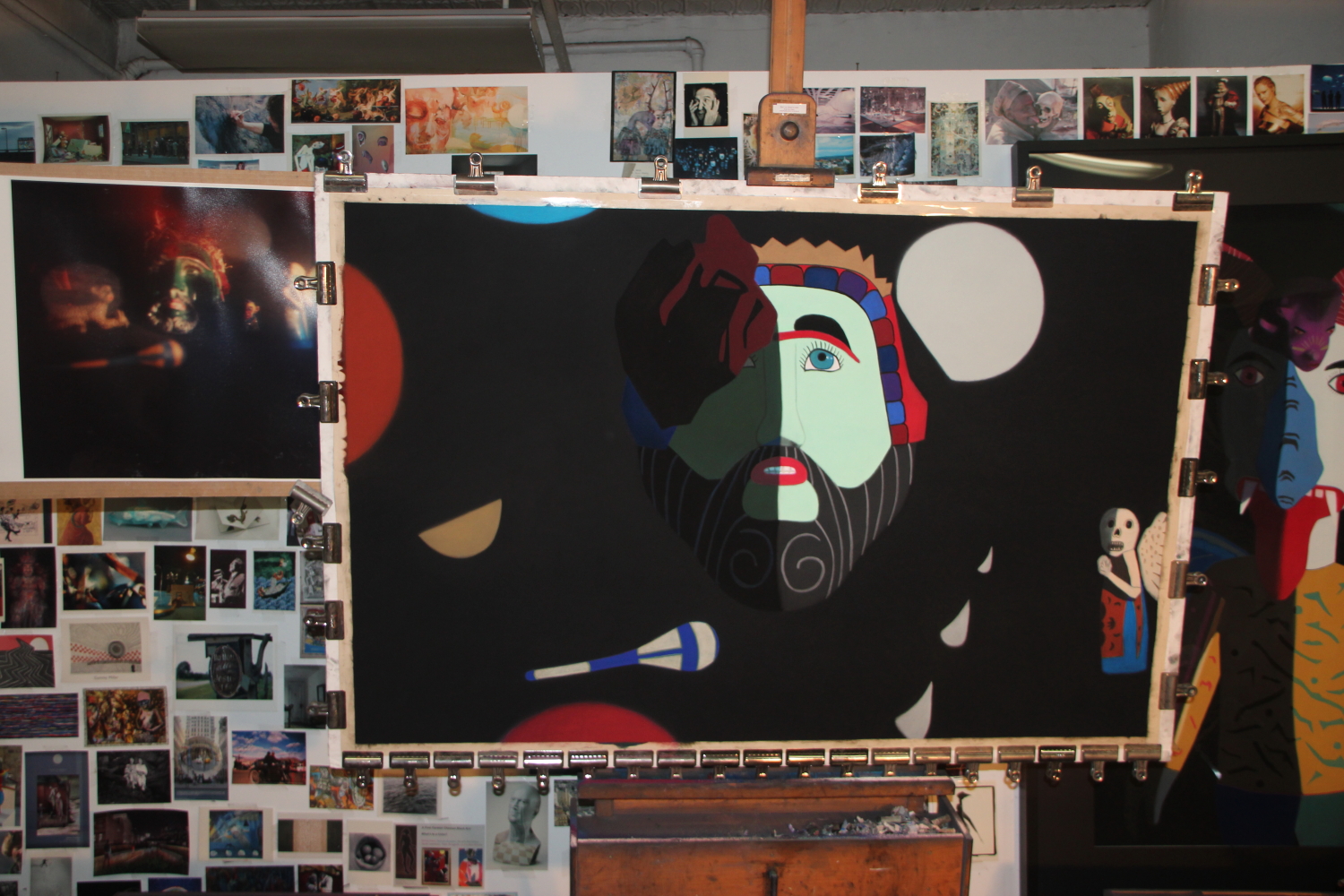
"Blind Faith," soft pastel on sandpaper, 38" x 58"

“Blind Faith,” soft pastel on sandpaper, 38″ x 58″

A:  I am putting finishing touches on a pastel-on-sandpaper painting called “Blind Faith.” Comments are welcome!

Pearls from artists* # 89

* an ongoing series of quotations – mostly from artists, to artists – that offers wisdom, inspiration, and advice for the sometimes lonely road we are on.
Dear Diary:

On a drifty Manhattan stroll
The kind that unearths magical treasures
I made a right turn off of Houston
Onto Bowery
And as it became Third Avenue
I came upon this old art store
That creaked hello
Its warped wooden shelves
Held new paints
A little dusty from the old building
But whose colors were deeper
Than I’d ever seen before

And at the back of the store
Up a narrow stairway
Was a tiny room
And behind a long table stood three people
(Probably artists)
Who could get me any paper I desired
Paper with designs
To collage with
Hot press, cold press
100 gram, 600 gram paper
To draw and paint on
Any kind of paper I’d ever want
Templates from heaven

And over my right shoulder
Was a tall window
Overlooking the glorious city
That has held this little room
Tenderly in its arms
All these years

And as I hugged
My rolled up package of paper
And went back downstairs
The old stairs seemed to gently whisper
“Come back soon,
We’ll keep each other alive”

And stepping outside
Third Avenue seemed more spacious
And I took a deep breath
As the world
Kaleidoscoped
With possibilities
Lovingly wrapped up
By three kind artists
At the top of the world.

Art Supplies From Heaven, by Judith Ellen Sanders, published in “Metropolitan Diary,” NY Times, April 6, 2014

Comments are welcome!

Pearls from artists* # 86

"Broken," 38" x 58," soft pastel on sandpaper

“Broken,” 38″ x 58,” soft pastel on sandpaper

* an ongoing series of quotations – mostly from artists, to artists – that offers wisdom, inspiration, and advice for the sometimes lonely road we are on.

When I’m working from a photograph, a transparency, or direct observation, I am always amazed at how much more I see as the painting progresses.  After I think I have completely perceived a particular area, something else reveals itself.  As the work continues, the level of awareness deepens.  The process takes it’s own time.  I have come to accept that time and not fight it.  I know that when I begin my work, no matter how hard I try, I’ll never observe as much on the first day as I will on the last.  Like life, the development will not be rushed, nor will there be full realization before completion.

Dr. Leopold Caligor, a prominent New York psychiatrist, says that he listens to tapes of recorded sessions with patients, he hears new things and gains deeper insights.  Each time he listens, more information is uncovered.  This process is repeated until understanding is complete.

Audrey Flack in Art & Soul:  Notes on Creating

Comments are welcome!

Q: What’s on the easel today?

Pastel painting in progress

Pastel painting in progress

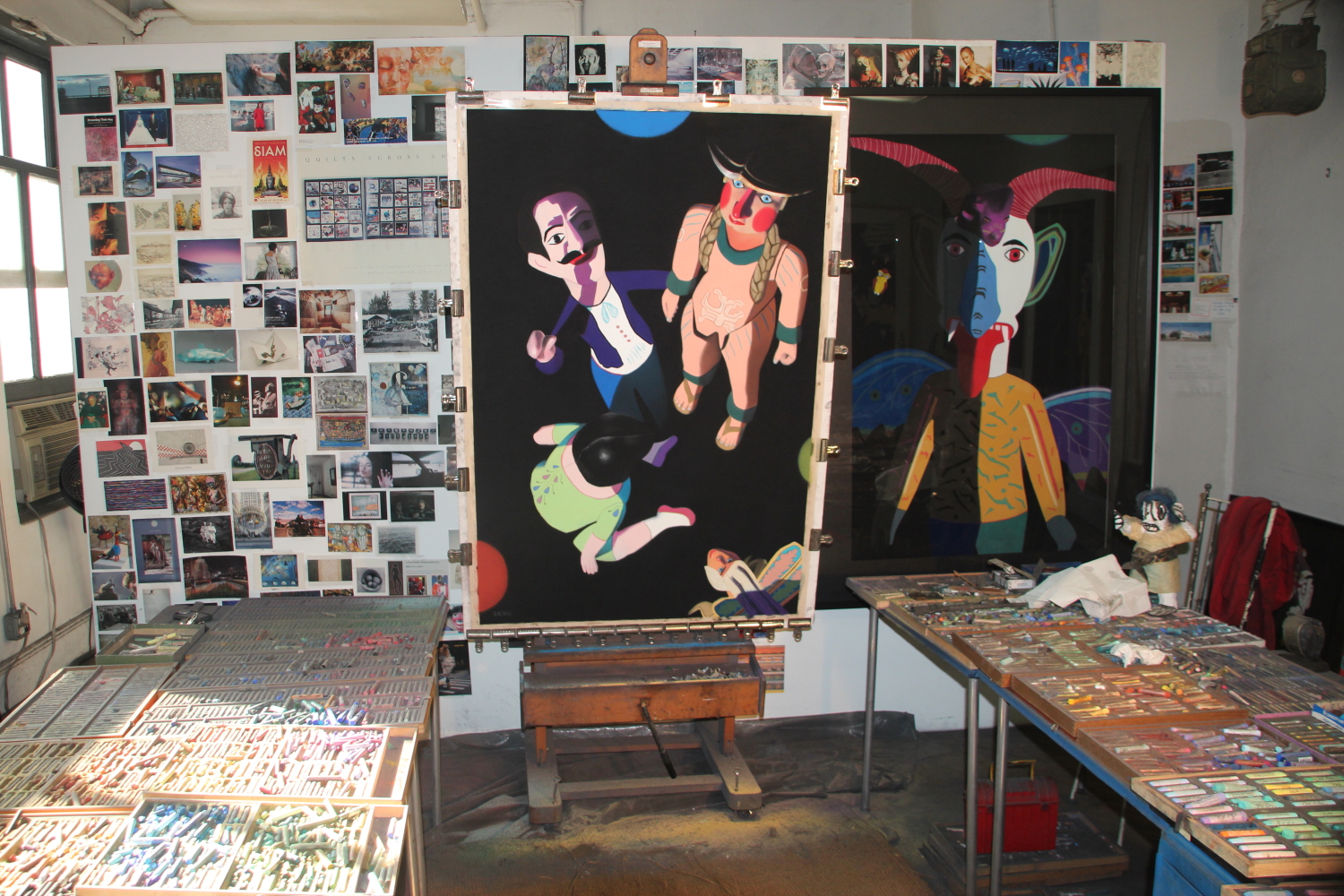
A:  I’m working on a pastel painting started a few weeks ago.  It has a long way to go.

Comments are welcome! 

Pearls from artists* # 82

"The Sovereign," soft pastel on sandpaper, 58" x 38"

“The Sovereign,” soft pastel on sandpaper, 58″ x 38″

* an ongoing series of quotations – mostly from artists, to artists – that offers wisdom, inspiration, and advice for the sometimes lonely road we are on.

Art isn’t psychology.  For one thing art deals in images, not language.  Images precede language and are closer to feelings.  They summon feelings before they’re named and categorized, when they’re still fresh and sometimes hard to recognize or identify.

For another thing, to translate his vision an artist uses materials that are, for lack of a better word, alchemical.  Paint, for example, has this wonderful, mysterious quality –  a smell and a sensuous, velvety feel and an ability to hold color and light – that unlocks and speeds up one’s creative metabolism.  And paint captures my every impulse – from my broadest conceptions to the tiniest ticks and tremors of my wrist.

There are literally no words to describe what occurs when an image suddenly and unexpectedly appears on the canvas.  Sometimes it’s serendipity, the result of a fortunate brushstroke.  Sometimes I think it has to do with the inherent qualities of paint, or the slickness of a surface, or the fullness or acuity of a brush.  And sometimes when I’ve got a good rhythm going and everything comes together, I feel as though it produces the purest expression of who I am and what I am and how I perceive the world.   

Eric Fischl and Michael Stone in Bad Boy:  My Life on and off the Canvas

Comments are welcome!

Pearls from artists* # 81

"Poker Face," soft pastel on sandpaper, 38" x 58"

“Poker Face,” soft pastel on sandpaper, 38″ x 58″

* an ongoing series of quotations – mostly from artists, to artists – that offers wisdom, inspiration, and advice for the sometimes lonely road we are on.

The creative process remains as baffling and unpredictable to me today as it did when I began my journey over forty years ago.  On the one hand, it seems entirely logical – insight building on insight; figures from my past, the culture, and everyday life sparking scenes and images on canvas; and all of it – subject, narrative, theme – working together with gesture, form, light to capture deeply felt experience.  But in real time the process is a blur, a state that precludes consciousness or any kind of rational thinking.  When I’m working well, I’m lost in the moment, painting quickly and intuitively, reacting to forms on the canvas, allowing their meaning to reveal itself to me.  In every painting I make I’m looking for some kind of revelation, something I didn’t see before.  If it surprises me, hopefully it will surprise the viewer, too.

Eric Fischl and Michael Stone in Bad Boy:  My Life On and Off the Canvas

Comments are welcome! 

Q: I just got home from my first painting experience… three hours and I am exhausted! Yet you, Barbara, build up as many as 30 layers of pastel, concentrate on such intricate detail, and work on a single painting for months. How do you do it?

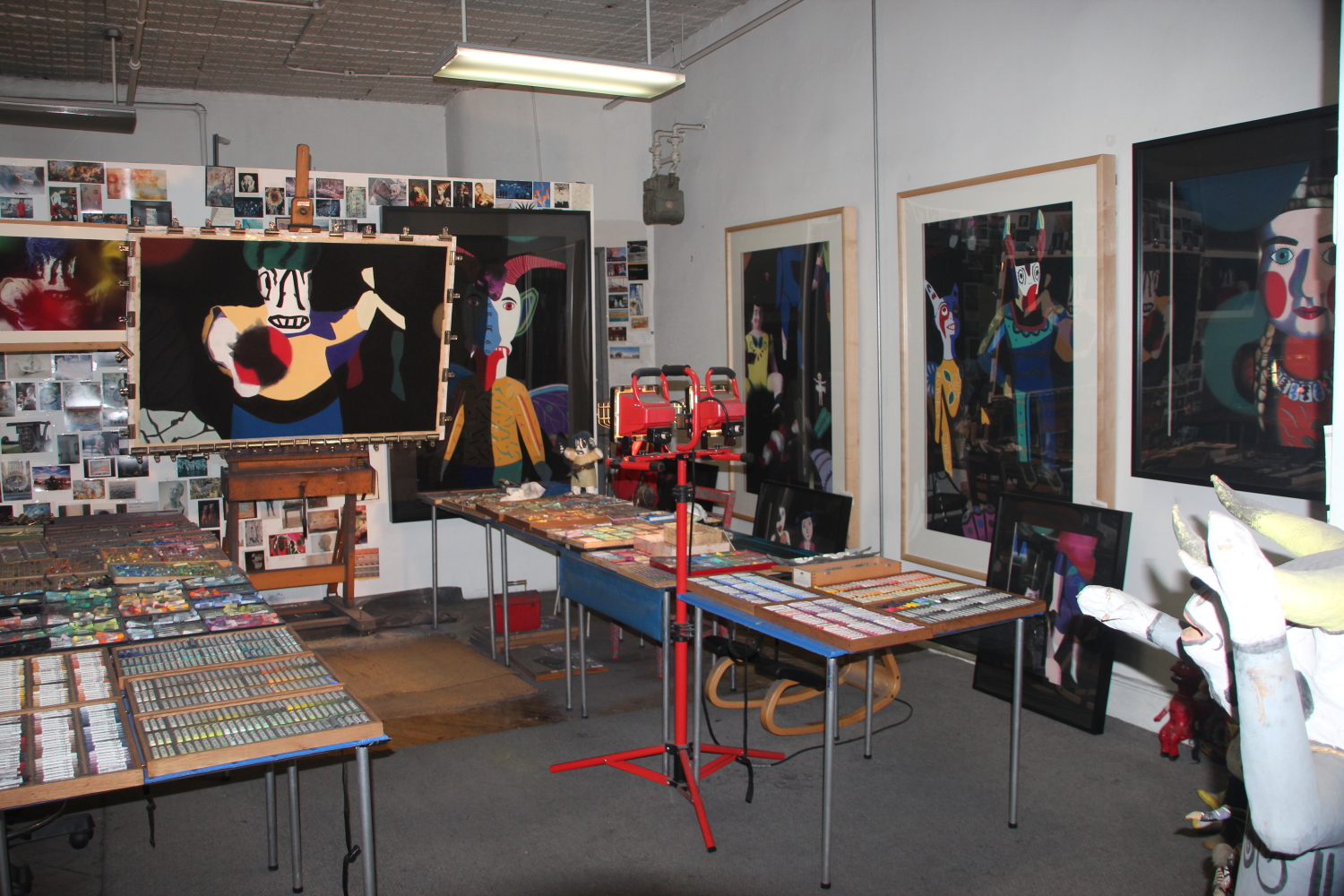
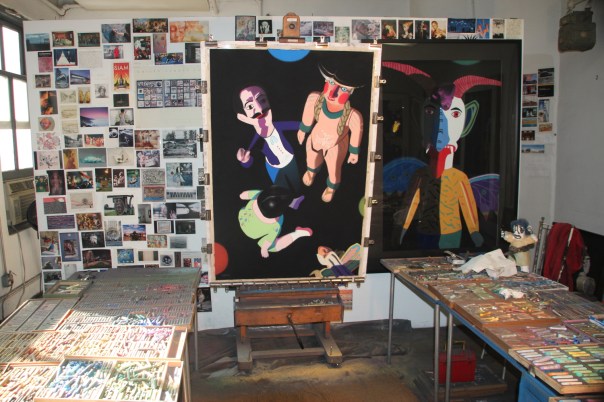
Barbara's studio

Barbara’s studio

A:  The short answer is that I absolutely love making art in my studio and on the best days I barely even notice time going by!  

Admittedly, it’s a hard road.  Pursuing life as an artist takes a very special and rare sort of person.  Talent and having innate gifts are a given, merely the starting point.  We must possess a whole cluster of characteristics and be unwavering in displaying them.  We are passionate, hard-working, smart, devoted, sensitive, self-starting, creative, hard-headed, resilient, curious, persistent, disciplined, stubborn, inner-directed, tireless, strong, and on and on.  Into the mix add these facts.  We need to be good business people. Even if we are, we are unlikely to make much money.  We are not respected as a profession.  People often misunderstand us:  at best they ignore us, at worst they insult our work and us, saying we are lazy, crazy, and more.

The odds are stacked against any one individual having the necessary skills and stamina to withstand it all.  So many artists give up, deciding it’s too tough and just not worth it, and who can blame them?  This is why I believe artists who persevere over a lifetime are true heroes.  It’s why I do all I can to help my peers.  Ours is an extremely difficult life – it’s impossible to overstate this – and each of us finds our own intrinsic rewards in the work itself.  Otherwise there is no reason to stick with it.  Art is a calling and for those of us who are called, the work is paramount.  We build our lives around the work until all else becomes secondary and falls away.  We are in this for the duration.

In my younger days everything I tried in the way of a career eventually became boring. Now with nearly thirty years behind me as a working artist, I can still say, “I am never bored in the studio!”  It’s difficult to put into words why this is true, but I know that I would not want to spend my time on this earth doing anything else.  How very fortunate that I do not have to do so!

Comments are welcome!

Q: What’s on the easel today?

Work in progress

Work in progress

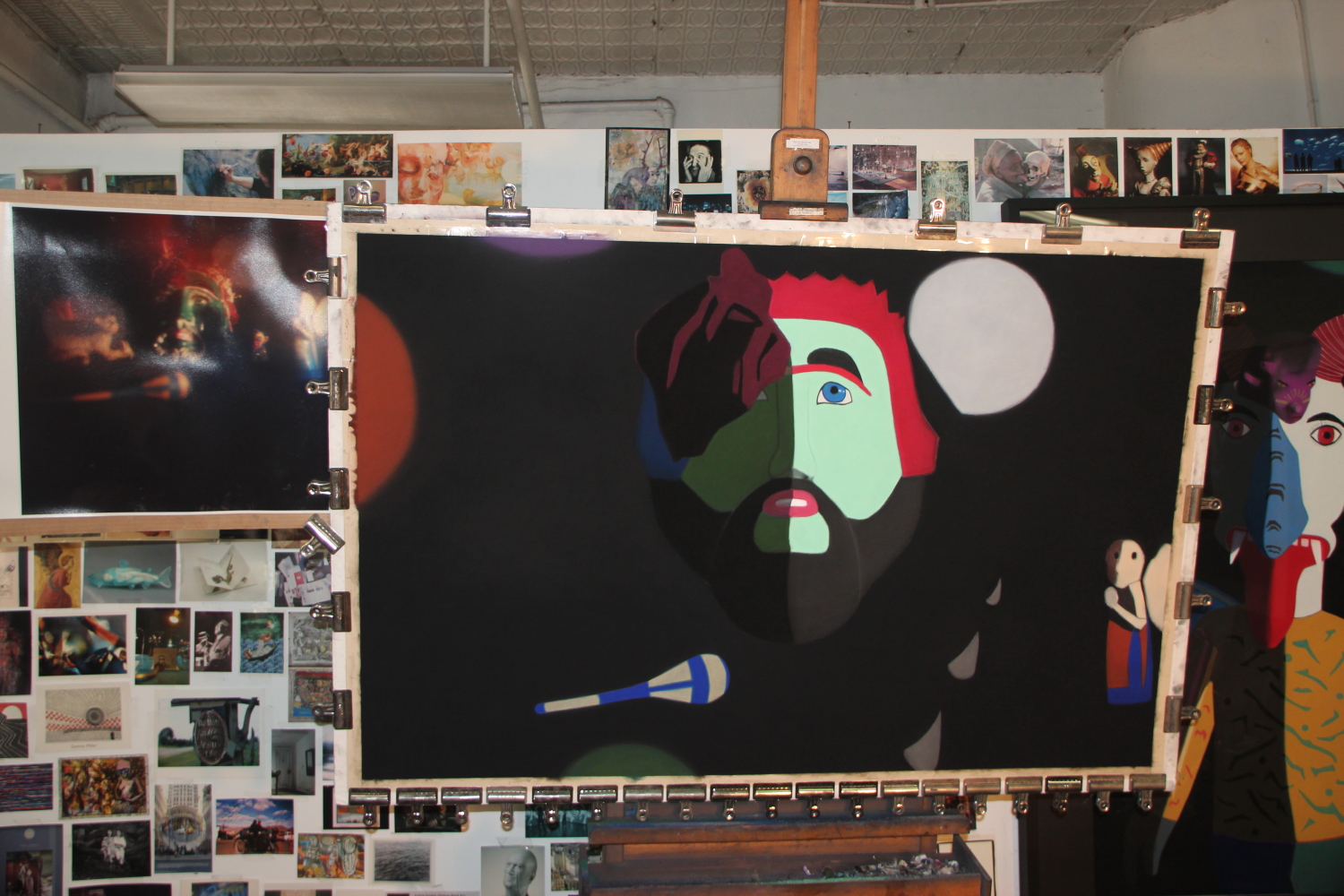
A:  I continue to work on a pastel-on-sandpaper painting that I began some weeks ago.  For now the working title is “Blinded,” which relates to the maroon and black shape on the main figure’s right eye.  I haven’t yet figured out the deeper meaning of that shape. 

Comments are welcome!

Pearls from artists* # 78

Barbara's studio

Barbara’s studio

* an ongoing series of quotations – mostly from artists, to artists – that offers wisdom, inspiration, and advice for the sometimes lonely road we are on.

To me, openings are never what you want them to be.  The excitement, relief, anxiety, and anticipation are too much to process.  There’s no apotheosis, no pinnacle, no turning point.  It’s not like theater, where at the end of a performance people get up and applaud.

Nothing gets created at an opening.  Nothing of artistic merit takes place.  All of that important stuff happens in the studio, long before the exhibition, when you’re alone.  For me, anyway, openings are something to get through, an ordeal to be endured.  The bigger the event, the less I remember it.  I pretty much walk in, and wherever I stop is where I stay.  I paint a grin on my face so fixed that by the end of the evening my jaw is sore.  I remember none of the conversations.  I stand there shaking hands, blindly mouthing, “Thank you.  Thank you very much.”  Then eventually April [Gornick, Fischl’s wife] collects me and we leave.

If, on the other hand, you were to ask me what I remember about making the paintings in a show, that’s a different story.  Imagine touching something, stroking it, jostling it, caressing it, and as you’re doing this, you are creating it.  How you touched it is how it came into existence.  Unlike other pleasures, where the feelings fade quickly as details become blurred, with paintings you remember everything.  Within the details are all the bumps and the friction, the memory of when the creative instinct flowed, when you were distracted or lazy or working too hard.  It’s all there on the canvas.  When I look at my paintings again, years later, even, I remember it all – the victory laps and the scars.

Eric Fischl and Michael Stone in Bad Boy:  My Life On and Off the Canvas  

Comments  are welcome! 

Pearls from artists* # 77

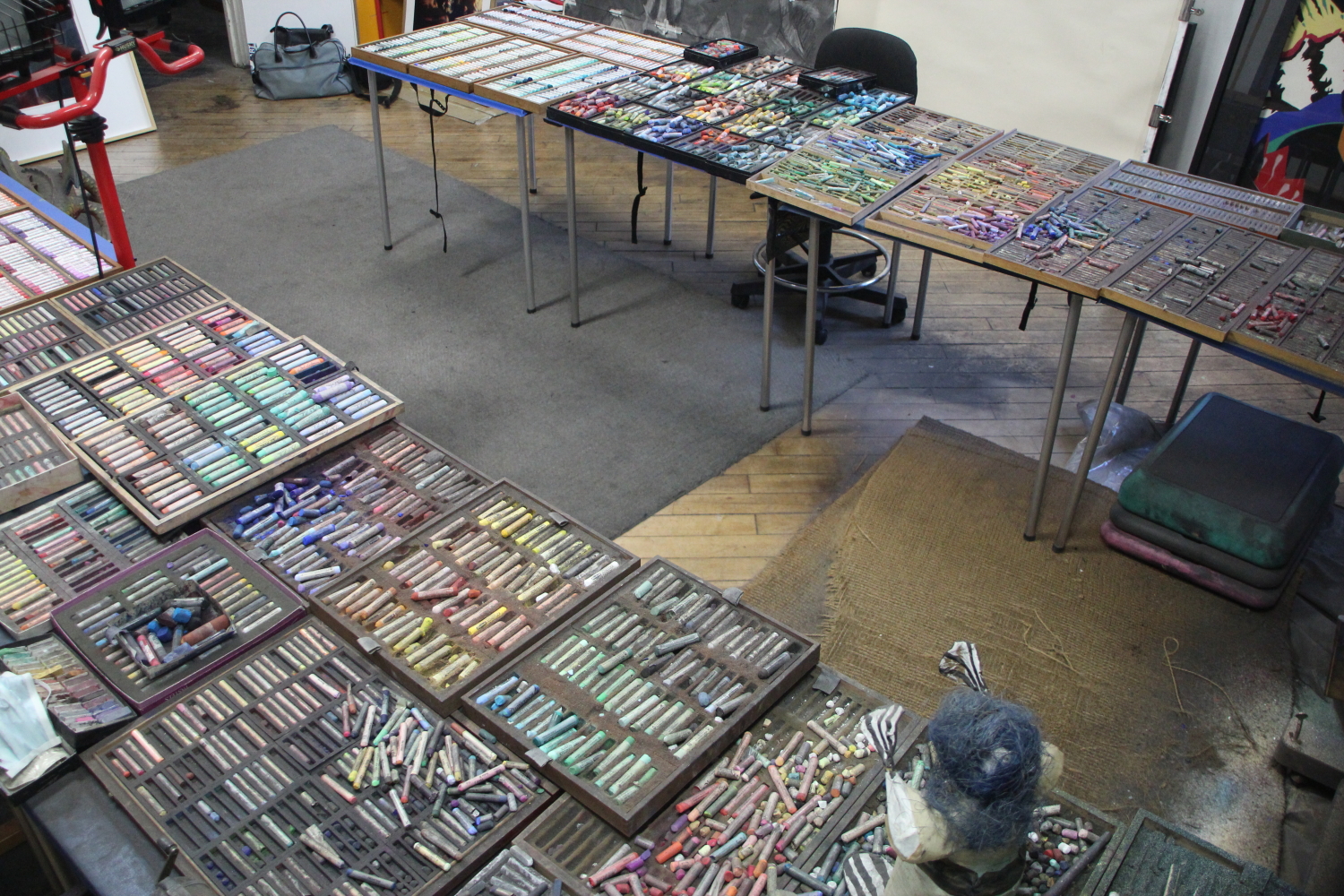
Barbara's studio

Barbara’s studio

* an ongoing series of quotations – mostly from artists, to artists – that offers wisdom, inspiration, and advice for the sometimes lonely road we are on.

Current possibilities far exceed any single artist’s capacity to engage them.  Indeed, every known way of making art ever undertaken in all of history is included in today’s inventory of creative options.  Thus, choices must be made.  This has had a profound effect upon the quantity and diversity of skills needed to become an artist today.  In addition to such conventional forms of artistic talent as visual acuity, manual dexterity, sensitivity, intelligence, ingenuity, and perseverance, contemporary artists must also be able to make judicious choices from a limitless inventory of alternatives.  A decisive aspect of the creative act involves choosing a place  amid possibilities that are as bountiful as they are eclectic and chaotic.  Even this process entail choices.  In staking the territory they wish to occupy, artists may be gluttons or ascetics, connoisseurs or  commoners.  Relationships between artists and their career choices may be lifelong and monogamous, or sequentially monogamous, polygamous, or promiscuous.  But artists’ options even exceed selecting precedents.  Free access to the past is amplified by freedom to augment the catalogue of creative options by contributing something new.

In the Making:  Creative Options for Contemporary Art by Linda Weintraub

Comments are welcome!