Category Archives: 2015
2015 Archives
Pearls from artists* # 156
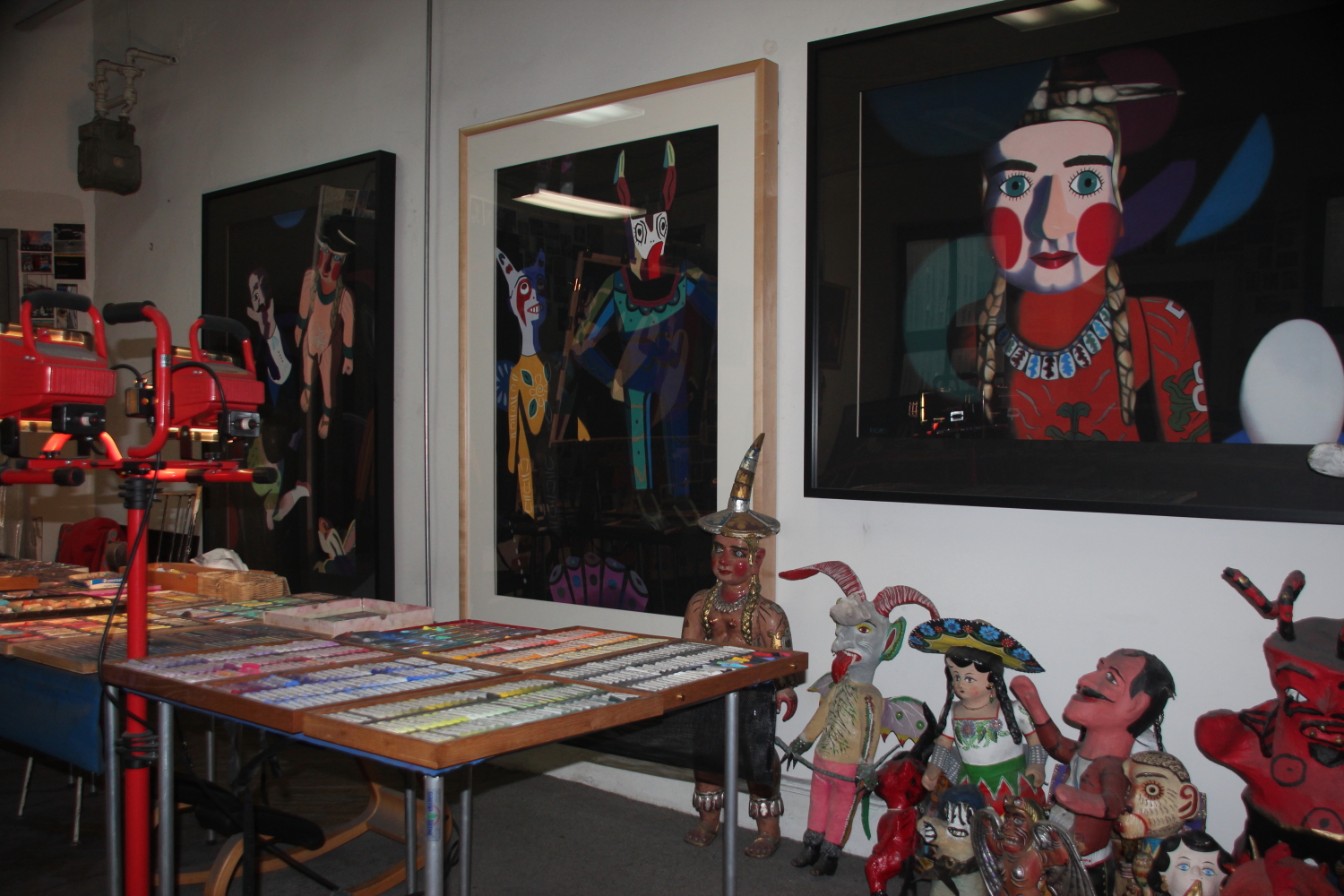
Barbara’s studio
Our vision is what makes us unique and special. Literally, vision means an artist’s unique way of seeing the world, the special and specific choices the artist makes when observing the world around him. It is also what the artist imagines and sees with his unique mind’s eye and brings out by way of his art. Vision is like a lighthouse, it guides the artist to a specific area of nature or life or to a subject that is personal to the artist, one that others might have overlooked. Vision also includes that which the artist’s conscience tells him the world ought to be – or what the world is lacking. Vision is that unique and special contribution we bring and add to life; it is that which no one can provide but us. Passion, inspiration, talent and skill all have to come together so that our vision can be achieved.
Samuel Adoquei in Origin of Inspiration: Seven Short Essays for Creative People
Comments are welcome!
Q: In terms of change where will you take your work next?

Barbara’s studio
A: That’s difficult to say because creating new pastel paintings is a somewhat mysterious process. Change happens on its own timetable and in its own way rather than from my efforts to exert conscious control over it. In essence it is my job to keep working in the studio, to be sensitive and true to my own creative process, and to go where the work leads. I doubt that I could work otherwise and still claim to be authentic.
Comments are welcome!
Pearls from artists* # 155
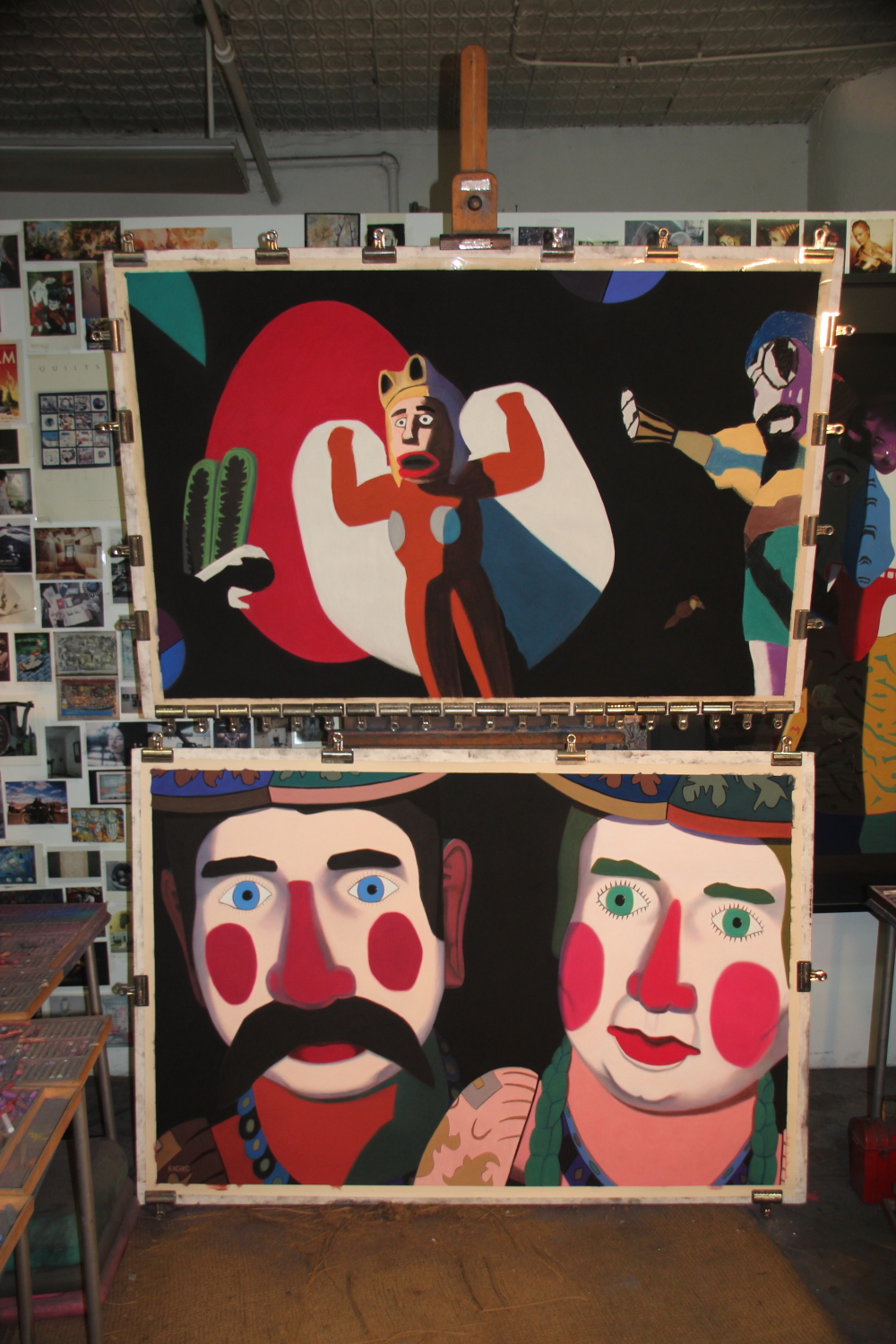
Works in progress
* an ongoing series of quotations – mostly from artists, to artists – that offers wisdom, inspiration, and advice for the sometimes lonely road we are on.
Throughout these many years of painting I have practiced starting my work from reality stating the facts before me. Then I paint without the object for a certain length of time, combining reality and imagination.
I have often obtained in painting directly from the object that which appears to be real results at the very first shot, but when that does happen, I purposely destroy what I have accomplished and re-do it over and over again. In other words that which comes easily I distrust. When I have condensed and simplified sufficiently I know that I have achieved more than reality.
Yasuo Kumiyoshi: East to West in The Creative Process, edited by Brewster Ghiselin
Comments are welcome!
Q: How do you think living in New York affects your work?
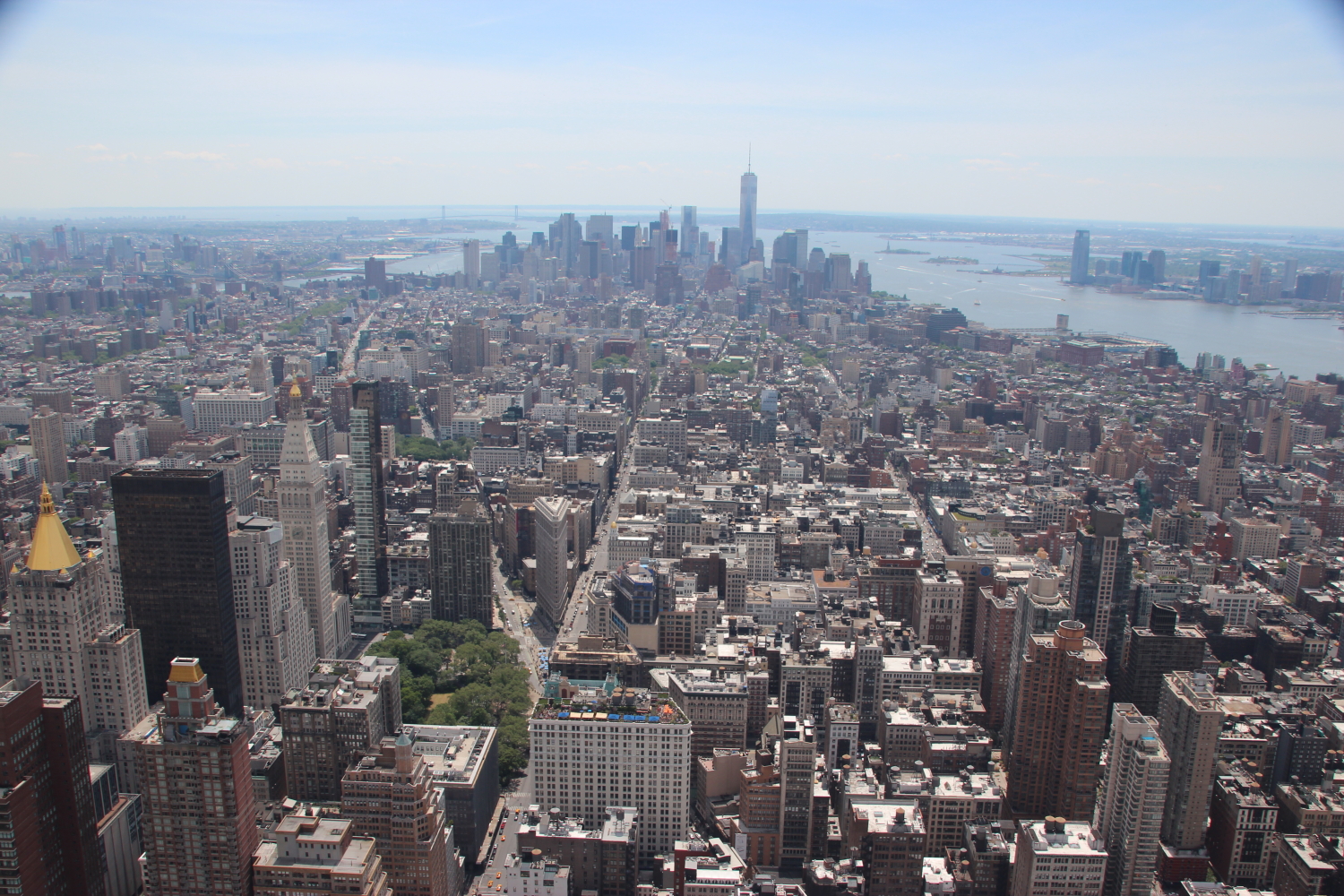
Lower Manhattan
A: Arguably, life in New York provides an artist with direct access to some of the best international art of the past, the present, and probably the future. It is possible to see more art here – both good and bad – than in any other American city.
Just pick up any local magazine and scan the art listings! Our problem is never that there isn’t anything interesting to see or do. It’s “how do we zero in on the most significant local cultural activities, ones that might contribute to making us better artists?”
Certainly a visual artist’s work is consciously and unconsciously influenced not only by what she sees in museums and galleries, but by walking around the city. That’s partly why I am an inveterate walker. I never know what amazing things I am going to see when I leave my apartment.
Although living in New York City is a rich and heady mix for anyone, it is more so for sensitive artists. Artists are virtual sponges, soaking up experiences, processing them, and mysteriously expressing them in our work.
New York lets an artist ponder excellence as we see and experience firsthand what is possible. The best of the best manages to make its way here.
Undoubtedly, my own work is richer for having spent the last eighteen years in this fascinating, wild, and crazy city. For a visual artist New York is an infinitely fascinating place to live.
Comments are welcome!
Pearls from artists* # 154
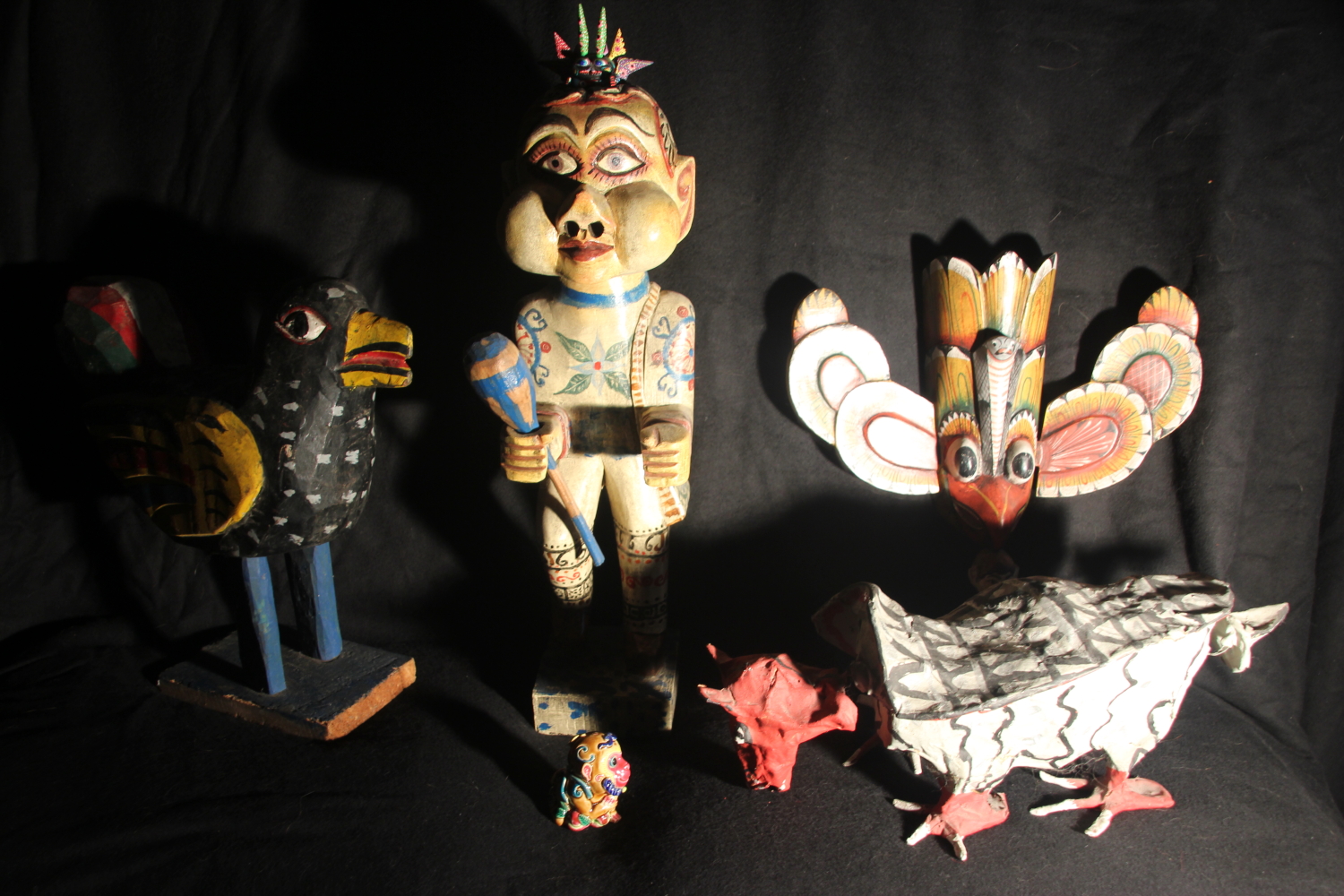
Idea for a painting
* an ongoing series of quotations – mostly from artists, to artists – that offers wisdom, inspiration, and advice for the sometimes lonely road we are on.
Often the public forms an idea of inspiration that is quite false, almost a religious notion. Alas! I do not believe that inspiration falls from heaven. I think it rather the result of a profound indolence and of our incapacity to put to work certain forces in ourselves. These unknown forces work deep within us, with the aid of the elements of daily life, its scenes and passions, and, they burden us and oblige us to conquer the kind of somnolence in which we indulge ourselves like invalids who try to prolong dream and dread resuming contact with reality, in short when the work that makes itself in us and in spite of us demands to be born, we can believe that this work comes to us from beyond and is offered by the gods. The artist is more slumberous in order that he shall not work. By a thousand ruses, he prevents his nocturnal work from seeing the light of day.
For it is at the moment that consciousness must take a precedence and that it becomes necessary to find the means which permit the unformed work to take form, to render it visible to all. To write, to conquer ink and paper, accumulate letters and paragraphs, divide them with periods and commas, is a different matter than carrying the dream of a play or of a book.
Jean Cocteau: The Process of Inspiration in The Creative Process, edited by Brewster Ghiselin
Comments are welcome!
Q: Why do you make art?

Barbara’s studio
A: This is an excellent question and one I like to revisit because with all the day-to-day frustrations and disappointments that are a normal part of an artist’s life, it is easy to forget what is important.
First, I make art because I have a gift and a desire to share it with others. To not develop, express, and share all that I have to say through my work is unthinkable.
Second, I make art because it is what gives my life direction and purpose. I believe that each human being has his or her own quest, driven by passion, to fulfill a certain duty. Recall Joseph Campbell’s, “The Hero’s Journey.” I need to make art in order to feel that I am living up to my highest potential.
Third, for inexplicable reasons (to me, anyway) soft pastel is an undervalued medium. I fell in love with pastel above all other media and hope to demonstrate that great art can be created with it. This is one of the drives that keeps me steadily working.
Comments are welcome!
Pearls from artists* # 153

“So What?”, soft pastel on sandpaper, 20″ x 26″
* an ongoing series of quotations – mostly from artists, to artists – that offers wisdom, inspiration, and advice for the sometimes lonely road we are on.
Ours is an excessively conscious age. We know so much, we feel so little. I have lived enough around painters and around studios to have had all the theories – and how contradictory they are – rammed down my throat. A man has to have a gizzard like an ostrich to digest all the brass tacks and wire nails of modern art theories. Perhaps all the theories, the utterly indigestible theories, like nails in an ostrich’s gizzard, do indeed help to grind small and make digestible all the emotional and aesthetic pabulum that lies in an artist’s soul. But they can serve no other purpose. Not even corrective. The modern theories of art make real pictures impossible. You only get these expositions, critical ventures in paint, and fantastic negations. And the bit of fantasy that may lie in the negation – as in a Dufy or a de Chirico – is just the bit that has escaped theory and perhaps saves the picture. Theorise, theorise all you like – but when you start to paint, shut your theoretic eyes and go for it with instinct and intuition.
D.H. Lawrence: Making Pictures in The Creative Process, edited by Brewster Ghiselin
Comments are welcome!
Q: What’s on the easel today?
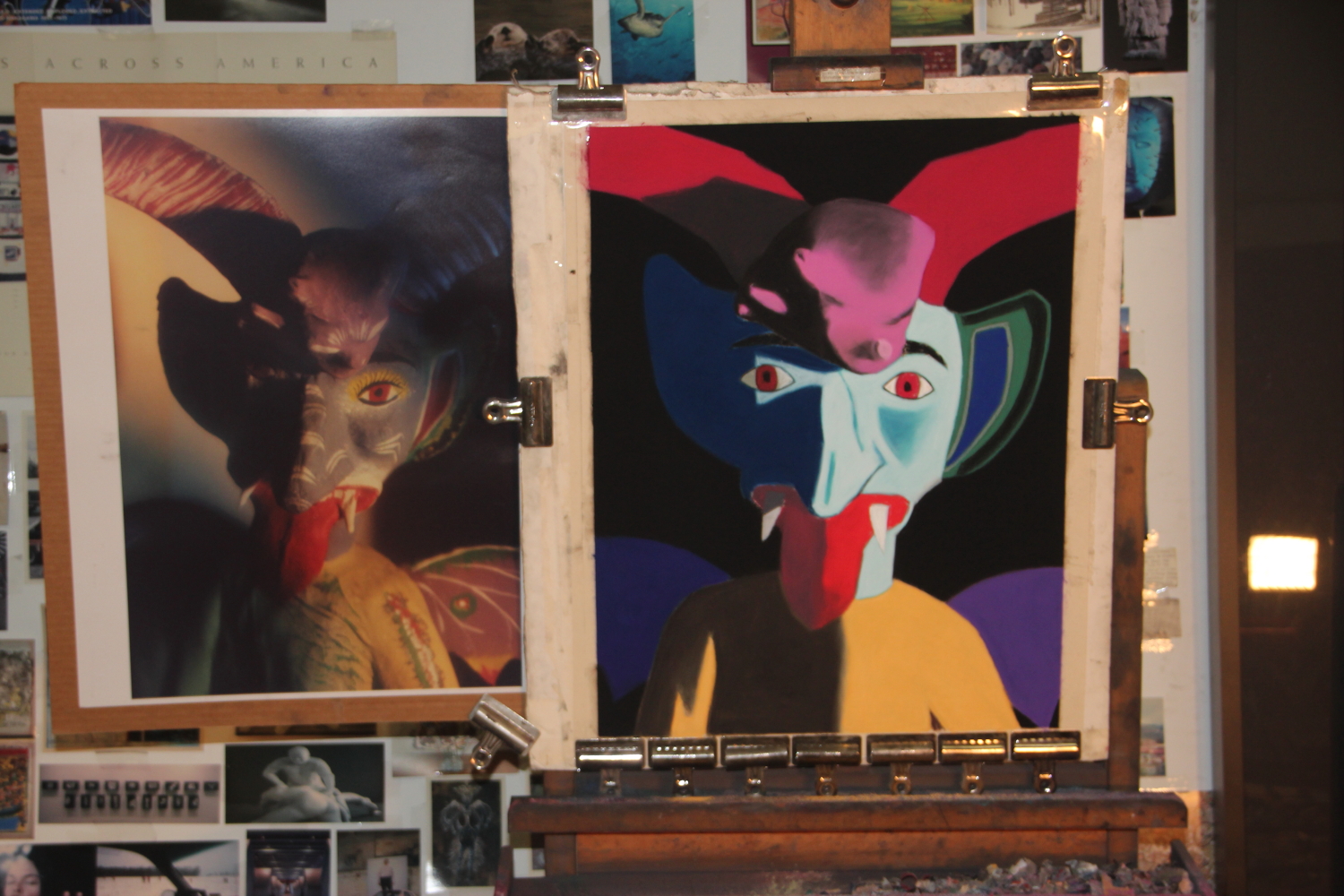
Work in progress
A: I am working on a small pastel painting, a portrait of my favorite Mexican Judas figure.
Comments are welcome!
Pearls from artists* # 152

“Between,” soft pastel on sandpaper, 20″ x 26″
* an ongoing series of quotations – mostly from artists, to artists – that offers wisdom, inspiration, and advice for the sometimes lonely road we are on.
The first picture I took of a black man was easy.
That’s the way it sometimes goes for me: I start on a new series of pictures and right away, in some kind of perverse bait-and-switch, I get a good one. This freak of a good picture inevitably inspires a cocky confidence, making me think this new project will be a stroll in the park. But, then, after sometimes two or three more good ones, the next dozen are duds, and that cavalier stroll becomes an uphill slog. It isn’t long before I have to take a breather, having reached the first significant plateau of doubt and lightweight despair. The voice of that despair suggests seducingly to me that I should give up, that I’m a phony, that I’ve made all the good pictures I’m ever going to, and I have nothing more worth saying.
That voice is easy to believe, and, as photographer and essayist (and my early mentor) Ted Orland has noted, it leaves me with only two choices: I can resume the slog and take more pictures, thereby risking further failure and despair, or I can guarantee failure and despair by not making more pictures. It’s essentially a decision between uncertainty and certainty and, curiously, uncertainty is the comforting choice.
Sally Mann in Hold Still: A Memoir with Photographs
Comments are welcome!
Pearls from artists* # 151

“The Storyteller,” soft pastel on sandpaper, 20″ x 26″
* an ongoing series of quotations – mostly from artists, to artists – that offers wisdom, inspiration, and advice for the sometimes lonely road we are on.
I am a storyteller, for better and for worse. I suspect that a feeling for stories, for narrative, is a universal human disposition, going with our powers of language, consciousness of self, and autobiographical memory.
The act of writing, when it goes well, gives me a pleasure, a joy, unlike any other. It takes me to another place – irrespective of my subject – where I am totally absorbed and oblivious to distracting thoughts, worries, preoccupations, or indeed the passage of time. In those rare, heavenly states of mind, I may write nonstop until I can no longer see the paper. Only then do I realize that evening has come and that I have been writing all day.
Over a lifetime, I have written millions of words, but the act of writing seems as fresh, and as much fun, as when I started it nearly seventy years ago.
On the Move: A Life by Oliver Sacks
Comments are welcome!


 barbararachkoscoloreddust.com