Blog Archives
Q: Did you formally study art? (Question from “Cultured Focus Magazine”)

A: My bachelor’s degree in Psychology is from the University of Vermont. I did not formally study art, unless you want to count the several years-worth of drawing and painting classes I took at the Art League School in Alexandria, VA. I never went to art school so do not have a bachelor’s or master’s degree in art.
Much later, in the early 2000s, I was compelled to study photography at the International Center of Photography in New York. This is a rather long story.
On September 11, 2001, my husband Bryan Jack, a high-ranking federal government employee, a brilliant economist and a budget analyst at the Pentagon, was on his way to present his monthly guest lecture in economics at the Naval Postgraduate College in Monterey, CA. He was a passenger on the plane that departed from Dulles Airport and was high-jacked and crashed into the Pentagon.
Losing Bryan on 9/11 was the biggest shock of my life, devastating in every way imaginable. We were soulmates and newly married. I have lived with his loss every single day for more than twenty years now. Life has never been the same.
In the summer of 2002 I was beginning to feel ready to get back to work. Learning about photography and cameras became essential avenues to my well-being.
My first challenge was learning how to use Bryan’s 4 x 5 view camera. Bryan had always taken the 4 x 5 negatives from which I derived the reference photos that were essential tools for making pastel paintings. I enrolled in a one-week view camera workshop at the International Center of Photography in New York. Surprisingly, it was very easy. I had derived substantial technical knowledge just from watching Bryan for many years.
After the view camera workshop, I decided to throw myself into learning this new medium, beginning with Photography I. I spent the next few years taking many classes at ICP and learning as much as I could. Eventually, I learned how to use Bryan’s extensive collection of film cameras, to properly light the setups that served as subject material for my “Domestic Threats” pastel paintings, and to make my own large chromogenic prints in a darkroom.
Then in October 2009 I was invited to present a solo photography exhibition at a gallery in New York. Continuing to make art after Bryan’s death had seemed like such an impossibility. I remember thinking how proud he would have been to know I became a good photographer.
Comments are welcome!
Q: What has been your biggest challenge so far?
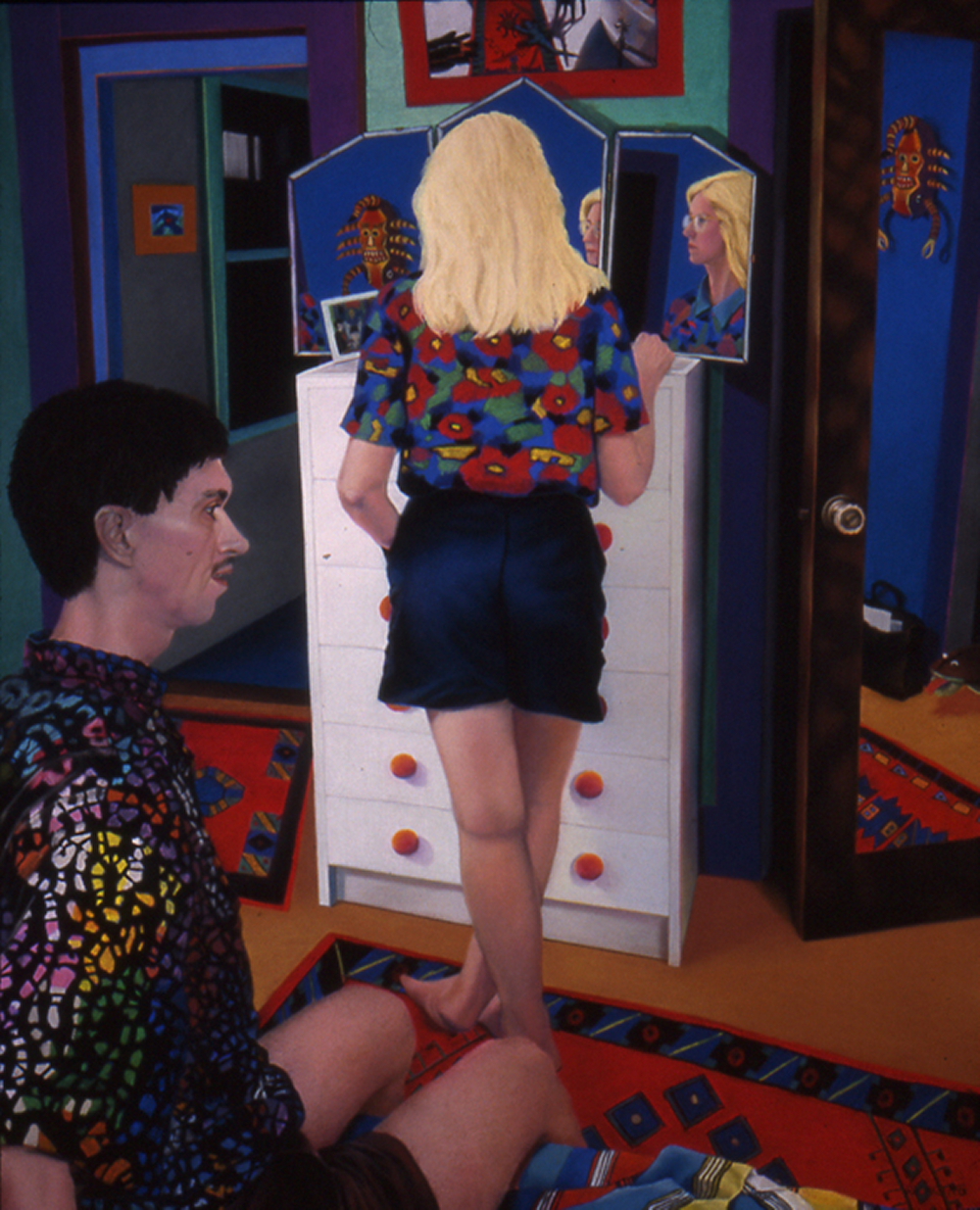
“Us and Them,” soft pastel on sandpaper, 47″ x 38″ image, 60″ x 50″ framed
A: On September 11, 2001, my husband Bryan, a high-ranking federal government employee, a brilliant economist (with an IQ of 180 he is the smartest man I have ever known) and a budget analyst at the Pentagon, was en route to Monterrey, CA to give his monthly guest lecture for an economics class at the Naval Postgraduate College. He had the horrible misfortune of flying out of Dulles Airport and boarding the plane that was high-jacked and crashed into the Pentagon, killing 189 people. Losing Bryan was the biggest shock of my life and devastating in every possible way.
The following summer I was ready to – I HAD to – get back to work. Learning about photography and pastel painting became avenues to my well-being. I use reference photos for my paintings, so my first challenge was to learn how to use Bryan’s 4 x 5 view camera (Bryan always took these reference photos for me).
In July 2002 I enrolled in a one-week view camera workshop at the International Center of Photography in New York. Much to my surprise, I had already acquired substantial technical knowledge from watching Bryan. Still, after the initial workshop, I threw myself into this new medium and continued studying photography at ICP for several years. I began with Photography I and enrolled in many more classes until I gradually learned how to use Bryan’s extensive camera collection, to properly light my setups, and to print large chromogenic photographs in a darkroom.
In October 2009 it was very gratifying to have my first solo photography exhibition with HP Garcia in New York. Please see http://barbararachko.art/images/PDFS/ BarbaraRachko-HPGargia.pdf. I vividly remember tearing up at the opening as I imagined Bryan looking down at me with his beautiful smile, beaming as he surely would have, so proud of me for having become a respected photographer.
Continuing to make art had seemed an impossibility after Bryan’s death. However, the first large pastel painting that I created using a self-made reference photograph proved my life’s work could continue. The title of that painting, “She Embraced It and Grew Stronger,” is certainly autobiographical. “She” is me, and “it” means continuing on without Bryan and living life for both of us.
Comments are welcome!
Pearls from artists* # 401

“Prophecy,” Soft Pastel on Sandpaper, 58″ x 38″ Image, 70″ x 50″ Framed
*an ongoing series of quotations – mostly from artists, to artists – that offers wisdom, inspiration, and advice for the sometimes lonely road we are on.
Said [Larry] Rivers,
You could be poor and think your life worthwhile – the dance of the mind, the leap of the intellect. If you made art that did not sell immediately, or ever, you could still be involved in a meaningful, inspiring activity that was a reward in itself, and you could show it to the people you dreamed of thrilling with your efforts; your friends were your audience. They were sitting on your shoulder watching you work. That was the opera of the time… Pursuit of a career and commercial success was selling out, losing one’s soul. In painting, writing, music, and dance, nothing could be more shameful.
Mary Gabriel in Ninth Street Women
Comments are welcome!
Pearls from artists* # 398
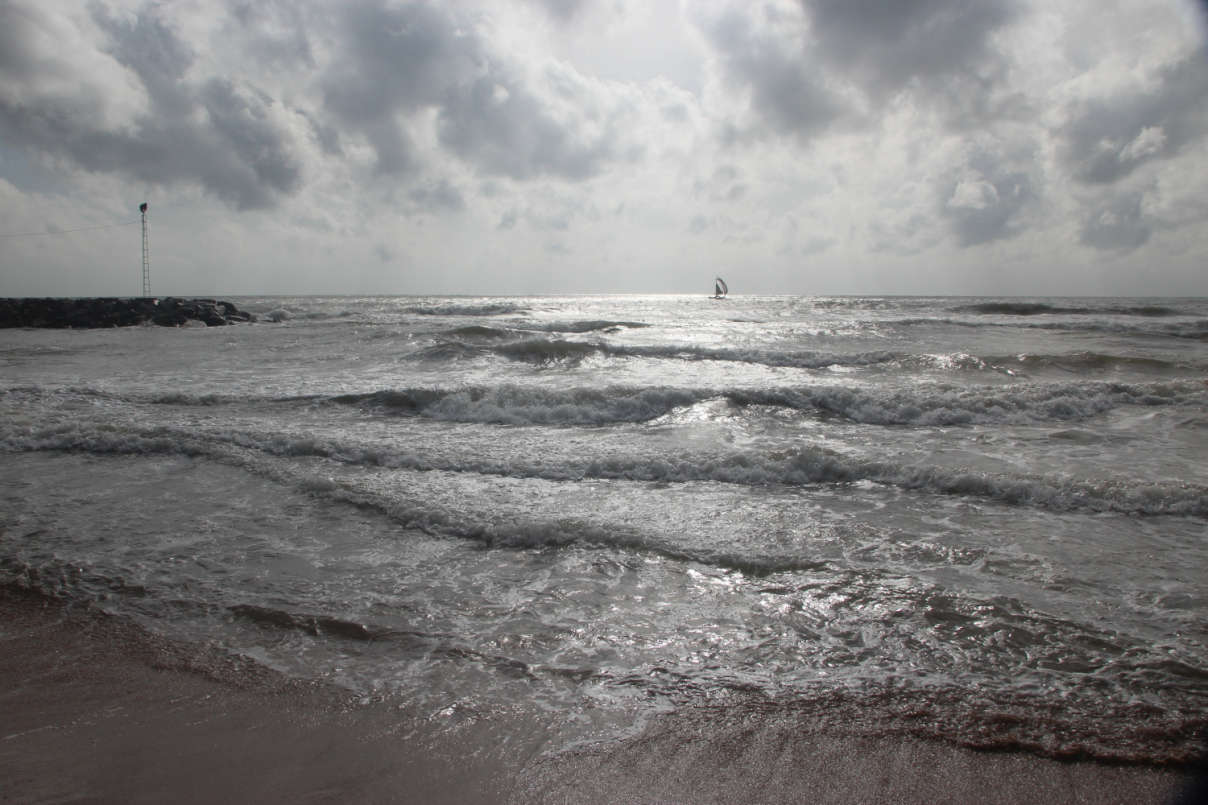
Negombo, Sri Lanka 2013
* an ongoing series of quotations – mostly from artists, to artists – that offers wisdom, inspiration, and advice for the sometimes lonely road we are on.
Marcus Aurelius asks us to note the passing of time with open eyes. Ten thousand years or ten thousand days, nothing can stop time, or change the fact that I would be turning seventy years old in the Year of the Monkey. Seventy. Merely a number but one indicating a significant percentage of the allotted sand in an egg timer, with oneself the darn egg. The grains pour and I find myself missing the dead more than usual. I notice that I cry more when watching television, triggered by romance, a retiring detective hit in the back while staring into the sea, a weary father lifting his infant from a crib. I notice that my own tears burn my eyes, that I am no longer a fast runner and that my sense of time seems to be accelerating.
Patty Smith in Year of the Monkey
Comments are welcome!
Q: During one of the most gripping times of your life, you were personally affected by the 9/11 attack on our country. Your husband was killed on the plane that crashed into the Pentagon. Would you mind telling us about it and how it has shaped your work?
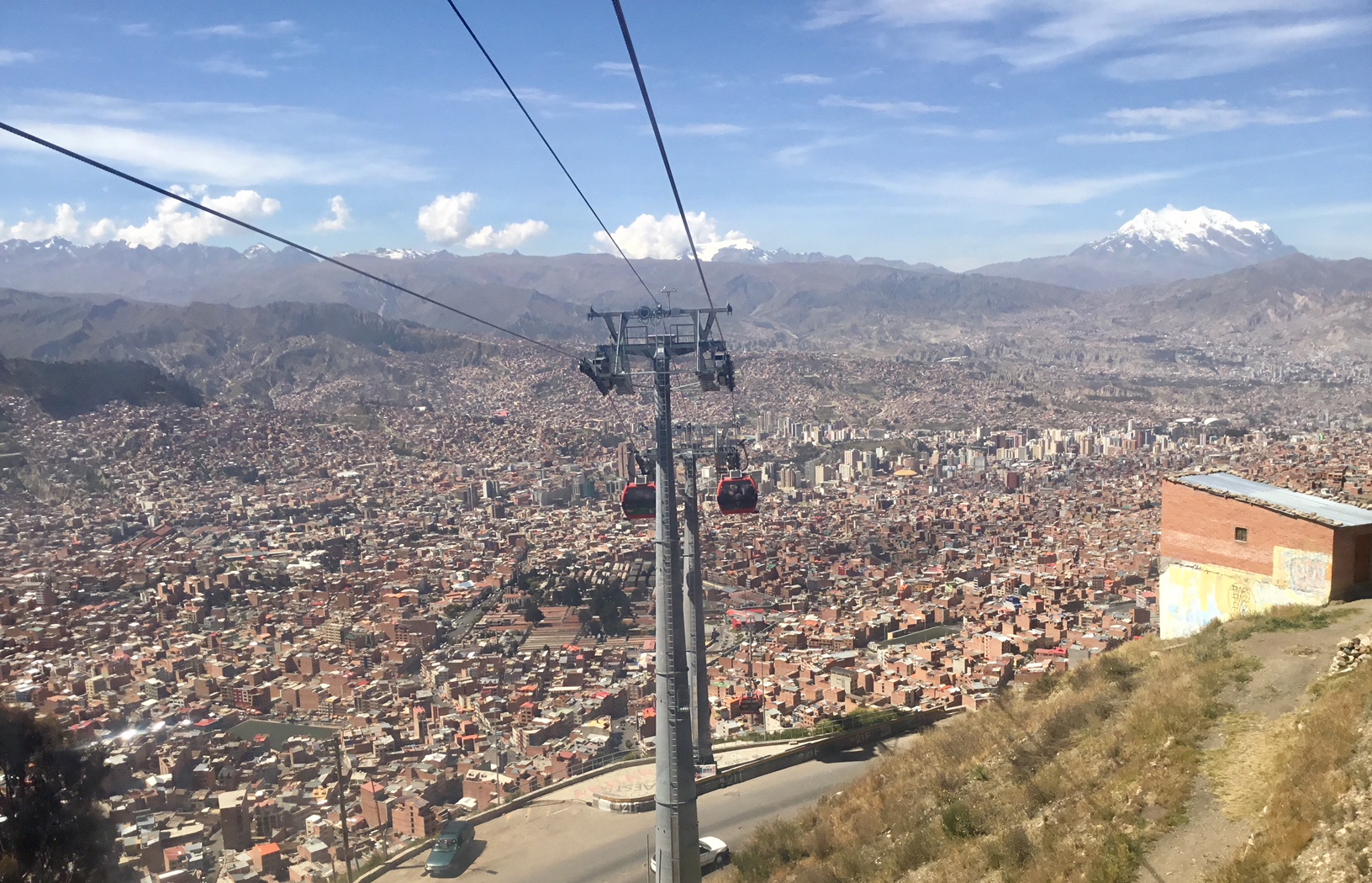
‘Mi Teleferico’ line, La Paz, Bolivia
A: In the summer of 2002 I was ready to – I HAD to – get back to work in my studio. I knew exactly what I must do. More than ever before, learning and painting would become the avenues to my well-being.
Because I use reference photos for my pastel paintings, the first challenge was to learn how to use Bryan’s 4 x 5 view camera. At that time I was not a photographer. Bryan had always taken reference photos for me.
In July 2002 I enrolled in a view camera workshop at New York’s International Center of Photography. Much to my surprise I had already absorbed quite a lot from watching Bryan. After the initial workshop, I continued more formal studies of photography for several years. In 2009, I am proud to say, I was invited to present a solo photography exhibition at a New York gallery!
In 2003 I resumed making my Domestic Threats series of pastel paintings, something that had seemed impossible after Bryan’s death. The first large pastel painting that I created using a reference photograph taken by me confirmed that my life’s work could continue. The title of that painting, “She Embraced It and Grew Stronger,” was autobiographical. “She” is me, and “it” meant continuing on without Bryan and living life for both of us.
Having had a long successful run, the Domestic Threats series finally ended in early 2007. Around that time I was feeling happier and had come to better terms with losing Bryan. While this is a tragedy I will never truly be at peace with, dealing with the loss became easier with time.
Then in 2007 I suddenly became blocked and did not know where to take my work next. I had never experienced creative block and especially for a full-time professional artist, this was a painful time. Still, I continued to go to the studio every day and eventually, thanks to a confluence of favorable circumstances, the block ended.
My next pastel painting series was called Black Paintings. I viewed the black background as literally, the very dark place that I was emerging from, exactly like the figures emerging in these paintings. The figures themselves were wildly colorful and full of life, but that black background – one critic has dubbed it my “blackground” – is always there.
Still the work continues to evolve. In 2017 I began my third pastel painting series called Bolivianos, based on a mask exhibition encountered in La Paz at the The National Museum of Ethnography and Folklore. Many people have proclaimed this to be my most bold, daring, and exciting pastel painting series yet. And I think they may be right! Continuing on the journey I began 30+ years ago, I am looking forward to creating many new, striking pastel paintings!
Comments are welcome!
Q: Were there any other artists in your family?

“The Ancestors,” soft pastel on sandpaper, 58″ x 38,” 2013
A: Unfortunately, I have not been able to reconstruct my family tree further back than two generations. So as far as I can tell, I am the first artist of any sort, whether musician, actor, dancer, writer, etc. in my family.
Both sets of grandparents emigrated to the United States from Europe. On my mother’s side my Polish grandparents died by the time my mother was 16, years before I was born.
My paternal grandparents both lived into their 90s. My father’s mother spoke Czech, but since I did not, it was difficult to communicate. I never heard any stories about the family she left behind. My grandfather spoke English, but I don’t remember him ever talking about his childhood or telling stories about his former life. My most vivid memories of my grandfather are seeing him in the living room watching Westerns on an old-fashioned television.
Sometimes I am envious of artists who had parents, siblings, or extended family who were artists. How I would have loved to grow up with a family member who was an artist and a role model!
Comments are welcome!
Q: How do you experience art in New York?

Lower Manhattan
A: As a New York artist I am very fortunate to live in a city with a vibrant, exciting cultural scene. Simply put, art is in the air here and I take inspiration from everything I see and experience: painting, photography, sculpture, installation, performance art, public art, dance, theater, film, opera, jazz, etc. This city itself is an endlessly fascinating place. Visually it is always thrilling! I never know what I am going to see – good and bad – whenever I leave my apartment.
I have been living here since April 1997. The city provides a heady mix to ponder and this mix mysteriously enriches, influences, and somehow finds its way into the work. I have been an artist for nearly thirty years and I continue to be intrigued with watching the intricacies of how my creative process evolves and grows.
Comments are welcome!
Q: Where do you want your work to go in the future?
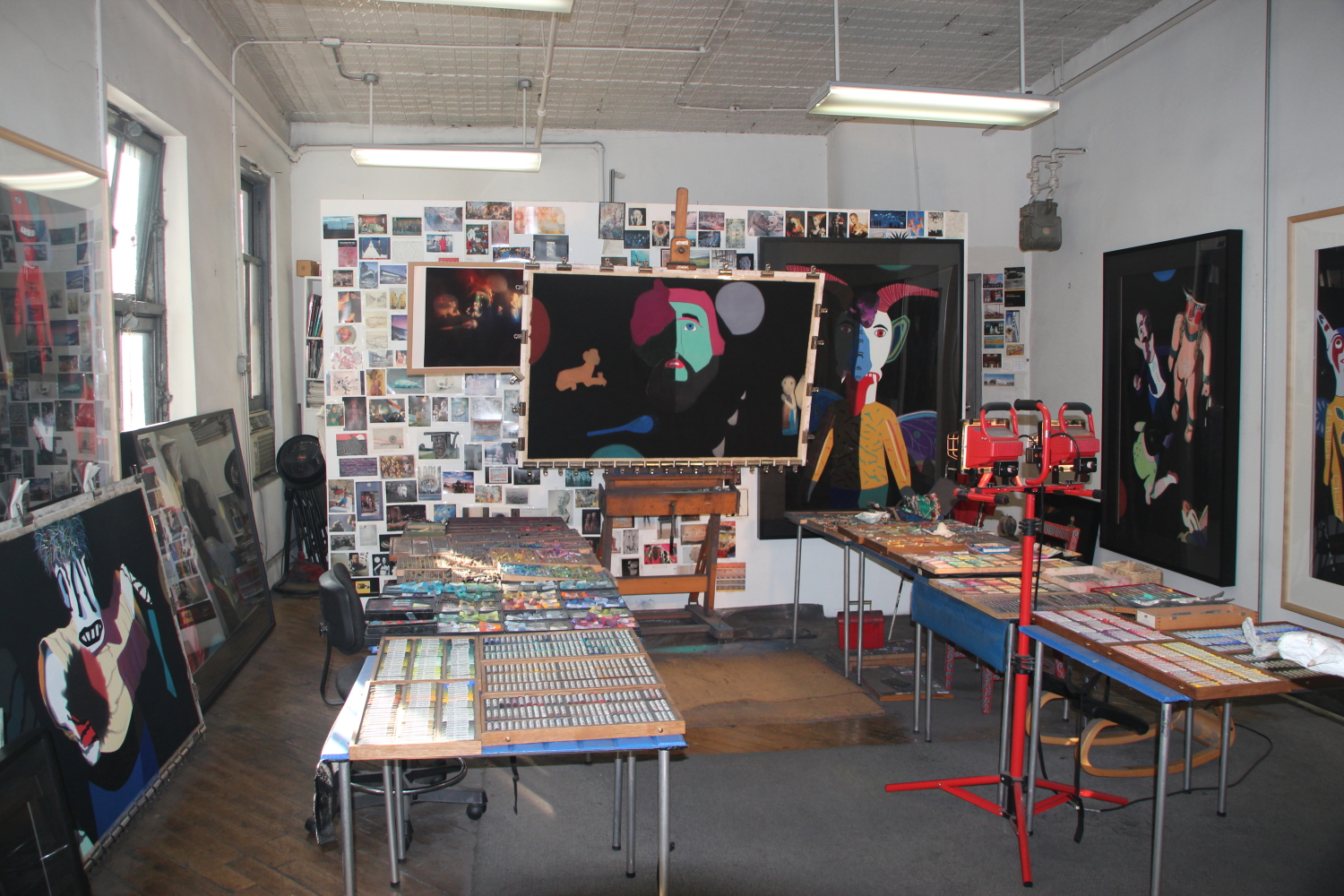
Barbara’s studio
A: Recently I answered a question about why I create, but now that I think about it, the same answer applies to what I want to do as an artist in the future:
~ to create bold and vibrant pastel paintings and photographs that have never existed before
~ to continue to push my primary medium – soft pastel on sandpaper – as far as I can and to use it in more innovative ways
~ to create opportunities for artistic dialogue with people who understand and value the work to which I am devoting my life
The last has always been the toughest. I sometimes think of myself as Sisyphus because expanding the audience for my art is an ongoing uphill battle. Many artist friends tell me they feel the same way about building their audience. It’s one of the most difficult tasks that we have to do as artists. I heard Annie Leibovitz interviewed on the radio once and remember her saying that after 40 years as a photographer, everything just gets richer. Notice that she didn’t say it gets any easier; she said, “it just gets richer.” I have been a painter for nearly 30 years and a photographer for 11. I agree completely. All artists have to go wherever our work goes. Creating art and watching the process evolve is an endlessly fascinating intellectual journey. I wouldn’t want to be spending my time on earth doing anything else!
Comments are welcome!
Q: At the end of last Saturday’s (September 28th) post you mentioned something called, “Esala Perahera.” What is that?
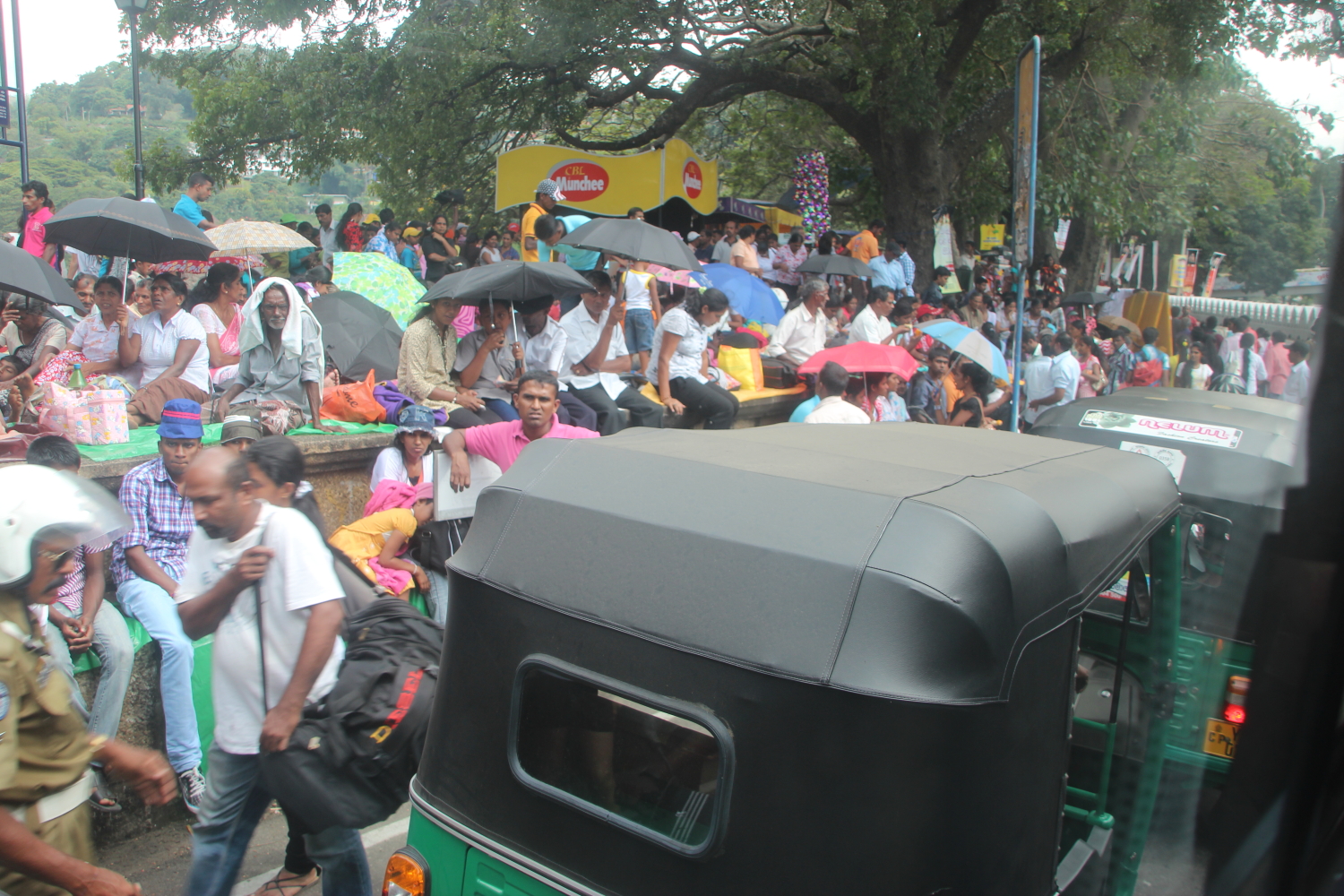
Waiting for the Perahera to start, Kandy, Sri Lanka
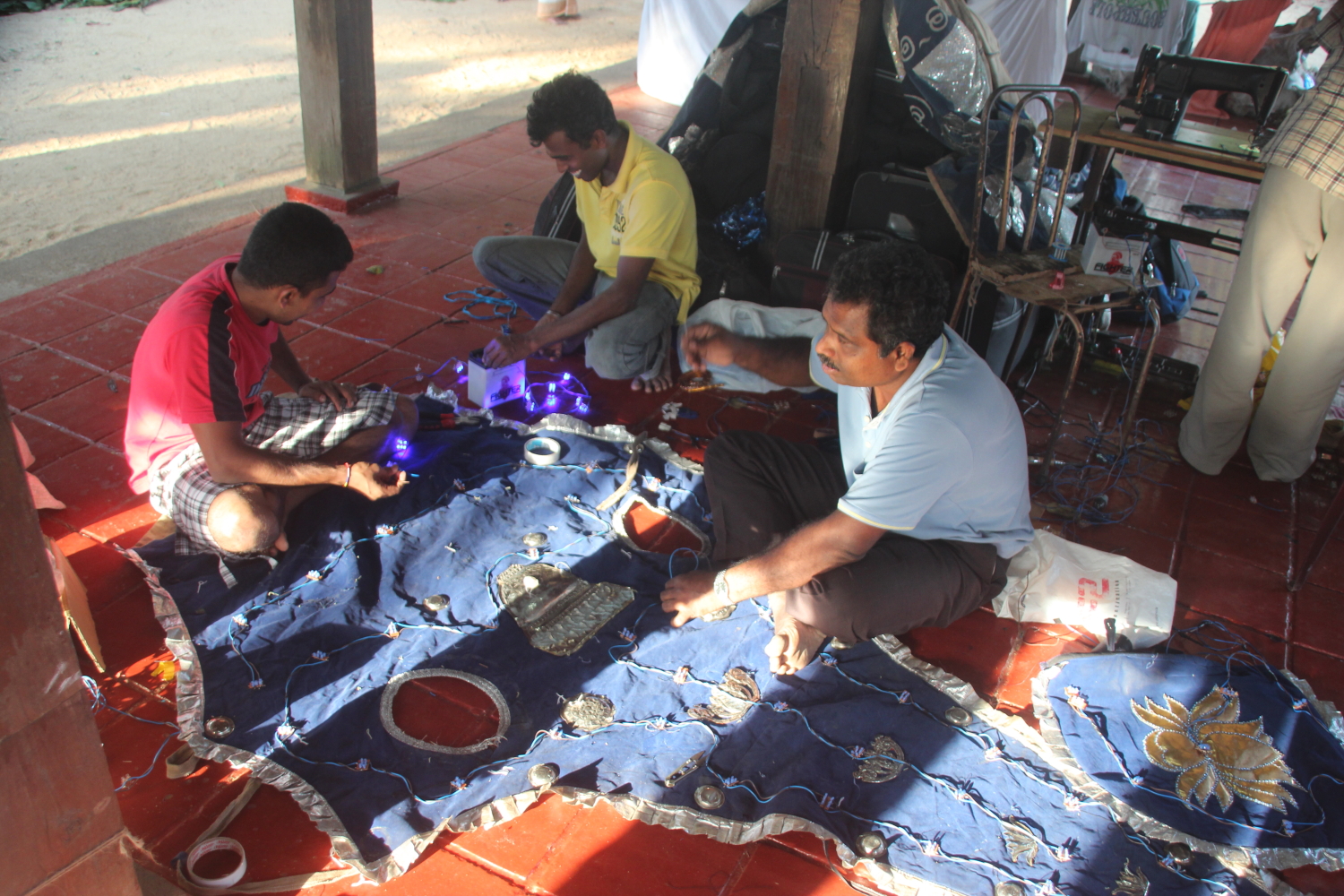
Mending an elephant’s headdress, Kandy, Sri Lanka
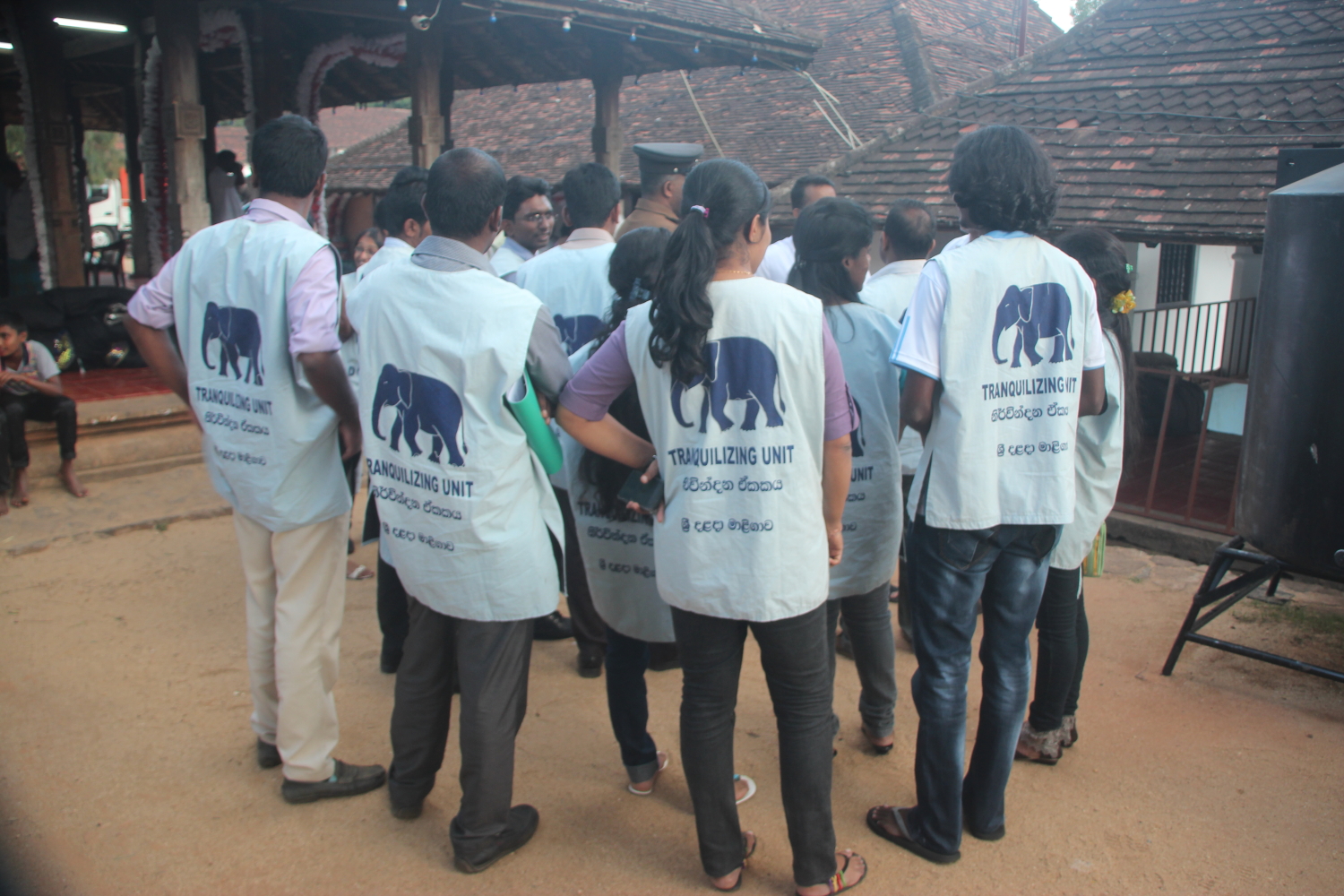
Preparations – planning what to do in case an elephant charges
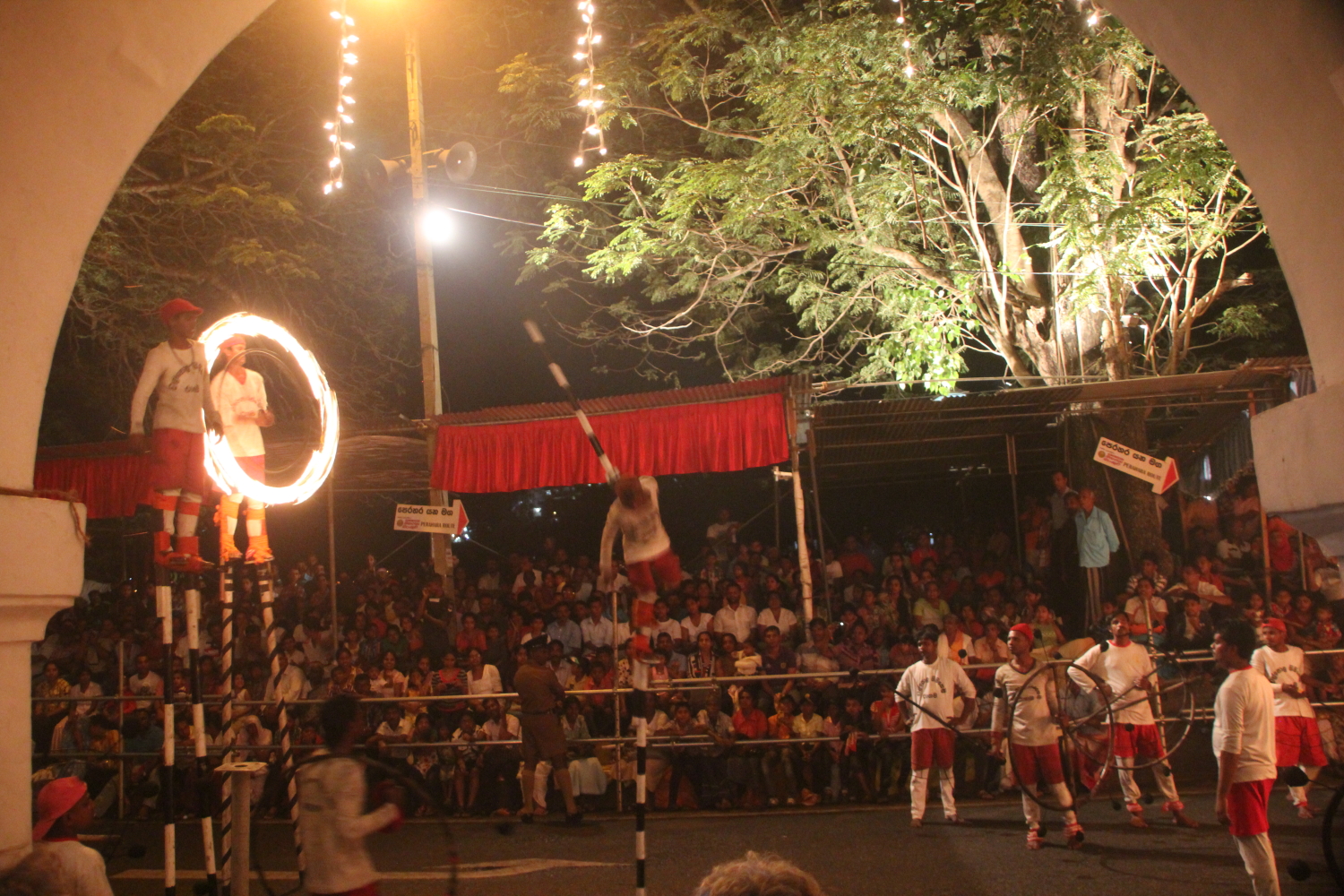
Flame throwers watching a man balancing on one stilt
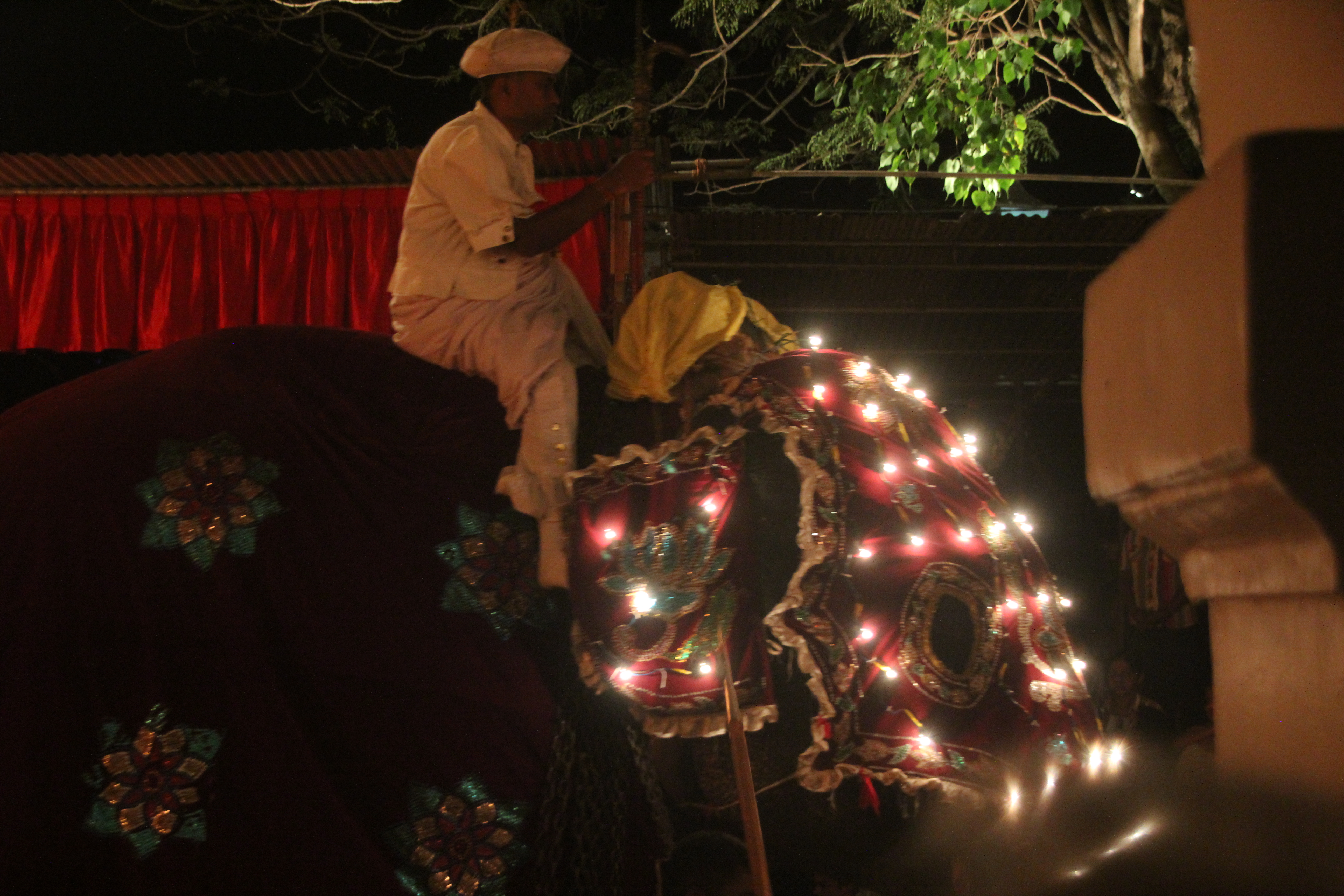
First elephant in the procession
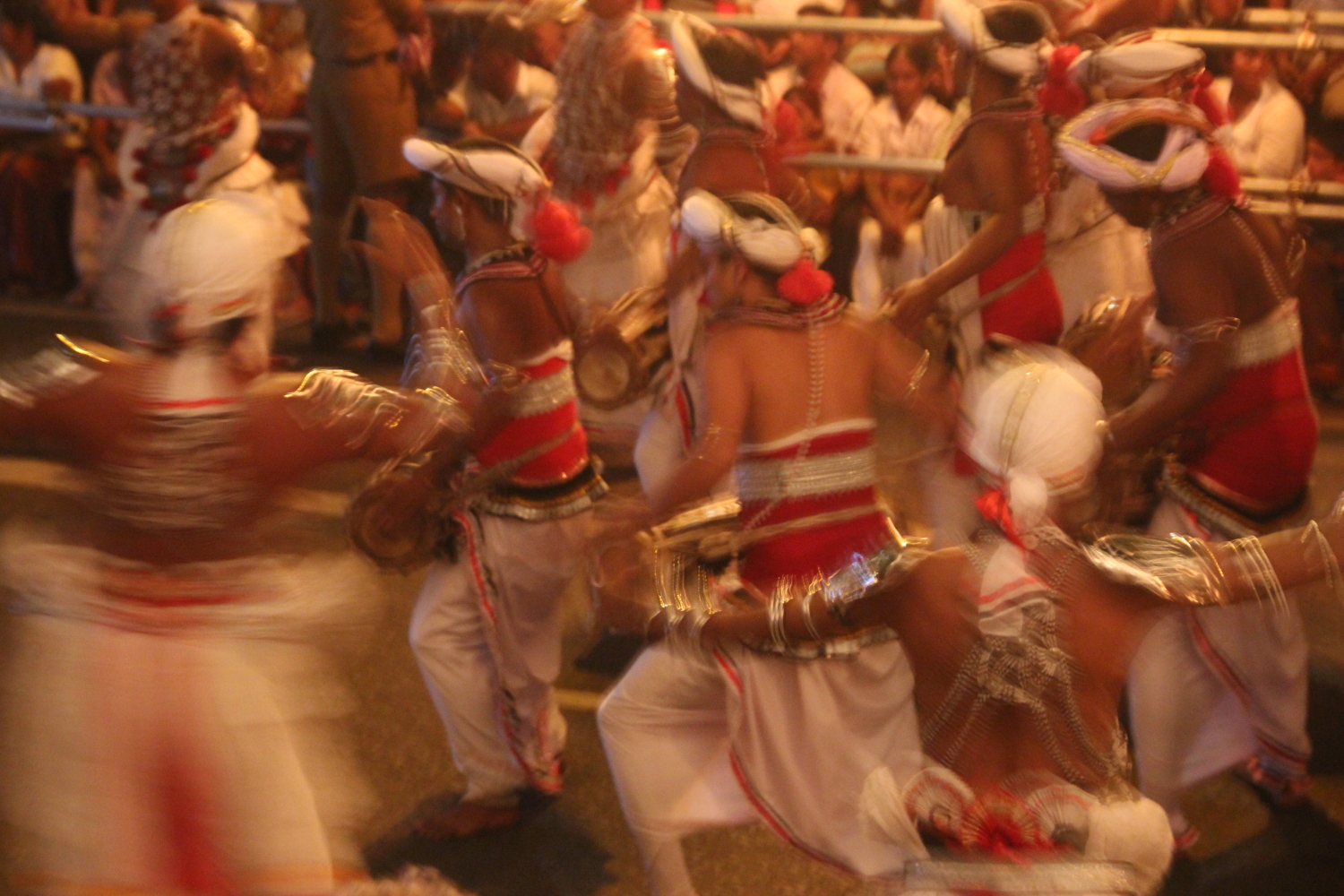
Drummers, Kandy, Sri Lanka
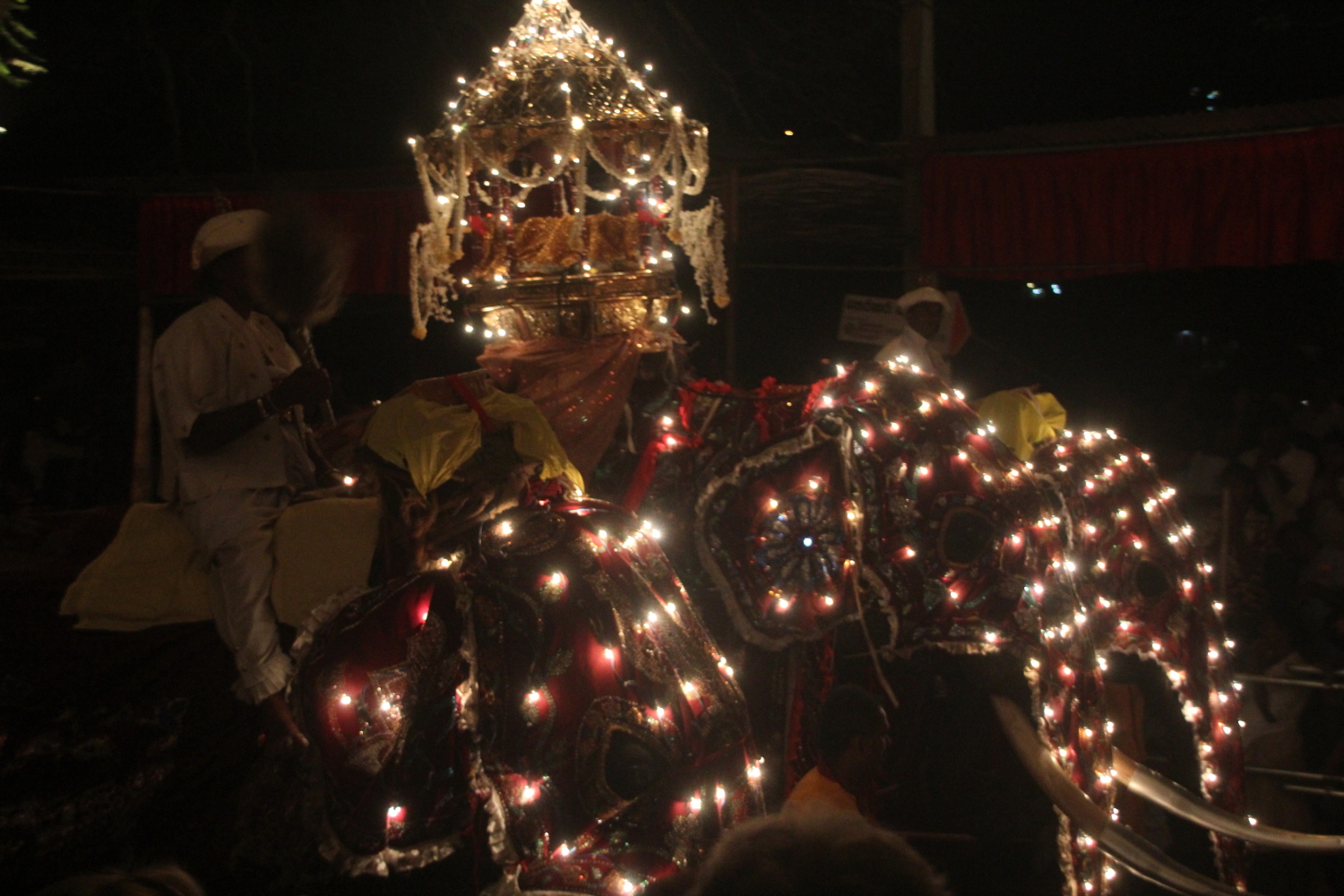
Three elephants, Kandy, Sri Lanka
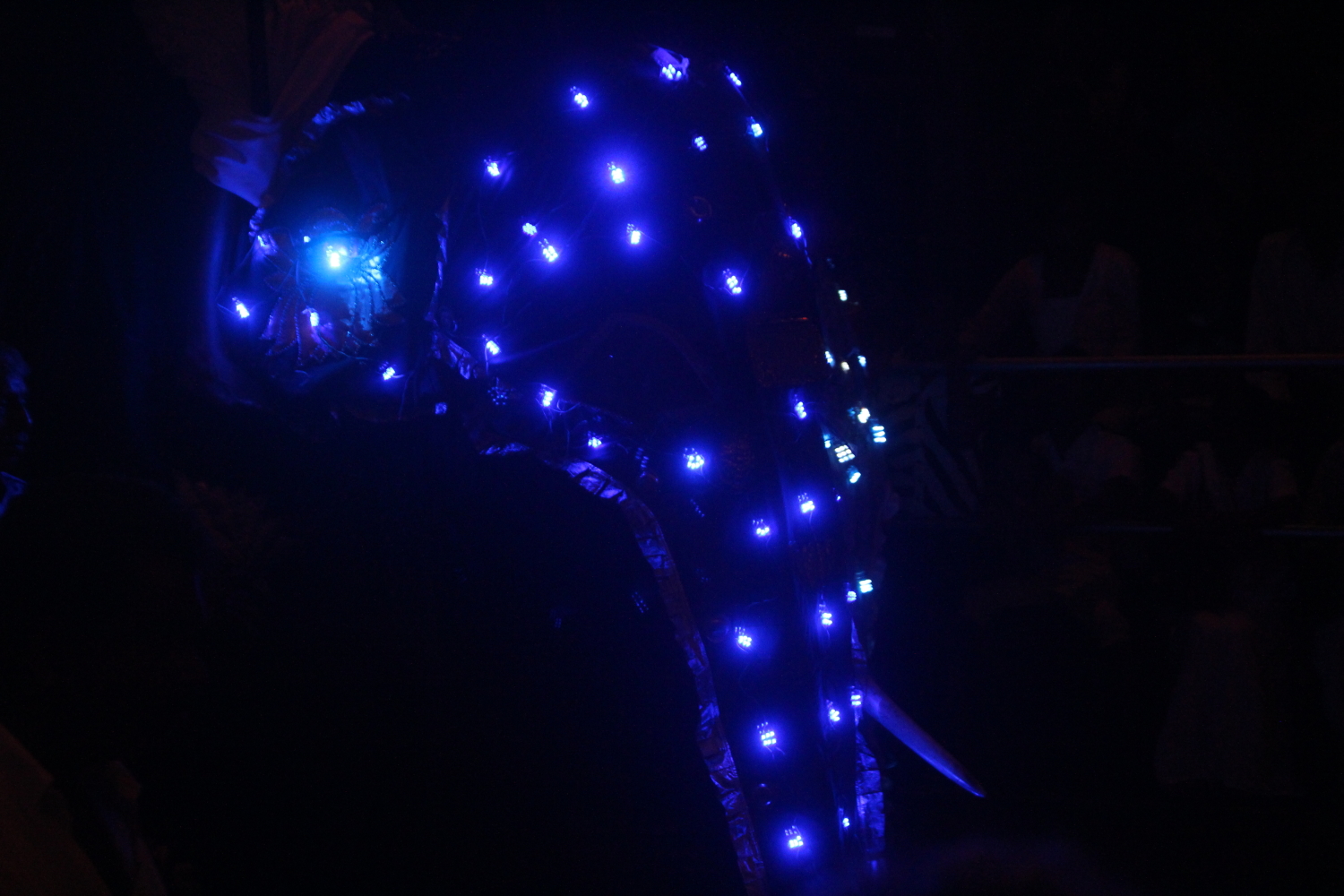
A single “tusker,” Kandy, Sri Lanka
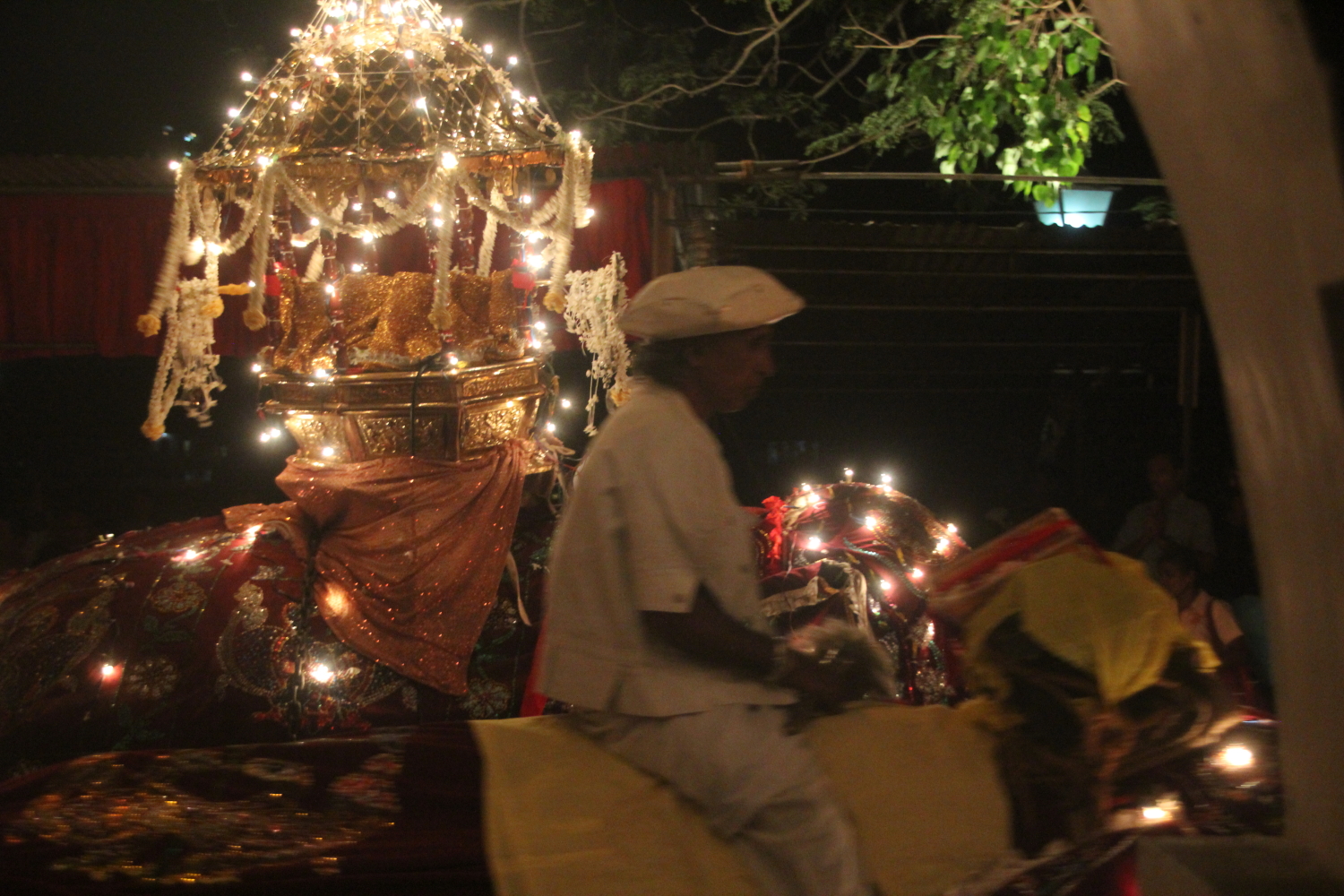
Esala Perahera, Kandy, Sri Lanka
After the festival
A: My trip to Sri Lanka was timed so that I could observe it first hand. Here is a description from the “Insight Guide to Sri Lanka:”
The lunar month of Esala is a month for festivals and peraheras all around the island. Easily the finest and the most famous is the Esala Perahera held at Kandy over the ten days leading up to the Esala Poya (full moon) day (late July or early August). The festival dates back to ancient Anuradhapura, when the Tooth Relic (of the Buddha) was taken through the city in procession, and the pattern continues to this day, with the relic carried at the head of an enormous procession which winds its way round and round the city by night. The perahera becomes gradually longer and more lavish over the 10 days of the festival, until by the final night it has swollen to include a cast of hundreds of elephants and thousands of dancers, drummers, fire-eaters, acrobats, and many others – an extraordinary sight without parallel anywhere else in Sri Lanka, if not the whole of Asia.
I would go further and add that the Esala Perahera is one of the world’s great festivals. Who could ever imagine such a spectacle? It may be a cliché to say it, but travel is ultimately the best education.
Comments are welcome!


 barbararachkoscoloreddust.com