Blog Archives
Pearls from artists* # 91
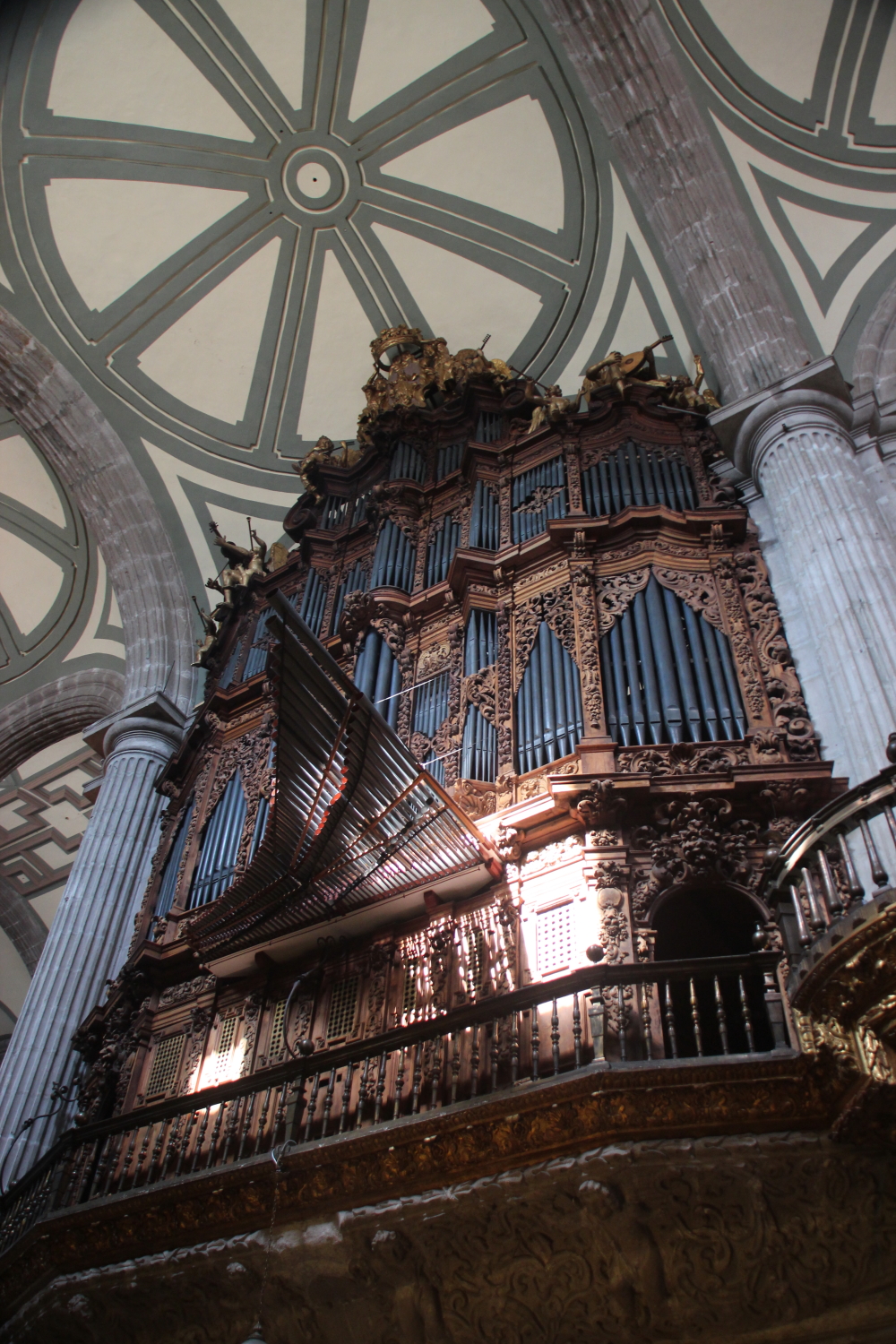
Mexico City
* an ongoing series of quotations – mostly from artists, to artists – that offers wisdom, inspiration, and advice for the sometimes lonely road we are on.
I’m struggling a lot financially, struggling a lot to keep my group going, struggling to keep going in every way, but I feel like I try so hard because every time that I’m able to go to a college or to be with young people they need to know that there is this “anything is possible” idea. They need to at least see that. I intend to continue nevertheless. Somehow that seems very important right now. It isn’t that you go to school just to find out everything you need to get a job or something. We never thought of what we did as a job. We thought of it as our work, our life. Then there was a certain point, I think, in the eighties where people thought of their identity as this and then what you did was a job. There was a separation between the two things.
I pray that now there will be some loosening and we’ll feel this sense of, just as you said so beautifully, space and breath. No one’s breathing. That’s why I feel that doing art is so important. It makes you dig in your heels even more. It’s a life-and-death kind of thing. What is the other alternative? The other alternative is that you’re living in a culture that’s basically trying to distract you from the moment. It’s trying to distract you from your life. It’s trying to distract you from who you are, and it’s trying to numb you, and it’s trying to make you buy things. Now, I don’t really think that that’s what life is about. I’m excited because now I have this real sense that there’s this counterculture, you could say, or counter-impulse. it’s not for-and-against, but there is a kind of dialectic where there’s a kind of resistance you can actually hit against, or at least address in one way or the other.
Meredith Monk quoted in Conversations with Anne: Twenty-four Interviews, by Anne Bogart
Comments are welcome!
Pearls from artists* # 79
Negombo, Sri Lanka
* an ongoing series of quotations – mostly from artists, to artists – that offers wisdom, inspiration, and advice for the sometimes lonely road we are on.
“What’s to say? Great paintings – people flock to see them, they draw crowds, they’re reproduced endlessly on coffee mugs and mouse pads and anything-you-like. And, I count myself in the following, you can have a lifetime of perfectly sincere museum-going where you traipse around enjoying everything and then go out and have some lunch. But … if a painting really works down in your heart and changes the way you see, and think, and feel, you don’t think, ‘oh, I love this picture because it’s universal.’ ‘I love this painting because it speaks to all mankind.’ That’s not the reason anyone loves a piece of art. It’s a secret whisper from an alleyway. Psst, you. Hey, kid. Yes, you.” Fingertip gliding over the faded-out photo – the conservator’s touch, a-touch-without-touching, a communion wafer’s space between the surface and his forefinger. “An individual heart-shock. Your dream … Vermeer’s dream. You see one painting, I see another, the art book puts it at another remove still, the lady buying the greeting card at the museum shop sees something else entire, and that’s not even to mention the people separated from us by time – four hundred years before us, four hundred years after we’re gone – it’ll never strike anybody the same way and the great majority of people it’ll never strike in any deep way at all – a really great painting is fluid enough to work its way into the mind and heart through all kinds of different angles, in ways that are unique and particular. Yours, yours. I was painted for you… fateful objects. Every dealer and antiquaire recognizes them. The pieces that occur and recur. Maybe for someone else, not a dealer, it wouldn’t be an object. It’d be a city, a color, a time of day. The nail where your fate is liable to catch and snag.”
Donna Tartt in The Goldfinch
Comments are welcome!
Q: What’s the point of all of this? Shouldn’t we be discussing how to end poverty or promote world peace? What can art do?
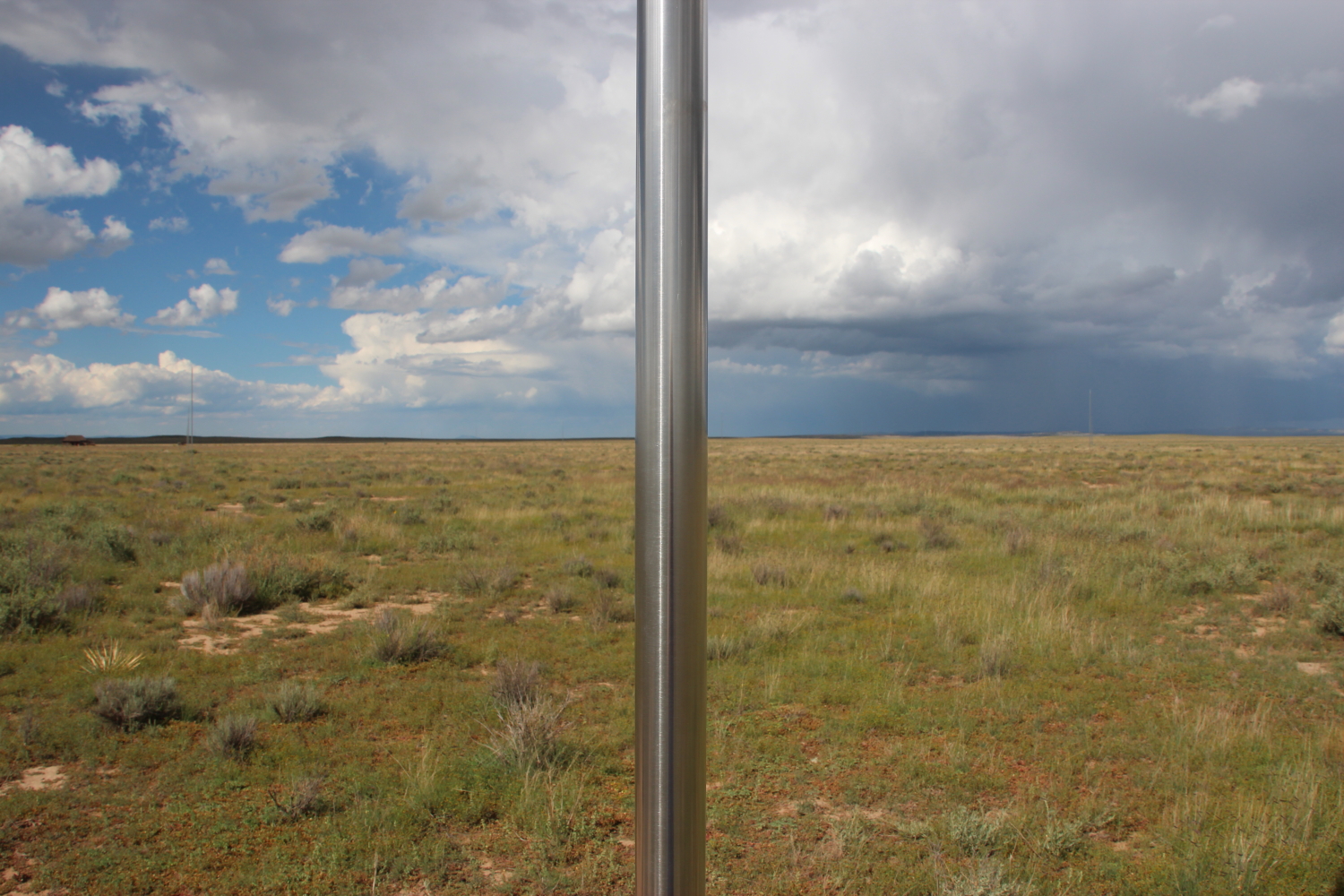
Lightning Field, Quemado, NM
A: I happen to recently have read an inspiring book by Anne Bogart, the theater director. It’s called, “and then you act: making art in an unpredictable world” and she talks about such issues. I’ll quote her wise words below:
“Rather than the experience of life as a shard, art can unite and connect the strands of the universe. When you are in touch with art, borders vanish and the world opens up. Art can expand the definition of what it means to be human. So if we agree to hold ourselves to higher standards and make more rigorous demands on ourselves, then we can say in our work, ‘We have asked ourselves these questions and we are trying to answer them, and that effort earns us the right to ask you, the audience, to face these issues, too.’ Art demands action from the midst of the living and makes a space where growth can happen.
One day, particularly discouraged about the global environment, I asked my friend the playwright Charles L. Mee, Jr., ‘How are we supposed to function in these difficult times? How can we contribute anything useful in this climate?’ ‘Well,’ he answered, ‘You have a choice of two possible directions. Either you convince yourself that these are terrible times and things will never get better and so you decide to give up, or, you choose to believe that there will be a better time in the future. If that is the case, your job in these dark political and social times is to gather together everything you value and become a transport bridge. Pack up what you cherish and carry it on your back to the future.'”
“… In the United States, we are the targets of mass distraction. We are the objects of constant flattery and manufactured desire. I believe that the only possible resistance to a culture of banality is quality. To me, the world often feels unjust, vicious, and even unbearable. And yet, I know that my development as a person is directly proportional to my capacity for discomfort. I see pain, destructive behavior and blindness of the political sphere. I watch wars declared, social injustices that inhabit the streets of my hometown, and a planet in danger of pollution and genocide. I have to do something. My chosen field of action is the theater.”
Comments are welcome!
Q: Have you ever worked outside?

Reproductions of “Cardinal Rule” (top) and “Blue Ego,” originals are soft pastel on sandpaper, 30″ x 38″
A: As a pastel artist I’ve never worked outside – with so many pastels, it’s just not practical – but early on in the “Domestic Threats” series, I created two outdoor setups. Works in the series derived from elaborate scenes that I arranged and then photographed.
I used to take long walks along the Potomac River in Alexandria, VA, and there was a tree stump that was fascinating. It was mostly twisted roots, knotty branches, dark hidden spaces, etc. (top painting in photo). One morning I took several hand puppets and stuffed animals (my subject matter at the time) and carefully arranged them on the tree. Around me people were busy exercising their dogs. Soon I attracted quite a bit of attention – a tall blonde woman playing with puppets on a tree stump! Dogs came over to sniff. Their owners came over, too, and I was pressed into explaining, again and again, that I was an artist, that I was photographing this scene so I could paint it, etc. The interruptions were very annoying.
The second time I tried an outdoor setup was again along the Potomac River, but this time I selected a secluded strip of beach where I was undisturbed. I had forgotten to consider the light and inadvertently chose a cloudy day. I remember being disappointed that the light was flat and lacking shadows. The painting (bottom in photo) turned out to be one of my least favorites.
I resolved from then on to focus on interiors. Alfred Hitchcock famously used rear projection so that he could work in a studio rather than on location. One reason, he said, was that in a studio he had total control. I know what he meant. When I set up an interior scene and position the lights to make interesting shadows, indeed, I have control over the whole look. No aspect is left to chance. The accidents – improvements! – happen later when I work on the painting.
Comments are welcome!
Pearls from artists* # 38
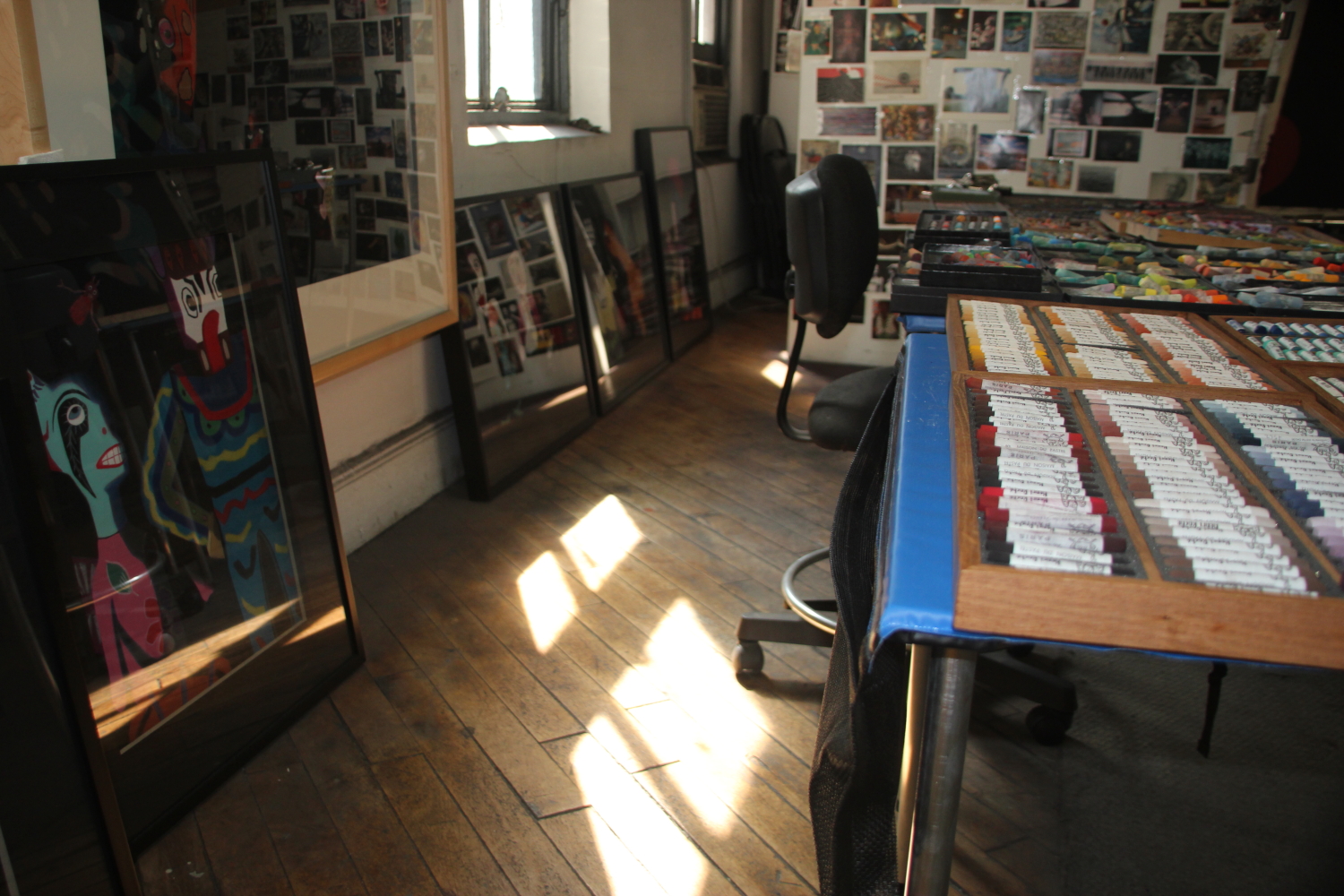
Morning sun at the studio
* an ongoing series of quotations – mostly from artists, to artists – that offers wisdom, inspiration, and advice for the sometimes lonely road we are on.
It’s one thing to be intelligent and it’s another to enjoy thinking, to relish the time spent alone with one’s thoughts, to happily muse, imagine, and analyze. Artists, who are introspective by nature, typically enjoy spending time in this fashion and may even prefer solitude to the company of others. Able to work by themselves, artists are often lost in a state of dreamy thoughtfulness of the sort described by the painter Hans Hofmann when he wrote, ” The first red spot on a white canvas may at once suggest to me the meaning of ‘morning redness,’ and from there I dream further with my color.” Artists are not introspective, thoughtful, lost in time and space because they wish to ignore the world. They’re introspective because out of that attitude artistic answers flow.
Eric Maisel in A Life in the Arts
Comments are welcome!
Pearls from artists* # 29
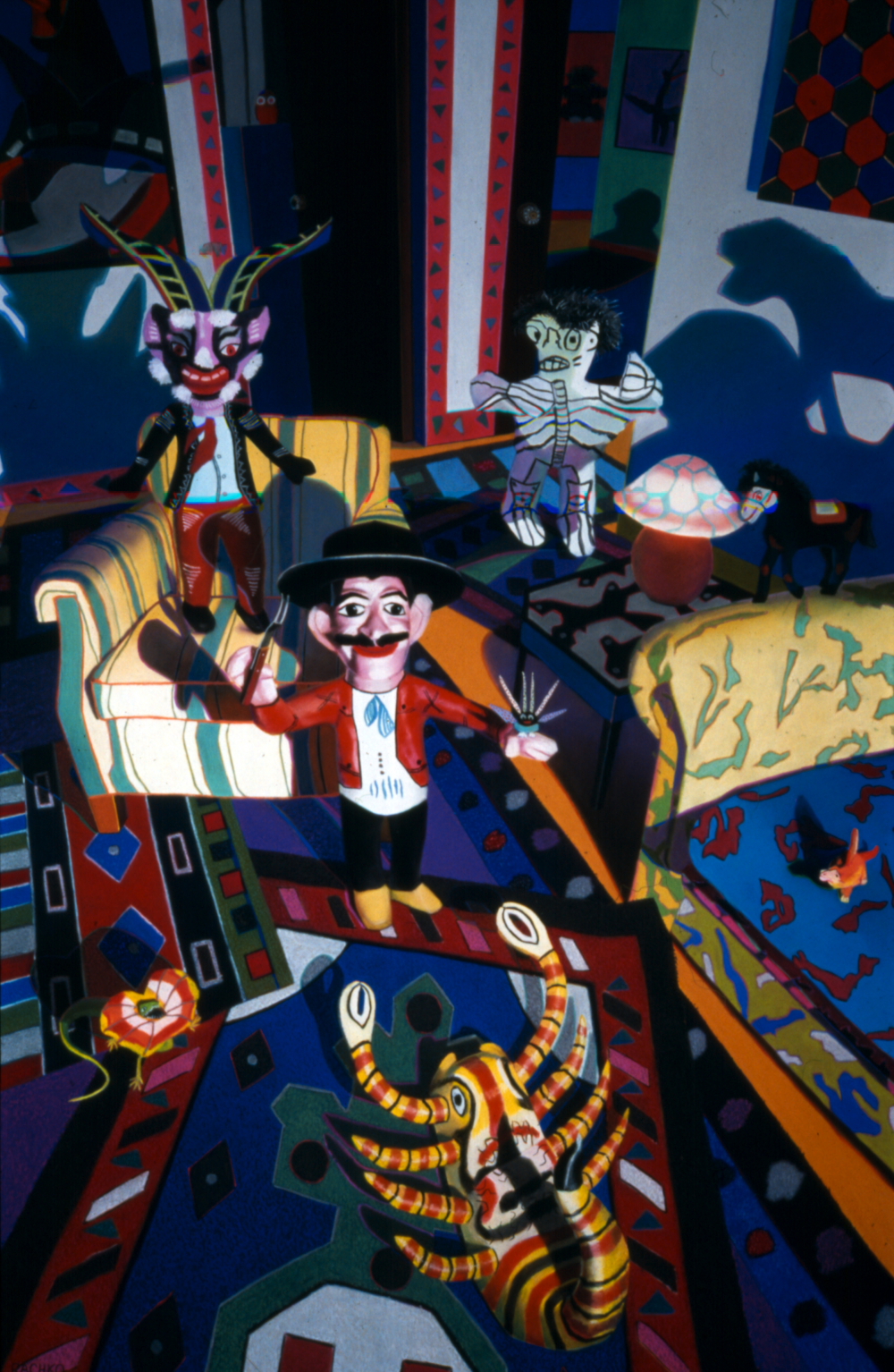
“He Just Stood There Grinning,” soft pastel on sandpaper, 58″ x 38″
* an ongoing series of quotations – mostly from artists, to artists – that offers wisdom, inspiration, and advice for the sometimes lonely road we are on.
And all the spaces of our past moments of solitude, the spaces in which we have suffered from our solitude, enjoyed, desired, and compromised solitude, remain indelible within us, and precisely because the human being wants them to remain so. He knows instinctively that this space identified with his solitude is creative; that even when it is forever expunged with the present, when, henceforth, it is alien to all the promises of the future, even when we no longer have a garret, when the attic is lost and gone, there remains the fact that we once loved a garret, once lived in an attic. We return to them in our night dreams. These retreats have the value of a shell. And when we reach the very end, the labyrinths of sleep, when we attain to the regions of deep slumber, we may perhaps experience a type of repose that is pre-human; pre-human, in this case, approaching the immemorial. But in the daydream itself, the recollection of moments of confined, simple, shut-in space are experiences of heartwarming space, of a space that does not seek to become extended, but would like above all to be possessed. In the past, the attic may have seemed too small, it may have seemed cold in winter and hot in summer. Now, however, in memory recaptured through daydreams, it is hard to say through what syncretism the attic is at once small and large, warm and cool, always comforting.
Gaston Bachelard in The Poetics of Space
Comments are welcome!
Q: Can you talk about the studios you have worked in over the years?

Studio entrance
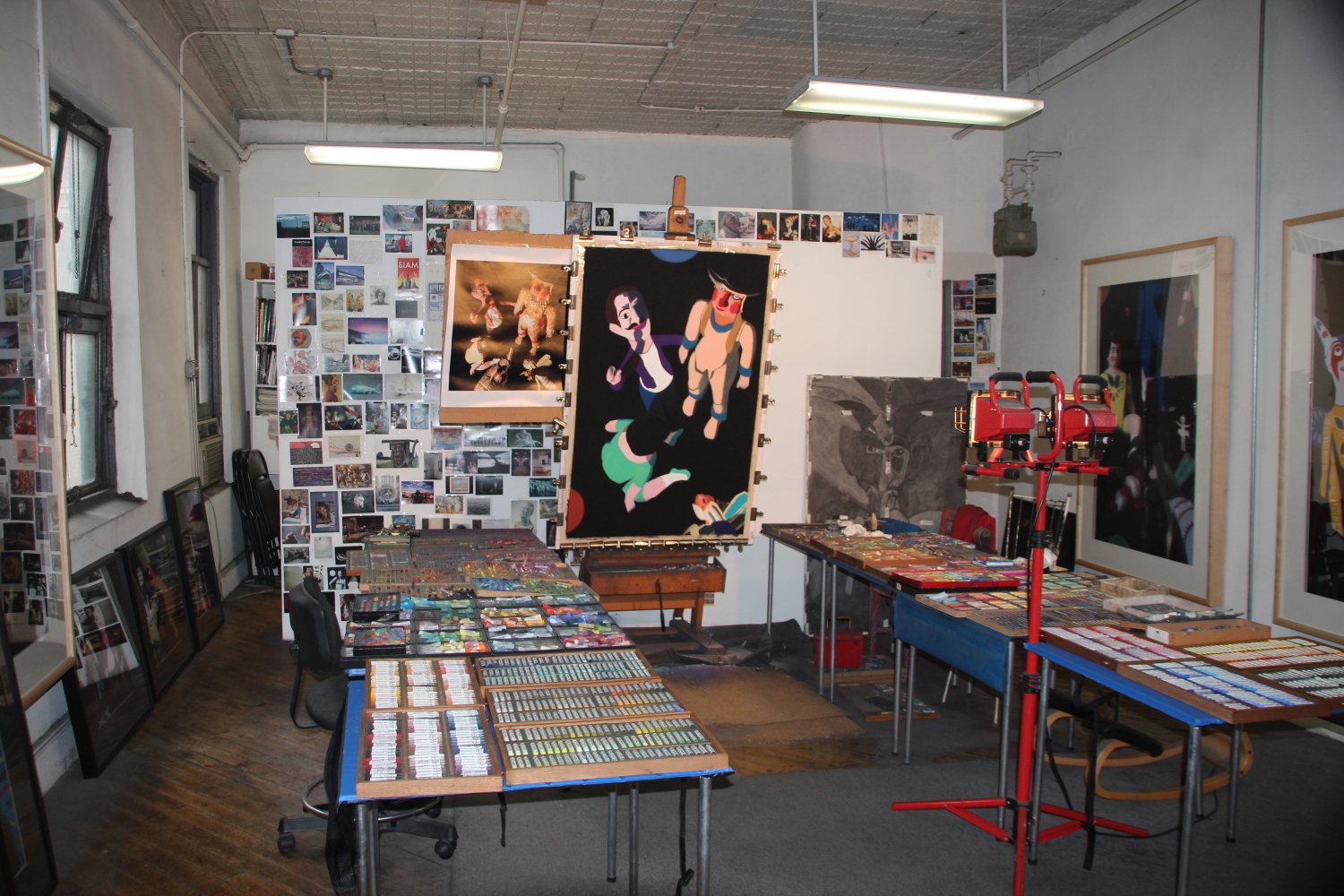
A: From the beginning in the mid-1980’s I had a studio. My first one was in the spare bedroom of the Alexandria, Virginia, house that I shared with Bryan and that I still own. For about three years in the 1990s I had a studio on the third floor of the Torpedo Factory Art Center, a building in Alexandria that is open to the public; people come in and watch the artists work. In 1997 an opportunity to move to New York arose and I didn’t look back. By then I was showing in a good 57th Street gallery, Brewster Arts Ltd. (the gallery focused exclusively on Latin American artists; I was thrilled with the company I was in; the only fellow non-Latina represented by owner, Mia Kim, was Leonora Carrington), and I had managed to find a New York agent, Leah Poller, with whom to collaborate. I looked at one other space before finding my West 29th Street studio, where I still work. It was and continues to be my oasis in a chaotic city, a place to make art, to read, and to think. I feel more calm the moment I walk in.
Comments are welcome!


 barbararachkoscoloreddust.com