Blog Archives
Pearls from artists* # 685
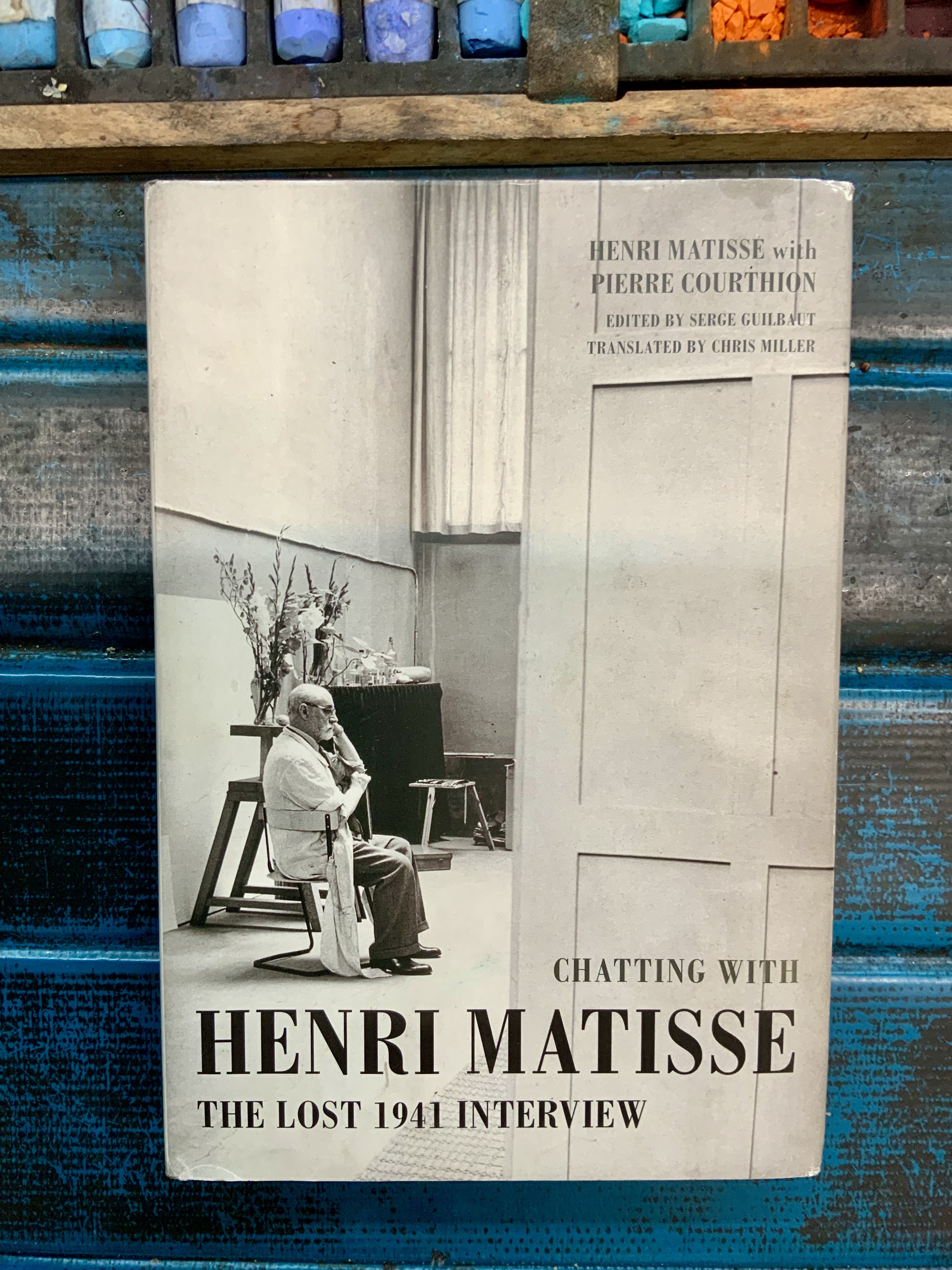
Another of my favorite books!
*an ongoing series of quotations – mostly from artists, to artists – that offers wisdom, inspiration, and advice for the sometimes lonely road we are on.
HM: The great benefit I took from visits with Renoir was realizing that even after a long working life, an artist’s curiosity could remain unquenched. The hope of some further progress, something to be added to his œuvre, was what kept Renoir alive. He was painting a “bathing” picture (now, finally, in the Musée du Louvre) and doing it with some difficulty because the picture was quite big and Renoir’s hands weren’t very nimble. But it’s only now, when I think about it, that I realize he must have found it hard; it would never occur to you when you saw him at his canvas – there was such intellectual urgency about everything he did.
Another big lesson I learned from visiting Renoir was that this man, riddled with pain and infirmity – his legs were so stiff he couldn’t walk a single step – could still be happy working and talking about his work. When you were with him for a while and he’d warmed to the conversation, you hadn’t the least sense that you were talking to an old man; his eyes were so full of life and intelligence that you forgot his age.
Henri Matisse in Chatting With Matisse: The Lost 1941 Interview, Henri Matisse with Pierre Courthion, edited by Serge Guilbault
Comments are welcome!
Pearls from artists* # 670

*an ongoing series of quotations – mostly from artists, to artists – that offers wisdom, inspiration, and advice for the sometimes lonely road we are on.
I’ve had to keep defining and defending myself as a writer every single day of my adult life – constantly reminding and re-reminding my soul and the cosmos that I’m very serious about the business of creative living, and that I will never stop creating, no matter what the outcome, and no matter how deep my anxieties and insecurities may be.
Over time I’ve found the right tone of voice for these assertions, too. It’s best to be insistent, but affable. Repeat yourself, but don’t get shrill. Speak to your darkest and most negative interior voices the way a hostage negotiator speaks to a violent psychopath: calmly, but firmly. Most of all, never back down. You cannot afford to back down. The life you are negotiating to save, after all, is your own.
Elizabeth Gilbert in Big Magic: Creative Living Beyond Fear
Comments are welcome!
Q: You use so many pastels in your work. Do you have a favorite?

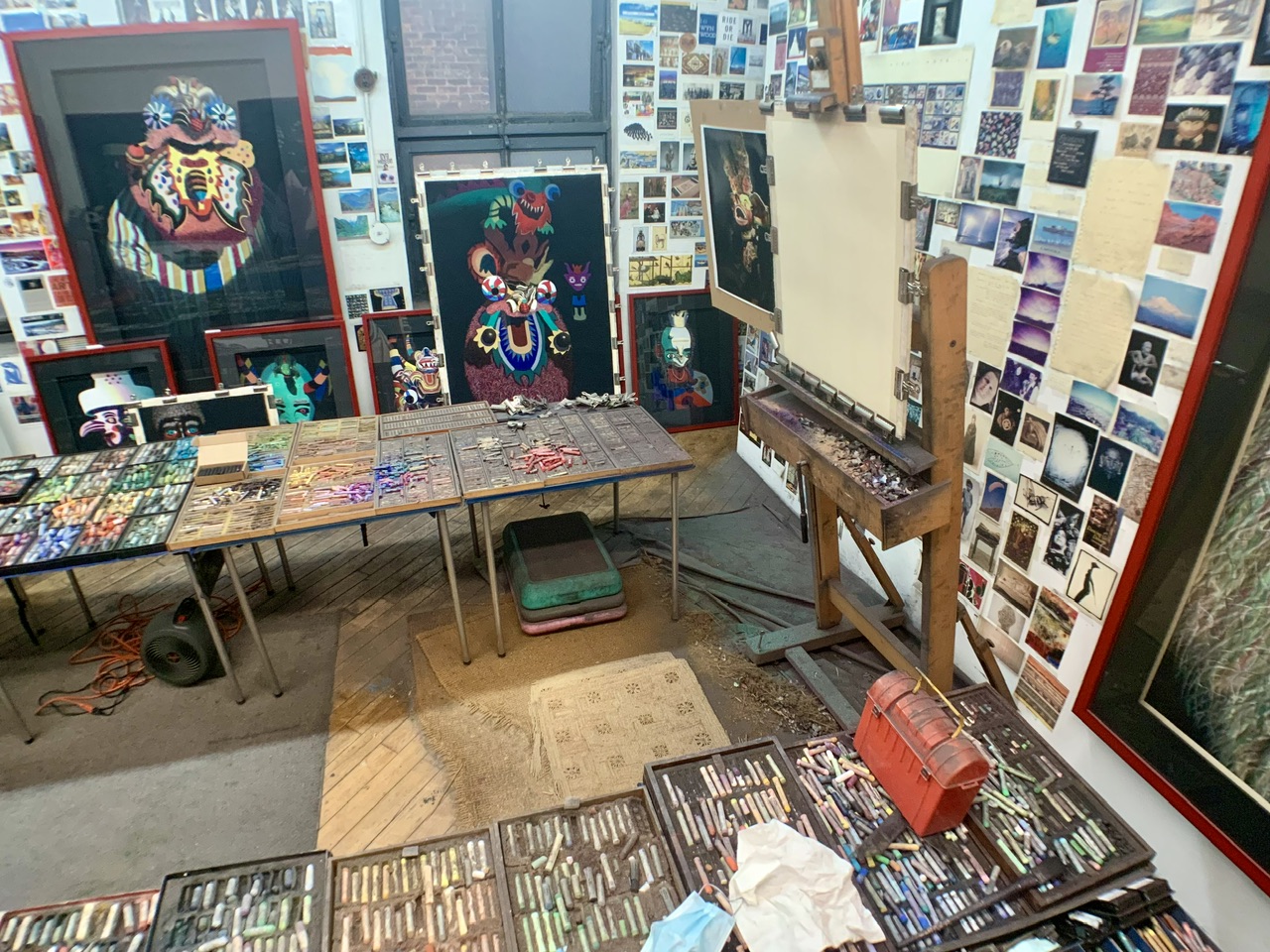
Barbara’s Studio
A: When people ask if I have a favorite pastel among the thousands in my studio, I am quick to answer, “Rembrandt black pastel!” This is the single color that I use the most. I buy them by the dozens because it takes many layers of pigment – applied and hand-blended together, one on top of the other, on sandpaper – to achieve the intense black backgrounds that distinguish my “Bolivianos” series of pastel paintings. Typically, I use up a minimum of two or three Rembrandt pastels to create these backgrounds. A few years ago one New York art critic cleverly dubbed them, “Barbara’s black-grounds.” How cool is that!
Comments are welcome!
Q: Did you formally study art? (Question from “Cultured Focus Magazine”)

A: My bachelor’s degree in Psychology is from the University of Vermont. I did not formally study art, unless you want to count the several years-worth of drawing and painting classes I took at the Art League School in Alexandria, VA. I never went to art school so do not have a bachelor’s or master’s degree in art.
Much later, in the early 2000s, I was compelled to study photography at the International Center of Photography in New York. This is a rather long story.
On September 11, 2001, my husband Bryan Jack, a high-ranking federal government employee, a brilliant economist and a budget analyst at the Pentagon, was on his way to present his monthly guest lecture in economics at the Naval Postgraduate College in Monterey, CA. He was a passenger on the plane that departed from Dulles Airport and was high-jacked and crashed into the Pentagon.
Losing Bryan on 9/11 was the biggest shock of my life, devastating in every way imaginable. We were soulmates and newly married. I have lived with his loss every single day for more than twenty years now. Life has never been the same.
In the summer of 2002 I was beginning to feel ready to get back to work. Learning about photography and cameras became essential avenues to my well-being.
My first challenge was learning how to use Bryan’s 4 x 5 view camera. Bryan had always taken the 4 x 5 negatives from which I derived the reference photos that were essential tools for making pastel paintings. I enrolled in a one-week view camera workshop at the International Center of Photography in New York. Surprisingly, it was very easy. I had derived substantial technical knowledge just from watching Bryan for many years.
After the view camera workshop, I decided to throw myself into learning this new medium, beginning with Photography I. I spent the next few years taking many classes at ICP and learning as much as I could. Eventually, I learned how to use Bryan’s extensive collection of film cameras, to properly light the setups that served as subject material for my “Domestic Threats” pastel paintings, and to make my own large chromogenic prints in a darkroom.
Then in October 2009 I was invited to present a solo photography exhibition at a gallery in New York. Continuing to make art after Bryan’s death had seemed like such an impossibility. I remember thinking how proud he would have been to know I became a good photographer.
Comments are welcome!
Pearls from artists* # 618

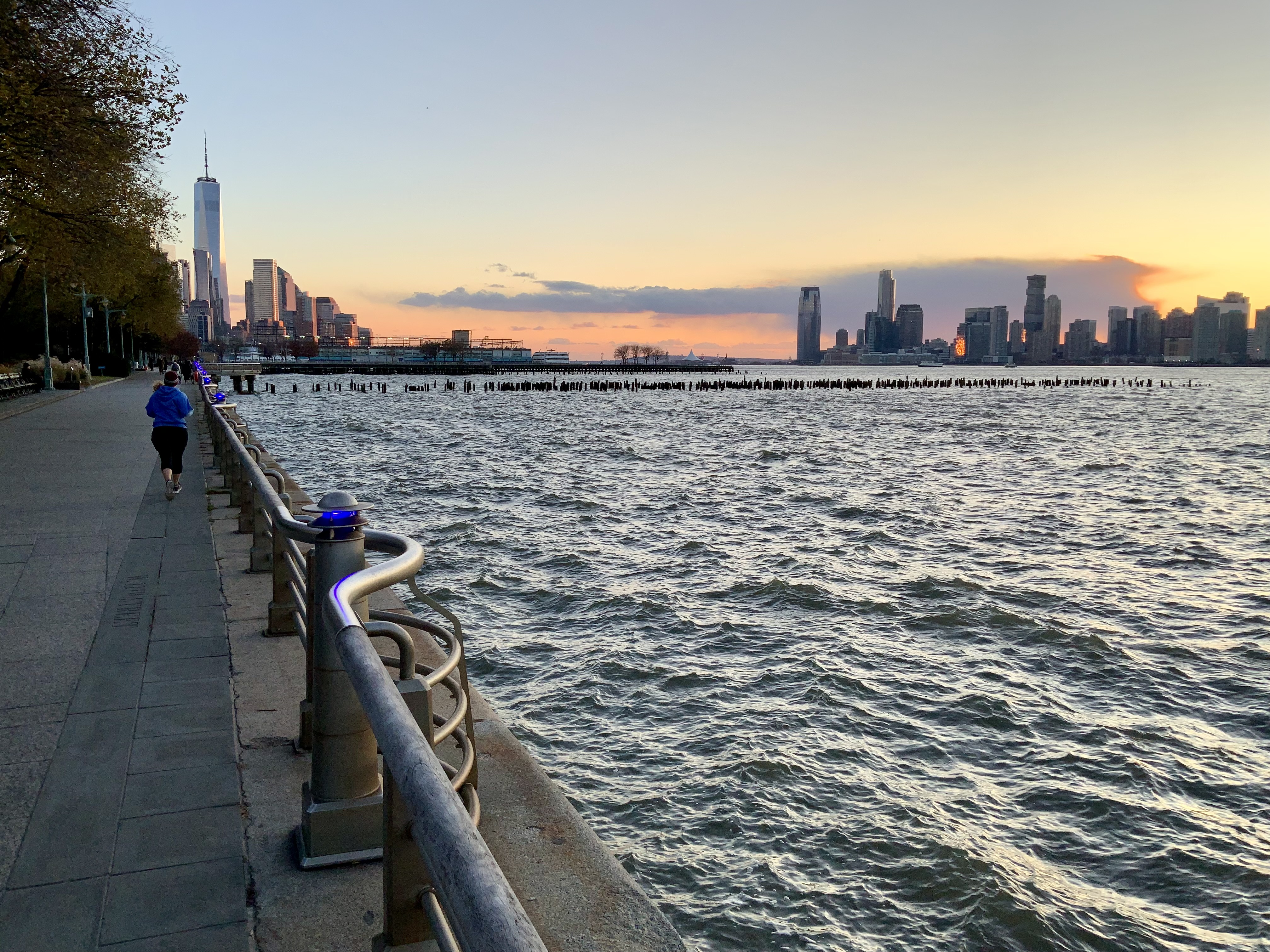
Lower Manhattan
*an ongoing series of quotations – mostly from artists, to artists – that offers wisdom, inspiration, and advice for the sometimes lonely road we are on.
Today, instead of one voice, we have dozens issuing demands. There is no longer one truth, no single authority – instead there is a score of would-be masters who would usurp their place. All are full of histories, statistics, proofs, demonstrations, facts, and quotations. First they read and exhort, and finally they resort to intimidation by threats and moral imprecations. Each pulls the artist this way and that, telling him what he must do if he is to fill his belly and save his soul.
Mark Rothko in The Artists’ Reality: Philosophies of Art
Comments are welcome!
Pearls from artists* # 616
*an ongoing series of quotations – mostly from artists, to artists – that offers wisdom, inspiration, and advice for the sometimes lonely road we are on.
This may be the most important piece of advice I can give you: The Internet is nothing like a cigarette break. If anything, it’s the opposite. One of the most difficult practical challenges facing writers in this age of connectivity is the fact that the very instrument on which most of us write is also a portal to the outside world. I once heard Ron Carlson say that composing on a computer is like writing in an amusement park. Stuck for a nanosecond? Why feel it? With the single click of a key we can remove ourselves and take a ride on a log flume instead.
By the time we return to work – if, indeed, we return to our work at all – we will be further away from our deepest impulses rather than closer to them. Where were we? Oh, yes. We were stuck. We were feeling uncomfortable and lost. We have gained nothing in the way of waking-dream time. Our thoughts have not drifted, but rather, have ricocheted from one bright and shiny thing to another.
Dani Shapiro in Still Writing: The Perils and Pleasures of a Creative Life
Comments are welcome!
Pearls from artists* # 613
New York NY
*an ongoing series of quotations – mostly from artists, to artists – that offers wisdom, inspiration, and advice for the sometimes lonely road we are on.
A painting is a statement of the artist’s notions of reality in terms of plastic speech. In that sense the painter must be likened to the philosopher rather than to the scientist. For science is a statement of the laws that govern a specific phenomenon or category of matter or energy within the specified units and conditions of its operation. Philosophy, however, must combine all these specialized truths within a single system. It is because of this broad scope that Aristotle gives preeminence to the philosopher in the introduction to his Metaphysics, for he tells us that every man except the philosopher is an authority within his specific field, whereas the philosopher must have the acute knowledge that each man has in his own field plus the ability to relate all these fields to the operations of universality and eternity.
Therefore art, like philosophy, is of its own age; for the partial truths of each age differ from those of other ages, and the artist, like the philosopher, must constantly adjust eternity, as it were, to all the specifications of the moment. Art, too, creates at different times the notions of reality that the artist, as a man of the age, must inherit and develop and consider real along with the other intellectually conscious men of his time. His language, which is his plastic means, will also adjust itself to the possibility of making these notions manifest in their most coherent possibilities. The reality of the artist, therefore, reflects the understanding of his times, even as his creations shape those understandings. We posit this without wishing to attempt to untangle here the series of causes and effects, a process which would probably obscure more than it certified.
Mark Rothko in The Artist’s Reality: Philosophies of Art
Comments are welcome!
Q: Love your selection of pastels! Do you have favorites that you need to force yourself not to continually return to? (Question from Donina Asera via Facebook)

A: No, I don’t think so. Certainly, I do have general preferences. I prefer dark, vivid, intense colors so many of my pale pastels go mostly unused. The single pastel that I use most is Rembrandt black – I buy them buy the dozens – because it takes many layers of pigment to achieve my dark black backgrounds. Otherwise, I strive to be open to whatever the painting needs. My goal – always! – is to make a pastel painting that is exciting to look at and different from anything I have created before.
Thank you very much for the great question!
Comments are welcome!
Q: There are so many instances in the art world where paintings are discovered to be fakes. Do you think this is a potential problem where your work is concerned? Can your pastel paintings be forged?


A: For the record, a little-appreciated fact about my pastel-on-sandpaper paintings is that they can never be forged. To detect a fake, you would only need to x-ray them. If dozens of layers of revisions are not visible under the final pastel painting, you are not looking at an original Rachko, period.
My completed paintings are the results of thousands of decisions. They are the product of an extremely meticulous, labor-intensive, and self-invented process. This is the difference between spending months thinking about and creating a painting, as I do, or a single day. It’s highly doubtful that my rigorous creative process can EVER be duplicated.
Comments are welcome!
Pearls from artists* # 516
*an ongoing series of quotations – mostly from artists, to artists – that offers wisdom, inspiration, and advice for the sometimes lonely road we are on
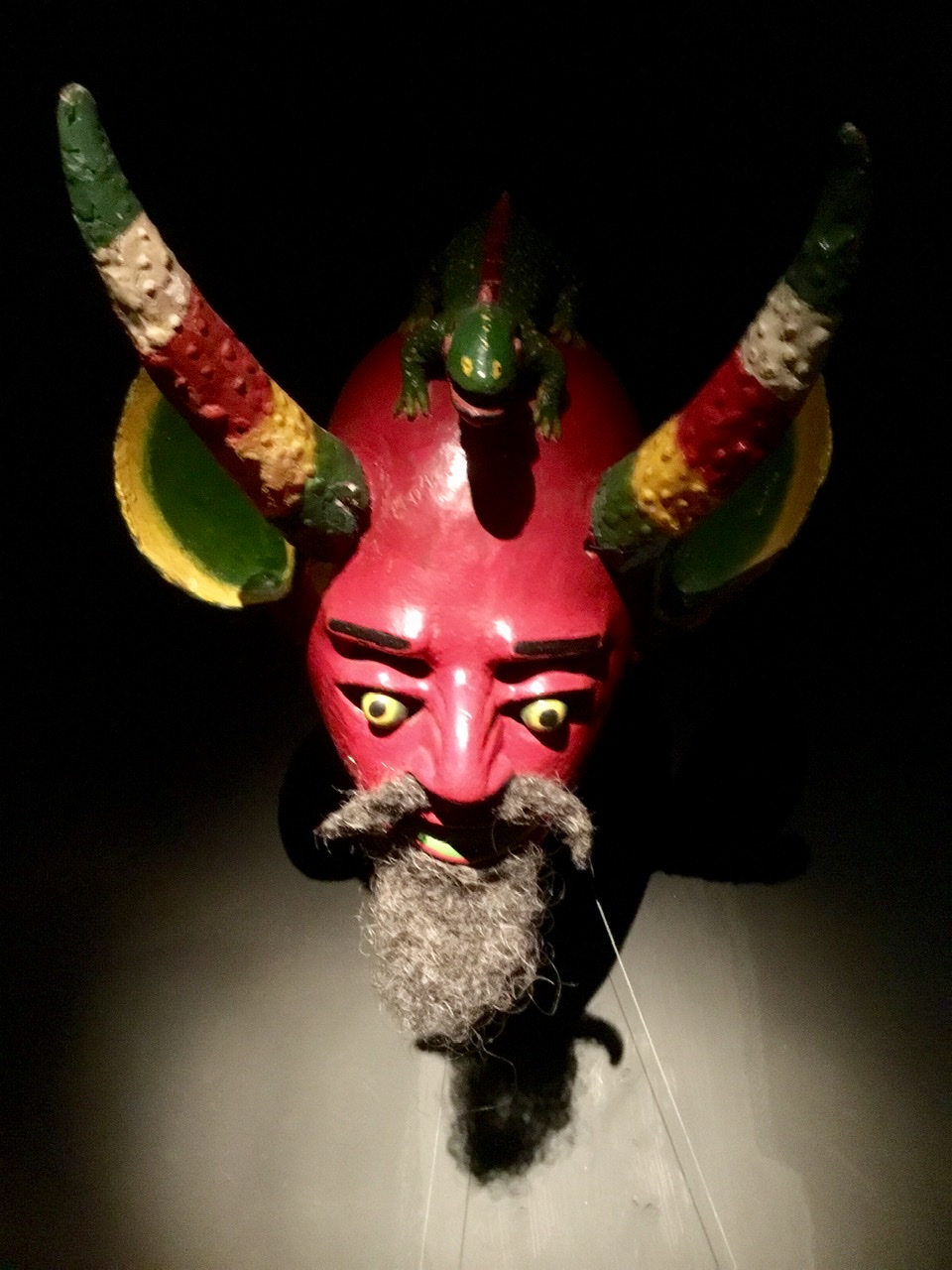
In Oruro, Bolivia, devotion to the Virgin del Socavon (Virgin of the Mineshaft) migrated from the fixed festival of Candlemas (2 February) to the movable feast of Carnival. By delaying their public devotion to the Virgin until the four-day holiday before Ash Wednesday, Oruro’s miners were able to enjoy a longer fiesta than if they had confined it to a single saint’s day. During Oruro’s Carnival, thousands of devils dance through the streets before unmasking in the Sanctuary of the Mineshaft to express devotion to the Virgin.
Evidently, the festive connotation of devils is not always demonic. In Manresa [Spain], the demons and dragons celebrate the restoration of liberty after a brutal civil war and subsequent dictatorship [General Francisco Franco]. In Oruro… the masked devils protest exploitation of indigenous miners by external forces and devote themselves to a Virgin who blesses the poor and marginalized. Festive disorder generally dreams not of anarchy but of a more egalitarian order.
Max Harris in Carnival and other Christian Festivals: Folk Theology and Folk Performance
Comments are welcome!


 barbararachkoscoloreddust.com