Blog Archives

Pearls from artists* # 114

Catalogue of Matisse's late work

Catalogue of Matisse’s late work

* an ongoing series of quotations – mostly from artists, to artists – that offers wisdom, inspiration, and advice for the sometimes lonely road we are on.

These paper cut-outs have their very pure existence, although they escape from your hands, from your scissors.  Their paper matter with the fine play of light on their flexibility, the physical aspect of this flexibility, all combine to make something miraculous which loses its essence when it is placed flat.  But it retains its essence when it is fastened to the wall with pins by Lydia.  The paper then keeps the life I am talking about and undergoes incessant changes.

Matisse:  A Second Life, 2005 Editions Hazan, James Mayor translator of the English version

Comments are welcome!

Q: What does your creative process look like when you are ready to begin a new painting?


Preliminary sketch

Preliminary sketch

A:  My working methods have changed dramatically over the years with my current process being a much-simplified version of how I used to work.  In other words as I pared down my imagery in the “Black Paintings,” my process quite naturally pared down, too. 

One constant is that I have always worked in series with each pastel painting leading quite logically to the next.  Another is that I always have set up a scene, lit and photographed it, and worked with a 20″ x 24″ photograph as the primary reference material.  In the “Domestic Threats” series I shot with a 4″ x 5″ view camera.  Nowadays the first step is to decide which photo I want to make into a painting (currently I have a backlog of images to choose from) and to order a 19 1/2″ x 19 1/2″ image (my Mamiya 6 shoots square images and uses film) printed on 20″ x 24″ paper.  I get the print made at Manhattan Photo on West 20th Street in New York.  Typically I have in mind the next two or three paintings that I want to create.

Once I have the reference photograph in hand, I make a preliminary tonal charcoal sketch on a piece of white drawing paper.  The sketch helps me think about how to proceed and points out potential problem areas ahead.  For example, in the photograph above I had originally thought about creating a vertical painting, but changed to horizontal format after discovering spatial problems in my sketch.  

Also, I decided to make a small painting now because it has been two years since I last worked in a smaller (than my usual 38″ x 58″) size.  I am re-using the photograph on which “Epiphany” is based.  Using a photograph a second time lets me see how my working methods have evolved over time.     

Comments are welcome! 

Pearls from artists* # 89

* an ongoing series of quotations – mostly from artists, to artists – that offers wisdom, inspiration, and advice for the sometimes lonely road we are on.
Dear Diary:

On a drifty Manhattan stroll
The kind that unearths magical treasures
I made a right turn off of Houston
Onto Bowery
And as it became Third Avenue
I came upon this old art store
That creaked hello
Its warped wooden shelves
Held new paints
A little dusty from the old building
But whose colors were deeper
Than I’d ever seen before

And at the back of the store
Up a narrow stairway
Was a tiny room
And behind a long table stood three people
(Probably artists)
Who could get me any paper I desired
Paper with designs
To collage with
Hot press, cold press
100 gram, 600 gram paper
To draw and paint on
Any kind of paper I’d ever want
Templates from heaven

And over my right shoulder
Was a tall window
Overlooking the glorious city
That has held this little room
Tenderly in its arms
All these years

And as I hugged
My rolled up package of paper
And went back downstairs
The old stairs seemed to gently whisper
“Come back soon,
We’ll keep each other alive”

And stepping outside
Third Avenue seemed more spacious
And I took a deep breath
As the world
Kaleidoscoped
With possibilities
Lovingly wrapped up
By three kind artists
At the top of the world.

Art Supplies From Heaven, by Judith Ellen Sanders, published in “Metropolitan Diary,” NY Times, April 6, 2014

Comments are welcome!

Pearls from artists* # 54

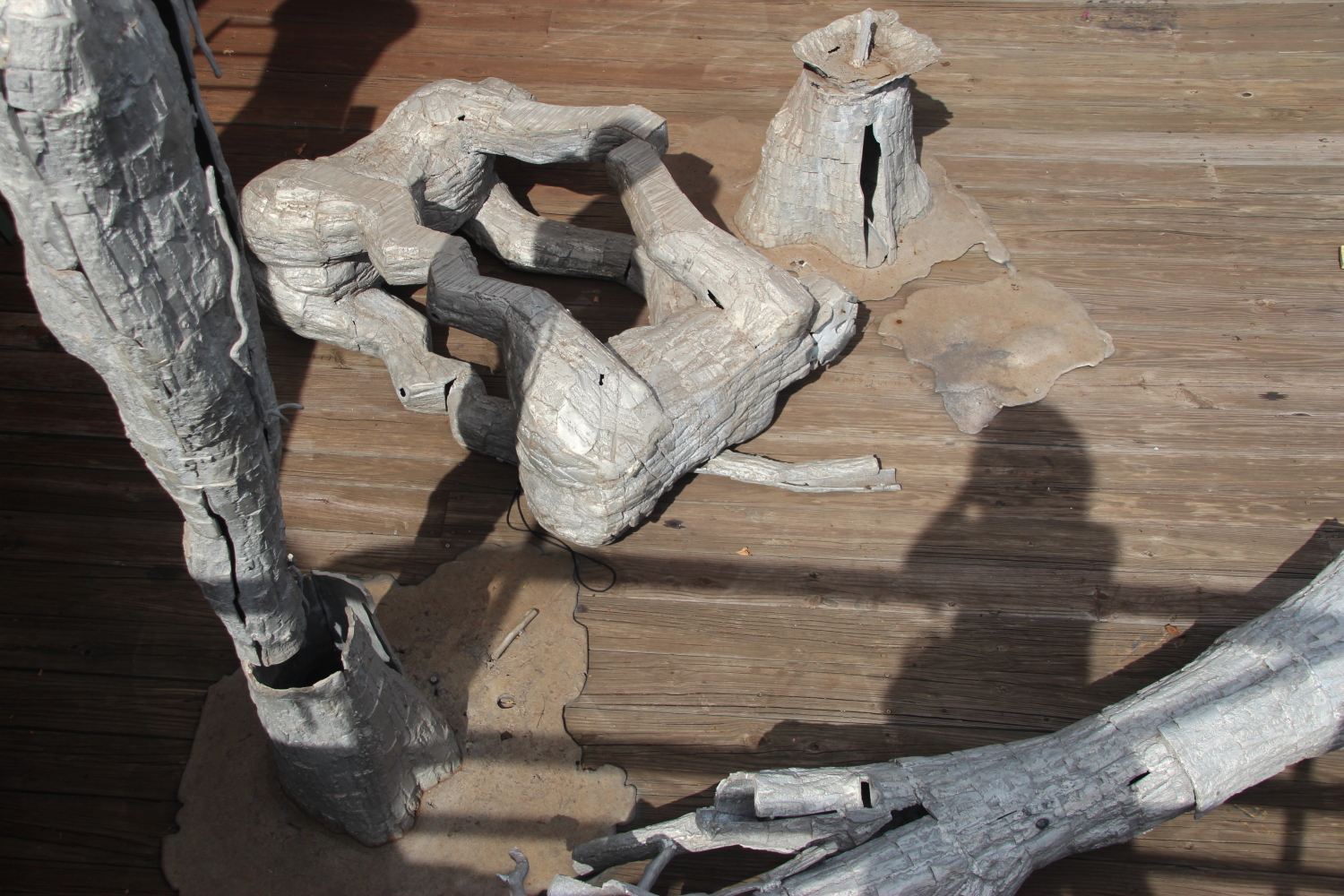
Pier 40, NYC

Pier 40, NYC

* an ongoing series of quotations – mostly from artists, to artists – that offers wisdom, inspiration, and advice for the sometimes lonely road we are on.

In the cemetery all the vultures began to circle, and the sky filled with birds.  It was then that I began my series of birds – many of my bird photos came from that moment.  All this is to say that in life everything is connected:  your pain and your imagination, which perhaps can help you forget reality.  It’s a way of showing how you connect what you live with what you dream, and what you dream with what you do, and this is what remains on paper…

Graciela Iturbide in Eyes to Fly With

Comments are welcome! 

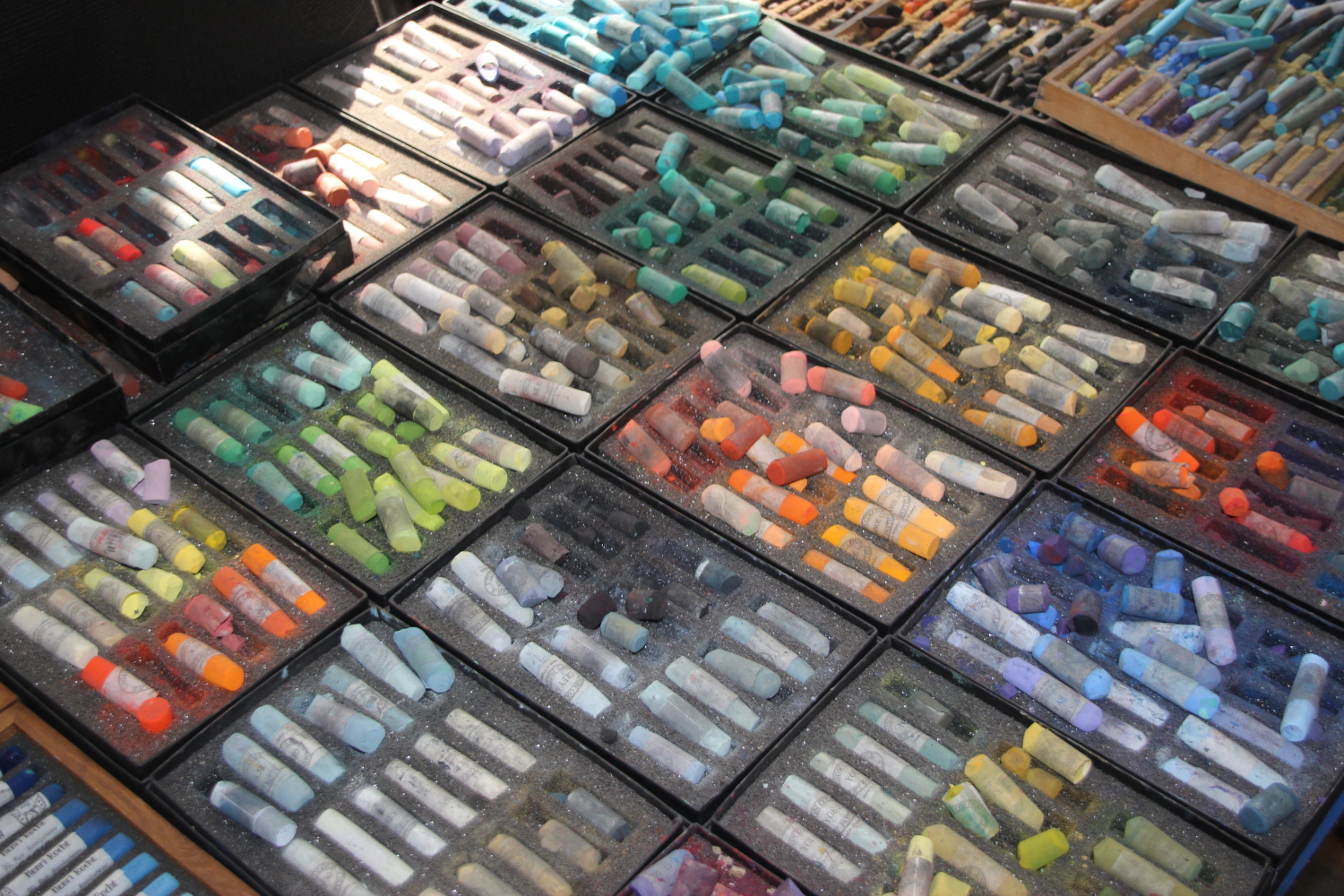
Q: What is it about soft pastel that you find so intriguing that you use it as your primary fine art medium?

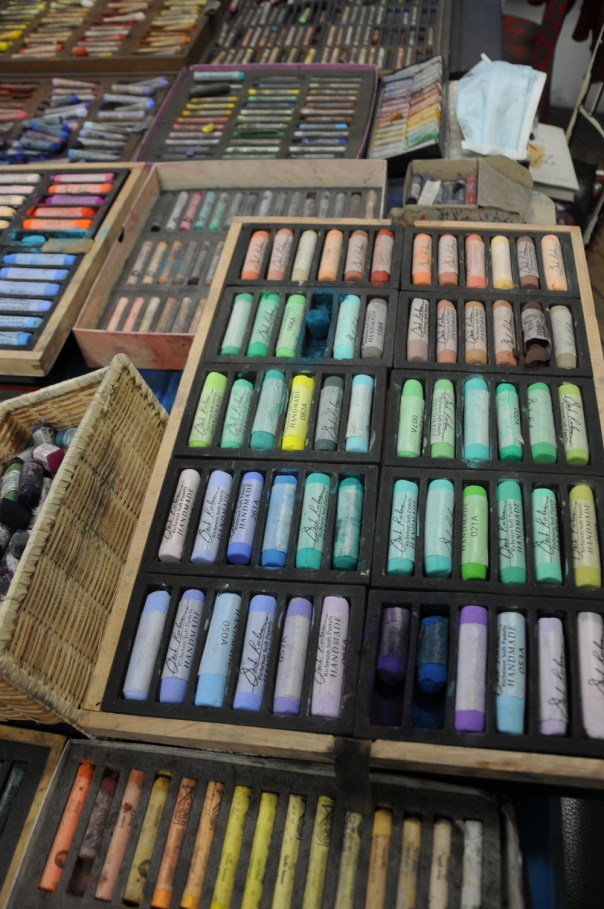
Some of Barbara's pastels

Some of Barbara’s pastels

A:  For starters it’s the medium that I fell in love with many years ago.  I recently read this article online, “What is Pastel?” by Mike Mahon, and will quote it because it neatly sums up  what I love about working with pastel.

Pastel is the most permanent of all media when applied to conservation ground and properly framed. Pastel has no liquid binder that may cause it to oxidize with the passage of time as oftentimes happens with other media.

In this instance, Pastel does not refer to pale colors, as the word is commonly used in cosmetic and fashion terminology. The pure, powdered pigment is ground into a paste with a minimum amount of gum binder, rolled into sticks and dried. The infinite variety of colors in the Pastel palette range from soft and subtle to hard and brilliant.

An artwork is created by stroking the stick of dry pigment across an abrasive ground, embedding the color in the “tooth” of the ground. If the ground is completely covered with Pastel, the work is considered a Pastel painting; whereas, leaving much of the ground exposed produces a Pastel sketch. Techniques vary with individual artists. The Pastel medium is favored by many artists because it allows a spontaneous approach. There is no drying time, therefore, no change in color occurs after drying as it does in other media.

Did you know that a particle of Pastel pigment seen under a microscope looks like a diamond with many facets? It does! Therefore, Pastel paintings reflect light like a prism. No other medium has the same power of color or stability.

Historically, Pastel can be traced back to the 16th century. Its invention is attributed to the German painter, Johann Thiele. A Venetian woman, Rosalba Camera, was the first to make consistent use of Pastel. Chardin did portraits with an open stroke, while La Tour preferred the blended finish. Thereafter, a galaxy of famous artists—Watteau, Copley, Delacroix, Millet, Manet, Renoir, Toulouse Lautrec, Vuillard, Bonnard, Glackens, Whistler, Hassam, William Merritt Chase—used Pastel for a finished work rather than for preliminary sketches.

Pastels from the 16th century exist today, as fresh as the day they were painted. Edgar Degas was the most prolific user of Pastel and its champion. His protégé, Mary Cassat, introduced Pastel to her friends in Philadelphia and Washington, and thus to the United States. In the Spring of 1983, Sotheby Parke Bernet sold at auction, two Degas Pastels for more than $3,000,000 each! Both Pastels were painted about 1880.

Note: Do not confuse Pastel with “colored chalk.” Chalk is a porous, limestone substance impregnated with dyes, whereas, Pastel is pure pigment—the same as is used in other permanent painting media.

Today, Pastel paintings have the stature of oil and watercolor as a major fine art medium. Many of our most renowned, living artists have distinguished themselves in Pastel and have enriched the art world with this beautiful medium.

So knowing all this, I often wonder, why don’t more artists use pastel?  Is it because framing is a big issue?  Works on paper need to be framed and pastel paintings have unique problems (see my April 27, 2013 blog post).  Second only to the cost of maintaining a studio in New York City, frames are my single largest business expense.  Sometimes I am grateful that pastel is a very slow medium.  I typically finish 4 or 5 paintings in a year, which means I only have to pay for 4 or 5 frames!

Comments are welcome!

Q: When and why did you start working on sandpaper?

Raw sandpaper

Raw sandpaper

A:  In the late 1980s when I was studying at the Art League in Alexandria, VA, I took a three-day pastel workshop with Albert Handel, an artist known for his southwest landscapes in pastel and oil paint.  I had just begun working with soft pastel (I’d completed my first class with Diane Tesler) and was still experimenting with paper.  Handel suggested I try Ersta fine sandpaper.  I did and nearly three decades later, I’ve never used anything else. 

The paper (UArt makes it now) is acid-free and accepts dry media, especially pastel and charcoal.   It allows me to build up layer upon layer of pigment, blend, etc. without having to use a fixative.  The tooth of the paper almost never gets filled up so it continues to hold pastel.  If the tooth does fill up, which sometimes happens with problem areas that are difficult to resolve, I take a bristle paintbrush, dust off the unwanted pigment, and start again.  My entire technique – slowly applying soft pastel, blending and creating new colors directly on the paper (occupational hazard:  rubbed-raw fingers, especially at the beginning of a painting as I mentioned in last Saturday’s blog post), making countless corrections and adjustments, looking for the best and/or most vivid colors, etc. – evolved in conjunction with this paper. 

I used to say that if Ersta ever went out of business and stopped making sandpaper, my artist days would be over.  Thankfully, when that DID happen, UArt began making a very similar paper.  I buy it from ASW (Art Supply Warehouse) in two sizes – 22″ x 28″ sheets and 56″ wide by 10 yard long rolls.  The newer version of the rolled paper is actually better than the old, because when I unroll it it lays flat immediately.  With Ersta I laid the paper out on the floor for weeks before the curl would give way and it was flat enough to work on.

Comments are welcome!

Q: What’s on the easel today?

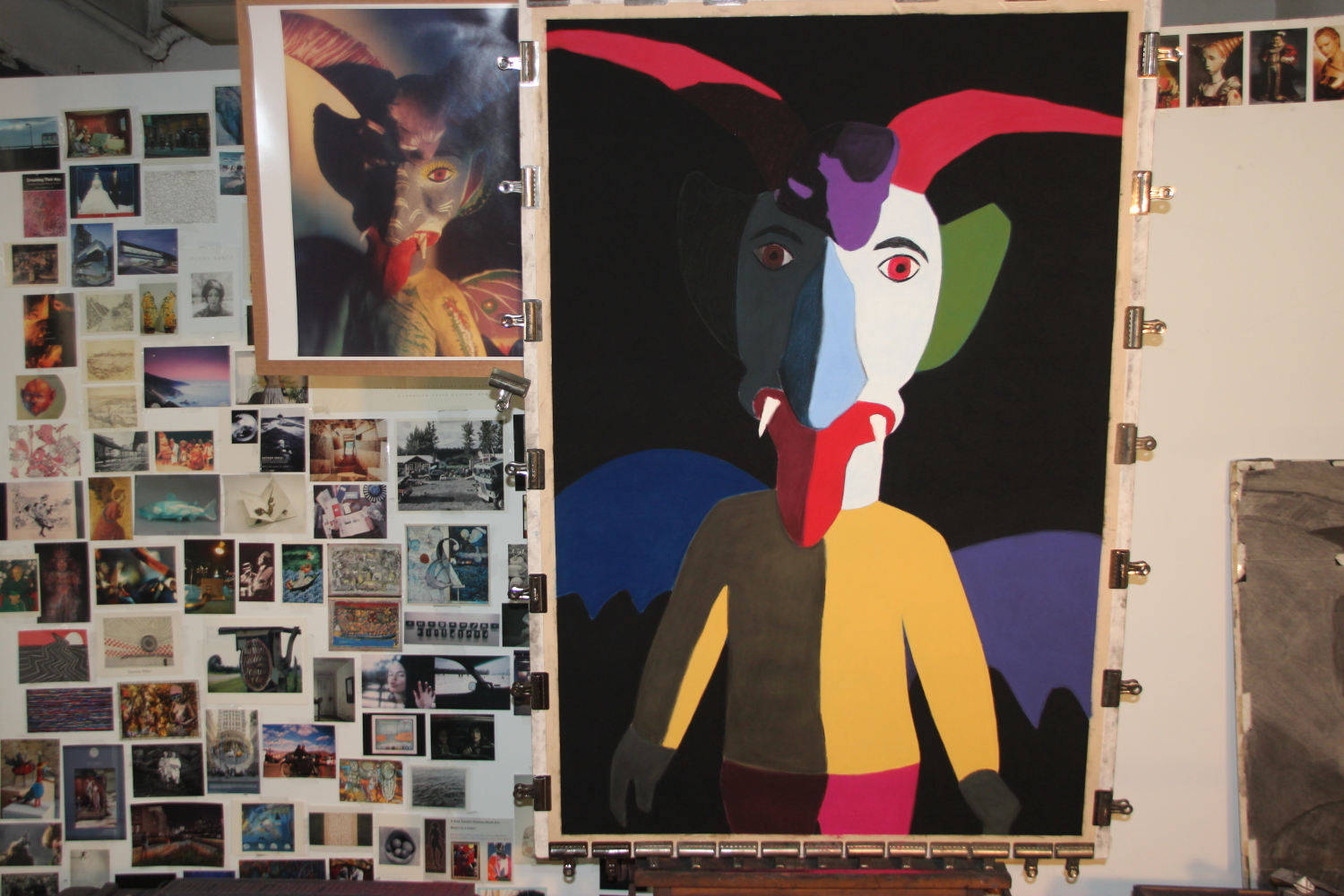
Work in progress, 58" x 38"

Work in progress, 58″ x 38″

A:  Today is a day off to let my fingers heal.  When I start a new painting, I need to rub my fingers against raw sandpaper in order to blend the pastel.  With each layer the tooth of the paper gets filled up and becomes smooth, but until then my fingers suffer.  Here is what I’ve been working on.

This pastel-on-sandpaper painting is an experiment, an attempt to push myself to work with bigger and bolder imagery.  The photograph clipped to the easel is one of my favorites.  It depicts a Judas that Bryan and I found in a dusty shop in Oaxaca.  Among the Mexican and Guatemalan folk art pieces that I’ve collected are five papier mâché Judases.  This particular one is unusual because it has a cat’s head attached at the forehead (the purple shape in the painting).  They are not made to last.  In some Mexican towns large Judases are hung from church steeples, loaded with fireworks, and burned in effigy.  This takes place at 10:00 a.m. on the Saturday morning before Easter.  Mexico is primarily a Catholic nation, of course, so effigy burning is done as symbolic revenge against Judas for his betrayal of Christ.  The Judas in the photo is small and meant for private burning by a family (rather than in public at a church) so by bringing it back to New York I rescued it from a fire-y death!  In sympathy with Mexican tradition, I began this painting last Saturday (the day before Easter) at 10 a.m.

Comments are welcome!

Q: What would you be if you were not an artist?

Self-portrait on a Hudson  River barge

Self-portrait on a Hudson River barge

A: I honestly have no idea, but whatever it might be, there is a good chance that I’d be bored! In my younger days boredom was a strong motivator. I left the active duty Navy out of boredom. I couldn’t bear not being intellectually challenged (most of my jobs consisted of paper-pushing), not using my flying skills (at 27 I was a licensed commercial pilot and Boeing 727 flight engineer), and not developing my artistic talent. In what surely must be a first, by spending a lot of time and money training me for jobs I hated, the Navy turned me into a hard-working artist! And once I left the Navy there was no plan B. There was no time to waste. It was “full speed ahead.”

Art is a calling. You do not need to be told this if you are among those who are called. It’s all about “the work,” that all-consuming focus of an artist’s life. If a particular activity doesn’t make you a better artist, you avoid it. You work hard to nourish and protect your gifts. As artists we invent our own tasks, learn whatever we need in order to progress, and complete projects in our own time. It is life lived at its freest.

My art-making has led me to fascinating places: Mexico, Guatemala, Brazil, Argentina, Uruguay, France, England, Italy, Bali, Java and more; and to in-depth studies of intriguing subjects: drawing, color, composition, art and art history, the art business, film and film history, photography, mythology, literature, music, jazz history, and archaeology, particularly that of ancient Mesoamerica (the Olmec, Zapotec, Mixtec, Aztec, Maya, etc.). And this rich mixture continually grows! For anyone wanting to spend their time on earth learning and meeting new challenges, there is no better life than that of an artist.

I SO agree with this exchange that I read years ago between between Trisha Brown and Mikhail Baryshnikov in the New York Times. I wrote it on a piece of paper and taped it to my studio wall:

Trisha: How do you think we keep going? Are we obsessed?

Mikhail: We do it because there’s nothing better. I’m serious. Because there is nothing more exciting than that. Life is so boring, that’s why we are driven to the mystery of creation.

Comments are welcome.