Blog Archives
Q: During one of the most gripping times of your life, you were personally affected by the 9/11 attack on our country. Your husband was killed on the plane that crashed into the Pentagon. Would you mind telling us about it and how it has shaped your work?
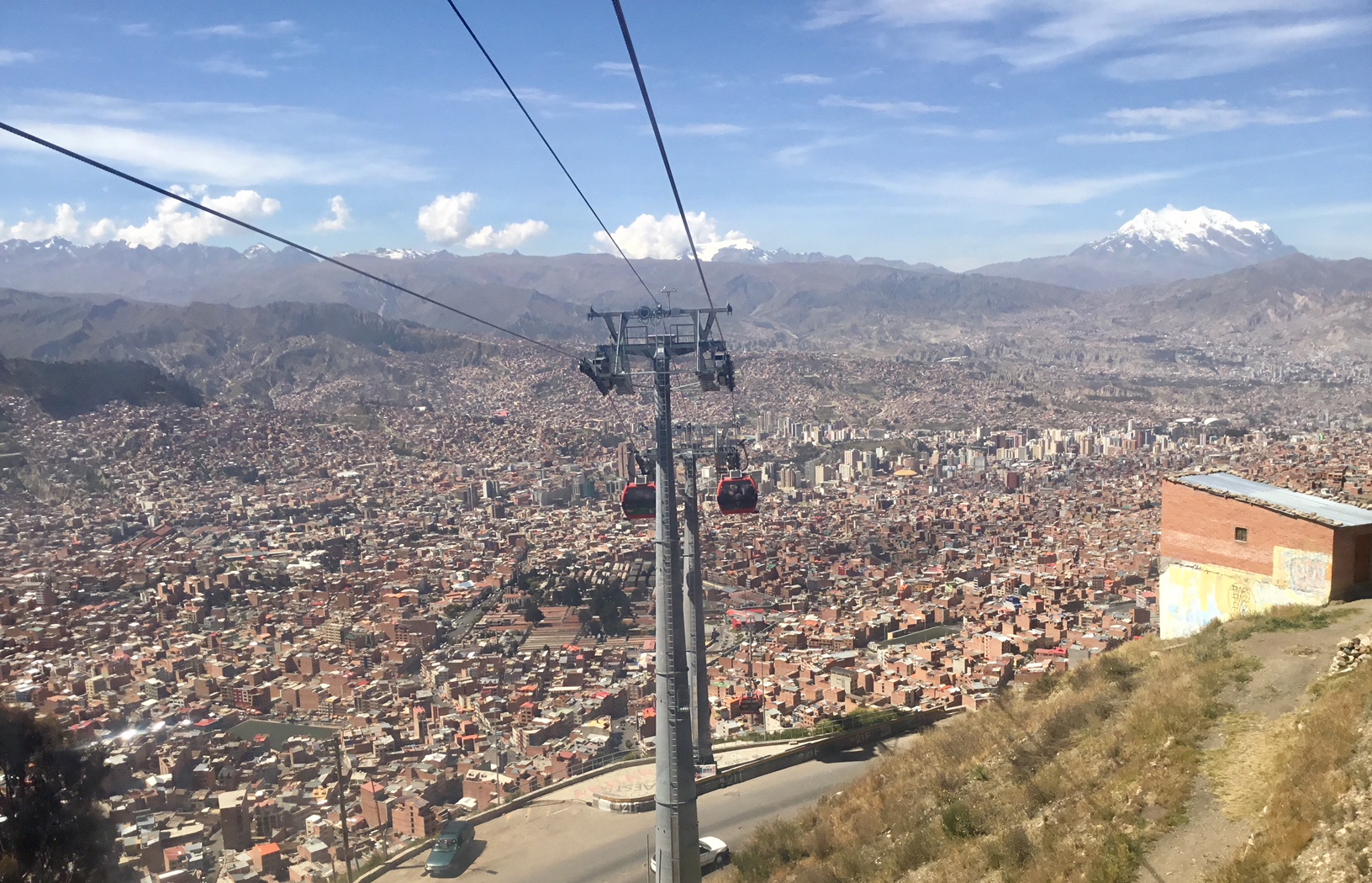
‘Mi Teleferico’ line, La Paz, Bolivia
A: In the summer of 2002 I was ready to – I HAD to – get back to work in my studio. I knew exactly what I must do. More than ever before, learning and painting would become the avenues to my well-being.
Because I use reference photos for my pastel paintings, the first challenge was to learn how to use Bryan’s 4 x 5 view camera. At that time I was not a photographer. Bryan had always taken reference photos for me.
In July 2002 I enrolled in a view camera workshop at New York’s International Center of Photography. Much to my surprise I had already absorbed quite a lot from watching Bryan. After the initial workshop, I continued more formal studies of photography for several years. In 2009, I am proud to say, I was invited to present a solo photography exhibition at a New York gallery!
In 2003 I resumed making my Domestic Threats series of pastel paintings, something that had seemed impossible after Bryan’s death. The first large pastel painting that I created using a reference photograph taken by me confirmed that my life’s work could continue. The title of that painting, “She Embraced It and Grew Stronger,” was autobiographical. “She” is me, and “it” meant continuing on without Bryan and living life for both of us.
Having had a long successful run, the Domestic Threats series finally ended in early 2007. Around that time I was feeling happier and had come to better terms with losing Bryan. While this is a tragedy I will never truly be at peace with, dealing with the loss became easier with time.
Then in 2007 I suddenly became blocked and did not know where to take my work next. I had never experienced creative block and especially for a full-time professional artist, this was a painful time. Still, I continued to go to the studio every day and eventually, thanks to a confluence of favorable circumstances, the block ended.
My next pastel painting series was called Black Paintings. I viewed the black background as literally, the very dark place that I was emerging from, exactly like the figures emerging in these paintings. The figures themselves were wildly colorful and full of life, but that black background – one critic has dubbed it my “blackground” – is always there.
Still the work continues to evolve. In 2017 I began my third pastel painting series called Bolivianos, based on a mask exhibition encountered in La Paz at the The National Museum of Ethnography and Folklore. Many people have proclaimed this to be my most bold, daring, and exciting pastel painting series yet. And I think they may be right! Continuing on the journey I began 30+ years ago, I am looking forward to creating many new, striking pastel paintings!
Comments are welcome!
Pearls from artists* # 345

Barbara working on an interview. Photo: Maria Cox
*an ongoing series of quotations – mostly from artists, to artists – that offers wisdom, inspiration, and advice for the sometimes lonely road we are on.
You begin your journey as an artist from sacred motives, with dreams and high hopes, and also, perhaps, from a place of painful turmoil or other inner necessity. From these powerful drives comes your conscious decision to pursue a life in art, your resolve to call yourself an artist whatever the consequences. You are the one nodding in agreement when the painter John Baldessari says, “Art is about bloody-mindedness. It’s not about living the good life. In the end, it’s just you and the art.”
Eric Maisel in A Life in the Arts: Practical Guidance and Inspiration for Creative and Performing Artists
Comments are welcome!
Q: Would you speak about the meaning of your work and the different materials you use?
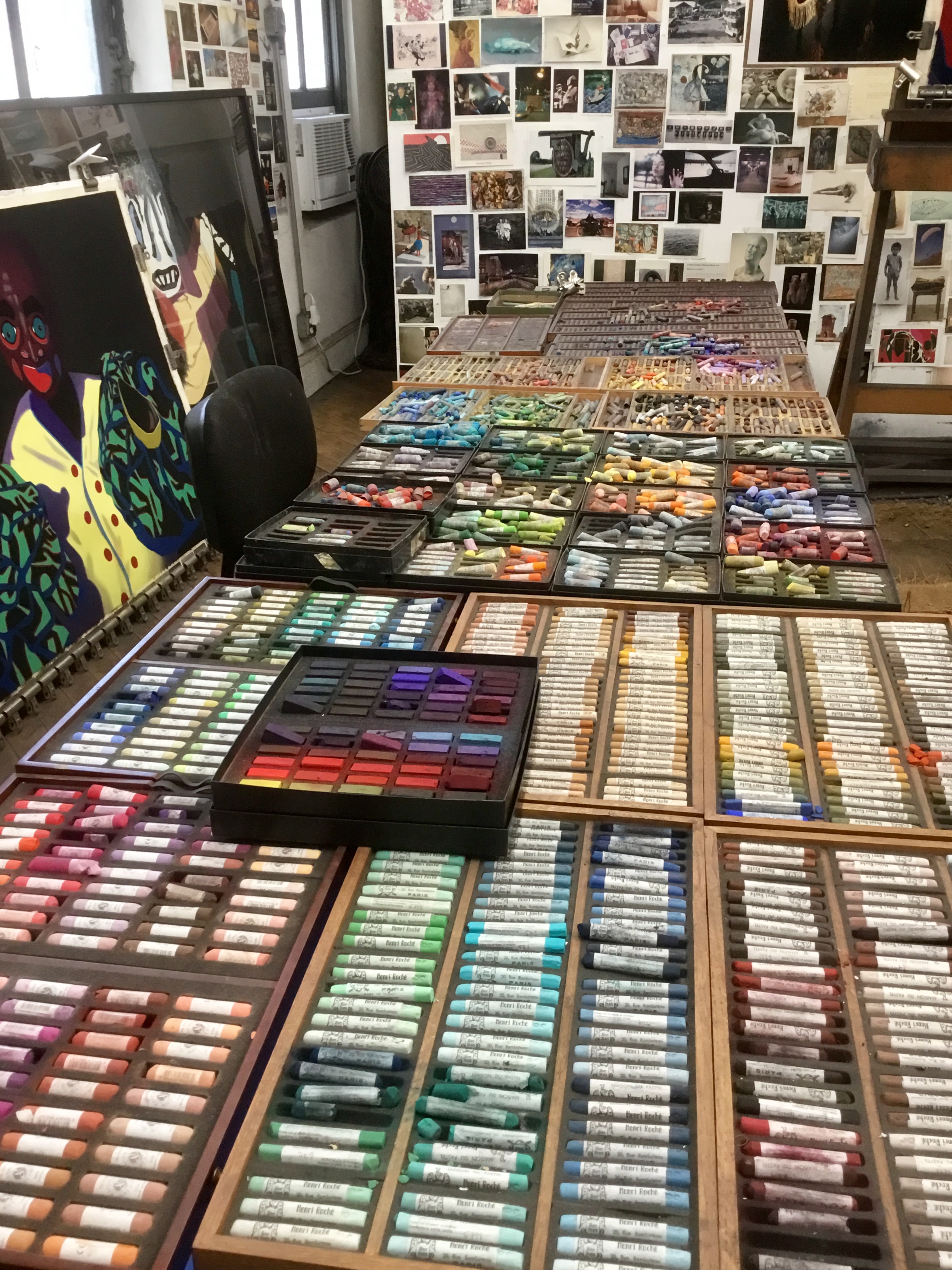
About half of Barbara’s pastels
A: It is as difficult to explain the meaning of my art as it is to interpret the meaning of life! I am invested in and concerned with process: foreign travel, prodigious reading, devotion to craft, months of slow meticulous work in the studio trying to create an exciting work of art that has never been seen before, etc. I love making pastel paintings! Many years ago I challenged myself to push the limits of what soft pastel can achieve. I am still doing so.
I leave it to others – viewers, arts writers, critics, art historians – to study my creative journey and talk about meanings. I believe an artist is inspired to create and viewers ponder the creation. I would not presume to tell anyone how to react to my work.
For many years I have been devoted to promoting soft pastel as a fine art medium. There are excellent reasons it has been around for five hundred years! It is the most permanent of media. There’s no liquid binder to cause oxidizing or cracking over time, as happens with oil paint. Pastel colors are intense because they are close to being pure pigment. Pastel allows direct application (no brushes) with no drying time and no color changes.
I use UArt acid-free sandpaper. This is not sandpaper from a hardware store. It is made for artists who work in pastel and allows me to build up layers of pigment without using a fixative. My process – slowly applying and layering pastels, blending and mixing new colors directly on the paper, making countless adjustments, searching for the best and/or most vivid colors – continually evolves. Each pastel painting takes months to create.
Comments are welcome!
Q: When and where did you start your career in the visual arts?
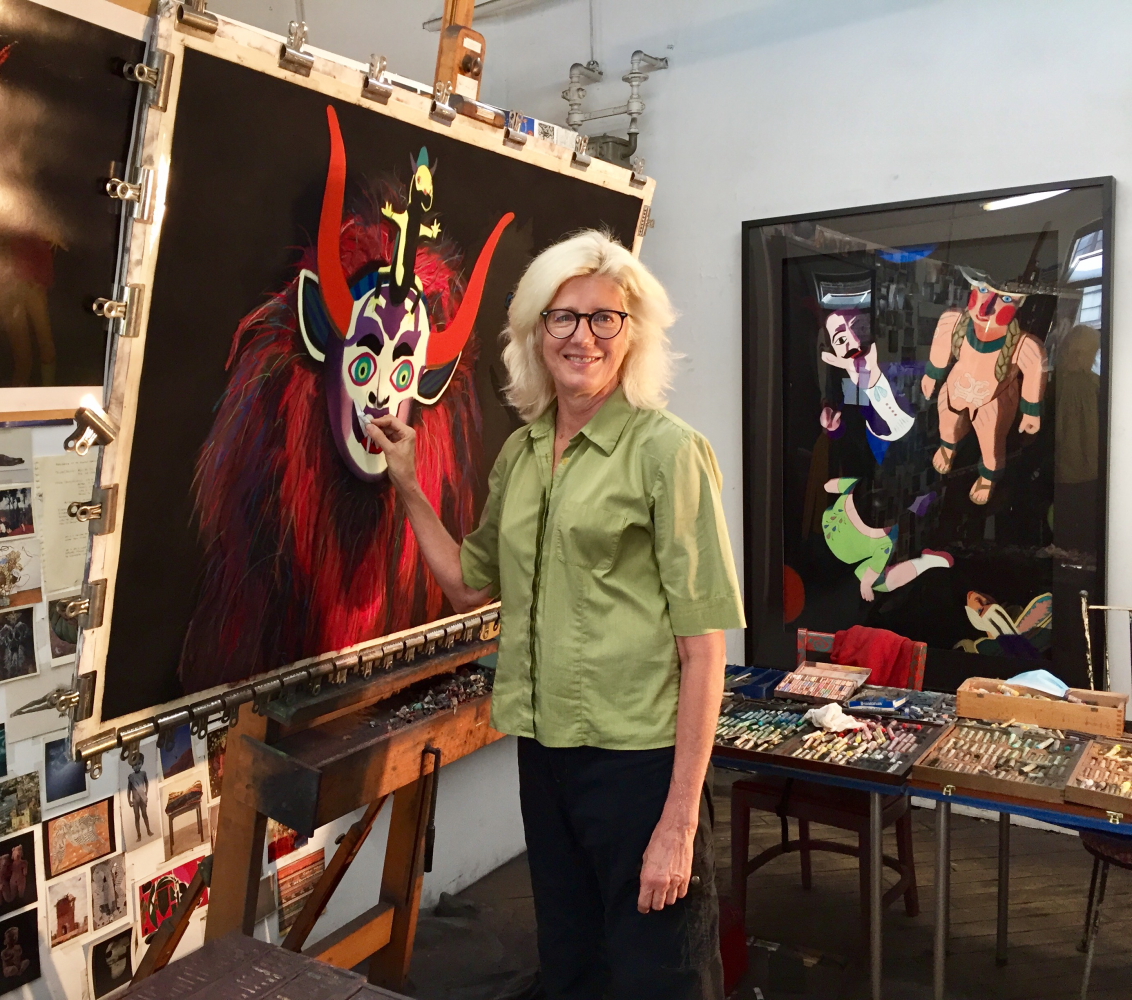
In the studio, Photo: Maria Cox
A: My journey to becoming an artist was circuitous. In the mid-1980s I was a thirty-something Navy lieutenant. I worked a soul-crushing job as a computer analyst on the midnight shift in a Pentagon basement. We were open 24/7 and supported the Joint Chiefs of Staff.
Remembering the joyful Saturdays of my youth in New Jersey, when I had studied with a local painter, I enrolled in a drawing class at the Art League School in Alexandria, Virginia. I loved it! I took more classes and became a highly motivated, full-time art student who worked nights at the Pentagon. After two years and as my skills improved, I discovered my preferred medium – soft pastel on sandpaper.
I knew I had found my calling, submitted my resignation, and left active duty. On October 1, 1989 I became a professional artist. However, I remained in the Navy Reserve for another fourteen years, working at the Pentagon one weekend a month. On November 1, 2003, I retired as a Navy Commander.
Comments are welcome!
Q: What significance do the folk art figures that you collect during your travels have for you?

Barbara’s studio
A: I am drawn to each figure because it possesses a powerful presence that resonates with me. I am not sure exactly how or why, but I know each piece I collect has lessons to teach.
Who made this thing? How? Why? Where? When? I feel connected to each object’s creator and curiosity leads me to become a detective and an archaeologist to find out more about them and to figure out how to best use them in my work.
The best way I can describe it: after nearly three decades of seeking out, collecting, and using these folk art figures as symbols in my work, the entire process has become a rich personal journey towards gaining greater knowledge and wisdom.
Comments are welcome!
Q: Can you speak about a book (or books) that deeply influenced you as an artist?

Barbara’s well-worn copy of “Camille Pissarro: Letters to His Son Lucien”
A: One such book that stands out is “Camille Pissaro: Letters to His Son Lucien.” The book is comprised of weekly letters from a father conveying wisdom about his craft, art, and life, over roughly twenty years, to a beloved son, who is just beginning his artistic journey. I discovered this gem about thirty years ago when I was just starting to find my way as an artist, too. Pissarro’s words are beautiful, poignant, and deeply felt. He has much to say to artists because, sadly, we still contend with the same problems, such as how to remain authentic and earn a living, how to deal with galleries and collectors, how to stay focused on the work, etc. I often enjoy rereading favorite passages simply because it makes me feel less alone as an artist.
Comments are welcome!
Q: How important are the titles of your pastel paintings?
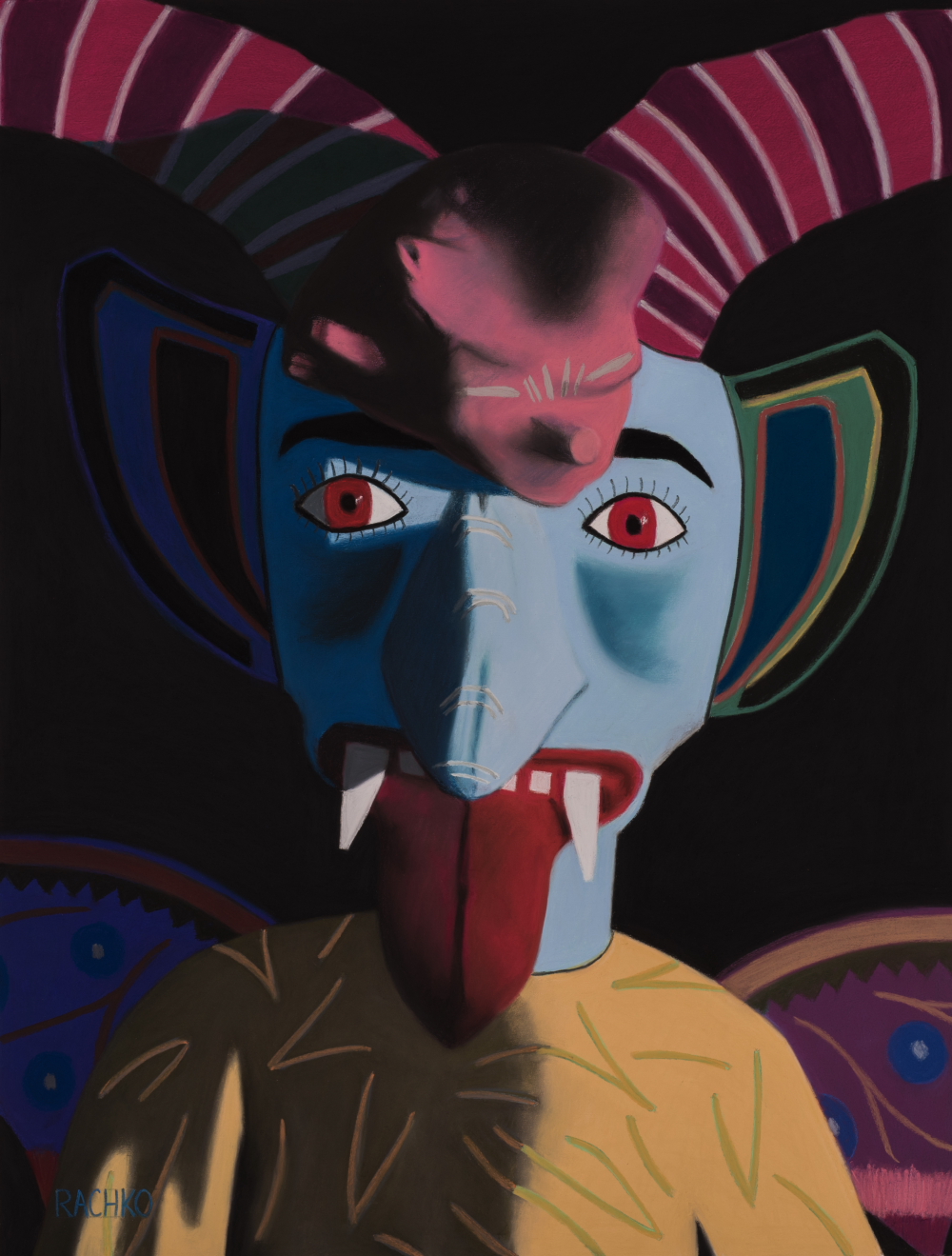
“Provocateur,” soft pastel on sandpaper, 26″ x 20″
A: I’d say they are important. Titles serve mainly as “a way in” for viewers, giving some clues about my thought processes while I am making a painting. Usually titles emerge only after I have been working on a painting for weeks or months. For me they are very much like mementos after a very interesting journey.
Comments are welcome!
Q: Your pastel paintings are immediately recognizable as yours alone. Did you consciously try to develop a signature style in your work?
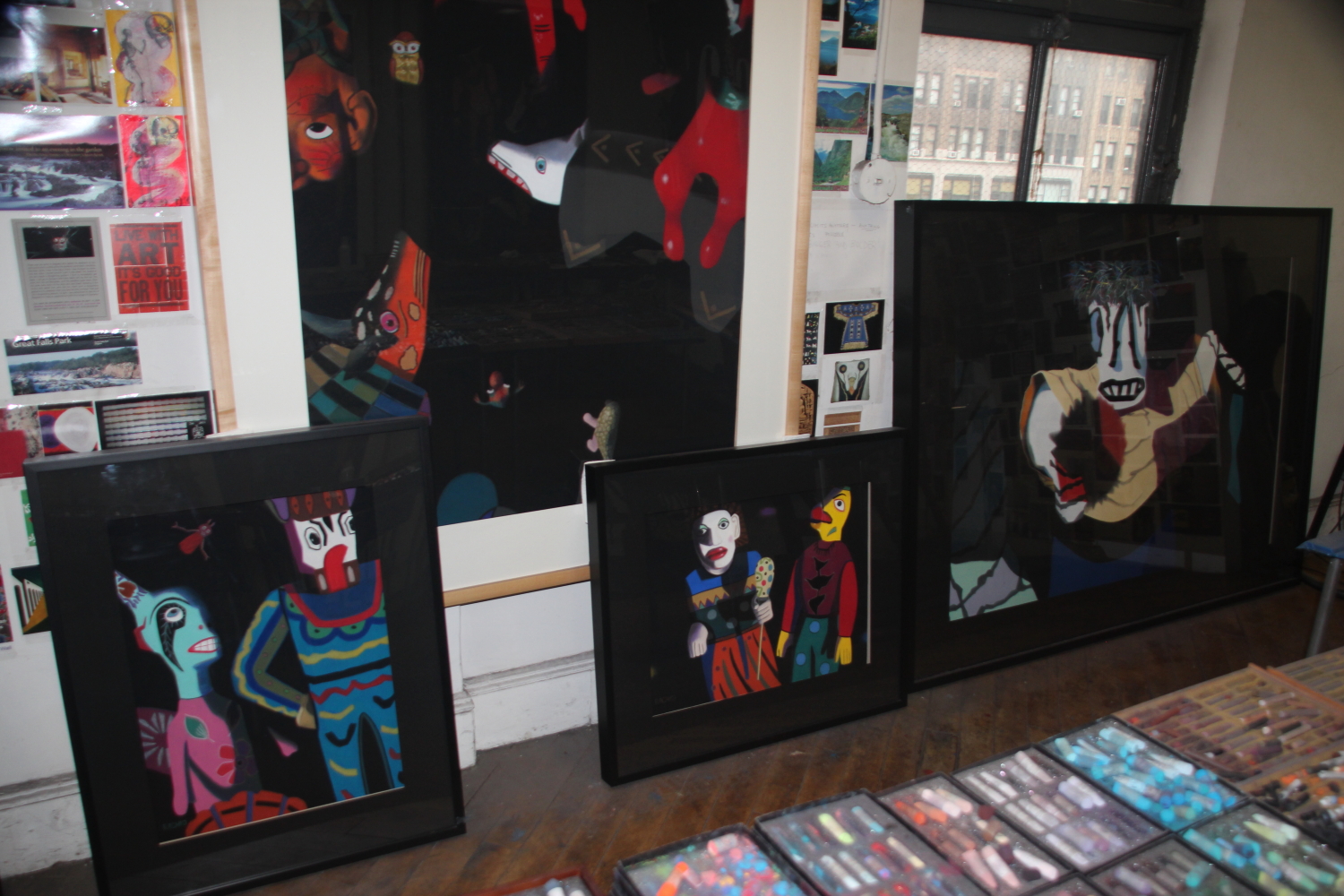
Barbara’s studio
A: I don’t believe that is even possible. An artist’s style is something that evolves with plain hard work and experience, over many years of trial and error, as one finds what techniques work best and discards those that don’t. It is a process of continually experimenting, refining, and clarifying. In other words, style is something that emerges naturally as you gradually strive to improve your art-making.
Style develops in close connection to what an artist is saying as she undergoes a very personal and idiosyncratic journey. Again, it would seem improbable for an artist to strive for any particular style, since style is not something over which an artist can exert much conscious control.
I would even say that each artist’s unique style is inevitable. It would be nearly impossible now to make a pastel painting or photograph that does NOT look like a Rachko.
Comments are welcome!
Q: What do you think are the most important qualities in an artist?

“Big Deal,” soft pastel on sandpaper, 58″ x 38″
A: Two essentials immediately come to mind. I believe imagination and curiosity are very important qualities, not only for artists, but for anyone who hopes to look back on a well-lived life. As Lauren Bacall famously said, “Imagination is the highest kite one can fly.”
It is curiosity that keeps people laser-focused on a lifetime journey of learning. I’d venture to say that curiosity is the not-so-secret quality of accomplished people in every profession. We humans can never know enough!
Comments are welcome!
Q: If you knew that you would never sell another pastel painting, would you still make them?
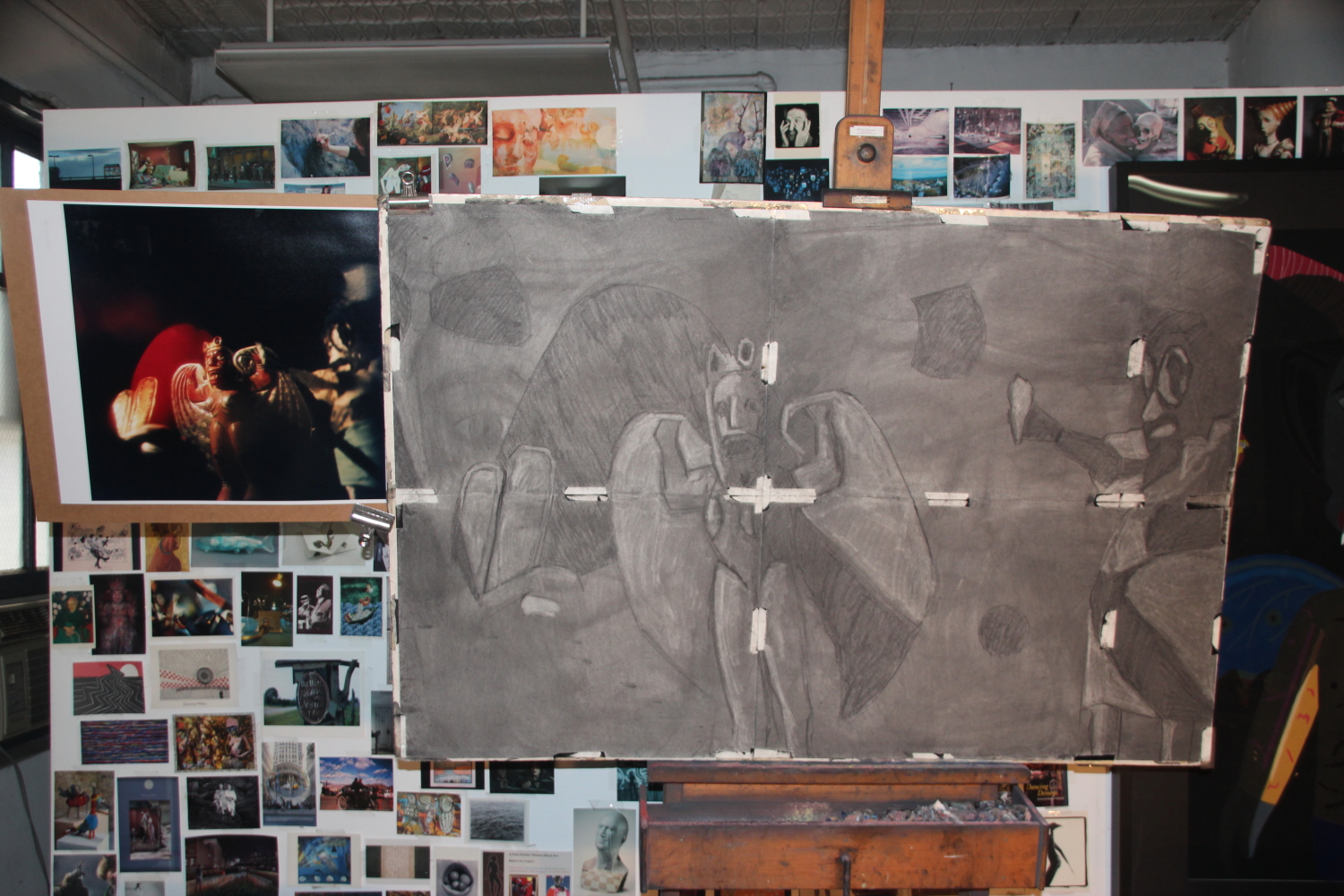
Preliminary sketch and photo
A: This is an interesting question to ponder in August when the art world is on vacation.
Certainly I would continue (reread my blog post of July 25th), but I wouldn’t bother to make them if one unrelated thing were true: that I knew beforehand what they would look like. Then the process just wouldn’t be very interesting.
Each pastel painting is an exploration, a journey with a point of departure. My reference photo and preliminary sketch serve as guides, but creating a painting is like making a voyage with only the roughest of maps. As I work, new possibilities open up that take the painting – and me – to places that could not have been imagined.
Comments are welcome!


 barbararachkoscoloreddust.com