Blog Archives

Pearls from artists* # 587

With friends of fifty years!
*an ongoing series of quotations – mostly from artists, to artists – that offers wisdom, inspiration, and advice for the sometimes lonely road we are on.
My general preparations include everything I do to be healthy and ready for surprises, with a full palette of resources available. I need energy to acquire skill, energy to practice, energy to keep going through the inevitable setbacks, energy to keep going when things look good and I am tempted to sit back and relax. I need physical energy, intellectual energy, libidinal energy, spiritual energy. The means to tapping these energies are well known: exercise the body, eat well, sleep well, keep track of dreams, meditate, enjoy the pleasures of life, read and experience widely. When blocked, tap into the block-busters: humor, friends, and nature.
Stephen Nachmanovitch in Free Play: Improvisation in Life and Art
Comments are welcome!
Pearls from artists* # 579

New York, NY
*an ongoing series of quotations – mostly from artists, to artists – that offers wisdom, inspiration, and advice for the sometimes lonely road we are on.
An empirical fact about our lives is that we do not and cannot know what will happen a day or a moment in advance. The unexpected awaits us at every turn and every breath. The future is a vast perpetually regenerated mystery and the more we live and know, the greater the mystery. When we drop the blinders of our preconceptions, we are virtually propelled by every circumstance into the present time and the present mind: the moment, the whole moment, and nothing but the moment. This is a state of mind taught and strengthened by improvisation, a state of mind in which the here and now is not some trendy idea but a matter of life and death, upon which we can learn to reliably depend. We can depend on the world being a perpetual surprise in general motion and a perpetual invitation to create.
Stephen Nachmanovitch in Free Play: Improvisation in Life and Art
Comments are welcome!
Q: Love your selection of pastels! Do you have favorites that you need to force yourself not to continually return to? (Question from Donina Asera via Facebook)

A: No, I don’t think so. Certainly, I do have general preferences. I prefer dark, vivid, intense colors so many of my pale pastels go mostly unused. The single pastel that I use most is Rembrandt black – I buy them buy the dozens – because it takes many layers of pigment to achieve my dark black backgrounds. Otherwise, I strive to be open to whatever the painting needs. My goal – always! – is to make a pastel painting that is exciting to look at and different from anything I have created before.
Thank you very much for the great question!
Comments are welcome!
Pearls from artists* # 437
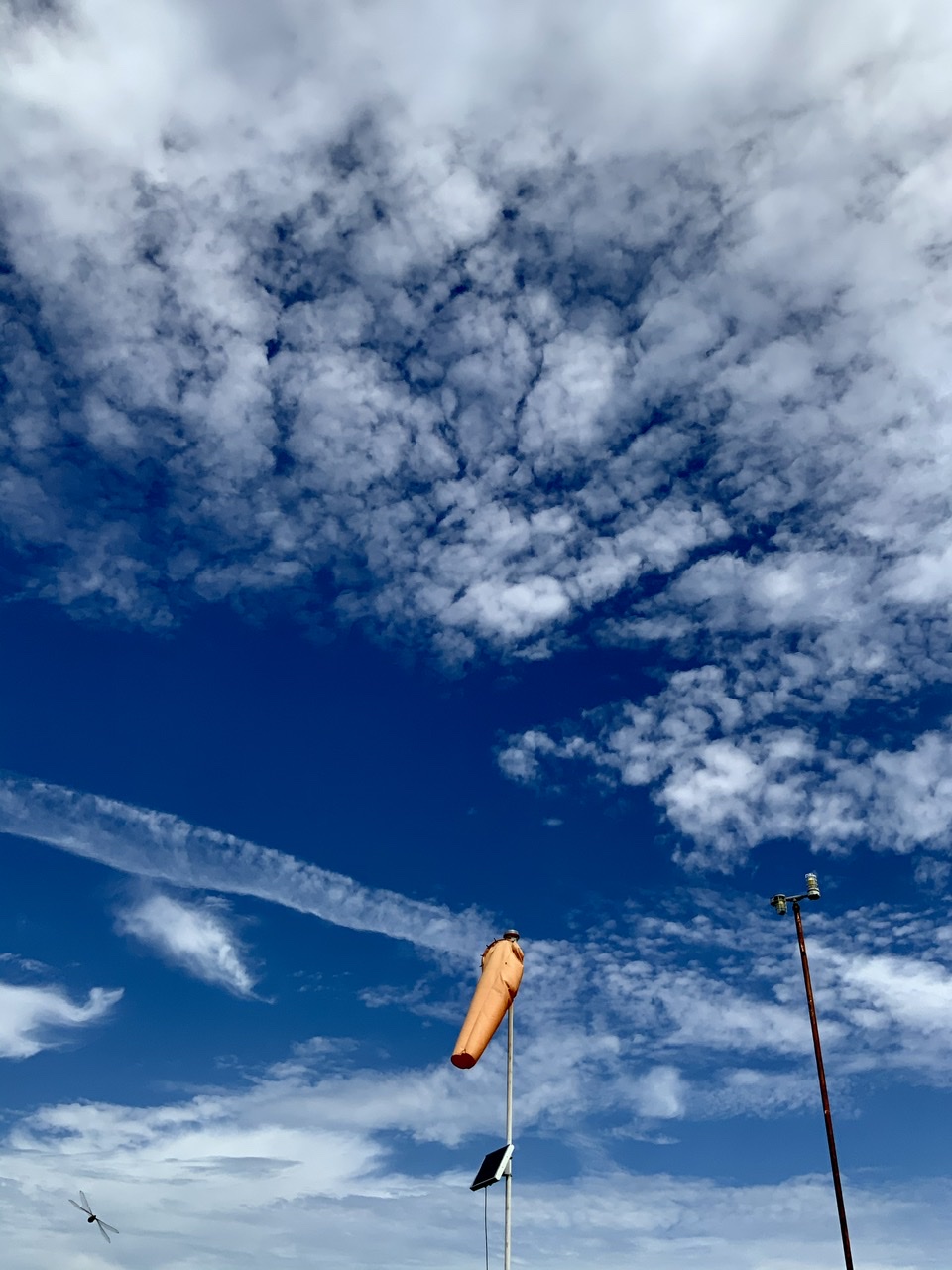
Dragonfly on final approach
* an ongoing series of quotations – mostly from artists, to artists – that offers wisdom, inspiration, and advice for the sometimes lonely road we are on.
There really is nothing to fear in fantasy unless you are afraid of the uncertainty. This is why it’s hard for me to imagine that anyone who likes science can dislike fantasy. Both are based so profoundly on the admission of uncertainty, the welcoming acceptance of unanswered questions. Of course, the scientist seeks to ask how things are the way they are, not to imagine how they might be otherwise. But are the two operations opposed, or related? We can’t question reality directly, only by questioning our conventions, our belief, our orthodoxy, our construction of reality. All Galileo said, all Darwin said, was, “It doesn’t have to be the way we thought it was.”
Ursula K. Le Guin in No Time to Spare: Thinking About What Matters
Comments are welcome!
Pearls from artists* # 399
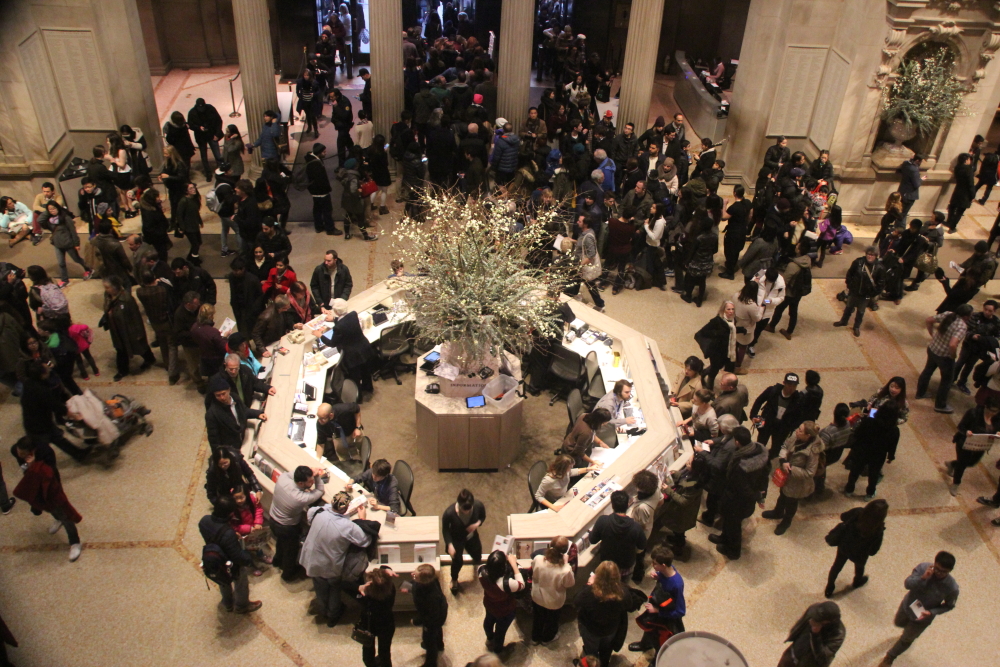
The Great Hall at the Met
* an ongoing series of quotations – mostly from artists, to artists – that offers wisdom, inspiration, and advice for the sometimes lonely road we are on.
Science is concerned with the general, the abstract, and the knowable. In contrast, art deals with the particular, the unknowable, the singular. This applies not just to the content of artistic works but also to the way this content is received. Even in the case of a film or concert attended by large numbers of people, the artistic experience remains fundamentally a solitary one. Each one of us lives the work alone. Whatever sense of togetherness accompanies the experience comes precisely from the fact that, faced with the singularity of the aesthetic moment, each percipient feels his aloneness before the radical mystery that enfolds us all. Wherever an act of creation is shared with others, then, there is individuation – not just for the author of the work but for the audience too. The singularity of art awakens us to our own singularity, and through it to the singularity in the Other. I have argued that artifice unifies by imposing an univocal image that replicates itself identically in each spectator. True art tears the spectator out of the mass of sameness, calling forth from the numberless crowd a new people and a new communion.
J.F. Martel in Reclaiming Art in the Age of Artifice: A Treatise, Critique, and Call to Action
Comments are welcome!
Pearls from artists* # 356
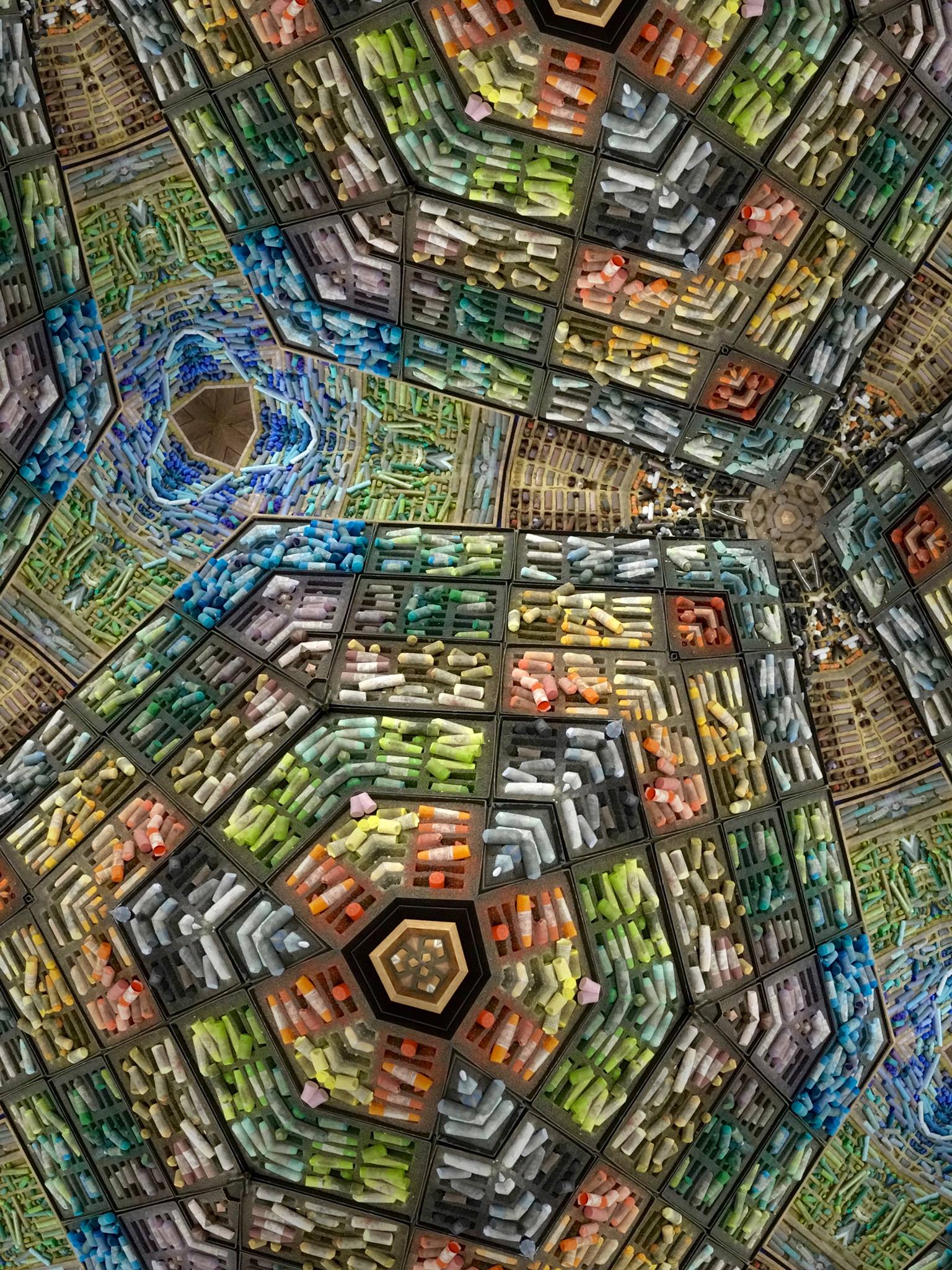
Some of Barbara’s pastels
*an ongoing series of quotations – mostly from artists, to artists – that offers wisdom, inspiration, and advice for the sometimes lonely road we are on.
Science is concerned with the general, the abstract, and the knowable. In contrast, art deals with the particular, the unknowable, the singular. This applies not just to the content of artistic works but also to the way this content is received. Even in the case of a film or concert attended by large numbers of people, the artistic experience remains a fundamentally solitary one. Each one of us lives the work from the work alone. Whatever sense of togetherness accompanies the experience comes precisely from the fact that, faced with the singularity of the aesthetic moment, each percipient feels his aloneness before the radical mystery that enfolds us all. Wherever an act of creation is shared with others, then, there is individuation – not just for the author of the work but for the audience too. The singularity of art awakens us to our own singularity, and through it to the singularity in the Other. I have argued that artifice unifies by imposing a univocal image that replicates itself indefinitely in each spectator. True art tears the spectral out of the mass of sameness, calling forth from the numberless crowd a new people and a new communion.
Reclaiming Art in the Age of Artifice: A treatise, Critique, and Call to Action
Comments are welcome!
Pearls from artists* # 338
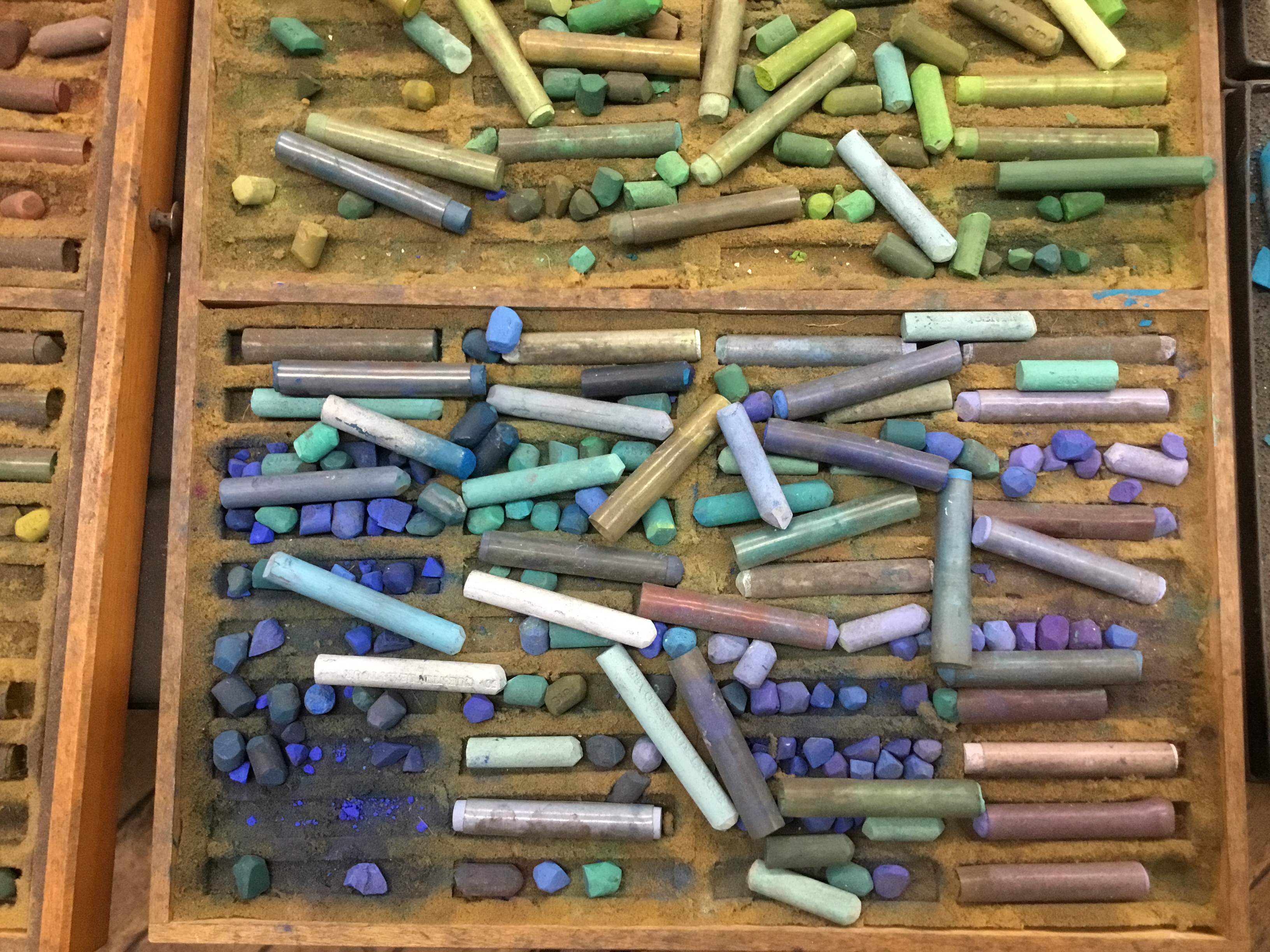
Pastels
*an ongoing series of quotations – mostly from artists, to artists – that offers wisdom, inspiration, and advice for the sometimes lonely road we are on.
Beauty without symbolic depth results in ornament. Symbol without beauty results in psychoanalysis. Only when the two meet can we speak of art. The artistic works that combine the two elements most compellingly are what are called the classics. In his magisterial book The Analogical Imagination, the theologian David Tracy defines the classic as a work exhibiting a permanent “excess of meaning.” We speak of classics as “timeless,” he says, not because they belong to time, but because they are perpetually timely; their relevance never wanes, and each generation, each percipient, must interpret them anew. According to Tracy, we know we are dealing with a classic when a work makes us realize that our general outlook on life is not as complete as we thought it was, that “something else might be the case.” In the light that the classic emanates, things suddenly seem less clear-cut than they used to seem – we find ourselves in the presence of something greater than we are, something potentially infinite. Classics take us to the apex of the numinous, the point of what Werner Herzog calls “ecstatic truth.”
J.F. Martel in Reclaiming Art in the Age of Artifice: A Treatise, Critique, and Call to Action
Comments are welcome!
Q: What qualities do you think mark the highest artistic achievement?
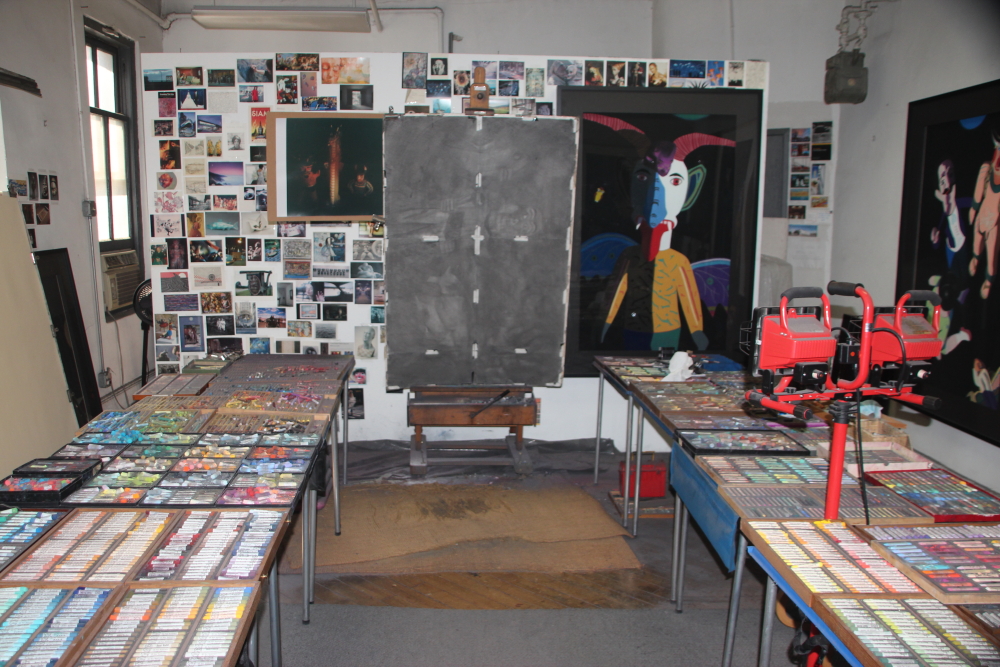
Barbara’s studio
A: If I may speak in the most general terms, several qualities come to mind that, for me, mark real artistic achievement:
- firm artistic control that allows the artist to create works that simultaneously demonstrate formal coherence while responding to inner necessity
- the creation of new forms and techniques that are adapted to expressing the artist’s highly personal vision
- an authentic and balanced fusion of form, method, and idea
- using material from one’s own idiosyncratic experiences and subtly transforming it in a personal inimitable way during the creative process
- the meaning of the thing created is rigorously subordinated to its design, which once established, generates its own internal principles of harmony and coherence
Comments are welcome!
Pearls from artists* # 161

Whitney Museum
* an ongoing series of quotations – mostly from artists, to artists – that offers wisdom, inspiration, and advice for the sometimes lonely road we are on.
It is the artist’s innate sensitivity that makes him special and different from other professionals. Society expects the artist to be more compassionate and understanding in order to bring out that which will enlighten, inspire and encourage life in his work. His vocation should not just be for art’s sake.
Where the average person sees an old beat-up shark, the artist sees a symbol of beauty in aging and imagines bringing out those qualities that the shark has sheltered over the ages, by means of artistic creation. To the intelligent and sensitive artist, the homeless man lying on the street corner is a symbol that reminds us of what we, as a society, should be doing to better our living.
Sensitivity comes into play when leaves that appear to the general viewer to be uniformly green are seen by the sensitive artist to be different shades, tones, and subtle nuances of green. Without sensitivity, special and important characteristics of nature will be out of our sight and out of reach to the viewing layman. Only the obvious, the average and the common will reveal themselves to the insensitive artist. The endurance of certain works will depend on what the artist has captured with the help of his sensitivity and because of the ideas behind the work.
Samuel Adoquei in Origin of Inspiration: Seven Short Essays for Creative People
Comments are welcome!
Pearls from artists* # 158

“Dichotomy,” soft pastel on sandpaper, 38″ x 58″
* an ongoing series of quotations – mostly from artists, to artists – that offers wisdom, inspiration, and advice for the sometimes lonely road we are on.
It is the artist’s innate sensitivity that makes him special and different from other professionals. Society expects the artist to be more compassionate and understanding in order to bring out that which will enlighten, inspire and encourage life in his work. His vocation should not just be art for art’s sake.
Where the average person sees an old beat-up shark, the artist sees a symbol of beauty in aging and imagines bringing out those qualities that the shark has sheltered over the ages by means of artistic creation. To the intelligent and sensitive artist, the homeless man lying on the street corner is a symbol that reminds us of what we, as a society, should do to better our living.
Sensitivity comes into play when leaves that appear to the general viewer to be uniformly green are seen by the sensitive artist to be different shades, tones and nuances of green. Without sensitivity, special and important characteristics of nature will be out of sight and out of reach to the viewing layman. Only the obvious, the average and the common will reveal themselves to the insensitive artist. The endurance of certain works will depend on what the artist has captured with the help of his sensitivity and because of the ideas behind the work.
Samuel Adoquei in Origin of Inspiration: Seven Short Essays for Creative People
Comments are welcome!


 barbararachkoscoloreddust.com