Blog Archives
Q: What’s on the easel today?
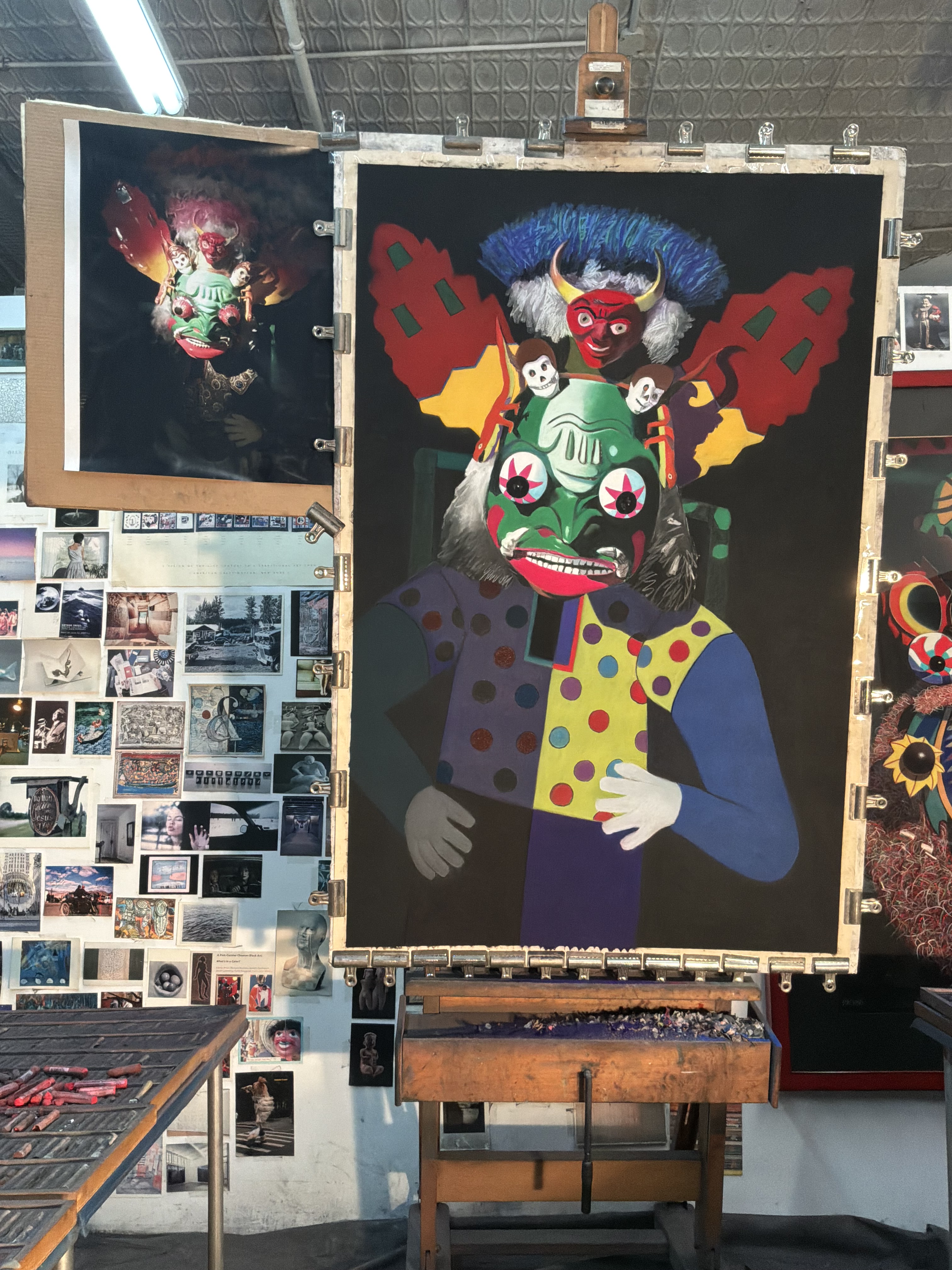
Work in progress
A: I continue working on “Gatecrasher,” soft pastel on sandpaper, 58” x 38.” In February I was privileged to visit this mask on exhibit at MUSEF La Paz in Bolivia. It was my second visit to the museum; the first was in 2017. Even more so this time, I was bowled over with how spectacular this particular mask is in person. Plus, I had forgotten its huge size. So I am absolutely determined to bump up my game and even more inspired to make this painting as strong and powerful as I possibly can!
Comments are welcome!
Pearls from artists* # 688

*an ongoing series of quotations – mostly from artists, to artists – that offers wisdom, inspiration, and advice for the sometimes lonely road we are on.
Many artists see their studio practice as a religion. Like any other faith, it has rituals, beliefs, devotions, visionaries, martyrs, and even miracles. Our souls have a need to position themselves in the giant scheme of the universe, and art, like spiritual conviction, helps us do that. It allows us to decipher and process the complexities of the world around us. It can make us better humans by telling stories and sharing points of view that stoke compassion, understanding, and empathy. It holds the potential to redeem both the maker and the viewer, transcending quotidian dullness by evoking a deep significance we had forgotten.
Kate Kretz in Art From Your Core: A Holistic Guide to Visual Voice
Comments are welcome!
Q: Do you have any rituals that you do in the mornings before you begin working?

Art From Your Core by Kate Kretz
A: When I arrive at the studio in the morning it’s rare for me to immediately start working. Usually I read something art-related. At the moment I’m rereading Art From Your Core: A Holistic Guide to Visual Voice by Kate Kretz. This is a fabulous book for visual artists. It is a must-read and has become my current art bible! As usual I am struggling to understand aspects of the art business and figure out what’s next to get my work appreciated and collected by a new audience. Art From Your Core reminds why I decided to make art in the first place and what I need to do to continue to improve. It helps reconnect with forgotten parts of myself and is a much-needed reminder of what I love most about being an artist.
Balancing the creative and business aspects of my art practice is an ongoing struggle. I imagine this is true for most artists. Both jobs are so important. An artist needs an appreciative audience – very few artists devote their lives to art-making so that the work will remain in a closet – but I also believe this (from a note hand-written years ago that I tacked to the studio wall): “Just make the work. None of the rest matters.”
Comments are welcome.
Q: Does your work look different to you on days when you are sad, happy, etc.?

Barbara’s Studio
A: I am much more critical on days when I am sad so that the faults, imperfections, and things I wish I had done better stand out. Fortunately, all of my work is framed behind plexiglas so I can’t easily go back in to touch up perceived faults. I am reminded of the expression, “Always strive to improve, whenever possible. It is ALWAYS possible!” However, I’ve learned that re-working a painting is a bad idea. You are no longer deeply involved in making it and the zeitgeist has changed. The things you were concerned with are gone: some are forgotten, others are less urgent.
For most artists our work is autobiography. Art is personal. When I look at a completed pastel painting, I usually remember exactly what was happening in my life as I created it. Each piece is a snapshot – maybe a time capsule, if anyone could decode it – that reflects and records a particular moment. When I finally pronounce a piece finished and sign it, that’s it, THE END. It’s as good as I can make it at that point in time. I’ve incorporated everything I was thinking about, what I was reading, how I was feeling, what I valued, art exhibitions I visited, programs that I heard on the radio or watched on television, music that I listened to, what was going on in New York, in the country, and in the world.
It is still a mystery how this heady mix finds its way into the work. During the time that I spend on it, each particular painting teaches me everything it has to teach. A painting requires months of looking, reacting, correcting, searching, thinking, re-thinking, revising. Each choice is made for a reason and together these decisions dictate what the final piece looks like. On days when I’m sad I tend to forget that. On happier days I remember that the framed pastel paintings that you see have an inevitability to them. If all art is the result of one’s having gone through an experience to the end, as I believe it is, then the paintings could not, and should not, look any differently.
Comments are welcome.
Q: Do you have any rituals that you do before beginning a day’s work in the studio?

The Studio!
A: When I arrive at the studio in the morning it’s rare for me to immediately start working. Usually I read something art-related – books written by artists, about creativity, etc. At the moment I’m reading The Artist’s Reality: Philosophies of Art by Mark Rothko. As usual I am struggling to understand aspects of the art business and figure out what I need to do next to get my work seen and collected by a wider audience. The Artist’s Reality reminds me why I decided to make art in the first place. It helps reconnect with temporarily forgotten parts of myself and is a much-needed reminder of what I love about being an artist, especially in light of the business side that is becoming so complex and demanding of attention now.
Balancing the creative and business aspects of being an artist is a continual struggle. Both are so important. An artist needs an appreciative audience – very few artists devote their lives to art-making so that the work will remain in a closet – but I also believe this (from a note I wrote years ago and tacked to the studio wall): “Just make the work. None of the rest matters.”
Comments are welcome!
Pearls from artists* # 605

*an ongoing series of quotations – mostly from artists, to artists – that offers wisdom, inspiration, and advice for the sometimes lonely road we are on.
At first the concept of the unconscious was limited to denoting the state of repressed or forgotten contents. Even with Freud, who makes the unconscious – at least metaphorically – take the stage as the acting subject, it is really nothing but the gathering place of forgotten and repressed contents, and has a functional significance thanks only to these. For Freud, accordingly, the unconscious is of an exclusively personal nature, although he was aware of its archaic and mythological thought forms.
A more or less superficial layer of the unconscious is undoubtedly personal. I call it the personal unconscious. But this personal unconscious rests upon a deeper layer, which does not derive from personal experience and is not a personal acquisition but is inborn. This deeper layer I call the collective unconscious. I have chosen the term “collective” because this part of the unconscious is not individual but universal; in contrast to the personal psyche, it has contents and modes of behavior that are more or less the same everywhere and in all individuals. It is, in other words, identical in all men and thus constitutes a common psychic substrate of a suprapersonal nature which is present in every one of us.
Carl Jung in The Archetypes and the Collective Unconscious, translated by RFC Hull
Comments are welcome!
Pearls from artists* # 576
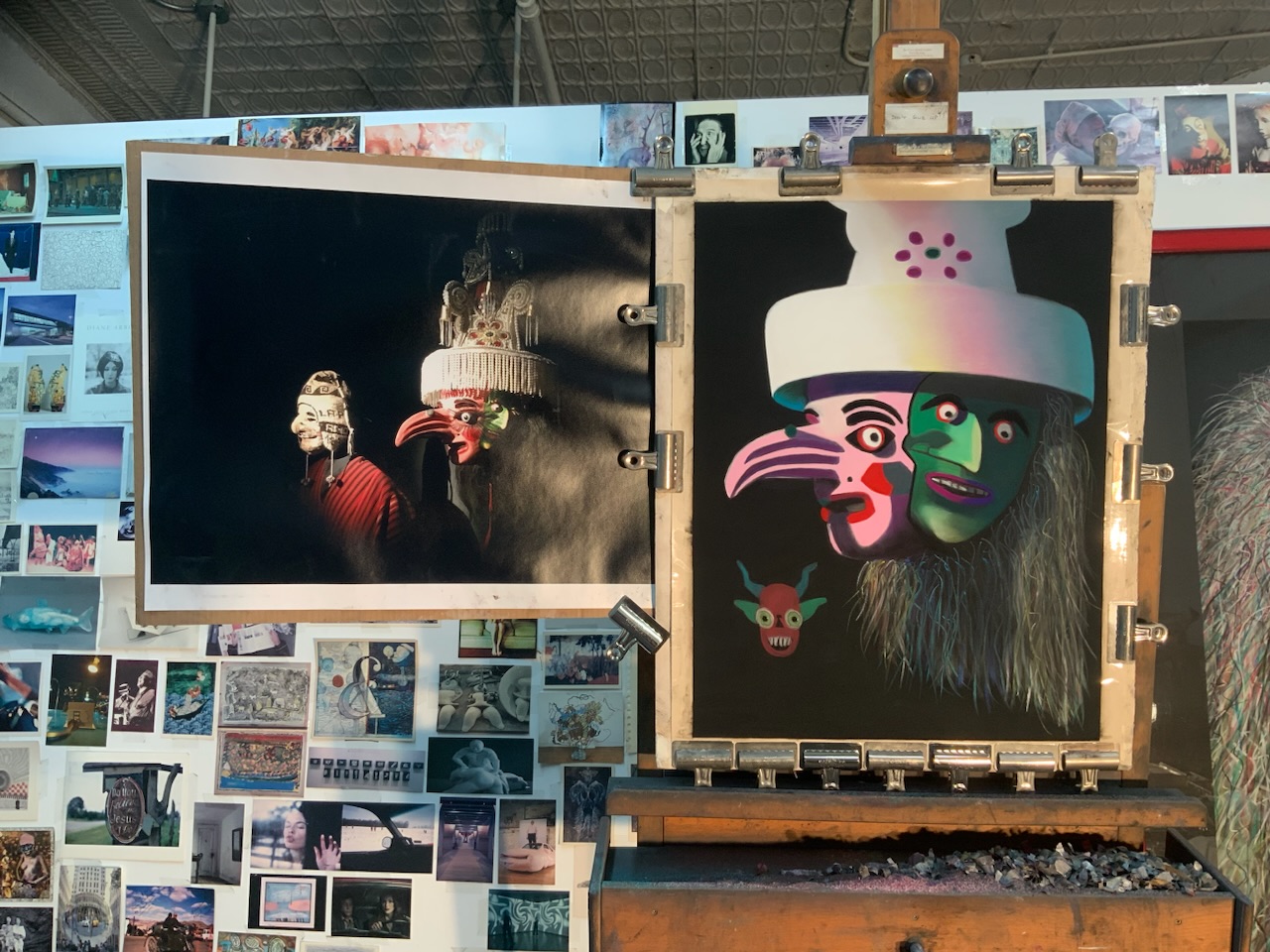
In progress: “Shadow,” soft pastel on sandpaper, 26” x 20”
*an ongoing series of quotations – mostly from artists, to artists – that offers wisdom, inspiration, and advice for the sometimes lonely road we are on.
A word derived from Latin, persona, originally referred to the masks worn by actors in ancient classical theatre. In Jungian psychology, this term refers to the inner character that we use to face the world. Drawn from societal expectations, cultural norms, and natural attributes, it is the person we want others to think we really are. Our persona is our brave face, our false front. It is the ongoing project of building our ideal self.
… the persona is our somewhat embellished view of ourselves, the shiny face that we want the world to see. It’s opposite, everything we reject about ourselves, is called the shadow.
… our shadow is the pain we’ve forgotten about. It is a complex within us, a split-off part our consciousness loaded with emotional weight. Our persona is what we want to be seen to be; shadow is what we least want to be.
Gary Bobroff in Carl Jung: Knowledge in a Nutshell
Comments are welcome!
Q: How do you see art as a way to document the history and the customs and cultures of people? (Question from “Arte Realizzata”)
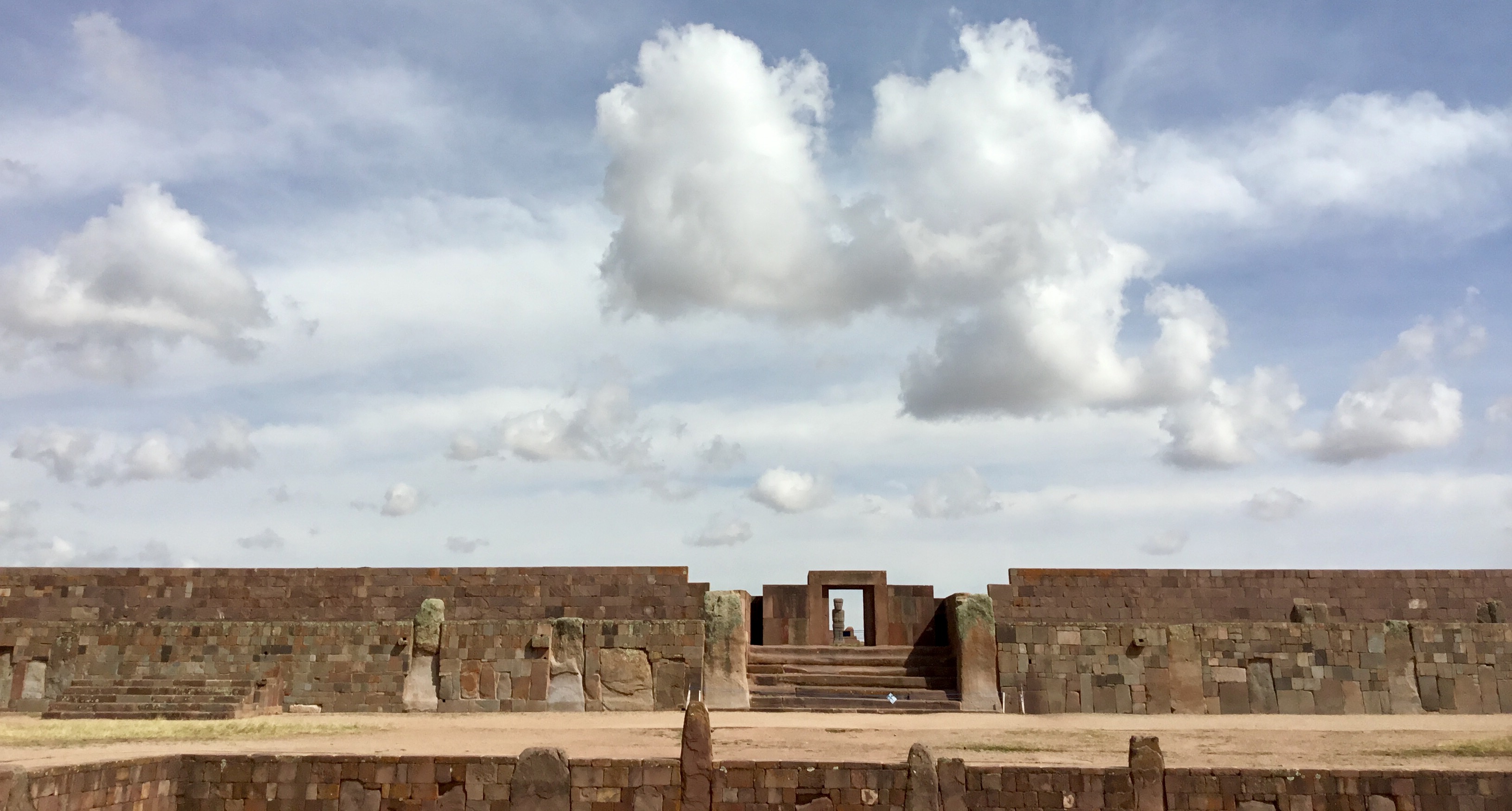
A: Certainly, art from the past gives us clues about life in the past, but I believe it does more. It reveals our shared humanity.
In one of my favorite books, Reclaiming Art in the Age of Artifice: A treatise, Critique, and Call to Action, JF Martel states that “… what the Modern west calls art is the direct result of a basic human drive, an inborn expressivity that is inextricably bound with creative imagination. It is less the product of culture than a process manifesting through the cultural sphere. One could go so far as to argue that art must exist in order for culture to emerge in the first place.”
The art that is left to us through history gives a glimpse of our shared humanity across time and across cultures. We get to see a forgotten part of ourselves, something reaching deeper into what it means to be human.
Comments are welcome!

Q: Would you speak about the creative process that resulted in your 1994 pastel painting, “Amok”?

A: Behind me in the photo above is one of my circa 1994 50” x 40” c-prints, signed by both Bryan, my late husband, and me. The photo was my reference for a pastel painting titled, “Amok” (right, above).
I staged these photos in our Alexandria house (staged photography was popular then), refined the composition over days or weeks, and lit the scene using two tungsten studio lights. I was careful to accentuate the shadows, doing what I could to light everything as though it were a film noir set. (Film noir is still a favorite movie genre of mine).
In those days I knew nothing about photography so I considered these photos collaborations, since Bryan clicked the shutter. (He typically shot two pieces of film using his old Toyo Omega 4 x 5 view camera with a rented wide angle lens). Bryan was reluctant to take any credit- insisting that the idea, concept, etc. were mine – but I persuaded him to also sign the photos. (How I wish he were still around to fill in forgotten details about our collaboration).People enjoyed and often asked to purchase the reference photos so I sometimes had them enlarged and sold them. The dragon in the foreground is significant because it was my first purchase in Oaxaca during our initial trip to Mexico.
If anyone is interested, please remind me to tell the (long) story about how I got it home on the plane!
Comments are welcome!


 barbararachkoscoloreddust.com