Blog Archives
Pearls from artists* # 644

Barbara’s Studio
*an ongoing series of quotations – mostly from artists, to artists – that offers wisdom, inspiration, and advice for the sometimes lonely road we are on.
Making the work you were born to make is a radical act of resistance in the current social climate. It refuses to hold money or power as its highest value. It takes as much time as it needs. It demands quiet and stillness. It involves deep reflection and reverence. It prioritizes uncool traits of curiosity, wonder, and earnestness. It shuns the superficial, contorting to reach far beyond it for the significant. It answers to no one but itself and has not been diluted by corporate committee. It doesn’t pander. It can tell stories that make people uncomfortable. And, despite all attempts to frame it as such, unlike most other activities, art is not a competitive sport.
Kate Kretz in Art From Your Core: A Holistic Guide to Visual Voice
Comments are welcome!
Q: What lies in the future for you? (Question from “Cultured Focus Magazine”)

A: I still have so much to say and share through my work! First, I want to continue creating and adding to the “Boliviano” series of pastel paintings that I began in 2017.
Second, Jennifer Cox, my director, and I are considering making part II of our film, “Barbara Rachko: True Grit,” which will require a return trip to Bolivia – to the Museum of Ethnography and Folklore in La Paz, where I first encountered the masks that are my current subject matter, and to Oruro to see similar masks in action during Carnival celebrations. This will be a complex undertaking and the issue of financing will first need to be resolved. Stay tuned!
Comments are welcome!
Q: Can you explain how your current work relates to Jungian archetypes?

In progress: “Wise One,” soft pastel on sandpaper, 58” x 38”
A: Here’s an example. The passage below is from Carl Jung: Knowledge in a Nutshell by Gary Bobroff.
The Wise Old Man or Woman is a figure found throughout folklore and mythology. They possess superior understanding and also often a more developed spiritual or moral character. Frequently, such characters provide the information or learning that the Hero needs to move forward in their quest. In Star Wars, Ben Kenobi plays the teacher to Luke, introducing purpose and knowledge into the young Hero’s life. Where the Hero brings drive, courage, and direct action, the Wise Old One introduces the importance of the opposing values of thought and questioning. Jung describes it thus: ‘Often the old man in fairytales asks questions like who? Why? Whence? Wither? For the purpose of inducing self-reflection and mobilizing the moral forces.’
The Wise One may appear in disguise to test the character of others. In the second Star Wars film, The Empire Strikes Back (1980), Luke’s mentor Yoda does not reveal himself as such when they first meet. He waits, asking questions that test Luke’s motivation for being there. Jung associated the Trickster archetype with the Wise One, and the use of disguise emphasizes this correlation.
Comments are welcome!
Q: What makes you drawn to face masks?

A: For me a mask is so much more than a mask. It is almost a living thing with its own soul and with a unique history. I always wonder, who created this mask? For what purpose? Where has it been? What stories would it tell if it could? In my current “Bolivianos” series I feel as though I am creating portraits of living, or perhaps once living, beings.
In a way the masks are a pretext for a return to my early days as an artist. When I resigned my Naval commission to pursue art full time, I started out as a photo-realist portrait painter. The twist is that this time I do not have to satisfy a client’s request to make my subjects look younger or more handsome. I am joyfully free to respond only to the needs of the pastel painting before me on the easel.
Comments are welcome!
Q: How has photography changed your approach to painting?
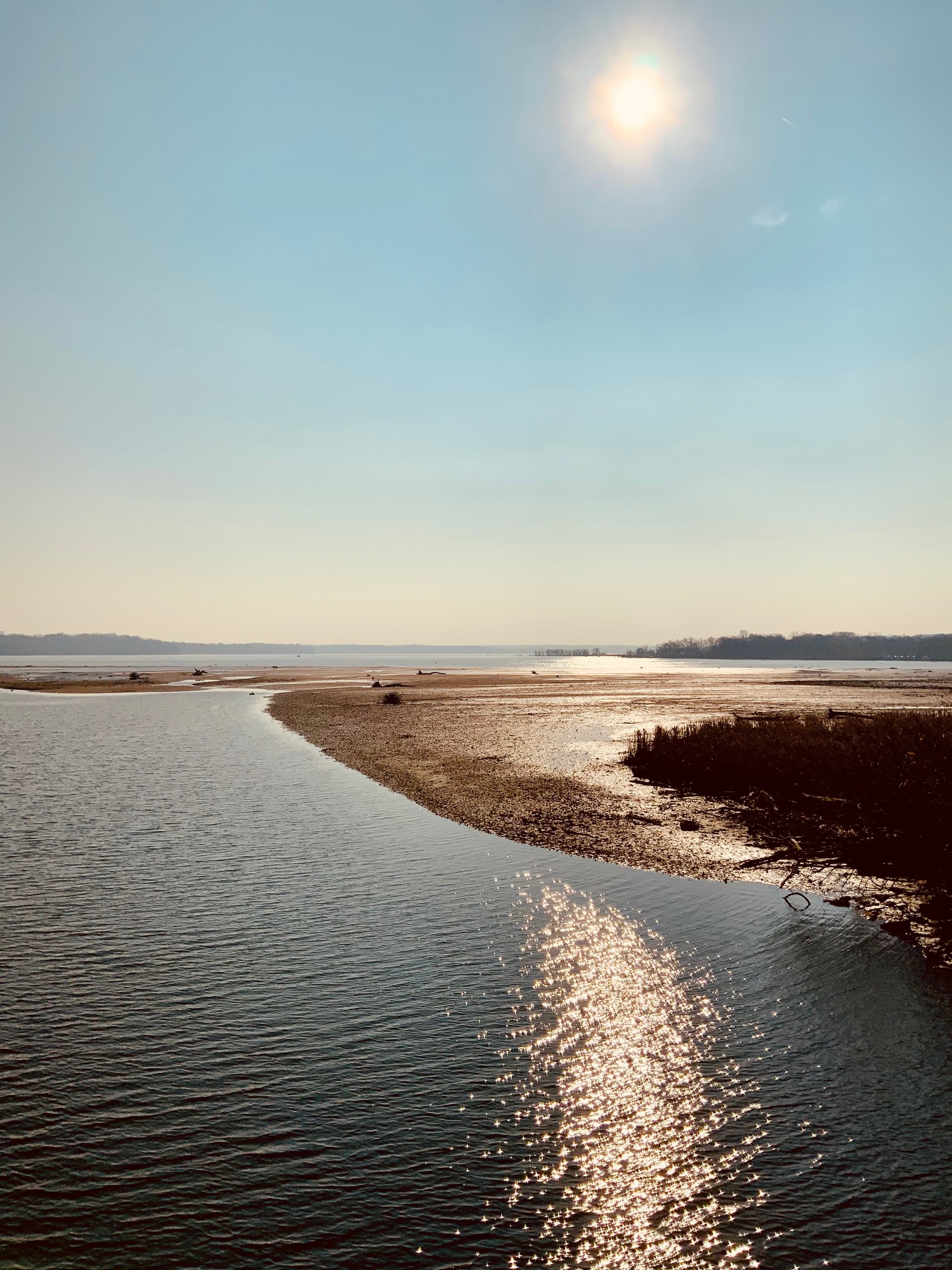
A: Except for many hours spent in life-drawing classes and still life setups that I devised when I was learning my craft in the 1980s, I have always worked from photographs. My late husband, Bryan, would shoot 4” x 5” negatives of my elaborate “Domestic Threats” setups using his Toyo-Omega view camera. I rarely picked up a camera except when we were traveling. After Bryan was killed on 9/11, I inherited his extensive (film) camera collection – old Nikons, Leicas, Graphlex cameras, etc. – and needed to learn how to use them. Starting in 2002 I enrolled in a series of photography courses (about 10 over 4 years) at the International Center of Photography in New York. I learned how to use all of Bryan’s cameras and how to make my own big color prints in the darkroom.
Early on I discovered that the sense of composition, color, and form I had developed over many years as a painter translated well into photography. The camera was, and is, just another medium with which to express ideas. Pastel painting will always be my first love. However, pastel paintings take months of work, while photography offers instant gratification, especially with my current preferred camera, an iPad Pro.
Comments are welcome!
Q: What inspires you to start your next painting? (Question from Nancy Nikkal)

A: For my current series, “Bolivianos,” I am using as source/reference material c-prints composed at a La Paz museum in 2017. I began the series by picking my favorite from this group of photos (“The Champ” and later, “Avenger”) before continuing with others selected for prosaic reasons such as I like some aspect of the photo, to push my technical skills by figuring out how to render some item in pastel, to challenge myself to make a pastel painting that is more exciting than the photo, etc. I like to think I have mostly succeeded.
At this time I am running low on images and have not yet imagined what comes next. Do I travel to La Paz again in 2021 to capture new photos? This series was a surprise gift so I am reluctant to deliberately chase after it knowing that ‘lightning never strikes twice.’ Will travel even be possible this year with Covid-19? These are questions I am wrestling with now.
Comments are welcome!
Q: What inspires you?
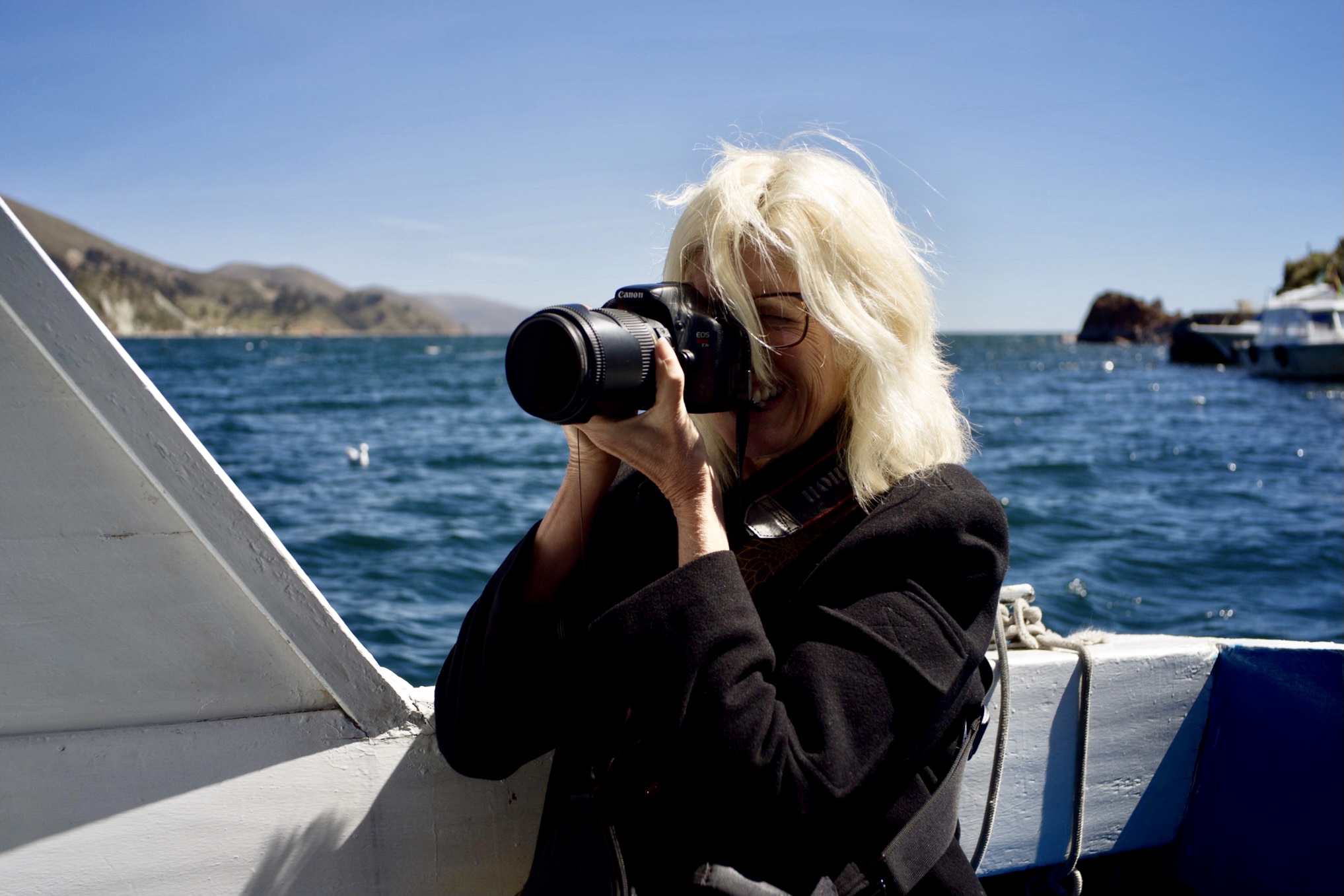
A: I love to travel and the more remote the destination the better! My current pastel painting series is based on a 2017 trip to Bolivia that continues to inspire me. More info about this work is at https://barbararachko.art/en/paintings/bolivianos
Also, I find the medium of soft pastel to be more fascinating now than ever. There is still so much to learn as I challenge myself to do more with it and to become a better artist.
Comments are welcome!
Q: What’s on the easel today?
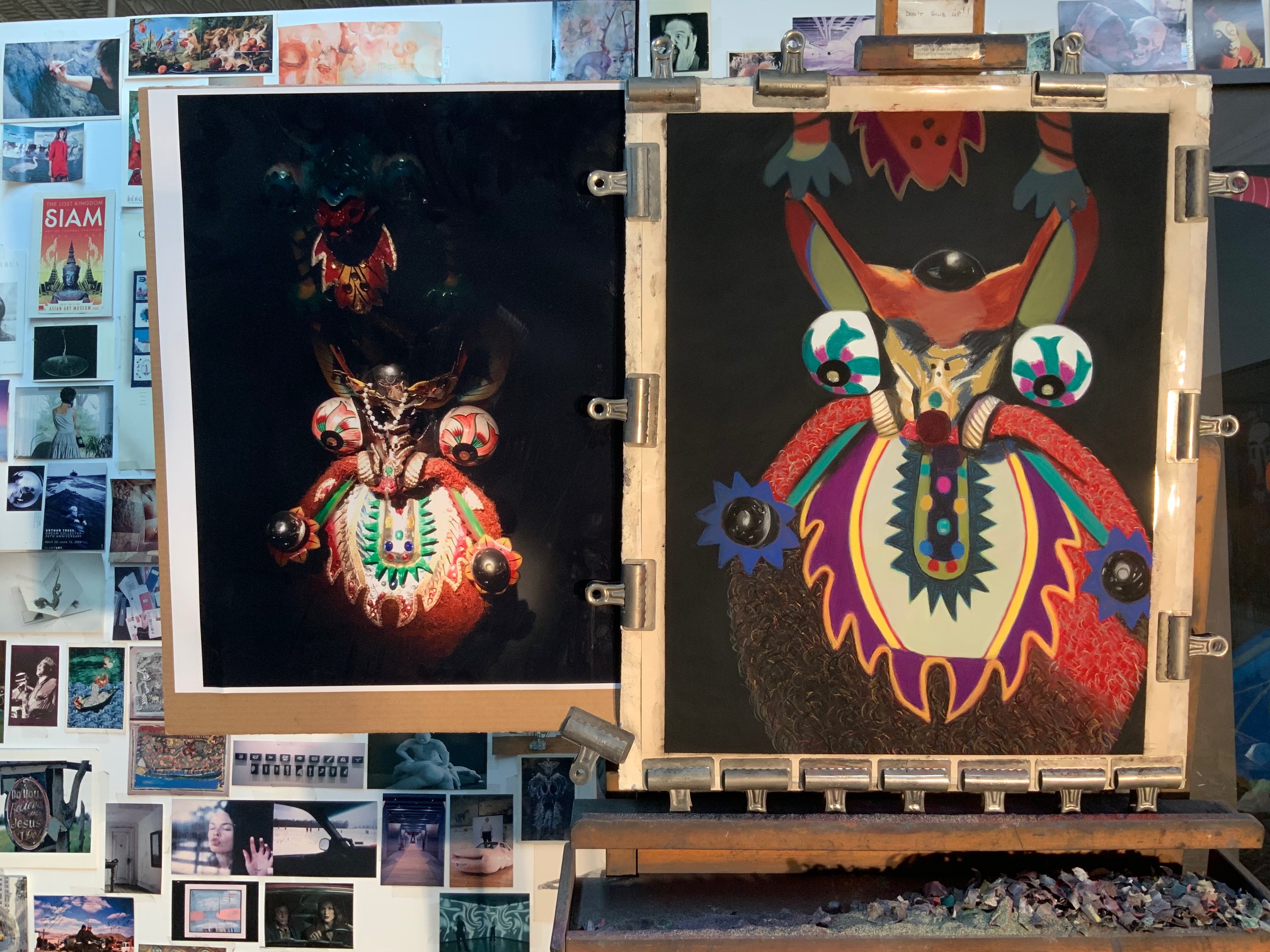
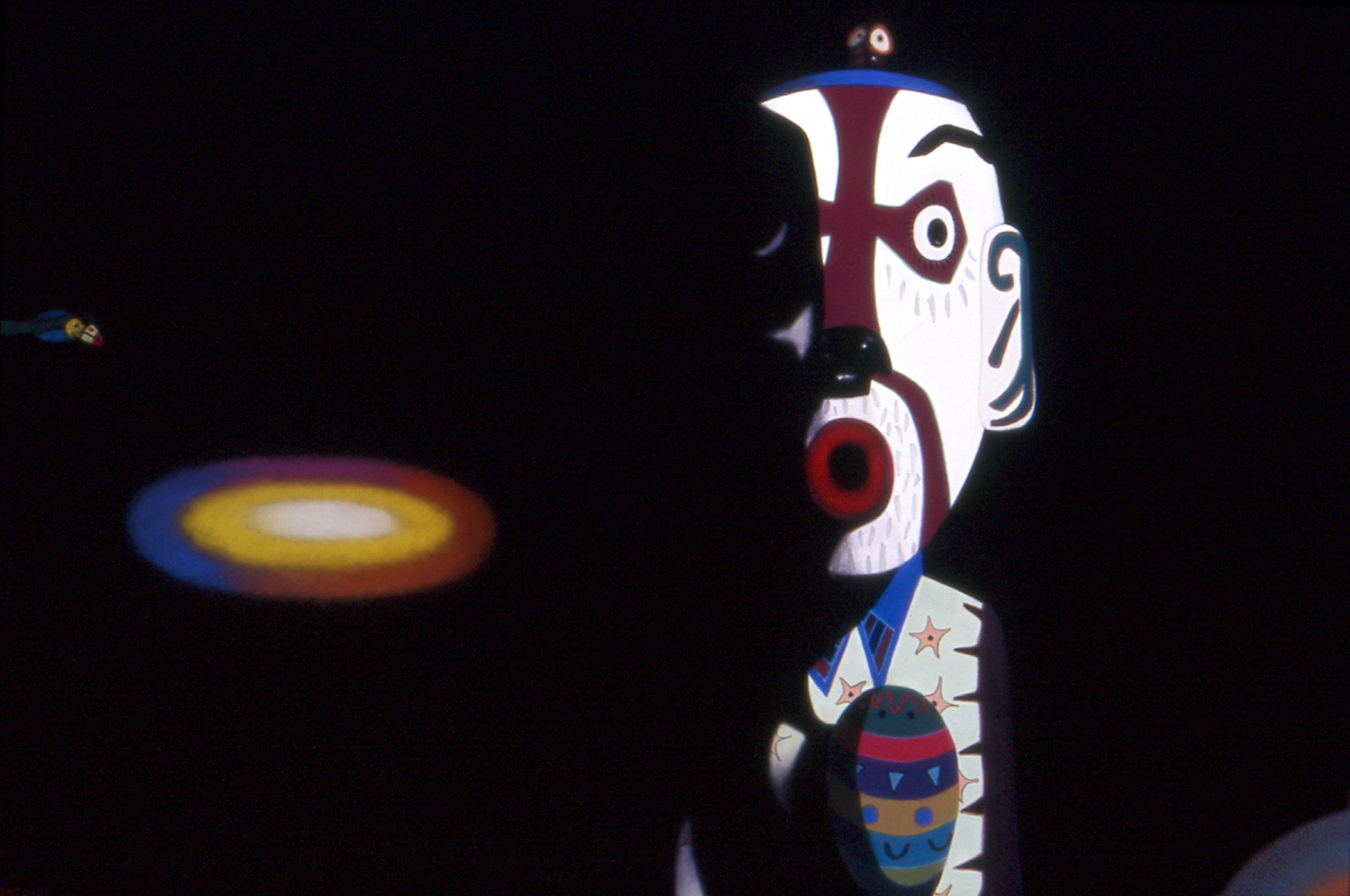
A: I continue working on “Enigma,” soft pastel on sandpaper, 20” x 26.” The title for this piece suggested itself as I was driving to my house in Alexandria, VA. I was listening to Lady Gaga’s current album, “Chromatica.” Her song “Enigma” came on and I thought, “That’s a great title for my painting because some areas of the ‘face’ are my own personal enigma!” They’re rather dark in my reference photo so I don’t yet understand what is happening there visually. But I will figure it out. I always do!
This is the second time I have titled a pastel painting based on a Lady Gaga song. It was “Poker Face,” from her debut album “The Fame.” My painting, “Poker Face,” was completed in 2012 and is number 24/45 in the “Black Paintings” series.
Comments are welcome!
Q: Can you give us your current elevator pitch?
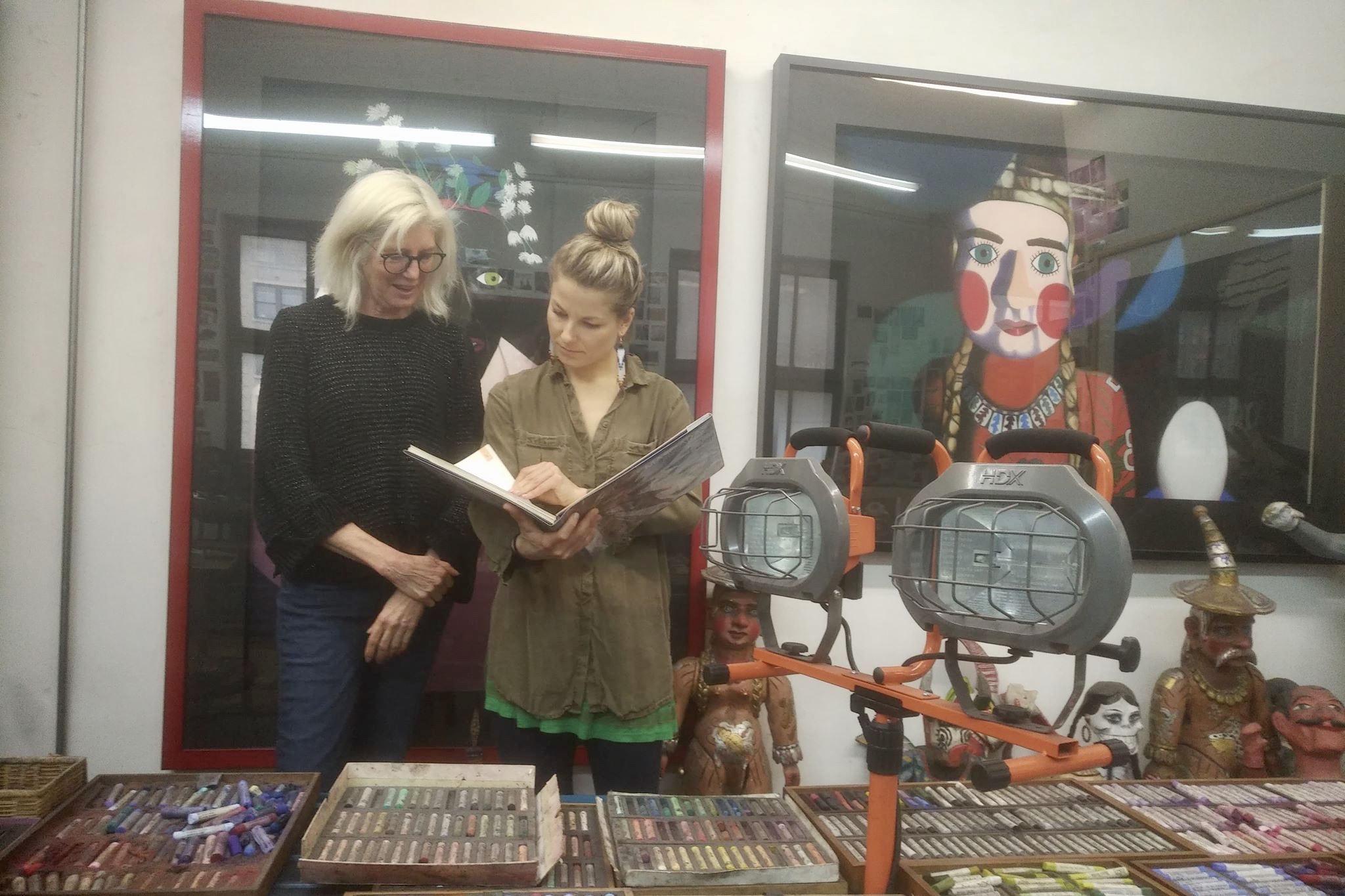
Discussing Bolivian masks with Nika, Photo: David De Hannay
A: Here it is:
I am a New York visual artist, blogger, and author. For thirty-four years I have been creating original pastel-on-sandpaper paintings that depict my large collection of Mexican and Guatemalan folk art – masks, carved wooden animals, papier mache figures, and toys. “Bolivianos,” my current series, is based on a mask exhibition I saw and photographed in La Paz in 2017 at the National Museum of Folklore and Ethnography.
My technique is self-invented and involves applying dozens of layers of soft pastel onto acid-free sandpaper to create new colors directly on the paper. Each pastel painting takes several months to complete. Typically, I make four or five each year. I achieve extraordinarily rich, vibrant color in pastel paintings that are a unique combination of reality, fantasy, and autobiography.
My background is unusual for an artist. I am a pilot, a retired Navy Commander, and a 9/11 widow. Besides making art, I am a published blogger and author best known for my popular blog, “Barbara Rachko’s Colored Dust” (53,000+ subscribers!) and my eBook, “From Pilot to Painter,” on Amazon and iTunes.
Please see images and more at http://barbararachko.art/en/
Comments are welcome!
Q: What’s on the easel today?
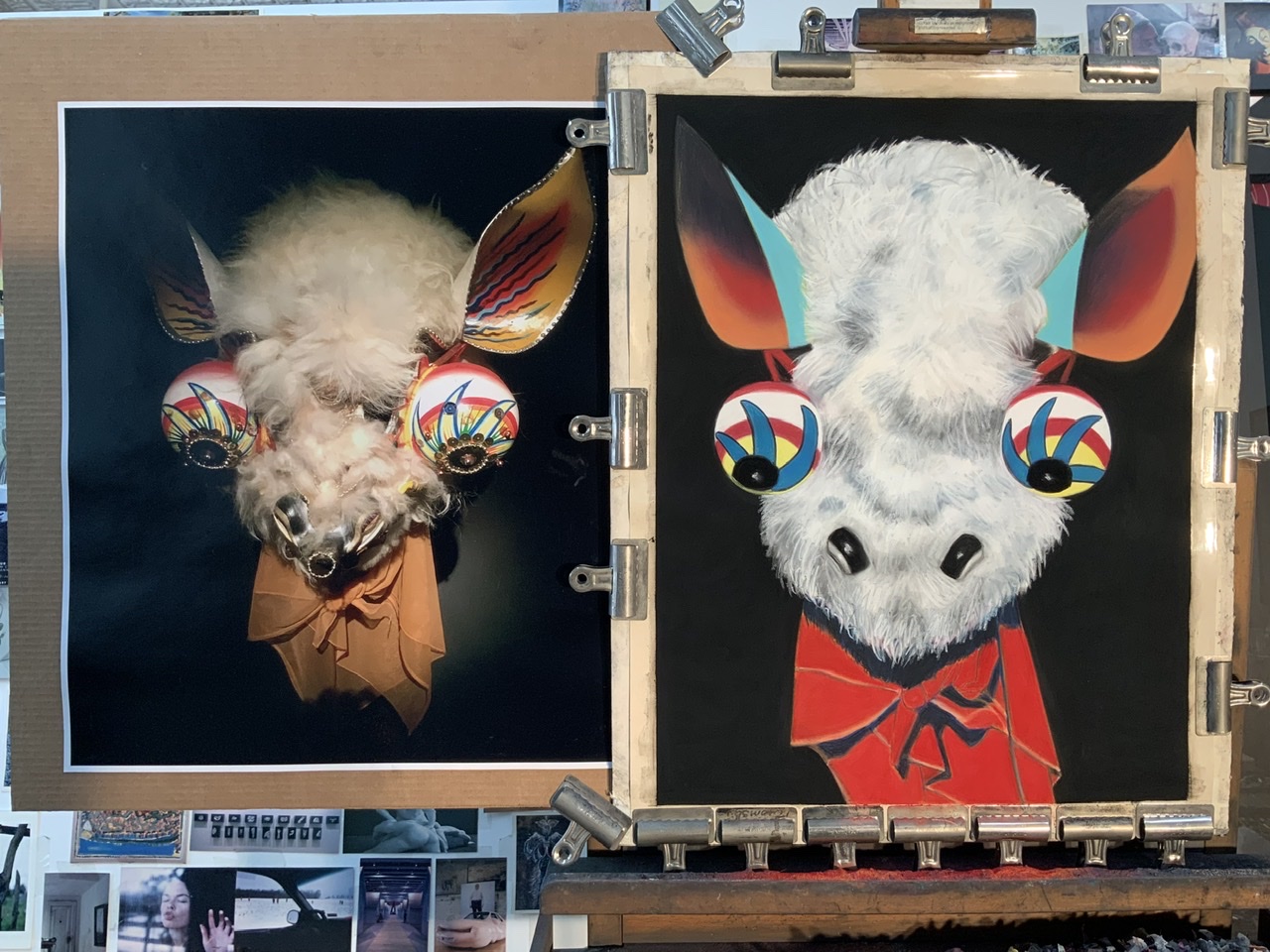
Work in progress
A: Progress is slower than usual during the current pandemic lockdown. I continue working on “Trickster,” soft pastel on sandpaper, 26” x 20.”
Comments are welcome!


 barbararachkoscoloreddust.com