Blog Archives
Pearls from artists* # 502

* an ongoing series of quotations – mostly from artists, to artists – that offers wisdom, inspiration, and advice for the sometimes lonely road we are on.
It seems to me that the less I fight my fear, the less it fights back. If I can relax, then fear relaxes, too. I cordially invite fear to come along with me everywhere I go. I even have a welcoming speech prepared for fear, which I deliver right before embarking upon any new project or adventure.
It goes something like this.
“Dearest fear: Creativity and I are about to go on a road trip together. I understand you will be joining us, because you always do. I acknowledge that you believe you have an important job to do in my life, and that you take your job seriously. Apparently, your job is to induce complete panic whenever I’m about to do something interesting – and may I say, you are superb at your job. So, by all means, keep doing your job, if you feel you must. But I will also be doing my job on this road trip, which is to work hard and stay focused. And Creativity will be doing its job, which is to remain stimulating and inspiring. There’s plenty of room in this vehicle for all of us, so make yourself at home, but understand this: Creativity and I are the only ones who will be making any decisions along the way. I recognize and respect that you are part of this family, and so I will never exclude you from our activities, but still – your suggestions will never be followed. You’re allowed to have a seat, and you’re allowed to have a voice, but you are not allowed to have a vote. You’re not allowed to touch the road maps; you’re not allowed to suggest detours; you’re not allowed to fiddle with the temperature. Dude, you’re not even allowed to touch the radio. But above all else, my dear old familiar friend, you are absolutely forbidden to drive.”
Then we head off together – me and creativity and fear – side by side by side forever, advancing once more into the terrifying but marvelous terrain of unknown outcome.
Elizabeth Gilbert in Big Magic: Creative Living Beyond Fear
Comments are welcome!
Pearls from artists* # 476
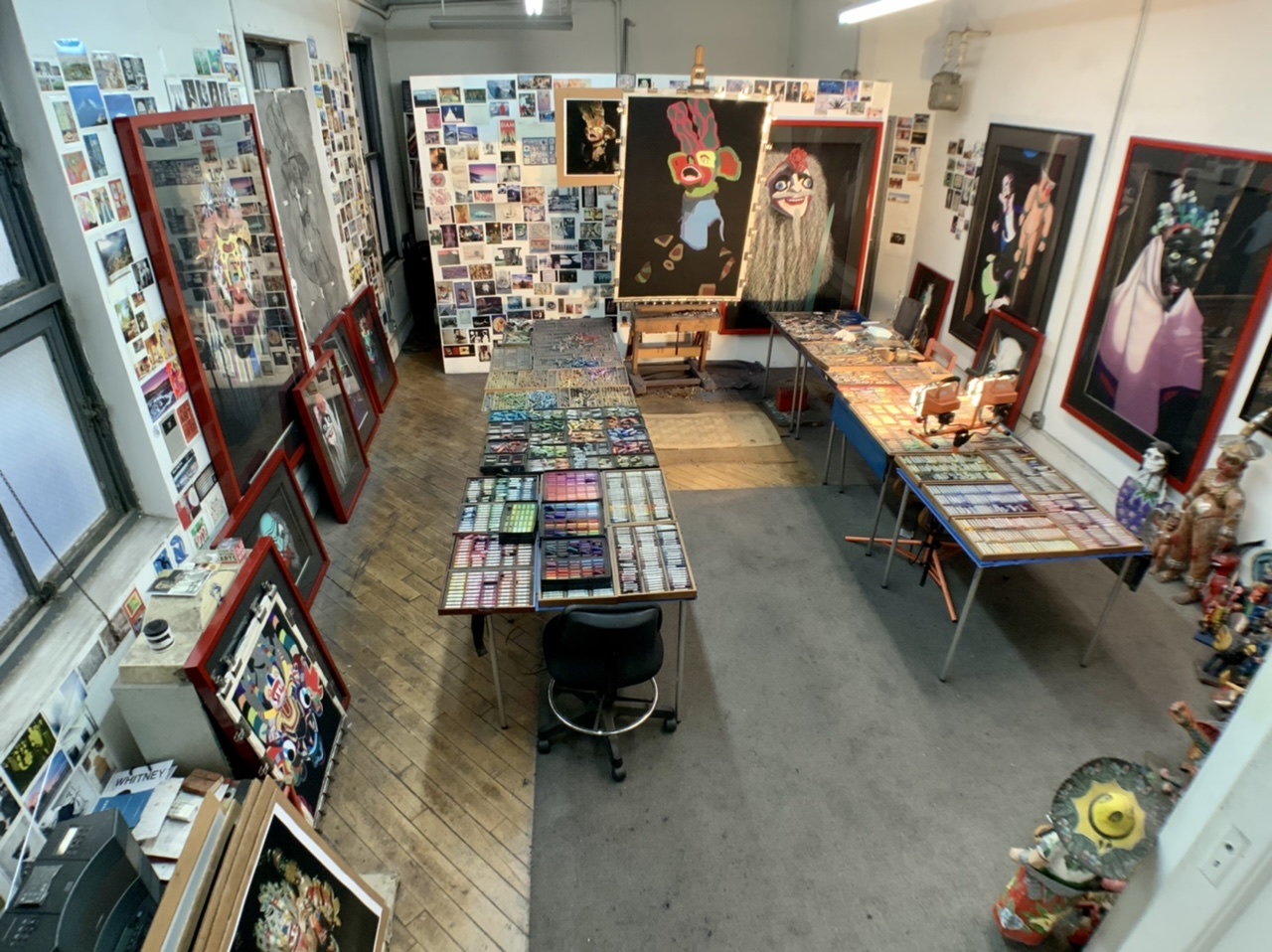
*an ongoing series of quotations – mostly from artists, to artists – that offers wisdom, inspiration, and advice for the sometimes lonely road we are on.
For a great many artists solitude is the time when they feel most real and alive. It is when they have their most intense experiences, when they can vicariously live out any adventure, any dream. Tennessee Williams said, “I’m only really alive when I’m writing.” The painter Robert Motherwell wrote, “I feel most real to myself in the studio.” The young, exuberant Russian painter Marie Bashkirtseff exclaimed at the end of the last century:
In the studio all distinctions disappear. One has neither name nor family; one is no longer the daughter of one’s mother, one is oneself and individual, and one has before one art, and nothing else. One feels so happy, so free, so proud!
We may think of his aliveness as the accumulation of al the above-listed benefits, as the artist working out her life, manifesting her creativity, suiting her personality, playing, avoiding unwanted social interactions, working authentically and integrity, living intensely – as the artist being her grandest self.
Eric Maisel in A Life in the Arts: Practical Guidance and Inspiration for Creative and Performing Artists
Comments are welcome!
Pearls from artists* # 385
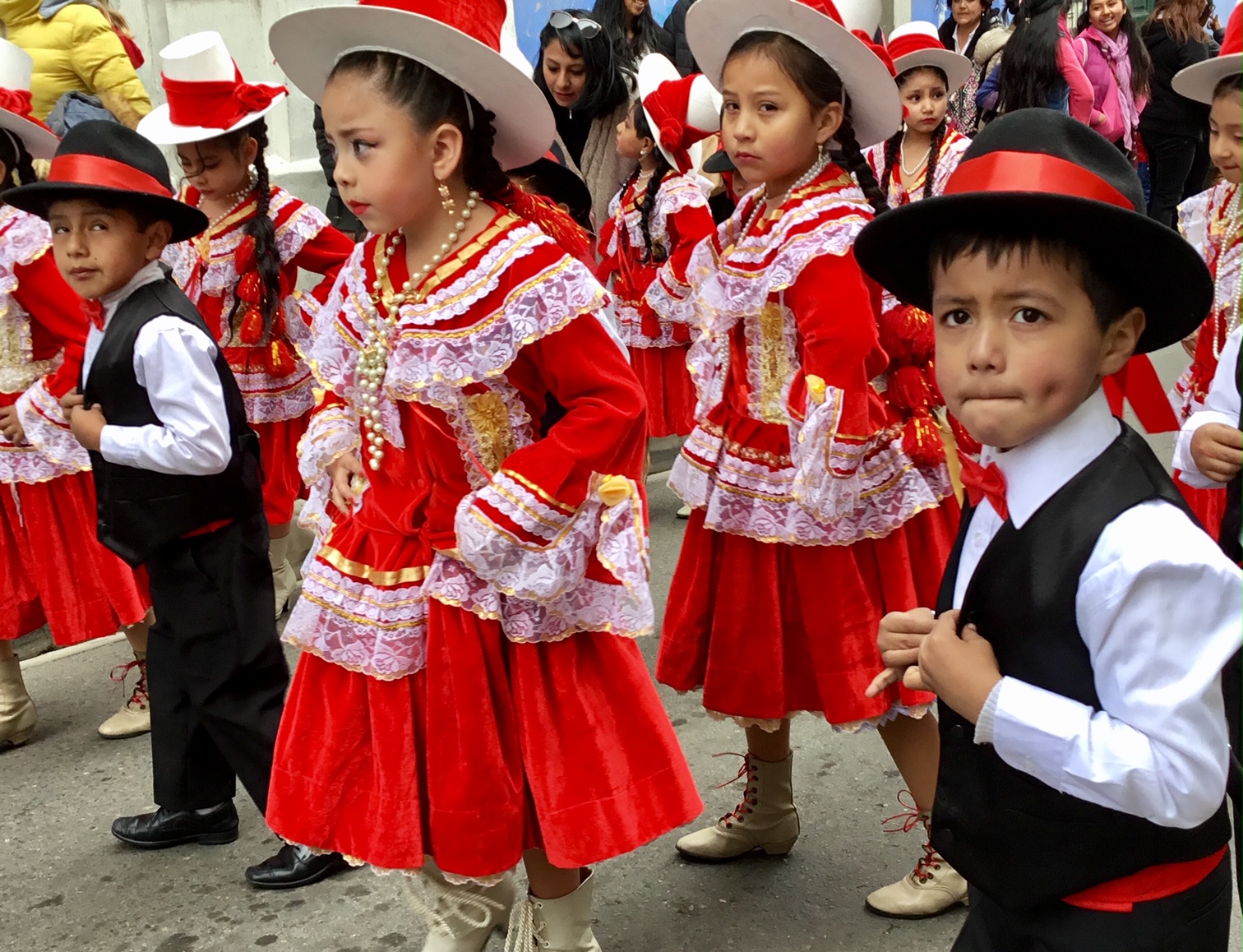
Potosí, Bolivia
* an ongoing series of quotations – mostly from artists, to artists – that offers wisdom, inspiration, and advice for the sometimes lonely road we are on.
Sunday of Carnival, the parade begins. For a whole day of celebration in music and dance, people can express their hope and fears, revive their myths and escape to a reality far from everyday life.
Thousands of spectators arrive from different parts if Bolivia and other countries. Filling the streets, they straddle benches, window ledges, balconies, cats and eve hang from walls or roofs to witness the entrance of the Carnival. Thus is the magnificent parade when Carnival makes its official entry into Oruro. The comparsas (dance troupes) dance to music for20 blocks, nearly eight lies, to the Church of the Virgin of Socavón (Virgin of the Mine). Each tries to out do the next in the brilliance of their costumes, the energy of their dancing and the power of their music. All their efforts are dedicated to the Virgin whose shrine is found on the hill called Pie de Gallo.
If there are thousands of spectators, there are also thousands of dancers from the city and other parts of the country. Among the most remarkable are the Diablos and Morenos which count for eight of the 40 or 50 participating groups. Keeping in mind that the smallest troupes have between 30 and 50 embers and the largest between 200 and 300, it is possible to calculate the number of dancers and imagine the spectacle.
… Each dance recalls a particular aspect of life in the Andes. Lifted from different periods and places, the dances offer a rich interpretation of historical events, creating an imaginative mythology for Oruro.
… Carnival blends indigenous beliefs and rituals with those introduced by the Spaniards. Both systems of belief have undergone transformations, each making allowance for the other, either through necessity or familiarity. The Christianity fought from Europe becomes loaded with new meanings while the myths and customs of the Andes accommodate their language and creativity to the reality of their conquered world. The process can be seen as a struggle culminating in a ‘mestizaje’ or new cultural mix.
El Carnaval de Oruro by Manuel Vargas in Mascaras de los Andes Bolivianos, Editorial Quipus and Banco Mercantil
Comments are welcome!
Pearls from artists* # 353
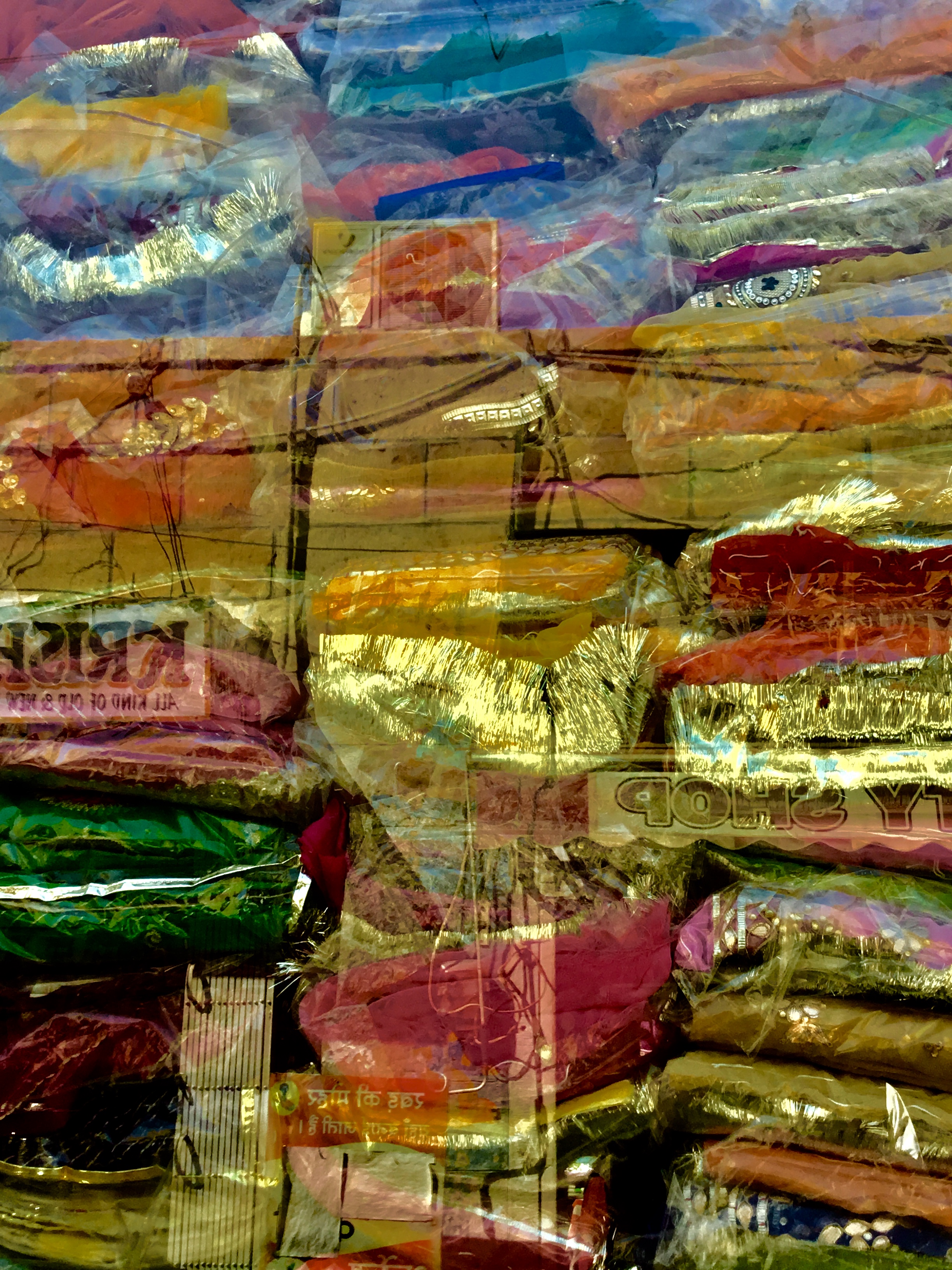
Sari shop, Ahmedabad, India
*an ongoing series of quotations – mostly from artists, to artists – that offers wisdom, inspiration, and advice for the sometimes lonely road we are on.
Creativity is freedom’s most primal expression, though not the freedom we were sold under the banner of democracy. True freedom is less a license to do as one pleases than the power to be what one has no choice but to be, the capacity to follow one’s own inmost desire. It is the freedom Nina Simone compares in “Feeling Good” to the shining of a star, a fish swimming in the sea, or the scent of a pine.
J.F. Martel in Reclaiming Art in the Age of Artifice: A Treatise, Critique, and Call to Action
Comments are welcome!
Pearls from artists* # 346
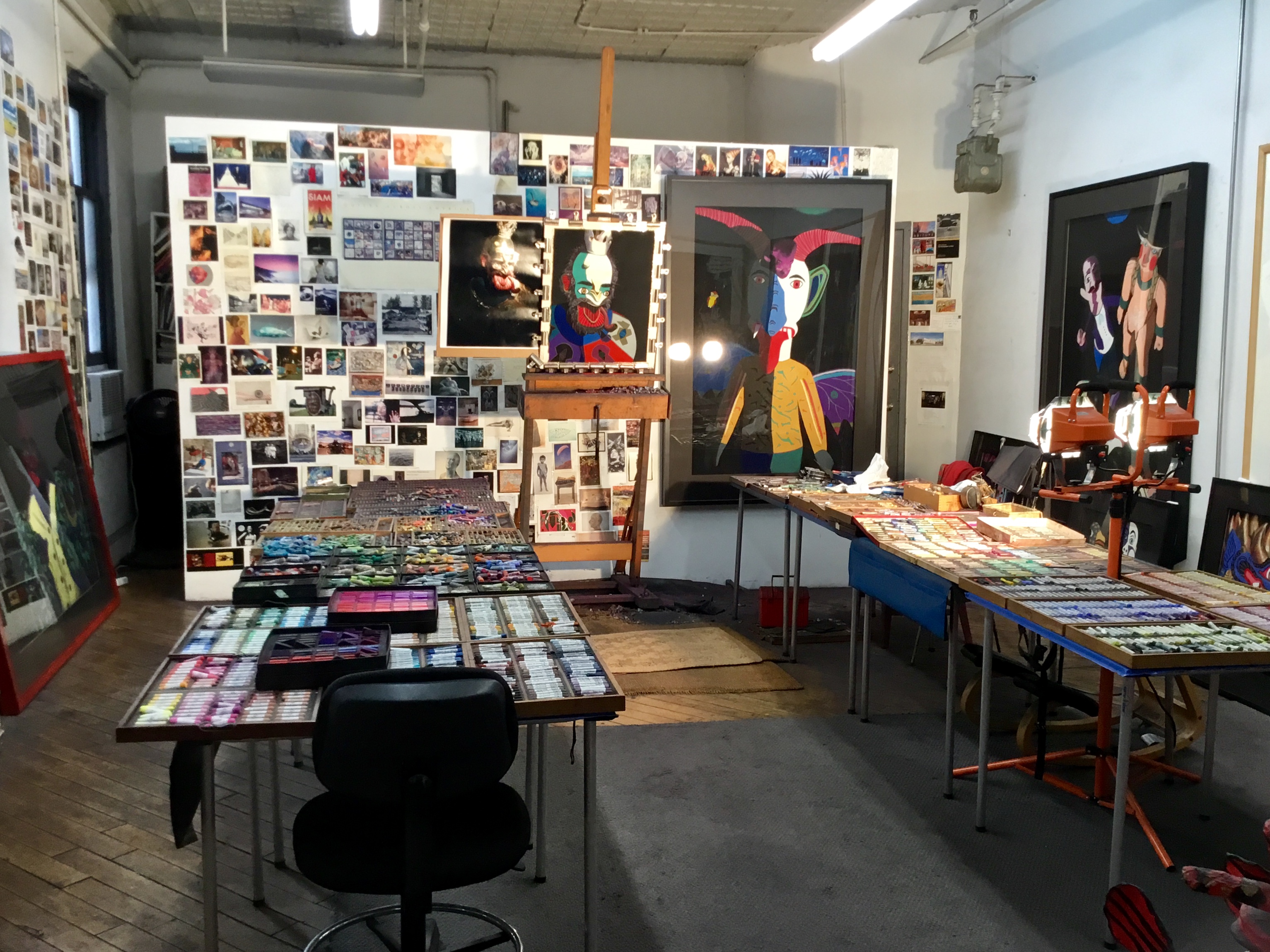
Barbara’s studio
*an ongoing series of quotations – mostly from artists, to artists – that offers wisdom, inspiration, and advice for the sometimes lonely road we are on.
In my view… the most useful definition of creativity is the following one: people are artistically creative when they love what they are doing, know what they are doing, and actively engage in the tasks we call art-making. The three elements of creativity are thus loving, knowing, and doing; or heart, mind, and hands; or, as Buddhist teaching has it, great faith, great question, and great courage.
Eric Maisel in A Life in the Arts: Practical Guidance and Inspiration for Creative and Performing Artists
Comments are welcome!
Pearls from artists* # 342

New York, NY
*an ongoing series of quotations – mostly from artists, to artists – that offers wisdom, inspiration, and advice for the sometimes lonely road we are on.
I work either way, you see – assisted or unassisted – because that is what you must do in order to live a fully creative life. I work steadily, and I always thank the process. Whether I am touched by grace or not, I thank creativity for allowing me to engage at all.
Because either way, it’s all kind of amazing – what we get to do, what we get to attempt, what we sometimes get to commune with.
Gratitude, always.
Always, gratitude.
Elizabeth Gilbert in Big Magic: Creative Living Beyond Fear
Comments are welcome!
Pearls from artists* # 337
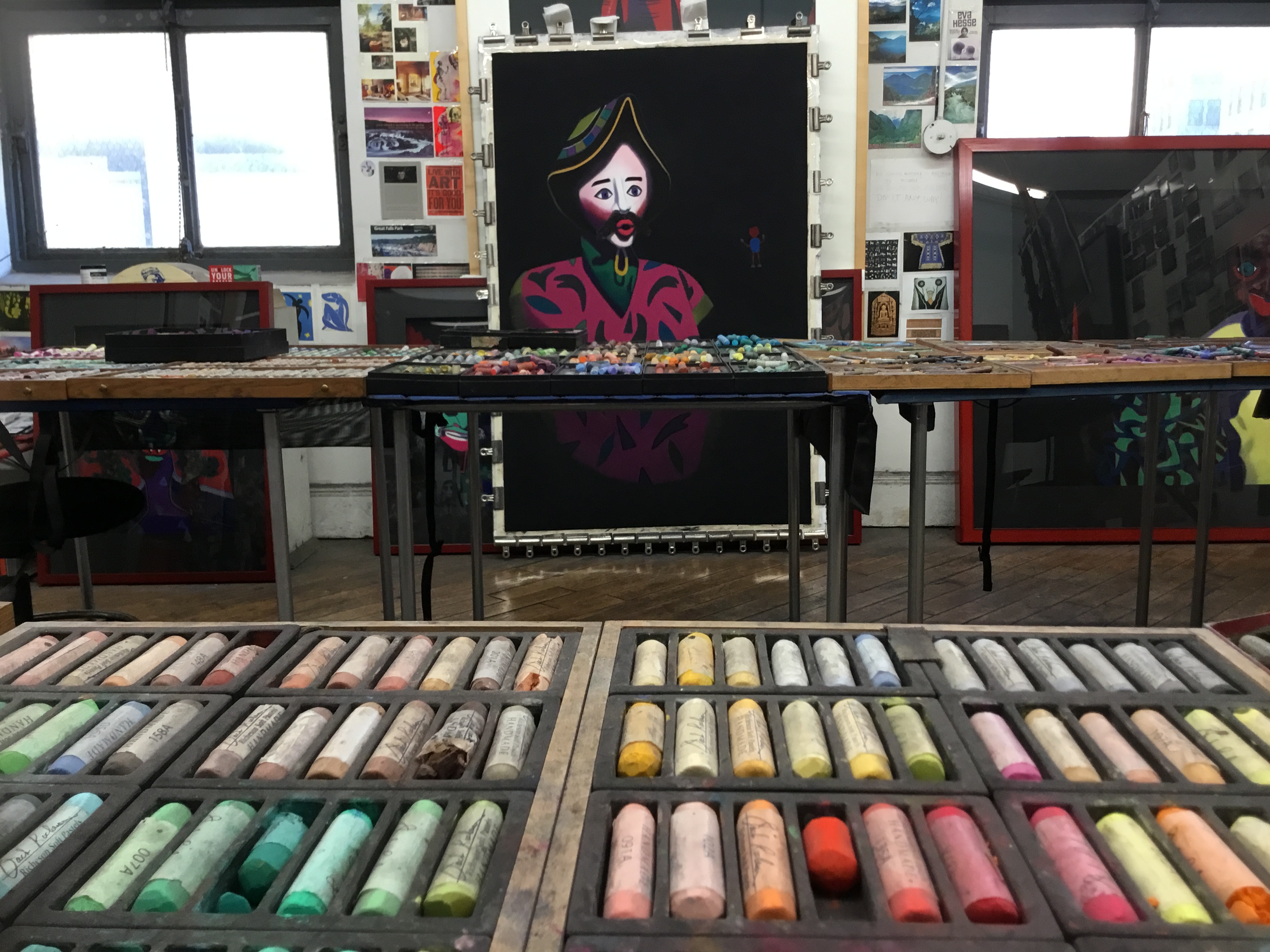
Barbara’s studio
*an ongoing series of quotations – mostly from artists, to artists – that offers wisdom, inspiration, and advice for the sometimes lonely road we are on.
I think society did a great disservice to artists when we started saying they were geniuses, instead of saying they had geniuses. That happened around the Renaissance, with the rise of a more rational and human-centered view of life. The gods and the mysteries fell away, and suddenly we put all credit and blame for creativity on the artists themselves – making the all-too-fragile humans completely responsible for the vagaries of inspiration.
In the process, we also venerated art and artists beyond their appropriate stations. The distinction of “being a genius” (and the rewards and status often associated with it) elevated creators into something like a priestly cast – and perhaps even into minor deities – which I think is a bit too much pressure for mere mortals, no matter how talented. That’s when artists start to really crack, driven mad and broken in half by the weight and weirdness of their gifts.
Elizabeth Gilbert in Big Magic: Creative Living Beyond Fear
Comments are welcome!
Pearls from artists* # 333

Studio entrance
*an ongoing series of quotations – mostly from artists, to artists – that offers wisdom, inspiration, and advice for the sometimes lonely road we are on.
… the Greeks and Romans both believed in the idea of an external daemon of creativity – a sort of house elf, if you will, who lived within the walls of your home and who sometimes aided you in your labors. The Romans had a specific term for that helpful house elf. They called it your genius – your guardian deity, the conduit of your inspiration. Which is to say, the Romans didn’t believe that an exceptionally gifted person was a genius; they believed that an exceptionally gifted person had a genius.
It’s a subtle but important distinction (being vs. having) and, I think, it’s a wise psychological construct. The idea of an external genius helps to keep an artist’s ego in check, distancing him somewhat from the burden of taking either full credit or full blame for the outcome of his work. If your work is successful, in other words, you are obliged to thank your external genius for the help, thus holding you back from total narcissism. And if your work fails, it’s not entirely your fault. You can say, “Hey, don’t look at me – my genius didn’t show up today!”
Either way, the vulnerable human ego is protected.
Protected from the corrupting influence of praise.
Protected from the corrosive effects of shame.
Elizabeth Gilbert in Big Magic: Creative Living Beyond Fear
Comments are welcome!
Pearls from artists* # 206
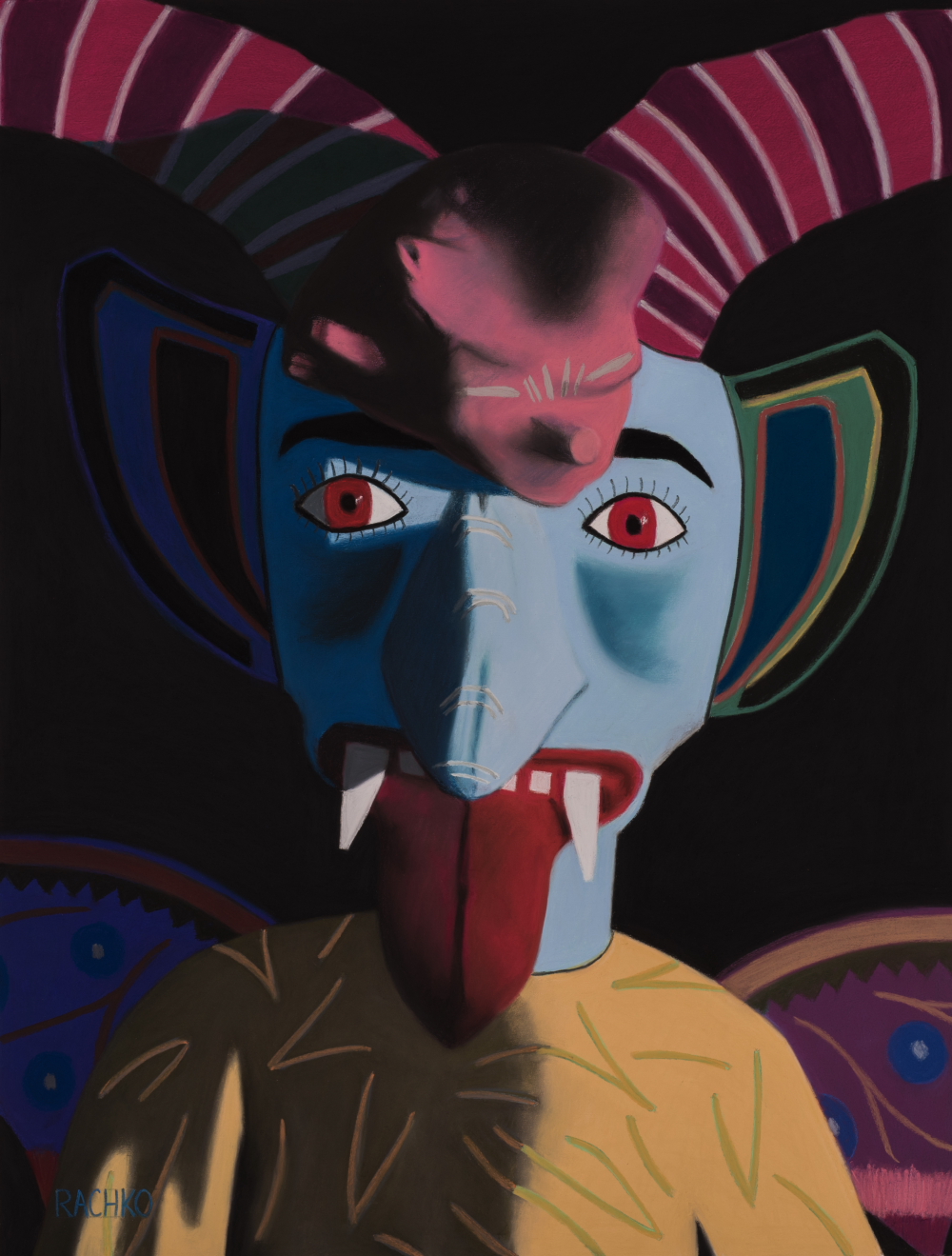
“Provocateur,” soft pastel on sandpaper, 26″ x 20″
* an ongoing series of quotations – mostly from artists, to artists – that offers wisdom, inspiration, and advice for the sometimes lonely road we are on.
And a career in higher education and medicine has taught me that creativity – whether in the sciences, arts or humanities – fosters controversy. We neither seek nor avoid controversy – we anticipate it and welcome the opportunity to explain the creative choices we make. We must take risks. We must be involved in the vital issues facing the world.
David J. Skorton, Director of the Smithsonian Institution in “What Do We Value?” Museum, May/June 2016
Comments are welcome!



Pearls from artists # 429
Nov 18
Posted by barbararachkoscoloreddust
*an ongoing series of quotations – mostly from artists, to artists – that offers wisdom, inspiration, and advice for the sometimes lonely road we are on.
Vincent [van Gogh] found himself in perfect harmony with[Emile] Zola’s world view. Neither of them sugarcoated or idealized the harsh reality of the everyday life that surrounded them, or the subjects it offered up. The same reality was at the heart of both of their work. In July 1883, Vincent read Zola’s essay on art, ‘Le Moment artistique,’ contained in one of his critical works on literary and artistic life, Mes haines (My Hatreds), in which Zola reflected on a crucial aspect of artistic creativity, going beyond the word ‘realistic;’ ‘the word “realist” means nothing to me, and I declare reality subordinate to temperament.’ Therefore, according to Zola, a ‘work of art is a corner of creation seen through a temperament.’ Vincent did not comment on this passage directly, but in his lines we see that in Zola’s words he found confirmation of his own beliefs. To Theo, in 1885, he wrote of his attempts to capture the effects of light in The Potato Eaters: “Not always literally exactly – rather never exactly – for one sees nature through one’s temperament.” The two contrasting souls that live side by side in the author of Les Rougon Macquart, one methodical, the other creative, reflected Vincent’s own creative approach.
Mariella Guzzoni in Vincent’s Books: Van Gogh and the Writers Who Inspired Him
Comments are welcome!
Share this:
Posted in 2020, An Artist's Life, Creative Process, Inspiration, Pearls from Artists, Quotes
Comments Off on Pearls from artists # 429
Tags: "Le Moment artistique", "Les Rougon Macquart", "Mes haines", "The Potato Eaters", accepted, according, ality, approach, artist, artistic, aspect, attempts, author, beliefs, beyond, capture, comment, confirmation, contained, contrasting, corner, creation, creative, creativity, critical, crucial, directly, effects, Emile Zola, everyday, exactly, harmony, himself, idealized, individual, literally, literary, Mariella Guzzoni, methodical, nature, neither, nothing, offered, passage, perfect, rather, realist, reality, reemperament, subjects, subordinate, sugarcoated, surrounded, transposition, Vincent Van Gogh, Vincent's Books: Van Gogh and the Writers Who Inspired Him, world view