Blog Archives
Pearls from artists* # 77
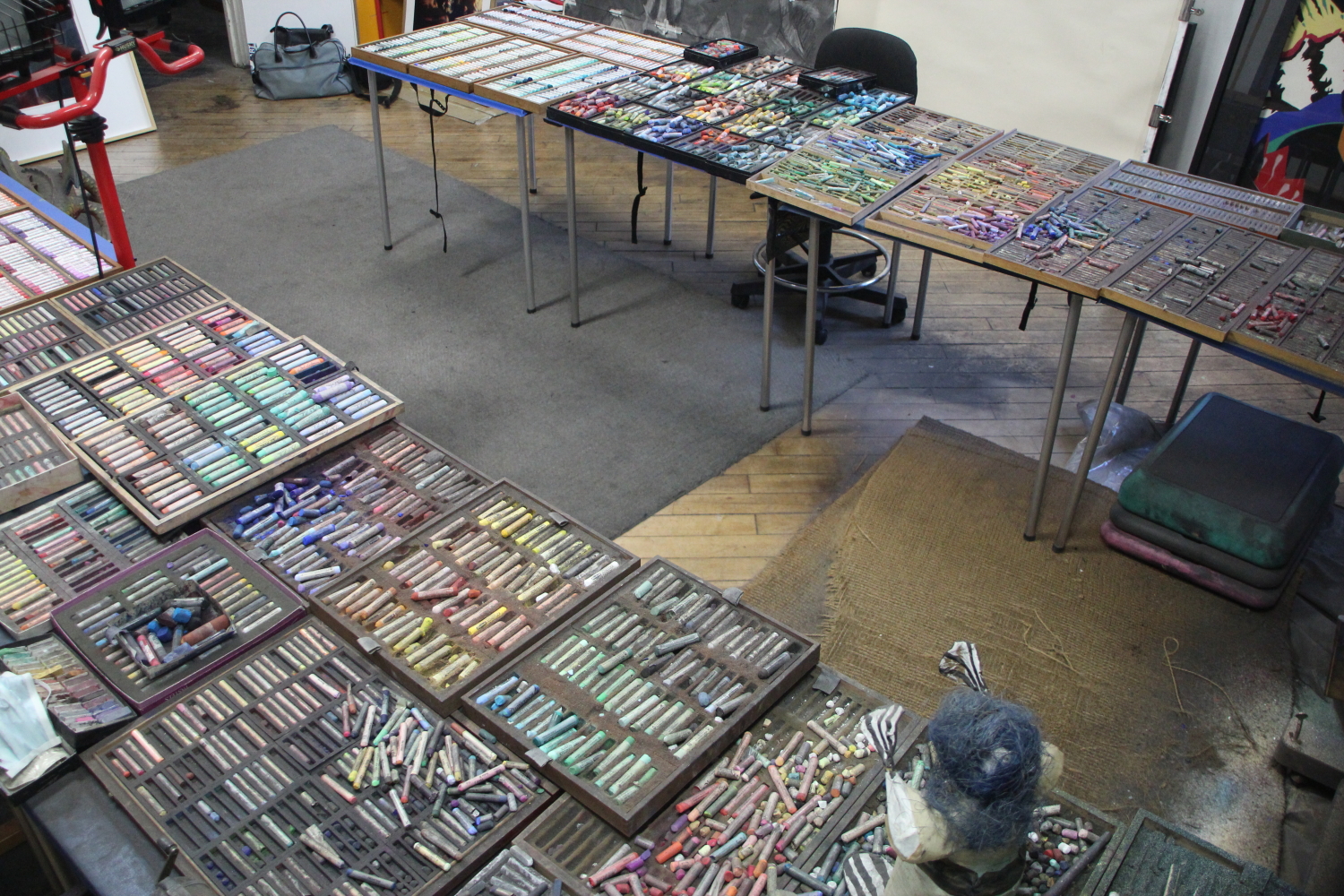
Barbara’s studio
* an ongoing series of quotations – mostly from artists, to artists – that offers wisdom, inspiration, and advice for the sometimes lonely road we are on.
Current possibilities far exceed any single artist’s capacity to engage them. Indeed, every known way of making art ever undertaken in all of history is included in today’s inventory of creative options. Thus, choices must be made. This has had a profound effect upon the quantity and diversity of skills needed to become an artist today. In addition to such conventional forms of artistic talent as visual acuity, manual dexterity, sensitivity, intelligence, ingenuity, and perseverance, contemporary artists must also be able to make judicious choices from a limitless inventory of alternatives. A decisive aspect of the creative act involves choosing a place amid possibilities that are as bountiful as they are eclectic and chaotic. Even this process entail choices. In staking the territory they wish to occupy, artists may be gluttons or ascetics, connoisseurs or commoners. Relationships between artists and their career choices may be lifelong and monogamous, or sequentially monogamous, polygamous, or promiscuous. But artists’ options even exceed selecting precedents. Free access to the past is amplified by freedom to augment the catalogue of creative options by contributing something new.
In the Making: Creative Options for Contemporary Art by Linda Weintraub
Comments are welcome!
Pearls from artists* # 73
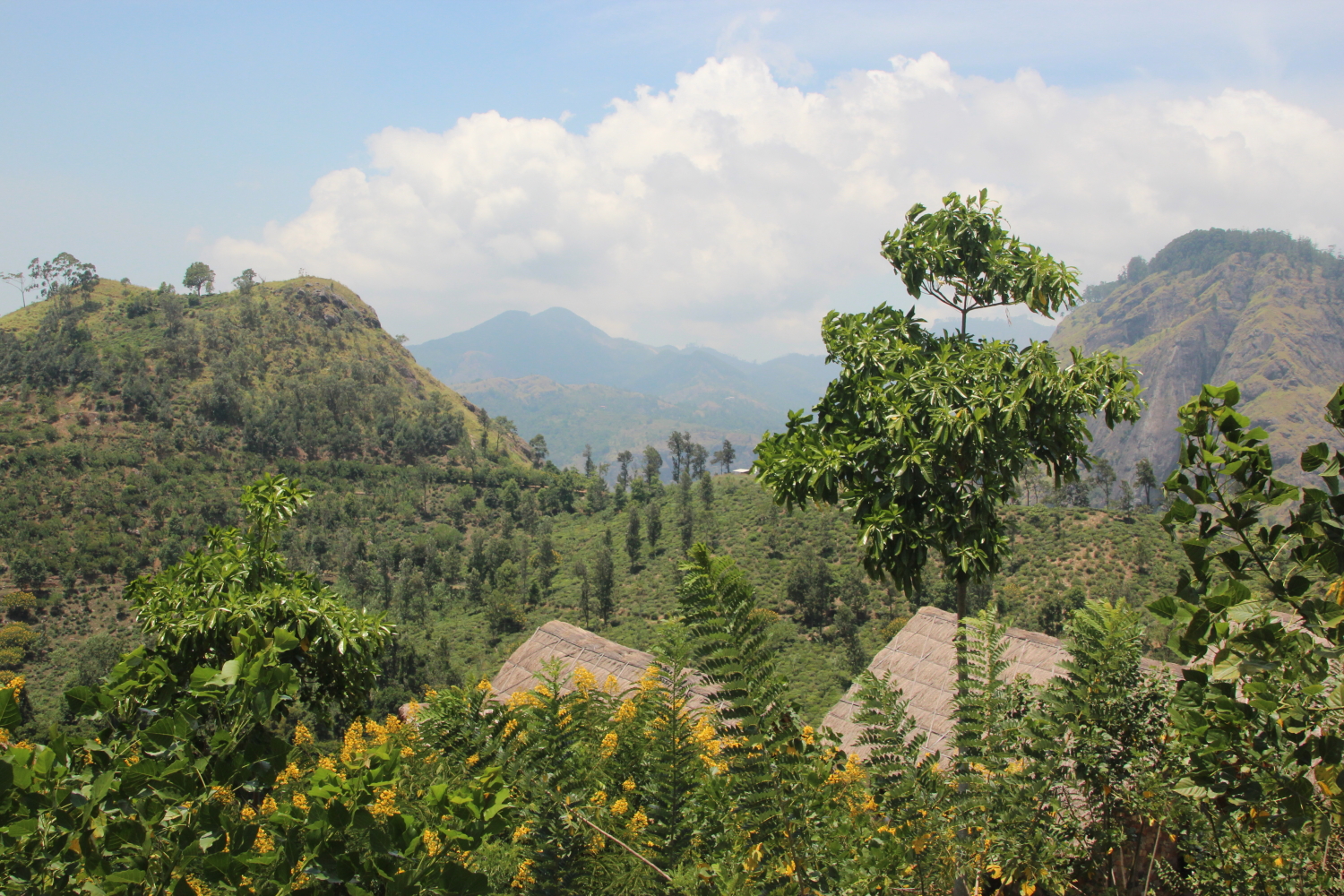
Sri Lanka
* an ongoing series of quotations – mostly from artists, to artists – that offers wisdom, inspiration, and advice for the sometimes lonely road we are on.
The primary tool in a creative process is interest. To be true to one’s interest, to pursue it successfully, one’s body is the best barometer. The heart races. The pulse soars. Interest can be your guide. It always points you in the right direction. It defines the quality, energy, and content of your work. You cannot feign or fake interest or choose to be interested in something because it is prescribed. It is never prescribed. It is discovered. When you sense this quickening you must act immediately. You must follow that interest and hold on tight.
Anne Bogart in A Director Prepares: Seven Essays on Art and Theater
Comments are welcome!
Q: Can you speak about what draws you to the Mexican and Guatemalan figures that you collect?
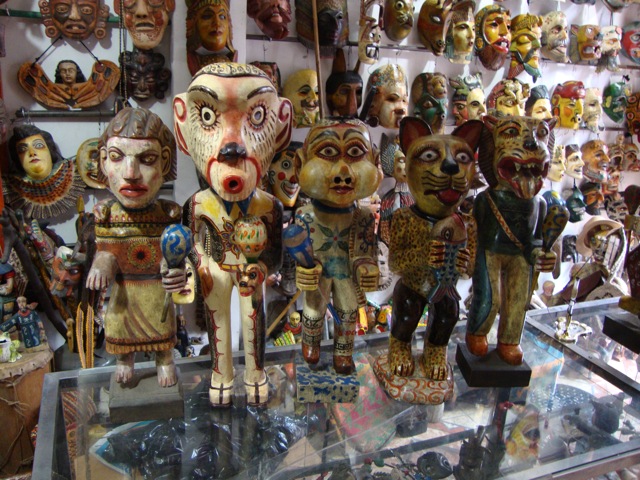
Shop in Panajachel, Guatemala, Photo: Donna Tang
A: I search the markets and bazaars of Mexico, Guatemala, and elsewhere for folk art objects – masks, carved wooden animals, papier mache figures, children’s toys – to bring back to New York to paint and photograph. Color is very important – the brighter and the more eye-catching the patterns are on these objects the better – plus they must be unique and have lots of personality. I try not to buy anything mass-produced or obviously made for the tourist trade. The objects must have been used or otherwise look like they’ve had a life (i.e., been part of religious festivities) to draw my attention. How and where each one comes into my possession is an important part of my creative process.
Finding, buying, and getting them back to the U.S. is always circuitous, but that, too, is part of the process, an adventure, and often a good story. Here’s an example. In 2009 I was in a small town on the shores of Lake Atitlan in Guatemala, called Panajachel. After returning from a boat ride across the lake, my friends and I were walking back to our hotel when we discovered a wonderful mask store. I spent some time looking around, made my selections, and was ready to buy five exquisitely-made standing wooden figures, when I learned that Tomas, the store owner, did not accept credit cards. I was heart-broken and thought, “Oh, no, I’ll have to leave them behind.” However, thanks to my good friend, Donna, whose Spanish is much more fluent than mine, the three of us brain-stormed until finally, Tomas had an idea. I could pay for the figures at the hotel up the block and in a few days when the hotel was paid by the credit card company, the hotel would pay Tomas. Fabulous! Tomas, Donna, and I walked to the hotel, where the transaction was made and the first hurdle was overcome. Working out the packing and shipping arrangements took another hour or two, but during that time Tomas and I became friends and exchanged telephone numbers (the store didn’t even have a telephone so he gave me the phone number of the post office next door, saying that when I called, he could easily run next door!). Most surprisingly, the package was waiting for me in New York when I returned home from Guatemala.
Comments are welcome!
Q: How would you describe your personal artistic style?
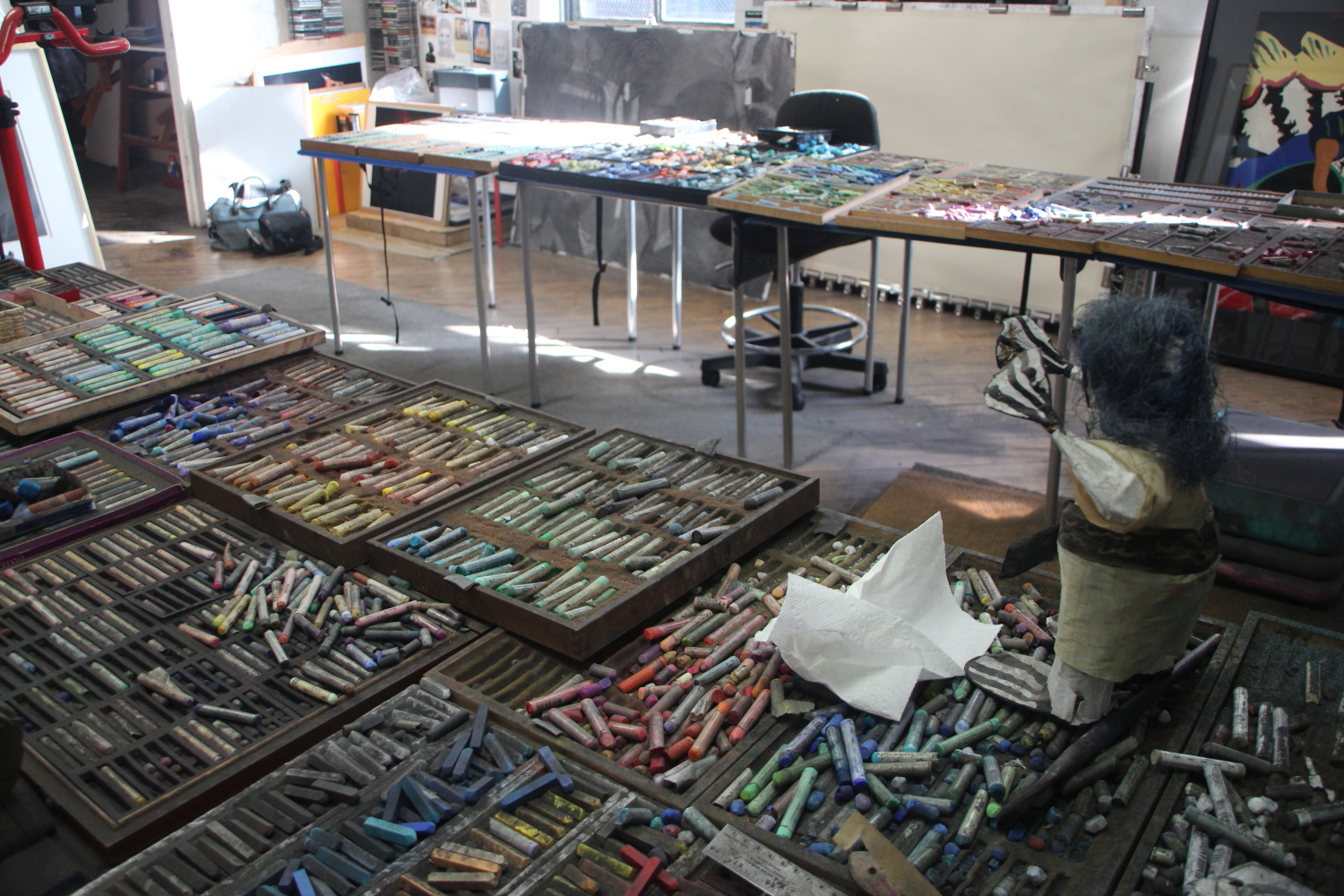
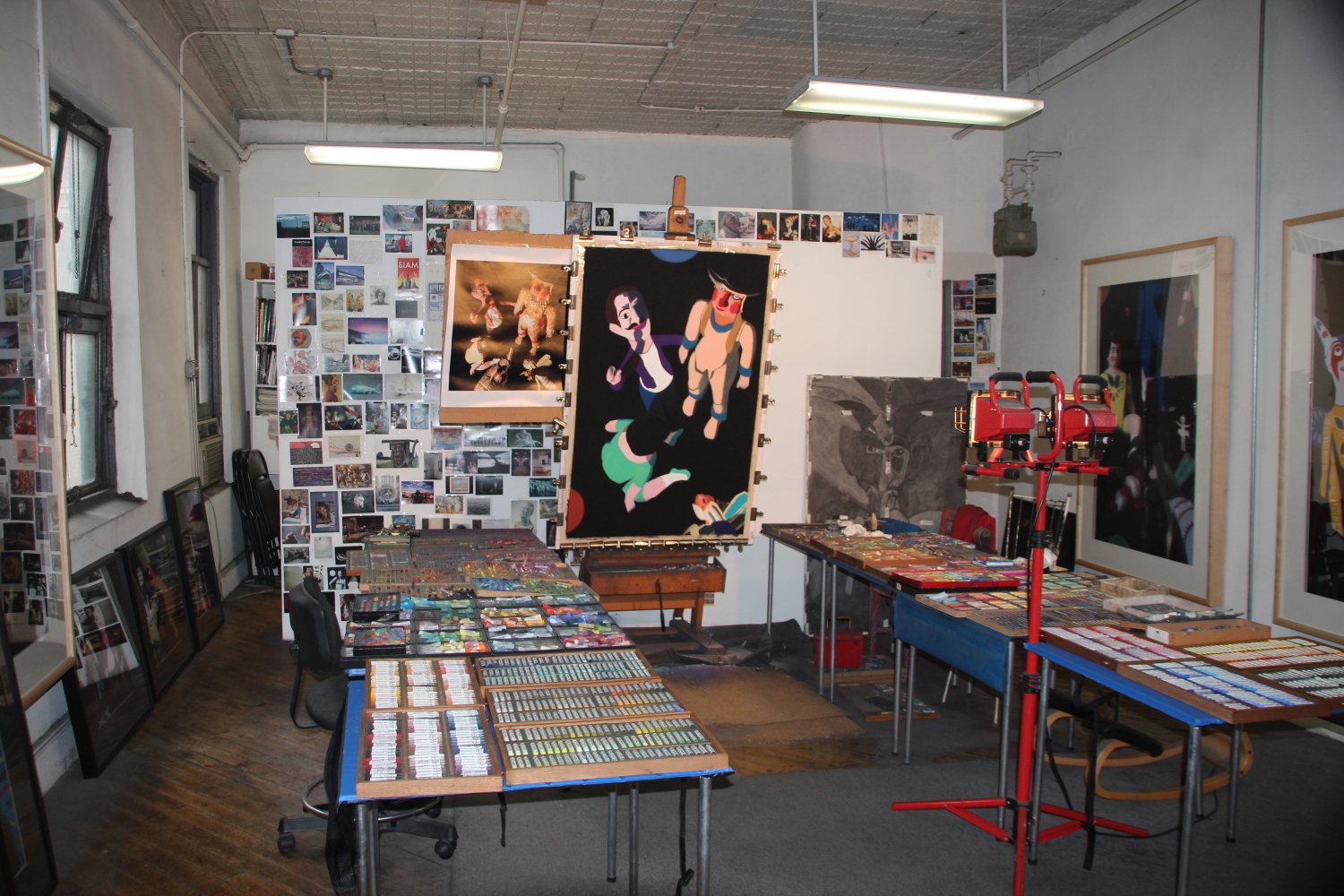
Barbara’a pastels
A: Regardless of what medium I am using, I am first and foremost a colorist. Everything I create is vibrant with color.
The Navy taught me to be organized, goal-oriented and focused, to love challenges, and in everything I do, to pay attention to the details. Trying to make it as an artist in New York is nothing BUT challenges, so these qualities serve me well, whether I am creating paintings, shooting and making photographs, or trying to understand the art business, keep up with social media, and manage all the tasks required of a busy artist with a New York studio, a business, and two residences to maintain. It’s a lot, but it forces me to continually learn and grow. As Helen Keller famously said, “Life is an adventure or it is nothing.”
These days I am rarely bored. I thoroughly enjoy spending long, solitary hours working to become a better artist. I am meticulous about craft and will not let work out of my studio until it is as good as I can make it. My creative process is more exciting than ever. It’s thrilling and energizing to continually push soft pastel to its limits and use it in ways that no other artist has done before!
Comments are welcome!
Q: How do you define success as an artist?
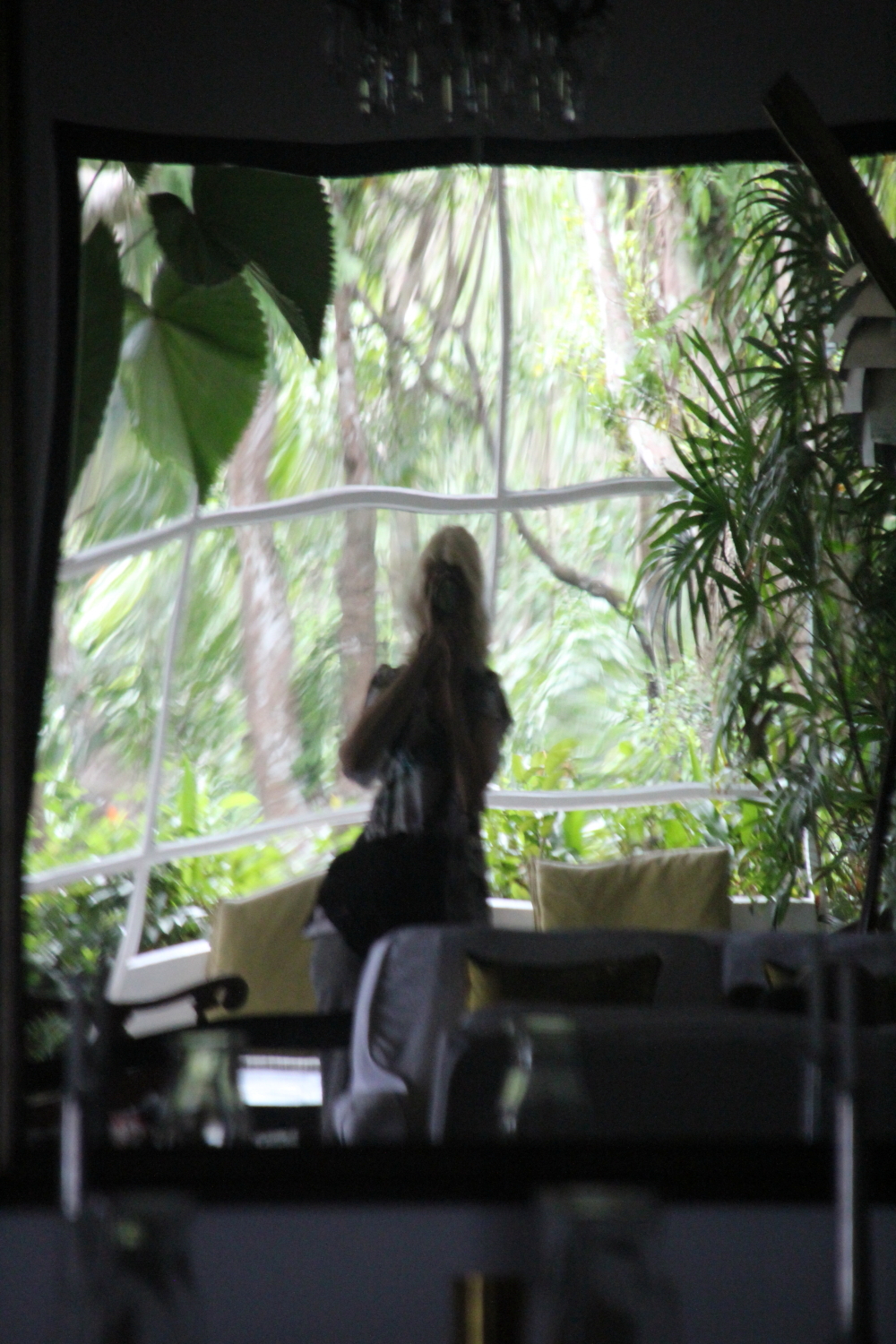
Self-portrait at an architect’s estate in Sri Lanka
A: This is another question that has many answers depending more or less on how things are progressing in the studio. I’d say that you are a successful artist if you are able to keep working and evolving, and are mostly living by your own rules, using your time as you see fit to become a better artist. This means navigating through all the ups and downs, the obstacles – and we know there are many – to art-making and finding joy and on-going discovery in your own particular creative process. The work is everything, as we always say, but hopefully, you have found an appreciative audience and do sell a piece of art now and then.
I know that I am more fortunate than many. Over time I’ve realized that money, i.e., sales, is one of the less important aspects of being an artist. The richness that being a professional artist brings to my life goes far beyond anything that can be acquired with cash!
Comments are welcome!
Pearls from artists* # 57

Studio corner
* an ongoing series of quotations – mostly from artists, to artists – that offers wisdom, inspiration, and advice for the sometimes lonely road we are on.
You are talented and creative. You rarely block, and when you do block you know how to move yourself along. Your moods are not incapacitating and you haven’t stepped over into madness. Your personality is sufficiently integrated that your necessary arrogance doesn’t prevent you from having successful relationships, your nonconformity hasn’t made you a pariah, and your skepticism hasn’t bred in you a nihilistic darkness. You work happily in isolation but can also move into the world and have a life. You have, in short, met the challenges posed so far.
Are you home free? Unfortunately not. The next challenges you face are as great as any posed so far. They are the multiple challenges of doing the business of art: making money, developing a career, acknowledging and making the most of your limited opportunities, living with compromise, dealing with mass taste and commercialism, negotiating the marketplace, and making personal sense of the mechanics and metaphysics of the business environment of art.
Many artists grow bitter in this difficult arena. Many an artist flounders. Only the rare artist sits himself down to examine these matters, for they are painful to consider. But you have no choice but to examine them. If you are an artist, you want an audience. And if you want an audience, you must do business.
Comments are welcome!
Eric Maisel in A Life in the Arts
Q: Please describe your artistic self in six words.

Alli’s backyard
A: Talking about myself I would say, “Seeker of color, light, and beauty;” on my creative journey, “Driven to communicate eloquently with less;” and concerning my artistic practice as a whole, “Excellence, authenticity, and integrity above everything.”
Comments are welcome!
Pearls from artists* # 36
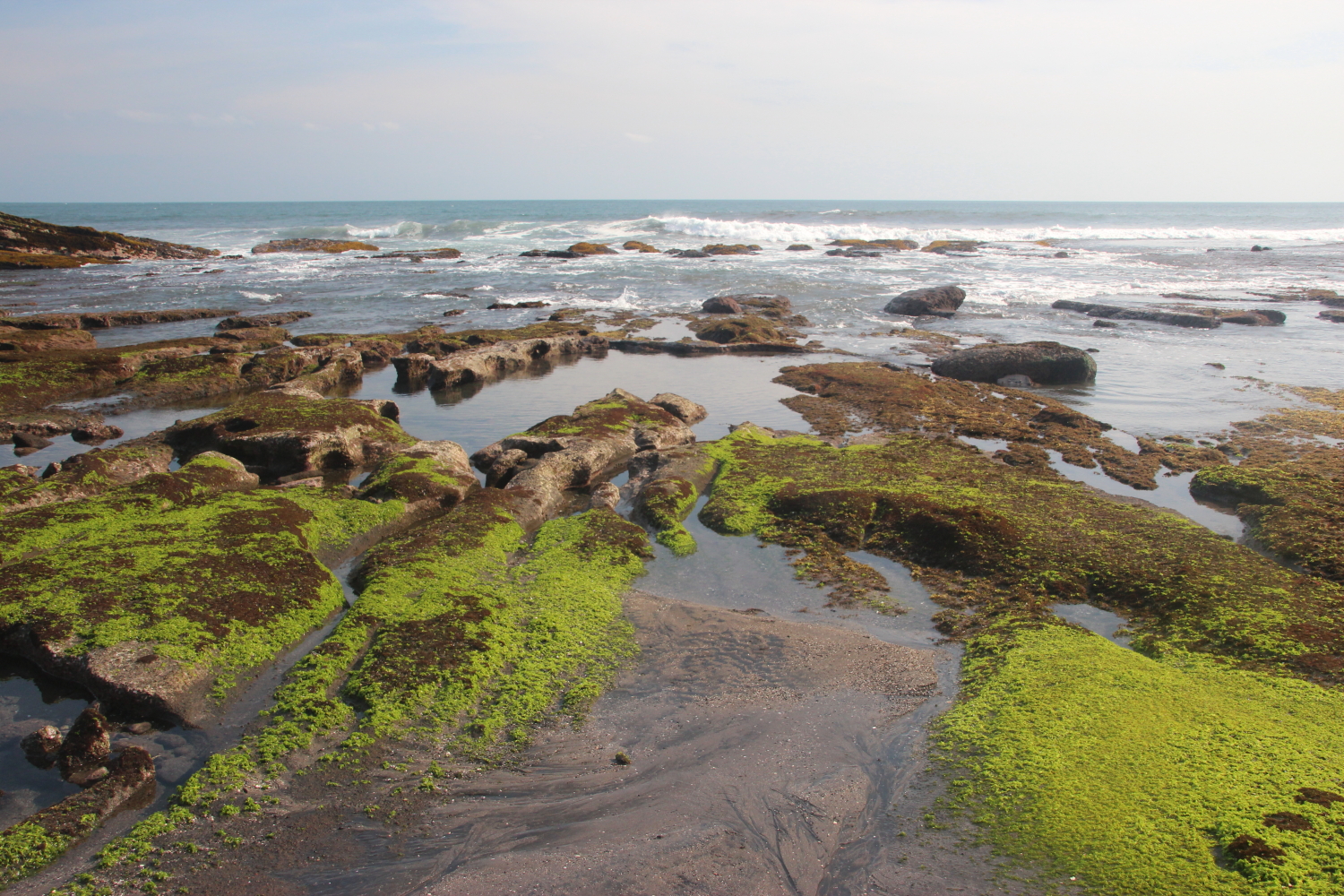
Indian Ocean, Tanah Lot, Bali
* an ongoing series of quotations – mostly from artists, to artists – that offers wisdom, inspiration, and advice for the sometimes lonely road we are on.
… don’t wait for things to change, the hour of man is now and, whether you are working at the bottom of the pile or on top, if you are a creative individual you will go on producing, come hell or high water. And this is the most you can hope to do. One has to go on believing in himself, whether recognized or not, whether heeded or not. The world may seem like hell on wheels – and we are doing our best, are we not, to make it so? – but there is always room, if only in one’s own soul, to create a spot of Paradise, crazy though it may sound.
Henry Miller in Stand Still Like the Hummingbird
Comments are welcome!



New eBook!
Jan 18
Posted by barbararachkoscoloreddust
Cover
I am pleased to announce that my first eBook, FROM PILOT TO PAINTER, is available now on Amazon!
It is based on my blog and is part memoir, including my personal loss on 9/11, insights into my creative practice, and intimate reflections on what it’s like to be an artist living in New York City now.
The eBook includes new material not found on the blog: 25+ reproductions of my vibrant pastel-on-sandpaper paintings, a Foreword by Ann Landi (who writes for ARTnews and The Wall Street Journal), and more.
Thank you for your support!
http://www.amazon.com/From-Pilot-Painter-Interview-Barbara-ebook/dp/B00HNVR200/ref=sr_1_1?ie=UTF8&qid=1389292390&sr=8-1&keywords=barbara+rachko
Note: If you do not own a Kindle, you can download a free Kindle app.
Here is the one for MACs:
http://www.amazon.com/gp/feature.html?docId=1000464931
Here is a link for the rest:
Kindle Cloud Reader – Read instantly in your browser
Smartphones – iPhone & iPod touch, Android, Windows Phone, BlackBerry
Computers – Mac, Windows 8, Windows 7, XP & Vista
Tablets – iPad, Android Tablet, Windows 8
http://www.amazon.com/gp/feature.html/ref=sv_kstore_3?ie=UTF8&docId=1000493771
Comments are welcome!
Share this:
Posted in 2014, An Artist's Life, Art in general, Art Works in Progress, Black Paintings, Creative Process, Domestic Threats, Gods and Monsters, Guatemala, Inspiration, Mexico, New York, NY, Painting in General, Pastel Painting, Photography, Quotes, Studio, Travel, Working methods
4 Comments
Tags: "From Pilot to Painter", "The Wall Street Journal", 9/11, Amazon, Ann Landi, announce, app, artist, ARTnews, available, blog, comments, cover, creative, easy, ebook, foreword, instructions, interview, intimate, Kindle, loss, material, memoir, New York City, paintings, pastel-on-sandpaper, personal, pleased, practice, reflections, reproductions, support, vibrant