Blog Archives
Q: Do you use a sketchbook?
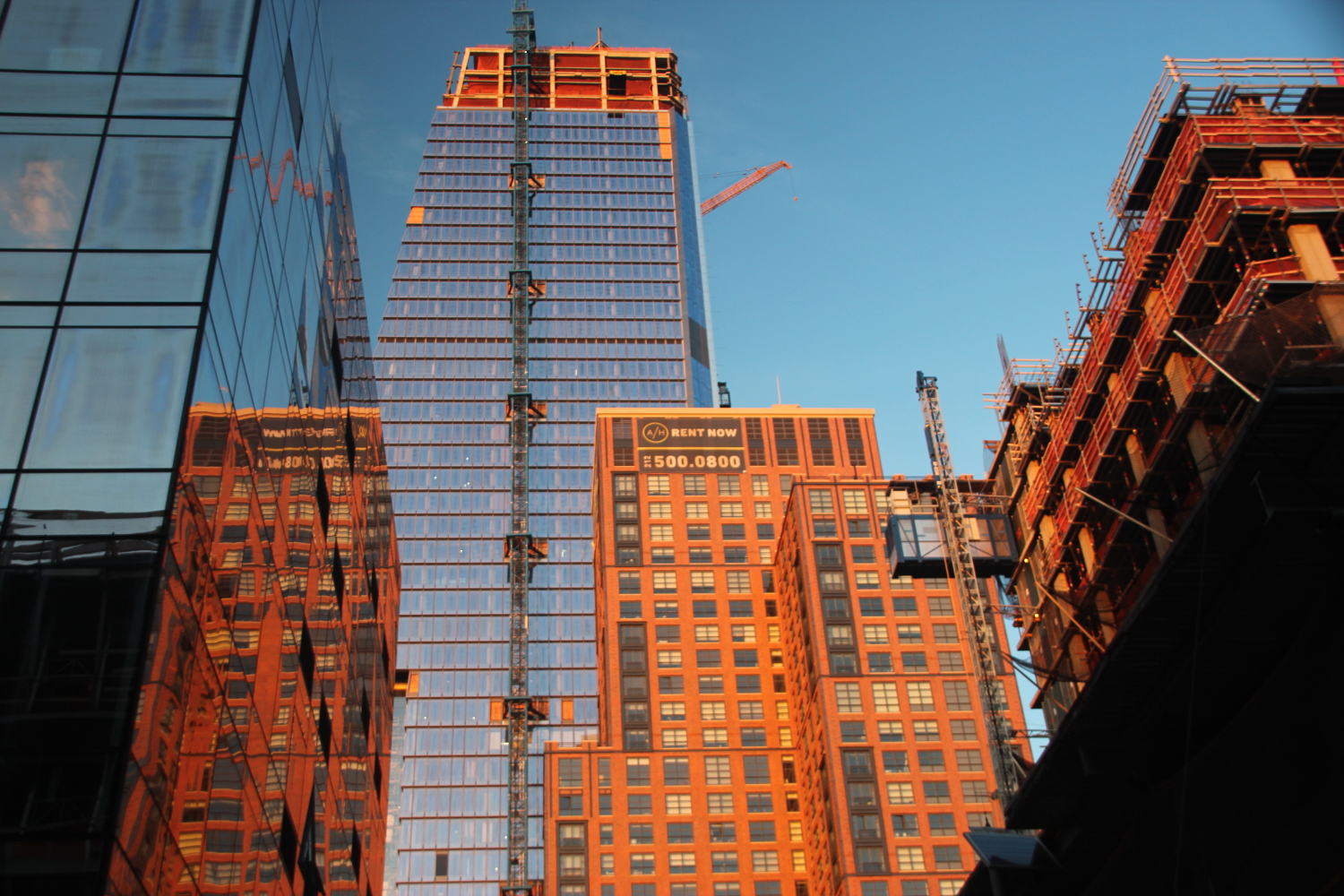
Hudson Yards, NYC
A: I used to use a sketchbook early on, when I was just beginning to find my way as an artist. Sketching on location helped to crystalize my ideas about art, about technique, and about what I hoped to accomplish in the near term. These days I spend so many hours in the studio – it’s my day job – that I often need a mental and physical break from using my eyes and from looking at and composing images.
What I do instead is to walk around New York (and elsewhere) with a camera. Photography for me sometimes serves as an alternative to sketching. It’s a way to continue to think about art, to experiment, and to contemplate what makes an arresting image without actually having to be working in the studio.
Comments are welcome!
Q: When you left the Navy you worked on commission as a portrait artist. Why don’t you accept commissions now?

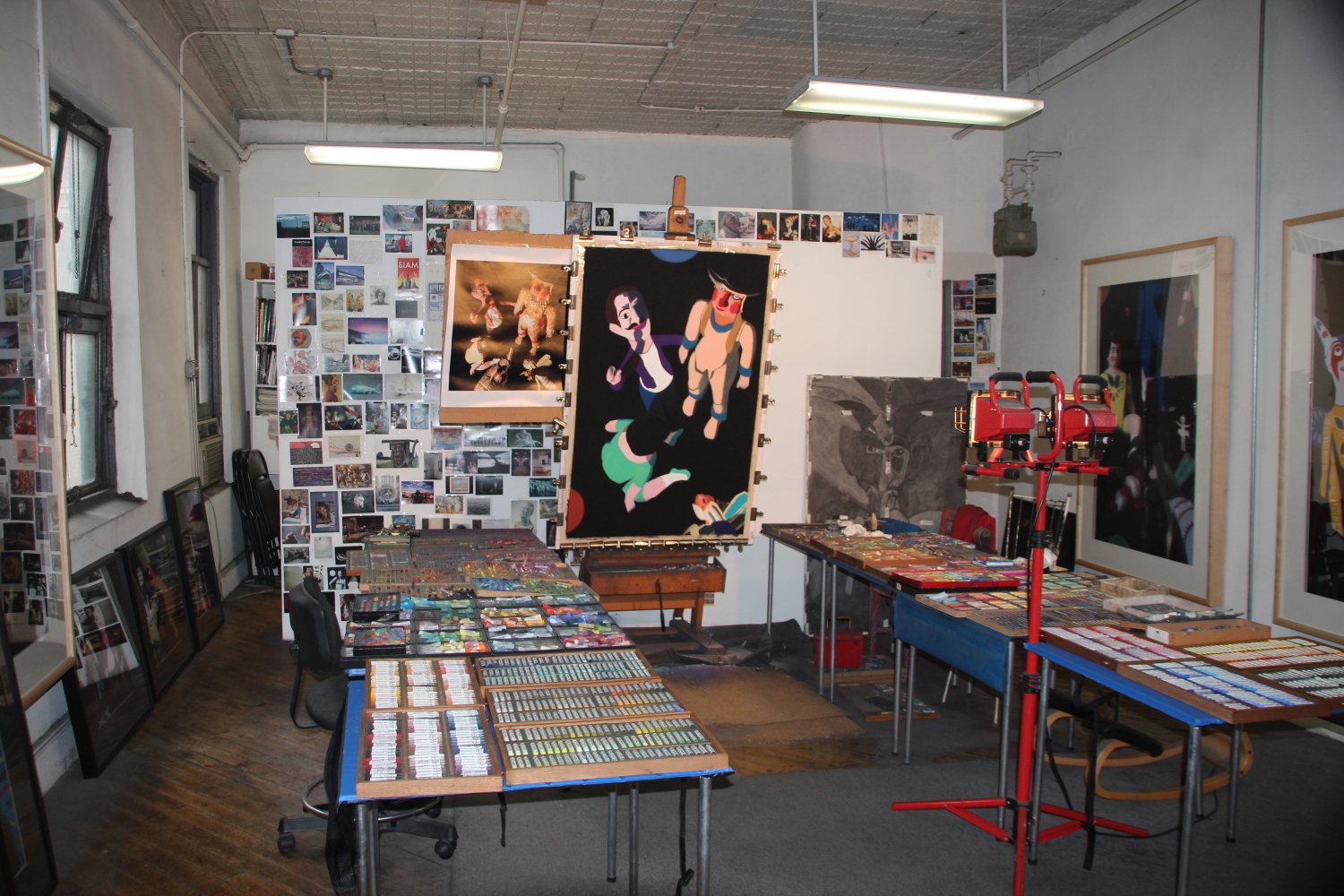
Barbara’s studio
A: As I have often said, I left the active duty Navy in 1989, but stayed in the Reserves. The Reserves provided a small part-time income and the only requirement was that I work one weekend a month and two weeks each year. Plus, I could retire after 13 more years and receive a pension. (In 2003 I retired from the Navy Reserve as a Commander). The rest of the time I was free to pursue my studio practice.
For a short time I made a living making commissioned photo-realist portraits in soft pastel on sandpaper. However, after a year I became very restless. I remember thinking, “I did not leave a boring job just to make boring art!” I lost interest in doing commissions because what I wanted to accomplish personally as an artist did not coincide with what portrait clients wanted. I finished my final portrait commission in 1990 and never looked back.
To this day I remain reluctant to accept a commission of any kind. So I am completely free to paint whatever I want, which is the only way to evolve as a serious, deeply committed artist.
Comments are welcome!
Q: How do you feel about accepting commissions?

“Reunion,” soft pastel on sandpaper, 38″ x 58″, 1990
A: By the time I left the Navy in 1989 to devote myself to making art, I had begun a career as a portrait painter. I needed to make money, this was the only way I could think of to do so, and I had perfected the craft of creating photo-realistic portraits in pastel. It worked for a little while.
A year later I found myself feeling bored and frustrated for many reasons. I didn’t like having to please a client because their concerns generally had little to do with art. Once I ensured that the portrait was a good (and usually flattering) likeness, there was no more room for experimentation, growth, or creativity. I believed (and still do) that I could never learn all there was to know about soft pastel. I wanted to explore color and composition and take this under-appreciated medium as far as possible. It seemed likely that painting portraits would not allow me to accomplish this. Also, I tended to underestimate the amount of time needed to make a portrait and charged too small a fee.
So I decided commissioned portraits were not for me and made the last one in 1990 (above). I feel fortunate to have the freedom to create work that does not answer to external concerns.
Comments are welcome!
Q: What impact do you hope to have on viewers of your work?
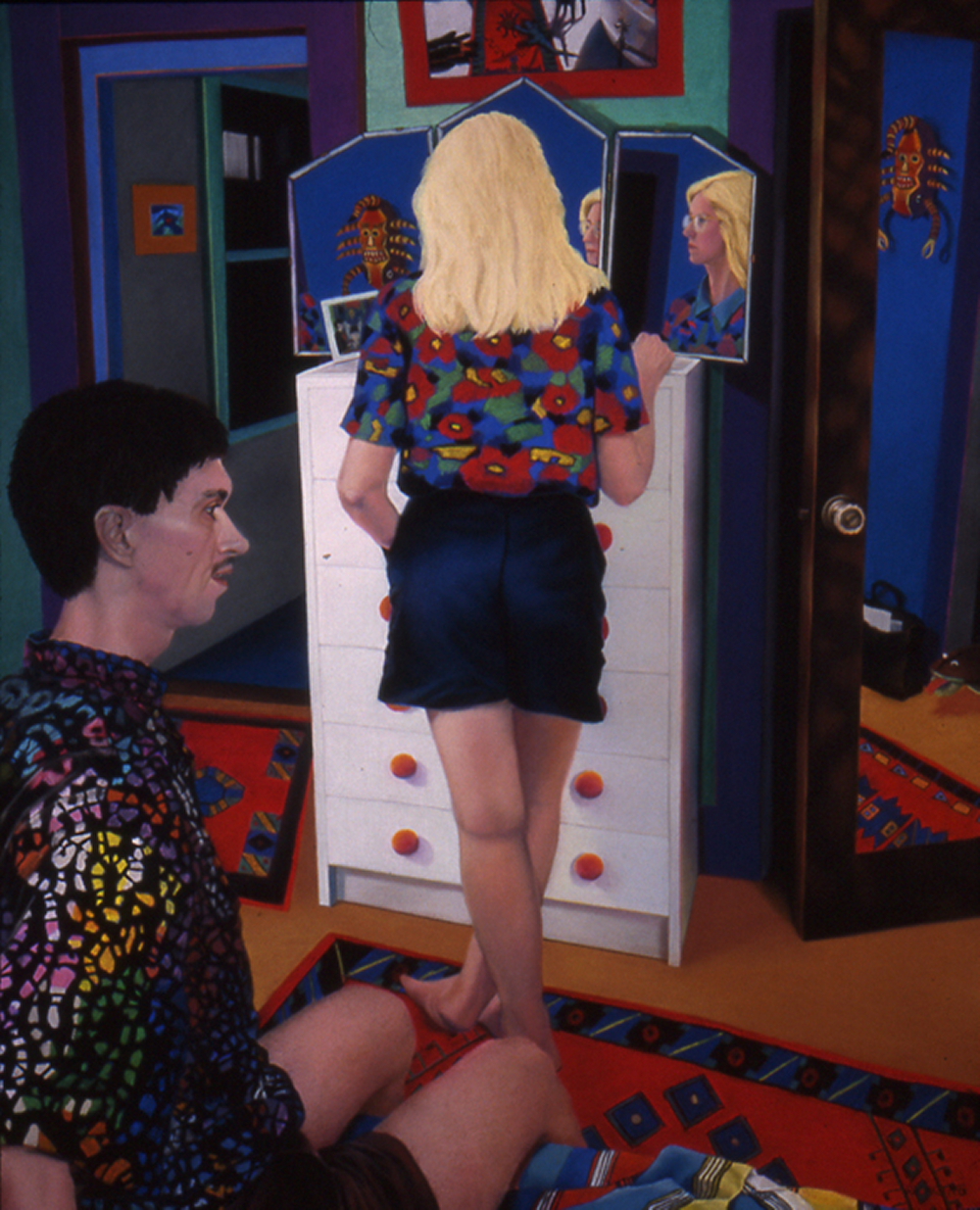
“Us and Them,” soft pastel on sandpaper, 47″ x 38″, 1993
A: I am pushing soft pastel to its limits, using it in ways that no artist has done before. I want people to see what is possible to accomplish with this medium. Because I have experienced unspeakable heartache – the loss of my husband on 9/11, onboard the high-jacked airplane that crashed into the Pentagon – when viewers learn about my life story, I hope to serve as an inspiration to keep forging ahead regardless of what tragedies life may bring. These are the main reasons that I wrote my eBook.
Comments are welcome!
Pearls from artists* # 68
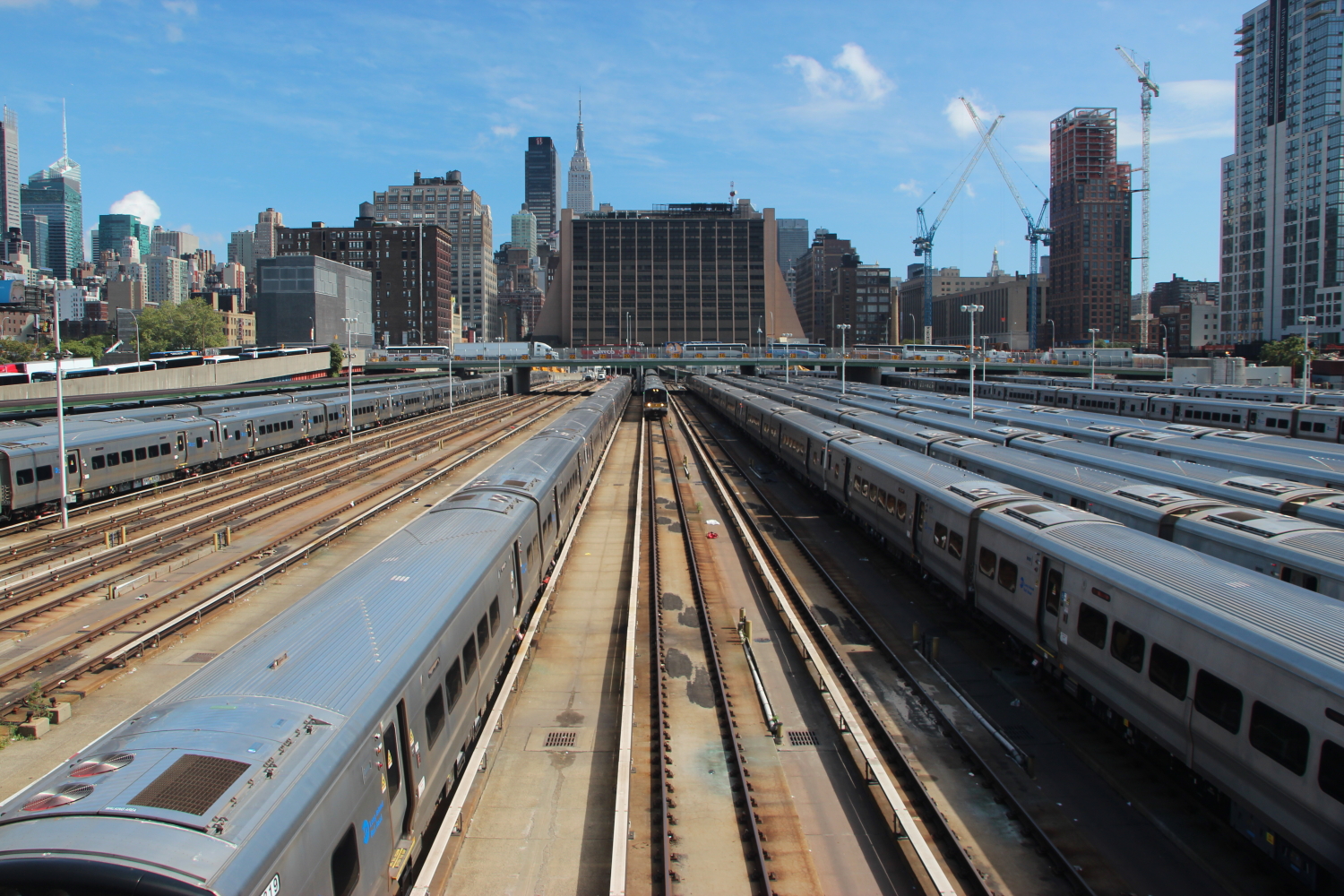
Hudson Rail Yards, NYC
* an ongoing series of quotations – mostly from artists, to artists – that offers wisdom, inspiration, and advice for the sometimes lonely road we are on.
Get to know what you really want. Hold on and treasure your vision. Acknowledge that your life is a work in progress and that your goals will change and develop over time. Knowing deeply what you want to accomplish shores up doubt, builds fortitude, and pushes you to take more action. This awareness changes how you hear and use information. Your senses will be sharpened. You begin to listen to everything differently; you interpret what you read, what you do, and whom you meet with your goals in mind. You will ask better questions of those around you and seek more meaningful help. All of this will produce a subtle yet profound shift in how you proceed and the actions you take. It will reshape your life and have major consequences for your career.
Jackie Battenfield in The Artist’s Guide: How to Make a Living Doing What You Love
Comments are welcome!
Q: You have sometimes spoken about your early work as a portrait artist. When and why did you start making portraits? Do you still do them?

“Bryan,” soft pastel on sandpaper, 22″ x 28″, 1988
A: In 1989 I was a Naval officer working at the Pentagon and I hated my job as a computer analyst. Although it was terrifying to leave the security of a paycheck for the uncertainty of an artist’s existence, I made the leap. In retrospect it was one of the best decisions of my life. When I resigned from active duty (I remained in the Navy Reserve, which provided a part-time job and a small income; in 2003 I retired as a Navy Commander), I needed a way to make a living.
Prior to this career change, I worked hard to develop my portrait skills. I volunteered to run a life drawing class at The Art League School in Alexandria, VA, where I made hundreds of figure drawings using charcoal and pastel. I spent a semester commuting between Washington, DC and New York to study artistic anatomy at the New York Academy of Art. I spent another semester studying gross anatomy with medical students at Georgetown University Medical School. So I was well prepared to devote myself to making portraits.
For a time I made a living making commissioned photo-realist portraits in soft pastel on sandpaper. However, after about two years I became bored. I remember thinking, “I did not leave a boring job just to make boring art!” Furthermore, I had no interest in doing commissions because what I wanted to accomplish as an artist did not coincide with what portrait clients wanted. I completed my final portrait commission in 1990 and never looked back. To this day I remain loathe to do a commission of any kind.
Comments are welcome!


 barbararachkoscoloreddust.com