Pearls from artists* # 362
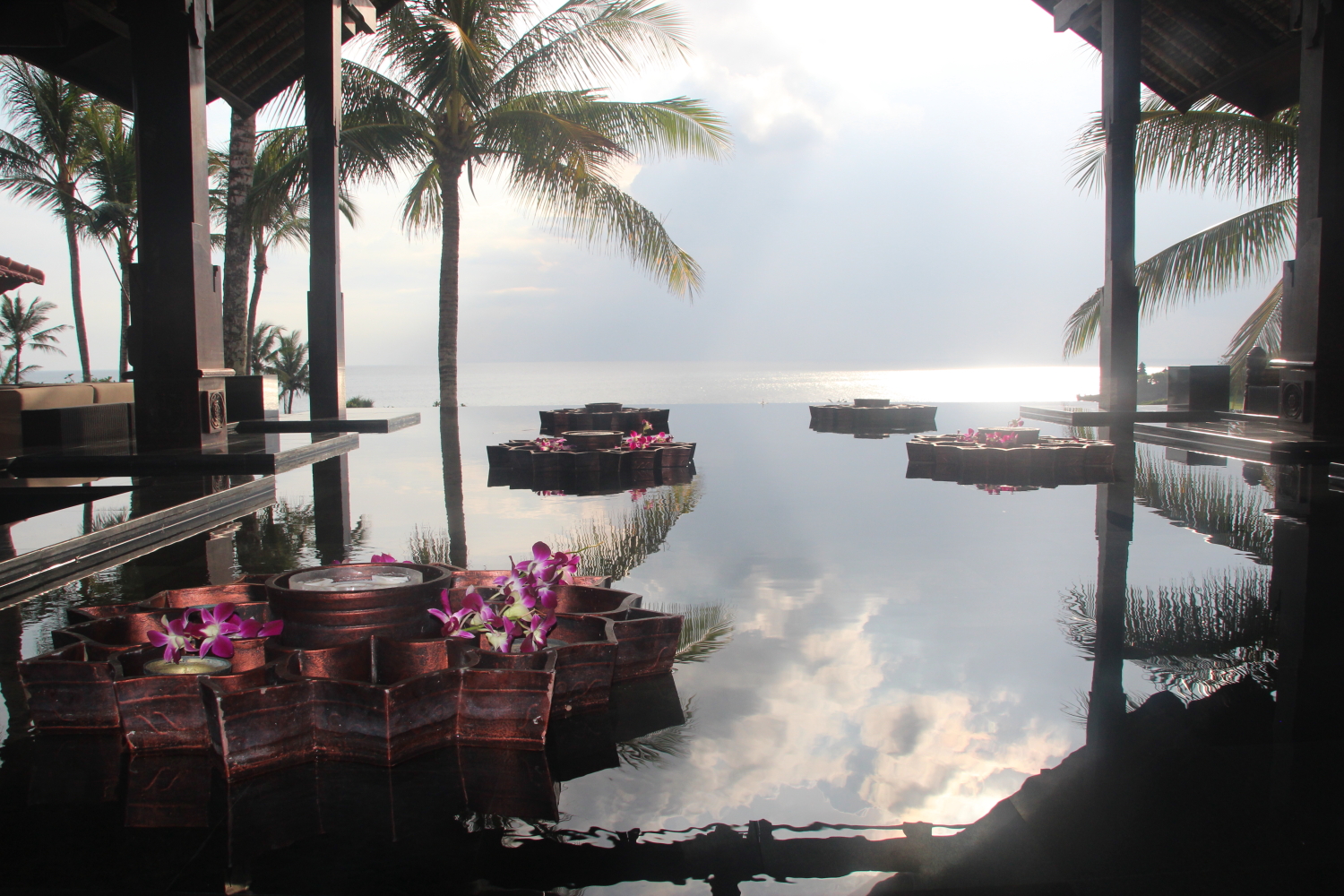
On the Indian Ocean in Tanah Lot, Bali
* an ongoing series of quotations – mostly from artists, to artists – that offers wisdom, inspiration, and advice for the sometimes lonely road we are on.
… if we look at the artifacts of all cultures, beauty always has attracted man’s attention. We know when we are in its presence. We’re held. Different pieces of art will arrest different people, and… some pieces will arrest larger numbers of people for longer periods of time. These are the works that are perhaps worthy of being called great art. We have to recognize that some people today, observing the greatest works of art, or the most awesome works of nature – the Grand Canyon, for instance – give it a minute and then are ready for something else. Insatiable for change, they are immune to deep resonance.
Art and beauty are about those resonances. It isn’t the subject matter that holds us. Some inexplicable reaction stops us, and we find ourselves connected with something other than ourself. Perhaps our ‘Self’ might be a better term, to distinguish it from the self that is caught up in thoughts, worries, and distractions. I like Ken Weber’s definition, that beauty “suspends the desire to be elsewhere.” In the face of great art, we experience transcendence.
Ian Roberts in Creative Authenticity: 16 Principles to Clarify and Deepen Your Artistic Vision
Comments are welcome!
Q: What’s on the easel today?
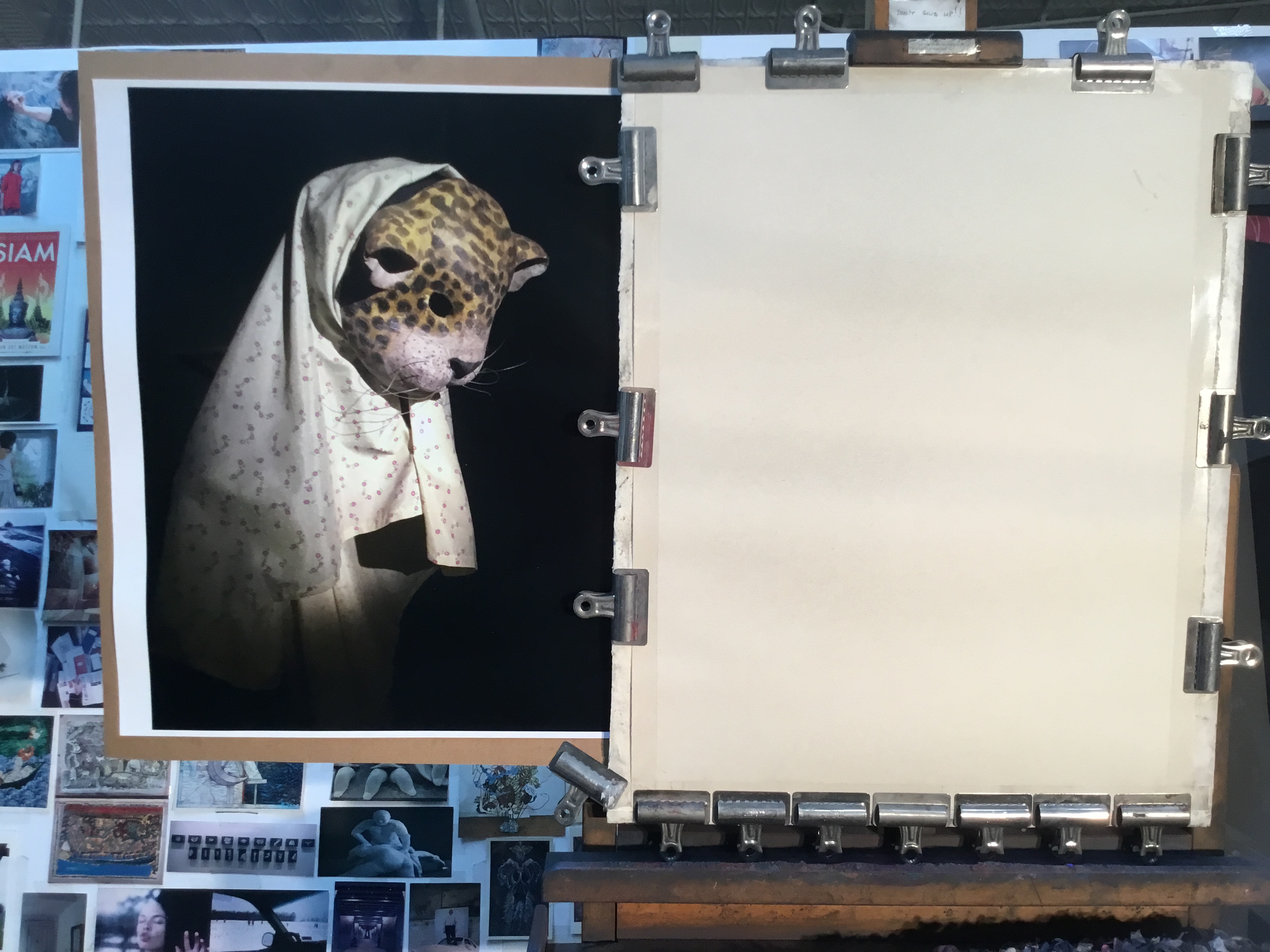
Work in progress
A: I’m beginning a new 26” x 20” pastel painting, which will be number eleven in the “Bolivianos” series.
Comments are welcome!
Pearls from artists* # 361

“The Champ,” soft pastel on sandpaper, 26″ x 20″
* an ongoing series of quotations – mostly from artists, to artists – that offers wisdom, inspiration, and advice for the sometimes lonely road we are on.
It seems to me in the end, as far as expressing yourself is concerned, you just have to plunge in, fears and all. There is something courageous about it. If a person is too timid even to start, I’m not sure what it would take to get that person started.I;m not a big believer in books and courses that advocate going into creativity rituals and altar-making and mask-making in order to get unstuck and get started. Maybe that stuff works. I don’t know. It just seems like more strategies to avoid getting on with it.
Ian Roberts in Creative Authenticity: 16 Principles to Clarify and Deepen Your Artistic Vision
Comments are welcome!
Pearls from artists* # 360
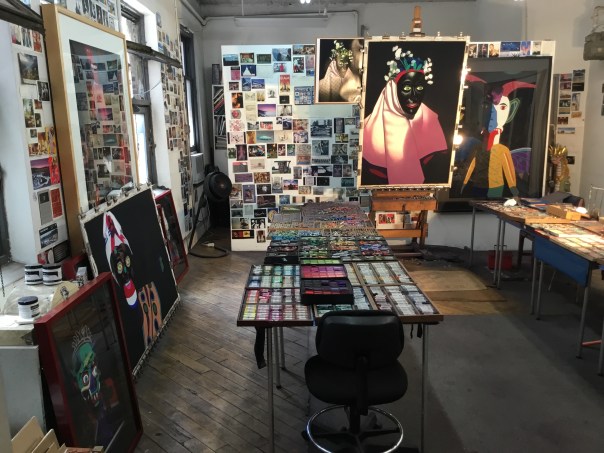
Barbara’s studio
*an ongoing series of quotations – mostly from artists, to artists – that offers wisdom, inspiration, and advice for the sometimes lonely road we are on.
Human beings have been creative beings for a really long time – long enough and consistently enough that it appears to be a totally natural impulse. To put the story in perspective, consider this fact: the earliest evidence of recognizable human art is forty thousand years old. The earliest evidence of human agriculture, by contrast is only ten thousand years old. Which means that somewhere in our collective evolutionary story, we decided it was way more important to make attractive, superfluous items than it was to learn how to regularly feed ourselves.
Elizabeth Gilbert in Big Magic: Creative Living Beyond Fear
Comments are welcome!
Pearls from artists* # 359

Matador mask, La Paz, Bolivia
*an ongoing series of quotations – mostly from artists, to artists – that offers wisdom, inspiration, and advice for the sometimes lonely road we are on.
The Matador, with a black mask made of plaster and stucco, jumps around and teases the pair of bulls. He wears an embroidered cloth on his chest that is draped over his shoulder to cover part of his back. In his hand he carries a saber that was cut out of a barrel or a tin oil can, the way I saw my father and my grandfather make. It has little bells made of beer and other bottle caps, that are flattened into rattles. The matador also wears a colorful diamond shaped montera (cap).
“An Aymara Vision of the Altiplano Masks,” texts and photos by Sixto Choque in Masks of the Bolivian Andes, Editorial Quipos and Banco Mercantil
Comments are welcome!
Q: What’s on the easel today?
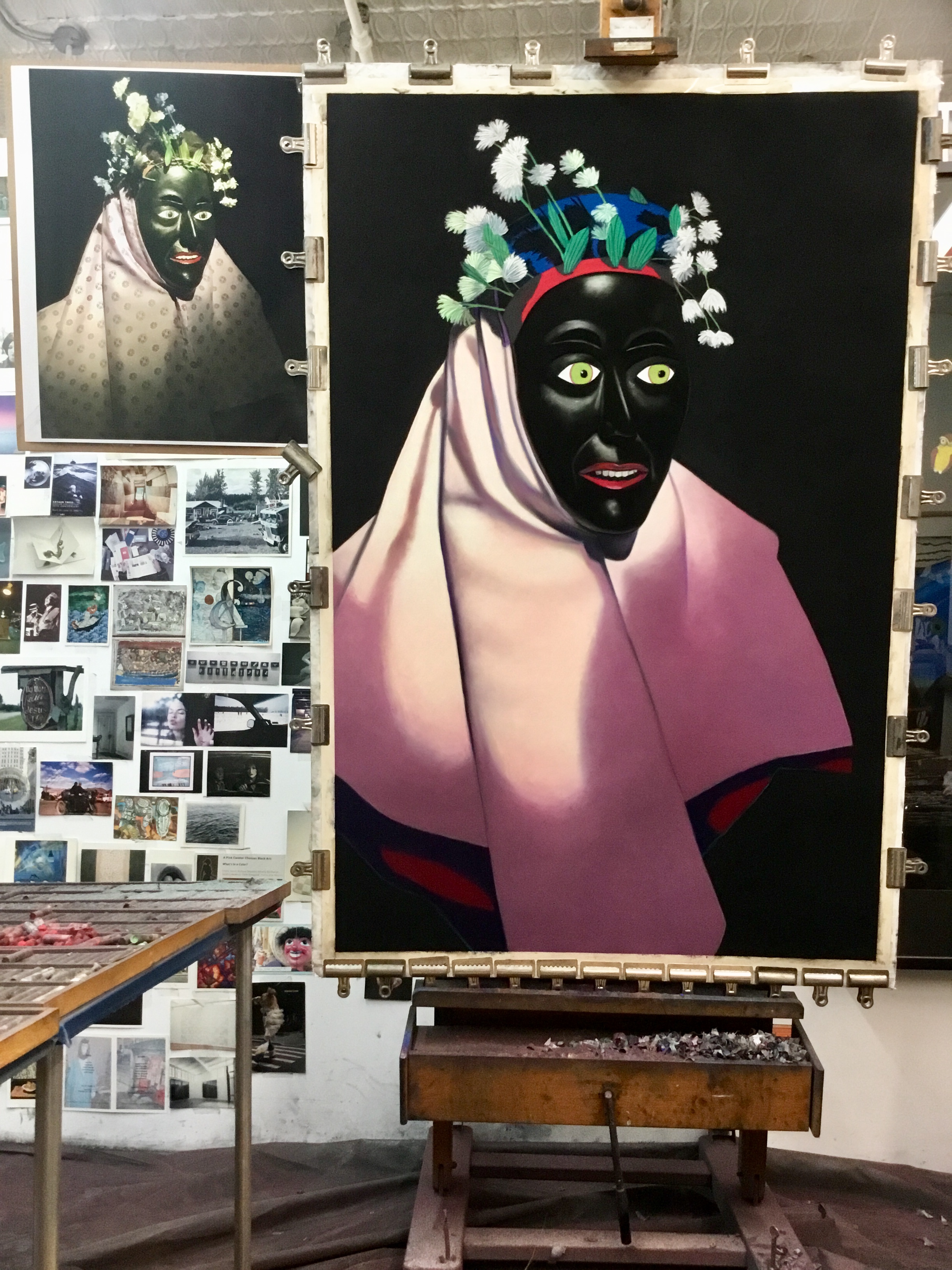
Work in progress
A: “Poseur,” Soft Pastel on Sandpaper, 58’ x 38” is awaiting finishing touches… at last!
Comments are welcome!
Pearls from artists* # 358
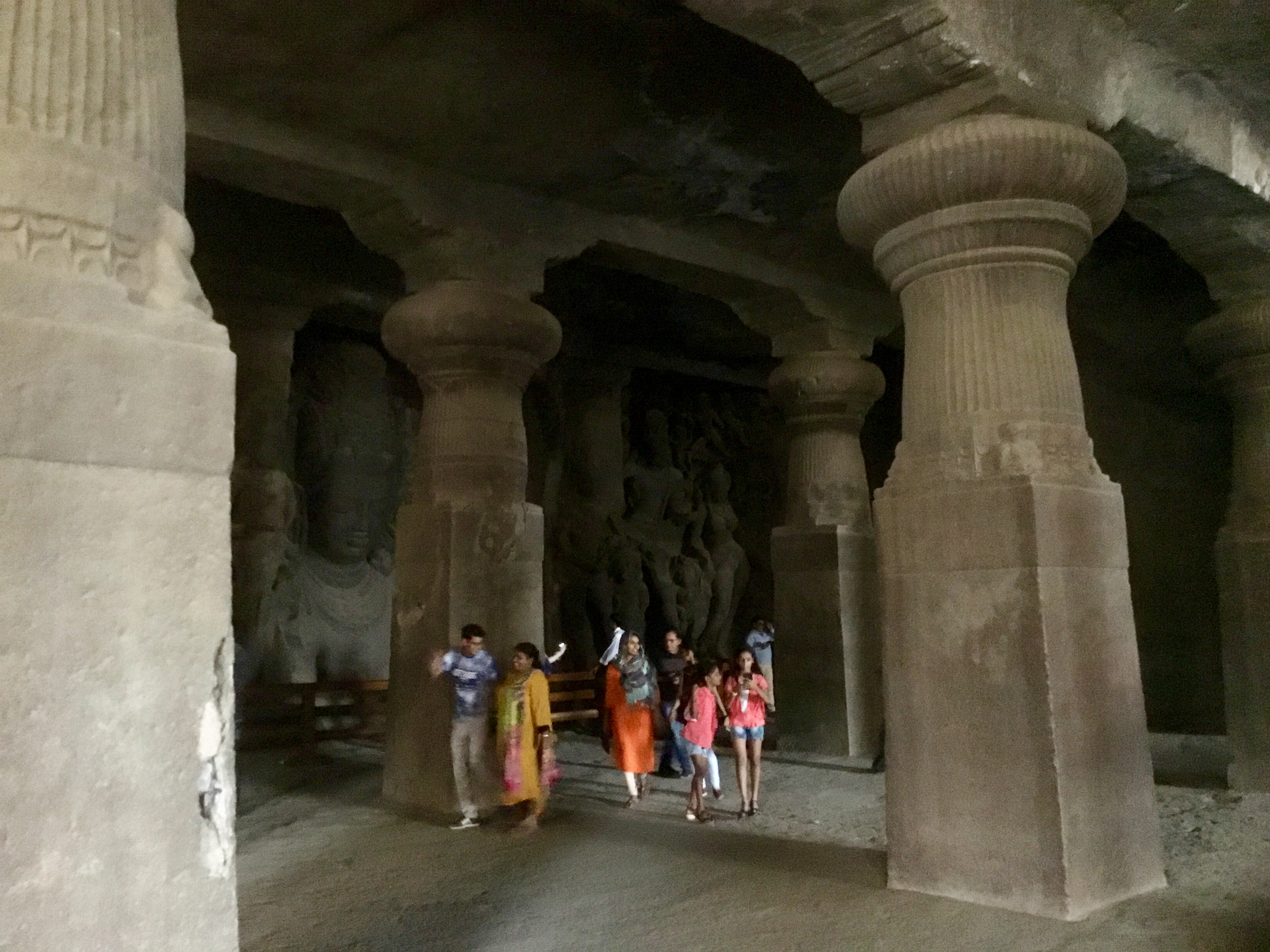
Elephanta Caves, India
*an ongoing series of quotations – mostly from artists, to artists – that offers wisdom, inspiration, and advice for the sometimes lonely road we are on.
According to [Rudolph] Arnheim, the way in which we reach out for and grasp the “object we see, either in our immediate range of perception or through the medium of photography, is dependent upon who we are and what we recognize from past experience.” The visual imprint of an image, an object, or a scene upon the eye is not at all “objective.” In the image-making process of thinking, we see, sort, and recognize according to the visual phenomenology of our own experience. What people notice in the “same” image – be it an image of a dancing Siva or a film of a Hindu festival procession – depends to some extent on what they can recognize from the visual experience of the past. In the case of film, of course, it also depends on what the photographer has seen and chosen to show us. Arnheim writes that the eye and the mind, working together in the process of cognition, cannot simply note down images that are “already there.” “We find instead that direct observation, far from being a mere ragpicker, is an exploration of the form-seeking, form-imposing mind, which needs to understand but cannot until it casts what it sees into manageable models.”
Diana L. Eck in Darsan: Seeing the Divine Image in India
Comments are welcome!
Travel photo of the month*
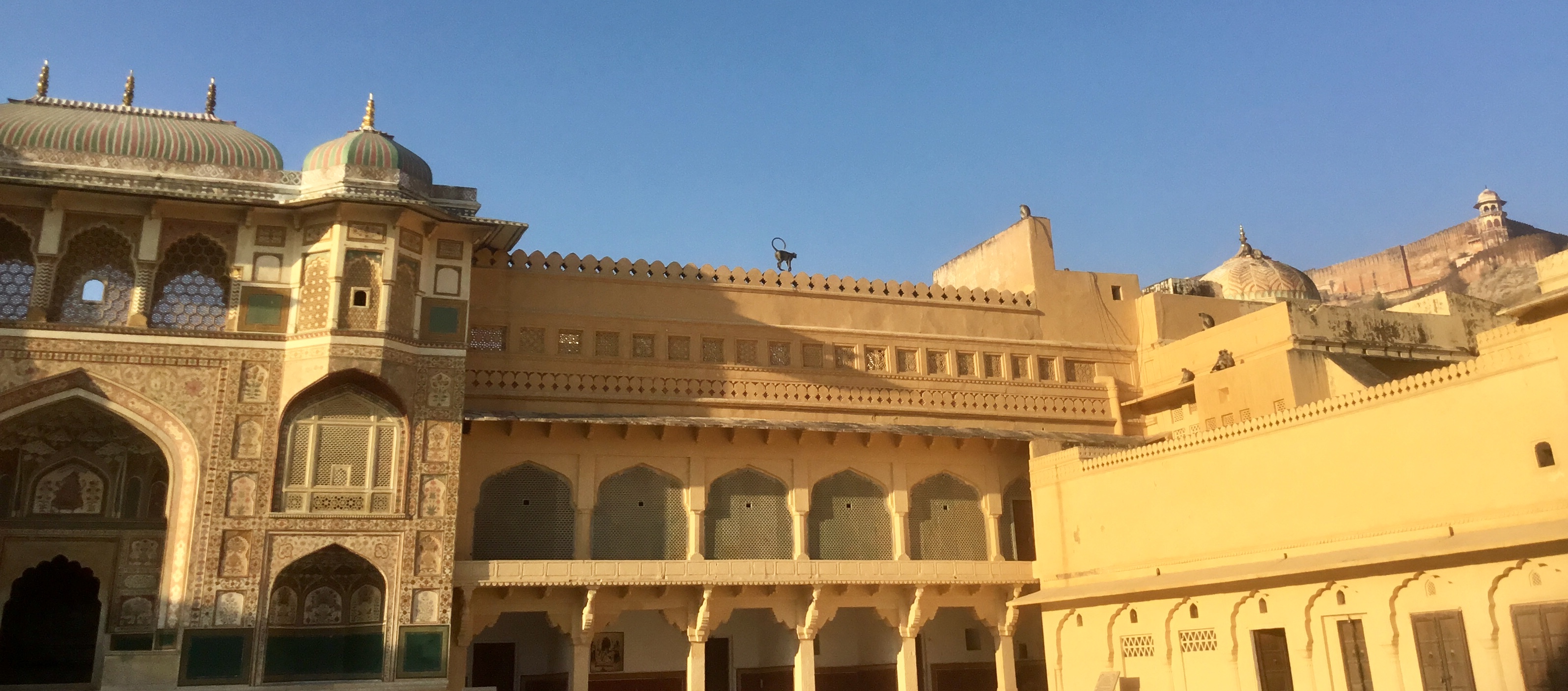
Amber Fort, Jaipur, India
*Favorite travel photographs that have not yet appeared in this blog
Comments are welcome!
Pearls from artists* # 357
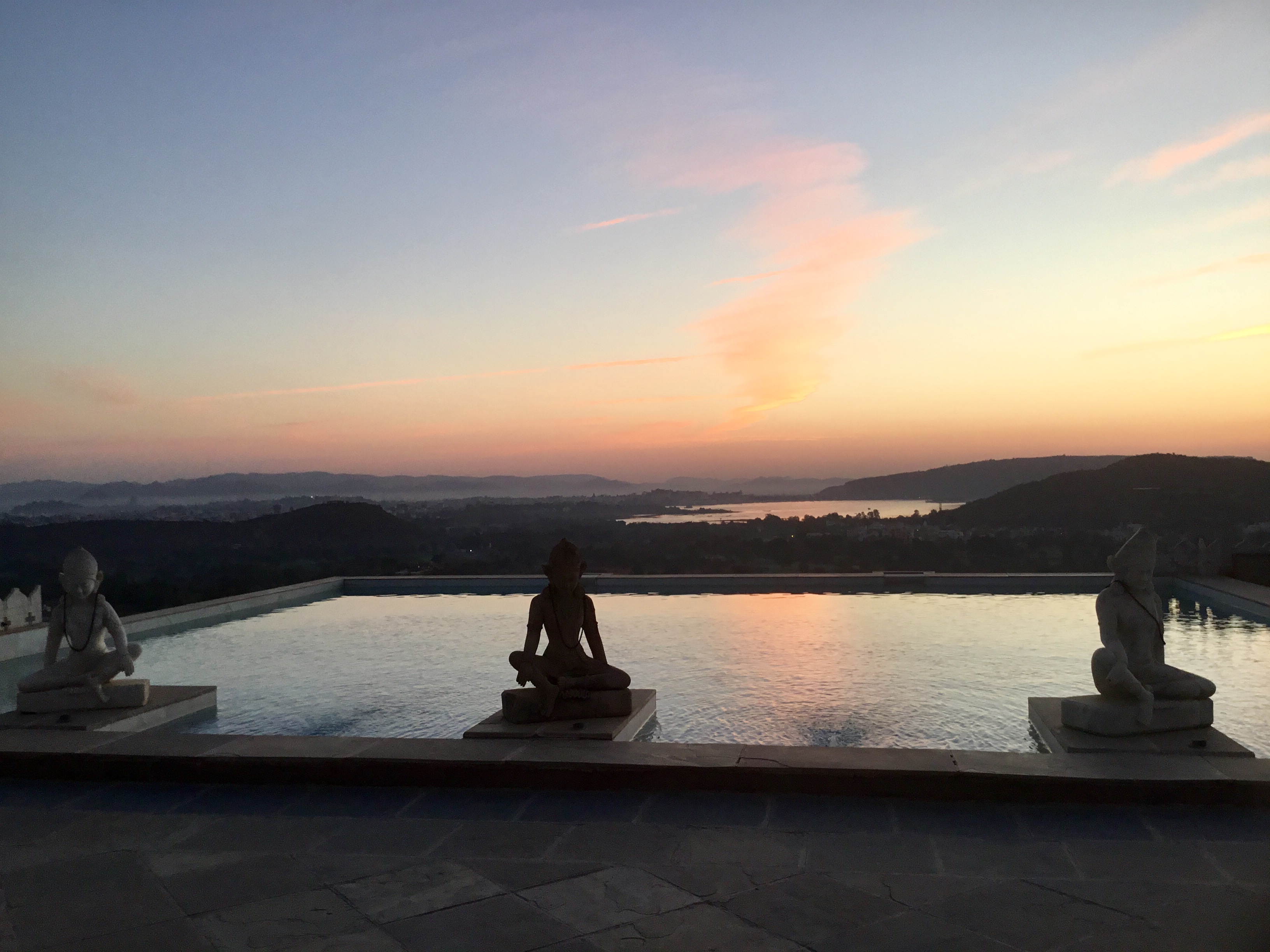
Udaipur, India
*an ongoing series of quotations – mostly from artists, to artists – that offers wisdom, inspiration, and advice for the sometimes lonely road we are on.
The term hermeneutics has been used to describe the task of understanding and interpreting ideas and texts. In a similar way, we need to set for ourselves the task of developing a hermeneutic of the visible, addressing the problem of how we understand and interpret what we see, not only in the classical images and art forms created by the various religious traditions, but in the ordinary images of people’s traditions, rites, and daily activities which are presented to us through the film-image.
Rudolph Arnheim, in his extensive work on visual perception, has shown that the dichotomy between seeing and thinking which runs through much of the Western tradition, is a very problematic one. In Visual Thinking, he contends that visual perception is integrally related to thought. It is not the case, according to Arnheim, that the eyes present a kind of raw data to the mind which, in turn, processes it and refines it by thought. Rather, those visual images are the shapers and bearers of thought. Jan Gonda, in writing on the Vedic notion dhi, sometimes translated as “thought,” finds similarly that the semantic fields of the word in Vedic literature does not correspond as much to our words for “thinking” as it does to our notions of “insight,” “vision,” and “seeing.” Suzanne Langer has also written of the integral relation of thought to the images we see in the “mind’s eye.” The making of all of those images is the fundamental “imaginative” human activity. One might add that it is the fundamental activity of the religious imagination as well. She writes, “Images are, therefore, our readiest instruments for abstracting concepts from the tumbling streams of actual impressions.”
Diana L. Eck in Darsan: Seeing the Divine Image in India
Comments are welcome!


 barbararachkoscoloreddust.com