Category Archives: Art in general
Pearls from artists* # 355

“The Champ,” soft pastel on sandpaper, 26″ x 20″
*an ongoing series of quotations – mostly from artists, to artists – that offers wisdom, inspiration, and advice for the sometimes lonely road we are on.
True art provides us with truth in a manner analogous to science. Its prophetic dimension – its knack for showing us the side of things that our interests blind us to – make it a source of knowledge, even though it is knowledge of a kind that instrumental reason has little time for. The psychologists who revolutionized our understanding of human psychology in the earliest twentieth century drew on two principal sources to build their concepts: the dream life of their patients and the great art of the past. Without this recognition of the primacy of imagination, Freud and Jung could never have drawn their maps of the psyche. Those who work for a better world would do well to follow their example and find the guiding patterns of life in the prophetic artistic works of the past and present. Only art can act as a counter-weight to that uniquely modern mentality that, wherever it becomes the only game in town, seeks to persuade us that the proper goal of human beings is to contain, dissect, and control everything – that even the most persistent mysteries are just problems to be solved.
J.F. Martel in Reclaiming Art in the Age of Artifice: A Treatise, Critique, and Call to Action
Comments are welcome!
Pearls from artists* # 354

“Epiphany,” soft pastel on sandpaper, 38″ x 58″
*an ongoing series of quotations – mostly from artists, to artists – that offers wisdom, inspiration, and advice for the sometimes lonely road we are on.
My earlier work had taught me that artistic activity is a form of reasoning, in which perceiving and thinking are indivisibly intertwined. A person who paints, writes, composes, dances, I felt compelled to say, thinks with his senses. This union of perception and thought turned out to be not merely a specialty of the arts. A review of what is known about perception, and especially about sight, made me realize that the remarkable mechanisms by which the senses understand the environment are all but identical with the operations described by the psychology of thinking. Inversely, there was much evidence that truly productive thinking in whatever area of cognition takes place in the realm of imagery. This similarity of what the mind does in the arts and what it does elsewhere suggested taking a new look at the long-standing complaint about the isolation and neglect of the arts in society and education. Perhaps the real problem was more fundamental: a split between sense and thought, which caused various deficiency diseases in modern man.
Rudolph Arnheim in Visual Thinking
Comments are welcome!
Q: Where did you grow up and what were some early milestones or experiences that contributed to you becoming an artist later in life?
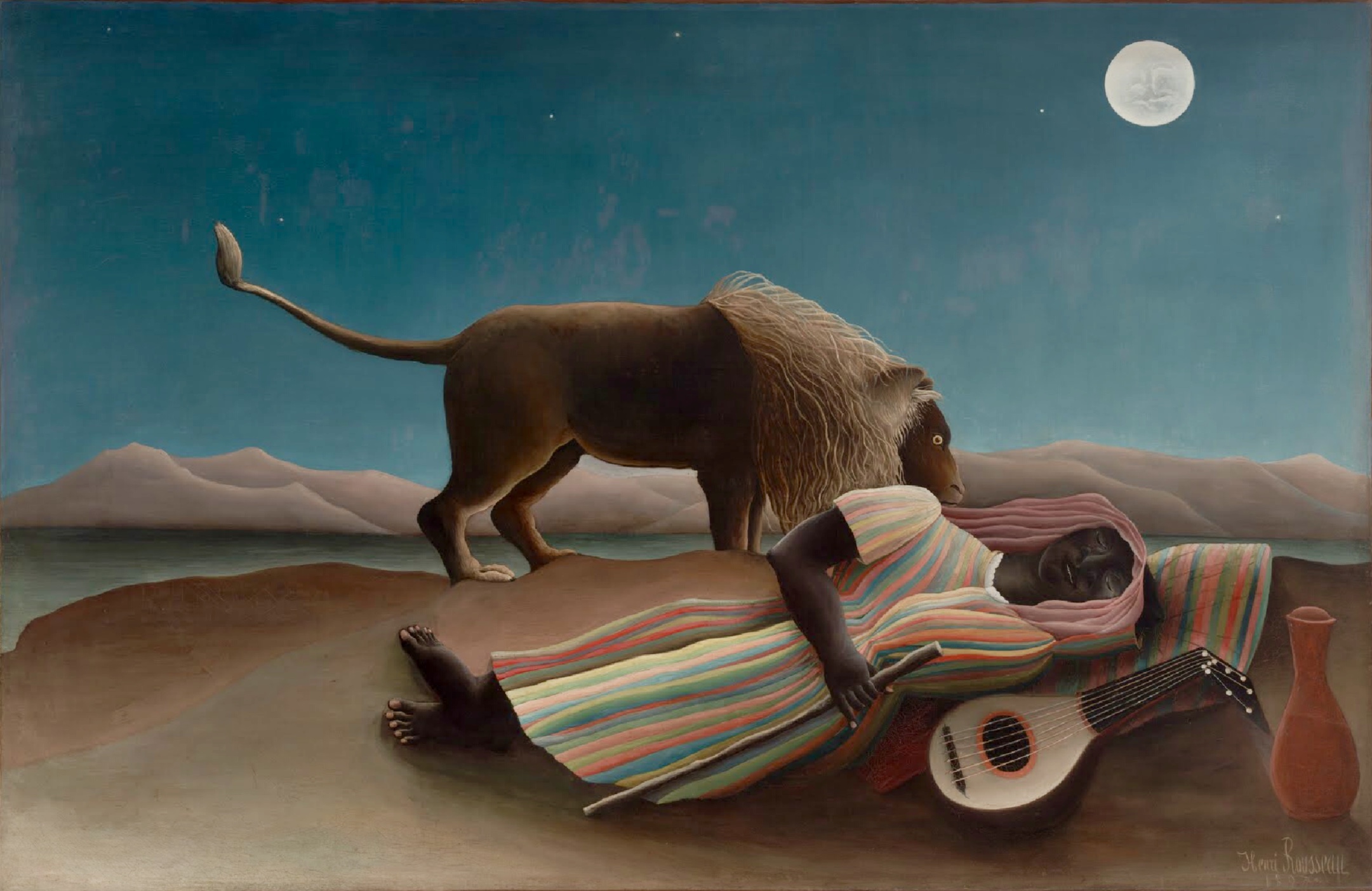
“The Sleeping Gypsy,” Henri Rousseau, oil on canvas, 1897
A: I grew up in a blue collar family in Clifton, New Jersey, a suburb about fifteen miles west of Manhattan. My father was a television repairman for RCA. My mother stayed home to raise my sister and me (at the time I had only one sister, Denise; my sister Michele was born much later). My parents were both first-generation Americans and no one in my extended family had gone to college yet. I was a smart kid who showed some artistic talent in kindergarten and earlier. I remember copying the Sunday comics, which in those days appeared in all the newspapers, and drawing small still lifes I arranged for myself. I have always been able to draw anything, as long as I can see it.
Denise, a cousin, and I enrolled in Saturday morning “art classes” at the studio of a painter named Frances Hulmes in Rutherford, NJ. I was about 6 years old. I continued the classes for 8 years and became a fairly adept oil painter. Since we lived so close to New York City, my mother often took us to museums, particularly to the Museum of Modern Art, the Metropolitan Museum of Art, and the Museum of Natural History. Like so many young girls, I fell in love with Rousseau’s “The Sleeping Gypsy” and was astonished by Picasso’s “Guernica” when it was on long-term loan to MoMA. I have fond memories of studying the dioramas at the Museum of Natural History (they are still my favorite part of the museum). As far as I know, there were no artists in my family so, unfortunately, I had no role models. At the age of 14 my father decided that art was not a serious pursuit – declaring, it is “a hobby, not a profession” – and abruptly stopped paying for my Saturday morning lessons. With no financial or moral support to pursue art, I turned my attention to other interests, letting my artistic abilities go dormant.
Comments are welcome!
Pearls from artists* # 352
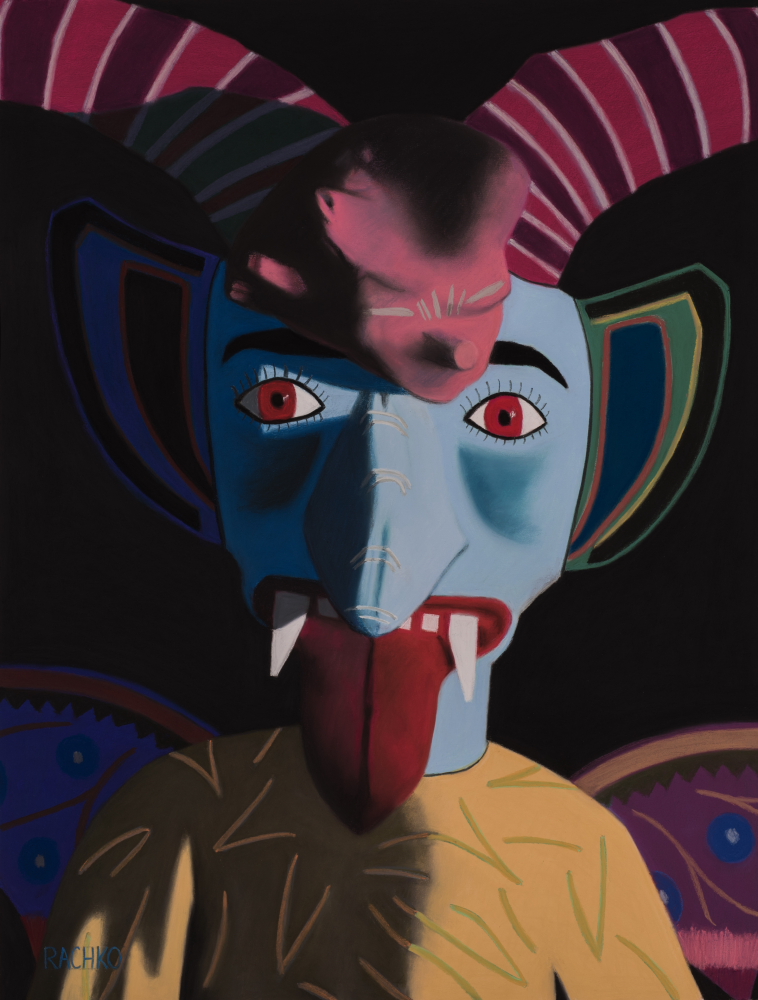
“Provocateur,” soft pastel on sandpaper, 26″ x 20″
*an ongoing series of quotations – mostly from artists, to artists – that offers wisdom, inspiration, and advice for the sometimes lonely road we are on.
The jester was certainly a key player in medieval court politics. His power, however, was commensurate with his acknowledged irrelevance to the state apparatus. As the eternal outsider, ridiculed or at best ignored by the elite unless he was actually entertaining them, he acquired the right to speak truths that others would speak at their peril. Yet if the imprudent king simply saw the Fool as a source of amusement, the wise king saw in his antics and wordplay the pattern of the past, present, and future. In the same way, art is the joker in the hand that was dealt to humanity. Nothing is easier than dismissing it as a frivolity, and yet those who meet it on its own ground gain access to the hidden facets of their situation. It is by virtue of its very separateness, its position outside the realm of the useful and the practical, that art reveals the Real. Paradoxically, art has political value only when appraised outside of any political framework.
J.F. Martel in Reclaiming Art in the Age of Artifice: A Treatise, Critique, and Call to Action
Comments are welcome!
Pearls from artists* # 348
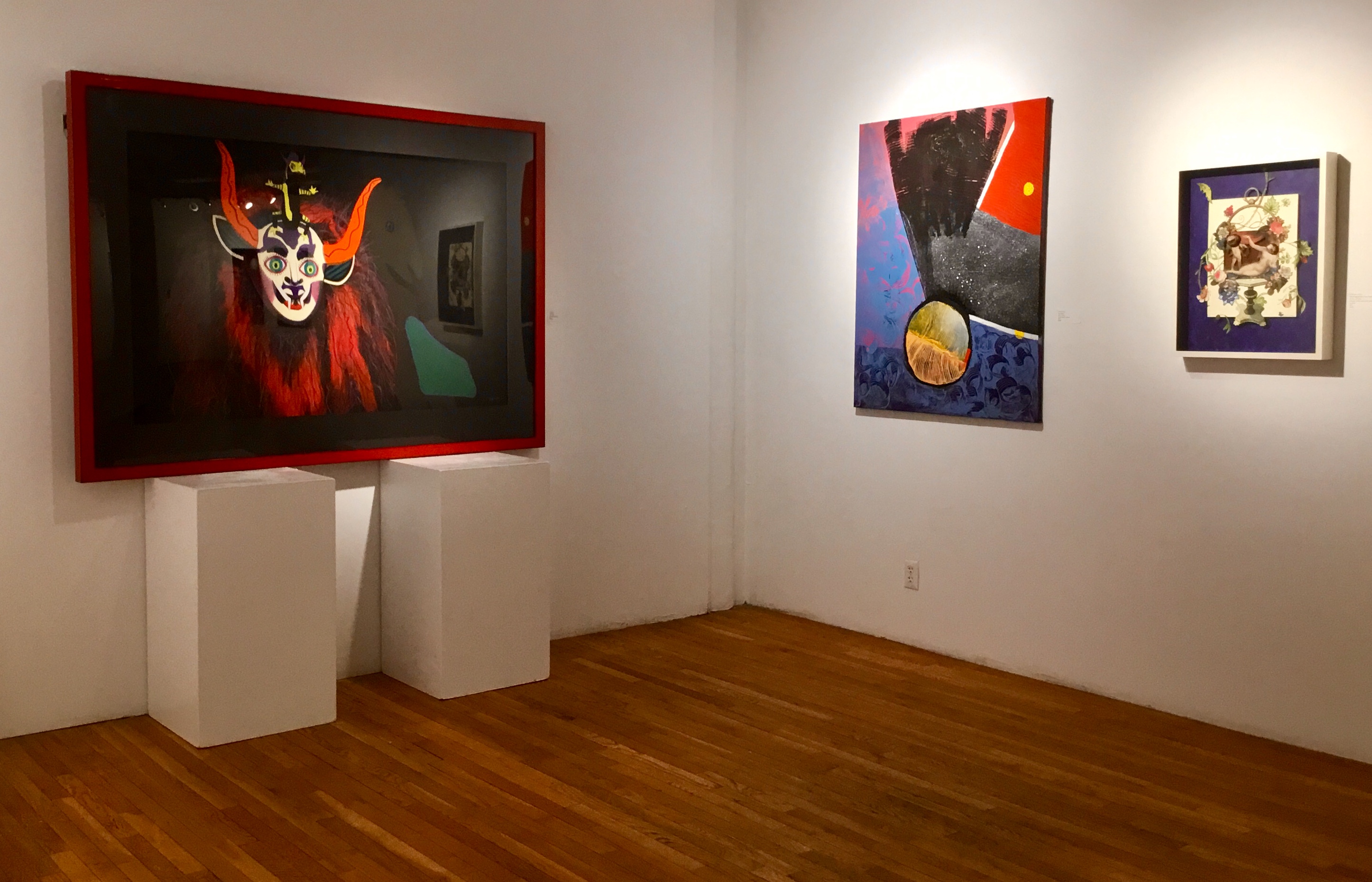
“The Orator” in “Worlds Seen & Unseen” at Westbeth Gallery, NYC
*an ongoing series of quotations – mostly from artists, to artists – that offers wisdom, inspiration, and advice for the sometimes lonely road we are on.
The percipient apprehends the primal quality of art as beauty and symbol, in an experience that invariably involves a sense of radical mystery. Art dissolves the fog of Consensus in which we normally operate to reveal the unseen in the situation. It places us in exactly the same position as the first people who stared up at the stars in wonder. The work of art is perpetually new; it demands reinterpretation with each era, each generation, each percipient. Great works of art are like inexhaustible springs originating from a place beyond our “little world of man.” They reconnect us with a reality too vast for the rational mind to comprehend. Therefore, art can be described as the human activity through which our all-too-human mentality is overcome and in light of which all finite judgments are shown to be inefficient. It is at once a sinking to the source and a leap toward the infinite.
J.F. Martel in Reclaiming Art in the Age of Artifice: A Treatise, Critique, and Call to Action
Comments are welcome!
Pearls from artists* # 347
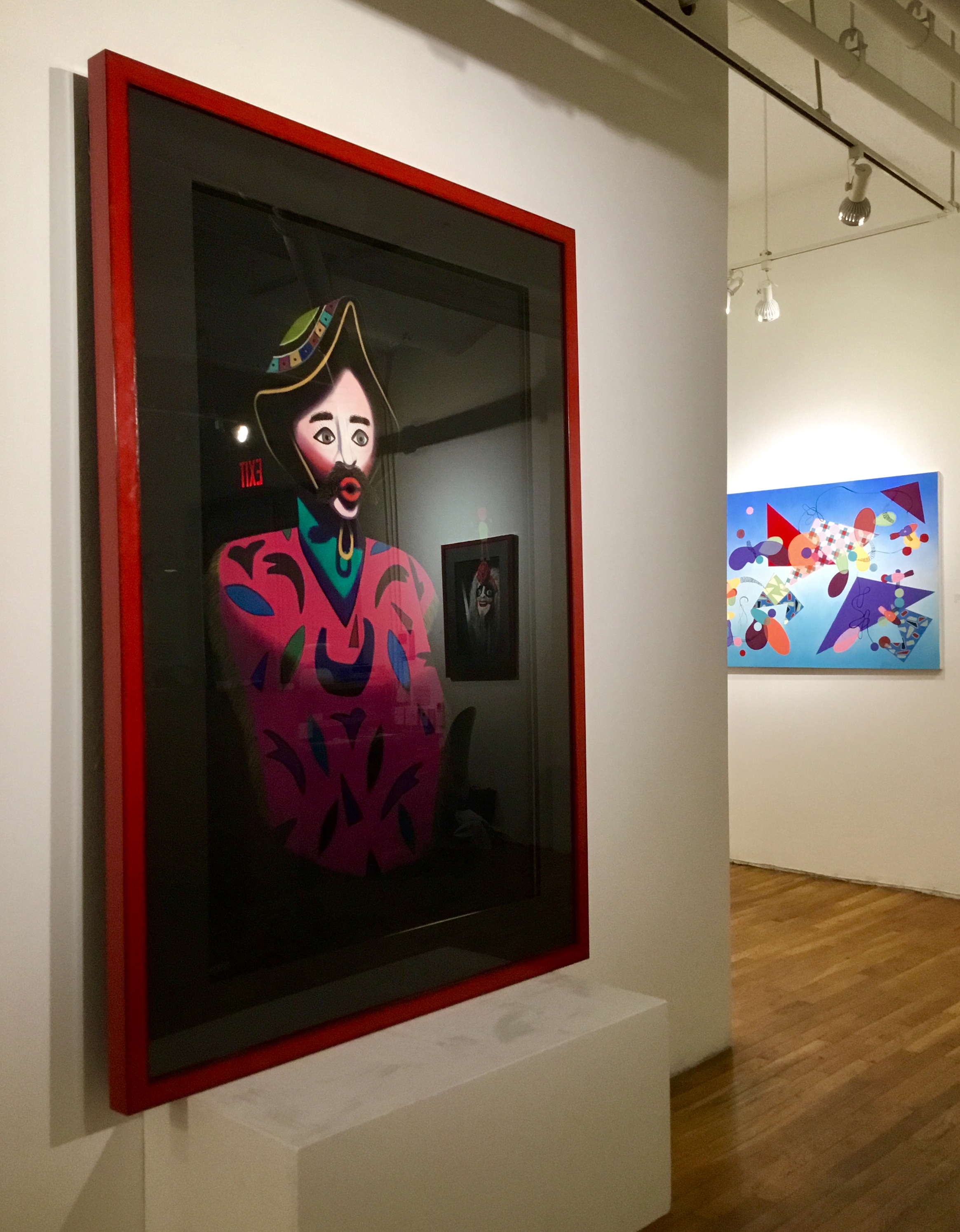
“Prophecy,” on view in “Worlds Seen & Unseen” at Westbeth Gallery, NYC
*an ongoing series of quotations – mostly from artists, to artists – that offers wisdom, inspiration, and advice for the sometimes lonely road we are on.
Like the cyclotrons of physicists, the artistic work is a machine for uncovering hidden layers of reality. It gives us insight into the psychic forces that shape the world, enabling us to divine where we come from and where we are heading. It is in this sense that art can be said to be prophetic.
J.F. Martel in Reclaiming Art in the Age of Artifice: A Treatise, Critique, and Call to Action
Comments are welcome!
Pearls from artists* # 349
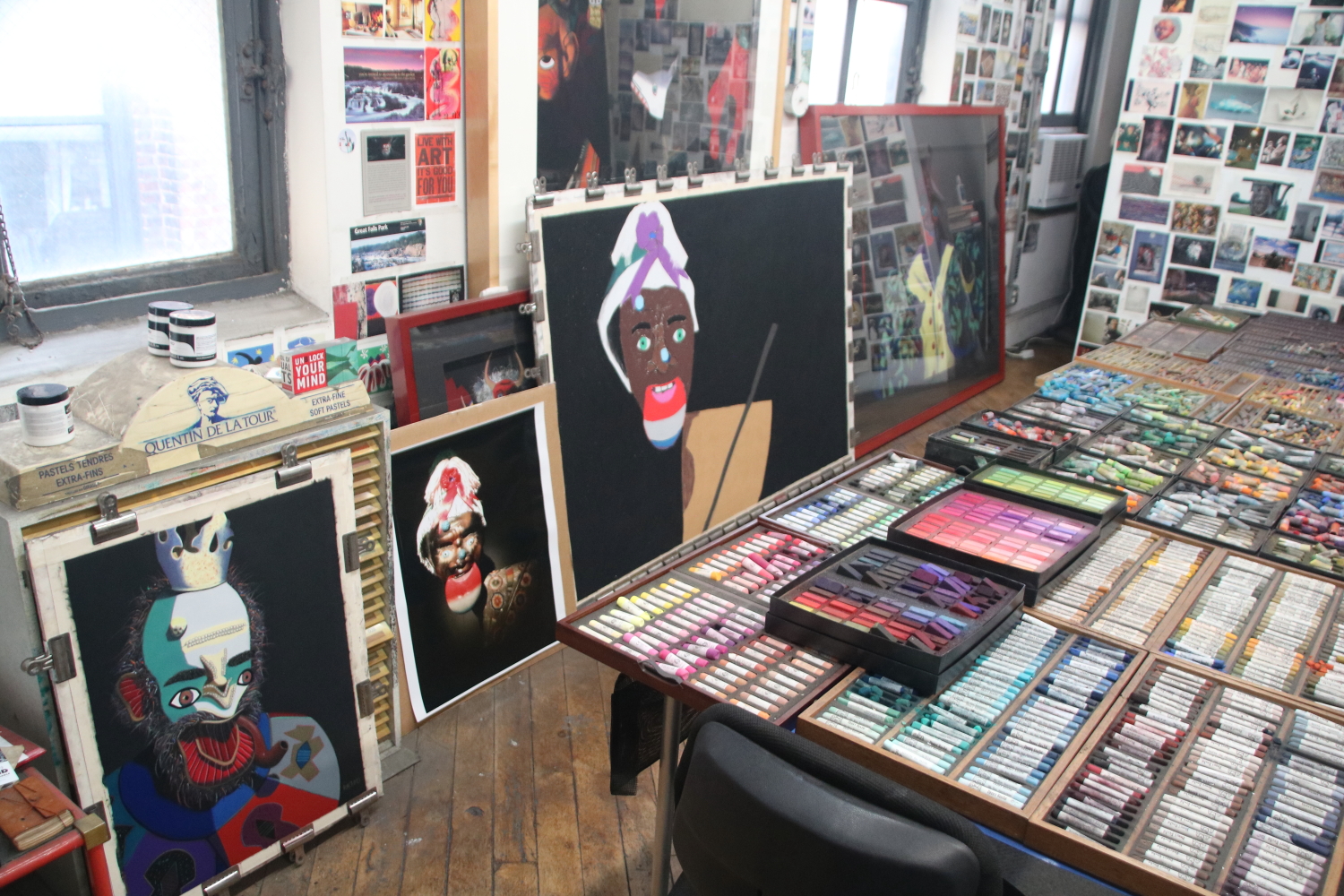
Barbara’s studio
*an ongoing series of quotations – mostly from artists, to artists – that offers wisdom, inspiration, and advice for the sometimes lonely road we are on.
If Dostoyevsky, Flaubert, and so many others were able to create great artistic works, it was because they were able to pull off something few adults can find it in themselves to do: they were able to suspend all final judgments about life and the universe in order to play…
The spirit of work is concerned with self-preservation. It evaluates concepts and ideas in terms of their practical value. Building roads, raising walls, running elections, debating policies, educating the young – all of these are purposive actions ultimately aimed at upholding social structures, changing those structures, or promoting one’s place within society. The spirit of work is the home of the ego, the part of us that has evolved to survive and thrive. One of the conditions of the artistic creation seems to be the ability to move frame this frame of mind into the spirit of play. As many artist have said in varying ways, the trick is to forget everything and create for the sake of creating. No worthwhile play, of course, is without effort. As the painstaking care Flaubert put into every line of his books makes clear, the spirit of play is sometimes the most exciting. Nevertheless, art remains in essence a game, an activity undertaken for its own sake, no matter how difficult. Like all games, it requires the establishment of a perimeter within which things that one might take very seriously in ordinary life are given only relative value. The perimeter suspends all the conventional rules, allowing the artist to turn the world on its head and let the imagination roam freely.
No sooner have we entered the spirit of play than we see things differently.
J.F. Martel in Reclaiming Art in the Age of Artifice: A Treatise, Critique, and Call to Action
Comments are welcome!
Pearls from artists* # 342

New York, NY
*an ongoing series of quotations – mostly from artists, to artists – that offers wisdom, inspiration, and advice for the sometimes lonely road we are on.
I work either way, you see – assisted or unassisted – because that is what you must do in order to live a fully creative life. I work steadily, and I always thank the process. Whether I am touched by grace or not, I thank creativity for allowing me to engage at all.
Because either way, it’s all kind of amazing – what we get to do, what we get to attempt, what we sometimes get to commune with.
Gratitude, always.
Always, gratitude.
Elizabeth Gilbert in Big Magic: Creative Living Beyond Fear
Comments are welcome!
Pearls from artists* # 341
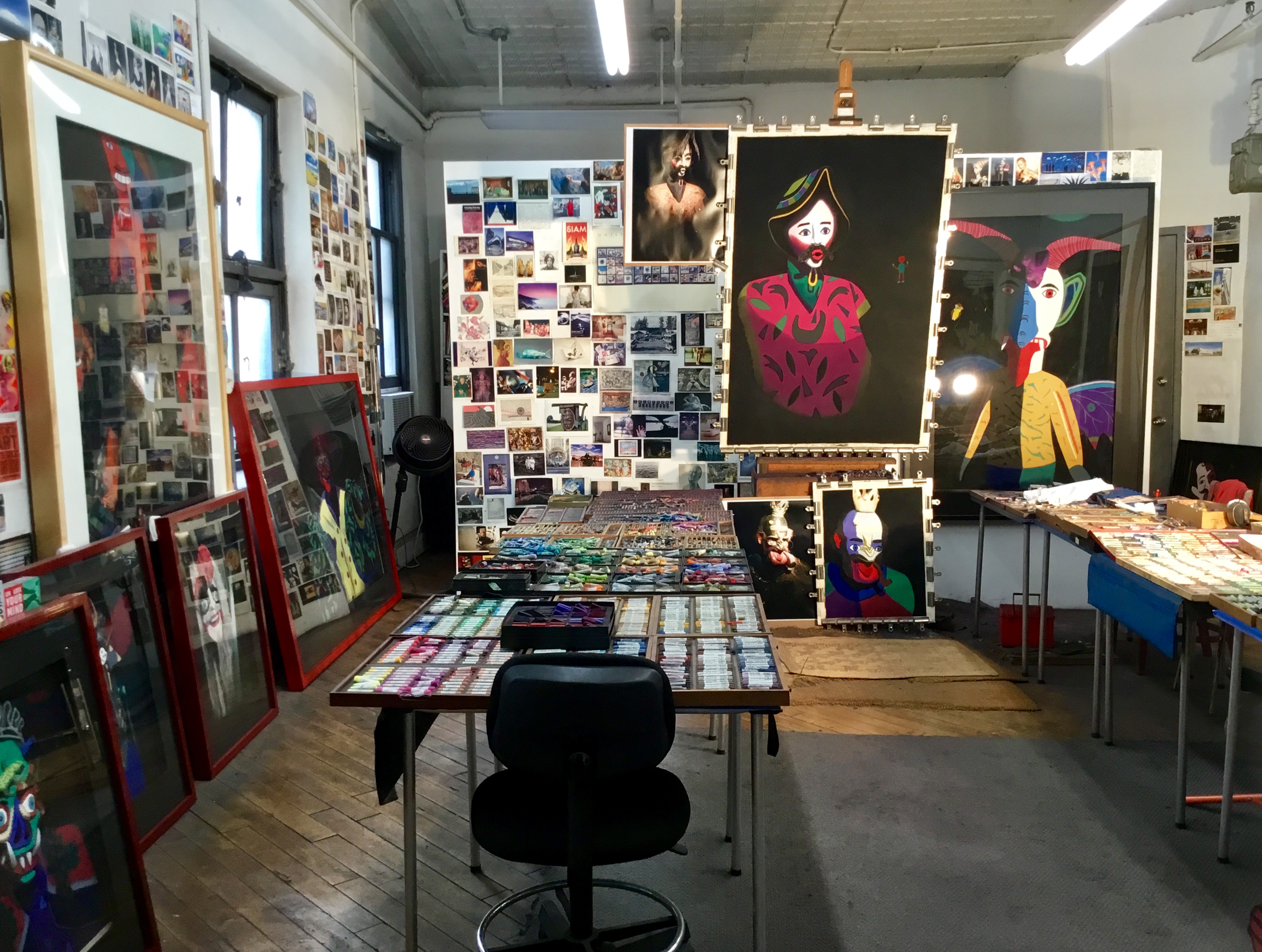
Barbara’s studio
*an ongoing series of quotations – mostly from artists, to artists – that offers wisdom, inspiration, and advice for the sometimes lonely road we are on.
The classic work of art is a form of life with its own bizarre consciousness. In the performing arts – theater, dance, music – this consciousness is not reducible to the minds of the performers onstage. The participants are parts of a spiritual organism that includes and transcends them. In our modern materialist mindset we naturally attribute the impression that a work speaks in its own voice to the intention of the author, who used it as a vehicle for her own ideas. But… works of art express much that their authors never intended to say: they exceed the limited views of those who bring them into being.
J.F. Martel in Reclaiming Art in the Age of Artifice: A Treatise, Critique, and Call to Action
Comments are welcome!
Pearls from artists* # 340

Lower Manhattan
* an ongoing series of quotations – mostly from artists, to artists – that offers wisdom, inspiration, and advice for the sometimes lonely road we are on.
What, do you suppose, are the lives of those who raise themselves above the level of the common herd? A continual struggle. A writer, for instance, must struggle against the laziness which he shares with the ordinary man when it comes to writing, because his genius demands to be heard, it is not merely of an empty desire for fame that he obeys, it is a matter of conscience. Let those who work coldly and calmly keep silence, for they have no conception of what it means to work under the spur of inspiration – the dread, the terror of rousing the sleeping lion whose roaring moves us to the very depth of our being. To sum up: be strong, simple, and true; here is an aim for every moment of the day, and it is always useful.
The Journal of Eugene Delacroix, edited by Hubert Wellington
Comments are welcome!


 barbararachkoscoloreddust.com