Category Archives: An Artist’s Life
Pearls from artists* # 351

Barbara at work on “The Orator”
*an ongoing series of quotations – mostly from artists, to artists – that offers wisdom, inspiration, and advice for the sometimes lonely road we are on.
That art is apolitical does not mean that artists themselves can be excused from the political responsibilities that fall on others. It means rather that as a manifestation of eternal psychic force, each work of art goes farther and deeper than the limited perspective of any individual mind, including that of its author.
No artist can predict how his work will affect the world… The artist invests his entire personality into the work, but he does so as a means of expressing a vision that is transpersonal. Everything that makes him what he is informs the work, but the final result transcends all personal contingencies.
J.F. Martel in Reclaiming Art in the Age of Artifice: A Treatise, Critique, and Call to Action
Comments are welcome!
Pearls from artists* # 350
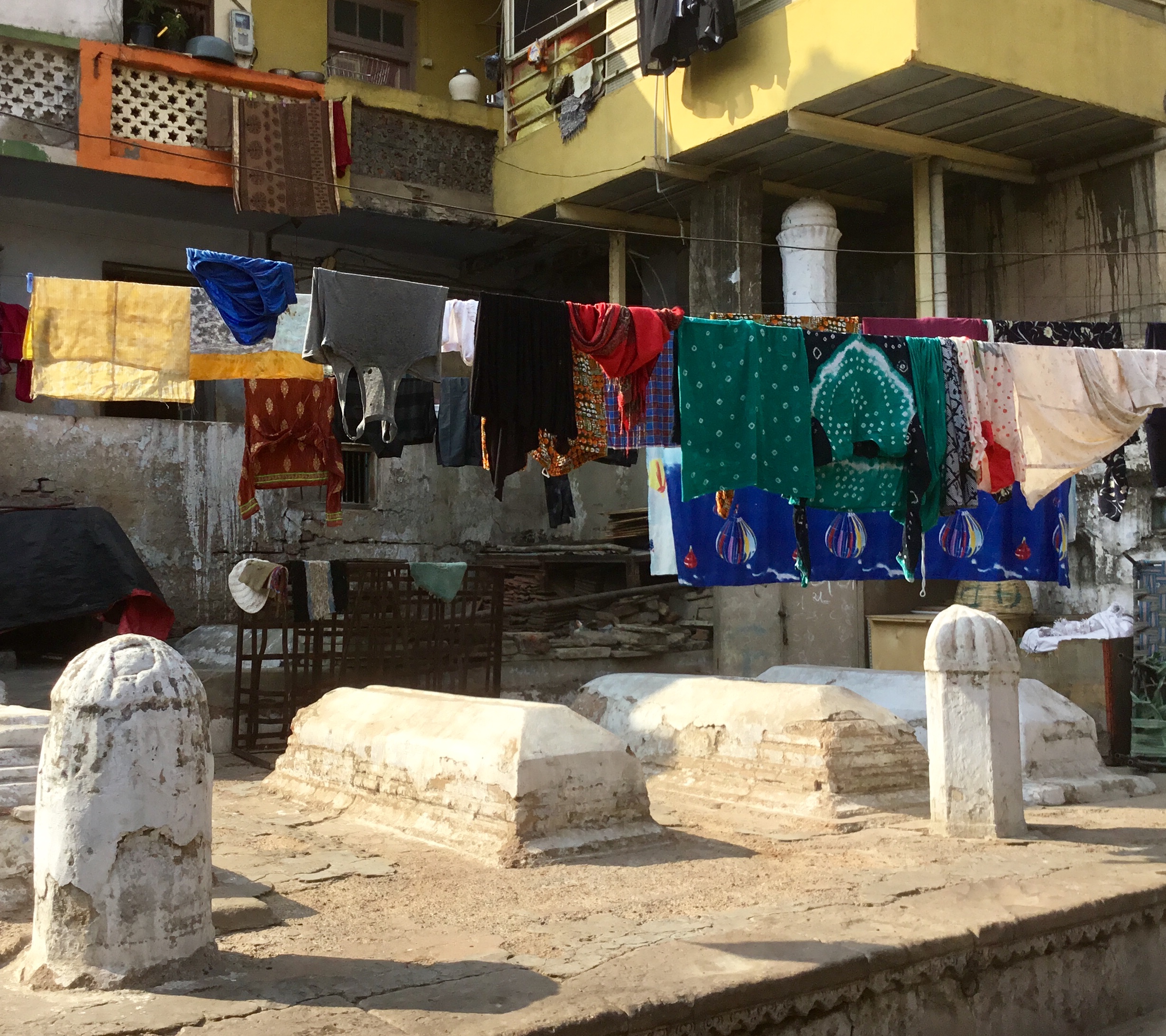
Ahmedabad, India
*an ongoing series of quotations – mostly from artists, to artists – that offers wisdom, inspiration, and advice for the sometimes lonely road we are on.
Seeing is not a passive awareness of visual data, but an active focusing upon it, “touching” it. Arnheim writes, in language that echoes the Hindu notion of seeing and touching: “In looking at an object we reach out for it. With an invisible finger we move through the space around us, go out to the distant places where things are found, touch them, catch them, scan their surfaces, trace their borders, explore their texture. It is an eminently active occupation.”
Diana L. Eck in Darsan: Seeing the Divine Image in India
Comments are welcome!
Pearls from artists* # 349
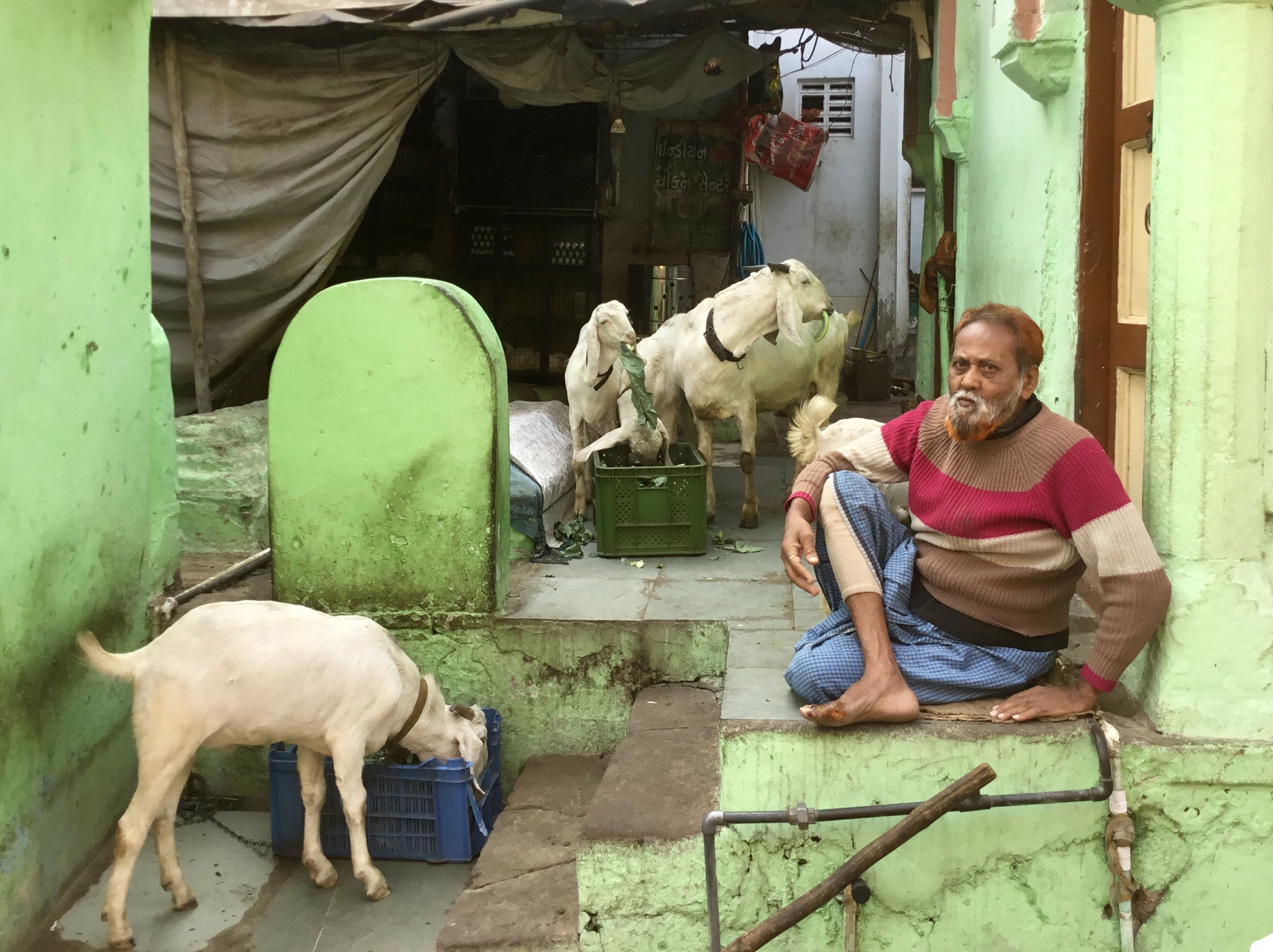
Ahmedabad, India
*an ongoing series of quotations – mostly from artists, to artists – that offers wisdom, inspiration, and advice for the sometimes lonely road we are on.
India presents to the visitor an overwhelmingly visual impression. It is beautiful, colorful, sensuous. It is captivating and intriguing, repugnant and puzzling. It combines the intimacy and familiarity of English four o’clock tea with the dazzling foreignness of carpisoned elephants or vast crowds bathing in the Ganga during an eclipse. India’s display of multi-armed images, it’s processions and pilgrimages, it’s beggars and kings, it’s street life and markets, it’s diversity of peoples – all appear to the eye in a kaleidoscope of images. Much that is removed from public view in the modern West and taken into the privacy of rest homes, asylums, and institutions is open and visible in the life of an Indian city or village. The elderly, the infirm, the dead awaiting cremation – these sights, while they may have been expunged from the childhood palace of the Buddha, are not isolated from the public eye in India. Rather, they are present daily in the visible world in which Hindus, and those who visit India, move in the course of ordinary activities. In India, one sees everything. One sees people at work and at prayer; one sees plump, well-endowed merchants, simple renouncers, fraudulent “holy” men, frail widows, and emaciated lepers; one sees the festival procession, the marriage procession, and the funeral procession. Whatever Hindus affirm of the meaning of life, death, and suffering, they affirm with their eyes wide open.
Diana L. Eck in Darsan: Seeing the Diving Image in India
Comments are welcome!
Q: What does a pastel feel like in your hand?
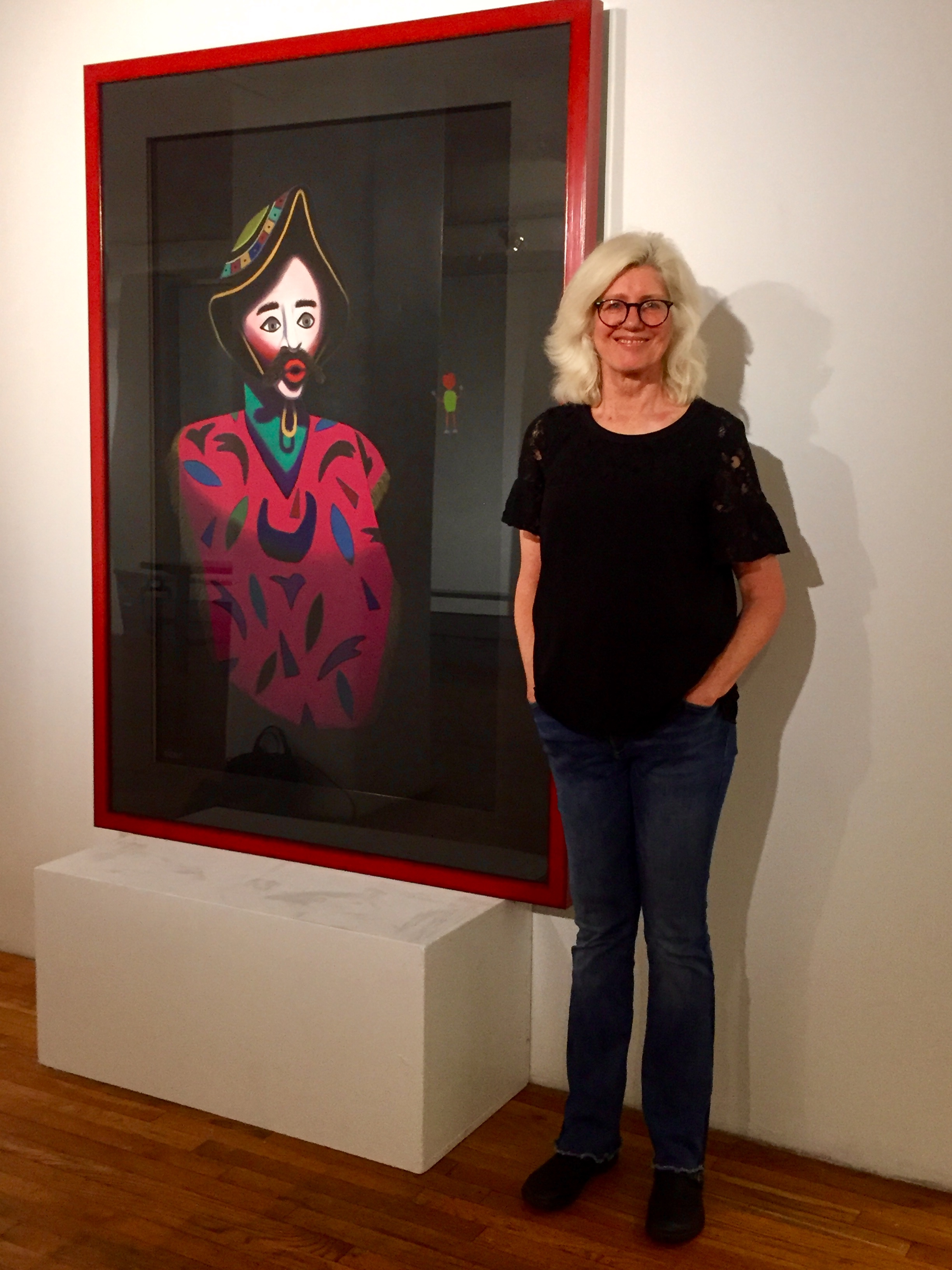
With “Prophecy,” 70” x 50,” at Westbeth Gallery
A: Each manufacturer uses distinct binders to hold the raw pigment together to form a pastel stick. Due mainly to this binder, each pastel feels slightly different. Rembrandts are medium-hard and I generally use them for the first few layers. The black backgrounds of my pastel paintings are achieved by layering lots of Rembrandt black.
I enjoy using Unison because they feel “buttery” as I apply them to the sandpaper. If you’ve been to my studio, you know that I use just about every soft pastel there is! Believe it or not, no two are the same color.
Each pastel has its own qualities and some are harder or more waxy than others. Henri Roche has the widest range of colors and they’re gorgeous! I want them to show so I use them for the final layer, the ‘icing on the cake.”
Comments are welcome!
Q: What made you fall in love with soft pastel versus another medium?
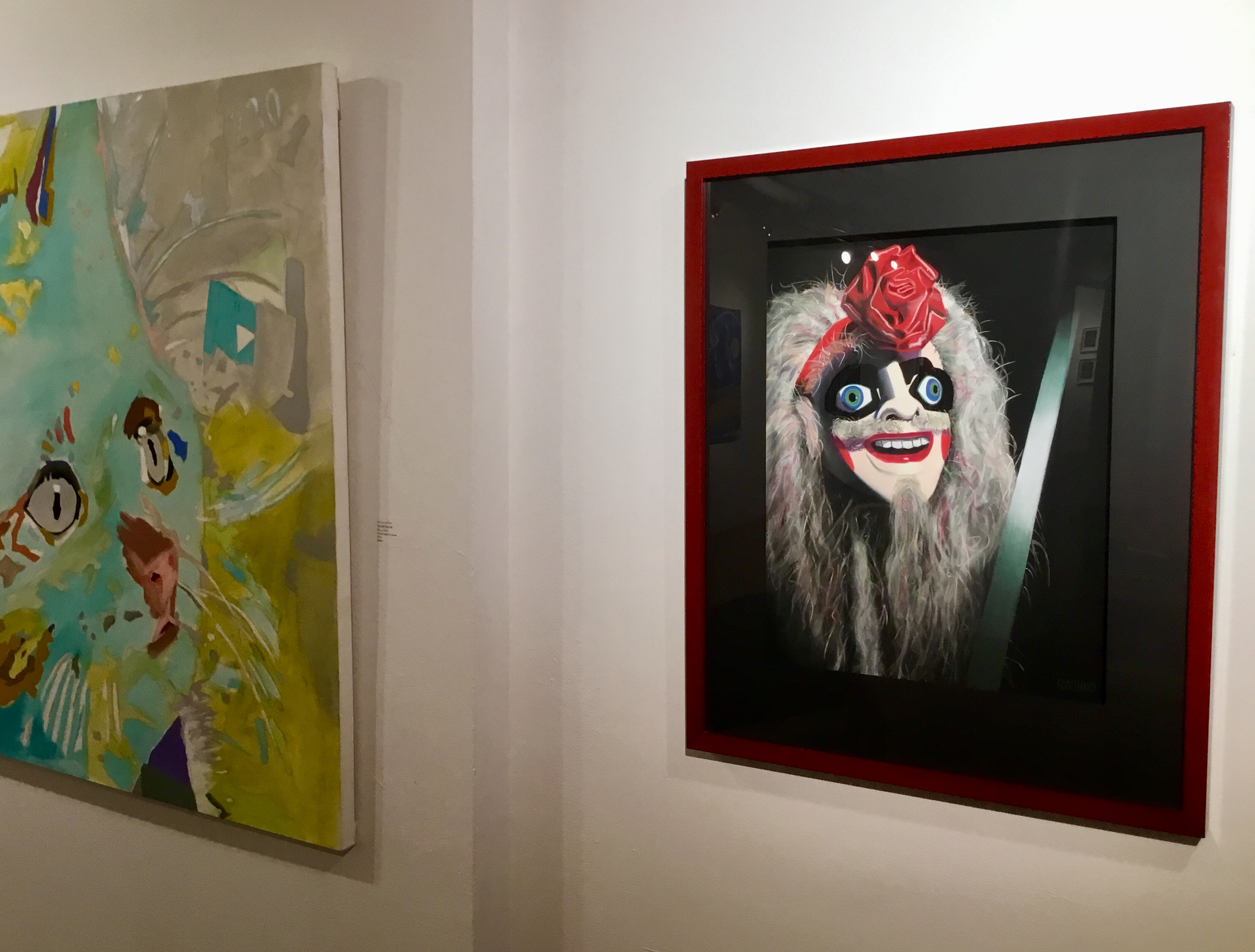
“The Champ” in “Worlds Seen & Unseen” at Westbeth Gallery, NYC
A: I like to get my hands right into my work. In other words, I don’t like brushes or anything else to intervene between my hands and what I’m working on.
I work with 400 or 500 grit Uart sandpaper so the downside is that I rub my fingertips raw from blending layers of soft pastel onto sandpaper. I’ve tried using rubber gloves (they make my fingers sweat and wear out fast), cotton gloves (they leave bits of lint on the paper), using a blending stump (it leaves lint on the paper), etc., but nothing works as well as my own fingers. So sore fingertips are an unavoidable occupational hazard. I sometimes take days off from the studio just so that my hands can heal.
I adore color and love looking at the thousands of pastels in my studio! After working with this medium for more than thirty years, I still love what I am able to accomplish and I am still pushing it to do new things. The colors are rich, intense, velvety. No other medium is as sensuous or as satisfying.
Comments are welcome!
Q: Do you have any ”dont’s” for artists that you swear by?
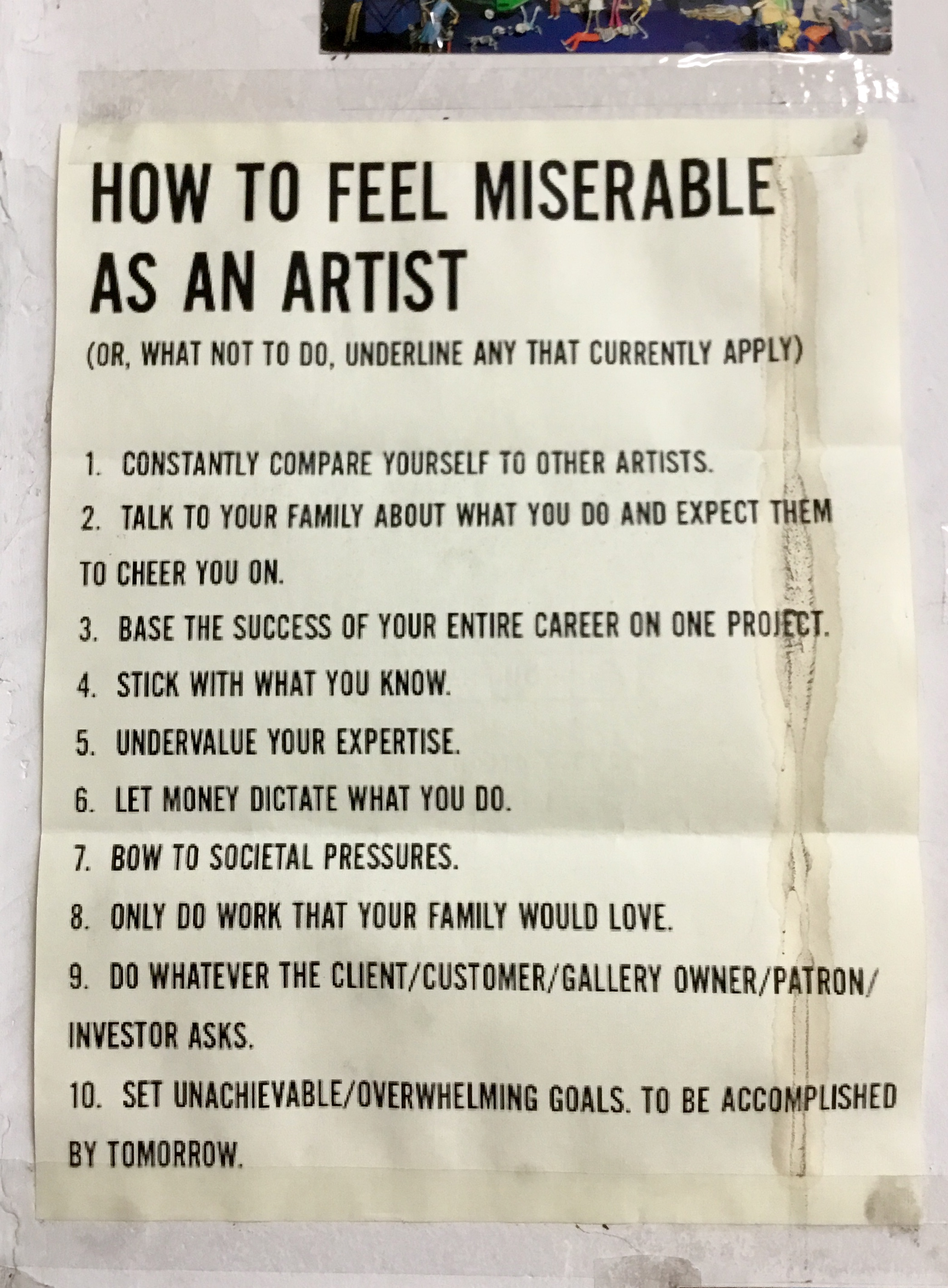
On my studio wall
A: I don’t remember where I found this list, but most artists probably need to be reminded once in awhile. I certainly do!
Comments are welcome!
Pearls from artists* # 346
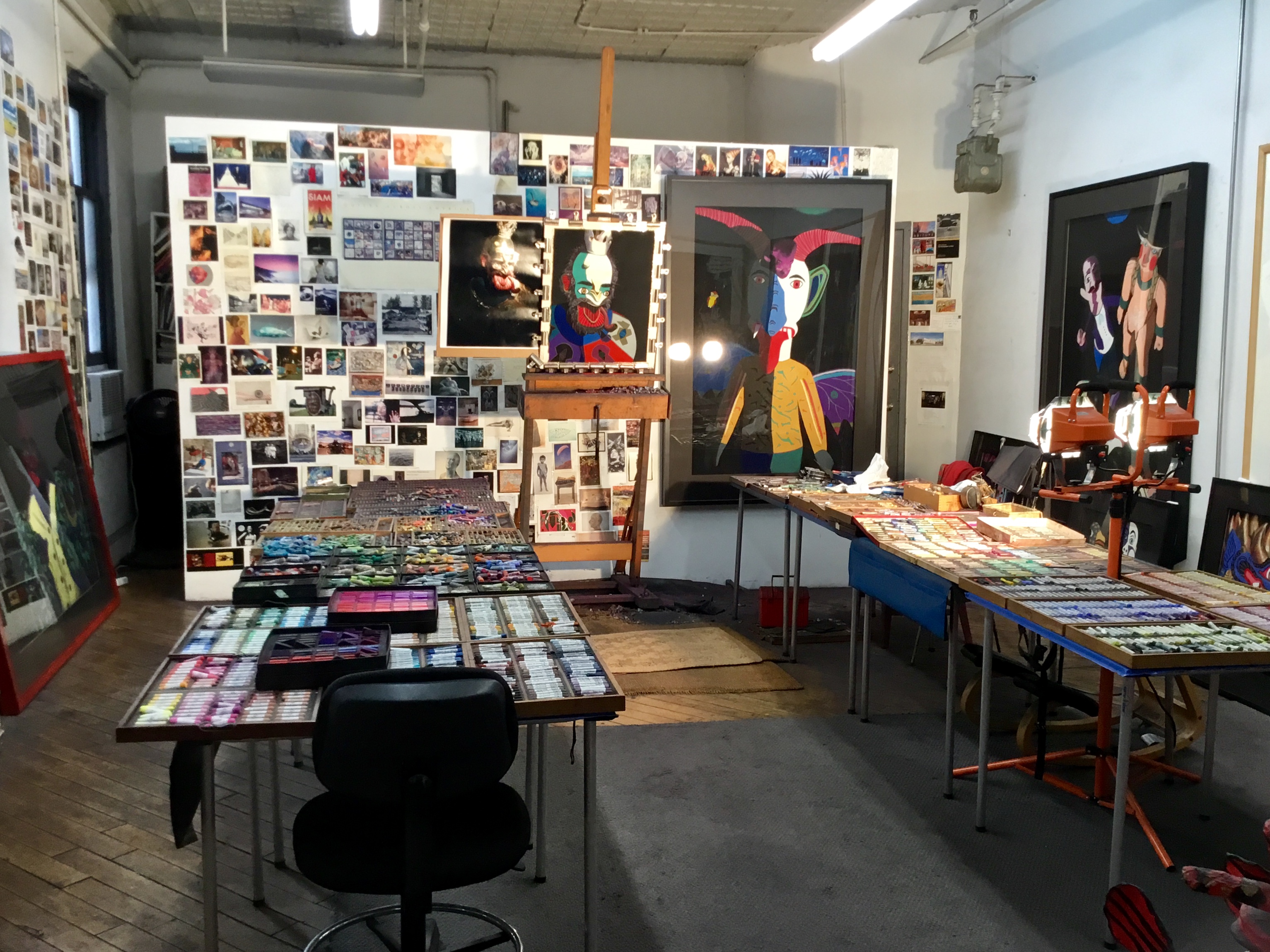
Barbara’s studio
*an ongoing series of quotations – mostly from artists, to artists – that offers wisdom, inspiration, and advice for the sometimes lonely road we are on.
In my view… the most useful definition of creativity is the following one: people are artistically creative when they love what they are doing, know what they are doing, and actively engage in the tasks we call art-making. The three elements of creativity are thus loving, knowing, and doing; or heart, mind, and hands; or, as Buddhist teaching has it, great faith, great question, and great courage.
Eric Maisel in A Life in the Arts: Practical Guidance and Inspiration for Creative and Performing Artists
Comments are welcome!
Pearls from artists* # 345

Barbara working on an interview. Photo: Maria Cox
*an ongoing series of quotations – mostly from artists, to artists – that offers wisdom, inspiration, and advice for the sometimes lonely road we are on.
You begin your journey as an artist from sacred motives, with dreams and high hopes, and also, perhaps, from a place of painful turmoil or other inner necessity. From these powerful drives comes your conscious decision to pursue a life in art, your resolve to call yourself an artist whatever the consequences. You are the one nodding in agreement when the painter John Baldessari says, “Art is about bloody-mindedness. It’s not about living the good life. In the end, it’s just you and the art.”
Eric Maisel in A Life in the Arts: Practical Guidance and Inspiration for Creative and Performing Artists
Comments are welcome!
Pearls from artists* # 344
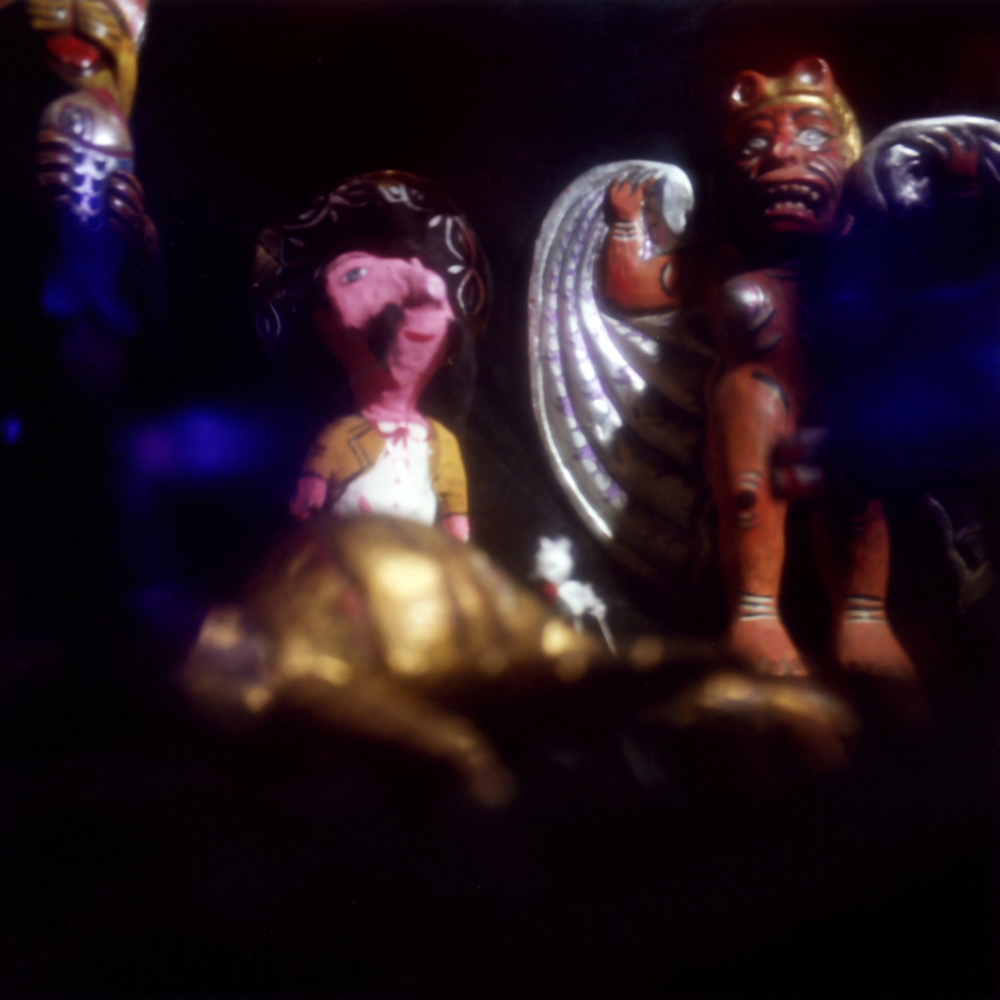
Untitled, c-print, 24 x 24,” edition of 5
*an ongoing series of quotations – mostly from artists, to artists – that offers wisdom, inspiration, and advice for the sometimes lonely road we are on.
I live in a most remarkable world, thick with mysteries. It all called to mind the British physicist Sir Arthur Eddington’s memorable explanation of how the universe works: “Something unknown is doing we don’t know what.”
But the best part is: I don’t need to know what.
… All I know for certain is that this is how I want to spend my life – collaborating to the best of my ability with forces of inspiration that I can neither see, nor prove, nor command, nor understand.
It’s a strange line of work, admittedly.
I cannot think of a better way to pass my days.
Elizabeth Gilbert in Big Magic: Creative Living Beyond Fear
Comments are welcome!
Q: What do you see when you look back at your early efforts?
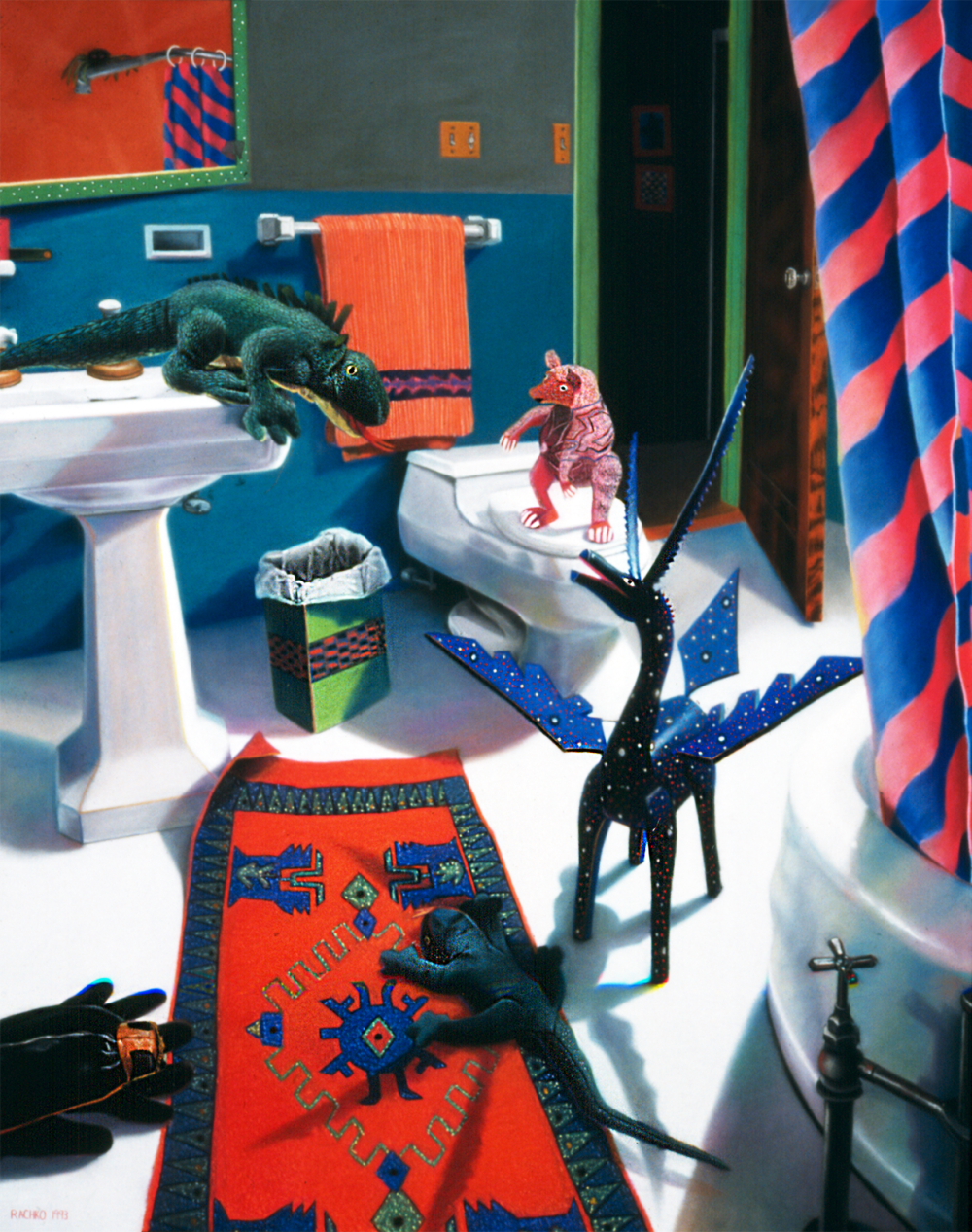
“Myth Meets Dream,” soft pastel on sandpaper, 47″ x 38,” 1993
A: I see continuity in subject matter and in medium, surely. For thirty-three years I have been inspired by foreign travel and research. In addition, I remain devoted to pushing the limits of what soft pastel can do and to promoting its merits as a fine art medium.
Here and there I see details I would render differently now; not exactly mistakes, but things that maybe could be done better. Fortunately, I think, all of my work is framed behind glass or plexiglas, making it extremely difficult to attempt revisions.
Perhaps most important of all, I see the long personal road that has advanced my work to its present state. Each gain has been hard-fought.
Comments are welcome!


 barbararachkoscoloreddust.com