Blog Archives
Q: You have spoken about learning to fly at the age of 25. What airplanes did you fly?
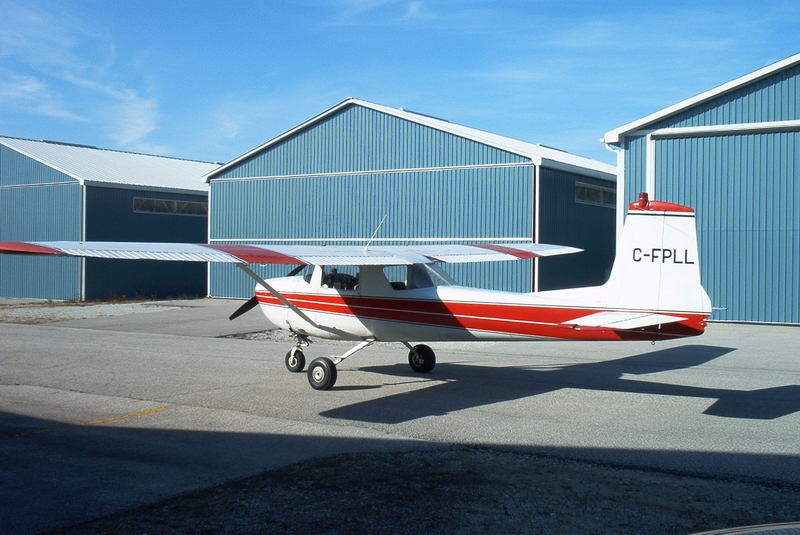
Cessna 150
A: I learned to fly at a small airport in Caldwell, NJ. Flying is expensive and since I didn’t have much money, I sought a job at Liberty Aviation, the local flight school, in exchange for flying lessons. For every three hours I worked, I earned a flying lesson. At the time it cost $25/hour to rent a plane, plus $10/hour for an instructor, and I was fortunate to find an excellent flight instructor who offered to teach me for free.
After I completed ground school at Clifton High School, I took my first flying lesson. It was on April 1, 1978 in a (two-seat) Cessna 150. During the following months I flew every chance I could, in Cessna 150s and newer Cessna 152s, and also occasionally in Piper Cherokees. On September 24, 1978 I received my private pilot’s license.
Then I got checked-out in a larger (four-seat) Cessna 172. For my instrument training I flew Cessna 150s and 172s. I received my instrument rating in April 1979.
Next I trained for a commercial pilot’s license and a multi-engine rating. I flew Cessna 172s and a twin-engine Piper Seminole and obtained my license and rating in May 1980.
In December 1980 I began Boeing 727 flight engineer training at Flight International in Atlanta, GA. Most of this was in Boeing-727 flight simulators with Delta airline pilots as instructors. My check-ride was in a Boeing-727 owned by FedEx. I received my flight engineer’s certificate in February 1981. At the time I was the only woman in the entire school!
Comments are welcome!
Pearls from artists* # 58
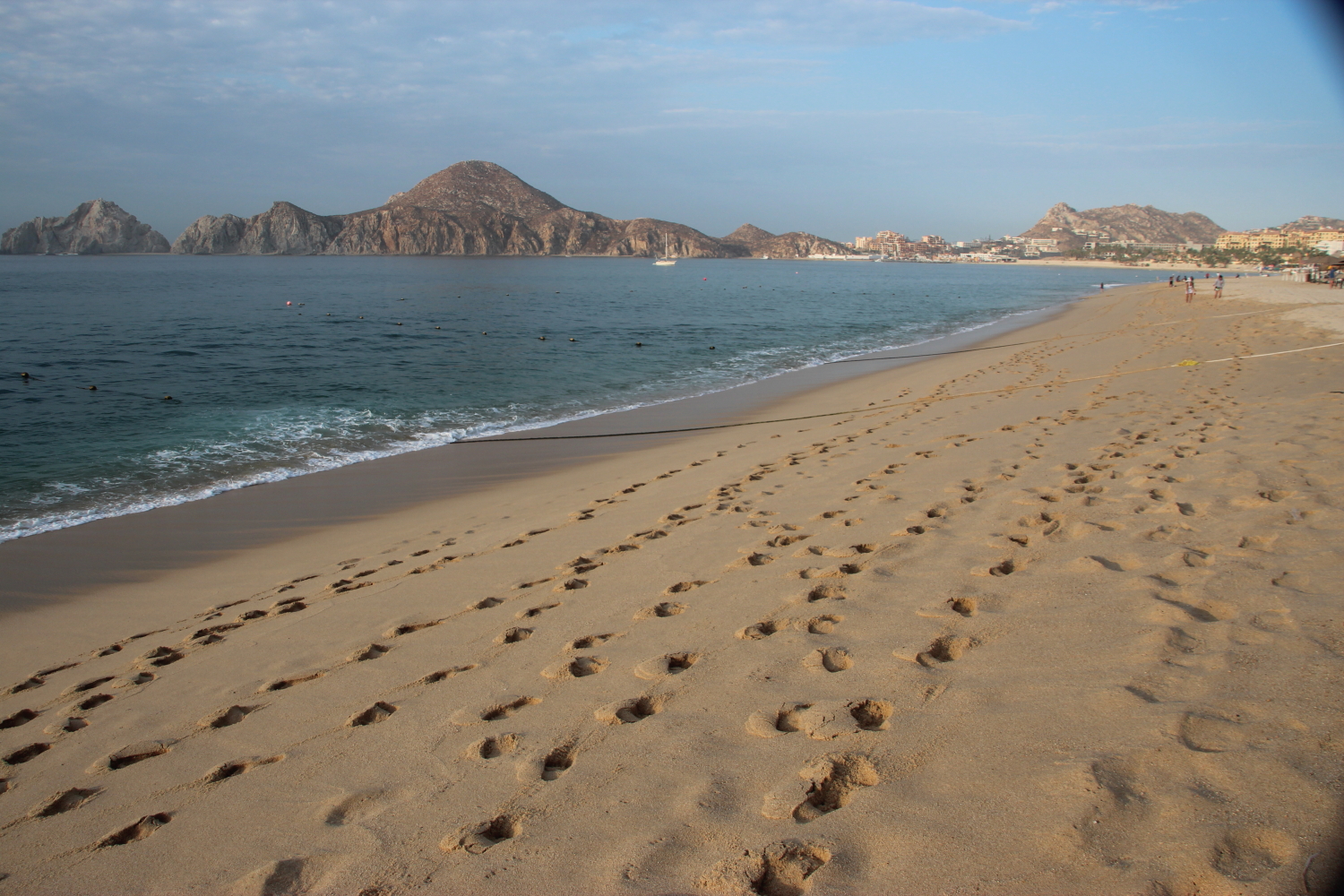
Cabo San Lucas, Mexico
* an ongoing series of quotations – mostly from artists, to artists – that offers wisdom, inspiration, and advice for the sometimes lonely road we are on.
I remember as a teenager having a group of friends at school and another group whom I spent the weekends with. I functioned fine until on occasions when I was with friends from both groups at the same time. Then it became really difficult, because I was used to acting very differently with the two groups. With one I was the leader, very vocal and outspoken about my opinions. With the other group I wanted desperately to belong and so I adapted to fit in, which meant not really being myself.
The lack of authenticity is painful. It applies to all levels of life. If our voice as a painter is inauthentic, we’re in trouble. In the end there is nothing so compelling as to be yourself. This is why being an artist can be so exhilarating. If you want to uncover your truth, you have a daily technique to come to terms with your limitations and to overcome them. You have an opportunity to look at the limiting stories you have written in your head and heart and rewrite them with boldness and vision. The quality of your attention influences how you see things.
What you put your attention on grows stronger in your life. Life, if you look around you, whether inside or in nature, is one bubbling mass of creativity. Recognize we have no shortage of it. If you focus your attention on what you now decide is fundamental , that quality will grow in your life. Not what our parents or teachers or friends or media or anybody says or said. What we now put our attention on will grow in our life. If you want to paint and put your focus there you will unleash a torrent of energy and enthusiasm.
Ian Roberts in Creative Authenticity: 16 Principles to Clarify and Deepen Your Artistic Vision
Comments are welcome!
Pearls from artists* # 27

Broken Bridge II, by El Anatsui, on the High Line
* an ongoing series of quotations – mostly from artists, to artists – that offers wisdom, inspiration, and advice for the sometimes lonely road we are on.
Of course, when people said a work of art was interesting, this did not mean that they necessarily liked it – much less that they thought it beautiful. It usually meant no more than that they thought they ought to like it. Or that they liked it, sort of, even though it wasn’t beautiful.
Or they might describe something as interesting to avoid the banality of calling it beautiful. Photography was the art where “the interesting” first triumphed, and early on: the new, photographic way of seeing proposed everything as a potential subject for the camera. The beautiful could not have yielded such a range of subjects; and it soon came to seem uncool to boot as a judgment. Of a photograph of a sunset, a beautiful sunset, anyone with minimal standards of verbal sophistication might well prefer to say, “Yes, the photograph is interesting.”
What is interesting? Mostly, what has not previously been thought beautiful (or good). The sick are interesting, as Nietzsche points out. The wicked, too. To name something as interesting implies challenging old orders of praise; such judgments aspire to be found insolent or at least ingenious. Connoisseurs of “the interesting” – whose antonym is “the boring” – appreciate clash, not harmony. Liberalism is boring, declares Carl Schmitt in The Concept of the Political, written in 1932. (The following year he joined the Nazi Party). A politics conducted according to liberal principles lacks drama, flavor, conflict, while strong autocratic politics – and war – are interesting.
Paolo Dilonardo and Anne Jump, editors, Susan Sontag: At the Same Time
Comments are welcome!


 barbararachkoscoloreddust.com