Blog Archives
Pearls from artists* # 664

*an ongoing series of quotations – mostly from artists, to artists – that offers wisdom, inspiration, and advice for the sometimes lonely road we are on.
Throughout history, geniuses have attributed their breakthroughs to the time they spent alone, deep in thought. Frank Kafka assures us,
‘You need not leave your room. Remain sitting at your table and listen. You need not even listen, simply wait. You need not even wait, just learn to become quiet, and still, and solitary. The world will freely offer itself to you to be unmasked. It has no choice; it will roll in ecstasy at your feet.’
Artists have a special relationship with the passing hours. Our work is tangible evidence of how we mark and give value to time. We have a finite, unknown number of hours on Earth, so we will only leave behind so many pieces. Our artistic legacy is literally tied to our ability to steal time and maintain silence.
And yet, we exist in a time and place with a tremendous aversion to peace. We must fight both ourselves and others to acquire it. No one asked us if this is the kind of environment we want to inhabit. Corporations inundate every square inch of space with uninvited visual and auditory interference, designed to light up the addiction pleasure centers in our brains. Our ancestors would have found this environment assaulting and maddening. It is certainly causing damage to our mental health, happiness, and creativity. But, it is so ubiquitous that there is pressure to simply accept the anxiety-producing ‘new normal’: we have collectively surrendered our brain space to the colonization.
Kate Kretz in Art From Your Core: A Holistic Guide to Visual Voice
Comments are welcome!
Pearls from artists* # 626

*an ongoing series of quotations – mostly from artists, to artists – that offers wisdom, inspiration, and advice for the sometimes lonely road we are on.
This is why, when writers who are just starting out ask me when it gets easier, my answer is never. It never gets easier. I don’t want to scare them, so I rarely say more than at, but the truth is that, if anything, it gets harder. The writing life is filled with predictable uncertainties, but with the awareness that we are always starting over. That everything we will ever write will be flawed. We may have written one book, or many, but all we know – if we know anything at all – is how to write the book we’re writing. All novels are failures. Perfection itself would be a failure. All we can hope is that we will fail better. That we will not fall prey to the easy enchantments of repeating what may have worked in the past. I try to remember that the job – as well as the plight, and the unexpected joy – of the artist is to embrace uncertainty, to be sharpened and honed by it. Each time we come to the end of a piece of work, we have failed as we have leapt – spectacularly, brazenly – into the unknown.
Dani Shapiro in Still Writing: The Perils and Pleasures of a Creative Life
Comments are welcome!
Pearls from artists* # 574

Barbara’s Studio
*an ongoing series of quotations – mostly from artists, to artists – that offers wisdom, inspiration, and advice for the sometimes lonely road we are on.
A creative life is risky business. To follow your own course, not patterned on parents, peers, or institutions, involves a delicate balance of tradition and personal freedom, a delicate balance of sticking to your guns and remaining open to change. While on some dimensions living a normal life, you are nevertheless a pioneer, breaking away from the molds and models that inhibit the heart’s desire, creating life as it goes. Being, acting, creating in the moment without props and supports, without security, can be supreme play, and it can also be frightening, the very opposite of play. Stepping into the unknown can lead to delight, poetry, invention, humor, lifetime friendships, self-realization, and occasionally a great creative breakthrough. Stepping into the unknown can also lead to failure, disappointment, rejection, sickness, or death.
Stephen Nachmanovitch in Free Play: Improvisation in Life and Art
Comments are welcome!
Pearls from artists* # 509
* an ongoing series of quotations – mostly from artists to artists – that offers wisdom, inspiration, and advice for the sometimes lonely road we are on.
Which left me with nothing but a dazzled heart and the sense that I live in a most remarkable world, thick with mysteries. It all called to mind the British physicist Sir Arthur Eddington’s memorable explanation of how the universe works: “Something unknown is doing we don’t know what.“
But the best part is: I don’t need to know what.
I don’t demand a translation of the unknown. I don’t need to understand what it all means, or where ideas are originally conceived, or why creativity plays out as unpredictably as it does. I don’t need to know why we are sometimes able to converse freely with inspiration, when at other times we labor hard in solitude and come up with nothing. I don’t need to know why an idea visited you today and not me. Or why it visited us both. Or why it abandoned us both.
None of us can know such things, for these are among the great enigmas.
All I know for certain is that this is how I want to spend my life – collaborating to the best of my ability with forces of inspiration that I can neither see, nor prove, nor command, nor understand.
It’s a strange line of work, admittedly.
I cannot think of a better way to pass my days.
Elizabeth Gilbert in Big Magic: Creative Living Beyond Fear
Comments are welcome!
Pearls from artists* # 507

* an ongoing series of quotations – mostly from artists to artists – that offers wisdom, inspiration, and advice for the sometimes lonely road we are on.
Intellectual work sometimes, spiritual work certainly, artistic work always – these are forces that fall within its [uncertainty and the unknown] grasp, forces that must travel beyond the realm of the hour and the restraint of the habit. Nor can the actual work be well separated from the entire life. Like the Knights of the Middle Ages, there is little the creatively inclined person can do but prepare himself, body and spirit, for the labor to come – for his adventures are all unknown. And no artist could go about his work, or would want to, with less than extraordinary energy and concentration. The extraordinary is what art is about.
Mary Oliver in Upstream: Selected Essays
Comments are welcome!
Pearls from artists* # 502

* an ongoing series of quotations – mostly from artists, to artists – that offers wisdom, inspiration, and advice for the sometimes lonely road we are on.
It seems to me that the less I fight my fear, the less it fights back. If I can relax, then fear relaxes, too. I cordially invite fear to come along with me everywhere I go. I even have a welcoming speech prepared for fear, which I deliver right before embarking upon any new project or adventure.
It goes something like this.
“Dearest fear: Creativity and I are about to go on a road trip together. I understand you will be joining us, because you always do. I acknowledge that you believe you have an important job to do in my life, and that you take your job seriously. Apparently, your job is to induce complete panic whenever I’m about to do something interesting – and may I say, you are superb at your job. So, by all means, keep doing your job, if you feel you must. But I will also be doing my job on this road trip, which is to work hard and stay focused. And Creativity will be doing its job, which is to remain stimulating and inspiring. There’s plenty of room in this vehicle for all of us, so make yourself at home, but understand this: Creativity and I are the only ones who will be making any decisions along the way. I recognize and respect that you are part of this family, and so I will never exclude you from our activities, but still – your suggestions will never be followed. You’re allowed to have a seat, and you’re allowed to have a voice, but you are not allowed to have a vote. You’re not allowed to touch the road maps; you’re not allowed to suggest detours; you’re not allowed to fiddle with the temperature. Dude, you’re not even allowed to touch the radio. But above all else, my dear old familiar friend, you are absolutely forbidden to drive.”
Then we head off together – me and creativity and fear – side by side by side forever, advancing once more into the terrifying but marvelous terrain of unknown outcome.
Elizabeth Gilbert in Big Magic: Creative Living Beyond Fear
Comments are welcome!
Pearls from artists* # 433

Chatting with Jenny Holzer. It looks like she did not want her picture taken, but she was actually waiving.
*an ongoing series of quotations – mostly from artists, to artists – that offers wisdom, inspiration, and advice for the sometimes lonely road we are on.
…Two positions exist, the artistic and the commercial. Between these two an abiding tension persists. The eighteenth-century American painter Gilbert Stuart complained, “What a business is that of portrait painter. He is brought a potato and is expected to paint a peach.” The artist learns that the public wants peaches, not potatoes. You can paint potatoes if you like, write potatoes, dance potatoes, and compose potatoes, you can with great and valiant effort communicate with some other potato-eaters and peach-eaters. In so doing you contribute to the world’s reservoir of truth and beauty. But if you won’t give the public peaches, you won’t be paid much.
Repeatedly artists take the heroic potato position. They want their work to be good, honest, powerful – and only then successful. They want their work to be alive, not contrived and formulaic. As the Norwegian painter Edvard Munch put it: “No longer shall I paint interiors, and people reading, and women knitting. I shall paint living people, who breathe and feel and suffer and love.”
The artist is interested in the present and has little desire to repeat old, albeit successful formulas. As the painter Jenny Holzer put it, “I could do a pretty good third generation-stripe painting, but so what?
The unexpected result of the artist’s determination to do his [sic] own best art is that he is put in an adversarial relationship with the public. In that adversarial position he comes to feel rather irrational for what rational person would do work that’s not wanted?
…Serious work not only doesn’t sell well, it’s also judged by different standards. If the artist writes an imperfect but commercial novel it is likely to be published and sold. If his screenplay is imperfect but commercial enough it may be produced. If it is imperfect and also uncommercial it will not be produced. If his painting is imperfect but friendly and familiar it may sell well. If it is imperfect and also new and difficult, it may not sell for decades, if ever.
Ironically enough, the artist attempting serious work must also attain the very highest level of distinction possible. He must produce Crime and Punishment and The Brothers Karamazov but not also The Insulted and Injured or A Raw Youth, two of Dostoevsky’s nearly unknown novels. He is given precious little space in this regard.
I daresay, this last is why I devote my life to creating the most unique, technically advanced pastel paintings anyone will see!
Eric Maisel, A Life in the Arts: Practical Guidance and Inspiration for Creative and Performing Artists
Comments are welcome!
Pearls from artists* # 387

Barbara at work on “Schemer,” Soft Pastel on Sandpaper, 26” x 20”
* an ongoing series of quotations – mostly from artists, to artists – that offers wisdom, inspiration, and advice for the sometimes lonely road we are on.
You know, you don’t go into the studio and say, “Oh, here I am this marvelous heroine, this wonderful woman doing my marvelous painting so all these marvelous women artists can come after me and do their marvelous painting.” There you are alone in this huge space and you are not conscious of the fact that you have breasts and a vagina. You are inside yourself, looking at a damned piece of rag on the wall that you are supposed to make a world out of. That is all you are conscious of. I simply cannot believe that a man feels differently… Inside yourself, you are looking at this terrifying unknown and trying to feel, to pull everything you can out of all your experience, to make something. I think a woman or a man creating feels very much the same way. I bring my experience, which is different from a man’s, yes, and I put it where I can. But once that is done, I don’t know if it is a woman’s experience I’m looking at.
Grace Hartigan quoted in Ninth Street Women by Mary Gabriel
Comments are welcome!
Pearls from artists* # 378
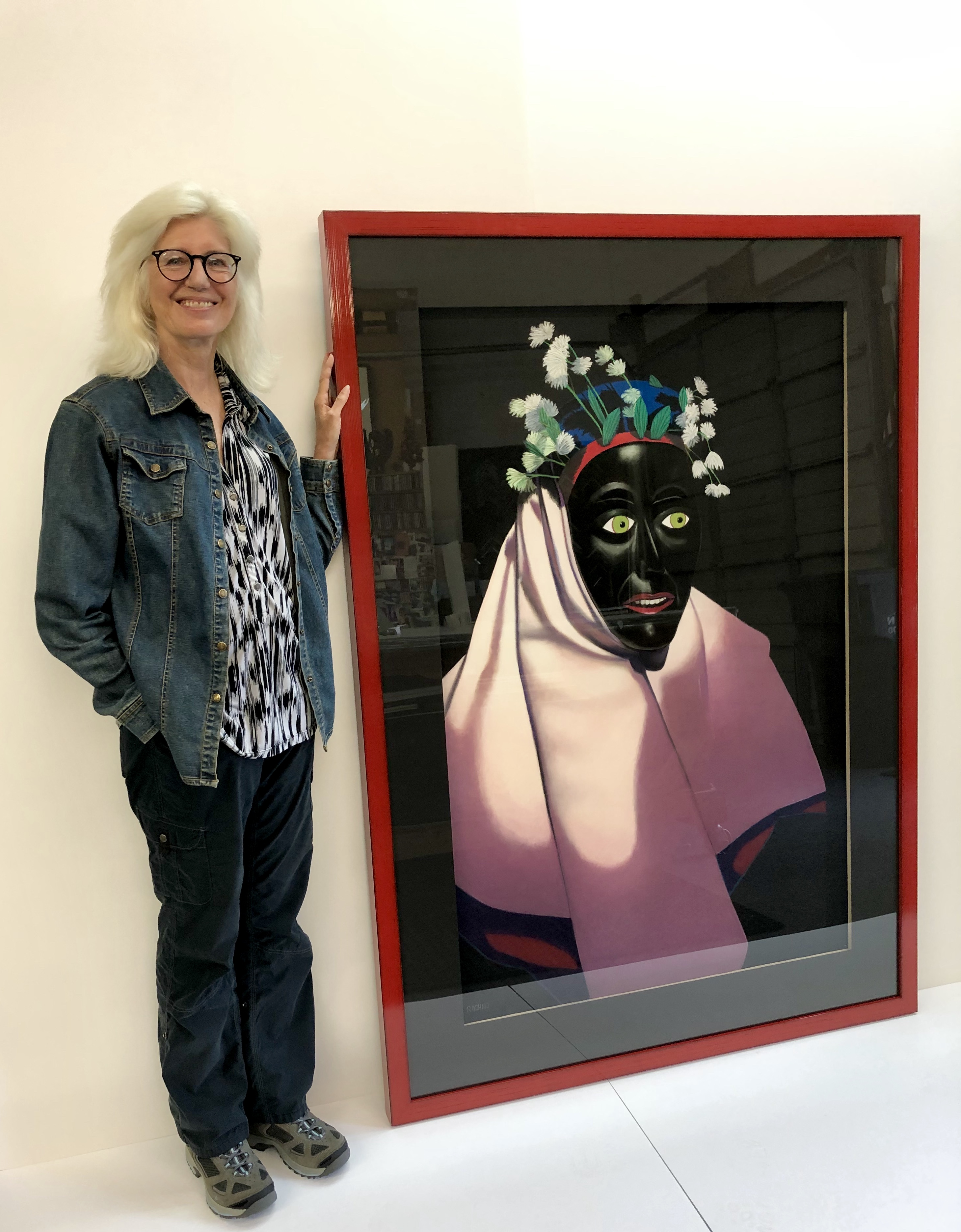
With “Poseur,” Soft Pastel on Sandpaper, 70” x 50,” 2019
* an ongoing series of quotations – mostly from artists, to artists – that offers wisdom, inspiration, and advice for the sometimes lonely road we are on.
[John] Graham told Lee [Krasner] and Jackson [Pollock] they were at the most wonderful part of their artistic journey because they were unknown and therefore free, and that there was only one thing they had to dread: fame.
How many men of great talent on their way to remarkable achievement in the present day are ruthlessly destroyed by critics, dealers, and public while mediocre, insensitive hacks, who by intrigue and industrious commercial effort have gained recognition and success, will go down in history with their inane creations. Success, fame, and greatness coincide very seldom. The great are not recognized during their life-time… Poe, Van Gogh,Rembrandt, Cezanne, Gauguin, Modigliani, Pushkin, Rimbaud, Baudelaire, and others could not make even a miserable living out of their art.
As Graham described it, true art could never be of the world because it was always steps, decades, light-years ahead of it. Artists, therefore, had no need to be part of the world, either. Their only duty was to persevere. Humanity, he said, depended on it.
Mary Gabriel in Ninth Street Women
Comments are welcome!
Pearls from artists* # 344
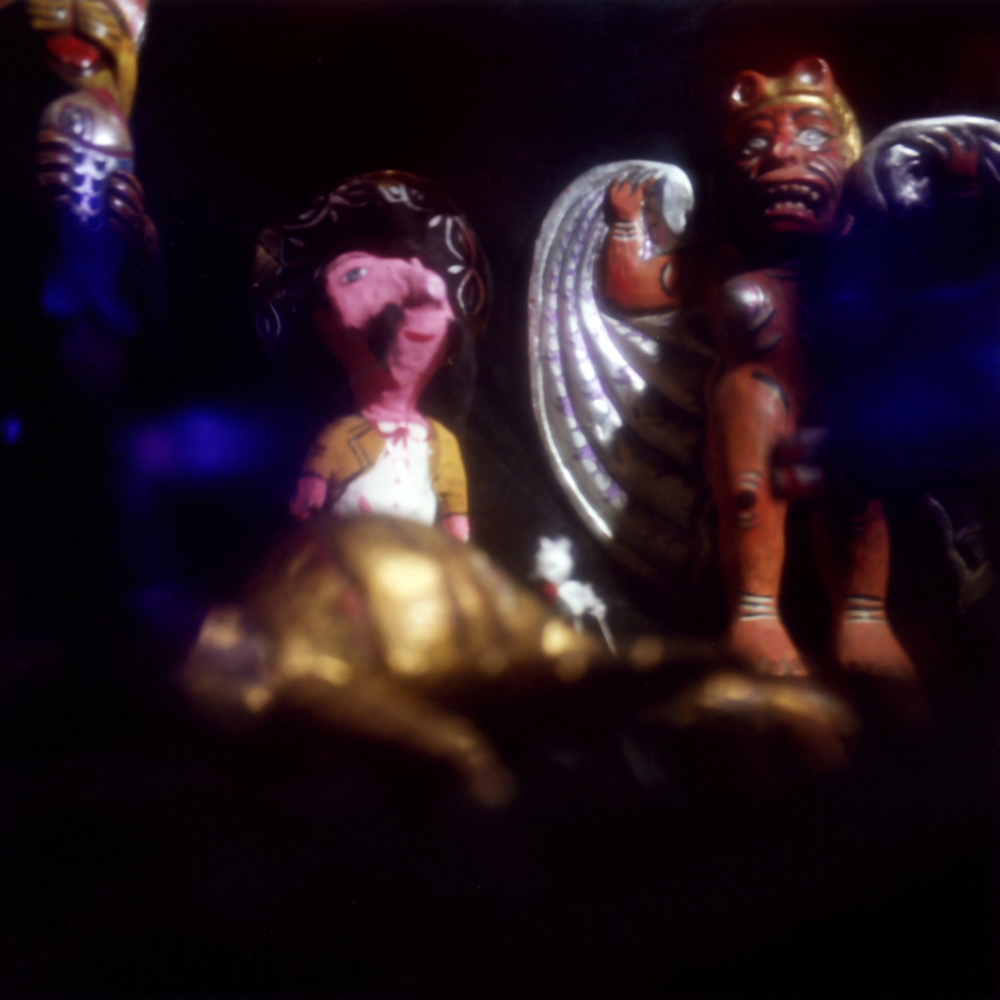
Untitled, c-print, 24 x 24,” edition of 5
*an ongoing series of quotations – mostly from artists, to artists – that offers wisdom, inspiration, and advice for the sometimes lonely road we are on.
I live in a most remarkable world, thick with mysteries. It all called to mind the British physicist Sir Arthur Eddington’s memorable explanation of how the universe works: “Something unknown is doing we don’t know what.”
But the best part is: I don’t need to know what.
… All I know for certain is that this is how I want to spend my life – collaborating to the best of my ability with forces of inspiration that I can neither see, nor prove, nor command, nor understand.
It’s a strange line of work, admittedly.
I cannot think of a better way to pass my days.
Elizabeth Gilbert in Big Magic: Creative Living Beyond Fear
Comments are welcome!


 barbararachkoscoloreddust.com