Blog Archives
Pearls from artists* # 175
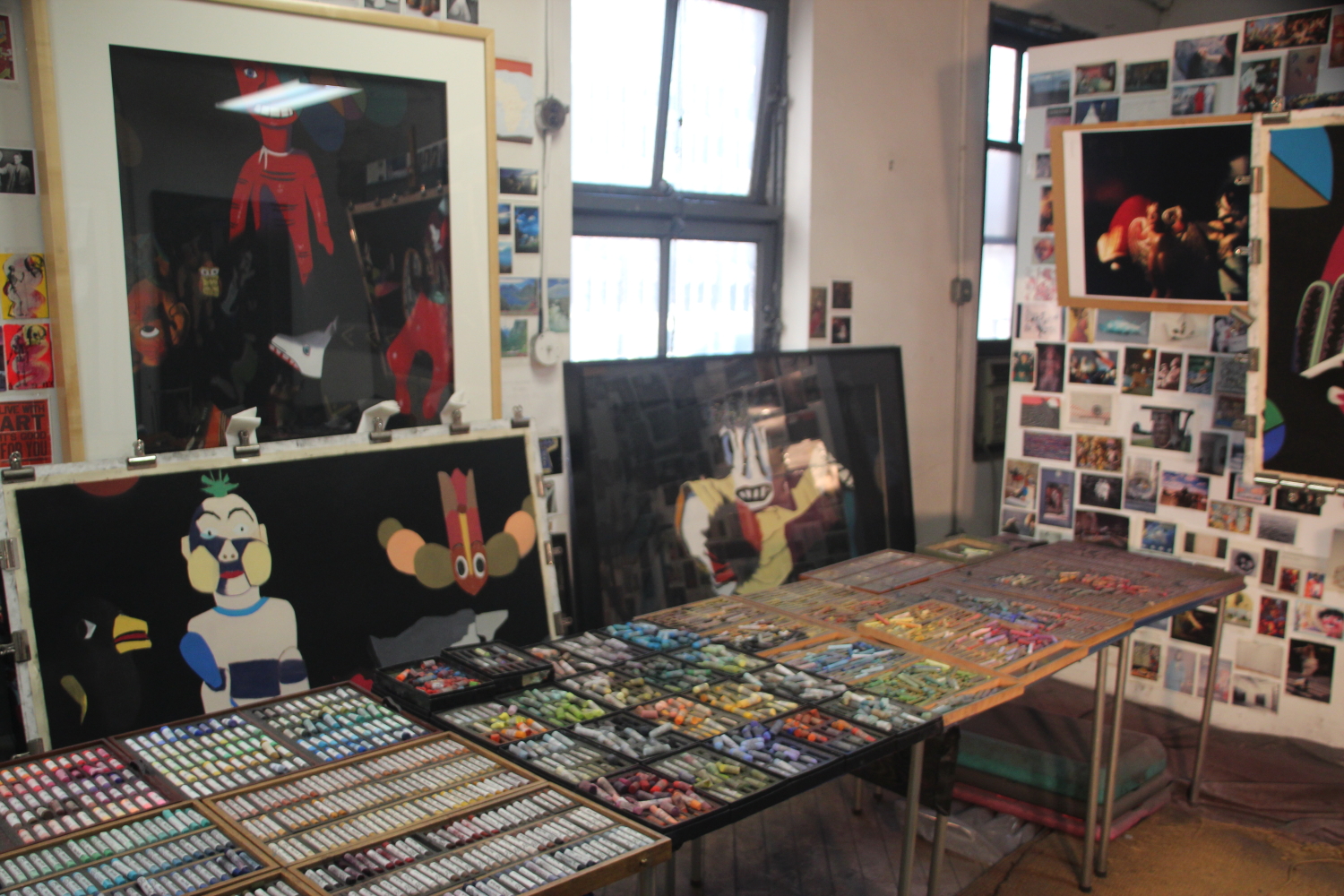
Barbara’s studio
* an ongoing series of quotations – mostly from artists, to artists – that offers wisdom, inspiration, and advice for the sometimes lonely road we are on.
I know this is a sentimental cliché, but I do feel toward my books very much as a parent must toward his children. As soon as someone says, “I did like your short stories, but I don’t like your novels,” or, “Of course, you only really came into your own with Anglo-Saxon Attitudes” – then immediately I want to defend all my other books. I feel this especially about Hemlock and Anglo-Saxon Attitudes – one child a bit odd but exciting, the other competent but not really so interesting. If people say they like one book and not the other, then I feel they can’t have understood the one they don’t like.
Angus Wilson in The Paris Review Interviews: Writers at Work 1st Series, edited and with an introduction by Malcolm Cowley
Comments are welcome!
Pearls from artists* # 165
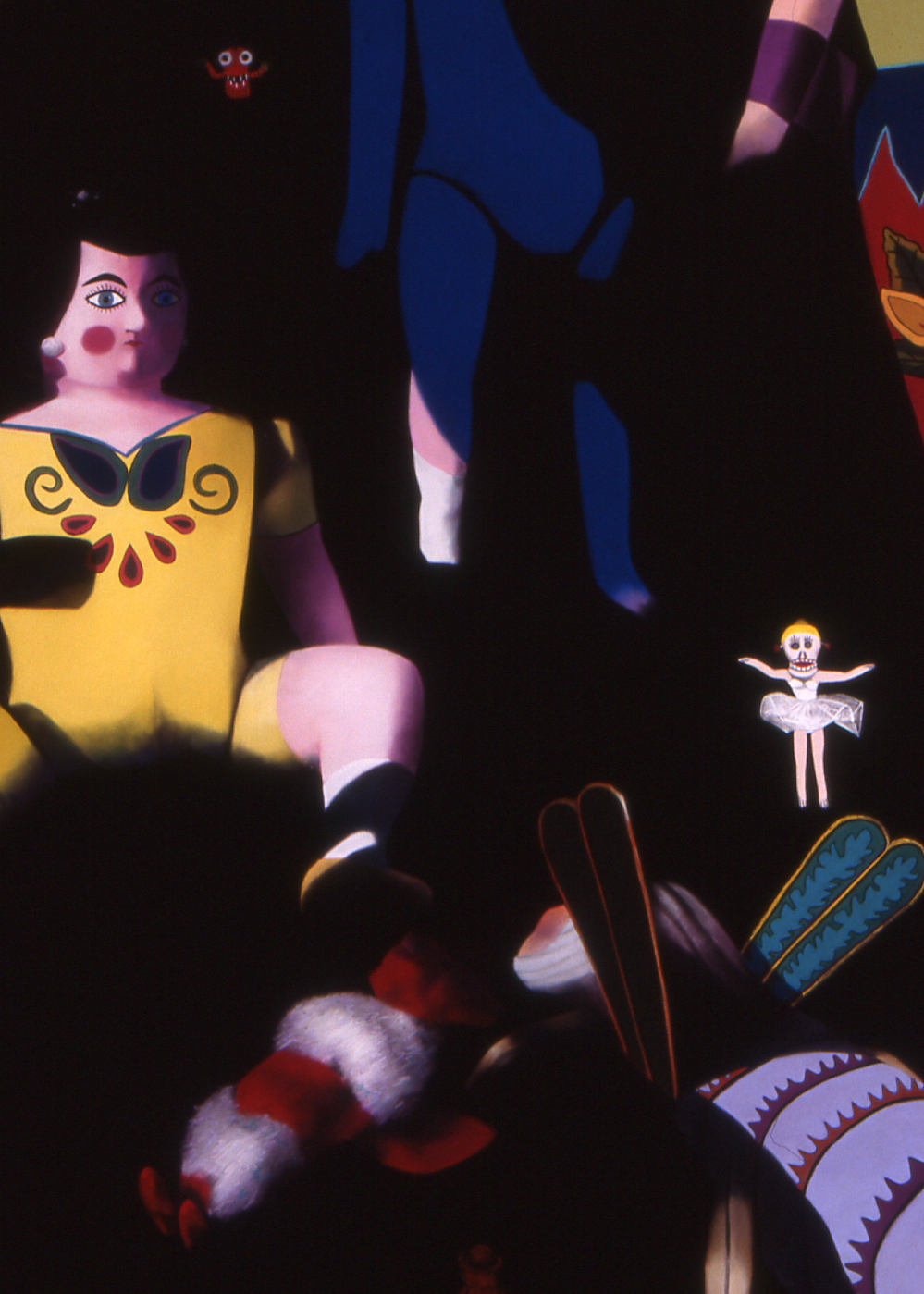
“The Space Between,” soft pastel on sandpaper, 58″ x 38″
* an ongoing series of quotations – mostly from artists, to artists – that offers wisdom, inspiration, and advice for the sometimes lonely road we are on.
When I have painted a fine picture I have not given expression to a thought! That is what they say. What fools people are! They would strip painting of all its advantages. A writer has to say almost everything in order to make himself understood, but in painting it is as if some mysterious bridge were set up between the spirit of the persons in the picture and the beholder. The beholder sees figures, the external appearance of nature, but inwardly he meditates; the true thinking that is common to all men. Some give substance to it in writing, but in so doing they lose the subtle essence. Hence, grosser minds are more easily moved by writers than by painters or musicians. The art of the painter is all the nearer to man’s heart because it seems to be more material. In painting, as in external nature, proper justice is done to what is finite and to what is infinite, in other words, to what the soul finds inwardly moving in objects that are known through the senses alone.
The Journal of Eugene Delacroix edited by Hubert Wellington
Comments are welcome!
Q: Were there any other artists in your family?

“The Ancestors,” soft pastel on sandpaper, 58″ x 38,” 2013
A: Unfortunately, I have not been able to reconstruct my family tree further back than two generations. So as far as I can tell, I am the first artist of any sort, whether musician, actor, dancer, writer, etc. in my family.
Both sets of grandparents emigrated to the United States from Europe. On my mother’s side my Polish grandparents died by the time my mother was 16, years before I was born.
My paternal grandparents both lived into their 90s. My father’s mother spoke Czech, but since I did not, it was difficult to communicate. I never heard any stories about the family she left behind. My grandfather spoke English, but I don’t remember him ever talking about his childhood or telling stories about his former life. My most vivid memories of my grandfather are seeing him in the living room watching Westerns on an old-fashioned television.
Sometimes I am envious of artists who had parents, siblings, or extended family who were artists. How I would have loved to grow up with a family member who was an artist and a role model!
Comments are welcome!
Pearls from artists* # 123
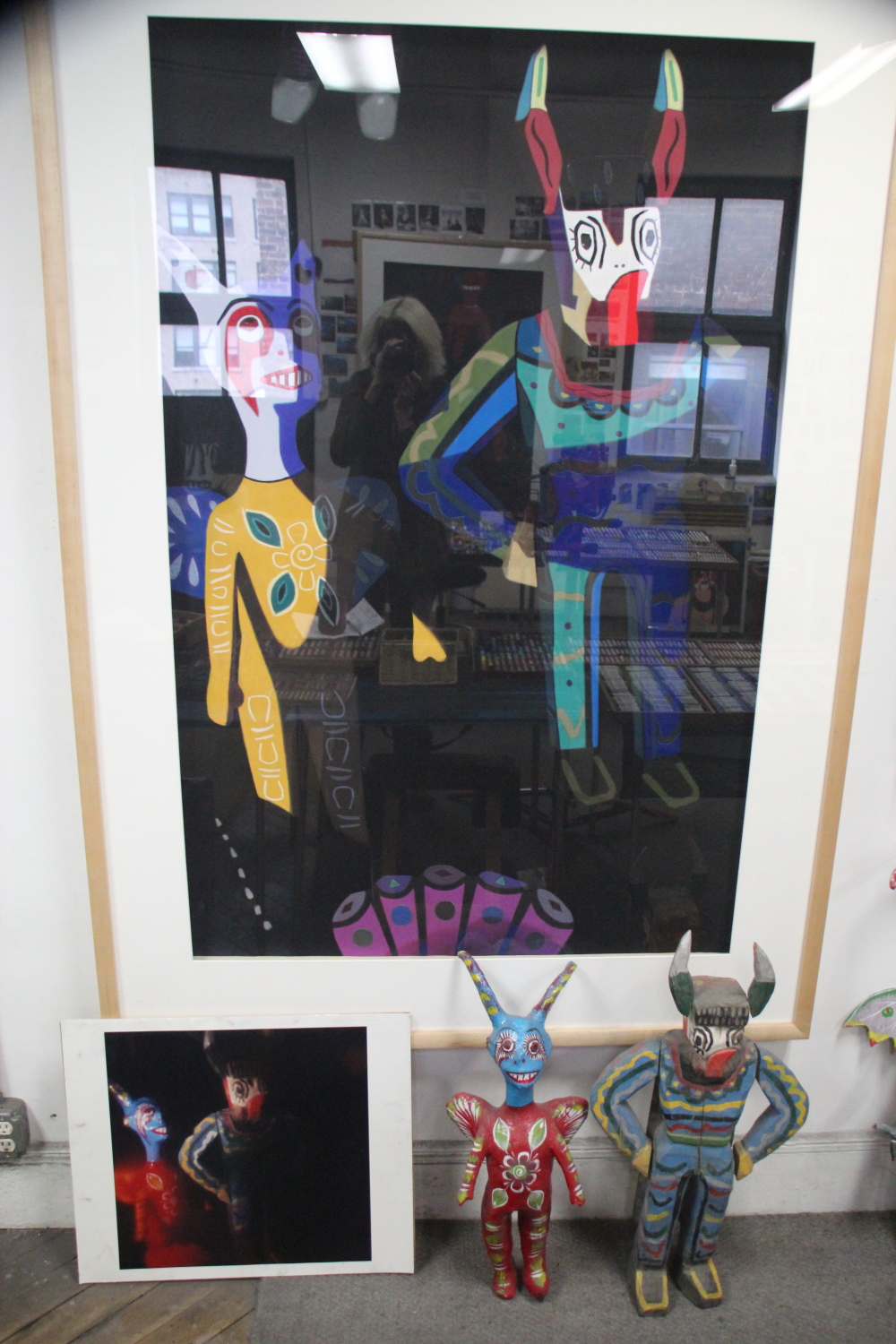
“Quartet” with self-portrait
* an ongoing series of quotations – mostly from artists, to artists – that offers wisdom, inspiration, and advice for the sometimes lonely road we are on.
We artists should not underestimate the importance of the stories we tell ourselves about how our art will make a difference. These motivational fictions describe the ways a work might interact with the world to justify our extravagant, and potentially narcissistic labors: that our art has transformational potential. A work might be understood as being critical of society or sanctuary from it, for instance, or a Trojan horse sent to the enemy as a nasty gift to unsettle their deeply entrenched frames of mind. We need renewable encouragement to make fresh work year after year in the face of uncertain rewards.
David Humphrey quoted in THE ART LIFE: On Creativity and Career by Stuart Horodner
Comments are welcome!
Pearls from artists* # 66
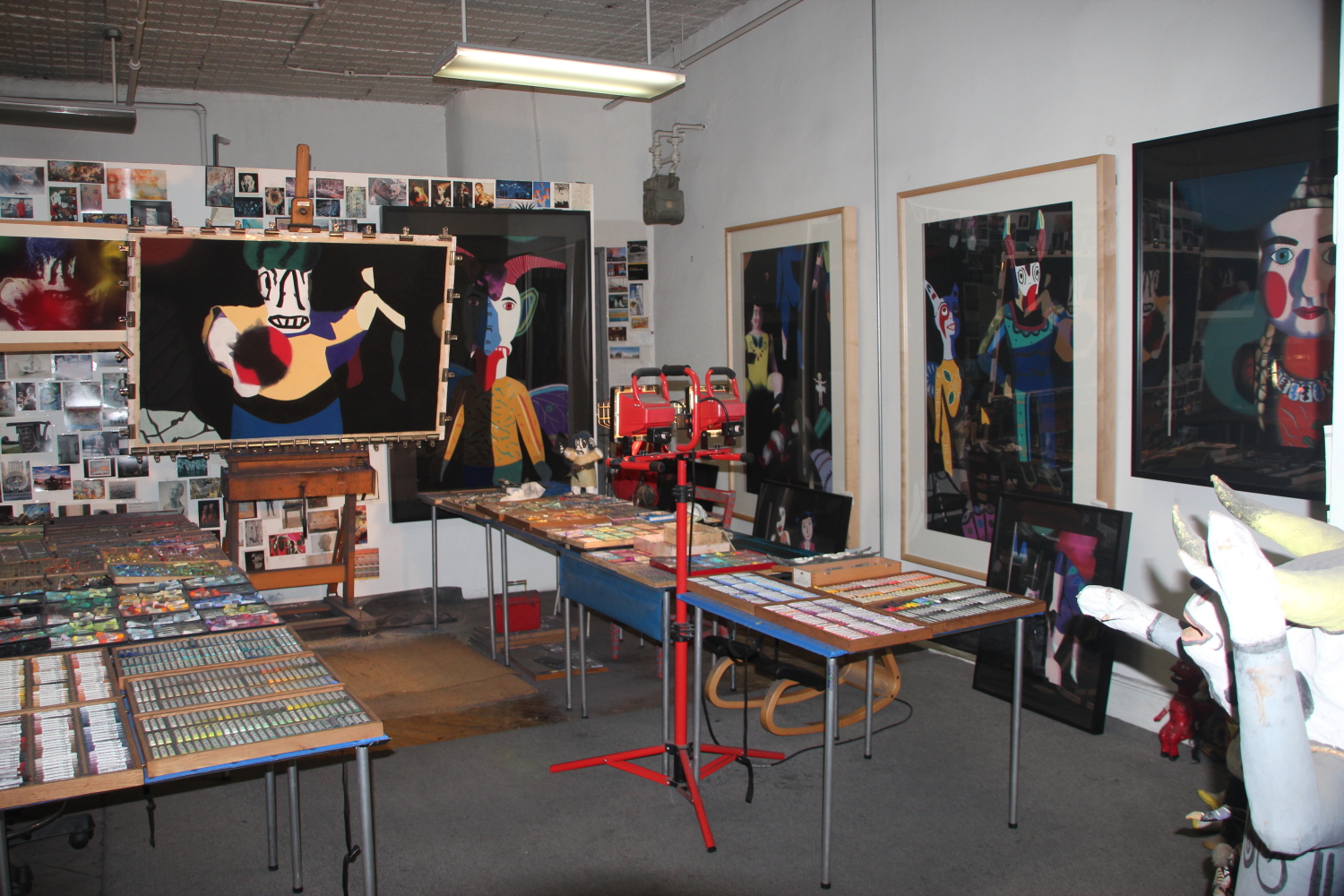
Barbara’s studio
* an ongoing series of quotations – mostly from artists, to artists – that offers wisdom, inspiration, and advice for the sometimes lonely road we are on.
I craved honesty, yet found dishonesty in myself. Why commit to art? For self-realization, or for itself? It seemed indulgent to add to the glut unless one offered illumination.
Often I’d sit and try to draw, but all the manic activity in the streets, coupled with the Vietnam War, made my efforts seem meaningless. I could not identify with political movements. In trying to join them I felt overwhelmed by yet another form of bureaucracy. I wondered if anything I did mattered.
Robert [Mapplethorpe] had little patience with these introspective bouts of mine. He never seemed to question his artistic drives, and by his example, I understood that what matters is the work: the string of words propelled by God becoming a poem, the weave of color and graphite scrawled upon the sheet that magnifies His motion. To achieve within the work a perfect balance of faith and execution. From this state of mind comes a light, life-charged.
Patti Smith in Just Kids
Comments are welcome!
Pearls from artists* # 32
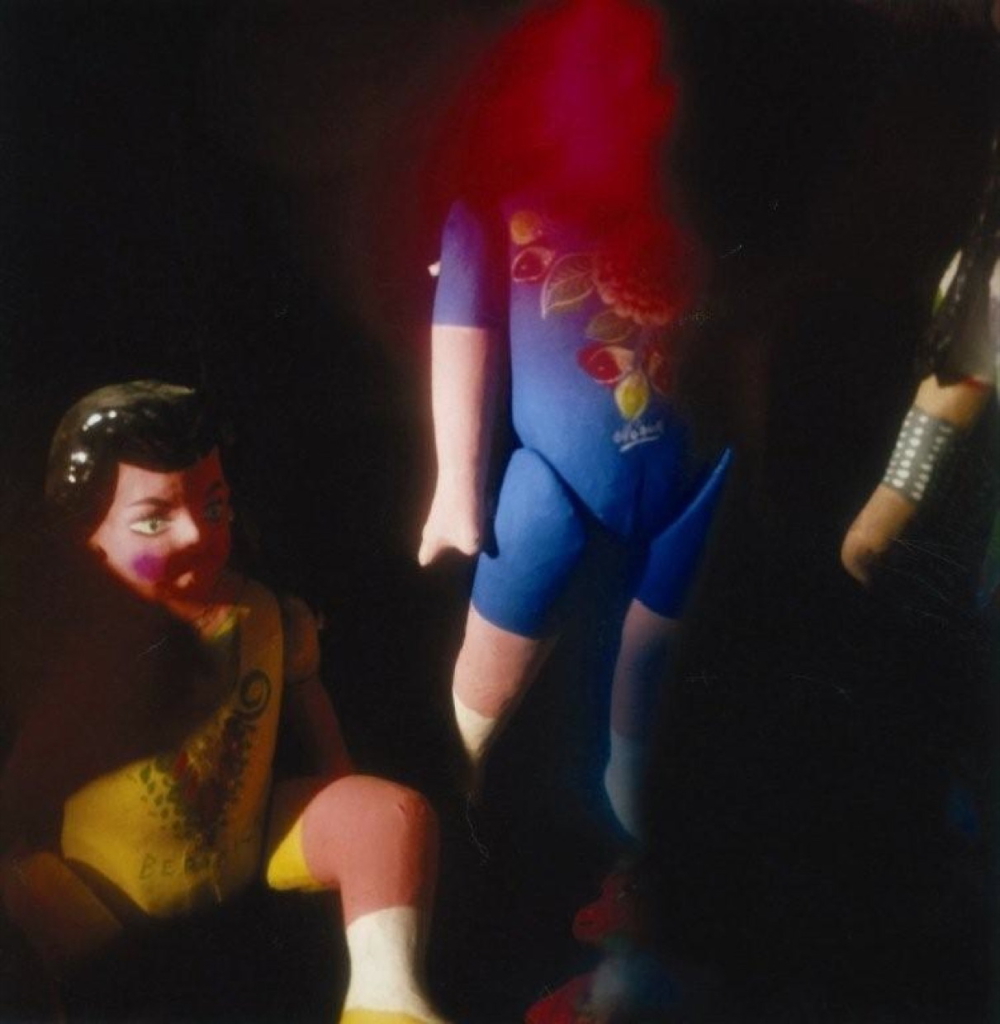
Untitled, 24″ x 24″ chromogenic print, edition of 5
* an ongoing series of quotations – mostly from artists, to artists – that offers wisdom, inspiration, and advice for the sometimes lonely road we are on.
We most certainly need to test ourselves against the most extreme possibilities, just as we are probably obligated not to express, share, and impart the most extreme possibility before it has entered the work of art. As something unique that no other person would and should understand, as one’s personal madness, so to speak, it has to enter into the work to attain its validity and to reveal there an internal law, like primary patterns that become visible only in the transparency of artistic creation. There exist nonetheless two freedoms to express oneself that seem to me the ultimate possibilities: one in the presence of the created object, and the other within one’s actual daily life where one can show another person what one has become through work, and where one may in this way mutually support and help and (here understood humbly) admire one another. In either case, however, it is necessary to show results, and it is neither lack of confidence nor lack of intimacy nor a gesture of exclusion if on does not reveal the tools of one’s personal becoming that are marked by so many confusing and tortuous traits, which are valid only for one’s own use.
Ulrich Baer, editor, The Wisdom of Rilke
Comments are welcome!
Q: What first intrigued you about Mexico?

“Myth Meets Dream,” 1993, soft pastel on sandpaper, first painting that includes Oaxacan figures
A: In the early 90’s my husband, Bryan, and I made our first trip to Oaxaca and to Mexico City. At the time I had become fascinated with the Mexican “Day of the Dead” celebrations so our trip was timed to see them firsthand. Along with busloads of other tourists, we visited several cemeteries in small Oaxacan towns. The indigenous people tending their ancestor’s graves were so dignified and so gracious, even with so many mostly-American tourists tromping around on a sacred night, that I couldn’t help being taken with these beautiful people and their beliefs. From Oaxaca we traveled to Mexico City, where again I was entranced, but this time by the rich and ancient history. On our first trip we visited the National Museum of Anthropology, where I was introduced to the fascinating story of ancient Meso-American civilizations (it is still one of my favorite museums in the world); the ancient city of Teotihuacan, which the Aztecs discovered as an abandoned city and then occupied as their own; and the Templo Mayor, the historic center of the Aztec empire, infamous as a place of human sacrifice. I was astounded! Why had I never learned in school about Mexico, this highly developed cradle of western civilization in our own hemisphere, when so much time had been devoted to the cultures of Egypt, Greece, and elsewhere? When I returned home to Virginia I began reading everything I could find about ancient Mexican civilizations, including the Olmec, Zapotec, Mixtec, Aztec, and Maya. This first trip to Mexico opened up a whole new world and was to profoundly influence my future work. I would return there many more times.
Comments are welcome!


 barbararachkoscoloreddust.com