Blog Archives
Q: Would you share your elevator pitch?
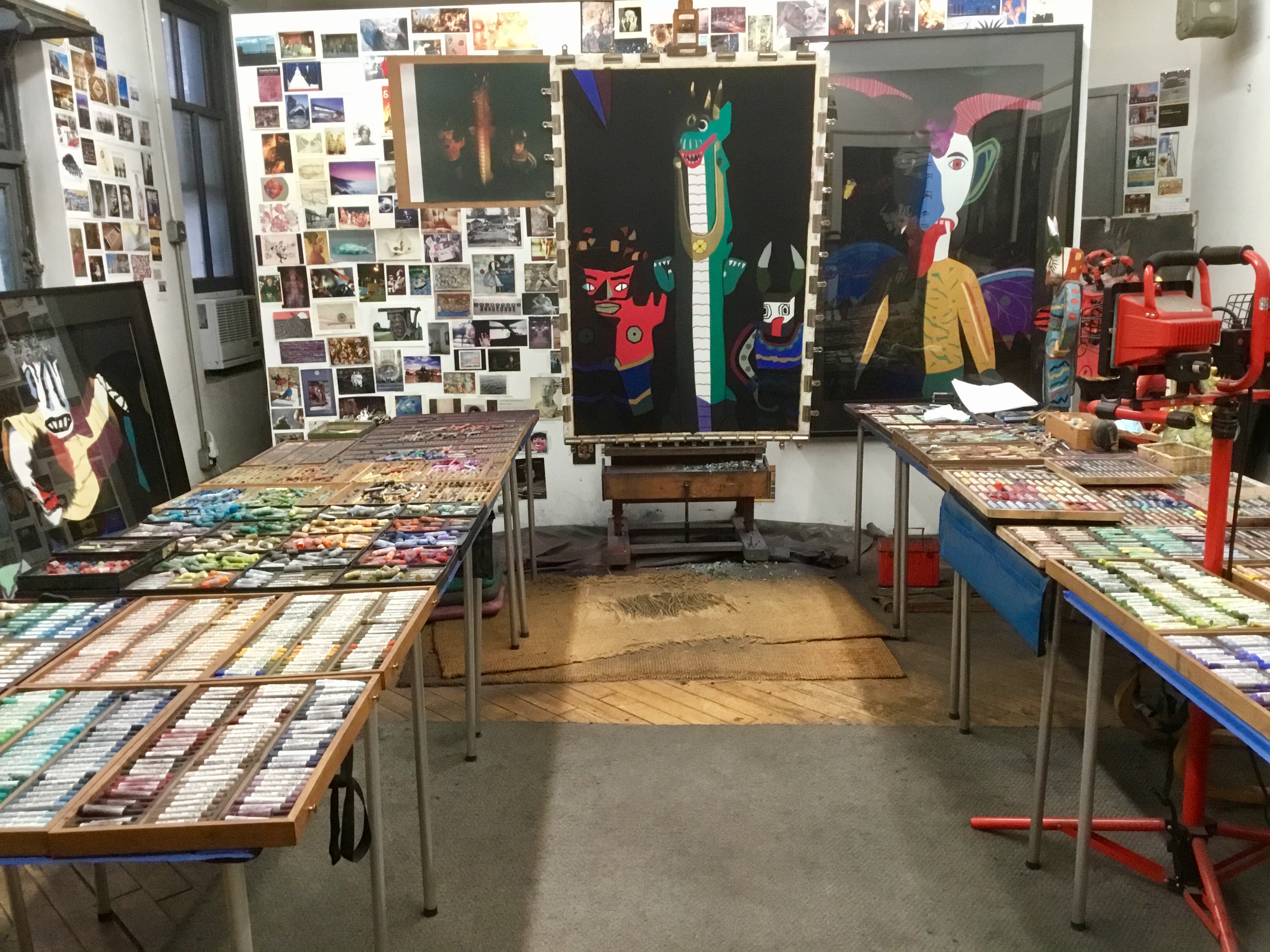
Barbara’s studio
A: Here it is:
I live in New York and have been a working artist for thirty years. I create original pastel paintings that use my large collection of Mexican and Guatemalan folk art – masks, carved wooden animals, papier mache figures, and toys – as subject matter.
Blending with my fingers, I spend months painstakingly applying dozens of layers of soft pastel onto acid-free sandpaper. My self-invented technique achieves extraordinarily rich, vibrant color and results in paintings that uniquely combine reality, fantasy, and autobiography.
My background is extremely unusual for an artist. I am a pilot, a retired Navy Commander, and a 9/11 widow.
Please see the extensive interview (14 pages so page through) at
http://barbararachko.com/images/PDFS/ARTiculAction-July2014.pdf
and see images and more at http://barbararachko.com/en/
Comments are welcome!
Pearls from artists* # 228
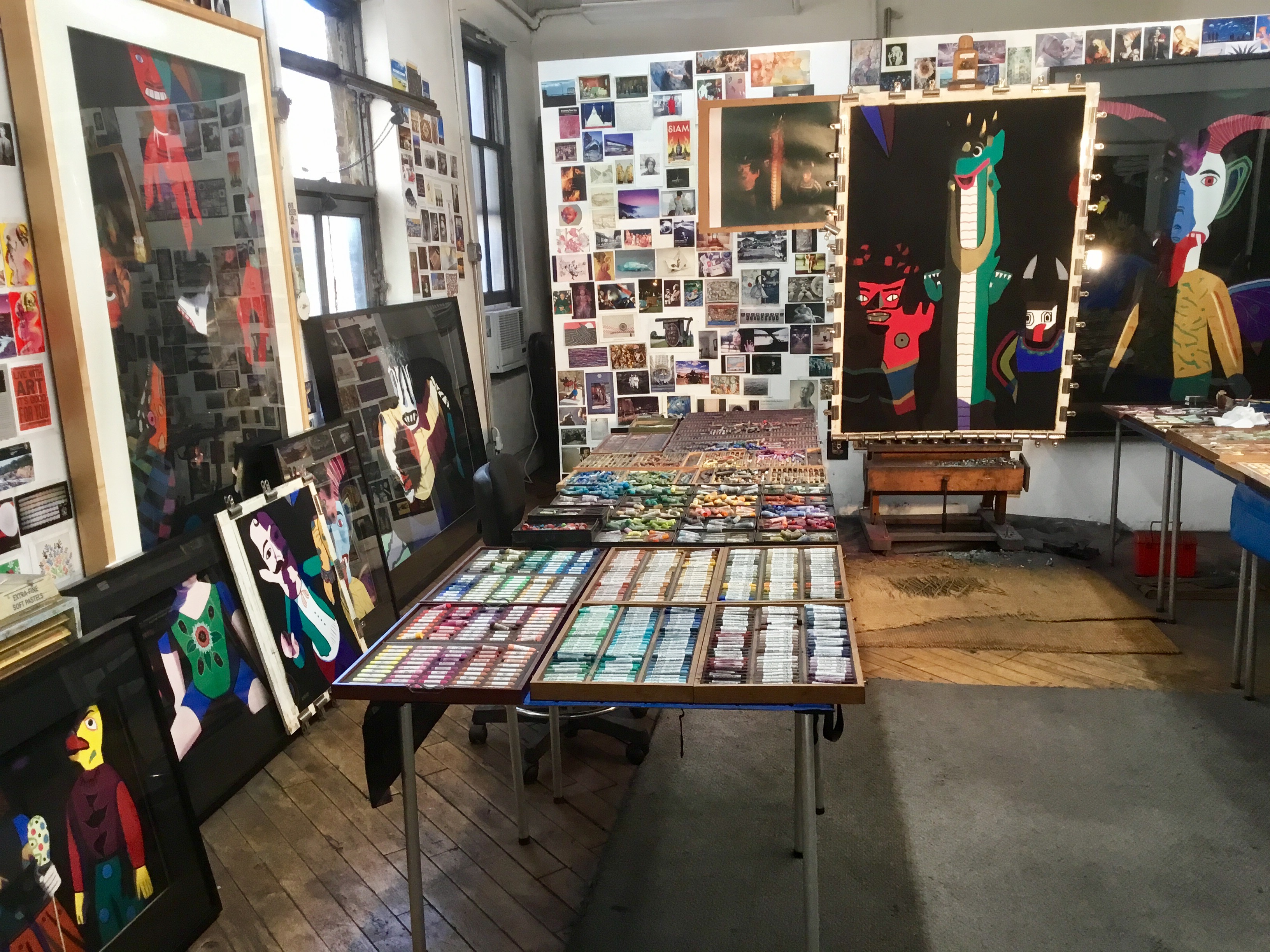
Barbara’s studio
* an ongoing series of quotations – mostly from artists, to artists – that offers wisdom, inspiration, and advice for the sometimes lonely road we are on.
… we’re plagued by the certainty that we haven’t quite achieved what we’d hoped we could. The work is only as good as our small, imperfect, pedestrian selves can make it. It exists in some idealized form, just out of reach. And so we push on. Driven by a desire to get it right, and the suspicion that there is no getting it right, we do our work in the hopes of coming close. There’s no room in this process for an overblown ego. A career – whether it takes us to Cap d’Antibes or to the Staybridge Suites off the interstate – can be the result, but if it’s the goal, we’ve lost before we’ve even begun.
Dani Shapiro in Still Writing: The Perils and Pleasures of a Creative Life
Comments are welcome!
Q: What’s on the easel today?
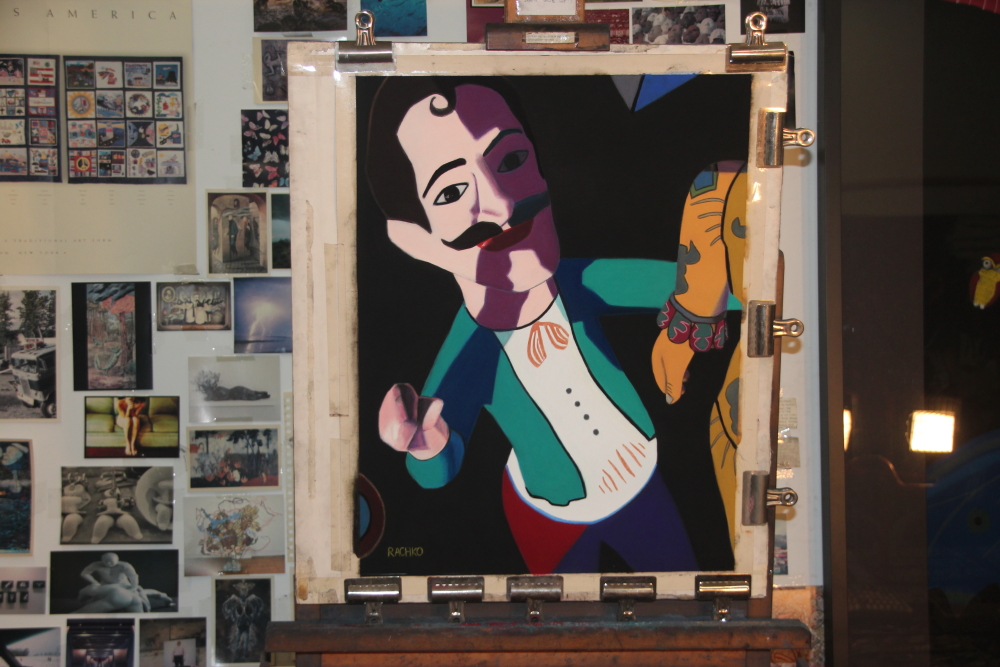
“A Long Goodbye,” soft pastel on sandpaper, 26″ x 20″
A: I am putting finishing touches on a small pastel painting called, “A Long Goodbye.” It’s a smaller, cropped version of a larger piece completed in 2013 called, “The Ancestors” (below).
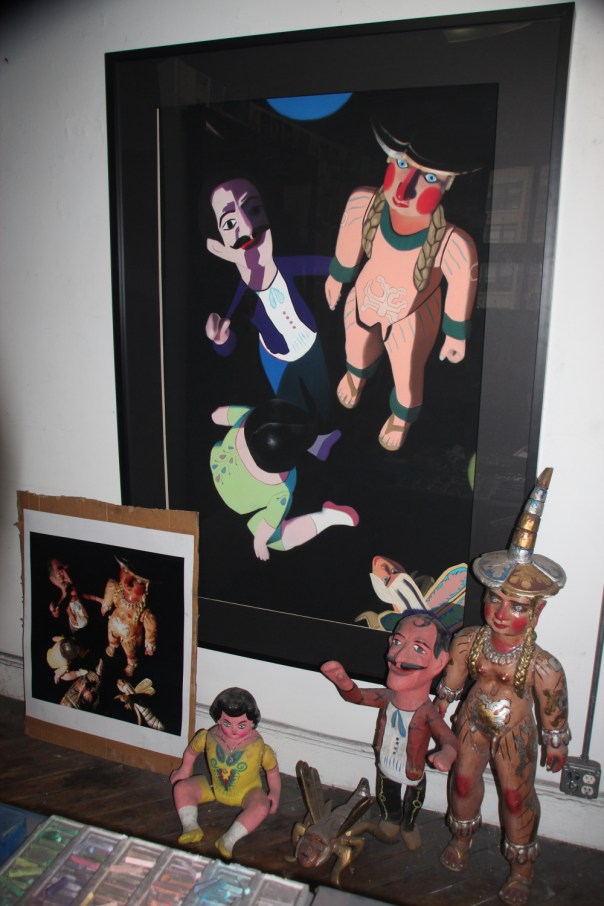
“The Ancestors” in Barbara’s studio
Comments are welcome!
Pearls from artists* # 219
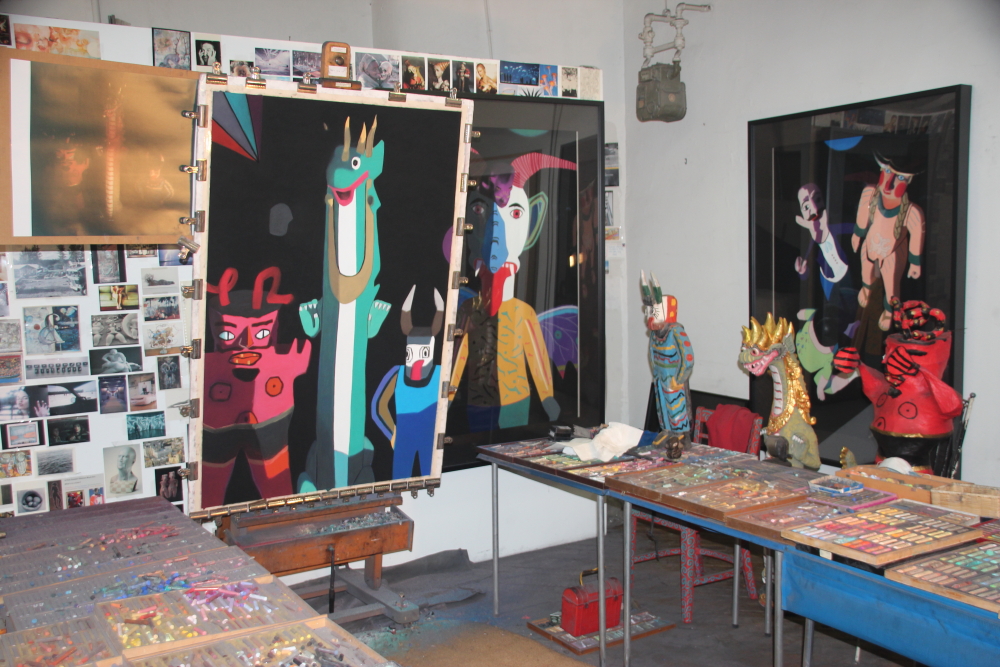
Barbara’s studio
* an ongoing series of quotations – mostly from artists, to artists – that offers wisdom, inspiration, and advice for the sometimes lonely road we are on.
There is a vitality, a life force, a quickening that is translated through you into action. And because there is only one of you in all time, the expression is unique. If you block it, it will never exist through any other medium and be lost. The world will not hear it. It is not your business to determine how good it is; nor how valuable it is; nor how it compares with other expressions. It is your business to keep it yours, clearly and directly, to keep the channel open. You do not even need to believe in yourself or your work. You have to keep open and aware directly to the urges that motivate you. Keep the channel open. No artist is pleased. There is no satisfaction whatever at any time. There is only a queer, divine satisfaction, a blessed unrest that keep us marching and makes us more alive than the others.
Martha Graham to Agnes de Mille in Still Writing: The Perils and Pleasures of a Creative Life by Dani Shapiro
Comments are welcome!
Q: What advice to you have for younger artists who are just beginning their careers?

Barbara’s studio
A: I have two pieces of advice:
- Build a support network among your fellow artists, teachers, and friends. It is tough to be an artist starting out. Also, be sure to read plenty of books by and about artists. All have experienced similar challenges.
- Do whatever you must to keep working – no matter what! Being an artist never really gets easier. There are always new obstacles and you’ll discover solutions over time.
Comments are welcome!
Q: What qualities do you think mark the highest artistic achievement?
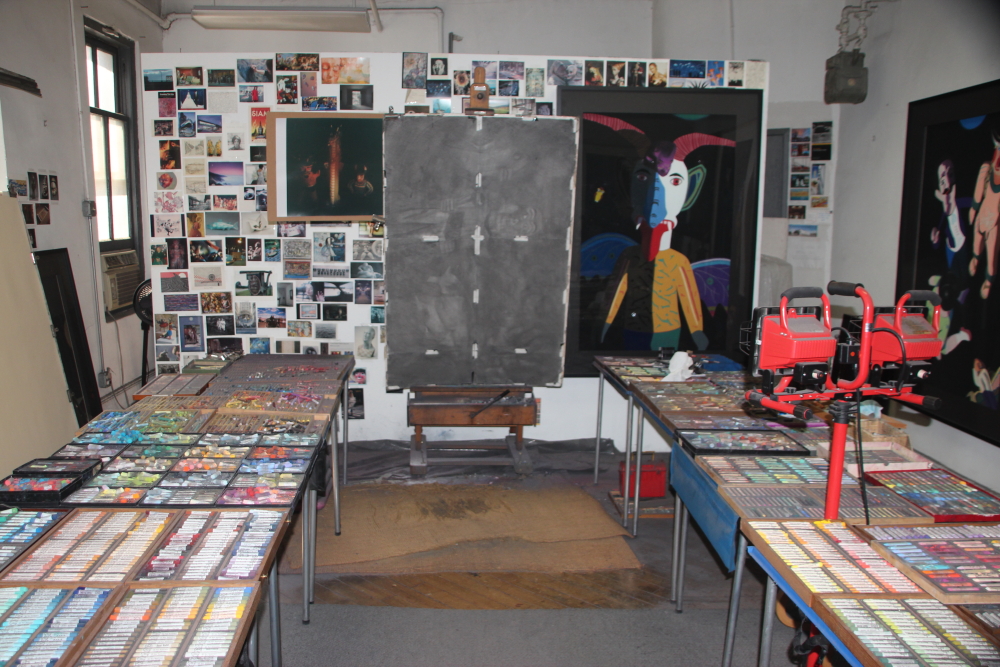
Barbara’s studio
A: If I may speak in the most general terms, several qualities come to mind that, for me, mark real artistic achievement:
- firm artistic control that allows the artist to create works that simultaneously demonstrate formal coherence while responding to inner necessity
- the creation of new forms and techniques that are adapted to expressing the artist’s highly personal vision
- an authentic and balanced fusion of form, method, and idea
- using material from one’s own idiosyncratic experiences and subtly transforming it in a personal inimitable way during the creative process
- the meaning of the thing created is rigorously subordinated to its design, which once established, generates its own internal principles of harmony and coherence
Comments are welcome!
Q: What significance do the folk art figures that you collect during your travels have for you?

Barbara’s studio
A: I am drawn to each figure because it possesses a powerful presence that resonates with me. I am not sure exactly how or why, but I know each piece I collect has lessons to teach.
Who made this thing? How? Why? Where? When? I feel connected to each object’s creator and curiosity leads me to become a detective and an archaeologist to find out more about them and to figure out how to best use them in my work.
The best way I can describe it: after nearly three decades of seeking out, collecting, and using these folk art figures as symbols in my work, the entire process has become a rich personal journey towards gaining greater knowledge and wisdom.
Comments are welcome!
Pearls from artists* # 207

Barbara’s studio
* an ongoing series of quotations – mostly from artists, to artists – that offers wisdom, inspiration, and advice for the sometimes lonely road we are on.
More than in any other vocation, being an artist means always starting from nothing. Our work as artists is courageous and scary. There is no brief that comes along with it, no problem solving that’s given as a task… An artist’s work is almost entirely inquiry based and self-regulated. It is a fragile process of teaching oneself to work alone, and focusing on how to hone your quirky creative obsessions so that they eventually become so oddly specific that they can only be your own.
“What It Really Takes to Be an Artist: MacArthur Genius Teresita Fernandez’s Magnificent Commencement Address,” by Maria Popova in “brainpickings”
Comments are welcome!
Q: What’s on the easel today?
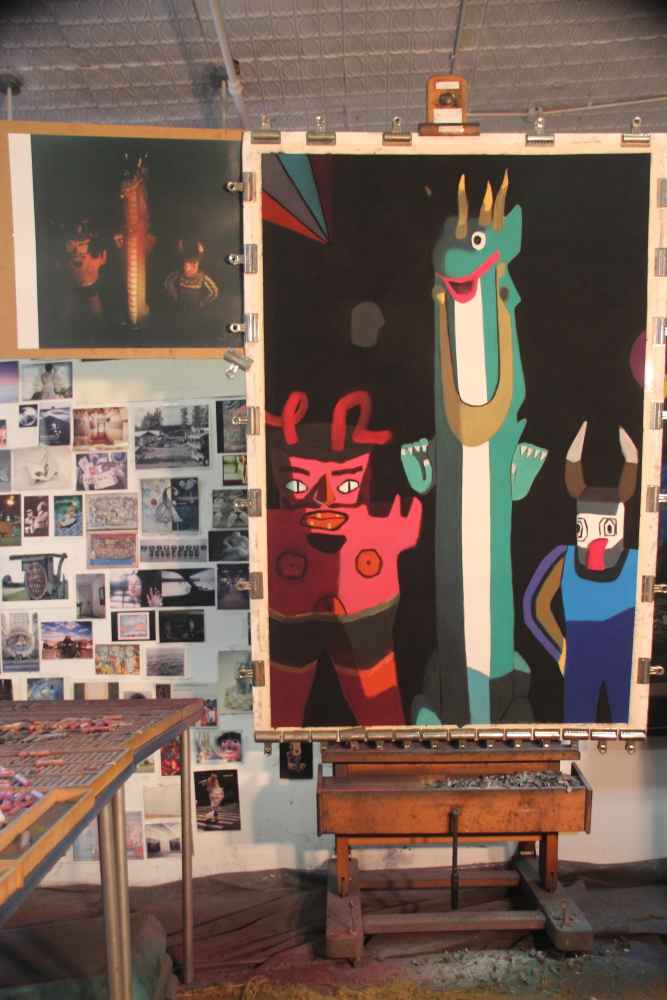
Work in progress
A: I am still in the early stages of a large pastel painting. After visiting Peru and Miami for three weeks, it has taken a few days to readjust and get back into my work routine.
In case you’re wondering, the undistinguished gray shape, roughly center left, is a placeholder for a stone figure found at a shaman’s shop in Chinchero, Peru. When I took this photo, the figure was at my apartment instead of in the studio (and I need to see the figure to paint it).
Comments are welcome!
Pearls from artists* # 204
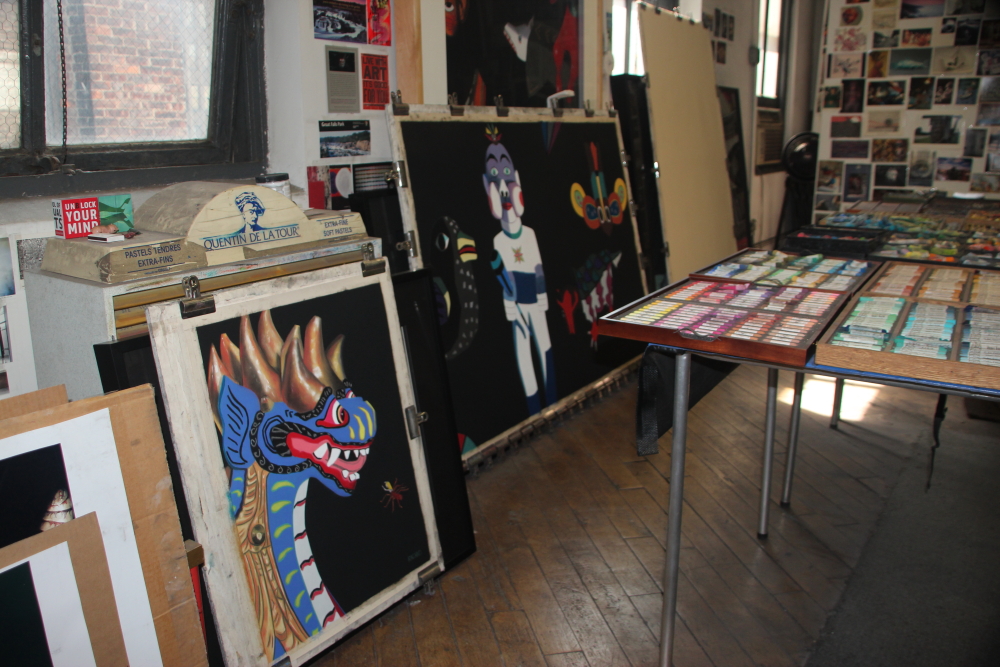
Barbara’s studio with work in progress
* an ongoing series of quotations – mostly from artists, to artists – that offers wisdom, inspiration, and advice for the sometimes lonely road we are on.
It has been said that science helps us understand what we can do; the arts and humanities – our culture and values – help us decide what to do. Studying the arts and humanities develops critical-thinking skills and nimble habits of mind, provides historical and cultural perspective and fosters the ability to analyze, synthesize and communicate.
As author Daniel Pink observed, “The last few decades have belonged to a certain kind of person with a certain kind of mind – computer programmers who could crank code, lawyers who could craft contracts, MBAs who could crunch numbers… The future belongs to a very different kind of mind – creators and empathizers, pattern recognizers and meaning makers. These people – artists, inventors, designers, storytellers, caregivers, consolers, big-picture thinkers – will now reap society’s richest rewards and share its greatest joys.”
David J. Skorton, Director of the Smithsonian Institution in “What Do We Value?” Museum, May/June 2016
Comments are welcome!


 barbararachkoscoloreddust.com