Blog Archives
Pearls from artists* # 134

“Bryan,” soft pastel on sandpaper, 22″ x 28″, 1988
* an ongoing series of quotations – mostly from artists, to artists – that offers wisdom, inspiration, and advice for the sometimes lonely road we are on.
You never want to forget your roots. Going back to your roots is very important so you don’t get carried away from something essential. Otherwise, you move farther and farther away from the hands-on approach to making art. It is very important to go back to the beginnings at all times. You spiral back.
Conversations with Meredith Monk by Bonnie Marranca
Comments are welcome!
Q: So much of the art one sees in New York is ugly, but your art is consistently beautiful. Is beauty important to you?
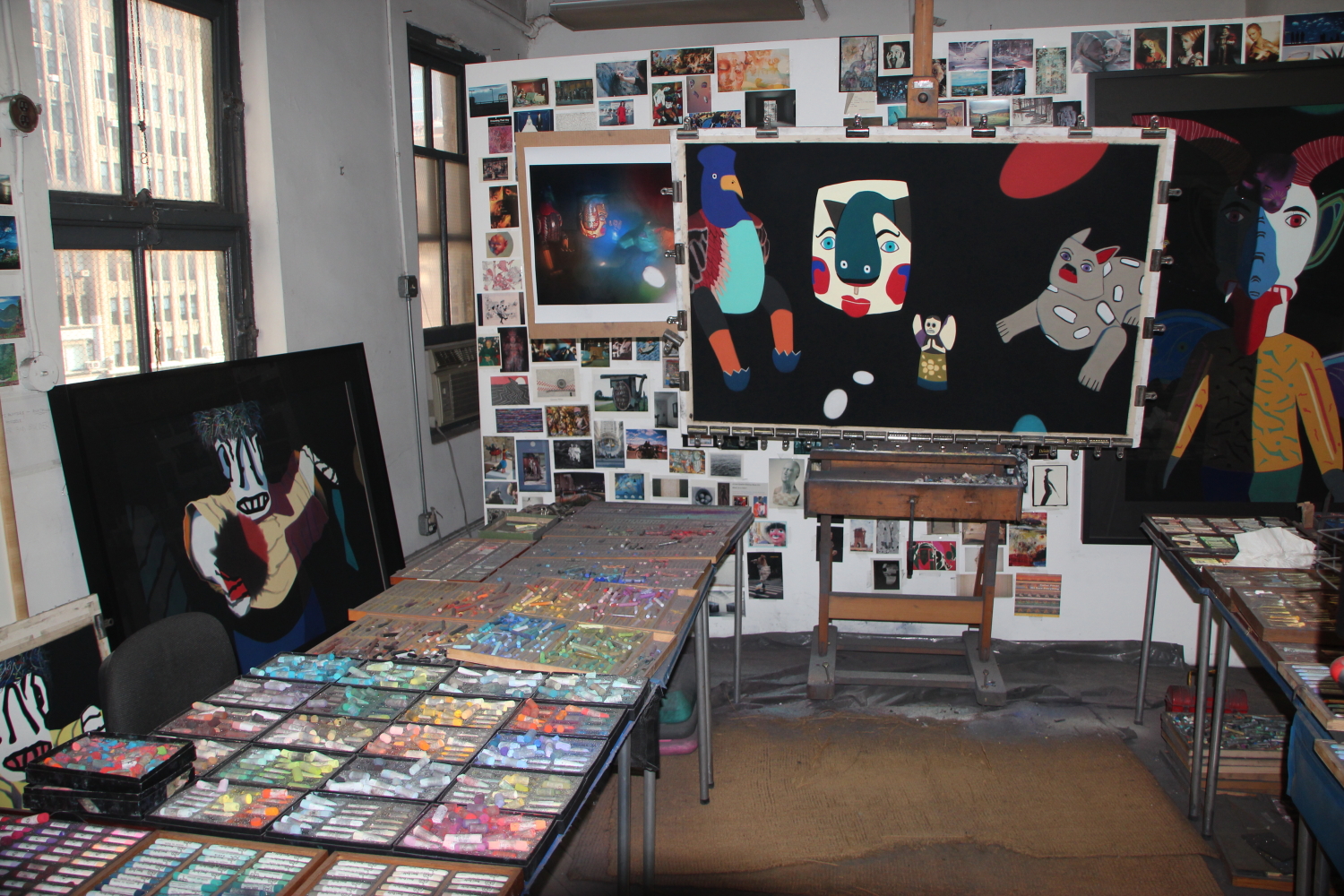
Barbara’s studio
A: Yes, beauty is extremely important. In some art circles it is not fashionable to say so, but I completely agree with the photographer, Robert Adams, who writes, “… the goal of art is Beauty.” I’ll leave it to others to decide if this quality is reached in my pastel paintings, but I certainly strive towards it.
Comments are welcome!
Q: How important is the feedback of your audience? Do you ever think about who will enjoy your Art when you conceive it?

Painting, subject, reference photo
A: I can’t say that I think at all about audience reaction while I’m creating a painting in my studio. Although, of course I want people to respond favorably to the work.
Generally, I’m thinking about technical problems – making something that is exciting to look at, well-composed, vibrant, up to my exacting standards, etc. When I finish a painting, it is the best thing I am capable of making at that moment in time.
I think about a painting and look at it for so long and with such intensity, that it could hardly have turned out any differently. There is an inevitability to the whole lengthy process that goes all the way back to when I first laid eyes on the folk art figures in a dusty shop in a third world country. Looking at a newly-finished painting on my easel I often think, “Of course! I was drawn to this figure so that it could serve this unique function in this painting.”
Comments are welcome!
Q: Can you talk a little bit about your process? What happens before you even begin a pastel painting?

Barbara in Bali (far right)
A: My process is extremely slow and labor-intensive.
First, there is foreign travel – often to Mexico, Guatemala or someplace in Asia – to find the cultural objects – masks, carved wooden animals, paper mâché figures, and toys – that are my subject matter. I search the local markets, bazaars, and mask shops for these folk art objects. I look for things that are old, that look like they have a history, and were probably used in religious festivals of some kind. Typically, they are colorful, one-of-a- kind objects that have lots of inherent personality. How they enter my life and how I get them back to my New York studio is an important part of my art-making practice.
My working methods have changed dramatically over the nearly thirty years that I have been an artist. My current process is a much simplified version of how I used to work. As I pared down my imagery in the current series, “Black Paintings,” my creative process quite naturally pared down, too.
One constant is that I have always worked in series with each pastel painting leading quite naturally to the next. Another is that I always set up a scene, plan exactly how to light and photograph it, and work with a 20″ x 24″ photograph as the primary reference material.
In the setups I look for eye-catching compositions and interesting colors, patterns, and shadows. Sometimes I make up a story about the interaction that is occurring between the “actors,” as I call them.
In the “Domestic Threats” series I photographed the scene with a 4″ x 5″ Toyo Omega view camera. In my “Gods and Monsters” series I shot rolls of 220 film using a Mamiya 6. I still like to use an old analog camera for fine art work, although I have been rethinking this practice.
Nowadays the first step is to decide which photo I want to make into a painting (currently I have a backlog of photographs to choose from) and to order a 19 1/2″ x 19 1/2″ image (my Mamiya 6 shoots square images) printed on 20″ x 24″ paper. They recently closed, but I used to have the prints made at Manhattan Photo on West 20th Street in New York. Now I go to Duggal. Typically I have in mind the next two or three paintings that I want to create.
Once I have the reference photograph in hand, I make a preliminary tonal charcoal sketch on a piece of white drawing paper. The sketch helps me think about how to proceed and points out potential problem areas ahead.
Only then am I ready to start actually making the painting.
Comments are welcome!
Pearls from artists* # 112
New York, NY
* an ongoing series of quotations – mostly from artists, to artists – that offers wisdom, inspiration, and advice for the sometimes lonely road we are on.
If the goal of art is Beauty and if we assume that the goal is sometimes reached, even if always imperfectly, how do we judge art? Basically, I think, by whether it reveals to us important Form that we ourselves have experienced but to which we have not paid adequate attention. Successful art rediscovers Beauty for us.
One standard, then, for the evaluation of art is the degree to which it gives us a fresh intimation of Form. For a picture to be beautiful it does not have to be shocking, but it must in some significant respect be unlike what has preceded it (this is why an artist cannot afford to be ignorant of the tradition within his medium). If the dead end of the romantic vision is incoherence, the failure of classicism, which is the outlook I am defending, is the cliché, the ten thousandth camera-club imitation of a picture by Ansel Adams.
Robert Adams in Beauty in Photography
Comments are welcome!
Q: What are your most significant professional accomplishments to date?

“Big Deal,” soft pastel on sandpaper, 58″ x 38″
A: I will mention these: my 1996 solo exhibition at a venerable New York gallery that specialized in Latin American-influenced art, Brewster Arts Ltd. at 41 West 57th Street; completion of Aljira’s Emerge 2000 business program for professional artists; and a solo exhibition at the Walton Art Center in Fayetteville, AR, in 2005. All three were very important factors in my artistic and professional development.
In January I published my first eBook, From Pilot to Painter, on Amazon.
In February I was interviewed by Brainard Carey for his Yale University Radio program. It can be heard at
http://museumofnonvisibleart.com/interviews/barbara-rachko/
Most recently I was interviewed for a fourteen-page article (the longest they have ever published on a single artist!) in ARTiculAction Art Review. Please see
http://issuu.com/articulaction/docs/articulaction_art_review_-_july_201/30
Comments are welcome!
Pearls from artists* # 100
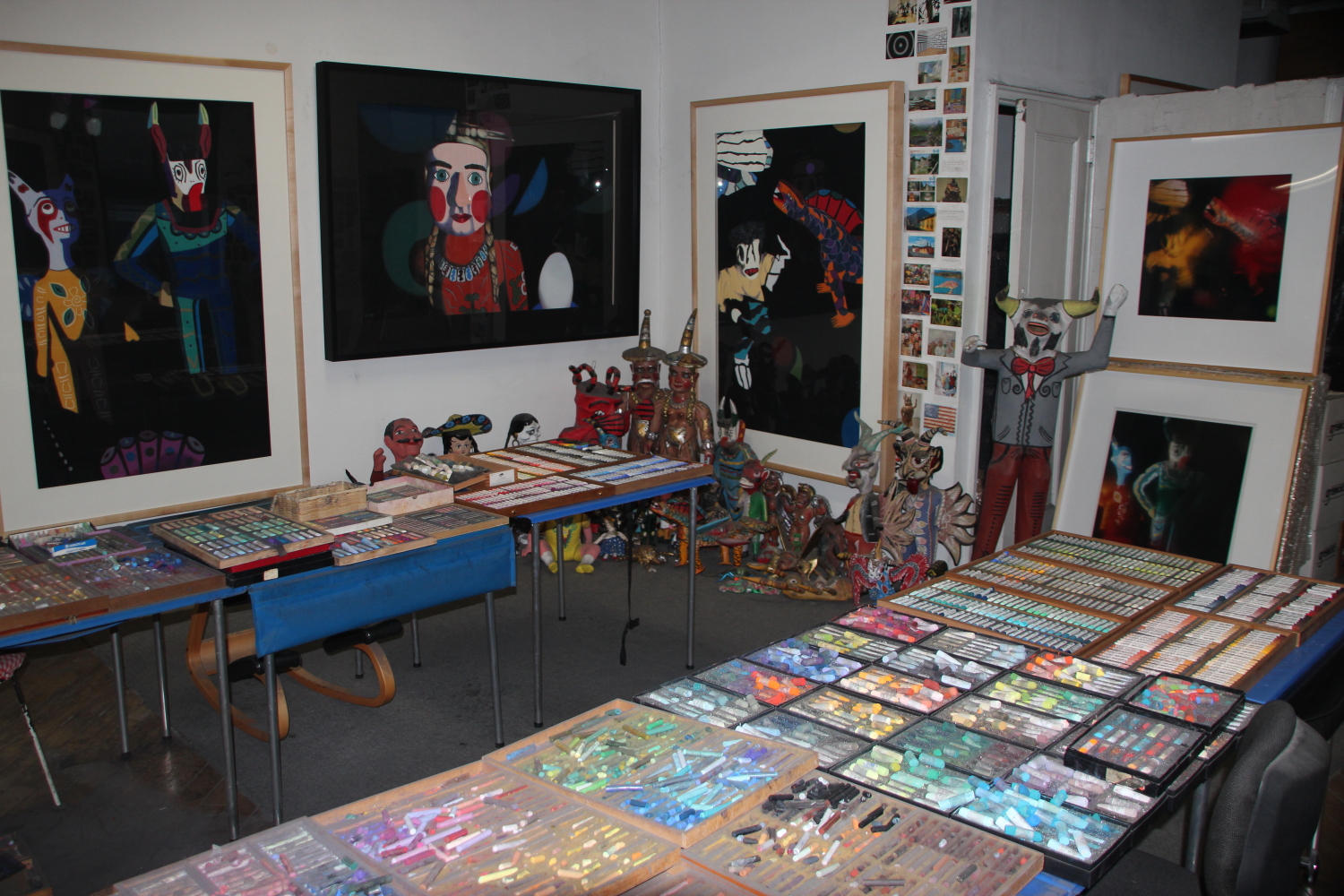
Barbara’s studio
* an ongoing series of quotations – mostly from artists, to artists – that offers wisdom, inspiration, and advice for the sometimes lonely road we are on.
I think it’s terribly important that people have always made structures that are better and more rigorous and more demanding than we as an audience can live up to for every single moment. Serious art should be better than you are. I think my plays are more lucid, more rigorous, than I, Richard, am in my life. I’m a stumble bum like all the rest of us. Create art that is better than you are able to manifest in normal life.
Richard Foreman in Anne Bogart’s Conversations with Anne: Twenty-four Interviews
Comments are welcome!
Pearls from artists* # 99

Barbara’s studio
* an ongoing series of quotations – mostly from artists, to artists – that offers wisdom, inspiration, and advice for the sometimes lonely road we are on.
I think there are two very interesting stages in creative work. One is confusion and one is boredom. They generally both mean that there’s a big fish swimming under the water. As Rilke said, “Live the questions.” And not judge that there’s something wrong about confusion, because the people who are working, say, on the cure for leprosy – they work for years and years in a state of confusion, and very often they don’t find the cure. They find something completely different. But they keep living the question. Confusion is absolutely essential to the creative process. If there was no confusion, why do it? I always feel that all of us have questions we’re asking all our lives, for our work, and if we ever found the answer, we’d stop working. We wouldn’t need to work anymore.
Boredom – if you’ve ever been in therapy, you’d know that when you start getting bored, that’s really important. The therapist sits up; there’s something going on, because the wall that you come against – that’s where the real gold is. It’s really precious.
Andre Gregory (from My Dinner with Andre) in Anne Bogart, Conversations with Anne: Twenty-four Interviews
Comments are welcome!
Pearls from artists* # 91
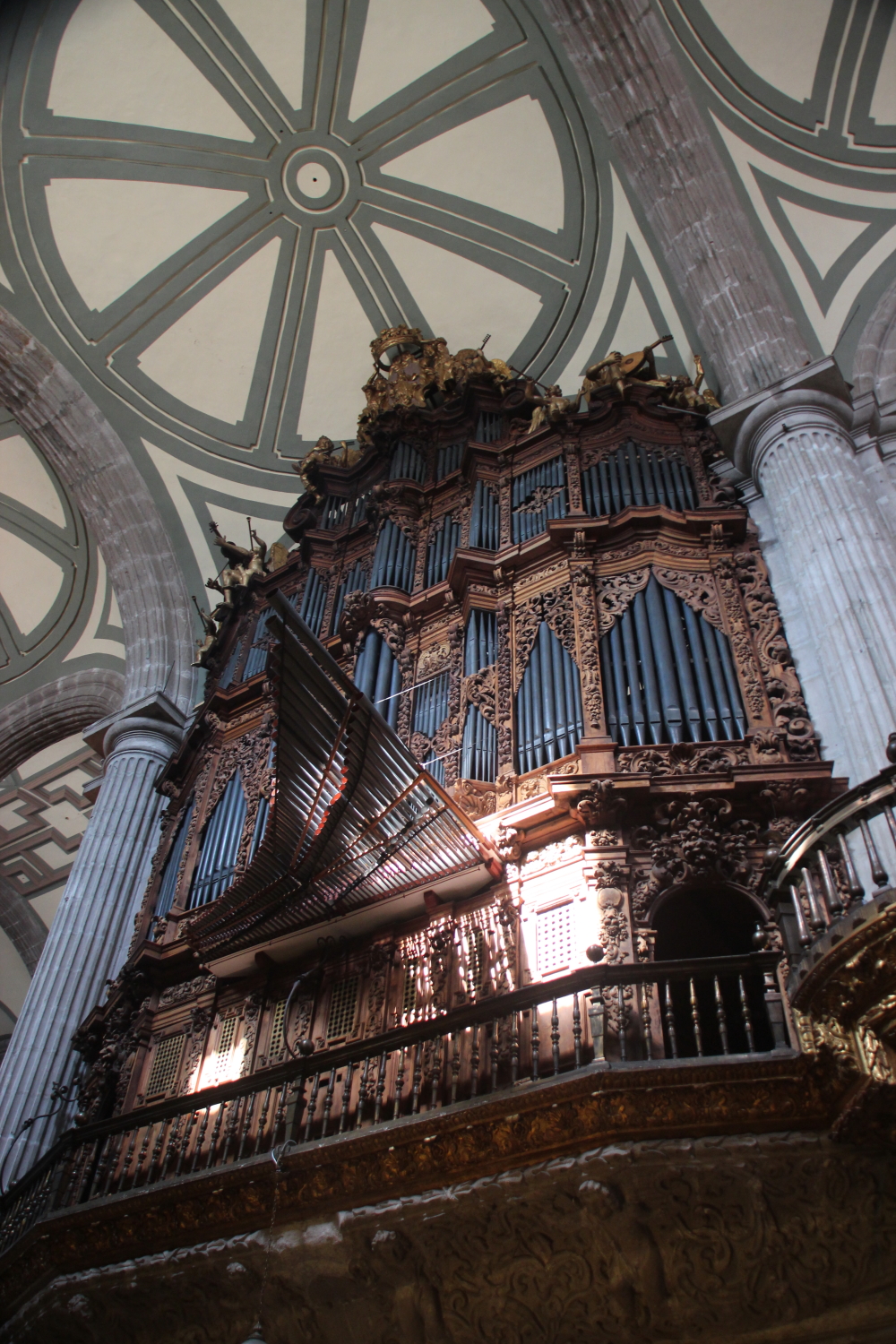
Mexico City
* an ongoing series of quotations – mostly from artists, to artists – that offers wisdom, inspiration, and advice for the sometimes lonely road we are on.
I’m struggling a lot financially, struggling a lot to keep my group going, struggling to keep going in every way, but I feel like I try so hard because every time that I’m able to go to a college or to be with young people they need to know that there is this “anything is possible” idea. They need to at least see that. I intend to continue nevertheless. Somehow that seems very important right now. It isn’t that you go to school just to find out everything you need to get a job or something. We never thought of what we did as a job. We thought of it as our work, our life. Then there was a certain point, I think, in the eighties where people thought of their identity as this and then what you did was a job. There was a separation between the two things.
I pray that now there will be some loosening and we’ll feel this sense of, just as you said so beautifully, space and breath. No one’s breathing. That’s why I feel that doing art is so important. It makes you dig in your heels even more. It’s a life-and-death kind of thing. What is the other alternative? The other alternative is that you’re living in a culture that’s basically trying to distract you from the moment. It’s trying to distract you from your life. It’s trying to distract you from who you are, and it’s trying to numb you, and it’s trying to make you buy things. Now, I don’t really think that that’s what life is about. I’m excited because now I have this real sense that there’s this counterculture, you could say, or counter-impulse. it’s not for-and-against, but there is a kind of dialectic where there’s a kind of resistance you can actually hit against, or at least address in one way or the other.
Meredith Monk quoted in Conversations with Anne: Twenty-four Interviews, by Anne Bogart
Comments are welcome!
Q: Reconnecting with an important source of inspiration, you recently traveled to the Gulf Coast of Mexico to study Olmec art and culture. Would you share some of your photographs?
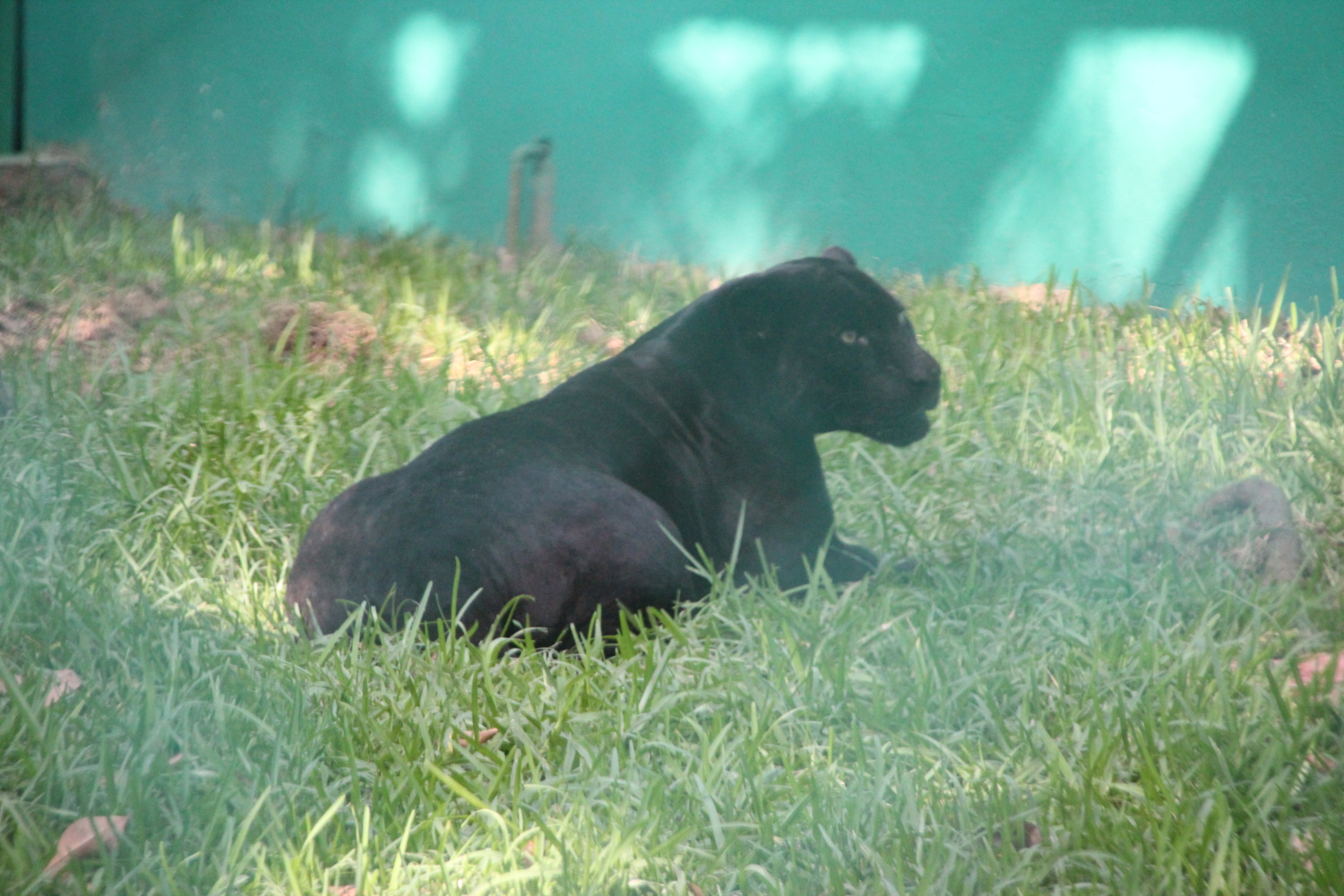
Parque Museo La Venta, Villahermosa
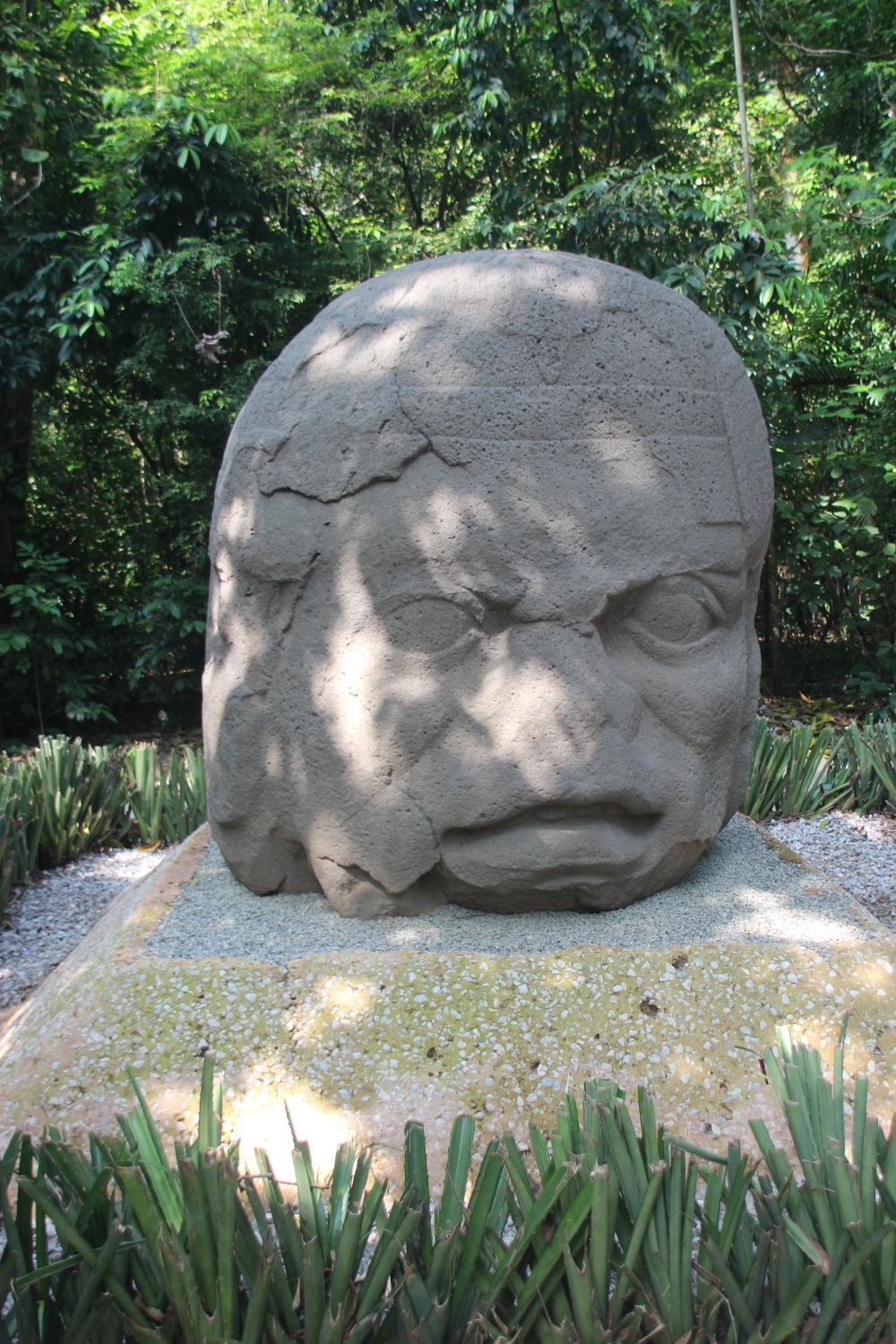
Parque Museo La Venta, Villahermosa
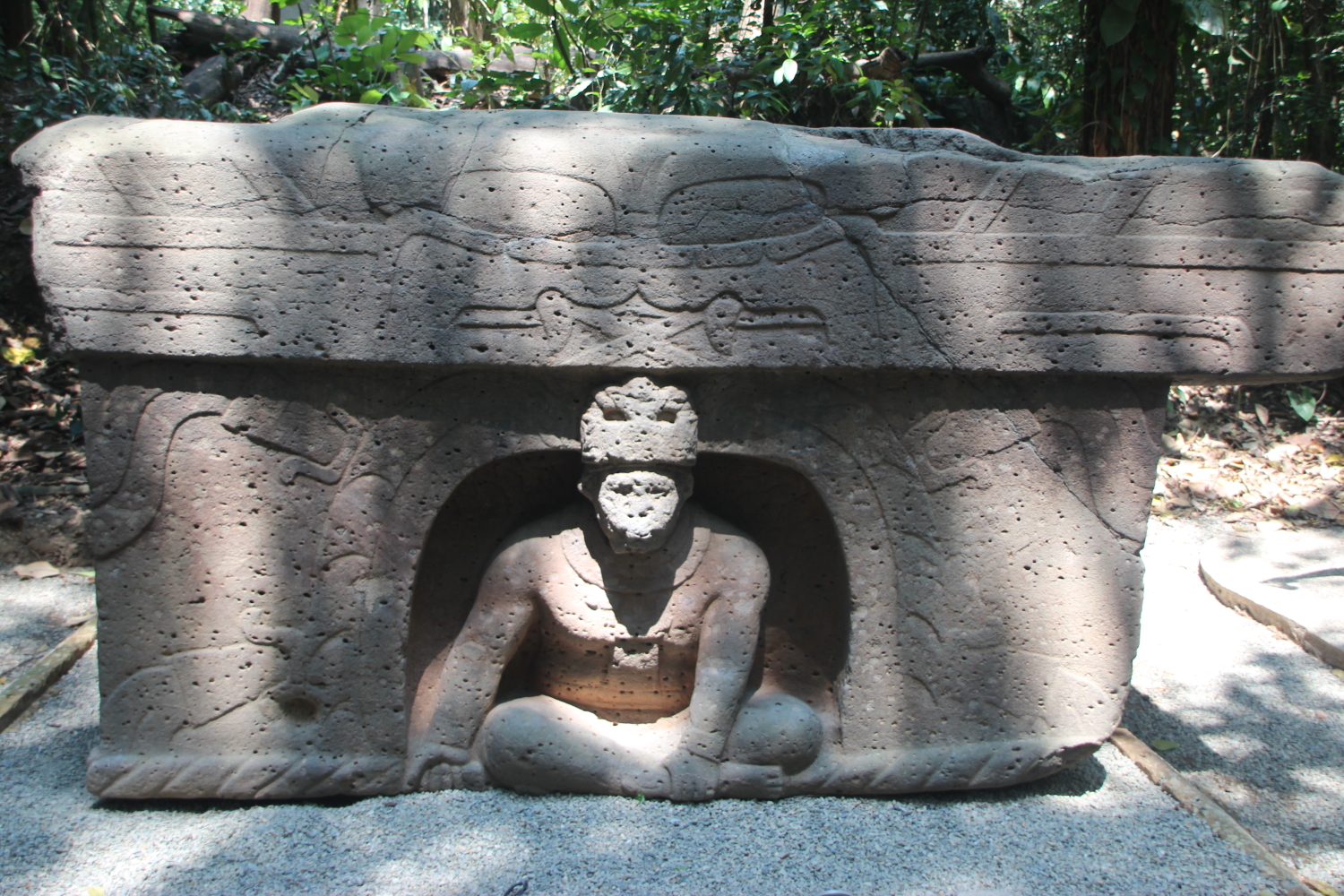
Parque Museo La Venta, Villahermosa
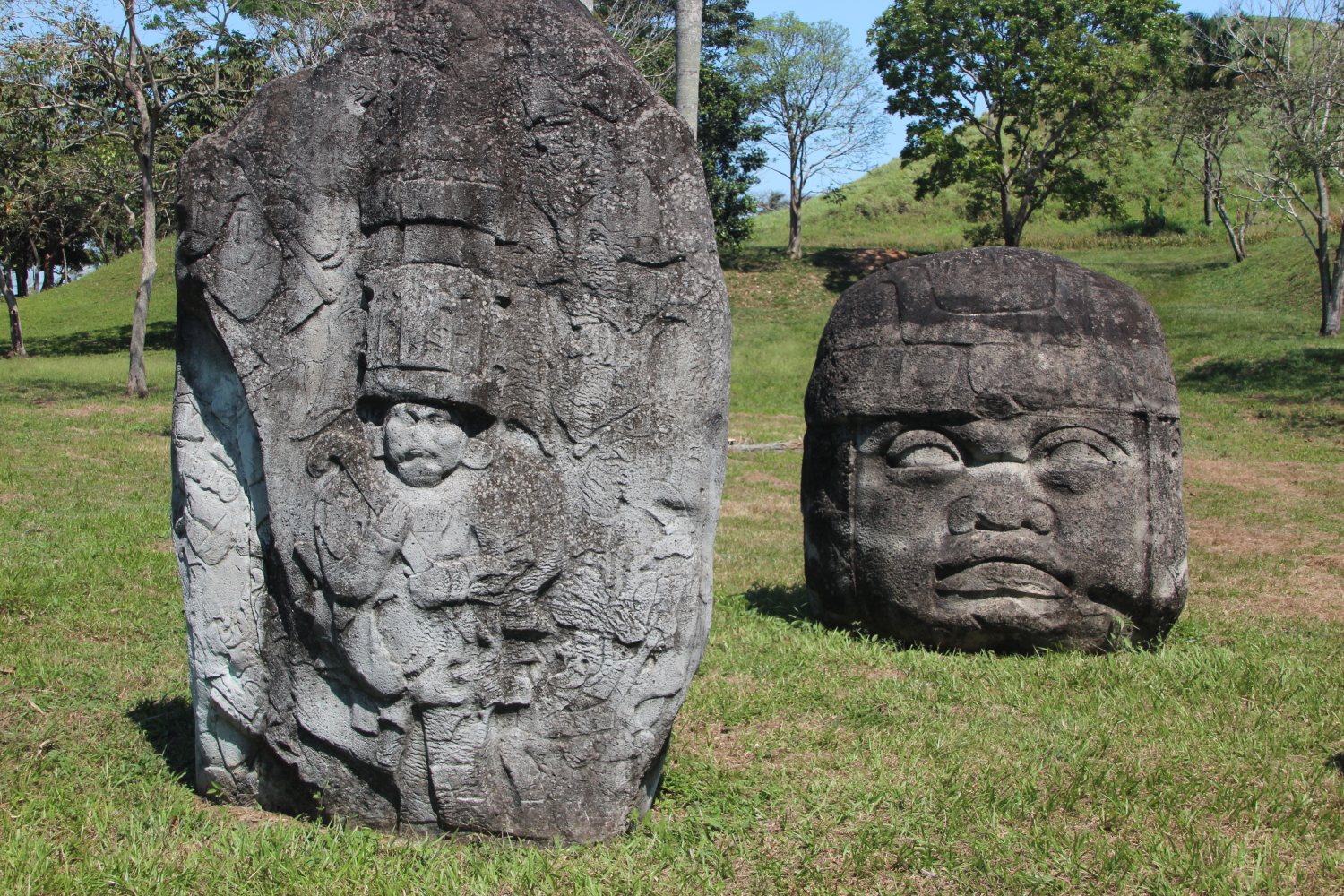
La Venta
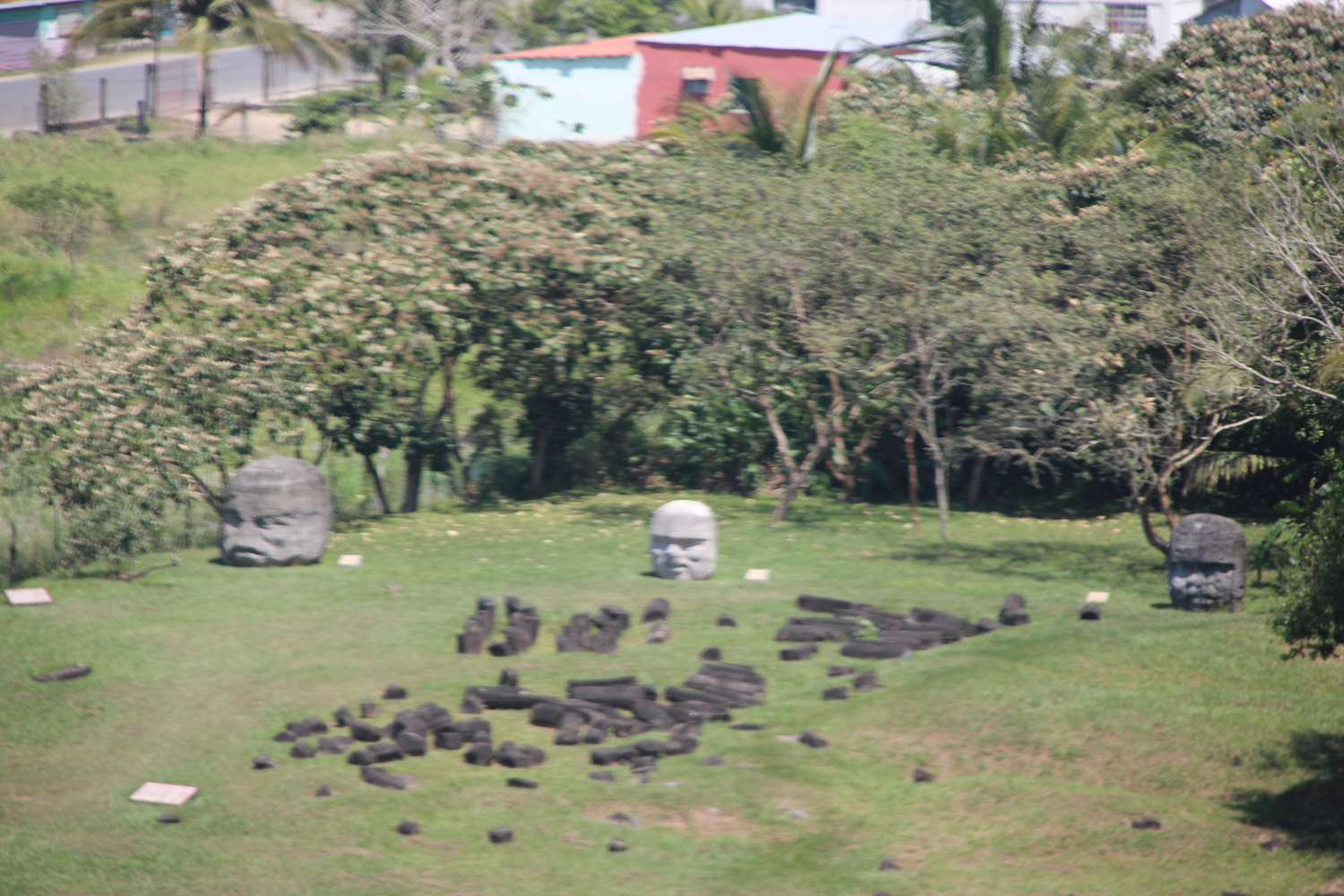
La Venta
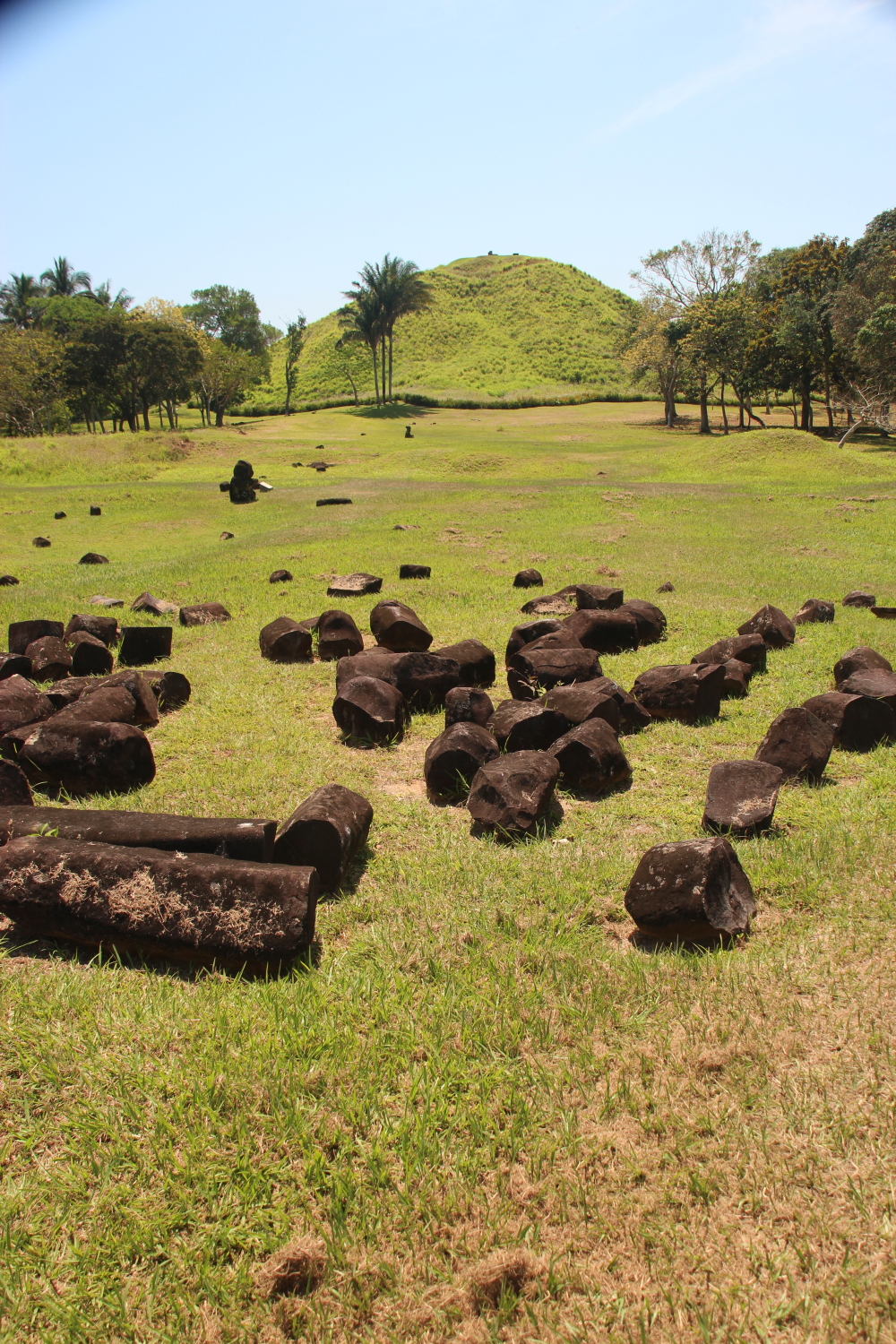
La Venta
Comments are welcome!



