Blog Archives
Q: How do you decide how much realism and how much imagination to put into a pastel painting?
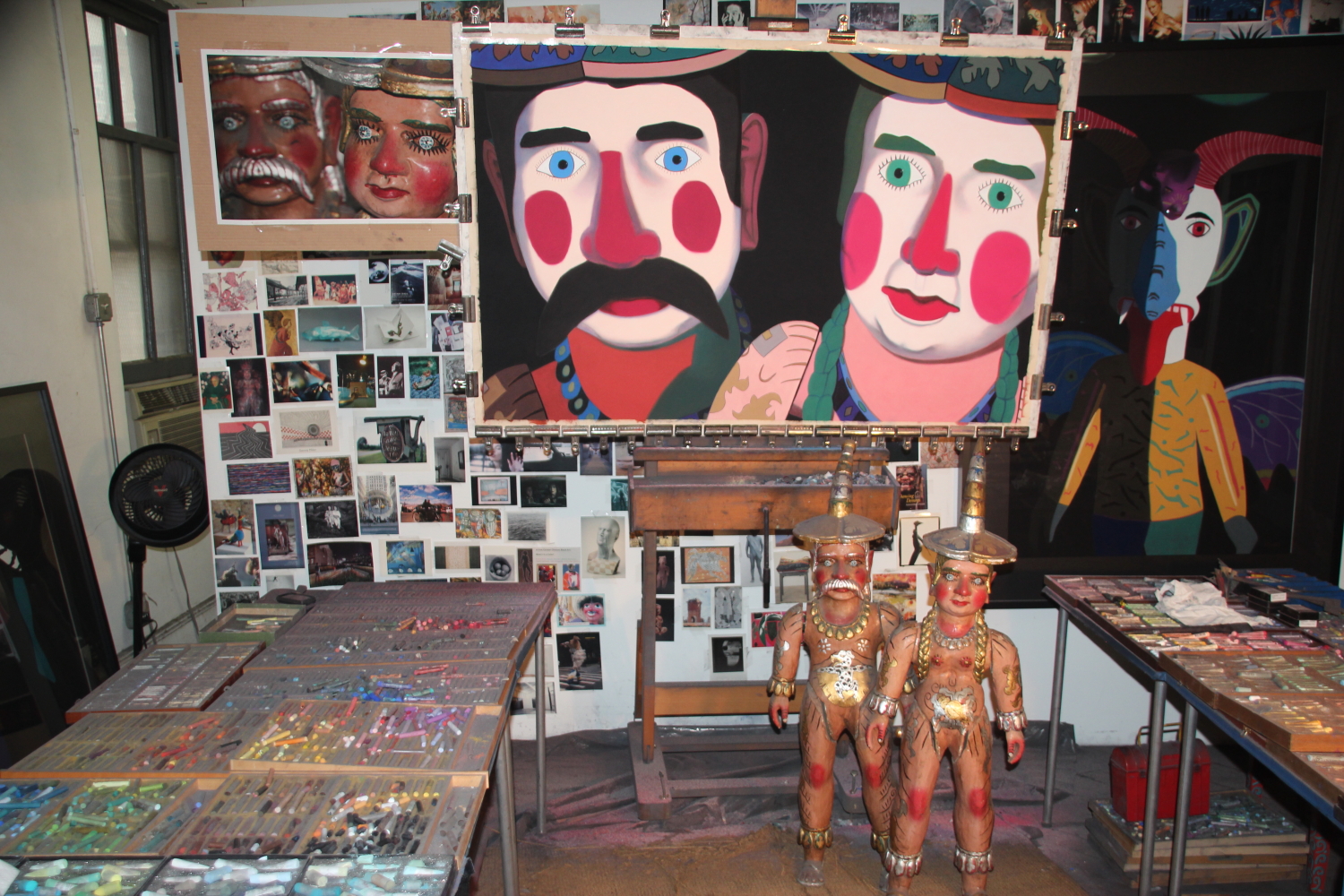
Models, reference photograph, and pastel painting in progress
A: I wouldn’t say “decide” is the right word because creating a painting is not strictly the result of conscious decisions. I think of my reference photograph, my preliminary sketch, and the actual folk art objects I depict as starting points. Over the months that it takes to make a pastel painting, the resulting interpretive development pushes the painting far beyond this source material. When all goes well, the original material disappears and characters that belong to the painting and nowhere else emerge.
It is a mysterious process that I am still struggling to understand. This is the best way I can describe what it feels like from the inside, as the maker.
Comments are welcome!
Pearls from artists* # 155
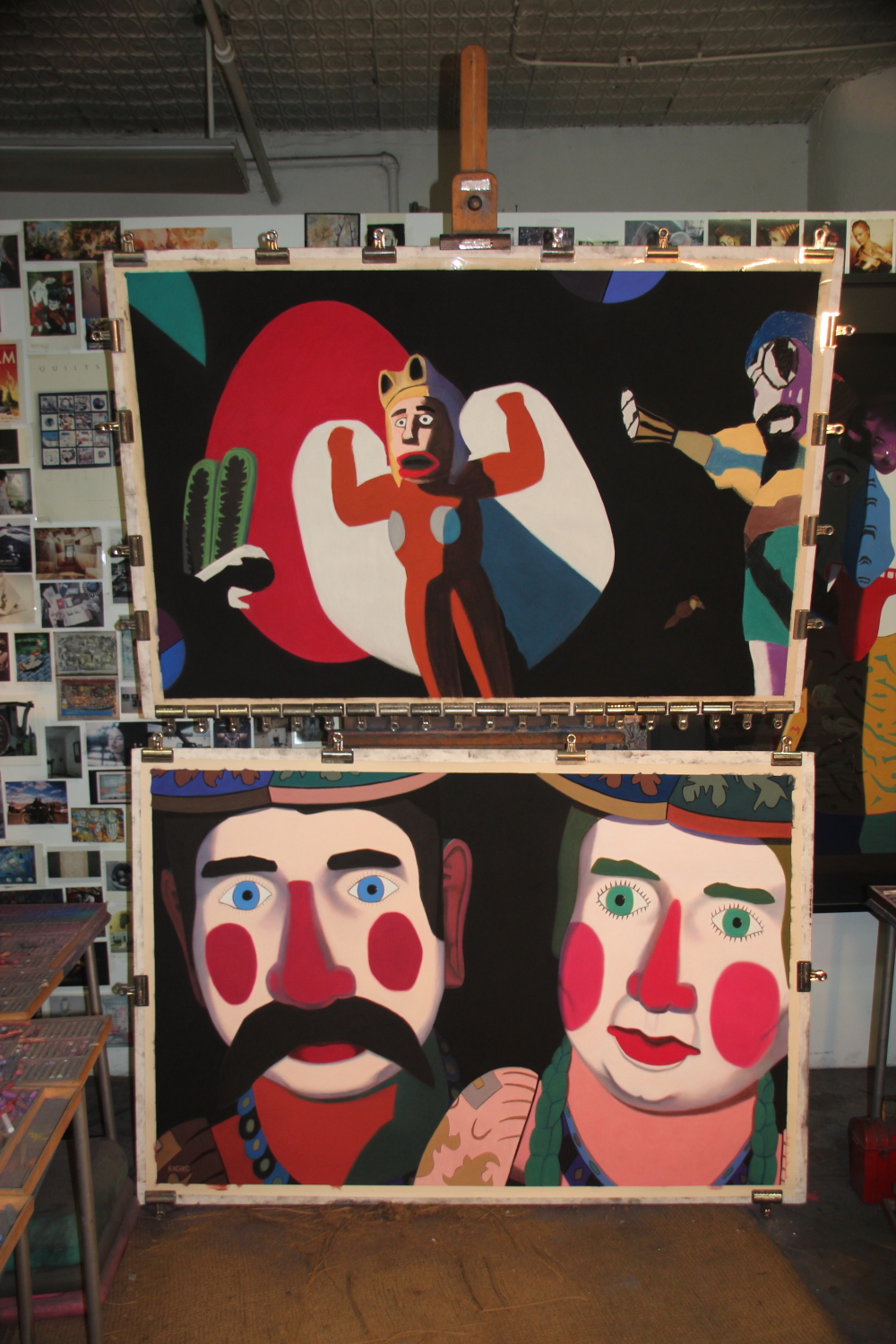
Works in progress
* an ongoing series of quotations – mostly from artists, to artists – that offers wisdom, inspiration, and advice for the sometimes lonely road we are on.
Throughout these many years of painting I have practiced starting my work from reality stating the facts before me. Then I paint without the object for a certain length of time, combining reality and imagination.
I have often obtained in painting directly from the object that which appears to be real results at the very first shot, but when that does happen, I purposely destroy what I have accomplished and re-do it over and over again. In other words that which comes easily I distrust. When I have condensed and simplified sufficiently I know that I have achieved more than reality.
Yasuo Kumiyoshi: East to West in The Creative Process, edited by Brewster Ghiselin
Comments are welcome!
Q: Would you talk about your use of Mexican and Guatemalan folk art as a convenient way to study formal properties such as color, shape, pattern, composition, etc. in your pastel paintings?
Models, reference photograph, and pastel painting in progress
A: For me an interesting visual property of these objects is that they readily present themselves as a vehicle for exploring formal artistic properties, like color, pattern, shape, etc. especially compared to my earlier subject matter: hyper-realistic portraits and still-lifes. Intent as I was on creating verisimilitude in the earlier work, there was little room for experimentation.
Many Mexican and Guatemalan folk art objects are wildly painted and being a lover of color, their brilliant colors and patterns are what initially attracted me. As a painter I am free to use their actual appearance as my starting point. I photograph them out-of-focus and through colored gels in order to change their appearance and make them strange, enacting my own particular version of “rendering the familiar strange.” Admittedly these objects are not so familiar to begin with.
When I make a pastel painting I look at my reference photograph and I also look at the objects, positioning them within eye-shot of my easel. There is no need whatsoever to be faithful to their actual appearance so my imagination takes over. As I experiment with thousands of soft pastels, with shape, with pattern, with composition, and all the rest, I have one goal in mind – to create the best pastel-on-sandpaper painting I am capable of making.
Comments are welcome!
Pearls from artists* # 144
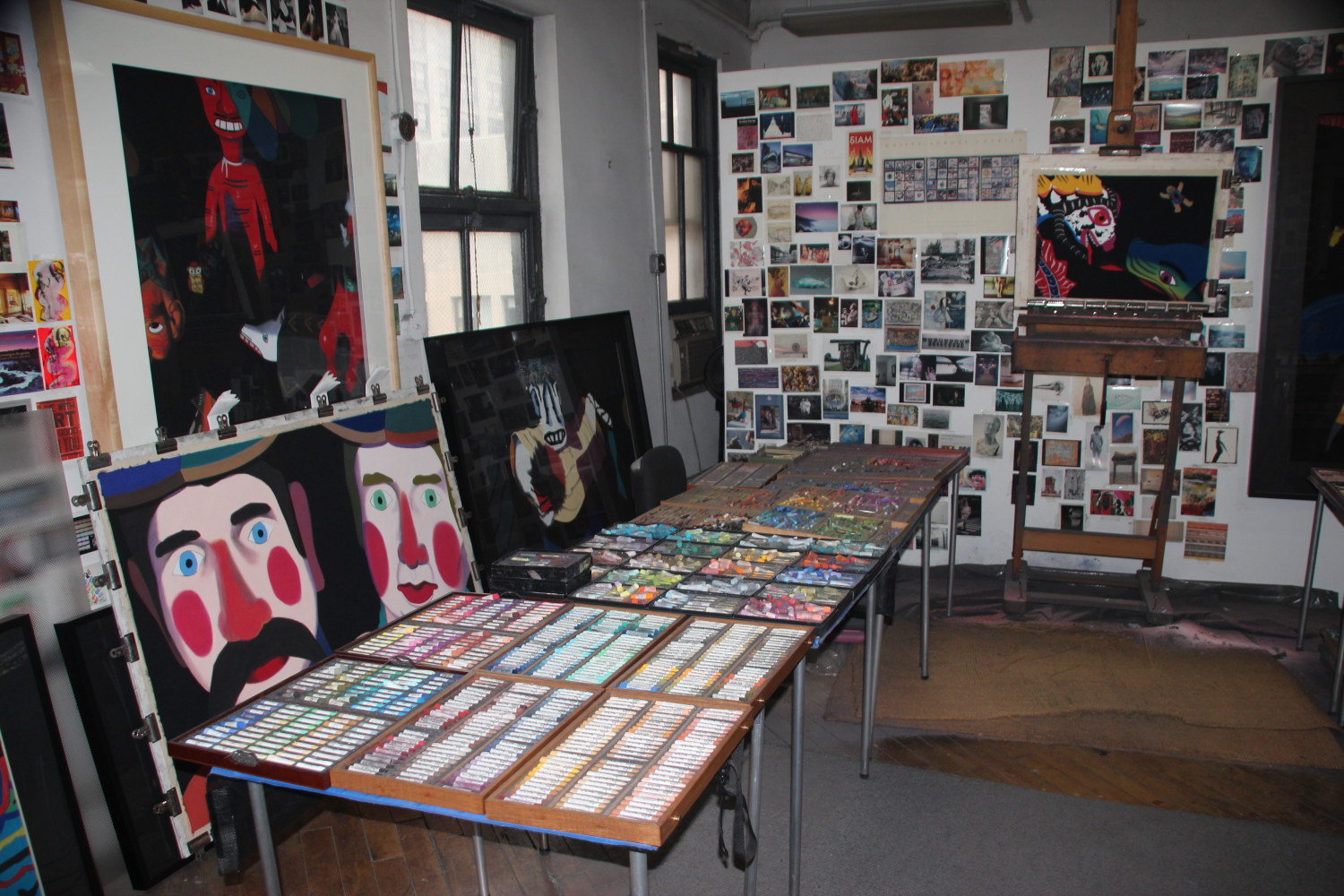
Barbara’s studio
* an ongoing series of quotations – mostly from artists, to artists – that offers wisdom, inspiration, and advice for the sometimes lonely road we are on.
Art and design are rule-based. This flies in the face of everything that most people have been taught before, namely, that art and design are about freedom. I remember reading a wonderful analogy about this concept many years ago in an out-of-print, early twentieth-century book on design. The author asked us to imagine a flying kite – the quintessential emblem of unrestricted, spontaneity, soaring in the wind. Keeping taught the line between you and the kite, however, is the source of that freedom. Here’s another way of putting it: “Creativity arises out of the tension between the rules and imagination.”
Leslie Hirst in The Art of Critical Making: Rhode Island School of Design on Creative Practice, Rosanne Somerson and Mara L. Hermano, editors
Comments are welcome!
Q: Why do you prefer not to explain your titles and imagery?
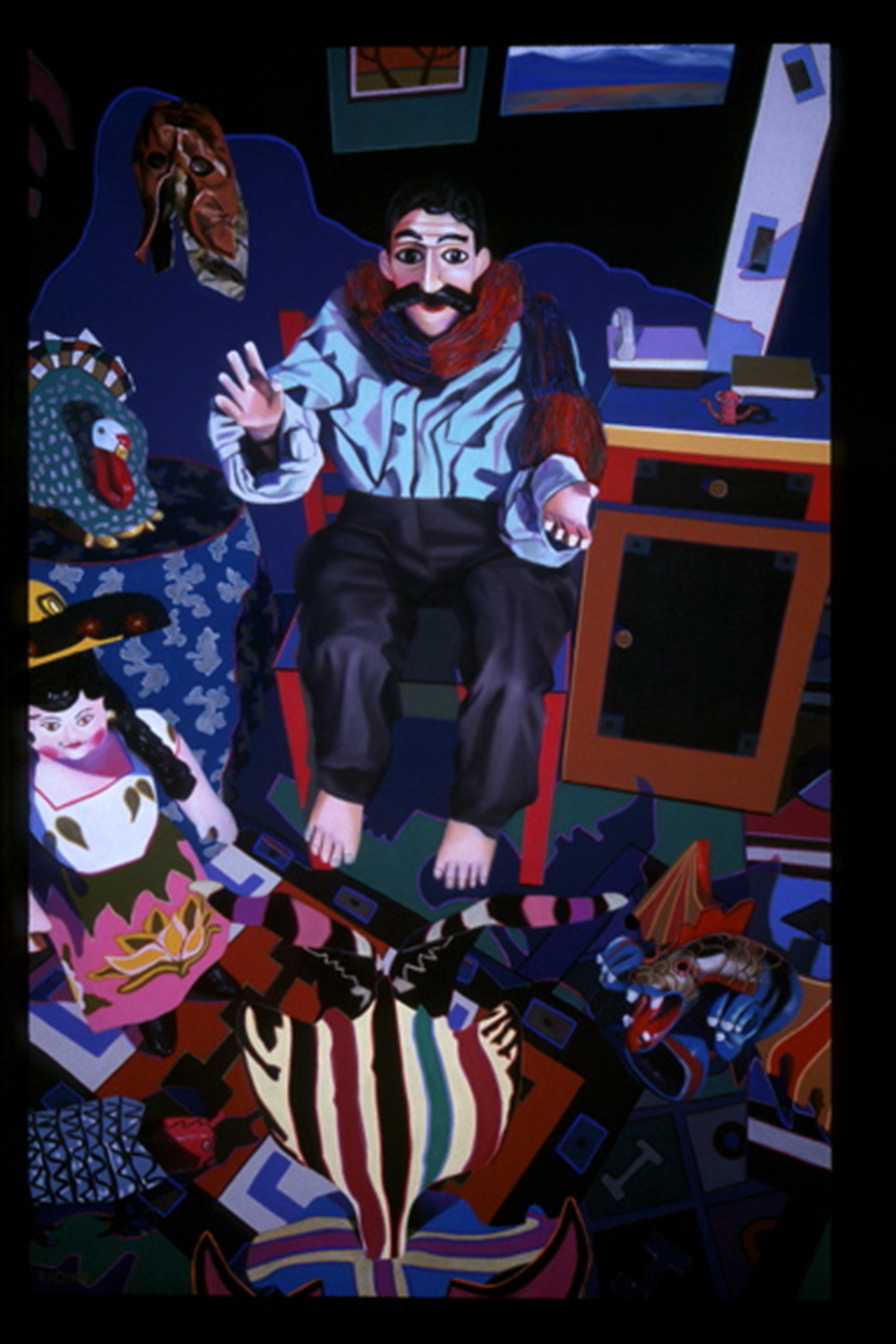
“Truth Betrayed by Innocence,” soft pastel on sandpaper, 58″ x 38″
A: It’s mainly because answers close down imagination and creativity. I enjoy hearing alternative interpretations of my pastel paintings. People are wildly imaginative and each person brings unique insights to their art viewing. By leaving meanings open, conversation is generated. Most artists want viewers to talk about their work.
Once at a public artist’s talk that I attended, I was told by an artist that my interpretation of her title was completely wrong. First of all, how can an interpretation honestly expressed by your audience be “wrong?” Art is as open to interpretation as a Rorschach test (art IS a kind of Rorshach test). Then she explained the thinking behind her title and succeeded in cutting off all further conversation. I felt belittled. Later several people told me that my interpretation was much more compelling. Still, the experience was mortifying and I hope to never do that to anyone.
Comments are welcome!
Q: You have written about how you came to your current subject matter, but what led you away from photorealism to work that while not exactly abstract, leans more in that direction?
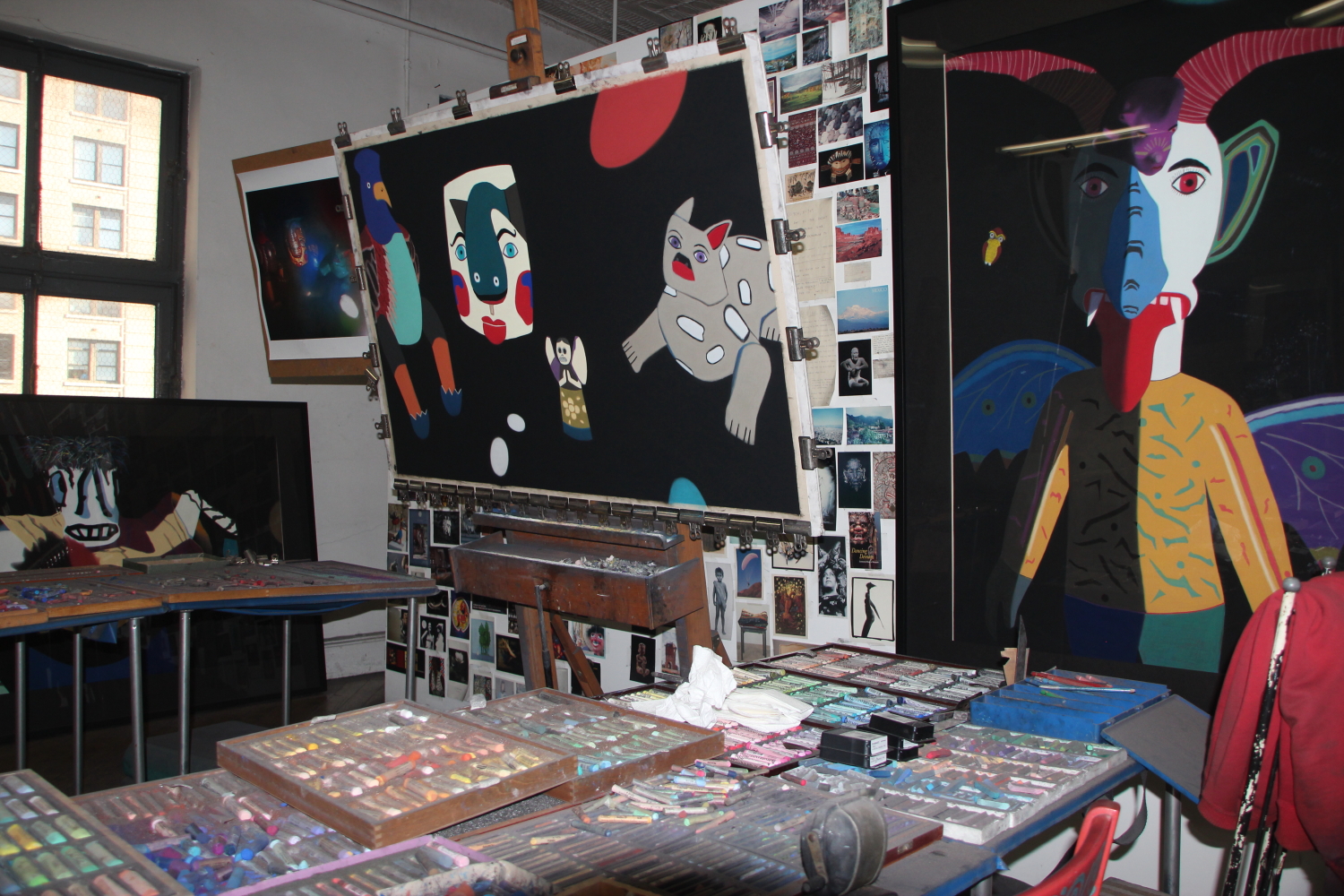
Barbara’s studio
A: Once I had achieved a high degree of technical facility with soft pastel, there was not much more to be gained from copying reality. Cameras do an excellent job of that so what would be the point?
Ultimately, all art lies in following an experience through to the end. Art is in the choices one makes. A visual artist’s private decisions about what to include and what to leave out become her unique inimitable style. Years ago I made a conscious decision to abandon photorealism. Since then I have been on a journey to work more from imagination and direct experience and less from physical reality.
It’s funny. I have always worked from photographs. Because I have a strong work ethic and substantial technical skill, I often feel like a slacker if I do not put in all the details that I see in the reference photo. That’s why the journey has been so slow, I think, as I convince myself it’s really ok to omit more and more details.
Comments are welcome!
Q: How would you define art?

Barbara’s studio
A: At its core all art is communication. I personally believe that without the component of communication, there is no art. The expression of human creative skill and imagination becomes art when it is appreciated for its beauty, complexity, emotional power, evocativeness, etc. A sympathetic and understanding audience is essential.
Why might artists fail to communicate? Perhaps they haven’t mastered their medium sufficiently to elicit a reaction from the viewer. Perhaps the viewer lacks the necessary artistic, cultural, or intellectual background to understand and appreciate what the artist is communicating. Maybe the viewer is distracted or preoccupied and not looking or thinking deeply enough. There are many reasons.
Comments are welcome!
Pearls from artists* # 54
Pier 40, NYC
* an ongoing series of quotations – mostly from artists, to artists – that offers wisdom, inspiration, and advice for the sometimes lonely road we are on.
In the cemetery all the vultures began to circle, and the sky filled with birds. It was then that I began my series of birds – many of my bird photos came from that moment. All this is to say that in life everything is connected: your pain and your imagination, which perhaps can help you forget reality. It’s a way of showing how you connect what you live with what you dream, and what you dream with what you do, and this is what remains on paper…
Graciela Iturbide in Eyes to Fly With
Comments are welcome!
Pearls from artists* # 31
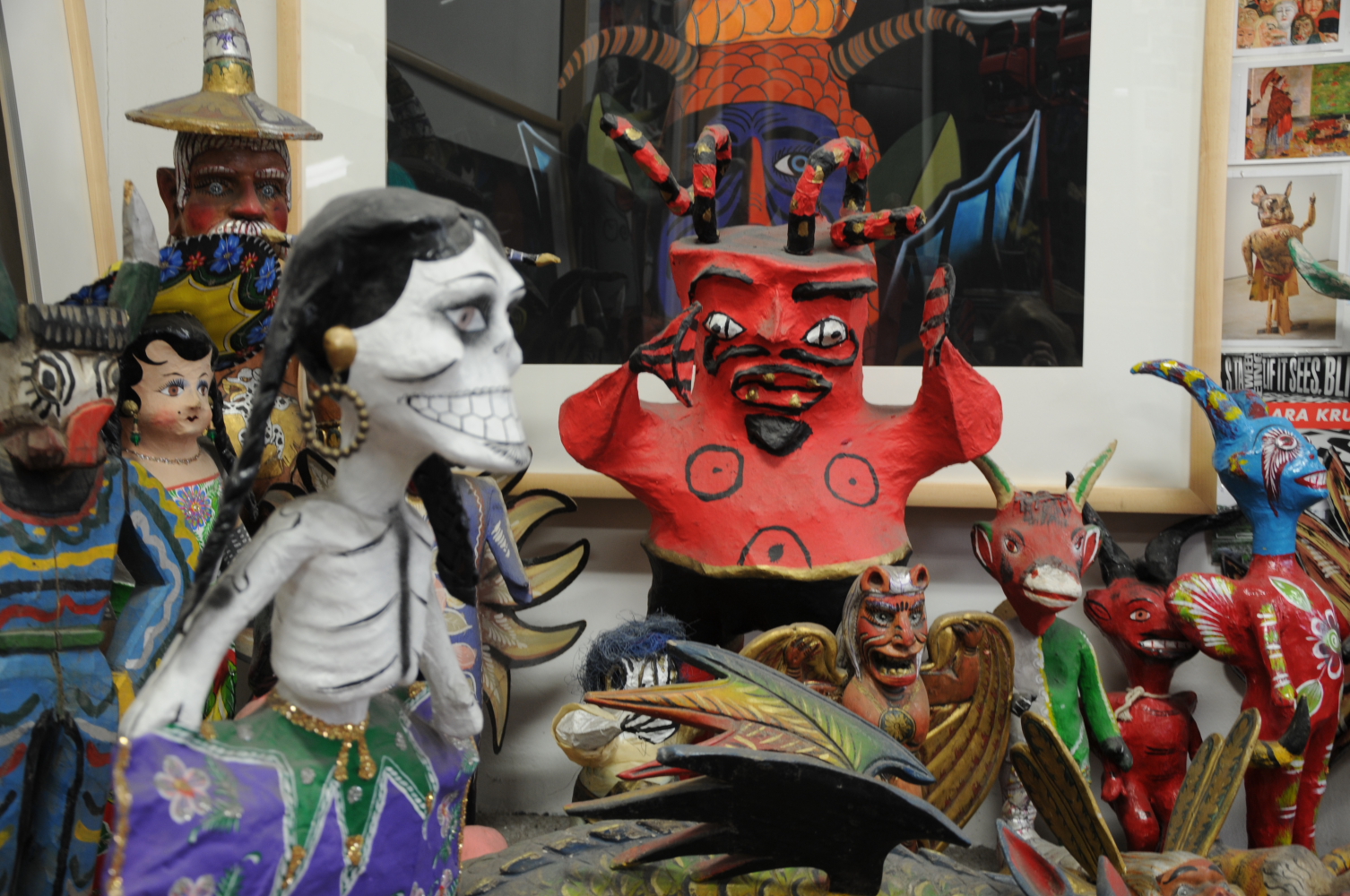
A corner of Barbara’s studio
* an ongoing series of quotations – mostly from artists, to artists – that offers wisdom, inspiration, and advice for the sometimes lonely road we are on.
When we are children we unquestioningly see the objects around us as alive; we speak to them, give them names, breathe life into them. The imagination knows no bounds. As we grow up, we gradually lose this facility, until we finally arrive in an utterly “demystified” world that draws clear boundaries between what is alive and what is not, between subjective and objective perception. According to Sigmund Freud, culture is the only domain in our modern society that gives a measure of legitimacy to the persistence of this infantile desire to see things as animate. In the field of art, imagination is the precondition on which fiction of any sort rests; in art, mental states can be projected onto objects and images, but not in social reality or the sciences.
Dietrich Karner in Animism: Modernity Through the Looking Glass
Comments are welcome!


 barbararachkoscoloreddust.com