Blog Archives
Pearls from artists* # 685
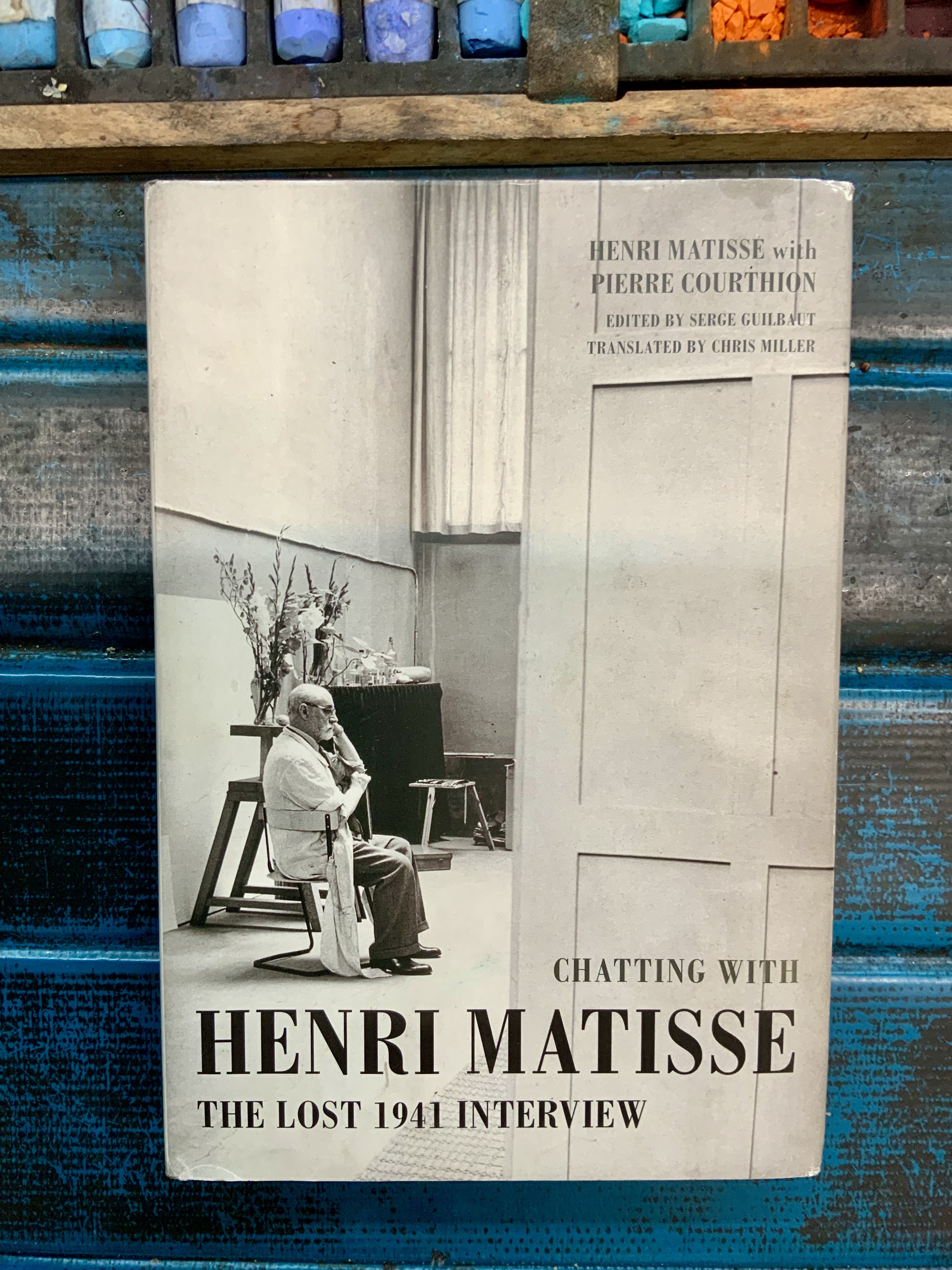
Another of my favorite books!
*an ongoing series of quotations – mostly from artists, to artists – that offers wisdom, inspiration, and advice for the sometimes lonely road we are on.
HM: The great benefit I took from visits with Renoir was realizing that even after a long working life, an artist’s curiosity could remain unquenched. The hope of some further progress, something to be added to his œuvre, was what kept Renoir alive. He was painting a “bathing” picture (now, finally, in the Musée du Louvre) and doing it with some difficulty because the picture was quite big and Renoir’s hands weren’t very nimble. But it’s only now, when I think about it, that I realize he must have found it hard; it would never occur to you when you saw him at his canvas – there was such intellectual urgency about everything he did.
Another big lesson I learned from visiting Renoir was that this man, riddled with pain and infirmity – his legs were so stiff he couldn’t walk a single step – could still be happy working and talking about his work. When you were with him for a while and he’d warmed to the conversation, you hadn’t the least sense that you were talking to an old man; his eyes were so full of life and intelligence that you forgot his age.
Henri Matisse in Chatting With Matisse: The Lost 1941 Interview, Henri Matisse with Pierre Courthion, edited by Serge Guilbault
Comments are welcome!
Pearls from artists* # 640

*an ongoing series of quotations – mostly from artists, to artists – that offers wisdom, inspiration, and advice for the sometimes lonely road we are on.
When an artist changes and develops over the years, as is natural to any creative person, such change is met by howls of protest from the marketers. Sometimes an artist (or teacher, scientist, or spiritual guru) starts with something extraordinary, becomes a star, and then their gift is either frozen or perverted.
The growing and risky edge of creative work is devalued, treated as a frill or extracurricular activity decorating the routine of ordinary life. There are few mechanisms available for the artist to construct a self-sustaining way of living and working. “One gathers,” says Virginia Woolf,
“from the enormous modern literature of confession and self-analysis that to write a book of genius is almost always a feat of prodigious difficulty. Everything is against the likelihood that it will come from the writer’s mind whole and entire. Generally, material circumstances are against it. Dogs will bark; people will interrupt; money must be made; health will break down. Further, accentuating all these difficulties and making them harder to bear is the world’s notorious indifference. It does not ask people to write poems and novels and histories; it does not need them. It does not care whether Flaubert finds the right word or whether Carlyle scrupulously verifies this or that fact. Naturally, it will not pay for what it does not want. And so the writer, Keats, Flaubert, Carlyle, suffers, especially in the creative years of youth, every form of distraction and discouragement. A curse, a cry of agony, rises from those books of analysis and confession. “Mighty poems in their misery dead” – that is the burden of their song. If anything comes through in spite of all this, it is a miracle, and probably no book is born entire and uncrippled as it was conceived.”
Stephen Nachmanovitch in Free Play: Improvisation in Art and Life
Comments are welcome!

Pearls from artists* # 467
*an ongoing series of quotations – mostly from artists, to artists – that offers wisdom, inspiration, and advice for the sometimes lonely road we are on.
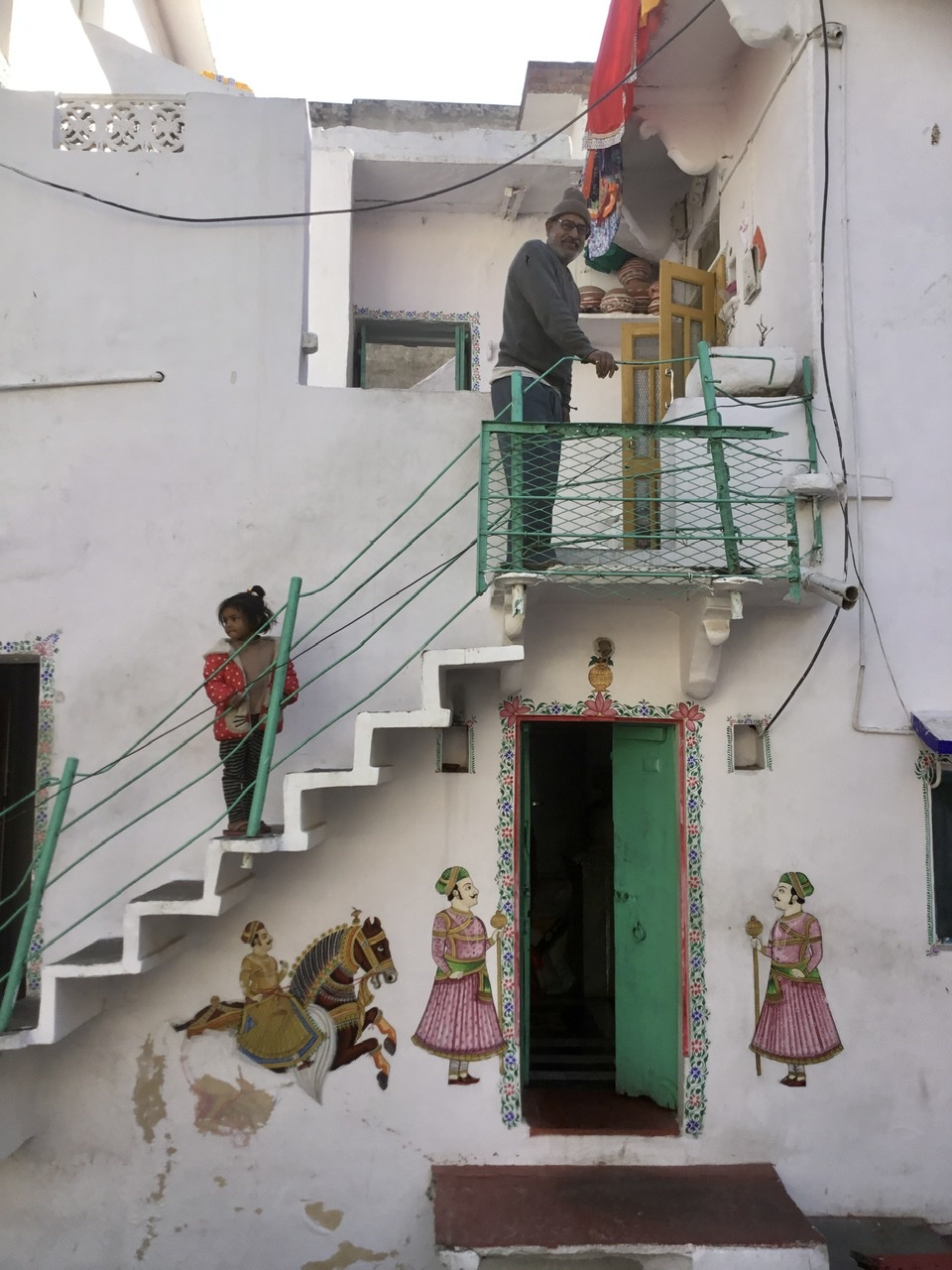
As students confronted with images of India through film and photography, we are challenged to begin to be self-conscious of who we are as “seers.” Part of the difficulty of entering the world of another culture, especially one with as intricate and elaborate a visual articulation as India’s, is that, for many of us, there are no “manageable models.” There are no self-evident ways of recognizing the shapes and forms of art, iconography, ritual life and daily life that we see. Who is Śiva, dancing wildly in a ring of fire? What is happening when the priest pours honey and yogurt over the image of Viṣṇu? Why does the woman touch the feet of the ascetic beggar? For those who enter the visible world of India through the medium of film, the onslaught of strange images raises a multitude of questions. These very questions should be the starting point for our learning. Without such self-conscious questions, we cannot begin to “think” with what we see and simply dismiss it as strange. Or worse, we are bound to misinterpret what we see by placing it solely within the context of what we already know from our own world of experience.
Diana L. Eck in Darsan: Seeing the Divine Image in India
Comments are welcome!
Pearls from artists* # 453
*an ongoing series of quotations – mostly from artists, to artists – that offers wisdom, inspiration, and advice for the sometimes lonely road we are on.
Art begins in the struggle for equilibrium. One cannot create from a balanced state. Being off balance produces a predicament that is always interesting on stage. In the moment of unbalance, our animal instincts prompt us to struggle towards equilibrium and this struggle is endlessly engaging and fruitful. When you welcome imbalance in your work, you will find yourself instantly face to face with your own inclination towards habit. Habit is an artist’s opponent. In art, the unconscious repetition of familiar territory is never vital or exciting. We must try to remain awake and alive in the face of our inclinations towards habit. Finding yourself off balance provides you with an invitation to disorientation and difficulty. It is not a comfortable prospect. You are suddenly out of your element and out of control. And it is here the adventure begins. When you welcome imbalance, you will instantly enter new and unchartered territory in which you feel small and inadequate in relation to the task at hand. But the fruits of this engagement abound.
Anne Bogart in A Director Prepares: Seven Essays on Art and Theatre
Comments are welcome!
Pearls from artists* # 28
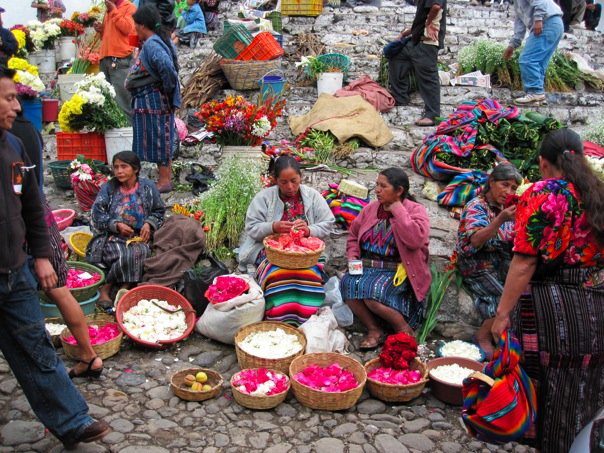
Flower sellers in Chichicastenango, Guatemala
* an ongoing series of quotations – mostly from artists, to artists – that offers wisdom, inspiration, and advice for the sometimes lonely road we are on.
We have talked a good deal about our duty, and how we could attain the right goal, and we came to the conclusion that in the first place our aim must be to find a steady position and a profession to which we can entirely devote ourselves. It is wise to do so, for life is but short and time passes quickly; if one is master of one thing and understands one thing well, one has at the same time insight into and understanding of many things.
One must especially have the end in mind, and the victory one would gain after a whole life of work and effort is better than one that is gained earlier. Whoever lives sincerely and encounters much trouble and disappointment, but is not bowed down by them, is worth more than one who has always sailed before the wind and has only relative prosperity. One must never trust the occasion when one is without difficulties.
Irving Stone with Jean Stone, editors, Dear Theo: The Autobiography of Vincent Van Gogh
Comments are welcome!


 barbararachkoscoloreddust.com