Blog Archives
Pearls from artists* # 648

“Apparition,” soft pastel on sandpaper, 58” x 38”
*an ongoing series of quotations – mostly from artists, to artists – that offers wisdom, inspiration, and advice for the sometimes lonely road we are on.
I prefer to speak in terms of the artist’s voice. Voice is deeper, manifested from the very core of your being. It is a synthesis of the experiences, intellectual concepts, and aesthetic interests you possess, executed in your distinctive way, in the formal, emotional, and intellectual language of your chosen medium. When successful, the realization of your voice follows a gestalt principle. The combination of your ideas and the work’s physical embodiment is greater than the sum of its parts and distinguishes your outcome from everyone else’s. If we wrote down a single concept and handed it to a dozen artists, we would get very different responses from each of them, and some works would be a stronger synthesis of ideas and execution. As Frank Stella once said, “There are no good ideas for paintings, there are only good paintings… the painting IS the idea (Saltz, 2020:42).”
The art that we recognize as having singular, identifying features, those formal aspects that allow us to immediately see a work as ‘a David Wojnarowicz’ or ‘a Julie Mehretu,’ were not the product of a singular flash of brilliance. These qualities evolved as part of a sustained, life-long, ever-deepening investigation to articulate their specific and singular vision. Our voice comes from tapping into the depths of our own consciousness, then distilling the most powerful aspects of that awareness. Voice also expands and deepens over time. It evolves along with the artist.
Kate Kretz in Art From Your Core: A Holistic Guide to Visual Voice
Comments are welcome!
Pearls from artists* # 645

New York City
*an ongoing series of quotations – mostly from artists, to artists – that offers wisdom, inspiration, and advice for the sometimes lonely road we are on.
It is critical that developing voice be an intensive, holistic process. Just as we cannot simply dip our bucket into the shallow pool of our culture and emerge with any substantial yield, we cannot generate deep, meaningful work unless we cultivate a deep, meaningful life. We must enlarge and intensify our way of being in the world, even as its forces conspire to distract, numb, and dumb us down… Regardless of the situation into which we were born, we can conjure our own expansive journey, guided by altruistic ideals, as we follow our vision. Being an artist is a way to simultaneously exist on a higher plane of consciousness while moving through our brief lives on this planet.
The art world is a business system that creates and follows trends. ‘Hot topics’ generate buzz only to become stale and replaced months later. However, the process of finding voice is timeless, even though the end products evolve with time.
Kate Kretz in Art From Your Core: A Holistic Guide to Visual Voice
Comments are welcome!
Pearls from artists* # 609
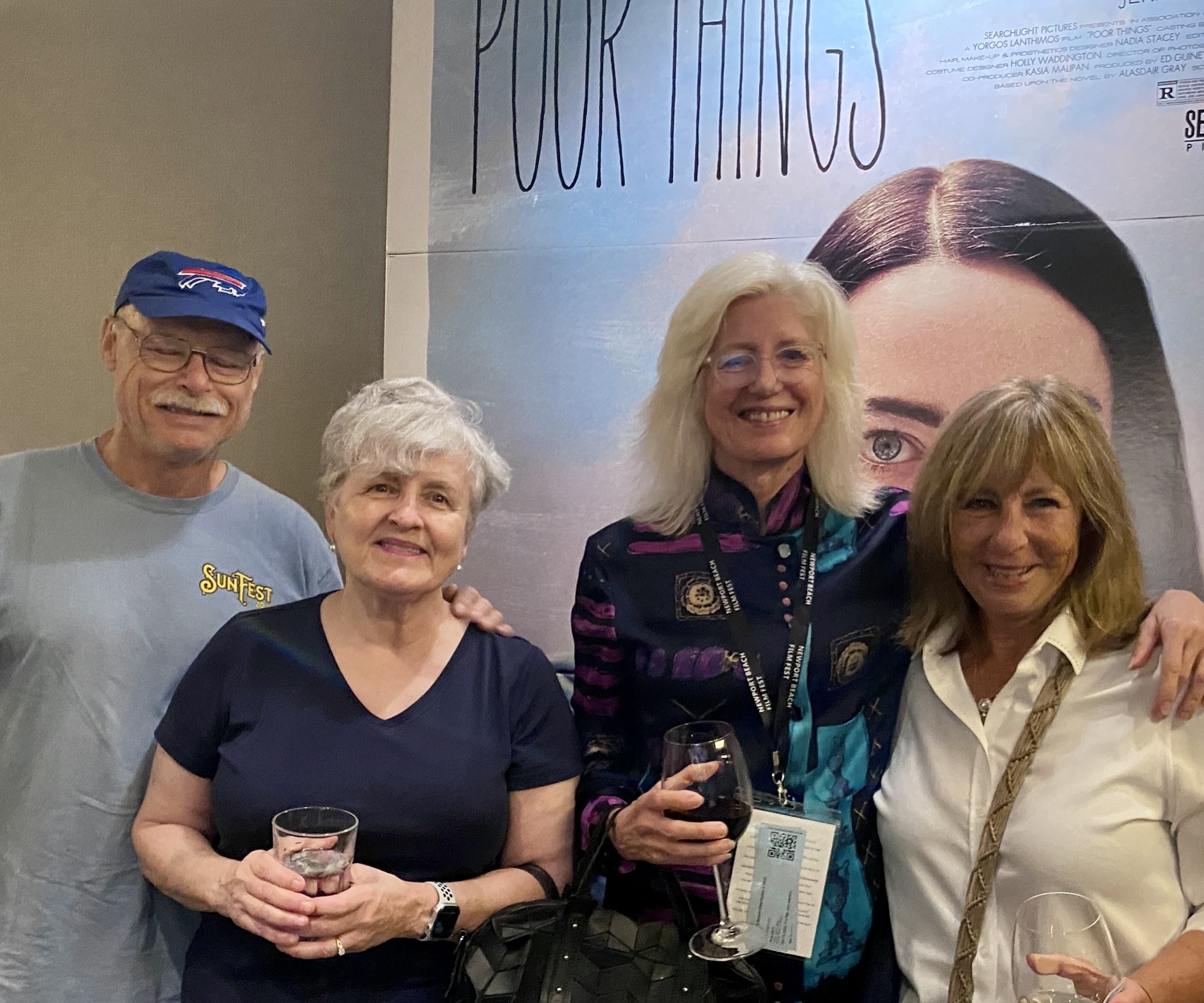
At the World Premier of “Barbara Rachko: True Grit” during the Newport Beach Film Festival
*an ongoing series of quotations – mostly from artists, to artists – that offers wisdom, inspiration, and advice for the sometimes lonely road we are on.
Whether we are creating high art or a meal, we improvise when we move with the flow of time and with our own evolving consciousness, rather than with a preordained script or recipe. In composed or scripted art forms, there are two kinds of time: the moment of inspiration in which a direct intuition of beauty or truth comes to the artist; then the often laborious struggle to hold onto it long enough to get it down on paper or canvas, film or stone. A novelist may have a moment (literally a flash) of insight into which the birth, meaning, and purpose of a new book reveal itself; but it may take years to write it. During this time he must not only keep the thought fresh and clear, he must also eat, live, make money, suffer, enjoy, be a friend, and everything else human beings do. In composed music or theater, moreover, there is yet a third kind of time: besides the moment (or moments) of inspiration and time it takes to write the score, there is the time of the actual performance. Often the music is not even performed until after the composer’s death.
Stephen Nachmanovitch in Free Play: Improvisation in Life and Art
Comments are welcome!
Pearls from artists* # 608

*an ongoing series of quotations – mostly from artists, to artists – that offers wisdom, inspiration, and advice for the sometimes lonely road we are on.
There is in all of these forms of expression a unitive experience that is the essence of the creative mystery. The heart of improvisation is the free play of consciousness as it draws, writes, paints, and plays with the raw material emerging from the unconscious. Such play entails a certain degree of risk.
Stephen Nachmanovitch in Free Play: Improvisation in Life and Art
Comments are welcome!
Pearls from artists* # 588

Screen shot from “Barbara Rachko: True Grit” Photo: Jennifer Cox
*an ongoing series of quotations – mostly from artists, to artists – that offers wisdom, inspiration, and advice for the sometimes lonely road we are on.
The structure of the hand is not… “just anything;” the fingers have certain characteristic relationships, certain ranges of relative movement, certain kinds of crossing, torquing, jumping, sliding, pressing, releasing movements that guide the music to come out a certain way. Graceful work uses those patterns and instinctively moves through them and out as we find ever-fresh combinations. The shape and size of the human hand brings powerful but subtle laws into every kind of art, craftsmanship, mechanical work, and into our ideas and feelings as well. There is a continuous dialogue between hand and instrument, hand and culture. Artwork is not thought up in consciousness and then, as a separate phase, executed by the hand. The hand surprises us, creates and solves problems on its own. Often enigmas that battle our brains are dealt with easily, unconsciously, by the hand.
Stephen Nachmanovitch in Free Play: Improvisation in Life and Art
Comments are welcome!
Pearls from artists* # 576
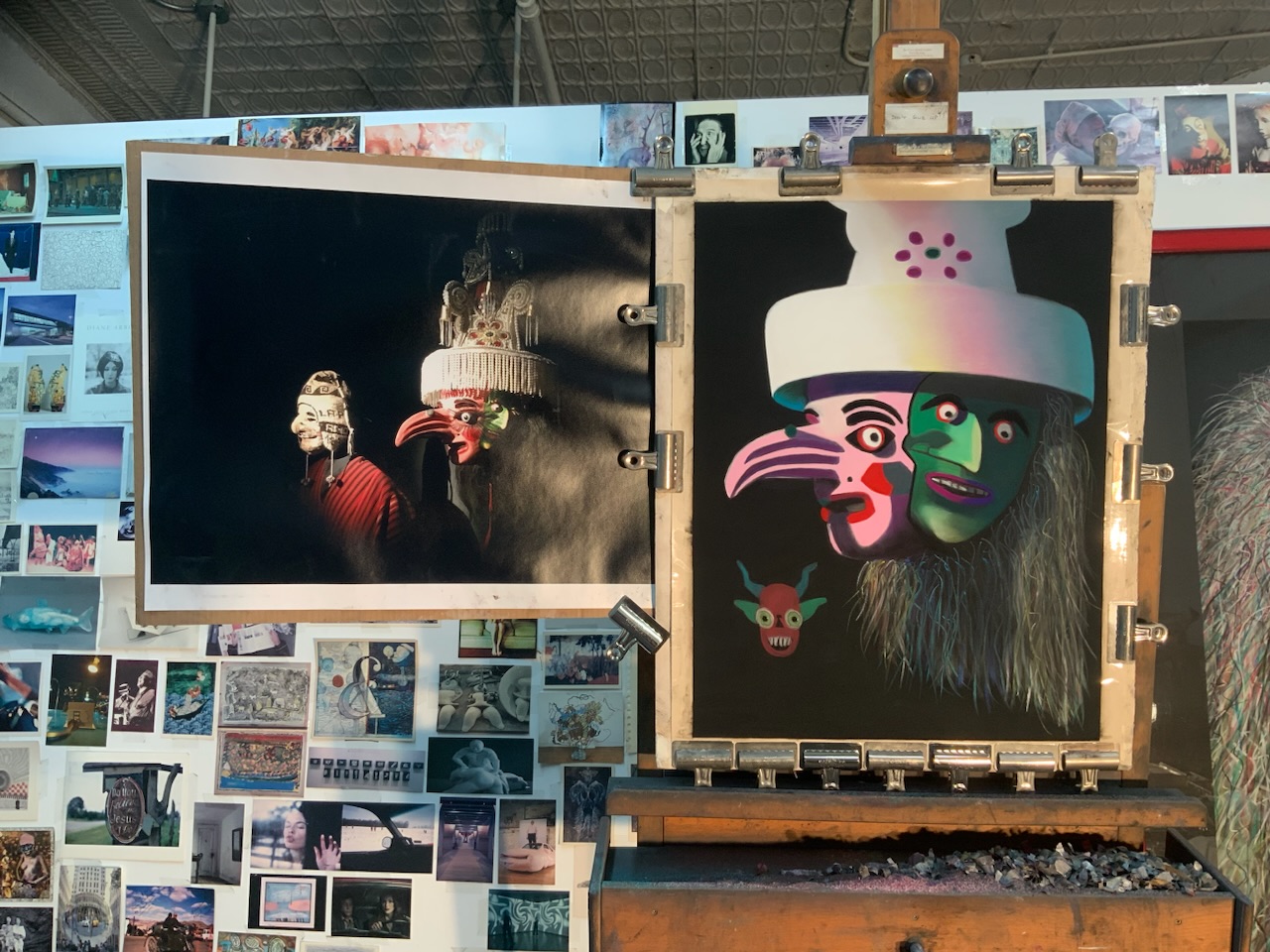
In progress: “Shadow,” soft pastel on sandpaper, 26” x 20”
*an ongoing series of quotations – mostly from artists, to artists – that offers wisdom, inspiration, and advice for the sometimes lonely road we are on.
A word derived from Latin, persona, originally referred to the masks worn by actors in ancient classical theatre. In Jungian psychology, this term refers to the inner character that we use to face the world. Drawn from societal expectations, cultural norms, and natural attributes, it is the person we want others to think we really are. Our persona is our brave face, our false front. It is the ongoing project of building our ideal self.
… the persona is our somewhat embellished view of ourselves, the shiny face that we want the world to see. It’s opposite, everything we reject about ourselves, is called the shadow.
… our shadow is the pain we’ve forgotten about. It is a complex within us, a split-off part our consciousness loaded with emotional weight. Our persona is what we want to be seen to be; shadow is what we least want to be.
Gary Bobroff in Carl Jung: Knowledge in a Nutshell
Comments are welcome!
Pearls from artists* #561

*an ongoing series of quotations – mostly from artists, to artists – that offers wisdom, inspiration, and advice for the sometimes lonely road we are on.
The most powerful symbols draw profound reactions from us. The symbolic images in great art attract and fascinate us; they stir our souls and move us beyond what can be easily expressed; ‘their pregnant language cries out to us that they mean more than they say.’
The unconscious produces symbols as part of a natural process within us. These images emerge out of the context of our lived experience… Jung saw the meaning-making process as one that not only requires attendance to the real context of our lives and history, but also involves profound inner listening. It asks us to use our rational capacities, but also our feeling and imaginal ones.
Symbolic images redirect our psychic energy, bringing together conscious and unconscious material and producing the lessening of conflict. In this way, they activate a transcendent function within the psyche. We experience this as the discovery of personal meaning and healing. This transformation is not the result of formulaic operations, but rather is a dynamic process that requires our authentic and vulnerable participation. The process challenges the whole of who we are and requires deep moral effort. That the unconscious would produce moving, powerful compensatory symbols inside us at all points to a fact that our culture may not have fully grasped – that there is a force working within us which is always driving us towards healing growth and greater consciousness… Despite our suffering, the psyche is always ultimately seeking both a healthy homeostatic balance and our ever-unfolding growth and unique development.
Gary Bobroff in Carl Jung: Knowledge in a Nutshell
Comments are welcome!
Pearls from artists* # 471

*an ongoing series of quotations – mostly from artists, to artists – that offers wisdom, inspiration, and advice for the sometimes lonely road we are on.
Impresario Peter Sellars remarks how “Vermeer [spent] hours, days, and weeks painting a small corner of a small room in an act of ritualistically informed meditation that leads to new possibilities of awareness and love.” The time of making, Sellars adds, influences the time of viewing: “The act [of painting] itself opens up and refines consciousness by slowing down time as it focuses the eye.” Sellars’ language of ritual and meditation anticipates my purposes. He associates painting not only with materiality but also with spiritual practices – indeed, he yokes the two: “The act of painting has always been charged with shamanic energies. Using bits of animal bone, hair, and sinew, mixing them with earth, and applying them steadily and with great concentration to a cave wall, a parchment, or a human face is an act of calling and recalling.”
Arden Reed in Slow Art: The Experience of Looking, Sacred Images to James Turrell
Comments are welcome!
Pearls from artists* # 406

With “Avenger,” soft pastel on sandpaper, 58” x 38” image, 70” x 50” framed
* an ongoing series of quotations – mostly from artists, to artists – that offers wisdom, inspiration, and advice for the sometimes lonely road we are on.
If we really are due for a shift in consciousness, it is incumbent upon each of us to “be the change,” in Gandhi’s famous phrase. Nothing is written in the stars.
Art is a testament to this way of thinking, because every great work of art is made, not for an abstract audience, but for the lone percipient with whom it seeks to connect. The symbols that compose artistic works are not static objects but dynamic events. As such, they can only emerge within a field of awareness, that is, within the context of a life being lived. It is therefore by approaching the work of art as though it were intended specifically for you – as though the artist had fashioned it with you in mind every step of the way – that you can turn the aesthetic experience into an engine of change in your own life and in the lives of those around you.
J.F. Martel in Reclaiming Art in the Age of Artifice: A Treatise, Critique, and Call to Action
Comments are welcome!
Pearls from artists* # 392
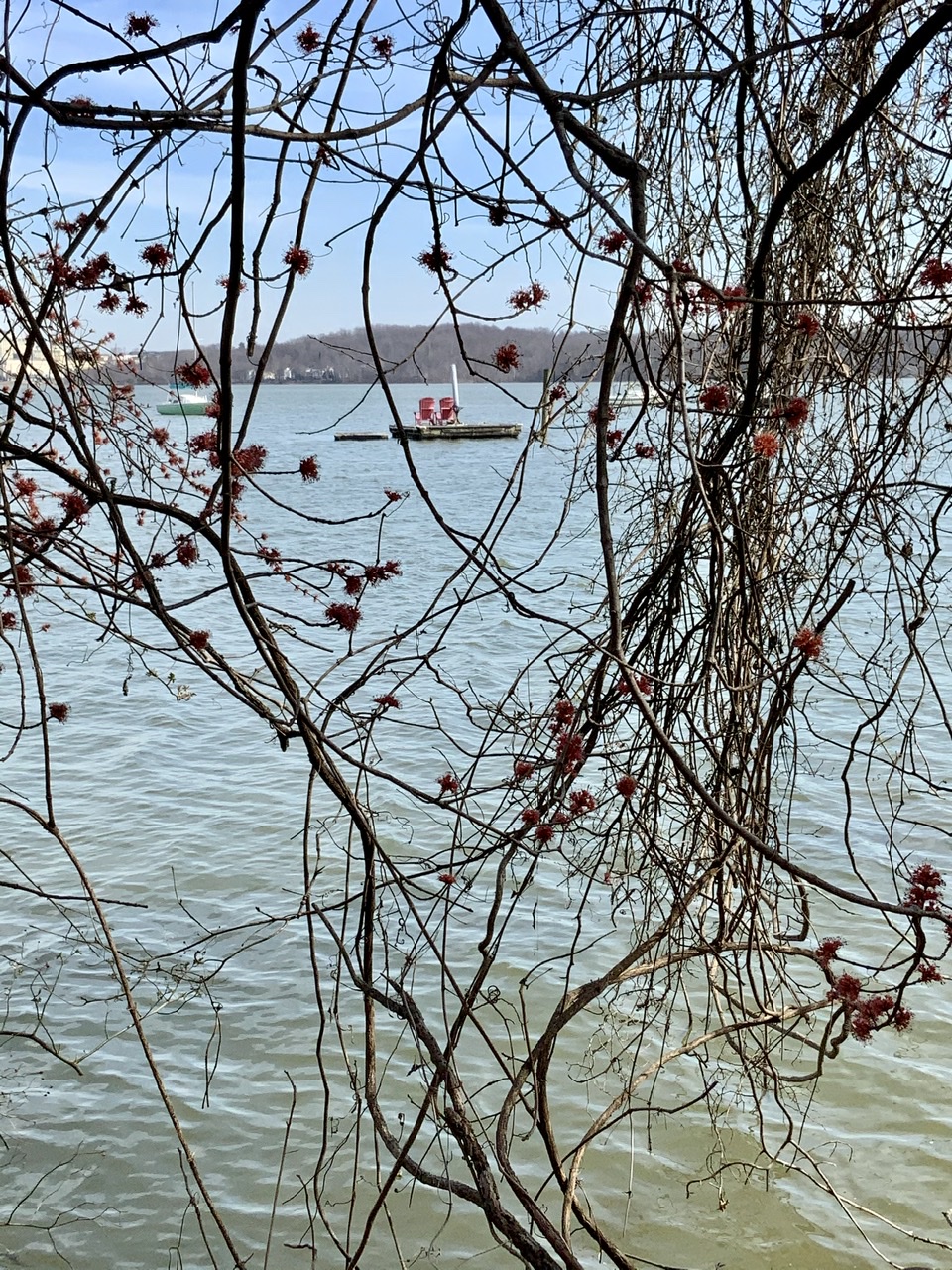
A place to read, Alexandria, VA
*an ongoing series of quotations – mostly from artists, to artists – that offers wisdom, inspiration, and advice for the sometimes lonely road we are on.
Dear Person,
Why read?
Because you only have one life but reading gives you many lives. Because you only have one personality but when you read a book you can be inside another mind and heart. Because experiencing elegance of language is one of the greatest pleasures of consciousness. Reading lets you be quiet in a chaotic world and commune with amazing people who may happen to be dead now, so not too easy to connect with otherwise. Reading startles you. Reading upsets you. Reading takes apart your world and expectations and rearranges them. Imagine the last few years without the books you have loved – it would be a much flatter, sadder experience of living. We read as a form of faith.
Naomi Wolf
A Velocity of Being: Letters to a Young Reader edited by Maria Popova and Claudia Bedrick
Comments are welcome!


 barbararachkoscoloreddust.com