Blog Archives
Q: What’s on the easel today?
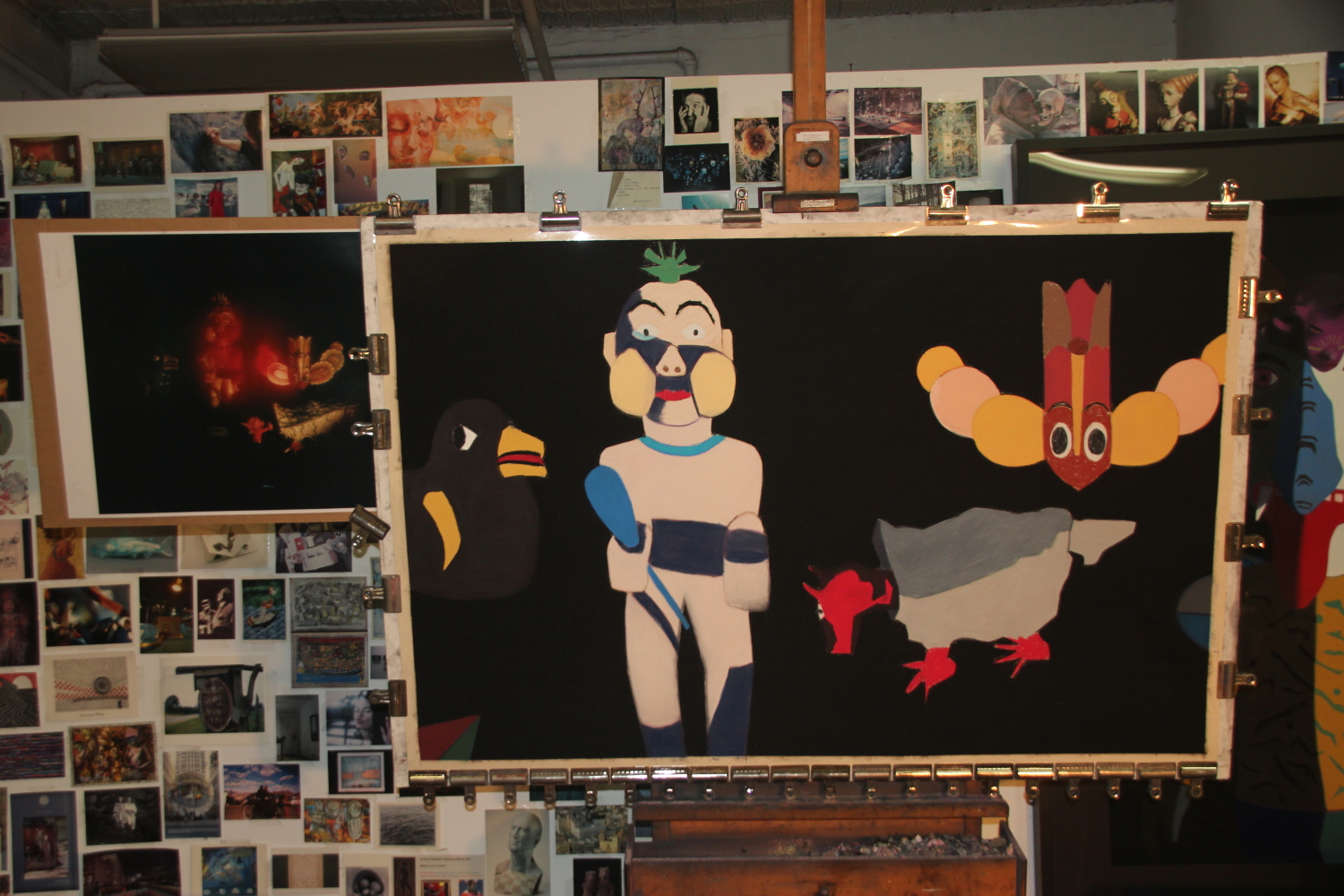
Work in progress
A: I am in the very early stages of a large pastel painting. I have never painted any of these figures before and they originated in different parts of the world. The bird (left) is from the Brooklyn Museum’s store, although it was hand carved in Guatemala. The standing figure is carved wood with beautiful painted details. It was a lucky find on a trip to Panajachel, Guatemala. The armadillo (red and grey) was made by one of my favorite Mexican folk artists (now deceased) and I believe it’s one of the last pieces he completed. It is a papier mâché figure that I found in a small shop in Mexico City. The figure on the upper right is a wooden mask bought from a talkative and talented artist at a hotel in Kandy, Sri Lanka. It depicts nagas (cobras), although you can’t tell that yet in the painting.
Comments are welcome!
Q: How do you store your pastel paintings?
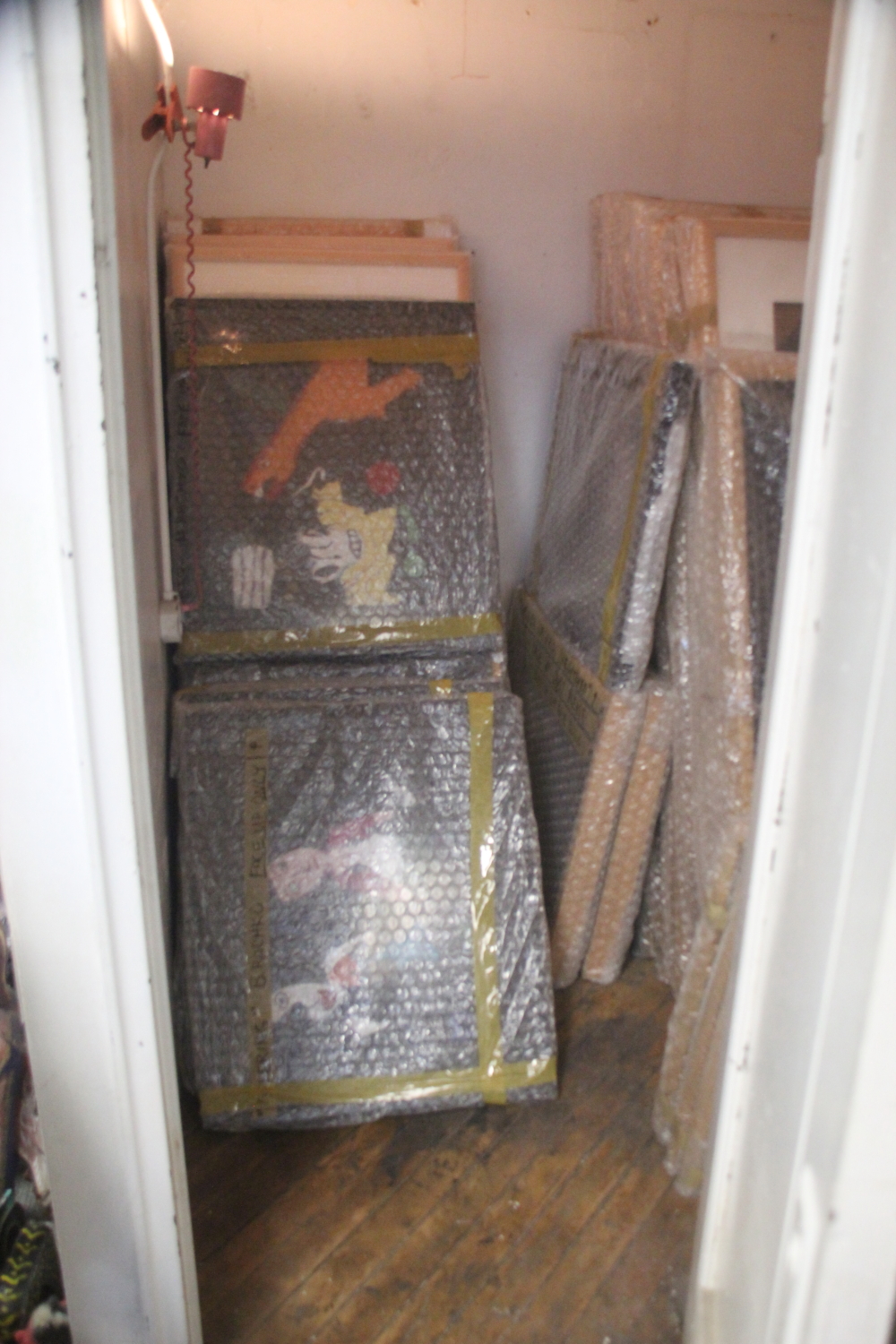
Storage closet
A: Well, I wish I could say that every pastel painting has sold as soon as it was completed, but that is a rarity that has only happened twice. As soon as possible after I finish a painting, I bring it to the framer. Pastel paintings are susceptible to smudging and other odd dangers (even a sneeze!) until they are under Plexiglas.
Framed work can easily and safely be stored by hanging it on a wall in my studio or standing it upright and face up, and leaning against a wall. When I put paintings in my storage closet for the longer term, I wrap them in bubble wrap.
The downside of having to frame everything is that it is a considerable expense. However, the upside is that I am always ready for a solo exhibition. Gallerists have called at the last minute when one of their exhibitions ran into unexpected problems. Usually, I am able to step right in.
Comments are welcome!
Pearls from artists* # 159
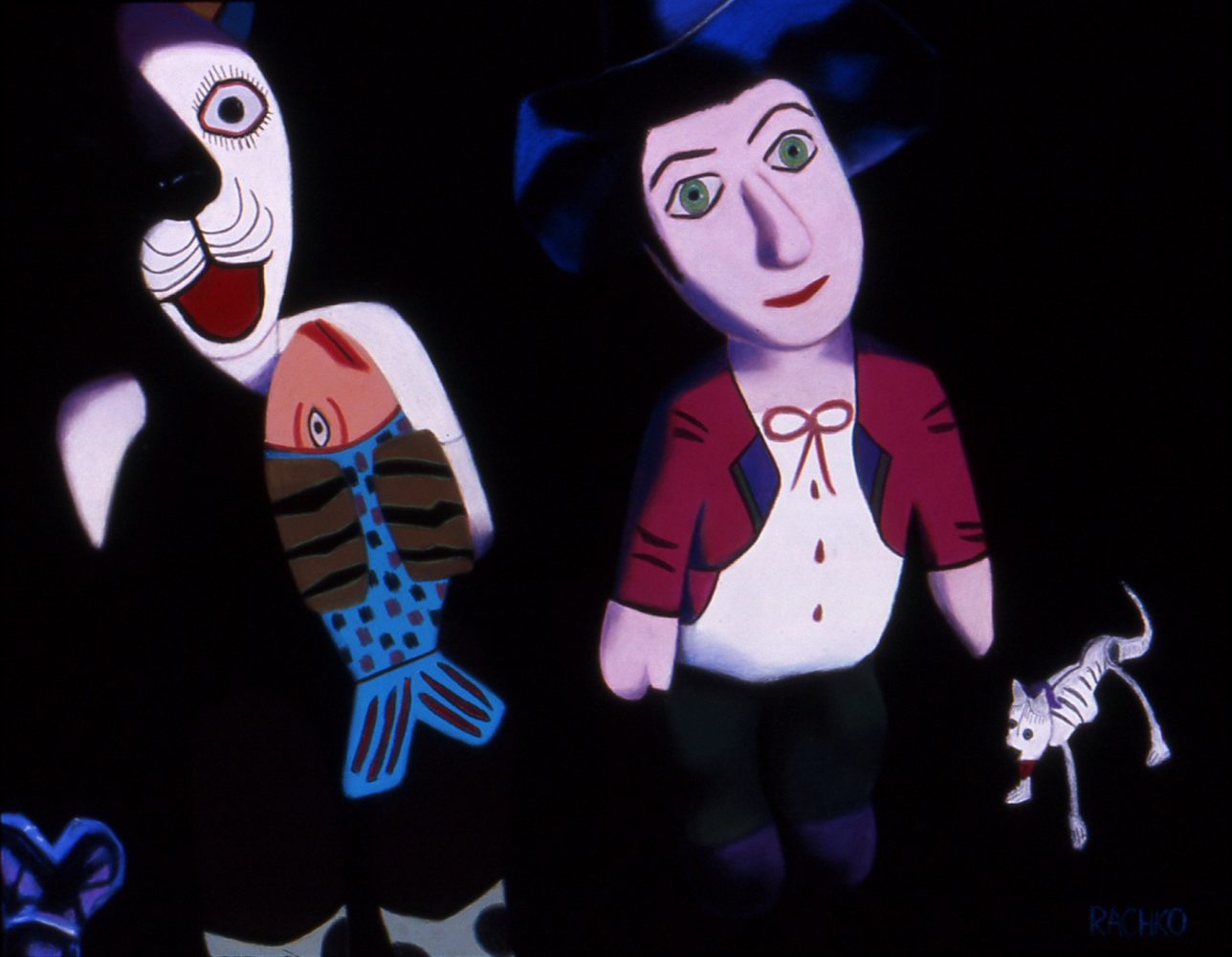
“Offering,” soft pastel on sandpaper, 20″ x 26″
* an ongoing series of quotations – mostly from artists, to artists – that offers wisdom, inspiration, and advice for the sometimes lonely road we are on.
We, the artists who are meant to provide art and teach the importance of beauty, have not yet been able to educate the public to know the difference between beauty and ugliness. .. It’s time to make sure artists with good intentions are ready to be taken seriously and to gain back their noble respectful place in culture. We should be ready with our own high standard of art for the new era, in which art patrons and a society that are more informed than ever will be thoughtfully critical and will expect everything from artists they support – talent, knowledge, skill and experience.
Samuel Adoquei in Origin of Inspiration: Seven Short Essays for Creative People
Comments are welcome!
Q: How do you think living in New York affects your work?
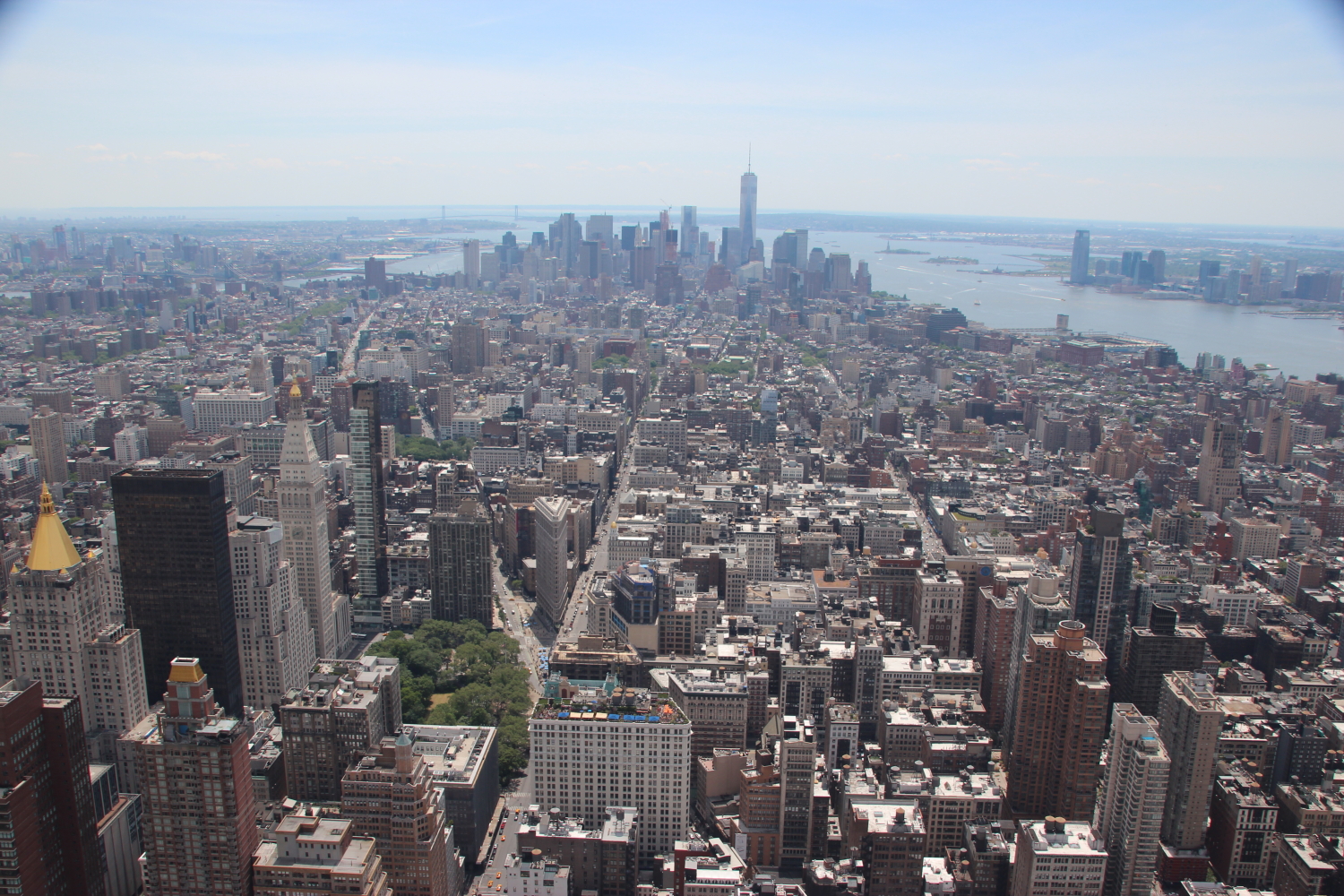
Lower Manhattan
A: Arguably, life in New York provides an artist with direct access to some of the best international art of the past, the present, and probably the future. It is possible to see more art here – both good and bad – than in any other American city.
Just pick up any local magazine and scan the art listings! Our problem is never that there isn’t anything interesting to see or do. It’s “how do we zero in on the most significant local cultural activities, ones that might contribute to making us better artists?”
Certainly a visual artist’s work is consciously and unconsciously influenced not only by what she sees in museums and galleries, but by walking around the city. That’s partly why I am an inveterate walker. I never know what amazing things I am going to see when I leave my apartment.
Although living in New York City is a rich and heady mix for anyone, it is more so for sensitive artists. Artists are virtual sponges, soaking up experiences, processing them, and mysteriously expressing them in our work.
New York lets an artist ponder excellence as we see and experience firsthand what is possible. The best of the best manages to make its way here.
Undoubtedly, my own work is richer for having spent the last eighteen years in this fascinating, wild, and crazy city. For a visual artist New York is an infinitely fascinating place to live.
Comments are welcome!
Q: Were there any other artists in your family?

“The Ancestors,” soft pastel on sandpaper, 58″ x 38,” 2013
A: Unfortunately, I have not been able to reconstruct my family tree further back than two generations. So as far as I can tell, I am the first artist of any sort, whether musician, actor, dancer, writer, etc. in my family.
Both sets of grandparents emigrated to the United States from Europe. On my mother’s side my Polish grandparents died by the time my mother was 16, years before I was born.
My paternal grandparents both lived into their 90s. My father’s mother spoke Czech, but since I did not, it was difficult to communicate. I never heard any stories about the family she left behind. My grandfather spoke English, but I don’t remember him ever talking about his childhood or telling stories about his former life. My most vivid memories of my grandfather are seeing him in the living room watching Westerns on an old-fashioned television.
Sometimes I am envious of artists who had parents, siblings, or extended family who were artists. How I would have loved to grow up with a family member who was an artist and a role model!
Comments are welcome!
Pearls from artists* # 143
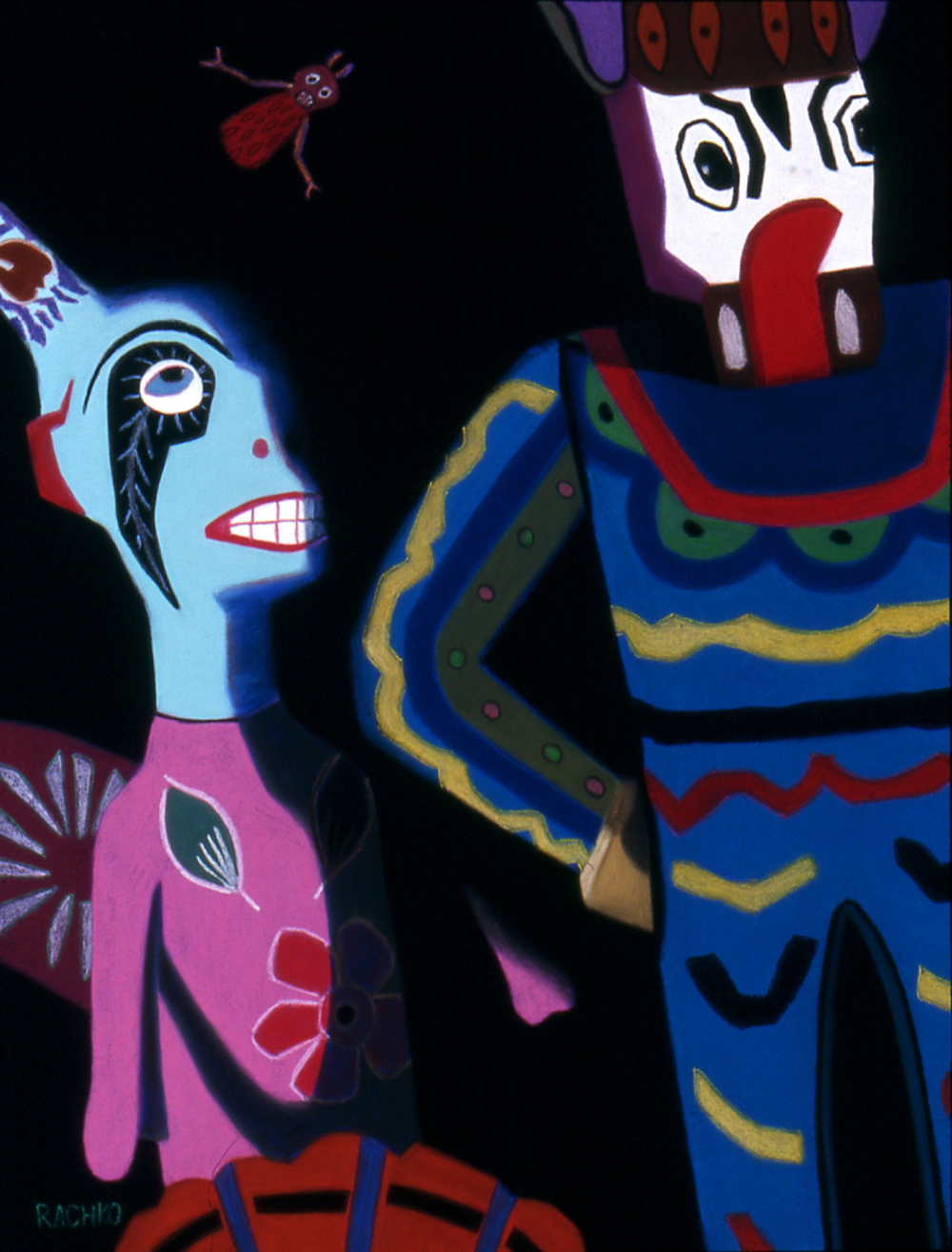
“Intruder,” soft pastel on sandpaper, 26″ x 20″
* an ongoing series of quotations – mostly from artists, to artists – that offers wisdom, inspiration, and advice for the sometimes lonely road we are on.
Artists and designers have the capacity to generate something from deep inside ourselves to live outside of ourselves. By residing in the experiential and the physical, and by developing the “hands on” as a portal of intelligent learning, we confirm the mind as maker and making as a state of mindfulness. We demonstrate how artists and designers are hosts for enduring creative discovery that is self-initiated and actively engaged. In short, artists and designers manifest what has not existed previously – in many cases, what has never even been imagined.
Rosanne Somerson in The Art of Critical Making: Rhode Island School of Design on Creative Practice, Rosanne Somerson and Mara L. Hermano, editors
Comments are welcome!
Pearls from artists* # 138

A corner of Barbara’s studio
* an ongoing series of quotations – mostly from artists, to artists – that offers wisdom, inspiration, and advice for the sometimes lonely road we are on.
BM: … so many artists value the sense of retaining something of the child, like the strangeness that children have where they’ll just make a gesture or say something that we filter as adults.
MM: Sometimes people think that it is childish, but it’s not, it is child-like. People get confused. One of the things we are trying to do as artists – it’s not romantic – is to get to a point where we are seeing things in a fresh way, in a way that we’ve never seen them before, the way children do. So we are acknowledging the magic in every moment we have.
BM: And it’s not a form of nostalgia, but the history of an entire human being.
MM: Exactly. Rather than nostalgia it is teaching us how to be present.
Conversations with Meredith Monk by Bonnie Marranca
Comments are welcome!
Q: How do you know when a series has ended?

“A Promise, Meant to be Broken,” soft pastel on sandpaper, 58″ x 38″
A: I suppose it’s when there is nothing left to say within a particular body of work. The urgency to add something I haven’t tried vanishes. Usually I can’t even think of anything I haven’t tried.
I knew with certainty that the “Domestic Threats” series was finished while “A Promise Meant to be Broken” was still on my easel. It’s no accident that I included a self-portrait. This painting was my way of saying good-bye to an important body of work – literally turning my back on it – and summing up where the work had taken me.
For artists each series is a creative journey with a beginning, a middle, and an end. At a certain point it’s over. Then you build on what you’ve accomplished and move on to create something new. The connection between new work and old may not always be obvious, but one thing is certain: all the previous work laid the groundwork for what you make today.
Comments are welcome!
Q: All artists go through periods when they wonder what it’s all for. What do you do during times like that?
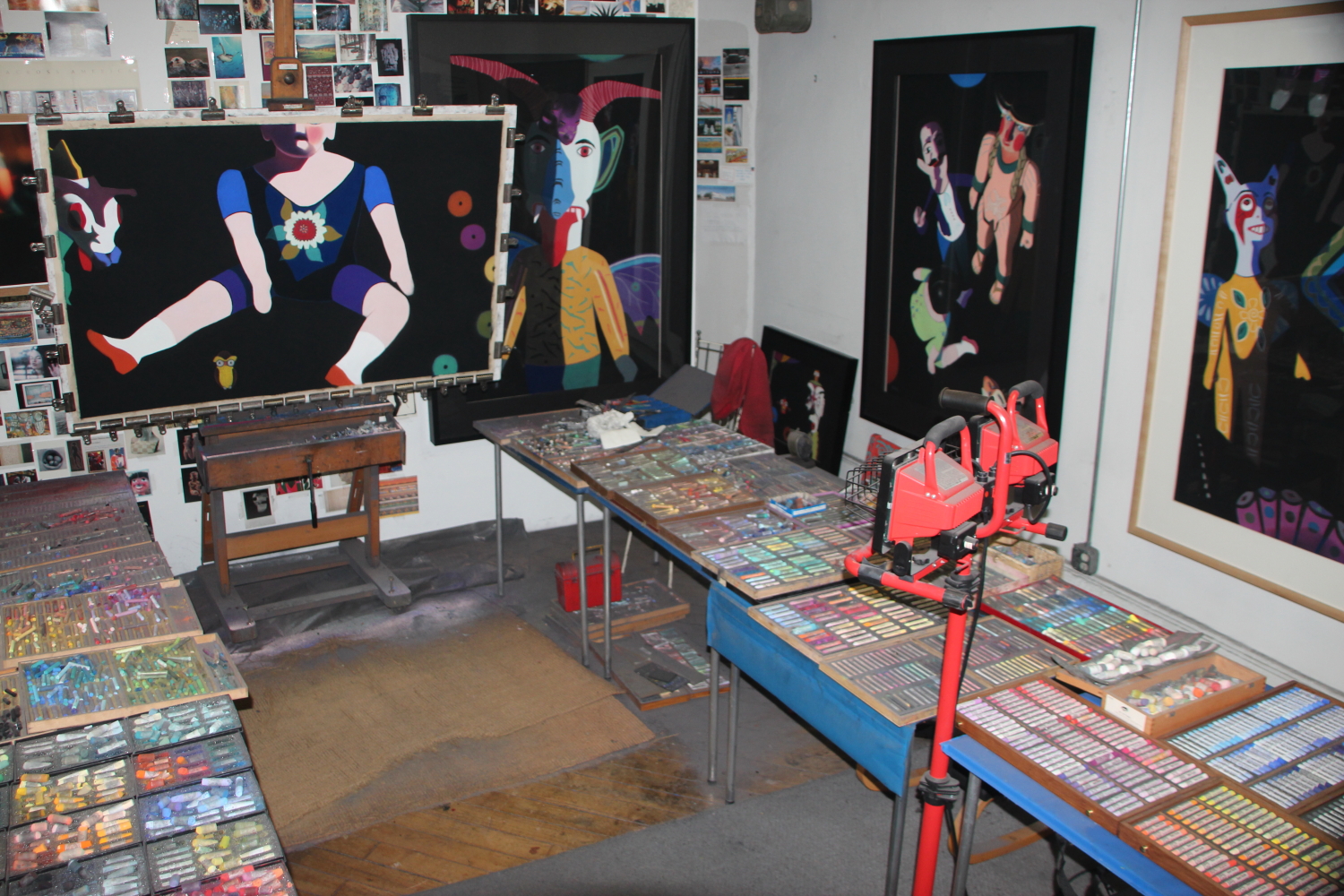
Barbara’s studio
A: Fortunately, that doesn’t happen very often. I love and enjoy all the varied facets involved in being an artist, even (usually) the business aspects, which are just another puzzle to be solved. I have vivid memories of being stuck in a job that I hated, one I couldn’t immediately leave because I was an officer in the US Navy. Life is so much better as a visual artist!
I appreciate the freedom that comes with being a self-employed artist. The words of Louise Bourgeois often come to mind: “It is a PRIVILEGE to be an artist.”
Still, with very valid reasons, no one ever said that an artist’s life is easy. It is difficult at every phase.
Books offer sustenance, especially ones written by artists who have endured all sorts of terrible hardships beyond anything artists today are likely to experience. I just pick up a favorite book. My Wednesday blog posts, “Pearls from artists,” give some idea of the sorts of inspiration I find. I read the wise words of a fellow artist, then I get back to work. As I quickly become intrigued with the problems at hand in a painting, all doubt usually dissolves.
I try to remember: Artists are extremely fortunate to be doing what we love and what we are meant to do with our short time on earth. What more could a person ask?
Comments are welcome!
Pearls from artists* # 123
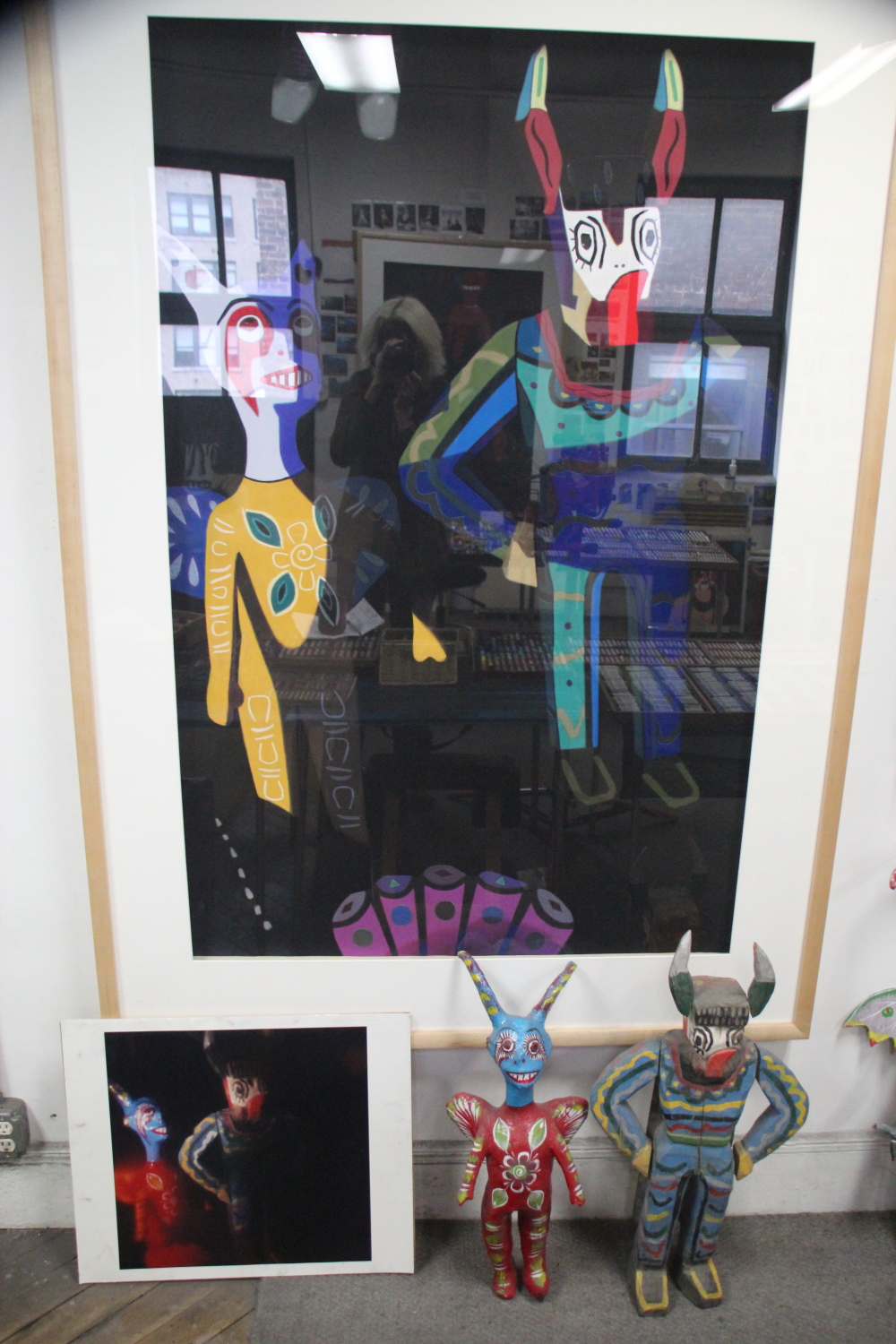
“Quartet” with self-portrait
* an ongoing series of quotations – mostly from artists, to artists – that offers wisdom, inspiration, and advice for the sometimes lonely road we are on.
We artists should not underestimate the importance of the stories we tell ourselves about how our art will make a difference. These motivational fictions describe the ways a work might interact with the world to justify our extravagant, and potentially narcissistic labors: that our art has transformational potential. A work might be understood as being critical of society or sanctuary from it, for instance, or a Trojan horse sent to the enemy as a nasty gift to unsettle their deeply entrenched frames of mind. We need renewable encouragement to make fresh work year after year in the face of uncertain rewards.
David Humphrey quoted in THE ART LIFE: On Creativity and Career by Stuart Horodner
Comments are welcome!


 barbararachkoscoloreddust.com