Blog Archives
Pearls from artists* # 577

In the Studio
*an ongoing series of quotations – mostly from artists, to artists – that offers wisdom, inspiration, and advice for the sometimes lonely road we are on.
What is the popular conception of the artist? Gather a thousand descriptions and the resulting composite is the portrait of a moron: he is held to be childish, irresponsible, and ignorant or stupid in everyday affairs.
The picture does not necessarily involve censure or unkindness. These definitions are attributed to the artist’s preoccupation with his particular kind of fantasy and to the unworldly nature of the fantastic itself. The bantering tolerance granted to the absentminded professor is extended to the artist. Biographers contrast the artless news of his judgments with the high attainment of his art, and while his naïveté or rascality are gossiped about, they are viewed as signs of Simplicity and Inspiration, which are the Handmaidens of Art. And if the artist is inarticulate and lacking in the usual repositories of fact and information, how fortunate, it is said, that nature has contrived to divert him from all worldly distractions so he may be single-minded in regards to his special office.
Mark Rothko in The Artist’s Reality: Philosophies of Art, edited and with an introduction by Christopher Rothko
Comments are welcome!
Q: How do you get such fine detail with soft pastel? Do they make pencil-size pastels? (Question from Lucia Sommer via Facebook)

A: After 37 years as a pastel artist, I have learned all sorts of techniques and can do whatever I want with it. I used regular Rembrandt white pastels for the sweater in “Sam and Bobo,” above.
There are several brands of pastel pencils that are made especially for drawing fine details. Sam’s face, hair, and hands are mostly pastel pencil. (Now I probably would not use pastel pencils as much. These days I only use them to draw lines and sign my name).
Another technique for making fine lines is to break a pastel stick and work with an edge.
Years ago I used to sharpen my pastels into a point with a small handheld sharpener (I still have one that allows me to change the blades). Sometimes I rub a pastel stick against a sandpaper pad until I get a somewhat sharp point. The problem with both of these methods is they waste so much pastel and pastels are not cheap! For example, my favorite French brand is nearly $20 per stick. I would never think of sharpening those!
Comments are welcome!
Pearls from artists* # 567
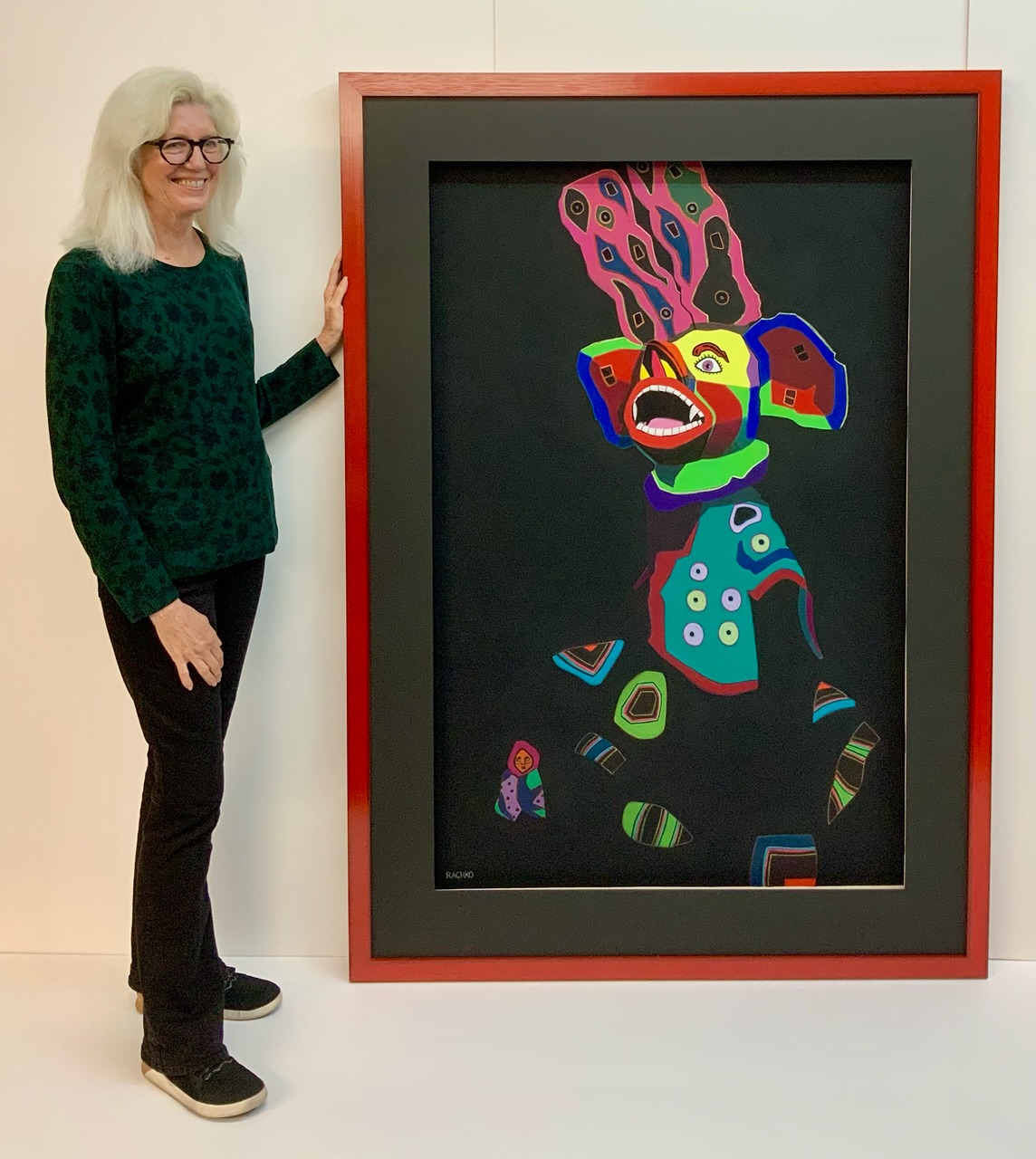
With “Impresario,” 70” x 50” framed, soft pastel on sandpaper
*an ongoing series of quotations – mostly from artists, to artists – that offers wisdom, inspiration, and advice for the sometimes lonely road we are on.
Almost every artist seems to meet someone at the beginning of his career who profoundly and often inexplicably affects later decisions and attitudes, someone whose personal expression is identified with the peculiar glamour of art that hits certain people so hard that they are caught up with it for the rest of their lives.
Mary Gabriel in Ninth Street Women
Comments are welcome!
Q: Why do you work in series?
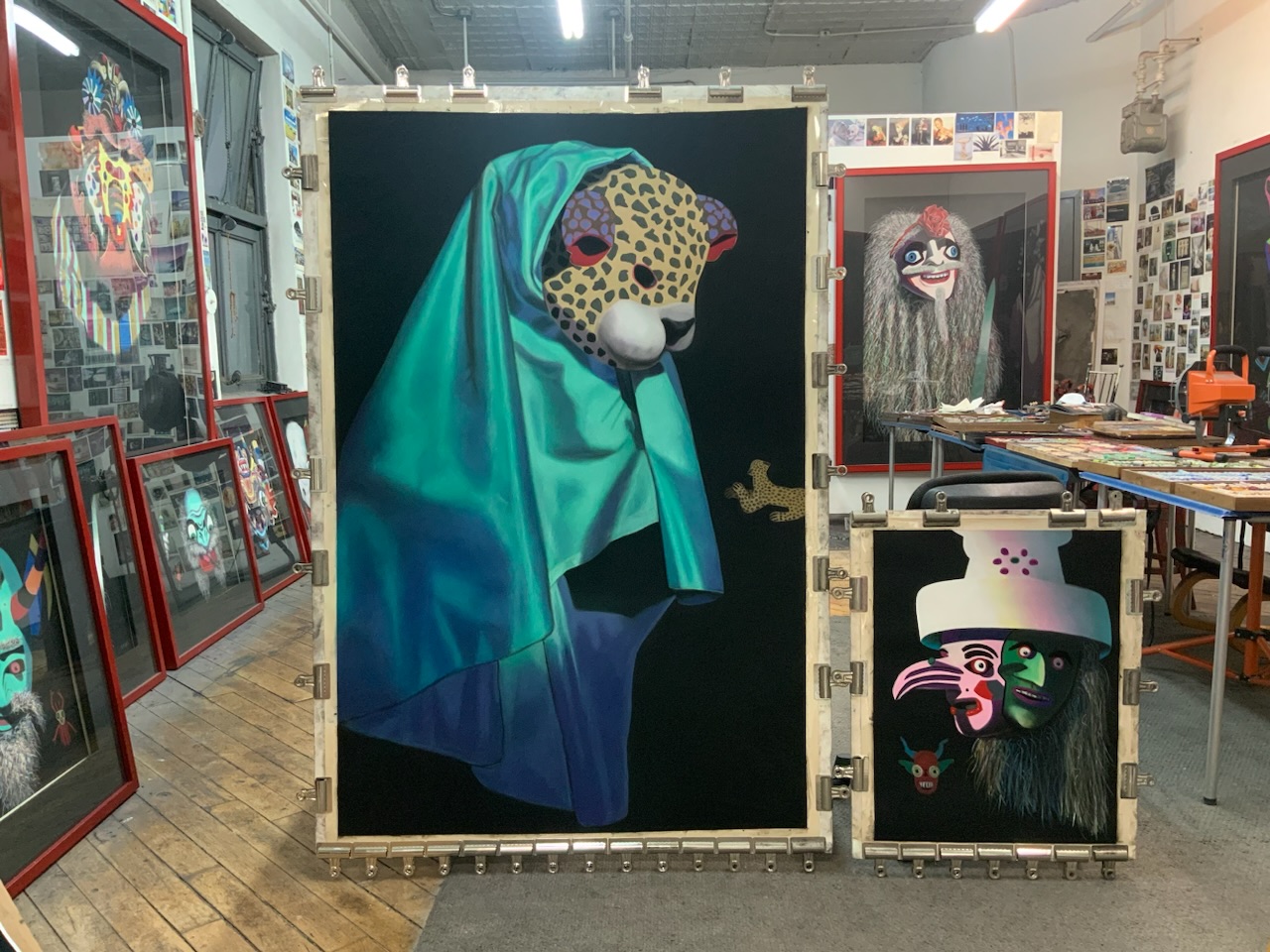
“Bolivianos” paintings in progress and on the walls and floor
A: I don’t really have any choice in the matter. It’s more or less the way I have always worked so it feels natural. Art-making comes from a deep place. In keeping with the aphorism ars longa, vita brevis, it’s a way of making one’s time on earth matter. Working in series mimics the more or less gradual way that our lives unfold, the way we slowly evolve and change over the years. Life-altering events happen, surely, but seldom do we wake up drastically different – in thinking, in behavior, etc. – from what we were the day before. Working in series feels authentic. It helps me eke out every lesson my paintings have to teach. With each completed piece, my ideas progress a step or two further.
I remember going to the Metropolitan Museum to see an exhibition called, “Matisse: In Search of True Painting.” It demonstrated how Matisse worked in series, examining a subject over time and producing multiple paintings of it. Matisse is my favorite artist of any period in history. I never tire of seeing his work and this particular exhibition was very enlightening. As I studied the masterpieces on the wall, I recognized a kindred spirit and thought, “Obviously, working in series was good enough for Matisse!”
Comments are welcome!
Pearls from artists* # 563

*an ongoing series of quotations – mostly from artists, to artists – that offers wisdom, inspiration, and advice for the sometimes lonely road we are on.
[John] Graham defined art as a “process of abstracting” thought and emotion by the use of paint or metal or stone. Because art was therefore intrinsically abstract, the duty of the artist would be to push abstraction “fearlessly to its logical end instead of evading it under the disguises of charm or being ‘true to nature.’” The artist created for society, he said, but if that society didn’t like what he or she had produced, the artist”does not trade his ideals for success. Martyrs and saints love luxury and success just as much as ordinary people, only they love something else even more.” Graham said, if the artist is a true genius, he can expect to be misunderstood and alone. “The beauty of genius is frightful to behold, few can envisage it. Others find subterfuge in scepticism.” The abstract artist, he said, would be repeatedly challenged by such skeptics asking, “‘What does it mean?’… Is it a sky, a house, a horse?’” To which they should respond with confidence and honesty, “‘No, it is a painting.’”
Mary Gabriel in Ninth Street Women
Comments are welcome!
Pearls from artists* # 559

“Sacrificial” soft pastel on sandpaper, 58” x 38” image, 70” x 50” framed
*an ongoing series of quotations – mostly from artists, to artists – that offers wisdom, inspiration, and advice for the sometimes lonely road we are on.
There are two images the spectator gets from every work of art: one while looking at the work, the other – the after-image – while remembering the work… the artist creates the after-image, the painter makes the painting.
Elaine de Kooning quoted in Ninth Street Women by Mary Gabriel
Comments are welcome!
Pearls from artists* # 558
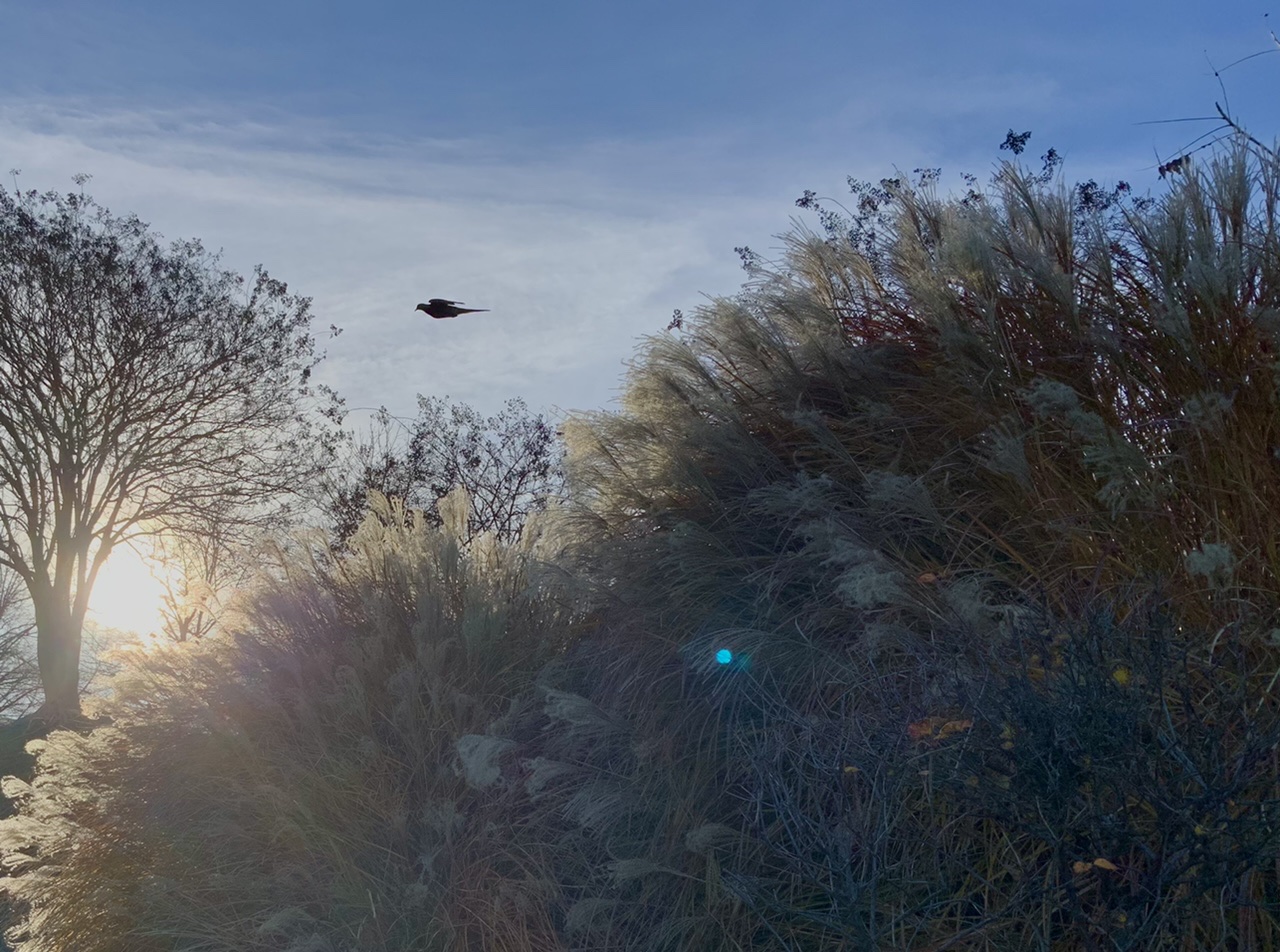
Alexandria, VA
*an ongoing series of quotations – mostly from artists, to artists – that offers wisdom, inspiration, and advice for the sometimes lonely road we are on.
One of the main differences between the young girl who drew a line in chalk from the Metropolitan Museum all the way to her home on Park Avenue and the young woman who drew lines on canvas and paper twenty years later was that the latter understood the willfulness that drove the child. She was facing “the monster,” the consuming need to create, which was beyond her control but no longer beyond her comprehension. Helen [Frankenthaler] had long understood that her gift set her apart, and that it would be nearly impossible to describe how and why without sounding arrogant or cruel. “It’s saying I’m different, I’m special, consider me differently,” she explained years later. “And it’s also on the other side, a recognition that one is lonely, that one is not run of the mill, that the values are different, and yet we all go into the same supermarkets… and we all are moved one way or the other by children and seasons, and dreams. So the art separates you.”
The separation she described was not merely the result of what one did, whether it be painting or sculpting or writing poetry. Helen said the distance between an artist and society was due to a quality both tangible and intangible and intrinsic, a “spiritual” or “magical” aspect that nonartists did not always understand and were sometimes frightened by. “They want you to behave a certain way. They want you to explain what you do and why you do it. Or they want you removed, either put on a pedestal or victimized. They can’t handle it.” Helen concluded that existing outside so-called normal life was simply the price an artist paid to create.
Mary Gabriel in Ninth Street Women
Comments are welcome!
Pearls from artists* # 556
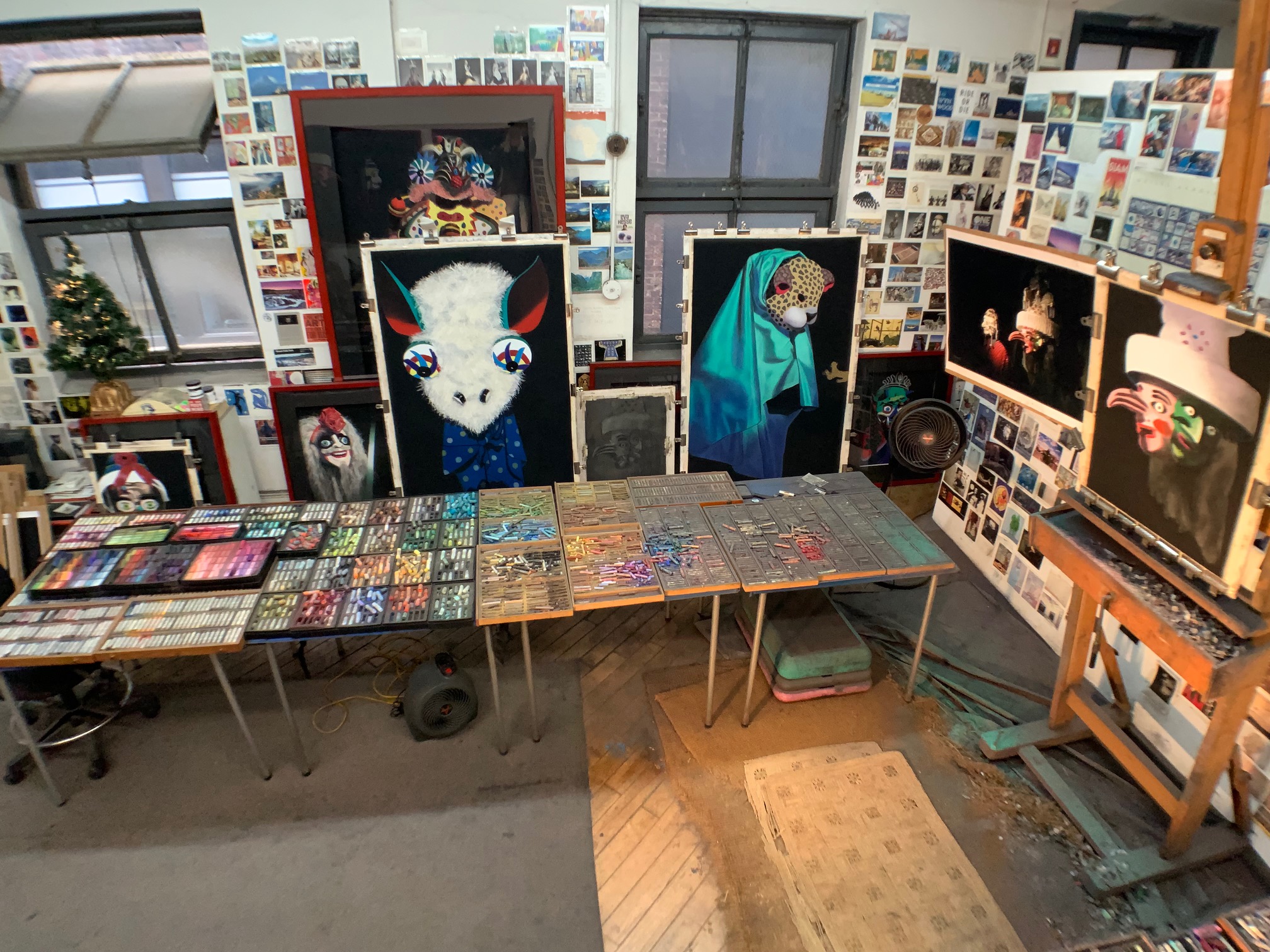
Barbara’s Studio
*an ongoing series of quotations – mostly from artists, to artists – that offers wisdom, inspiration, and advice for the sometimes lonely road we are on.
The painter Paul Klee exclaimed in his diary, “Am I God? I have accumulated so many great things in me!” But we also remember these other words of Klee… “He who strives will never enjoy this life peacefully.” The lucky artist may be the one who, while in human measure a god, has nevertheless found satisfactory ways of escaping the relentless firing of his synapses.
Eric Maisel in A Life in the Arts: Practical Guidance and Inspiration for Creative and Performing Artists
Comments are welcome!
Q: It must be tricky moving pastel paintings from your New York studio to your framer in Virginia. Can you explain what’s involved? (Question from Ni Zhu via Instagram)
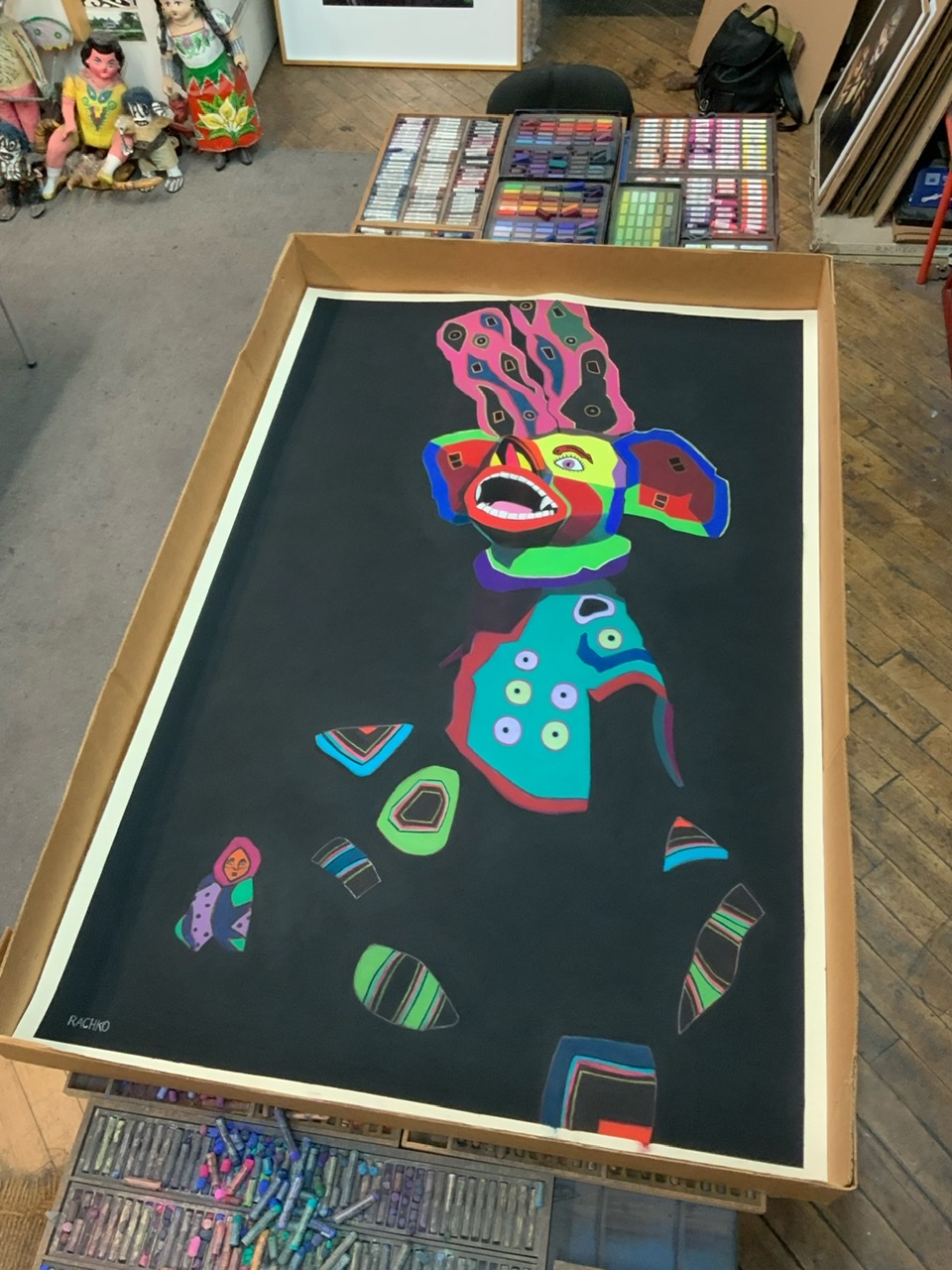
“Impresario” partially boxed for transport to Virginia
A: Well, I have been working with the same framer for three decades so I am used to the process.
Once my photographer photographs a finished, unframed piece, I carefully remove it from the 60” x 40” piece of foam core to which it has been attached (with bulldog clips) during the months I worked on it. I carefully slide the painting into a large covered box for transport. Sometimes I photograph it in the box before I put the cover on (see above).
My studio is in a busy part of Manhattan where only commercial vehicles are allowed to park, except on Sundays. Early on a Sunday morning, I pick up my 1993 Ford F-150 truck from Pier 40 (a parking garage on the Hudson River at the end of Houston Street) and drive to my building’s freight elevator. I try to park relatively close by. On Sundays the gate to the freight elevator is closed and locked so I enter the building around the corner via the main entrance. I unlock my studio, retrieve the boxed painting, bring it to the freight elevator, and buzz for the operator. He answers and I bring the painting down to my truck. Then I load it into the back of my truck for transport to my apartment.
I drive downtown to the West Village, where I live, and double park my truck. (It’s generally impossible to park on my block). I hurry to unload the painting, bring it into my building, and up to my apartment, all the while hoping I do not get a parking ticket. The painting will be stored in my apartment, away from extreme cold or heat, until I’m ready to drive to Virginia. On the day I go to Virginia, I load it back into my truck. Then I make the roughly 5-hour drive south.
Who ever said being an artist is easy was lying!
Comments are welcome!
Pearls from artists* # 551

Barbara’s Studio
*an ongoing series of quotations – mostly from artists, to artists – that offers wisdom, inspiration, and advice for the sometimes lonely road we are on.
A creative process is a philosophical search, shaped by matters of practice and procedure that extend from the first touch of the artist’s pencil, brush, or chisel to the final decisions about what constitutes completeness.
Stylistic particularism – the decision as to what kind of abstract or representational artist you’re going to be – shapes, deepens, and extends the artist’s imaginative powers. Most artists who work for many years see their style evolve, sometimes dramatically. In the 1930s and 1940s Giacometti, who had first been admired for Surrealist sculptures in which representational elements are set in essentially abstract structures, found himself increasingly focused on the direct observation of the human figure. What by the mid-1940s could look like a wholesale transformation of his artistic language was the result of individual decisions all of which, during Giacometti’s career of nearly five decades, interlocked. They reinforced one another. They added up.
Between Abstraction and Representation by Jed Perl in The New York Review of Books, November 24, 2022
Comments are welcome!


 barbararachkoscoloreddust.com