Blog Archives
Pearls from artists* # 507

* an ongoing series of quotations – mostly from artists to artists – that offers wisdom, inspiration, and advice for the sometimes lonely road we are on.
Intellectual work sometimes, spiritual work certainly, artistic work always – these are forces that fall within its [uncertainty and the unknown] grasp, forces that must travel beyond the realm of the hour and the restraint of the habit. Nor can the actual work be well separated from the entire life. Like the Knights of the Middle Ages, there is little the creatively inclined person can do but prepare himself, body and spirit, for the labor to come – for his adventures are all unknown. And no artist could go about his work, or would want to, with less than extraordinary energy and concentration. The extraordinary is what art is about.
Mary Oliver in Upstream: Selected Essays
Comments are welcome!
Pearls from artists* # 504

* an ongoing series of quotations – mostly from artists, to artists – that offers wisdom, inspiration, and advice for the sometimes lonely road we are on.
… if a project doesn’t work out, you can always think of it as having been a worthwhile and constructive experiment. You can resist the seductions of grandiosity, blame, and shame. You can support other people in their creative efforts, acknowledge the truth that there’s plenty of room for everyone. You can measure your worth by your dedication to your path, not by your successes or failure. You can battle your demons (through therapy, recovery, prayer, or humility) instead of battling your gifts – in part by realizing that your demons were never the ones doing the work, anyhow. You can believe that you are neither a slave to inspiration nor its master, but something far more interesting – its partner – and that the two of you are working together toward something intriguing and worthwhile. You can live a long life, moving and doing really cool things the entire time. You might earn a living with your pursuits or you might not, but you can recognize that this is not really the point. And at the end of your days, you can thank creativity for having blessed you with a charmed, interesting, passionate existence.
Elizabeth Gilbert in Big Magic: Creative Living Beyond Fear
Comments are welcome!
Pearls from artists* # 502

* an ongoing series of quotations – mostly from artists, to artists – that offers wisdom, inspiration, and advice for the sometimes lonely road we are on.
It seems to me that the less I fight my fear, the less it fights back. If I can relax, then fear relaxes, too. I cordially invite fear to come along with me everywhere I go. I even have a welcoming speech prepared for fear, which I deliver right before embarking upon any new project or adventure.
It goes something like this.
“Dearest fear: Creativity and I are about to go on a road trip together. I understand you will be joining us, because you always do. I acknowledge that you believe you have an important job to do in my life, and that you take your job seriously. Apparently, your job is to induce complete panic whenever I’m about to do something interesting – and may I say, you are superb at your job. So, by all means, keep doing your job, if you feel you must. But I will also be doing my job on this road trip, which is to work hard and stay focused. And Creativity will be doing its job, which is to remain stimulating and inspiring. There’s plenty of room in this vehicle for all of us, so make yourself at home, but understand this: Creativity and I are the only ones who will be making any decisions along the way. I recognize and respect that you are part of this family, and so I will never exclude you from our activities, but still – your suggestions will never be followed. You’re allowed to have a seat, and you’re allowed to have a voice, but you are not allowed to have a vote. You’re not allowed to touch the road maps; you’re not allowed to suggest detours; you’re not allowed to fiddle with the temperature. Dude, you’re not even allowed to touch the radio. But above all else, my dear old familiar friend, you are absolutely forbidden to drive.”
Then we head off together – me and creativity and fear – side by side by side forever, advancing once more into the terrifying but marvelous terrain of unknown outcome.
Elizabeth Gilbert in Big Magic: Creative Living Beyond Fear
Comments are welcome!
Pearls from artists* # 499

*an ongoing series of quotations – mostly from artists, to artists – that offers wisdom, inspiration, and advice for the sometimes lonely road we are on.
Life is a journey back to where you started from, Le Guin always said. True voyage is return. When you get there, you might know a little more than when you began.
Isn’t the real question this: Is the work worth doing? Am I, a human being, working for what I really need and want – or for what the State or the advertisers tell me I want? Do I choose? I think that’s what anarchism comes down to. Do I let my choices be made for me, and so go along with the power game, or do I choose? In other words, am I going to be a machine-part, or a human being?
Ursula K. Le Guin: The Last Interview and Other Conversations edited and with an introduction by David Streitfeld
Comments are welcome!

Q: What makes you drawn to face masks?

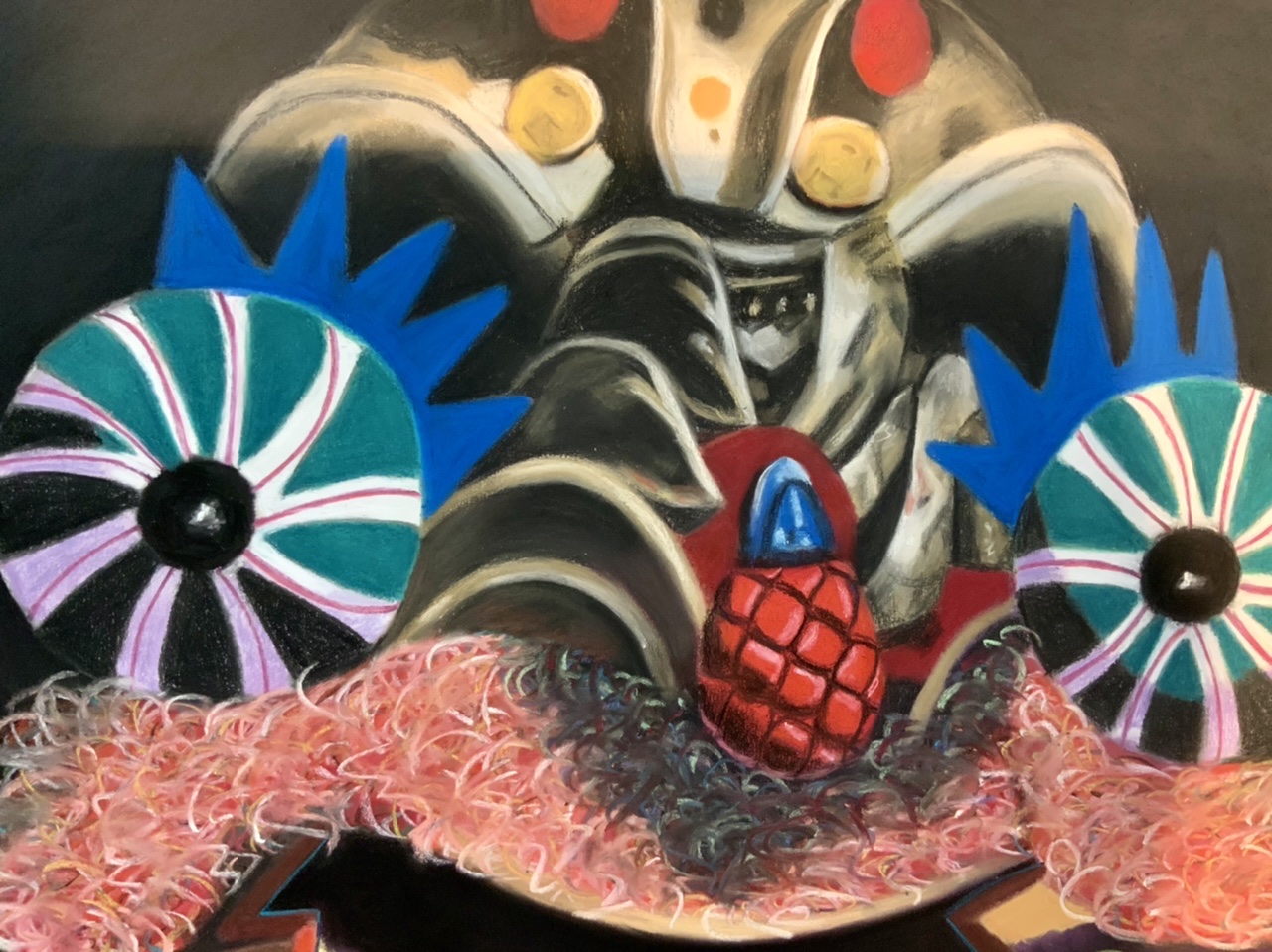
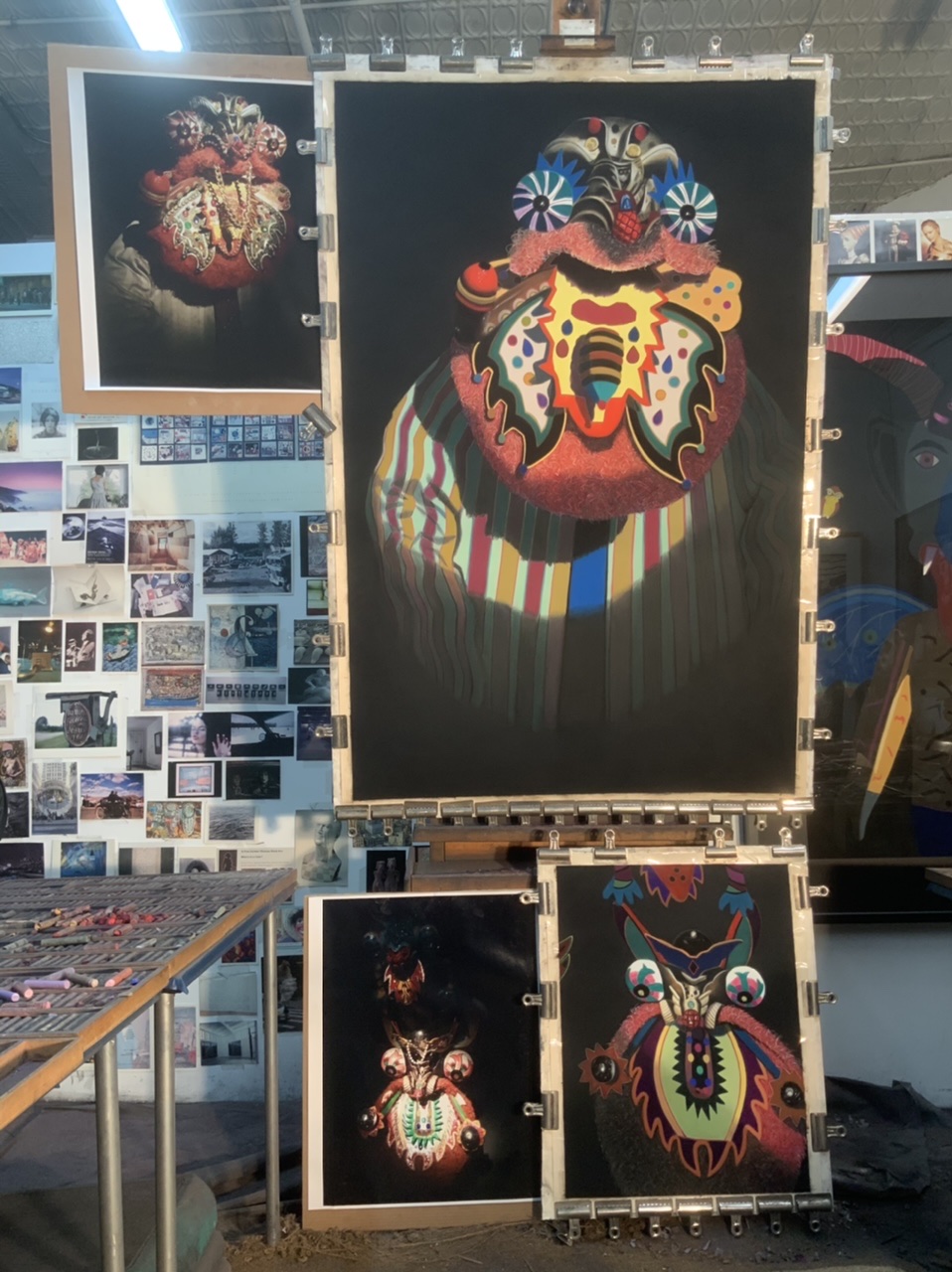
A: For me a mask is so much more than a mask. It is almost a living thing with its own soul and with a unique history. I always wonder, who created this mask? For what purpose? Where has it been? What stories would it tell if it could? In my current “Bolivianos” series I feel as though I am creating portraits of living, or perhaps once living, beings.
In a way the masks are a pretext for a return to my early days as an artist. When I resigned my Naval commission to pursue art full time, I started out as a photo-realist portrait painter. The twist is that this time I do not have to satisfy a client’s request to make my subjects look younger or more handsome. I am joyfully free to respond only to the needs of the pastel painting before me on the easel.
Comments are welcome!
Q: Why do you make a preliminary drawing before you begin a pastel painting?

A: I make a preliminary charcoal drawing because that’s how I like to begin thinking about and planning a new pastel painting. I always make preliminary drawings the same size as the upcoming pastel painting. While I draw, I make decisions about the overall composition, decide where the major light and dark shapes will be, and envision the likely problem areas that lie ahead. These drawings are done quickly. I spend perhaps an hour on them.
Once the drawing is in my head I no longer need it. So I put it away and when it’s time to begin a subsequent pastel painting, I erase it. I wipe it out with a paper towel and make the next preliminary charcoal drawing directly on top. These are ephemeral tools, existing only for as long as I need them.
Comments are welcome!
Pearls from artists* # 463
*an ongoing series of quotations – mostly from artists, to artists – that offers wisdom, inspiration, and advice for the sometimes lonely road we are on.
When in doubt, when you are lost, don’t stop. Instead, concentrate on detail. Look around, find a detail to concentrate on and do that. Forget the big picture for a while. Just put your energy into the details of what is already there. The big picture will eventually open up and reveal itself if you can stay out of the way for a while. It won’t open up if you stop. You have to stay involved but you don’t always have to stay involved with the big picture.
While paying attention to the details and welcoming insecurity, while walking the tightrope between control and chaos and using accidents, while allowing yourself to go off balance and going through the back door, while creating the circumstances in which something might happen and being ready for the leap, while not hiding and being ready to stop doing homework, something is bound to happen. And it will probably be appropriately embarrassing.
Anne Bogart in A Director Prepares: Seven Essays on Art and Theatre
Comments are welcome!
Pearls from artists* # 461

*an ongoing series of quotations – mostly from artists, to artists – that offers wisdom, inspiration, and advice for the sometimes lonely road we are on.
I must not eat much in the evening, and I must work alone. I think that going into society from time to time, or just going out and seeing people, does not do much harm to one’s work and spiritual progress, in spite of what many so-called artists say to the contrary. Associating with people of that kind is far more dangerous; their conversation is always commonplace. I must go back to being alone. Moreover, I must try to live austerely, as Plato did. How can one keep one’s enthusiasm concentrated on a subject when one is always at the mercy of other people and in constant need of their society? Dufresne was perfectly right; the things we experience for ourselves when we are alone are much stronger and much fresher. However pleasant it may be to communicate one’s emotion to a friend there are too many fine shades of feeling to be explained, and although each probably perceives them, he does so in his own way and thus the impression is weakened for both. Since Dufresne has advised me to go to Italy alone, and to live alone once I am settled there, and since I, myself, see the need for it, why not begin now to become accustomed to the life; all the reforms I desire will spring from that? My memory will return, and so will my presence of mind, and my sense of order.
The Journal of Eugene Delacroix edited by Hubert Wellington
Comments are welcome!
Pearls from artists* # 460
*an ongoing series of quotations – mostly from artists, to artists – that offers wisdom, inspiration, and advice for the sometimes lonely road we are on.
Precious realm of painting! That silent power that speaks at first only to the eyes and then seizes and captivates every faculty of the soul! Here is your real spirit; here is your own true beauty, beautiful painting, so much insulted, so much misunderstood and delivered up to fools who exploit you. But there are still hearts ready to welcome you devoutly, souls who will no more be satisfied with mere phrases than with inventions and clever artifices. You have only to be seen in your masculine and simple vigor to give pleasure that is pure and absolute. I confess that I have worked logically, I, who have no love for logical painting. I see now that my turbulent mind needs activity, that it must break out and try a hundred different ways before reaching the goal towards which I am always straining. There is an old leaven working in me, some black depth that must be appeased. Unless I am writhing like a serpent in the coils of a pythoness I am cold. I must recognize this and accept it, and to do so is the greatest happiness. Everything good that I have ever done has come about in this way. No more ‘Don Quixotes’ and such unworthy things!
The Journal of Eugene Delacroix edited by Hubert Wellington
Comments are welcome!


 barbararachkoscoloreddust.com