Travel photo* of the month

Jodhpur, Rajasthan, India
* Favorite travel photos that have not yet appeared in this blog.
Comments are welcome!
Pearls from artists* # 393
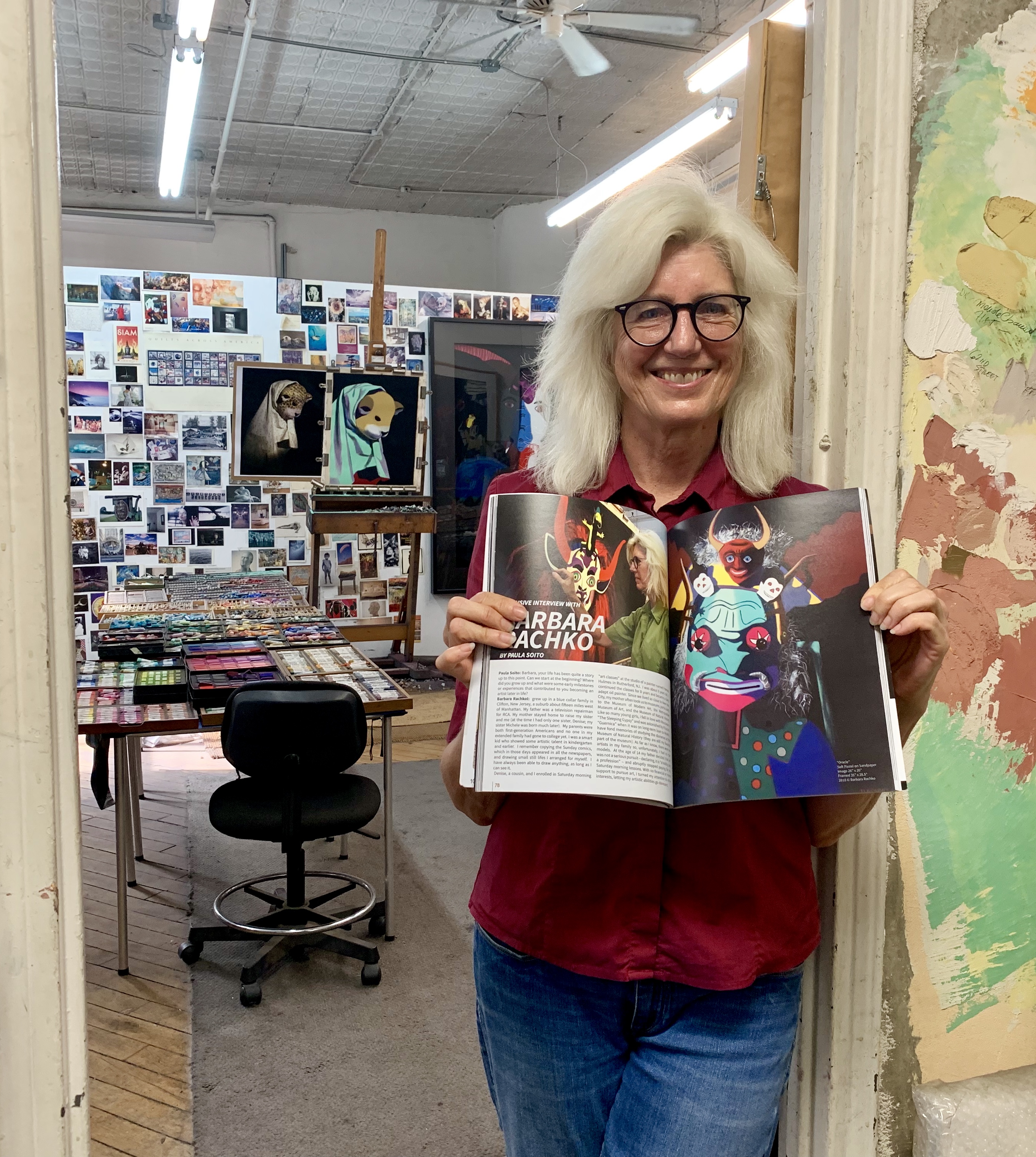
With my favorite interview
* an ongoing series of quotations – mostly from artists, to artists – that offers wisdom, inspiration, and advice for the sometimes lonely road we are on.
… Fernhoffer’s a man in love with our art, a man who sees higher and farther than other painters. He’s meditated on the nature of color, on the absolute truth of line, but by dint of so much research, he has come to doubt the very object of his investigations. In moments of despair, he claims that drawing doesn’t exist and that lines are only good for rendering geometrical figures, which is far from the truth, since with line and with black, which is not a color, we can create a human figure. There’s your proof that our art is like nature itself, composed of an infinity of elements: drawing accounts for the skeleton, color supplies life, but life without a skeleton is even more deficient than a skeleton without life. Lastly, there’s something even truer than all this, which is that practice and observation are everything to a painter; so that if reasoning and poetry argue with our brushes, we wind up in doubt, like our old man here, who’s as much a lunatic as he is a painter — a sublime painter who had the misfortune to be born into wealth, which has allowed him to wander far and wide. Don’t do that to yourself! A painter should philosophize only with a brush in his hand!
Honore Balzac in The Unknown Masterpiece
Comments are welcome!
Q: What’s on the easel today?
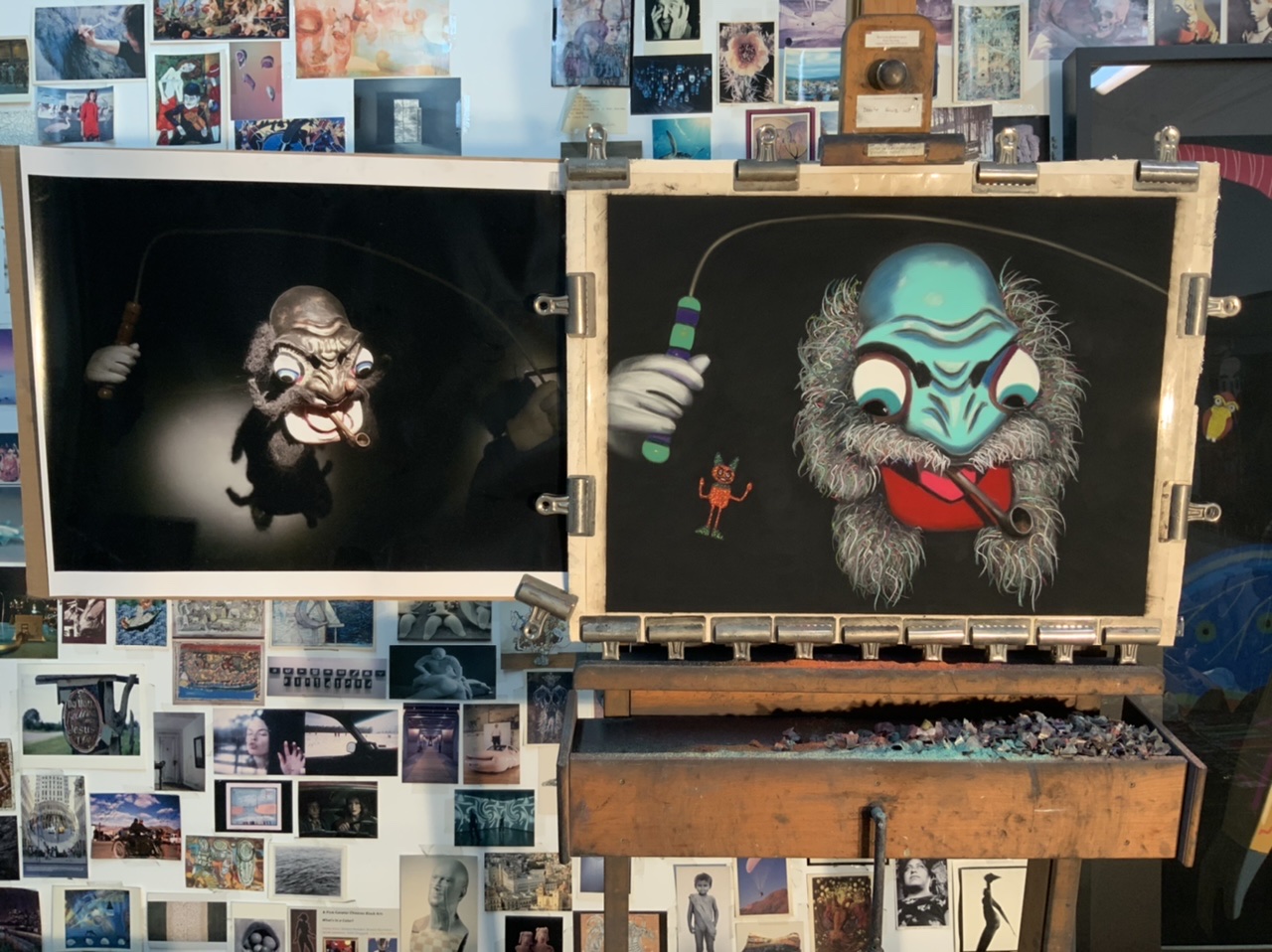
Work in progress
A: “Majordomo,” 20” x 26,” soft pastel on sandpaper, is coming along. After today’s studio session, I will put it aside and add finishing details when I am able to see it fresh again. I‘ve been looking at this piece too long to know what else it needs now.
Comments are welcome!
Pearls from artists* # 392
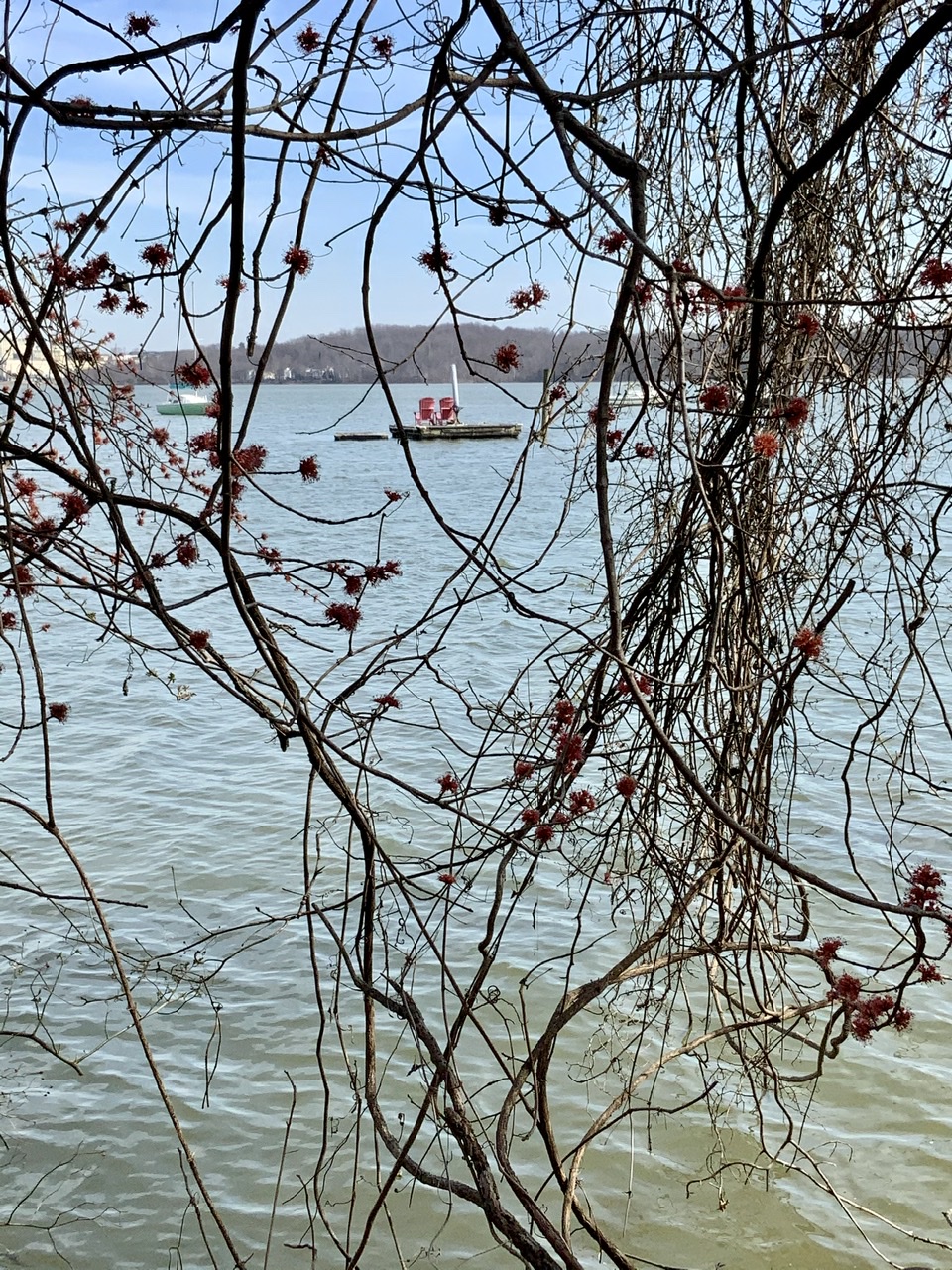
A place to read, Alexandria, VA
*an ongoing series of quotations – mostly from artists, to artists – that offers wisdom, inspiration, and advice for the sometimes lonely road we are on.
Dear Person,
Why read?
Because you only have one life but reading gives you many lives. Because you only have one personality but when you read a book you can be inside another mind and heart. Because experiencing elegance of language is one of the greatest pleasures of consciousness. Reading lets you be quiet in a chaotic world and commune with amazing people who may happen to be dead now, so not too easy to connect with otherwise. Reading startles you. Reading upsets you. Reading takes apart your world and expectations and rearranges them. Imagine the last few years without the books you have loved – it would be a much flatter, sadder experience of living. We read as a form of faith.
Naomi Wolf
A Velocity of Being: Letters to a Young Reader edited by Maria Popova and Claudia Bedrick
Comments are welcome!
Q: You have worked with twenty-plus galleries during your career. Which ones do you consider the best?

“Myth Meets Dream,” 1993, soft pastel on sandpaper, the earliest painting that includes Mexican figures
A: Probably the most prestigious gallery that represented my work was Brewster Fine Arts on West 57th Street in Manhattan. Brewster was my first New York gallery. In the summer of 1996 I mailed the gallery a sheet of slides, as we did in those days. I was living in Virginia and had been a working artist for ten years. In July while traveling around Mexico, I decided to check the phone messages at home in Virginia. I was thrilled to receive an invitation from Mia Kim, the gallery director, to exhibit pastel paintings in October! And she had not yet even seen my work in person.
Beginning that fall, I gained representation with Brewster Fine Arts, an elegant gallery specializing in Latin American Masters like Rufino Tamayo, Diego Rivera, and others. I am not Latina, of course, but I showed there due to my subject matter. At my October opening, I remember Mia declaring to the attendees, “Barbara has the soul of a Latina!” That night I met fellow gallery artist Leonora Carrington. She and I were the only non-Latina artists respresented. I knew I was on my way!
The gallery continued to present my work in group exhibitions and the staff gave brilliant talks about me and my creative process. For many years whenever I introduced myself to a new art aficionado, they already knew my work from having seen it at Brewster. I continued to be represented there until the gallery closed years later.
Also, Gallery Bergelli in Larkspur, CA did an excellent job of representing my work. I applied for one of their juried exhibitions, was accepted, and afterwards, they offered permanent representation. Soon they introduced me to one of my best collectors, with whom I am still friends.
I have worked with many galleries, some good, some not, for various reasons. Ours is an extremely tough business. Unfortunately, many of the best and formerly-great galleries are gone forever.
Comments are welcome!
Pearls from artists* # 391

“Schemer,” Soft Pastel on Sandpaper, 26” x 20,” packed up for transport to the framer
*an ongoing series of quotations – mostly from artists, to artists – that offers wisdom, inspiration, and advice for the sometimes lonely road we are on.
Charles Baudelaire once wrote that the frenzy of the artist
is the fear of not going fast enough, of letting the phantom escape before the synthesis has been extracted and pinned down; it is that terrible fear which takes possession of all great artists and gives them such a passionate desire to become masters of every means of expression so that the orders of the brain may never be perverted by the hesitations of the hand and that finally… ideal execution, may become as unconscious and spontaneous as is digestion for a healthy man after dinner.
Mary Gabriel in Ninth Street Women
Comments are welcome!
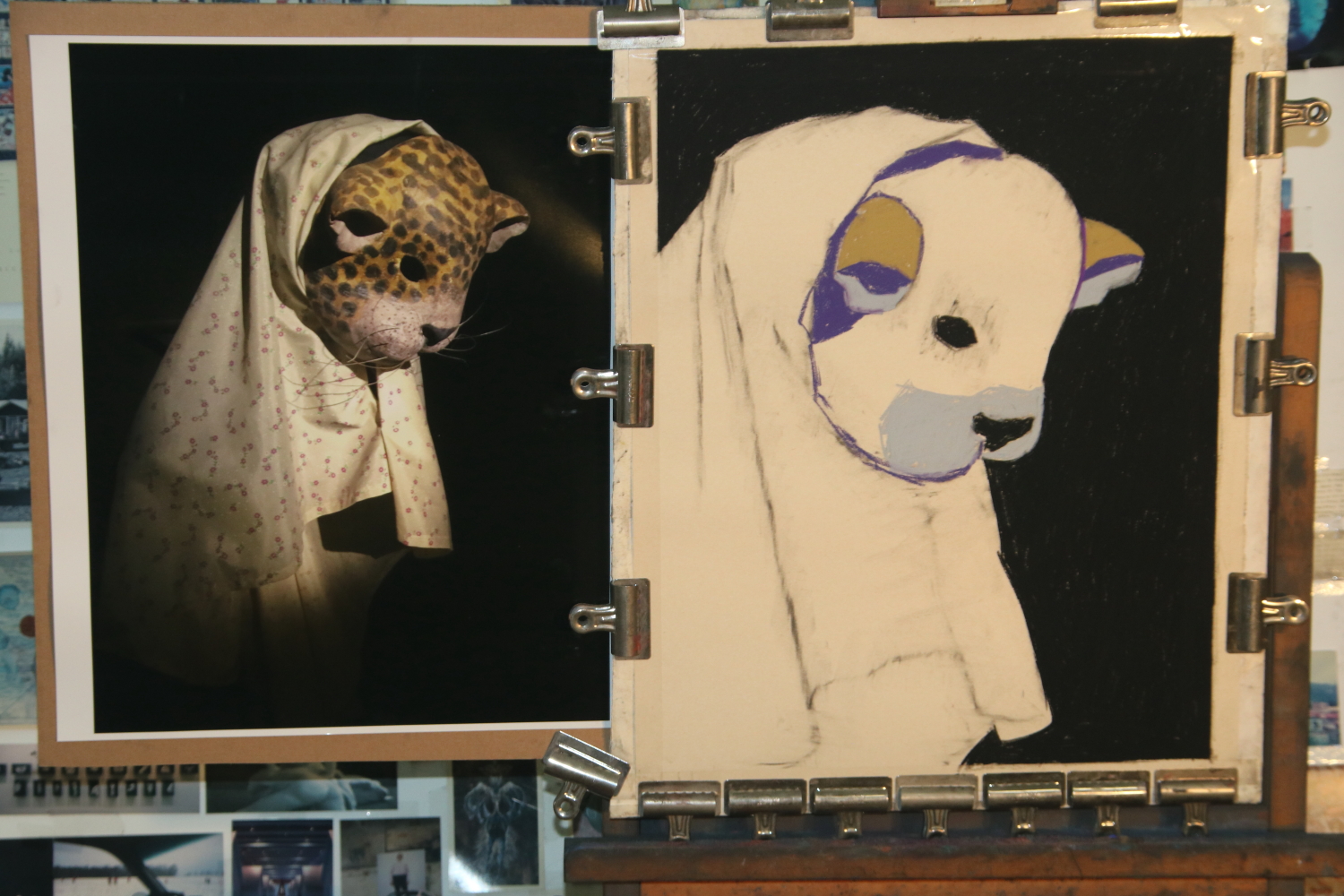
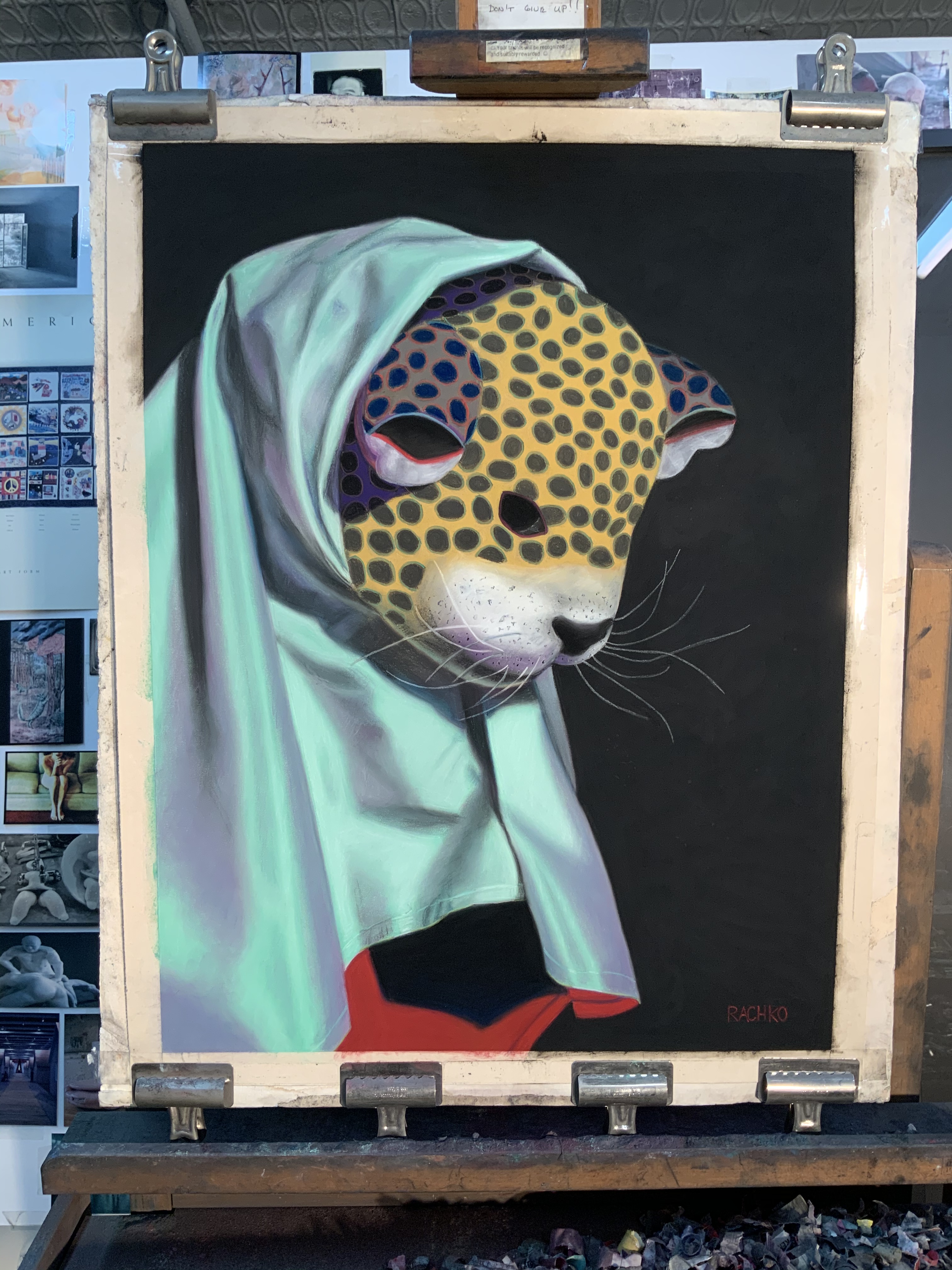
Pearls from artists* # 390
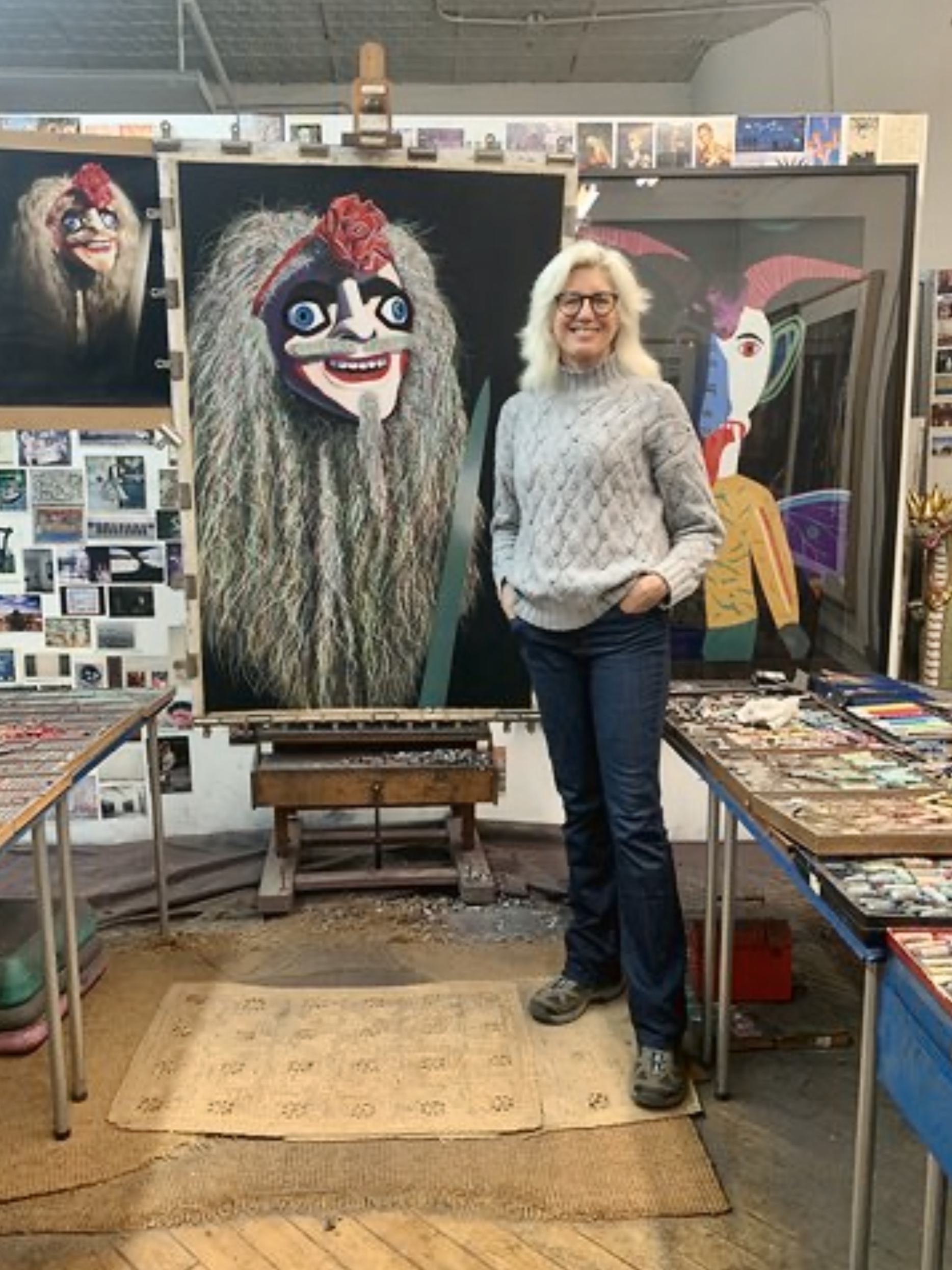
In the studio. Photo: Izzy Nova
*an ongoing series of quotations – mostly from artists, to artists – that offers wisdom, inspiration, and advice for the sometimes lonely road we are on.
What made their work so unique and brilliant was that intangible element – self. Great painting, great art in general, is not about materials used or methods mastered or even talent possessed. It is a combination of all of these factors, and an individual driven by a force that seems outside them, toward expression of an idea they often do not understand.
Mary Gabriel in Ninth Street Women
Comments are welcome!
Travel photo* of the month
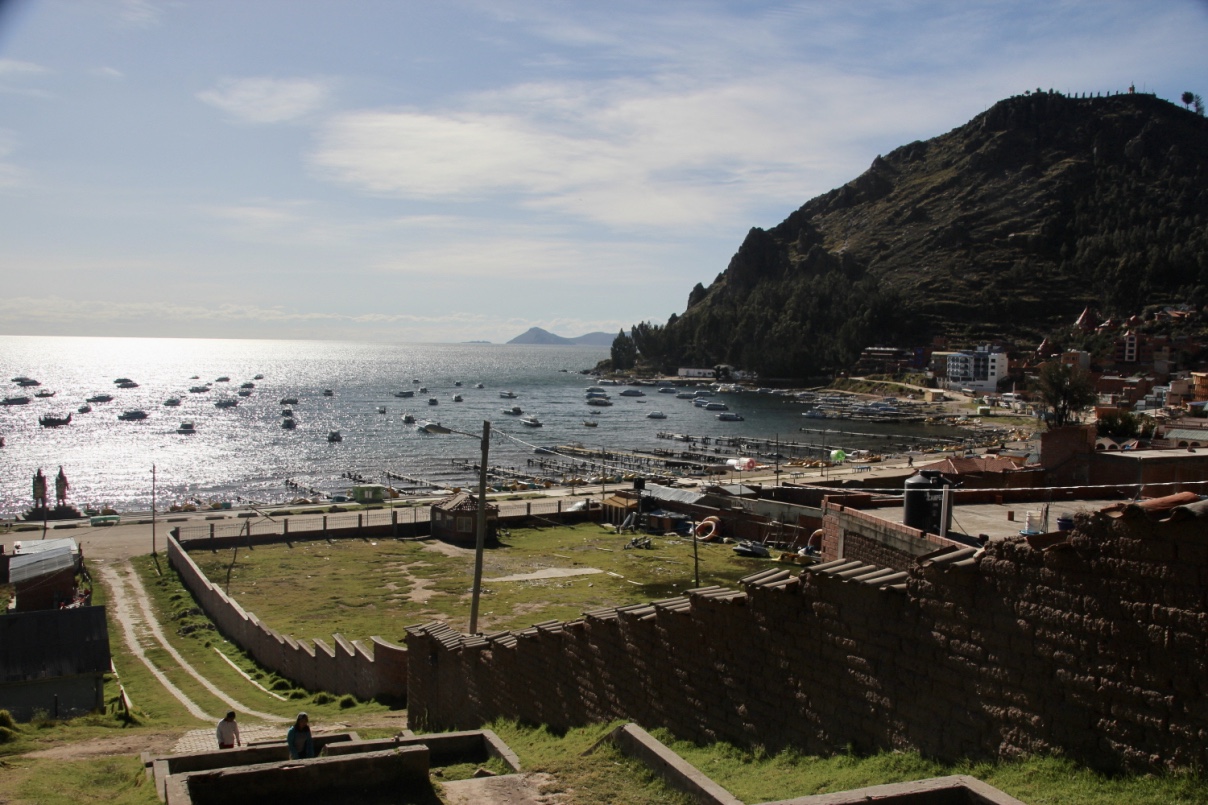
Copacabana, Bolivia
* Favorite travel photos that have not yet appeared in this blog.
Comments are welcome!
Pearls from artists* # 389

Henri Roche pastels: nine trays (four at the top, five on the bottom).
* an ongoing series of quotations – mostly from artists, to artists – that offers wisdom, inspiration, and advice for the sometimes lonely road we are on.
Color vision must be universal. The human eye and brain work the same way for nearly all people as a property of their being human – determining that we all see blue. But the color lexicon, meaning not merely the particular words but also the specific chromatic space they are said to mark, clearly has been shaped by the particularities of culture. Since the spectrum of visible colors is a seamless continuum, where one color is thought to stop and another begun is arbitrary. The lexical discrimination of particular segments is conventional rather than natural. Physiology determines what we see; culture determines how we name, describe, and understand it. The sensation of color is physical; the perception of color is cultural.
David Scott Kastan in On Color
Comments are welcome



