Category Archives: Travel
Pearls from artists* # 243
Self portrait, White Sands, NM
* an ongoing series of quotations – mostly from artists, to artists – that offers wisdom, inspiration, and advice for the sometimes lonely road we are on.
Art is not a making-oneself-understood but an urgent understanding-of-oneself. The closer you get in your most intimate and solitary contemplation or imagination (vision), the more has been achieved, even if no one else were to understand it.
The Poet’s Guide to Life: The Wisdom of Rilke, edited and translated by Ulrich Baer
Comments are welcome!
Pearls from artists* # 212
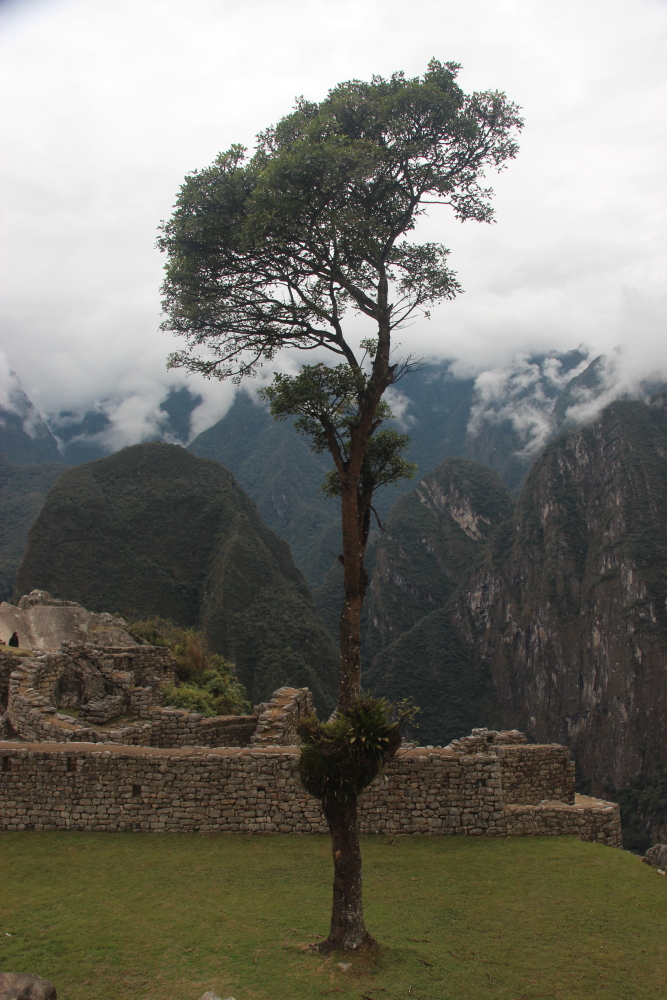
Machu Picchu
* an ongoing series of quotations – mostly from artists, to artists – that offers wisdom, inspiration, and advice for the sometimes lonely road we are on.
… the anthropologist Ellen Disanayake… in Homo Aestheticus, argues that art and aesthetic interest belong with rituals and festivals – offshoots of the human need to ‘make special,’ to extract objects, events, and human relations from everyday uses and to make them a focus of collective attention. This ‘making special’ enhances group cohesion and also leads people to treat those things which really matter for the survival of community – be it marriage or weapons, funerals, or offices – as things of public note, with an aura that protects them from careless disregard and emotional erosion. The deeply engrained need to ‘make special’ is explained by the advantage that it has conferred on human communities, holding them together in times of threat, and furthering their reproductive confidence in times of peaceful flourishing.
Beauty: A Very Short Introduction, by Roger Scruton
Comments are welcome!
Pearls from artists* # 210
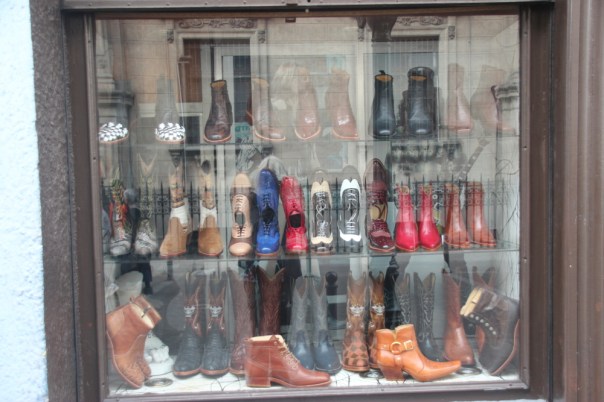
Lima, Peru (with self-portrait)
* an ongoing series of quotations – mostly from artists, to artists – that offers wisdom, inspiration, and advice for the sometimes lonely road we are on.
Much that is said about beauty and its importance in our lives ignores the minimal beauty of an unpretentious street, a nice pair of shoes or a tasteful piece of wrapping paper, as though these things belonged to a different order of value from a church by Bramante or a Shakespeare sonnet. Yet these minimal beauties are far more important to our daily lives, and far more intricately involved in our own rational decisions, than the great works which (if we are lucky) occupy our leisure hours. They are part of the context in which we live our lives, and our desire for harmony, fittingness and civility expressed and confirmed in them. Moreover, the great works of architecture often depend for their beauty on the humble context that these lesser beauties provide. Longhena’s church on the Grand Canal would lose its confident and invocatory presence, were the modest buildings which nestle in its shadow to be replaced with cast-concrete office blocks, of the kind that ruin the aspect of St. Paul’s.
Beauty: A Very Short Introduction, by Roger Scruton
Comments are welcome!
Q: What significance do the folk art figures that you collect during your travels have for you?

Barbara’s studio
A: I am drawn to each figure because it possesses a powerful presence that resonates with me. I am not sure exactly how or why, but I know each piece I collect has lessons to teach.
Who made this thing? How? Why? Where? When? I feel connected to each object’s creator and curiosity leads me to become a detective and an archaeologist to find out more about them and to figure out how to best use them in my work.
The best way I can describe it: after nearly three decades of seeking out, collecting, and using these folk art figures as symbols in my work, the entire process has become a rich personal journey towards gaining greater knowledge and wisdom.
Comments are welcome!
Pearls from artists* # 205
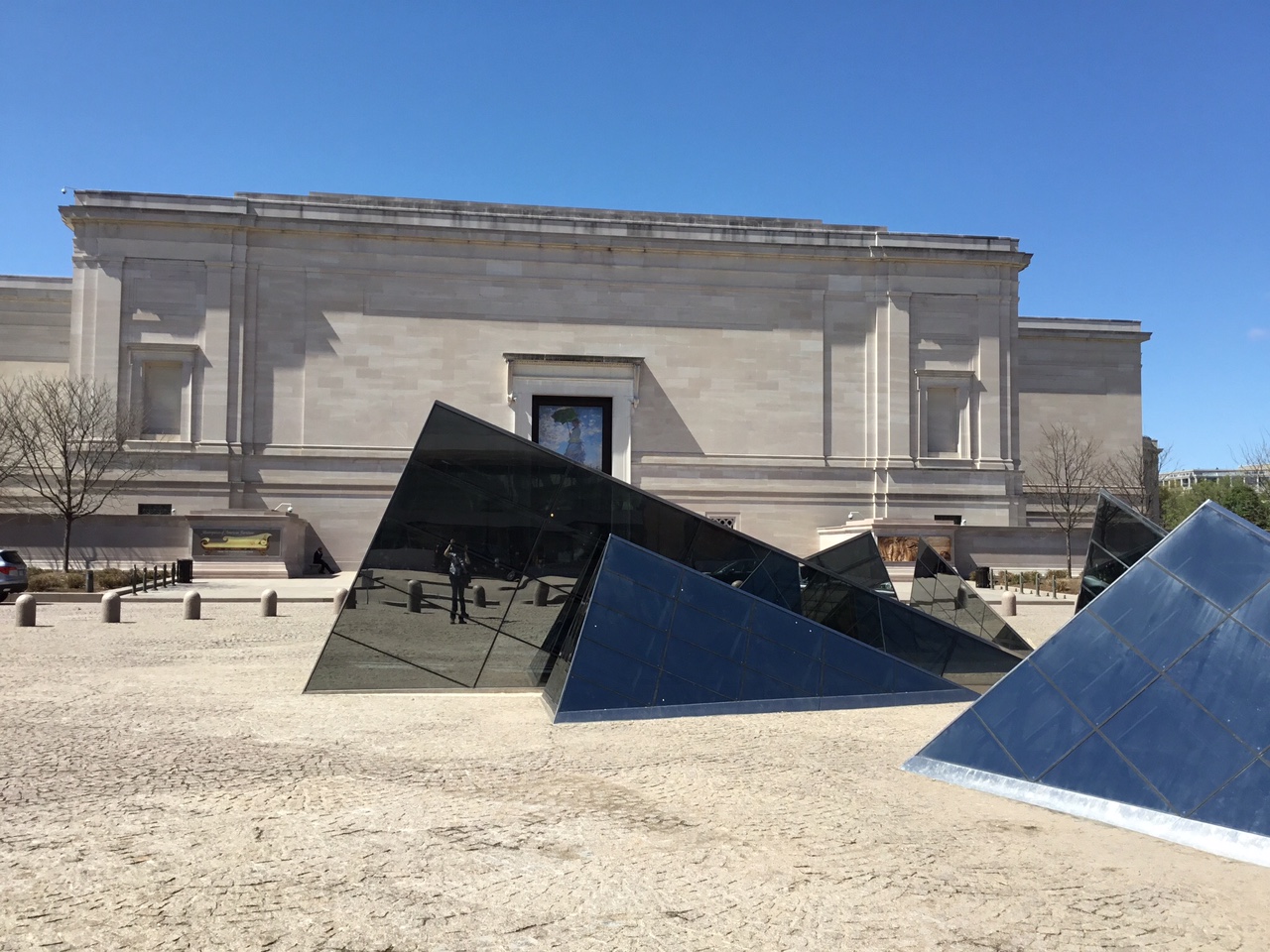
National Gallery of Art with self-portrait
* an ongoing series of quotations – mostly from artists, to artists – that offers wisdom, inspiration, and advice for the sometimes lonely road we are on.
Museums empower people when they are patrons for artists and thinkers; when they amplify civic discourse, accelerate cultural change and contribute to cultural intelligence among the great diversity of city dwellers, visitors, policy makers and leaders… Museums present beautiful, accessible and meaningful spaces in which communities and individuals can meet, exchange ideas and solve problems.
David J. Skorton, Director of the Smithsonian Institution in “What Do We Value?” Museum, May/June 2016
Comments are welcome!
Q: What’s on the easel today?
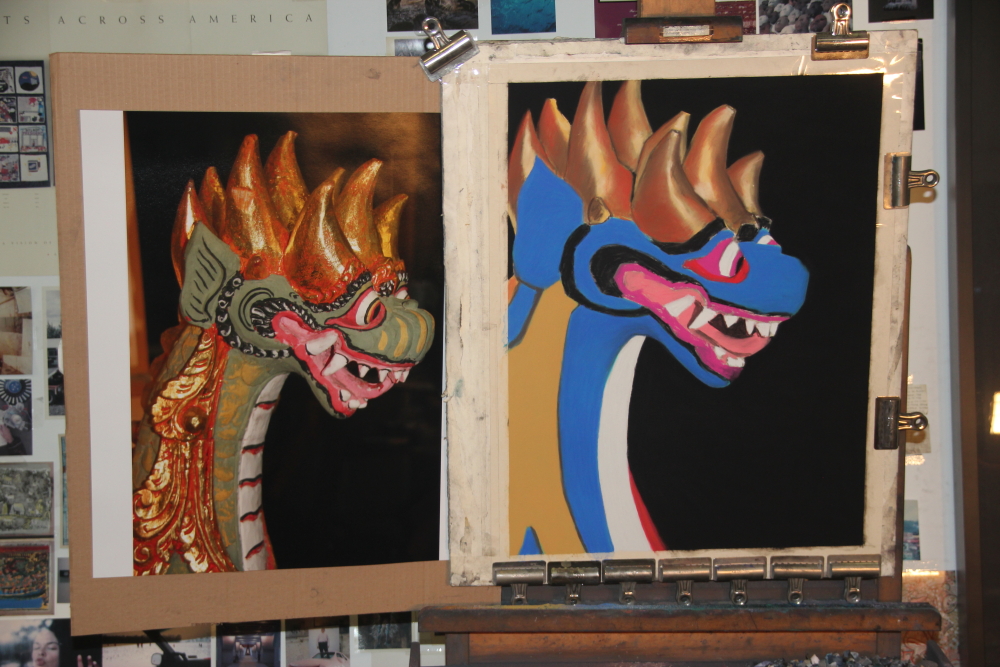
Work in progress
A: I have just started working on a small (20″ x 26″) pastel painting. The figure is a Balinese dragon I found last summer at “Winter Sun & Summer Moon” in Rhinebeck, New York.
Preferring to collect these figures while traveling in their countries of origin, I made an exception this time. My reasoning? I have been to Bali (in 2012) and at four feet tall and carved from solid wood, this dragon is quite heavy and would have been difficult to bring home.
Comments are welcome!
Q: What’s on the easel today?

Work in progress
A: I continue working on a large pastel painting that combines some of my finds from Oaxaca and Mexico City, Kandy (Sri Lanka), and Panajachel (Guatemala).
Comments are welcome!
Q: What’s on the easel today?
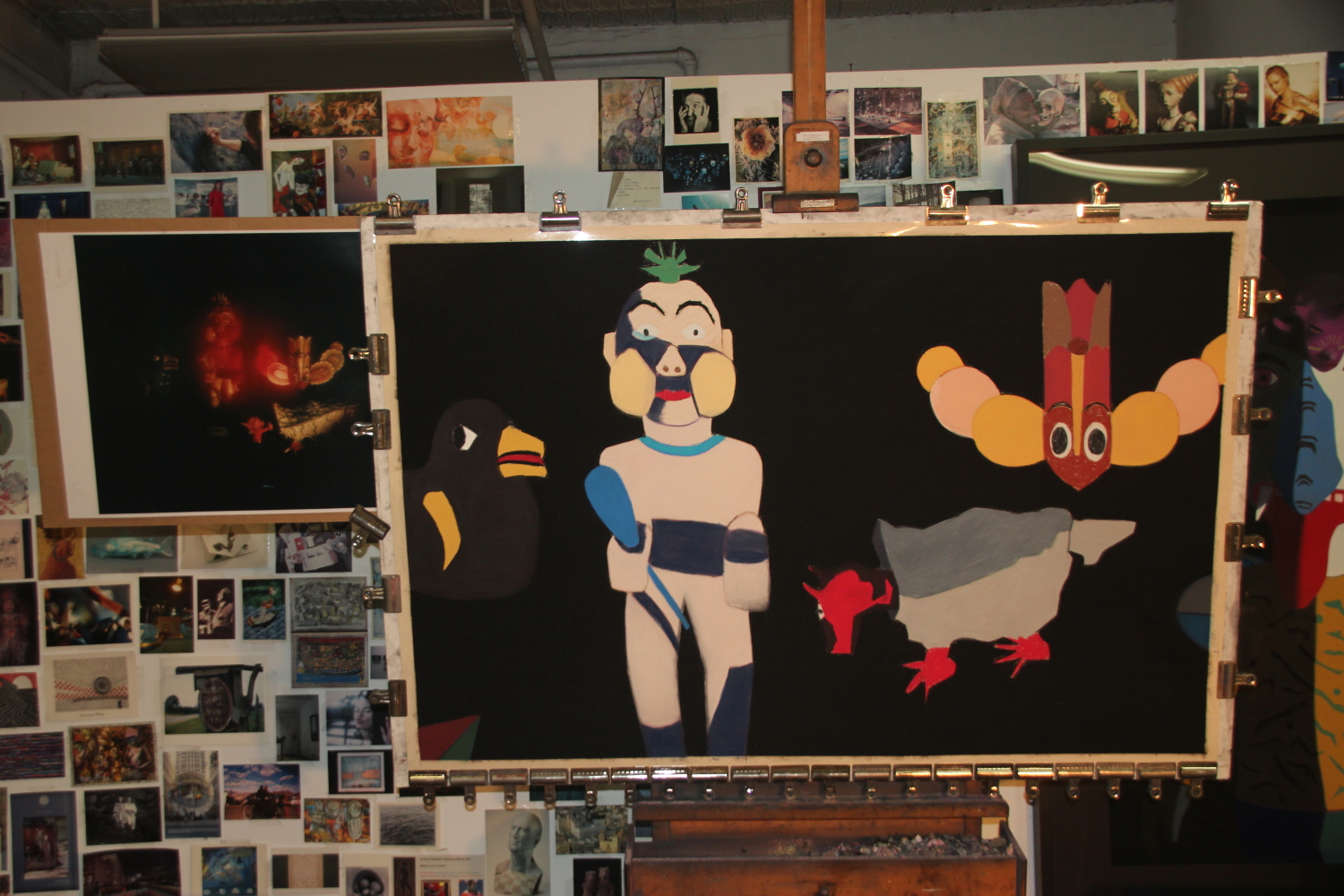
Work in progress
A: I am in the very early stages of a large pastel painting. I have never painted any of these figures before and they originated in different parts of the world. The bird (left) is from the Brooklyn Museum’s store, although it was hand carved in Guatemala. The standing figure is carved wood with beautiful painted details. It was a lucky find on a trip to Panajachel, Guatemala. The armadillo (red and grey) was made by one of my favorite Mexican folk artists (now deceased) and I believe it’s one of the last pieces he completed. It is a papier mâché figure that I found in a small shop in Mexico City. The figure on the upper right is a wooden mask bought from a talkative and talented artist at a hotel in Kandy, Sri Lanka. It depicts nagas (cobras), although you can’t tell that yet in the painting.
Comments are welcome!
Pearls from artists* # 132
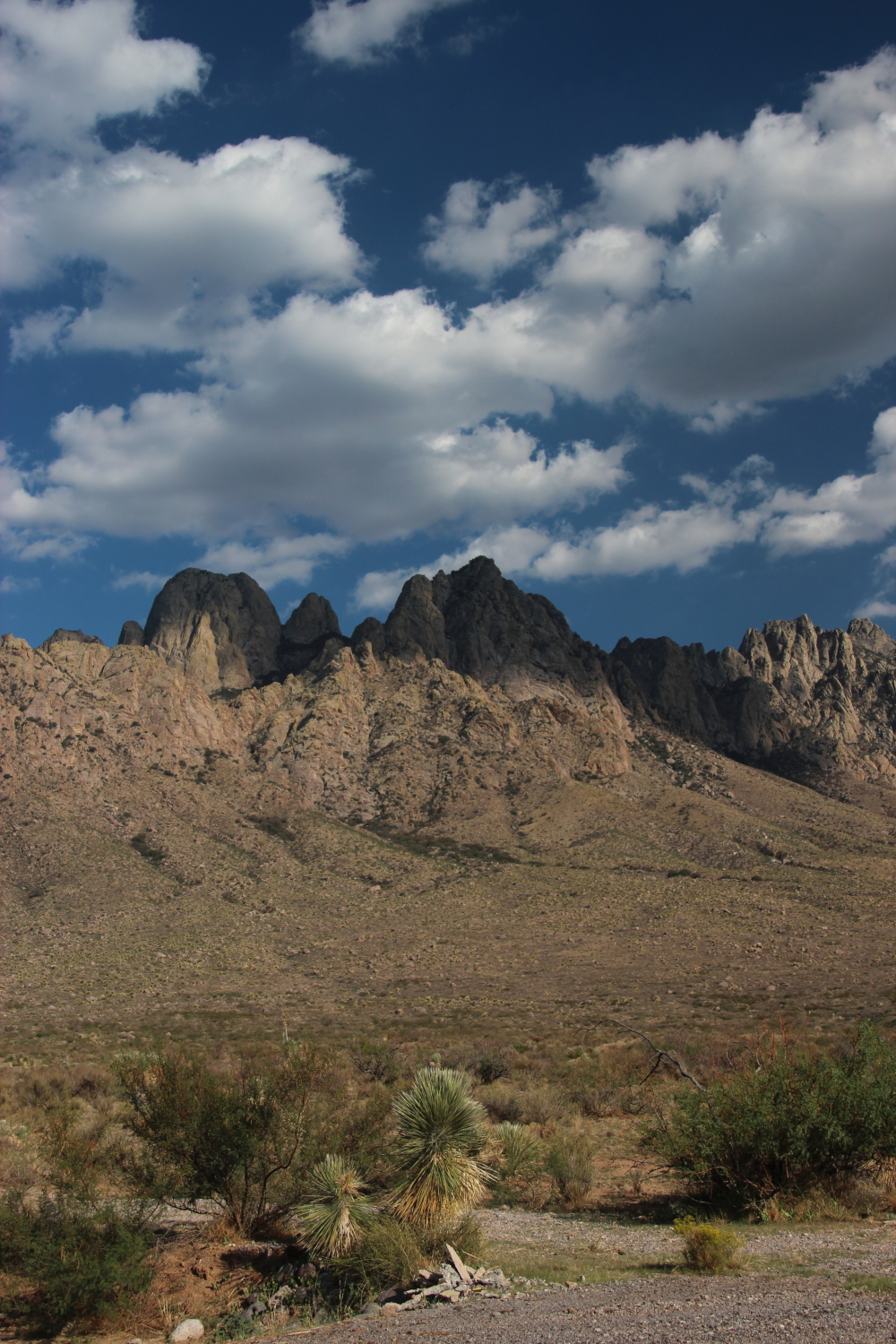
Las Cruces, NM
* an ongoing series of quotations – mostly from artists, to artists – that offers wisdom, inspiration, and advice for the sometimes lonely road we are on.
… To feel confident and successful is not natural to the artist.
To feel insufficient.
to experience disappointment and defeat in waiting for
inspiration
is the natural state of mind of an artist.
As a result praise to most artists is a little embarrassing.
They cannot take credit for inspiration,
for what we can see perfectly, but we cannot do perfectly…
Agnes Martin quoted in The Art Life: On Creativity and Career by Stuart Horodner
Comments are welcome!
Pearls from artists* # 131
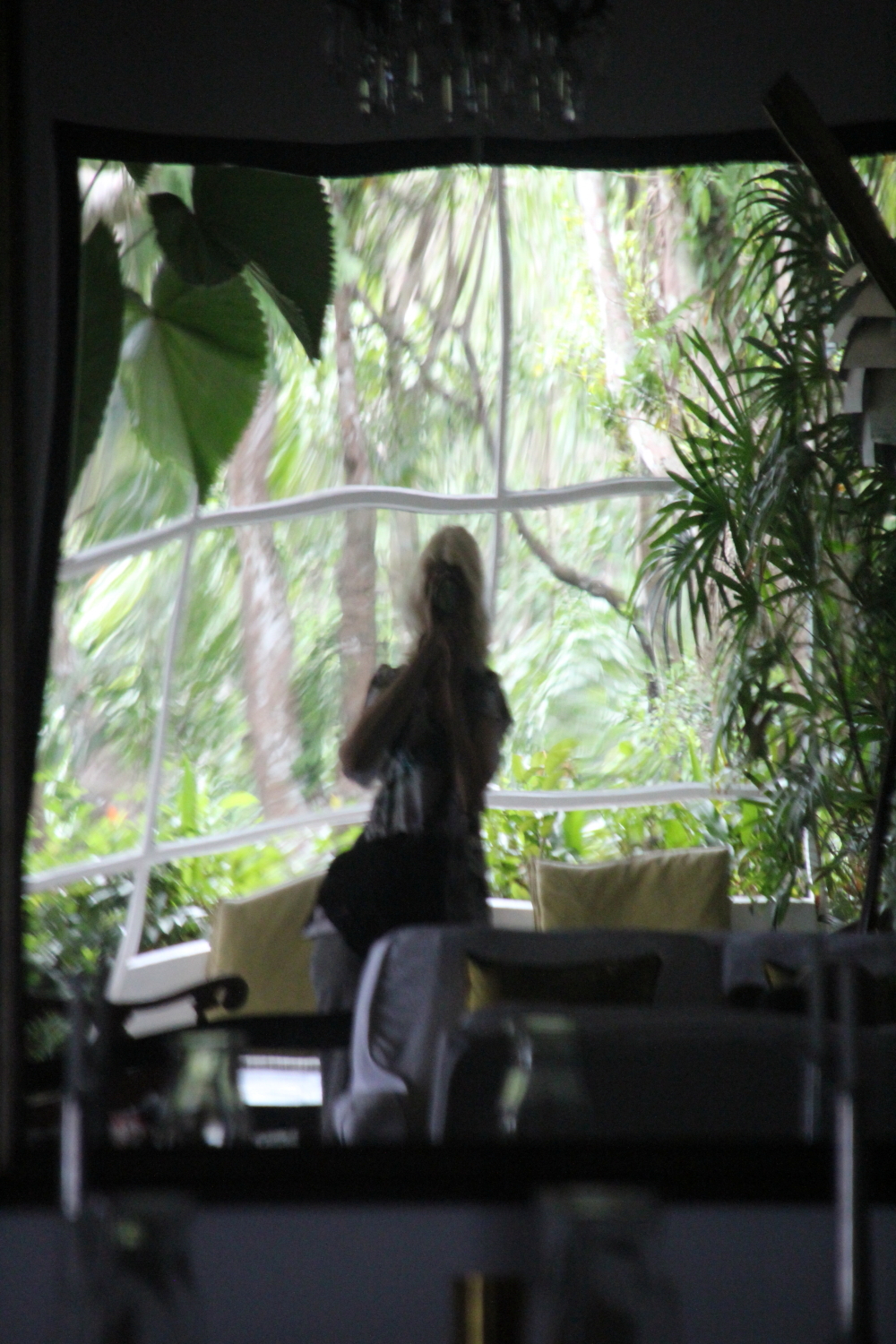
Self-portrait at an architect’s estate in Sri Lanka
* an ongoing series of quotations – mostly from artists, to artists – that offers wisdom, inspiration, and advice for the sometimes lonely road we are on.
Sister Corita
Immaculate Heart College Art Department Rules
Rule 1: Find a place you trust, and then try trusting it for a while.
Rule 2: General duties of a student: pull everything out of your teacher. Pull everything out of your fellow students.
Rule 3: General duties of a teacher: Pull everything out of your students.
Rule 4: Consider everything an experiment.
Rule 5: Be self-disciplined. This means finding someone wise or smart and choosing to follow them. To be disciplined is to follow in a good way. To be self-disciplined is to follow in a better way.
Rule 6: Nothing is a mistake. There’s no win and no fail. There’s only make.
Rule 7: The only rule is work. If you work it will lead to something. It’s the people who do all of the work all of the time who eventually catch on to things.
Rule 8: Don’t try to create and analyze at the same time. They’re different processes.
Rule 9: Be happy whenever you can manage it. Enjoy yourself. It’s lighter than you think.
Rule 10: “We’re breaking all the rules. Even our own rules. And how do we do that? By leaving plenty of room for X quantities.” John Cage
Helpful Hints: Always be around. Come or go to everything. Always go to classes. Read anything you can get your hands on. Look at movies carefully, often. Save everything – it might come in handy later.
There should be new rules next week.
Quoted in The Art Life: On Creativity and Career by Stuart Horodner
Comments are welcome!


 barbararachkoscoloreddust.com