Blog Archives
Q: You have worked with twenty-plus galleries during your career. Which ones do you consider the best?

“Myth Meets Dream,” 1993, soft pastel on sandpaper, the earliest painting that includes Mexican figures
A: Probably the most prestigious gallery that represented my work was Brewster Fine Arts on West 57th Street in Manhattan. Brewster was my first New York gallery. In the summer of 1996 I mailed the gallery a sheet of slides, as we did in those days. I was living in Virginia and had been a working artist for ten years. In July while traveling around Mexico, I decided to check the phone messages at home in Virginia. I was thrilled to receive an invitation from Mia Kim, the gallery director, to exhibit pastel paintings in October! And she had not yet even seen my work in person.
Beginning that fall, I gained representation with Brewster Fine Arts, an elegant gallery specializing in Latin American Masters like Rufino Tamayo, Diego Rivera, and others. I am not Latina, of course, but I showed there due to my subject matter. At my October opening, I remember Mia declaring to the attendees, “Barbara has the soul of a Latina!” That night I met fellow gallery artist Leonora Carrington. She and I were the only non-Latina artists respresented. I knew I was on my way!
The gallery continued to present my work in group exhibitions and the staff gave brilliant talks about me and my creative process. For many years whenever I introduced myself to a new art aficionado, they already knew my work from having seen it at Brewster. I continued to be represented there until the gallery closed years later.
Also, Gallery Bergelli in Larkspur, CA did an excellent job of representing my work. I applied for one of their juried exhibitions, was accepted, and afterwards, they offered permanent representation. Soon they introduced me to one of my best collectors, with whom I am still friends.
I have worked with many galleries, some good, some not, for various reasons. Ours is an extremely tough business. Unfortunately, many of the best and formerly-great galleries are gone forever.
Comments are welcome!
Q: How long did it take you to discover the properties of pastel? (Liliana Mileo via facebook.com/BarbaraRachko/)
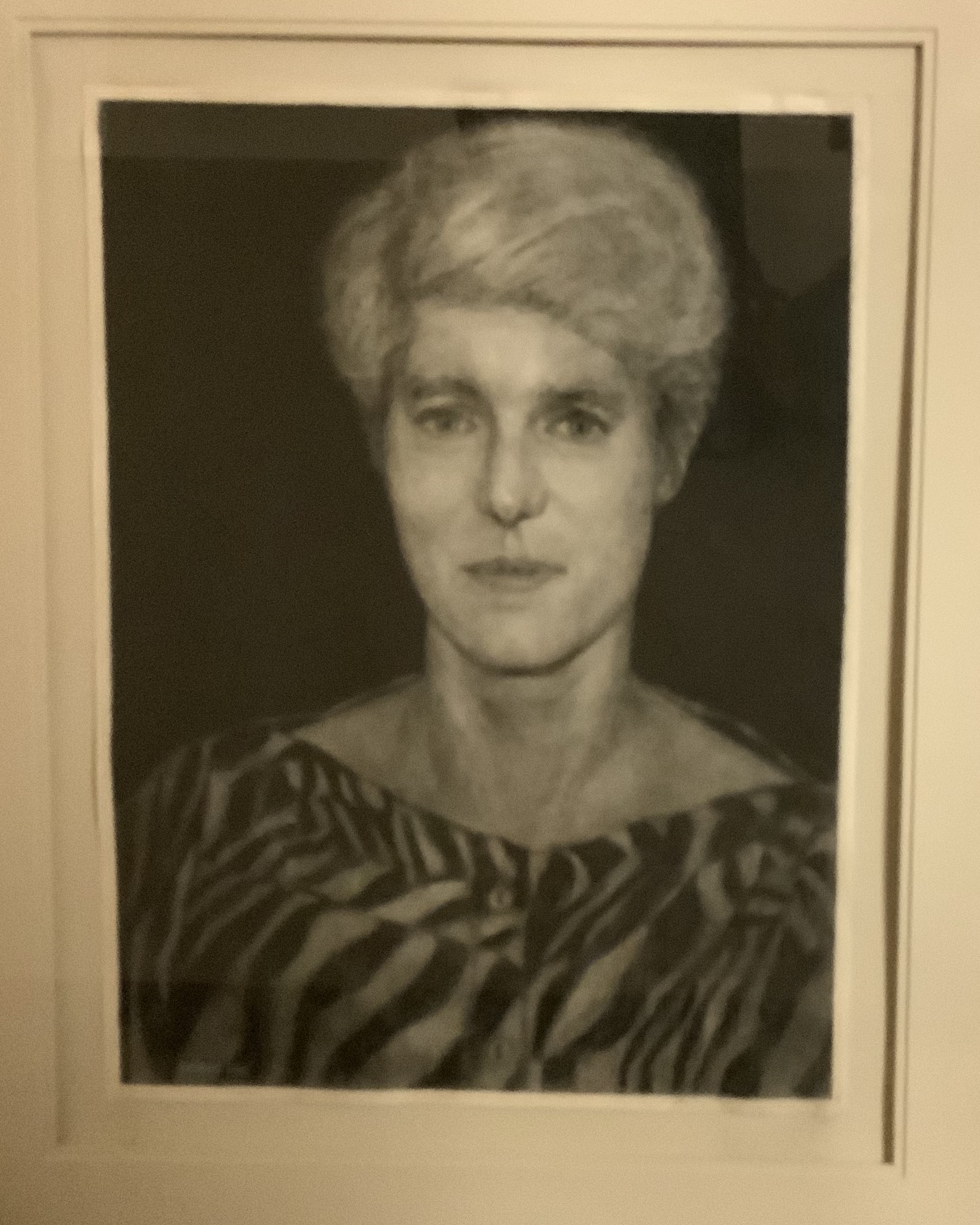
A charcoal self-portrait from 1988
A: After I moved to Alexandria, Virginia in the mid-1980s, I began taking classes at The Art League School. I was extremely unhappy with my career as a Navy Lieutenant. I worked as a computer analyst for the Joint Chiefs of Staff at the Pentagon and was searching for something more meaningful to do with my life.
I began with a basic drawing class and liked it. I enrolled in more classes and decided to spend two years working exclusively in black and white media, such as charcoal and graphite, before advancing to color. Fortunately, early on I found an excellent teacher in Lisa Semerad. I remain deeply grateful for the strong foundational drawing skills she imparted to me during this period.
After two years I tried water color and soon discovered it was not for me, a perfectionist who needs to refine my work. Then I tried etching and found it extremely tedious, the antithesis of instant gratification.
Finally I began studying soft pastel with Diane Tesler, another gifted teacher, and fell in love with this medium! At The Art League School I also completed a one-week workshop with Albert Handell, who introduced me to the archival sandpaper that I have been using ever since.
While I fell in love with pastel three decades ago, I continue to learn about its unique properties. I am pushing pastel to new heights as my techniques continually evolve. This is a lifetime journey of learning. I hope to never know all there is to know.
Comments are welcome! Ask anything and I may answer in a future blog post, as you’ve seen here with Liliana’s question.
Q: What’s on the easel today?
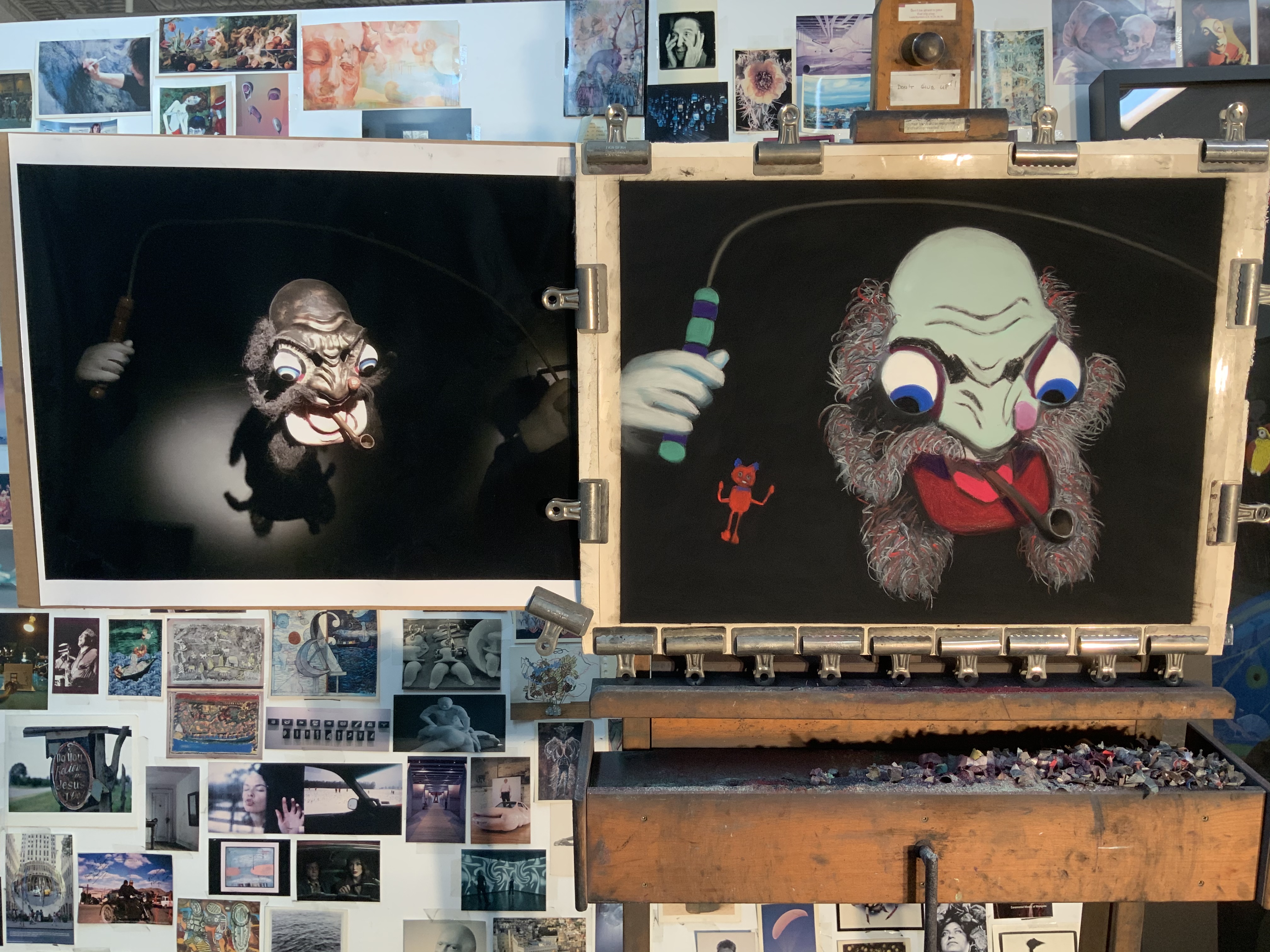
Work in progress
A: I’m slowly working on a small, 20” x 26,” pastel painting. The tentative title is “Majordomo,” although I’m searching for something better.
Comments are welcome!
Pearls from artists* # 382

Barbara’s studio
* an ongoing series of quotations – mostly from artists, to artists – that offers wisdom, inspiration, and advice for the sometimes lonely road we are on.
I think a man [sic] spends his whole lifetime painting one picture or working on one piece of sculpture. The question of stopping is really a decision of moral considerations. To what extent are you intimidated by the actual act, so that you are beguiled by it? To what extent are you charmed by its inner life? And to what extent do you then really approach the intention or desire that is really outside it? The decision is always made when the purée has something in it that you wanted.
Barnett Newman quoted in The Unknown Masterpiece by Honore Balzac
Comments are welcome!
Q: What advice would you give to up and coming artists, as well as experienced artists, who want to reach the level of publicity and notoriety that you have achieved?
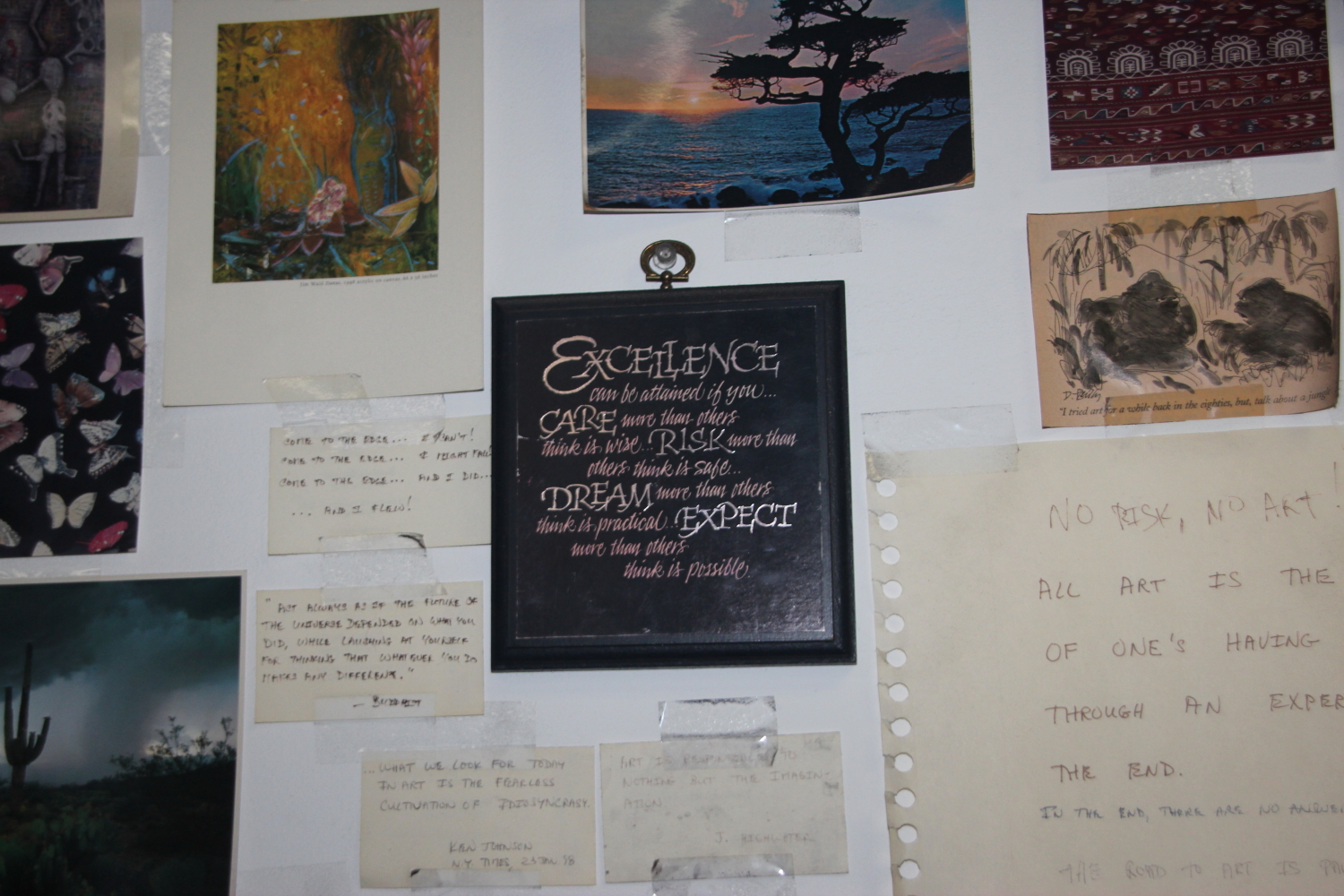
On my studio wall
A: I have several pieces of advice:
Build a support network among your fellow artists, teachers, and friends. It is tough to be an artist, period. Be sure to read plenty of books by and about artists. You will learn that all have experienced similar challenges.
Do whatever you must to keep working – no matter what! Being an artist never gets easier. There are always new obstacles and you will discover solutions over time.
When I left the active duty Navy in 1989, my co-workers threw a farewell party. One of the parting gifts I received was a small plaque from a young enlisted woman whom I had supervised. The words on the plaque deeply resonated with me, since I was about to make a significant and risky career change. It was the perfect gift for someone facing the uncertainty of an art career.
Many years later the plaque is still a proud possession of mine. It hangs on the wall behind my easel, to be read every day as I work. It says:
“Excellence can be attained if you…
Care more than others think is wise…
Risk more than others think is safe…
Dream more than others think is practical…
Expect more than others think is possible.”
I continue to live by these wise words.
Comments are welcome!
Q: Why do you make art?

“Why Do I Make Art” by Ursula von Rydingsvard
A: Last spring I viewed Ursula von Rydingsvard’s exhibition at the National Museum of Women in the Arts. One thing that stayed with me is her wall text, “Why Do I Make Art by Ursula von Rydingsvard” in which she listed a few dozen benefits that art-making has brought to her life.
I want to share some of my own personal reasons here, in no particular order. My list keeps changing, but these are true at least for today.
1. Because I love the entire years-long creative process – from foreign travel whereby I discover new source material, to deciding what I will make, to the months spent in the studio realizing my ideas, to packing up my newest pastel painting and bringing it to my Virginia framer’s shop, to seeing the framed piece hanging on a collector’s wall, to staying in touch with collectors over the years and learning how their relationship to the work changes.
2. Because I love walking into my studio in the morning and seeing all of that color! No matter what mood I am in, my spirit is immediately uplifted.
3. Because my studio is my favorite place to be… in the entire world. I’d say that it is my most precious creation. It’s taken more than twenty-two years to get it this way. I hope I never have to move!
4. Because I get to listen to my favorite music all day or to Public Radio stations.
5. Because when I am working in the studio, if I want, I can tune out the world and all of it’s urgent problems. The same goes for whatever personal problems I am experiencing.
6. Because I am devoted to my medium. How I use pastel continually evolves. It’s exciting to keep learning about its properties and to see what new techniques will develop.
7. Because I have been given certain gifts and abilities and that entails a sacred obligation to USE them. I could not live with myself were I to do otherwise.
8. Because art-making gives meaning and purpose to my life. I never wake up in the morning wondering, how should I spend the day? I have important work to do and a place to do it. I know this is how I am supposed to be spending my time on earth.
9. Because I have an enviable commute. To get to my studio it’s a thirty-minute walk, often on the High Line early in the morning before throngs of tourists have arrived.
10. Because life as an artist is never easy. It’s a continual challenge to keep forging ahead, but the effort is also never boring.
11. Because each day in the studio is different from all the rest.
12. Because I love the physicality of it. I stand all day. I’m always moving and staying fit.
13. Because I have always been a thinker more than a talker. I enjoy and crave solitude. I am often reminded of the expression, “She who travels the farthest, travels alone.” In my work I travel anywhere.
14. Because spending so much solitary time helps me understand what I think and feel and to reflect on the twists and turns of my unexpected and fascinating life.
15. Because I learn about the world. I read and do research that gets incorporated into the work.
16. Because I get to make all the rules. I set the challenges and the goals, then decide what is succeeding and what isn’t. It is working life at its most free.
17. Because I enjoy figuring things out for myself instead of being told what to do or how to think.
18. Because despite enormous obstacles, I am still able to do it. Art-making has been the focus of my life for thirty-three years – I was a late bloomer – and I intend to continue as long as possible.
19. Because I have been through tremendous tragedy and deserve to spend the rest of my life doing exactly what I love. The art world has not caught up yet, but so be it. This is my passion and my life’s work and nothing will change that.
20. Because thanks to the internet and via social media, my work can be seen in places I have never been to and probably will never go.
21. Because I would like to be remembered. The idea of leaving art behind for future generations to appreciate and enjoy is appealing.
Comments are welcome!
Pearls from artists* # 372
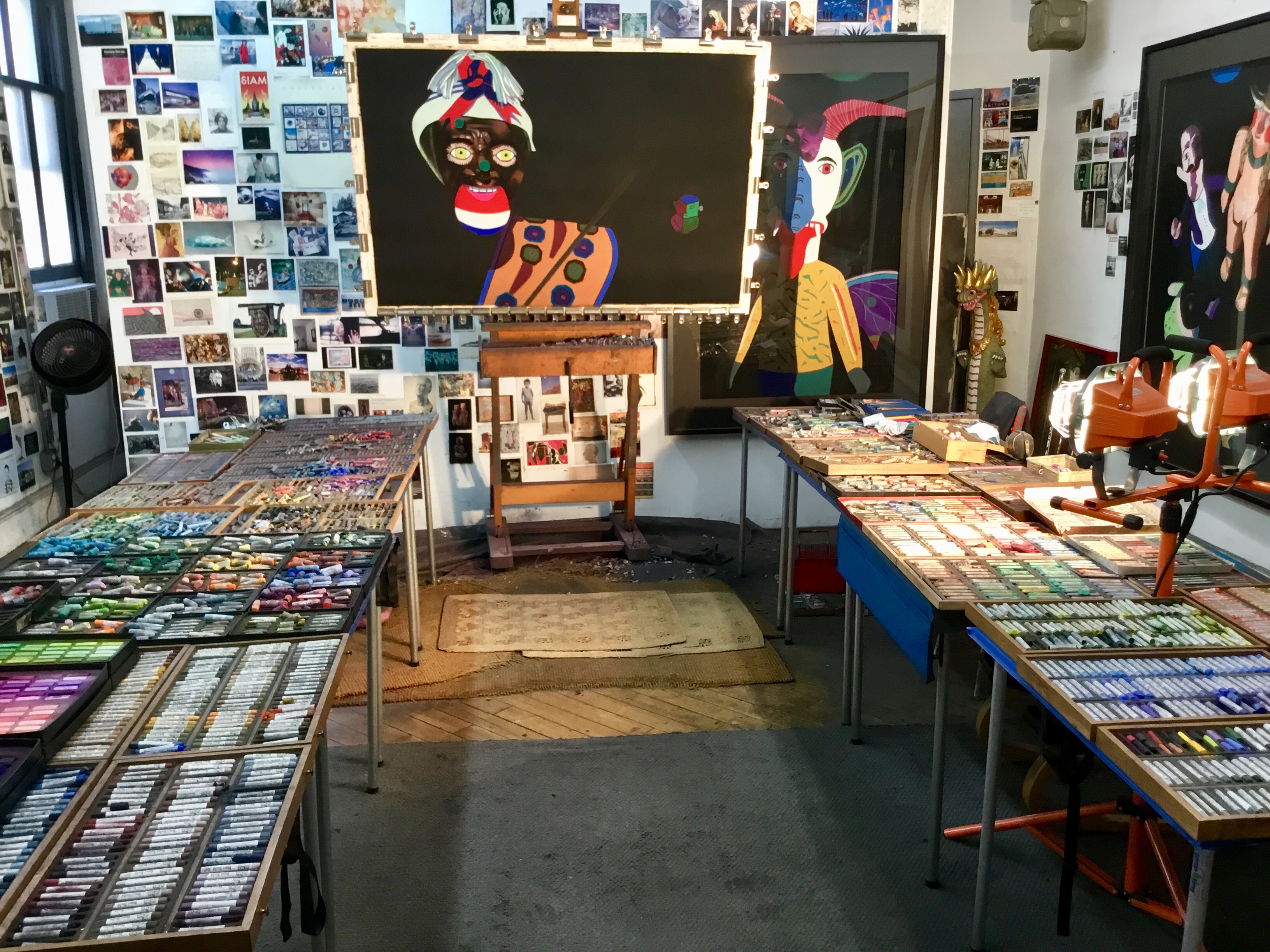
Barbara’s studio
* an ongoing series of quotations – mostly from artists, to artists – that offers wisdom, inspiration, and advice for the sometimes lonely road we are on.
Artists will, in their long education of sifting through what they like and respond to and what they don’t, find they “see” an artist’s work in the environment. They see a Corot or a Hopper. They know then that they have found a good subject because of the similarity of poetic attraction. They see with a set of limits or conventions that speak to them.
But as time goes on and you continue working, you find you do not consider those subjects any longer but they still register. They belong to someone else. You have found other affinities. Or perhaps more importantly you have found your own. You respond now to your own internal song. Art is about art as much as it is about nature. Everything we respond to has passed through our filter of artistic influences.
Ian Roberts in Creative Authenticity: 16 Principles to Clarify and Deepen Your Artistic Vision
Comments are welcome!
Q: Your work is unlike anyone else’s. There is such power and boldness in your pastels. What processes are you using to create such poignant and robustly colored work?

Barbara working on an interview. Photo: Maria Cox
A: For thirty-three years I have worked exclusively in soft pastel on sandpaper. Pastel, which is pigment and a binder to hold it together, is as close to unadulterated color as an artist can get. It allows for very saturated color, especially using the self-invented techniques I have developed and mastered. I believe my “science of color” is unique, completely unlike how any other artist works. I spend three to four months on each painting, applying pastel and blending the layers together to mix new colors on the paper.
The acid-free sandpaper support allows the buildup of 25 to 30 layers of pastel as I slowly and meticulously work for hundreds of hours to complete a painting. The paper is extremely forgiving. I can change my mind, correct, refine, etc. as much as I want until a painting is the best I can create at that moment in time.
My techniques for using soft pastel achieve rich velvety textures and exceptionally vibrant color. Blending with my fingers, I painstakingly apply dozens of layers of pastel onto the sandpaper. In addition to the thousands of pastels that I have to choose from, I make new colors directly on the paper. Regardless of size, each pastel painting takes about four months and hundreds of hours to complete.
I have been devoted to soft pastel from the beginning. In my blog and in numerous interviews online and elsewhere, I continue to expound on its merits. For me no other fine art medium comes close.
My subject matter is singular. I am drawn to Mexican, Guatemalan, and Bolivian cultural objects—masks, carved wooden animals, papier mâché figures, and toys. On trips to these countries and elsewhere I frequent local mask shops, markets, and bazaars searching for the figures that will populate my pastel paintings. How, why, when, and where these objects come into my life is an important part of the creative process. Each pastel painting is a highly personal blend of reality, fantasy, and autobiography.
Comments are welcome!
Q: What’s on the easel today?
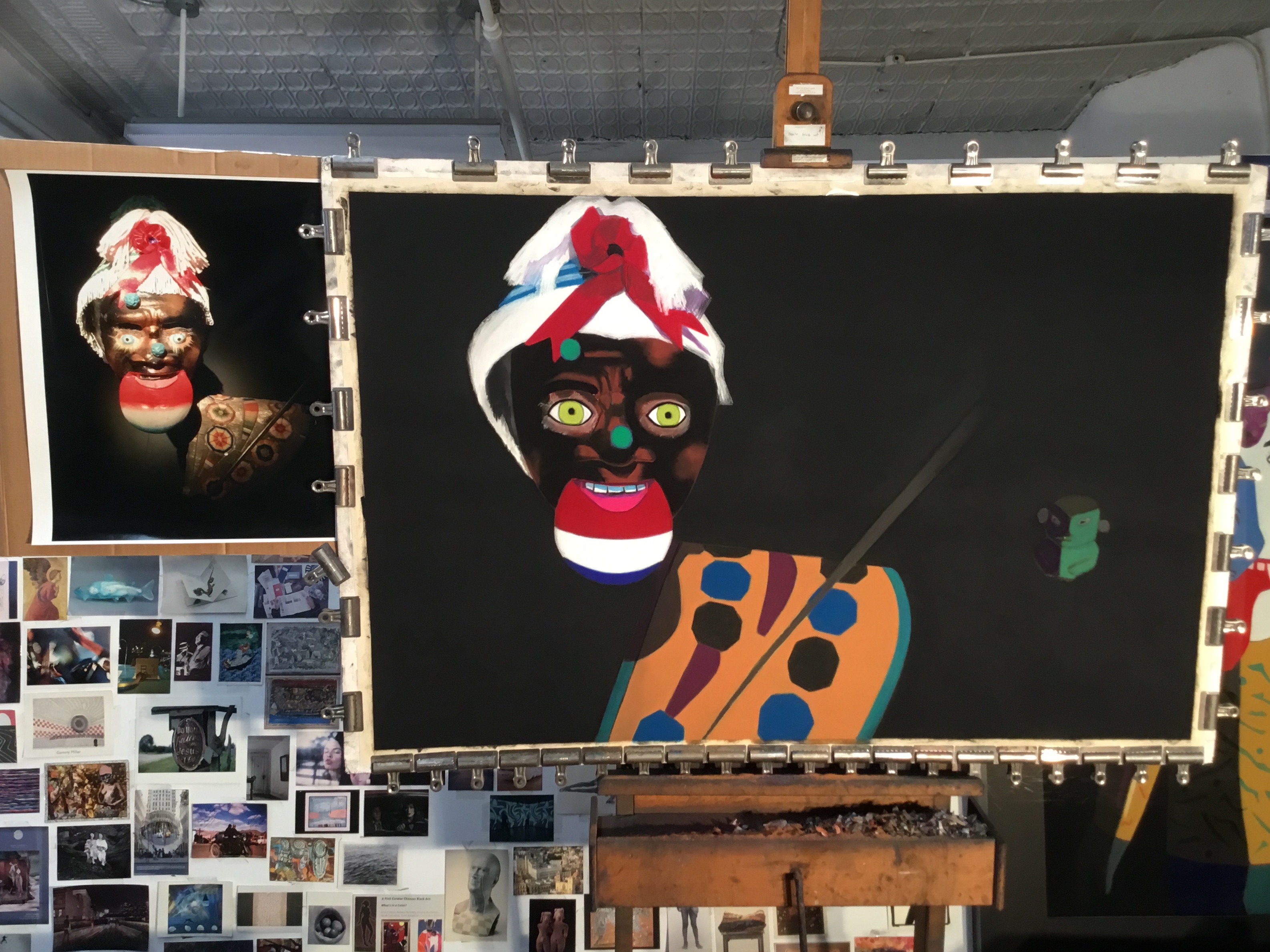
Work in progress
A: I continue slowly working on an untitled 38” x 58” pastel painting, number nine in the “Bolivianos” series. It still has a long way to go.
Comments are welcome!
Q: Was there a pivotal time in your life when you were forced to choose between two different paths? Do you have any regrets?
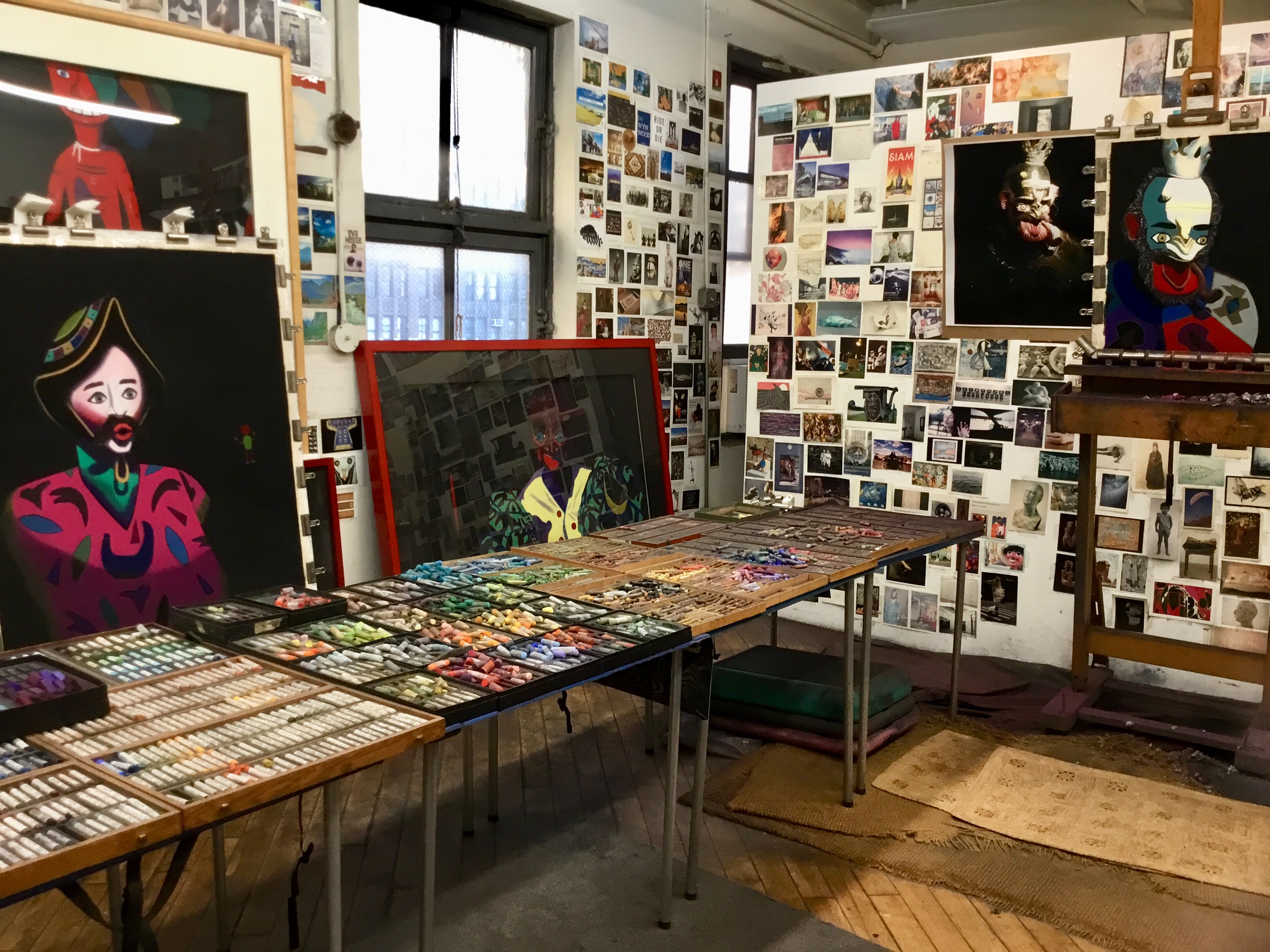
Barbara’s studio
A: In 1988 I was a Navy Lieutenant working at the Pentagon as a computer analyst. I hated my boring job! For about two years I had been taking drawing classes at the Art League School in Alexandria, VA and was rapidly improving. More importantly, I discovered that making art was endlessly fascinating and challenging.
After much soul searching, I made the scary decision to resign from active duty. Sept. 30, 1989 was my last day. I have been a professional visual artist ever since and surprisingly (to me!), have never needed a day job.
However, for fourteen years I remained in the Naval Reserve, working in Virginia one weekend a month and for two weeks each year. After I moved to New York in 1997, I used to take Amtrak to Washington, DC. I would go from my full time New York artist’s life to my part time military life. It was extremely interesting to be around such different types of people, to say the least! On November 1, 2003 I retired as a Navy Commander.
I have never, ever regretted the path I chose. I love being an artist and would not want to spend my life doing anything else.
Comments are welcome!


 barbararachkoscoloreddust.com