Blog Archives
Pearls from artists* # 665

*an ongoing series of quotations – mostly from artists, to artists – that offers wisdom, inspiration, and advice for the sometimes lonely road we are on.
We are wordlessly persuaded and taught outright to hide so much of what we have unearthed in our lives. But artists throughout the centuries have described the power of using anguish as a catalyst to fuel their creativity. In Greek epic poetry, ‘Kleos’ refers to immortal renown. Unlike present-day fame, this term referred exclusively to heroes who had surmounted a great obstacle or persevered through tremendous difficulties. There is a certain authority that comes from those who have endured hardship. They have earned the depth of their work.
Darkness contains a great deal of energy. We can use it for destruction or creativity. Only those who tolerate it are able to illuminate the shadowy corners, revealing the nefariousness that hopes to stay hidden. We cannot change our past, or any hell that we have been through. But art provides the means to exorcise the pain that has taken up residence in our body and fashion it into a form outside ourselves, in an infinitely affirmative gesture. The darkness we have passed through was not endured in vain if we mold it into a vision that lights the way out… for us, and for all the other souls who undoubtedly need it.
Kate Kretz in Art From Your Core: A Holistic Guide to Visual Voice
Comments are welcome!
Pearls from artists* # 657

Storm King Art Center, Cornwall-ON-Hudson, NY
*an ongoing series of quotations – mostly from artists, to artists – that offers wisdom, inspiration, and advice for the sometimes lonely road we are on.
Students told me he [Jack Gilbert] was the most extraordinary man that they’s ever encountered. He had seemed not quite of this world, they said. He seemed to live in a state of uninterrupted marvel, and he encouraged them to do the same. He didn’t so much teach them how to write poetry, they said, but why: because of delight. Because of stubborn gladness. He told them that they must live their most creative lives as a means of fighting back against the ruthless furnace of the world.
Most of all, though, he asked his students to be brave. Without bravery, he instructed, they would never be able to realize the vaulting scope of their own capacities. Without bravery, they would never know the world as richly as it longs to be known. Without bravery, their lives would remain small – far smaller than they probably wanted their lives to be.
Elizabeth Gilbert in Big Magic: Creative Living Beyond Fear
Comments are welcome!
Pearls from artists* # 629

Barbara’s Studio
*an ongoing series of quotations – mostly from artists, to artists – that offers wisdom, inspiration, and advice for the sometimes lonely road we are on.
I kept coming back to [Ellen] Dissanayake. She’s for banning the word art altogether on the grounds it’s uselessly vague, and argues we shouldn’t treat art as a thing but as a behavior. Art, she claims, occurs anytime we take ordinary things and transform them into extraordinary experiences through a process she calls “making special.” Making special happens when words turn into poetry, flesh gets painted for a shaman’s ceremony, a B-flat meets a middle G to form the tune in a Peking opera. I liked her definition, which seemed less arbitrary than others I’d read and didn’t turn up its nose at blockbuster movies or Super Bowl halftime shows – which Dissanayake calls “the arts of our time.” As she sees it, art results from several key “operations” … Artists repeat… formalize… exaggerate… elaborate… and manipulate expectation… Break dancing, leading a tea ceremony, designing Grand Theft Auto – to Dissanayake, it’s art, art, and more art.
Bianca Bosker in Get the Picture: A Mind-Bending Journey Among the Inspired Artists and Obsessive Art Fiends Who Taught Me How to See
Comments are welcome!
Pearls from artists* # 574

Barbara’s Studio
*an ongoing series of quotations – mostly from artists, to artists – that offers wisdom, inspiration, and advice for the sometimes lonely road we are on.
A creative life is risky business. To follow your own course, not patterned on parents, peers, or institutions, involves a delicate balance of tradition and personal freedom, a delicate balance of sticking to your guns and remaining open to change. While on some dimensions living a normal life, you are nevertheless a pioneer, breaking away from the molds and models that inhibit the heart’s desire, creating life as it goes. Being, acting, creating in the moment without props and supports, without security, can be supreme play, and it can also be frightening, the very opposite of play. Stepping into the unknown can lead to delight, poetry, invention, humor, lifetime friendships, self-realization, and occasionally a great creative breakthrough. Stepping into the unknown can also lead to failure, disappointment, rejection, sickness, or death.
Stephen Nachmanovitch in Free Play: Improvisation in Life and Art
Comments are welcome!
Pearls from artists* # 570
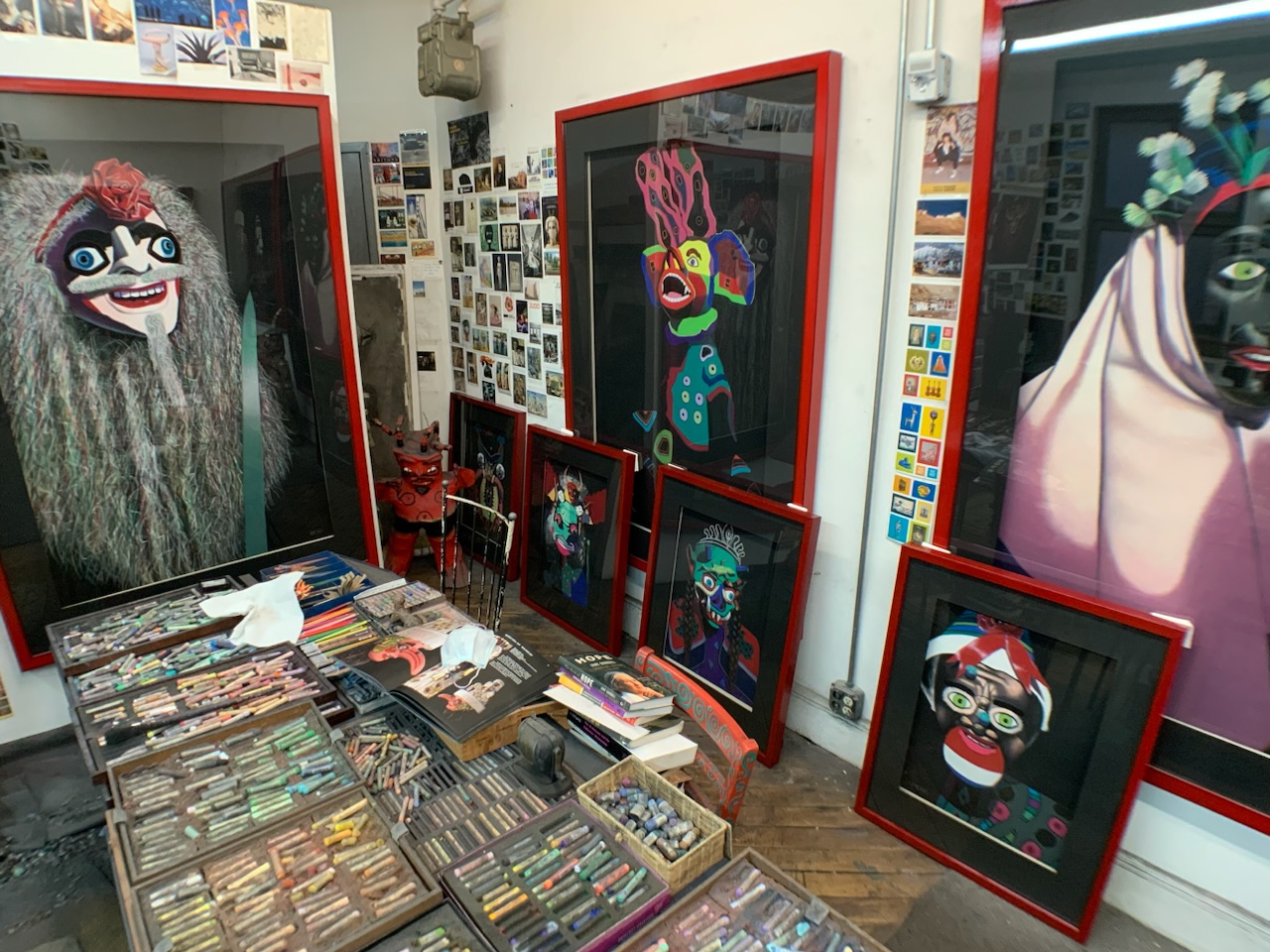
Barbara’s Studio
*an ongoing series of quotations – mostly from artists, to artists – that offers wisdom, inspiration, and advice for the sometimes lonely road we are on.
One of the main differences between the young girl who drew a line in chalk from the Metropolitan Museum all the way to her home on Park Avenue and the young woman who drew lines on canvas and paper twenty years later was that the latter understood the willfulness that drove the child. She was facing “the monster,” the consuming need to create, which was beyond her control but no longer beyond her comprehension. Helen [Frankenthaler] had long understood that her gift set her apart, and that it would be nearly impossible to describe how and why without sounding arrogant or cruel. “It’s saying I’m different, I’m special, consider me differently,” she explained years later. “And it’s also on the other side, a recognition that one is lonely, that one is not run of the mill, that the values are different, and yet we all go into the same supermarkets… and we are all moved one way or another by children and seasons, and dreams. So that art separates you…”
The separation she described was not merely the result of what one did, whether it be painting or sculpting or writing poetry. Helen said the distance between an artist and society was due to a quality both intangible and intrinsic, a “spiritual” or “magical” aspect that nonartists did not always understand and were sometimes frightened by. “They want you to behave a certain way. They want you to explain what you do and why you do it. Or they want you removed, either put on a pedestal or victimized. They can’t handle it.” Helen concluded that existing outside so-called normal life was simply the price an artist paid to create.
Mary Gabriel in Ninth Street Women
Comments are welcome!
Pearls from artists* # 558
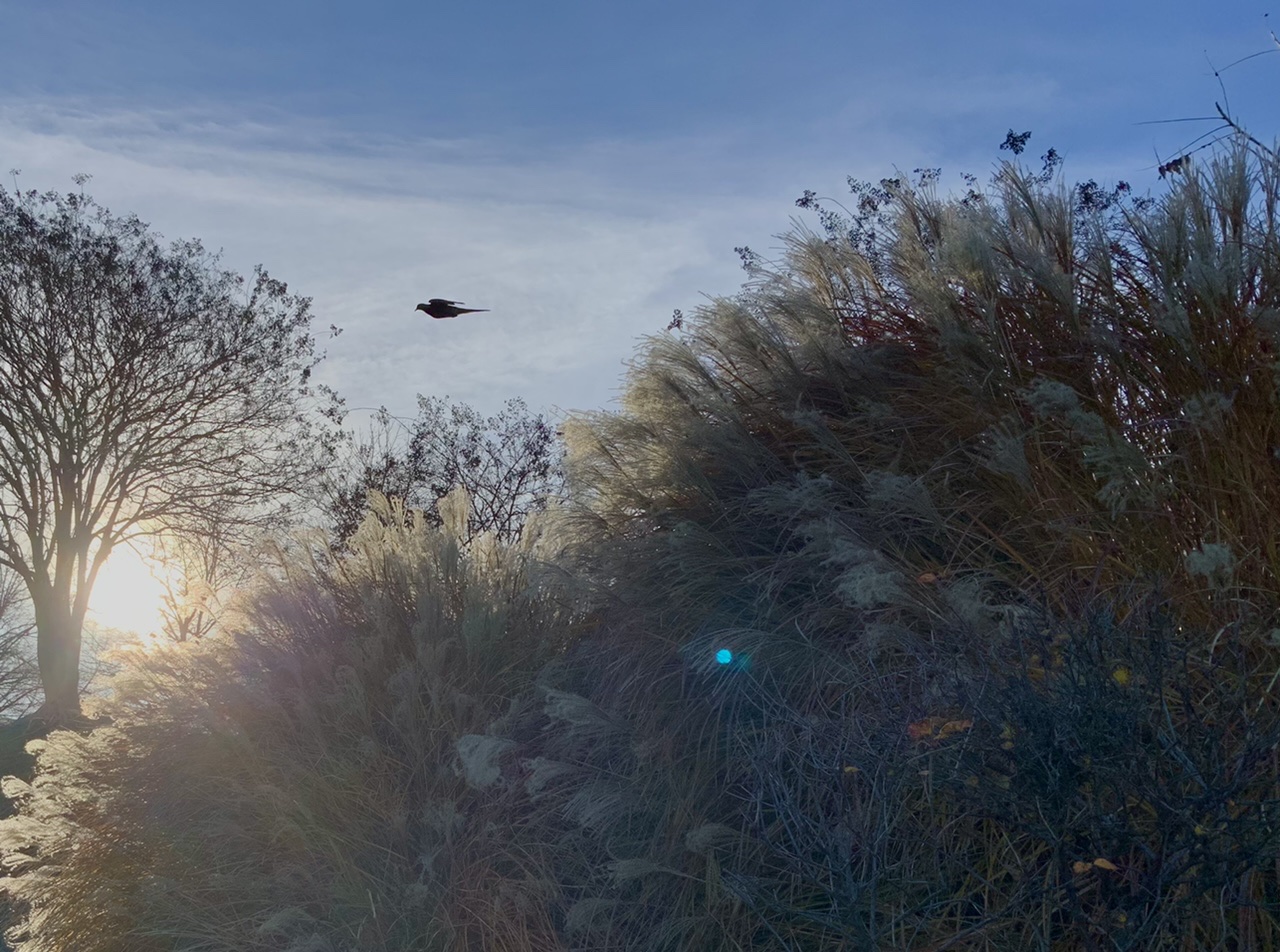
Alexandria, VA
*an ongoing series of quotations – mostly from artists, to artists – that offers wisdom, inspiration, and advice for the sometimes lonely road we are on.
One of the main differences between the young girl who drew a line in chalk from the Metropolitan Museum all the way to her home on Park Avenue and the young woman who drew lines on canvas and paper twenty years later was that the latter understood the willfulness that drove the child. She was facing “the monster,” the consuming need to create, which was beyond her control but no longer beyond her comprehension. Helen [Frankenthaler] had long understood that her gift set her apart, and that it would be nearly impossible to describe how and why without sounding arrogant or cruel. “It’s saying I’m different, I’m special, consider me differently,” she explained years later. “And it’s also on the other side, a recognition that one is lonely, that one is not run of the mill, that the values are different, and yet we all go into the same supermarkets… and we all are moved one way or the other by children and seasons, and dreams. So the art separates you.”
The separation she described was not merely the result of what one did, whether it be painting or sculpting or writing poetry. Helen said the distance between an artist and society was due to a quality both tangible and intangible and intrinsic, a “spiritual” or “magical” aspect that nonartists did not always understand and were sometimes frightened by. “They want you to behave a certain way. They want you to explain what you do and why you do it. Or they want you removed, either put on a pedestal or victimized. They can’t handle it.” Helen concluded that existing outside so-called normal life was simply the price an artist paid to create.
Mary Gabriel in Ninth Street Women
Comments are welcome!
Pearls from artists* # 445
*an ongoing series of quotations – mostly from artists, to artists – that offers wisdom, inspiration, and advice for the sometimes lonely road we are on.
My good friend the writer Charles L. Mee, Jr helped me to recognize the relationship between art and the way societies are structured. He suggested that, as societies develop, it is the artists who articulate the necessary myths that embody our experience of life and provide parameters for ethics and values. Every so often the inherited myths lose their value because they become too small and confined to contain the complexities of the ever-transforming and expanding societies. In that moment new myths are needed to encompass who we are becoming. These new constructs do not eliminate anything already in the mix; rather, they include fresh influences and engender new formations. The new mythologies always include ideas, cultures and people formerly excluded from the previous mythologies. So, deduces Mee, the history of art is the history of inclusion.
I believe that the new mythologies will be created and articulated in art, in literature, painting and poetry. It is the artists who will create a livable future through their ability to articulate in the face of flux and change.
Anne Bogart in A Director Prepares: Seven Essays on Art and Theater
Comments are welcome!

Pearls from artists* # 442

*an ongoing series of quotations – mostly from artists, to artists – that offers wisdom, inspiration, and advice for the sometimes lonely road we are on.
Alexander Pope identified a central function of poetry as taking thoughts we experience as half-formed and giving them clear expression: ‘what was often thought, but ne’er so well expressed.’ In other words, a fugitive part of our own experience, is taken up, edited, and returned to us better than it was before, so that we feel, at last, that we know ourselves more clearly.
Alain de Botton and John Armstrong in Art as Therapy
Comments are welcome!
Pearls from artists* # 420

‘Science in Surrealism,” published by Gallery Wendy Norris
*an ongoing series of quotations – mostly from artists, to artists – that offers wisdom, inspiration, and advice for the sometimes lonely road we are on.
During the early period of Einstein’s great fame, which began in 1919, Breton wrote an essay for the first one-man show in Paris of Max Ernst. There, for the first time, he expressed what would become the central mechanism of Surrealism’s theory of poetry: the experience of ‘disorientation,’ engendered by what Breton called ‘the marvelous ability to reach out, without leaving the field of our experience, to two distinct realities and bring them together to create a spark.’ Perhaps in search of authorization, Breton gave this definition in the context of the ‘separate systems of reference’ posited by Einstein’s Relativity. This, Breton argued, helped make sense of weird juxtapositions to be found in Ernst’s collages of the time, shown in Paris in the same year that the German to French translations of both Einstein’s Relativity: The Special Theory and the General Theory and [Sir Arthur] Eddington’s, Space, Time, and Gravitation were published. This in turn gave Breton and his friends a glimpse of the ‘real’ world ushered in by the new physics.
“Sibylline Strangeness: Surrealism and Modern Physics,” by Gavin Parkinson in Science in Surrealism, published by Gallery Wendy Norris
Comments are welcome!
Pearls from artists* # 409

Recent works in progress
*an ongoing series of quotations – mostly from artists, to artists – that offers wisdom, inspiration, and advice for the sometimes lonely road we are on.
Poets can look at a painting and understand it without having it spelled out [and] painters can read poetry… People say, I don’t understand what it means, about John Ashbery’s poetry. Painters would never say that… The idea of “I don’t understand what it means,” looking at abstract painting and saying, “Explain it to me, what does it mean?” You don’t say that, and you don’t ask people to explain music. And so, poets, painters, composers don’t need explanations. Explanations are for other people… burdened by logic.
Elaine de Kooning quoted in Mary Gabriel in Ninth Street Women
Comments are welcome!


 barbararachkoscoloreddust.com