Blog Archives
Pearls from artists* # 489

*an ongoing series of quotations – mostly from artists, to artists – that offers wisdom, inspiration, and advice for the sometimes lonely road we are on.
Murch: …The only time one is able to exercise control over the film is in the editing. The images themselves are not sufficient. They’re very important, but they’re only images. What’s essential is the duration of each image: the whole eloquence of cinema is that it’s achieved in the editing room.
In The Conversations: Walter Murch and the Art of Editing Film by Michael Ondaatje
Comments are welcome!
Pearls from artists* # 485
*an ongoing series of quotations – mostly from artists, to artists – that offers wisdom, inspiration, and advice for the sometimes lonely road we are on.
[Michael] Ondaatje: It’s an odd thing: I’ve heard you talk about the importance of ambiguity in film, and the need to save that ambiguous quality which exists in a book or painting, and which you think a film does not often have. And at the same time in a mix you are trying to “perfect” that ambiguity.
[Walter] Murch: I know. It’s a paradox. And one of the most fruitful paradoxes, I think, is that even when the film is finished, there should be unsolved problems. Because there’s another stage, beyond the finished film: when the audience views it. You want the audience to be co-conspirators in the creation of this work, just as much as the editor or the mixers or the cameraman or actors are. If by some chemistry you actually did remove all ambiguity in the final mix – even though it had been ambiguous up to that point – I think you would do the film a disservice. But the paradox is that you have to approach every problem as if it’s desperately important to solve it. You can’t say, I don’t want to solve this because it’s got to be ambiguous. If you do that, then there’s a sort of hemorrhaging of the organism.
O: And more of a confusion.
M: Yes. I keep thinking about it, and it’s a wonderful dilemma: you have to acknowledge that there must be unsolved problems at each stage. As hard as you work, you must have this secret, unspoken hope that one very significant problem will remain unsolved. But you never know what that will be until the film is done. You can almost define a film by the problem it poses, that it can’t answer itself, that it asks the audience to solve.
The Conversations: Walter Murch and the Art of Editing Film by Michael Ondaatje
Comments are welcome!
Pearls from artists* # 483

*an ongoing series of quotations – mostly from artists, to artists – that offers wisdom, inspiration, and advice for the sometimes lonely road we are on.
The editor has a unique relationship with the actors. I never try to go on to the set to see the actors out of costume or out of character – and also just not to see the set. I only want to see what there is on screen. Ultimately, that’s all the audience is ever going to see. Everyone else working on the film at that stage is party to everything going on around the filmed scene: how cold it was when that scene was shot; who was mad at whom; who is in love with whom; how quickly something was done; what was standing just to the left of the frame. An editor particularly has to be careful that those things don’t exert a hidden influence on the way the film is constructed, can (and should in my view) remain ignorant of all that stuff – in order to find value where others might not see value, and on the other hand, to diminish the value of certain things that other people see as too important. It’s one o the crucial functions of the editor. To take, as far as it is possible, the view of the audience, who is seeing the film without any knowledge of all the things that went into its construction.
On Editing Actors, by Walter Murch in The Conversations: Walter Murch and the Art of Editing Film, by Michael Ondaatje
Comments are welcome!
Q: What country’s artistic style influenced you the most over the years? (Question from Arte Realizzata)

A: Undoubtedly, I would have to say Mexico. As a Christmas present in 1991 my future sister-in-law sent two brightly painted wooden animal figures from Oaxaca, Mexico. One was a blue polka-dotted winged horse. The other was a red, white, and black bear-like figure.
I was enthralled with this gift and the timing was fortuitous because I had been searching for new subject matter to paint. Soon I started asking artist-friends about Oaxaca and learned that it was an important art hub. At least two well-known Mexican painters, Rufino Tamayo and Francisco Toledo, had gotten their start there , as had master photographer Manual Alvarez Bravo. There was a “Oaxacan School of Painting” (‘school’ meaning a style, not an actual building) and Alvarez Bravo had established a photography school there (the building/institution kind). I began reading everything I could find. At the time I had only been to Mexico very briefly, in 1975, having made a road trip to Ensenada with my cousin and best friend from college. The following autumn my then-boyfriend, Bryan, and I planned a two-week trip to visit Mexico. We timed it to see Day of the Dead celebrations in Oaxaca. (In my reading I had become fascinated with this festival). We spent one week in Oaxaca followed by one week in Mexico City. My interest in collecting Mexican folk art was off and running!
Comments are welcome!
Pearls from artists* # 482

*an ongoing series of quotations – mostly from artists, to artists – that offers wisdom, inspiration, and advice for the sometimes lonely road we are on.
Devils’ heads with daring and disturbing eyes, twisted horns, abundant grey hair and hooked noses hang on the blue walls of Antonio Viscarra’s house. Long benches covered with old, multi-colored cushions in Bolivian motifs surround the concrete floor of the small room. Several dozen of these hanging faces, which seem to watch in silence from the darkness, are ready to be used in festivals and traditional dances.
The maskmaker or “maestro” as he is called, lives [deceased now] in the area of Avenida Buenos Aires, far from the political and administrative center of the city of La Paz, but rather at the very center of the other La Paz (Chuquiago in the Aymara language) where many peasant immigrants have settled, and which for that reason, is the center of the city’s popular culture.
Viscarra is the oldest creator of masks in La Paz, and his work has helped to conserve, and at the same time to rejuvenate, the tradition of using masks in Bolivian dances. If economic progress and alienation have contributed to the excessive adornment of new masks with glass and other foreign materials, Viscarra, in an attempt to recover the distinctive, original forms, has gone back to the 100-year-old molds used by his grandfather. His work has been exhibited in Europe, in the United States and in South America, Most important, however, is that Viscarra is transmitting his knowledge to his children, ensuring that this form of authentic Bolivian culture will never die.
…Viscarra inherited the old mask molds from his grandfather and was told to take good care of them because some day he might need them. After keeping them carefully put away for 50 years, the maestro used them again for an exhibition of masks prepared in 1984, slowly recreating the original masks, beautiful in their simplicity, in their delicate craftsmanship and in their cultural value. In this way, the masks which emerged from the old molds are regaining their past prestige and importance.
Antonio Viscarra, The mask Maker by Wendy McFarren in Masks of the Bolivian Andes, Editorial Quipus and Banco Mercantil
Comments are welcome!
Pearls from artists* # 470
*an ongoing series of quotations – mostly from artists, to artists – that offers wisdom, inspiration, and advice for the sometimes lonely road we are on.
Find something that is really meaningful to you – that’s the most important thing at the end of the day. Even if everything goes well, there are still those moments when you see through it all. Once you see through the fame, money, and social life and ask yourself, “What is this all about? What does it mean to me?,” it’s great if you can see your work clearly and what you see is important to you.
That same thing goes on the other side. When you wonder why you go through all this hell and you’re struggling, at least you see that you really enjoy what you do, you are fulfilled by what you make, and you believe in it.
Charles Long, artist, Mount Baldy, CA, in Art/Work: Everything You Need to Know (And Do) As You Pursue Your Art Career by Heather Darcy Bhandari and Jonathan Melber
Comments are welcome!
Q: What is the most important factor behind your success?

A: In a word, I’d say it’s love. I love soft pastel! I love being an artist! I love looking at the thousands of pastels in my studio while I think about the possibilities for mixing new colors and making exciting new pastel paintings. Soft pastels are rich and intense.
Even after more than thirty years as an artist, I still adore what I am able to accomplish. I continually refine my craft as I push pastel to new heights. My business card says it all: “Revolutionizing Pastel as Fine Art!”
The surfaces of my finished pastel paintings are velvety and demanding of close study and attention. Soft pastel on sandpaper – no other medium is as sensuous or as satisfying. Who could argue with that!
Comments are welcome!
Pearls from artists* # 438
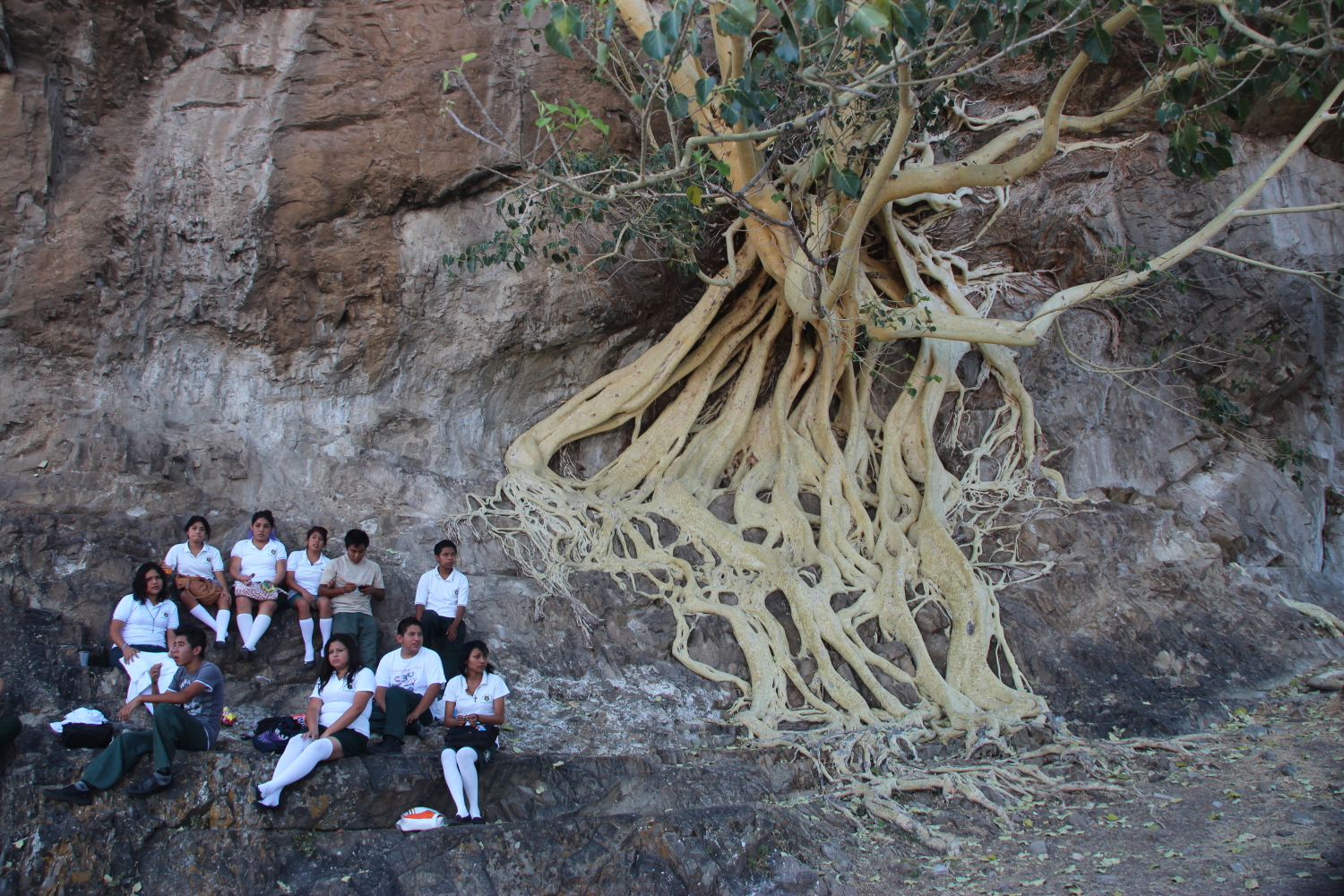
Chalcatzingo, Mexico
* an ongoing series of quotations – mostly from artists, to artists – that offers wisdom, inspiration, and advice for the sometimes lonely road we are on.
Although {Manuel} Alvarez Bravo and Cartier-Bresson were both important mentors for Iturbide, her photographs, as she confirms, are not connected to Surrealism in any way. Henri Cartier-Bresson’s publication Carnets du Mexique (Mexican Notebooks) was an important influence, as it presented a visual representation of Mexico that resonated with her. (Cartier-Bresson also worked mainly in Juchitan, where Iturbide has spent a great deal of time). However, Iturbide developed a way of working quite different from Cartier-Bresson’s. What distinguishes the two artists’ photographs lies in the notion of the fleeting instant, or, as Cartier-Bresson called it, “the decisive moment.” Iturbide refers to Cartier-Bresson’s interest in the “sharp eye” and capturing an instant in time, and describes her own intentions when photographing: “More than in time, I’m interested in the artistic form of the symbol.” Further, Iturbide’s photographs are taken with an understanding of the people, rituals, and symbols of the communities she captures, which makes them stand apart from Cartier-Bresson’s fleeting moments of Mexico. Her work is informed by her deep connection and empathy for her subjects.
Kristen Gresh in Graciela Iturbide’s Mexico
Comments are welcome!
Pearls from artists* # 425

Gladstone, NJ
*an ongoing series of quotations – mostly from artists, to artists – that offers wisdom, inspiration, and advice for the sometimes lonely road we are on.
And yet books were faithful companions for Vincent, an important source of sustenance during his times of melancholy: he periodically re-read his favourites, finding new meaning in the text and illustrations each time. Van Gogh read in at least two ways: first “breathlessly,’ and then ‘by careful exploration.’ But we could add a third and a fourth way: thirdly as an artist, and fourthly from the perspective of the writer he perhaps knew himself to be. To Vincent, reading books meant above all to ‘seek in them the artist who made them,’ as he wrote to his sister Willemien. He sought to open an internal dialogue with other writers as artists, and meditated on their words, stopping to consider and reconsider a phrase to make it resonate within him He did this in more than one language – internalizing words, ruminating, bending them to his will, and finally assigning them to a fate of his choosing, over the years. Remarkably several Prefaces by French Naturalist novelists such as Zola, De Goncourts or Maupassant (today considered genuine manifestos) were among the pages that truly challenged and engaged his mind. In them he found the freedom that he was seeking in painting – the ‘confirmation’ of his own ideas, inspiration and encouragement. The work of the illustrators of his favorite books and magazines equally attracted him and had a lingering effect on him, on which he paused to reflect repeatedly, extracting inspiration indirectly.
Mariella Guzzoni in Vincent’s Books: Van Gogh and the Writers Who Inspired Him
Comments are welcome!
Pearls from artists* # 414
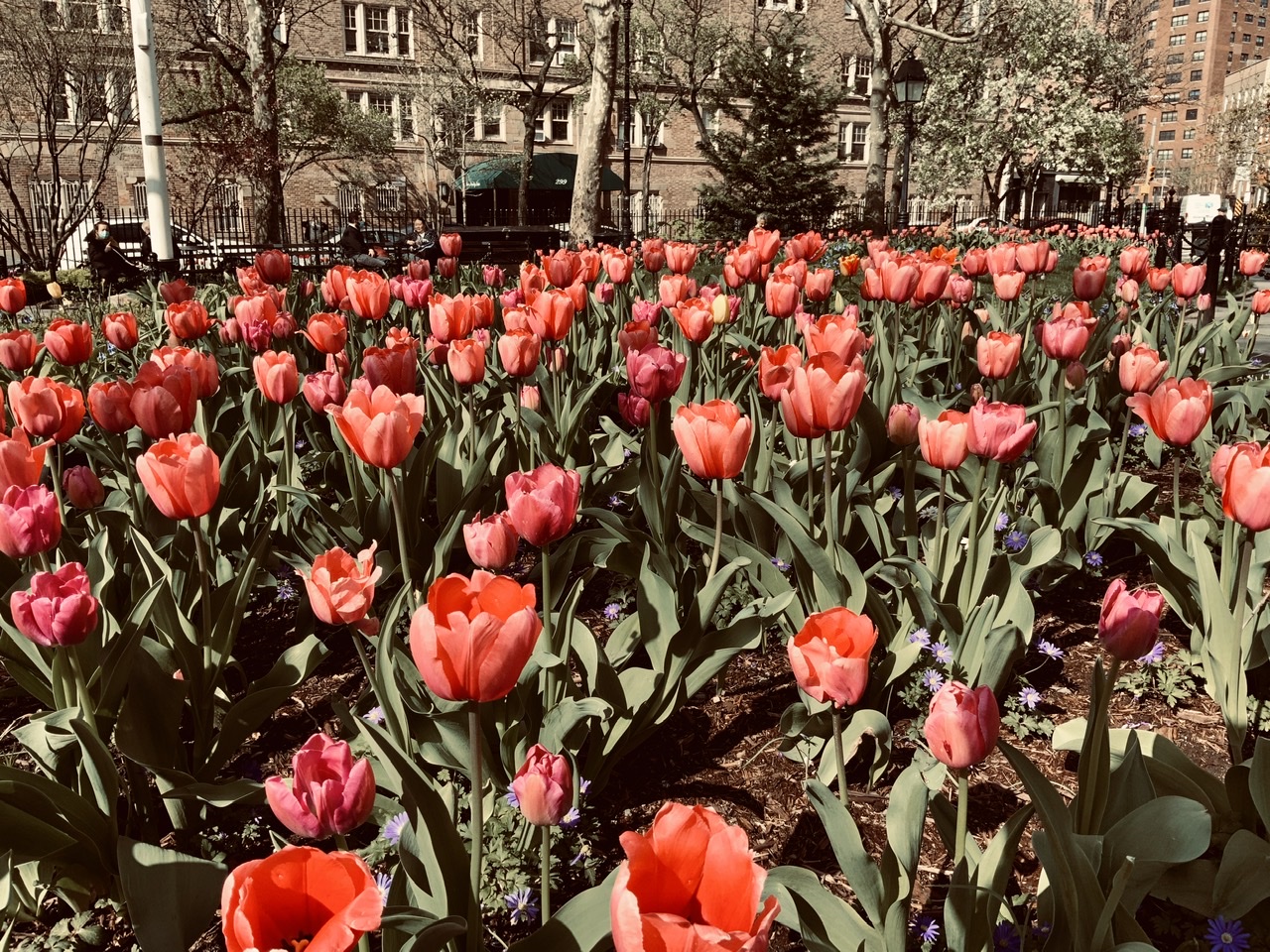
New York, NY
*an ongoing series of quotations – mostly from artists, to artists – that offers wisdom, inspiration, and advice for the sometimes lonely road we are on.
As we grow into our true artistic selves, we start to realize that the tools don’t matter, the story does. Your point of view and the way that you express yourself as a photographer are how you tell the stories that matter to you. And that, my friends, is therapeutic.
There’s a certain amount of Zen in that act. Peace and tranquility are hard to come by in today’s world. But through photography, we all have a chance to find both.
As photographers, we sometimes lose sight of the fact that our ability to use a camera gives us a chance to show everyone else who we are. Young photographers often obsess over doing something new. Older photographers, like Rick and I, realize that the real goal is in being you. So focus on being you not on being new for new’s sake. This is the path to both inner and outer success.
People will ask you what you photograph. I personally am often described as a bird photographer. But we are not what we do. It’s important to note the difference. And that is because people don’t care what you do. They care why you do it. If you are doing what you are meant to do, you will be able to articulate your own why.
Scott Bourne in Photo Therapy Motivation and Wisdom by Rick Sammon
Comments are welcome!


 barbararachkoscoloreddust.com