Blog Archives

Pearls from artists* # 666

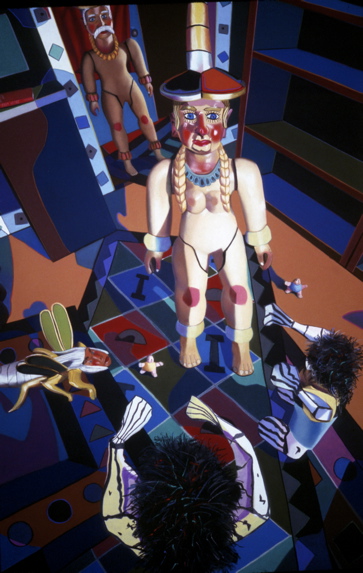
With “Harbinger,” soft pastel on sandpaper, 35” x 28.5” framed

*an ongoing series of quotations – mostly from artists, to artists – that offers wisdom, inspiration, and advice for the sometimes lonely road we are on.

Most of my writing life consists of nothing more than unglamorous, disciplined labor. I sit at my desk and I work like a farmer, and that’s how it gets done. Most of it is not fairy dust in the least.

But sometimes it is fairy dust. Sometimes when I’m in the midst of writing, I feel like I am suddenly walking on one of those moving sidewalks that you find in a big airport terminal; I still have a long slog to my gate. And my luggage is still heavy, but I can feel myself being gently propelled by some exterior force. Something is carrying me along – something powerful and generous – and that something is decidedly not me.

You may know this feeling. It’s the feeling you get when you’ve made something wonderful, or done something wonderful, and when you look back at it later, all you can say is: “I don’t even know where that came from.”

Elizabeth Gilbert in Big Magic: Creative Living Beyond Fear

Comments are welcome!

Q: You seem very disciplined. Do you ever have a day when you just can’t get excited about going to the studio to work?

Signing “Narcissist”


A:  That happens occasionally, but I usually still go to the studio to work.  You know the expression, “99% of life is just showing up”?  Well, of course I have to show up at my studio to accomplish anything so I still try to keep fairly regular studio hours – 6 to 7 hours a day, 4 or 5 days a week. And that’s not to mention all the other work – answering email, checking social media, writing blog posts, etc. – which I tend to do at lunchtime, in the evenings, and on my days off from the studio.

When you are an artist there is always work to do and for some of it, no one else can do it because no one else knows the work from the inside the way the maker does.  I like what Twyla Tharp says in her book, “The Creative Habit.”  In order to progress an artist needs good work habits that become a daily routine.  And Chuck Close used to say, “Inspiration is for amateurs,” meaning a professional works whether she’s in the mood or not.  I completely agree so I keep working and slowly moving ahead. 

As Tchaikovsky wrote in a letter to a friend:

We must always work, and a self-respecting artist must not fold his hands on the pretext that he is not in the mood.  If we wait for the mood, without endeavoring to meet it halfway, we easily become indolent and apathetic.  We must be patient, and believe that inspiration will come to those who can master their disinclination.  A few days ago I told you I was working every day without any real inspiration.  Had I given way to my disinclination, undoubtedly I should have drifted into a long period of idleness.  But my patience and faith did not fail me, and today I felt that inexplicable glow of inspiration of which I told you; thanks to which I know beforehand that whatever I write today will have power to make an impression, and to touch the hearts of those who hear it.

Quoted in Eric Maisel’s A Life in the Arts: Practical Guidance and Inspiration for Creative and Performing Artists.

Comments are welcome!

Pearls from artists* # 548

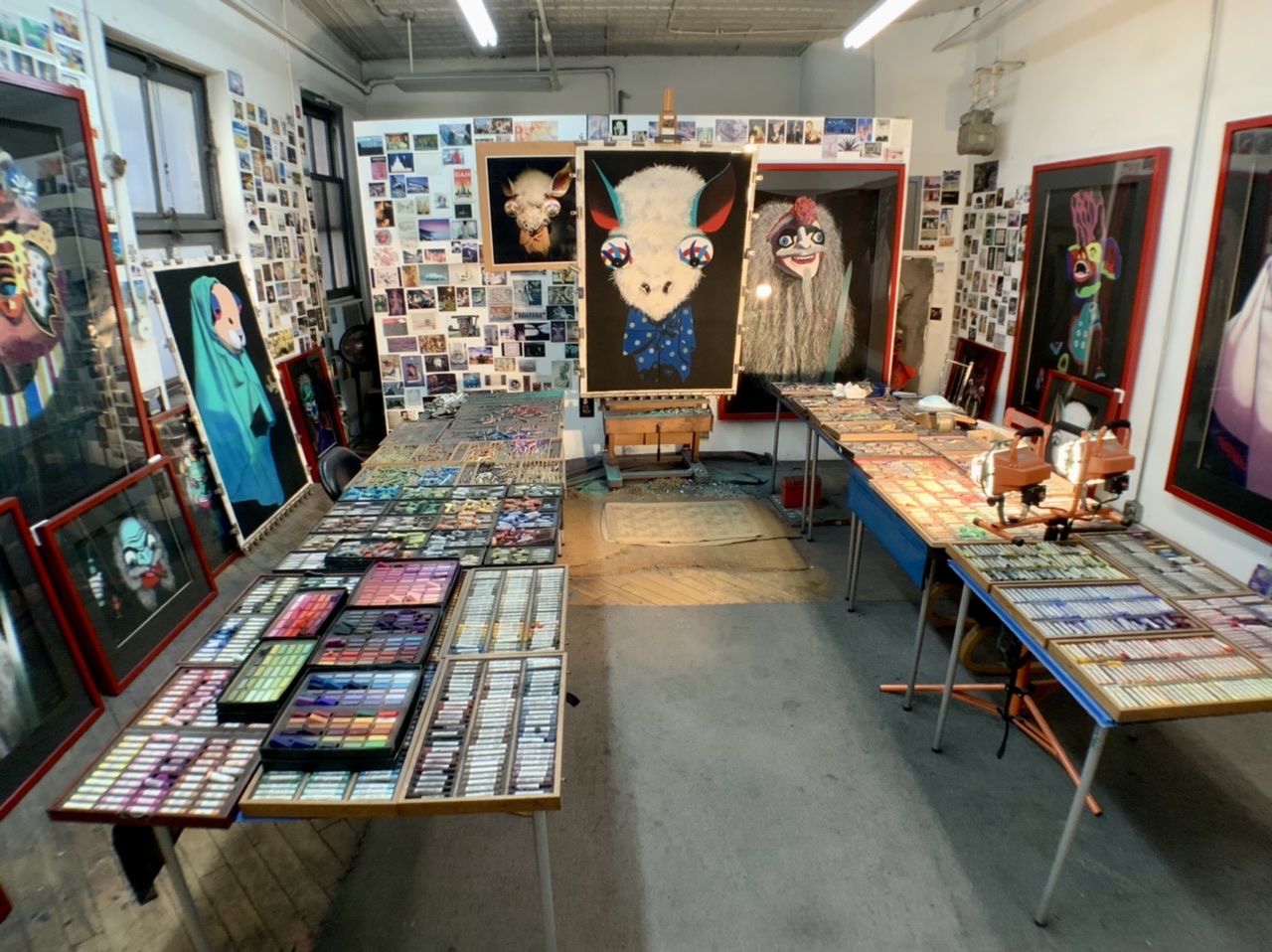
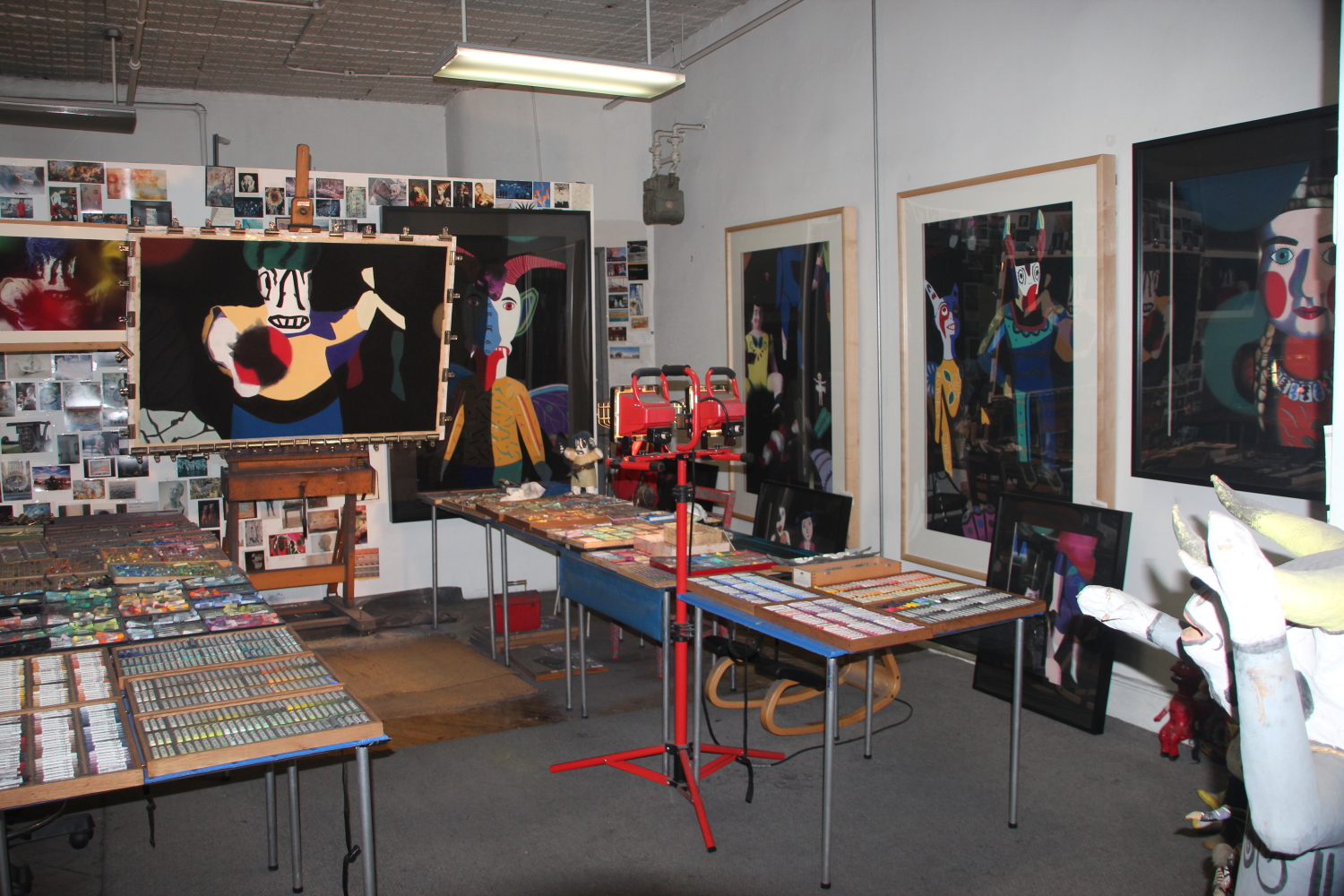
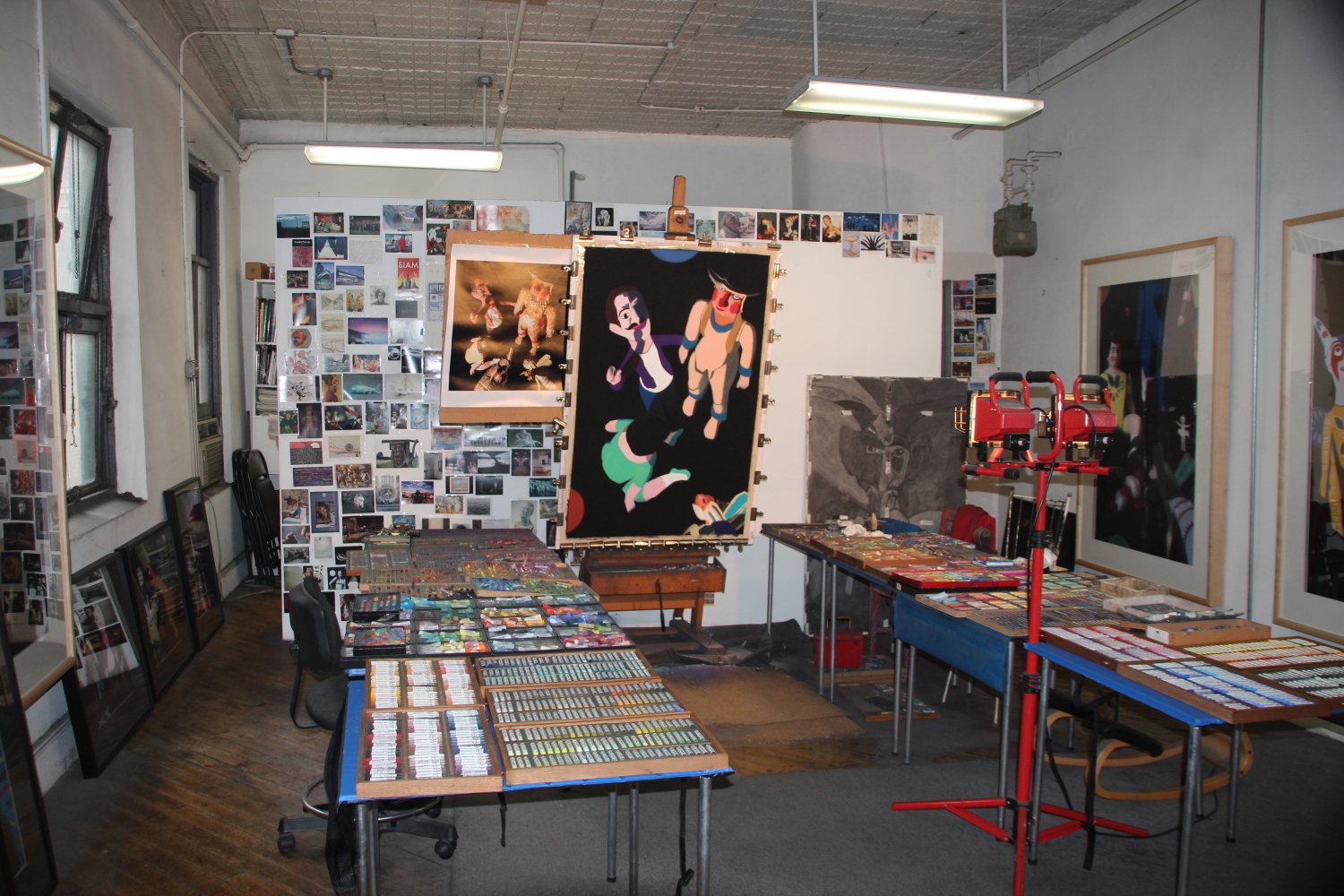
Barbara’s Studio

*an ongoing series of quotations – mostly from artists, to artists – that offers wisdom, inspiration, and advice for the sometimes lonely road we are on.

We who work in the arts are at risk of being in a popularity contest rather than a profession. If that fact causes you despair, you should probably pick another profession. Your desire to communicate must be bigger than your relationship to these chaotic and unfair realities. Ideally, we must be even more ‘professional’ than lawyers, doctors, accountants, hairdressers. We have to create our own standards of discipline.

All of the successful artists I know are very disciplined and very organized. Even if they don’t look organized, they have their own order.

Anna Deavere Smith in Letters to a Young Artist: Straight Up Advice on Making a Life in the Arts – for Actors, Performers, Writers, and Artists of Every Kind

Comments are welcome!

Q: Walk us through your “typical day”?

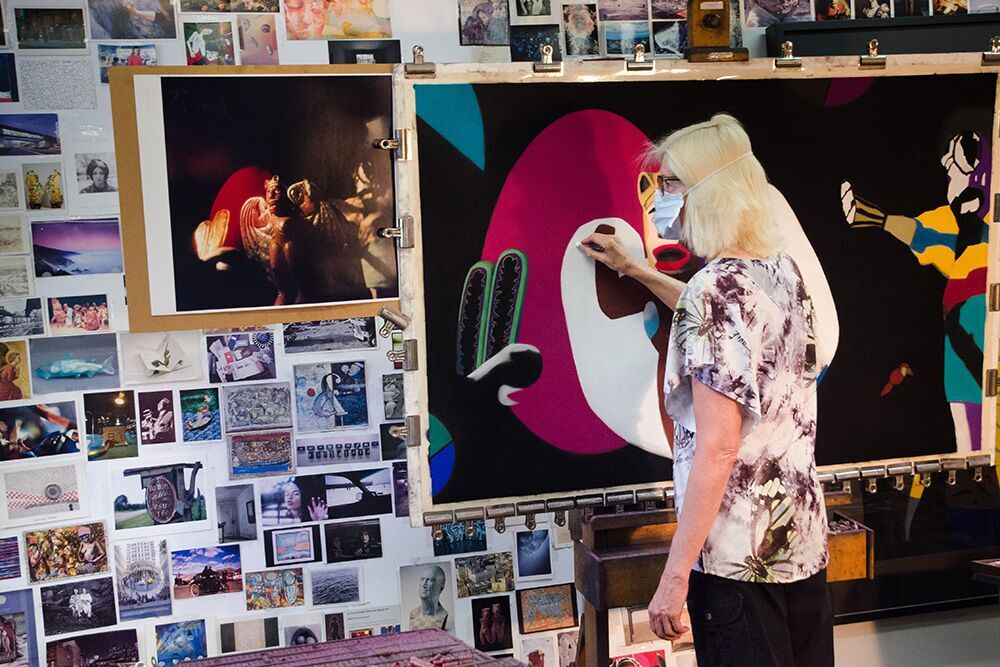
Barbara at work on “Schemer,” Soft Pastel on Sandpaper, 26” x 20”

Barbara at work on “Schemer,” Soft Pastel on Sandpaper, 26” x 20”

A:  I’ll describe a typical day at the studio.  When I first arrive in the morning, I read for 30 minutes. Reading focuses and quiets my mind and gets me ready to begin the day’s work.  While I read, I look at the pastel painting that’s on my easel to see where to begin.  Then I close the book, turn on some music, plug in the Halogen lamps I use while working, apply a barrier cream to my hands, put on a surgical mask (to avoid breathing pastel dust), pick up a pastel, and start.   

I never sit while working.  I enjoy the physicality of art-making and prefer to stand at my easel so I can back up to see how the pastel painting looks from a distance.  I like being on my feet all day and getting some exercise.  I work for a couple of hours, break for lunch, and then work the rest of the afternoon.

I believe artists need to be disciplined.  I work five days a week, taking Wednesdays and Sundays off, and spend seven hours or more per day in the studio.  Daylight is essential so I work more hours in summer, fewer in winter.  I like to think of art-making as independent of time tables, but I tend to work in roughly two-hour blocks before taking a break.  I typically work until 5:00 or so.

Studio hours are sacrosanct and exclusively for creative work.  I do not have WiFi at my studio and prefer to keep my computer and mobile devices elsewhere (they devour time).  Art business activities – answering email, keeping up with social media, sending jpegs, writing blog posts, doing interviews, etc. – are accomplished at home in the mornings, in the evenings, and on days off from the studio.

Comments are welcome!

Q: Did your military experience become a building block on which you formed your artistic ideas?

"Answering the Call," 58" x 38," soft pastel on sandpaper, 2000

“Answering the Call,” 58″ x 38,” soft pastel on sandpaper, 2000

A:  In my younger days boredom was a strong motivator. I left the active duty Navy out of boredom. I couldn’t bear not being intellectually challenged (most of my jobs consisted of paper-pushing), not using my flying skills, and not developing my artistic talent. In what must be a first, by spending a lot of time and money training me for jobs I hated, the Navy turned me into a hard-working, devoted, and disciplined artist! Once I left the Navy there was no plan B. It was “full speed ahead” to become an accomplished artist.

Comments are welcome!

Q: What are some of your work habits? Do you sit most of the day?

Barbara at work, Photo: Marianne Barcellona

Barbara at work, Photo: Marianne Barcellona

A:  No, I never sit while working.  I enjoy the physicality of art-making and prefer to stand at my easel so I can back up to see how a painting looks from a distance.  I like being on my feet all day and getting some exercise.

In order to accomplish anything, artists need to be disciplined.  I work five days a week, taking Wednesdays and Sundays off, and spend seven hours or more in the studio.  Daylight is necessary so I work more hours in summer, fewer in winter.  I deliberately don’t have a clock on the wall – art-making is independent of timetables – but I tend to work in roughly two-hour blocks before taking a break. 

Studio hours are sacrosanct and exclusively for creative work.  I keep my computer and mobile devices out of the studio.  Art business activities – answering email, keeping up with social media, sending jpegs, writing blog posts, doing interviews, etc. – are mostly accomplished at home in the evenings and on days off.

Comments are welcome!         

Pearls from artists* # 131

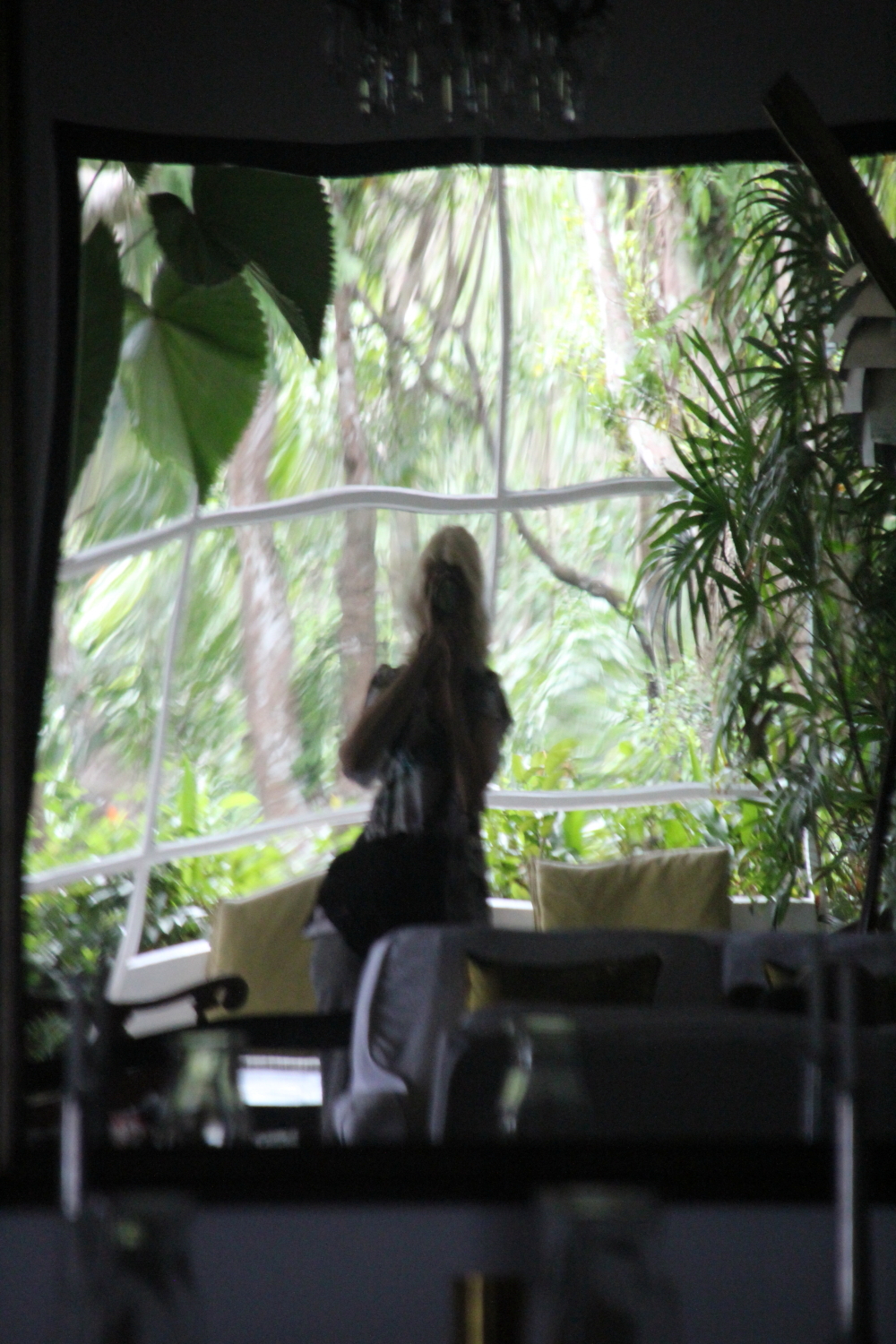
Self-portrait at an architect's estate in Sri Lanka

Self-portrait at an architect’s estate in Sri Lanka


* an ongoing series of quotations – mostly from artists, to artists – that offers wisdom, inspiration, and advice for the sometimes lonely road we are on.

Sister Corita

Immaculate Heart College Art Department Rules

Rule 1:    Find a place you trust, and then try trusting it for a while.

Rule 2:    General duties of a student:  pull everything out of your teacher.  Pull everything out of your fellow students.

Rule 3:    General duties of a teacher:  Pull everything out of your students.

Rule 4:    Consider everything an experiment.

Rule 5:    Be self-disciplined.  This means finding someone wise or smart and choosing to follow them.  To be disciplined is to follow in a good way.  To be self-disciplined is to follow in a better way.

Rule 6:    Nothing is a mistake.  There’s no win and no fail.  There’s only make.

Rule 7:    The only rule is work.  If you work it will lead to something.  It’s the people who do all of the work all of the time who eventually catch on to things.

Rule 8:    Don’t try to create and analyze at the same time.  They’re different processes.

Rule 9:    Be happy whenever you can manage it.  Enjoy yourself.  It’s lighter than you think.

Rule 10:  “We’re breaking all the rules.  Even our own rules. And how do we do that?  By leaving plenty of room for X quantities.”  John Cage

Helpful Hints:  Always be around.  Come or go to everything.  Always go to classes.  Read anything you can get your hands on.  Look at movies carefully, often.  Save everything – it might come in handy later.

There should be new rules next week.    

Quoted in The Art Life:  On Creativity and Career by Stuart Horodner

Comments are welcome!


Q: Why do people need art in their daily lives?


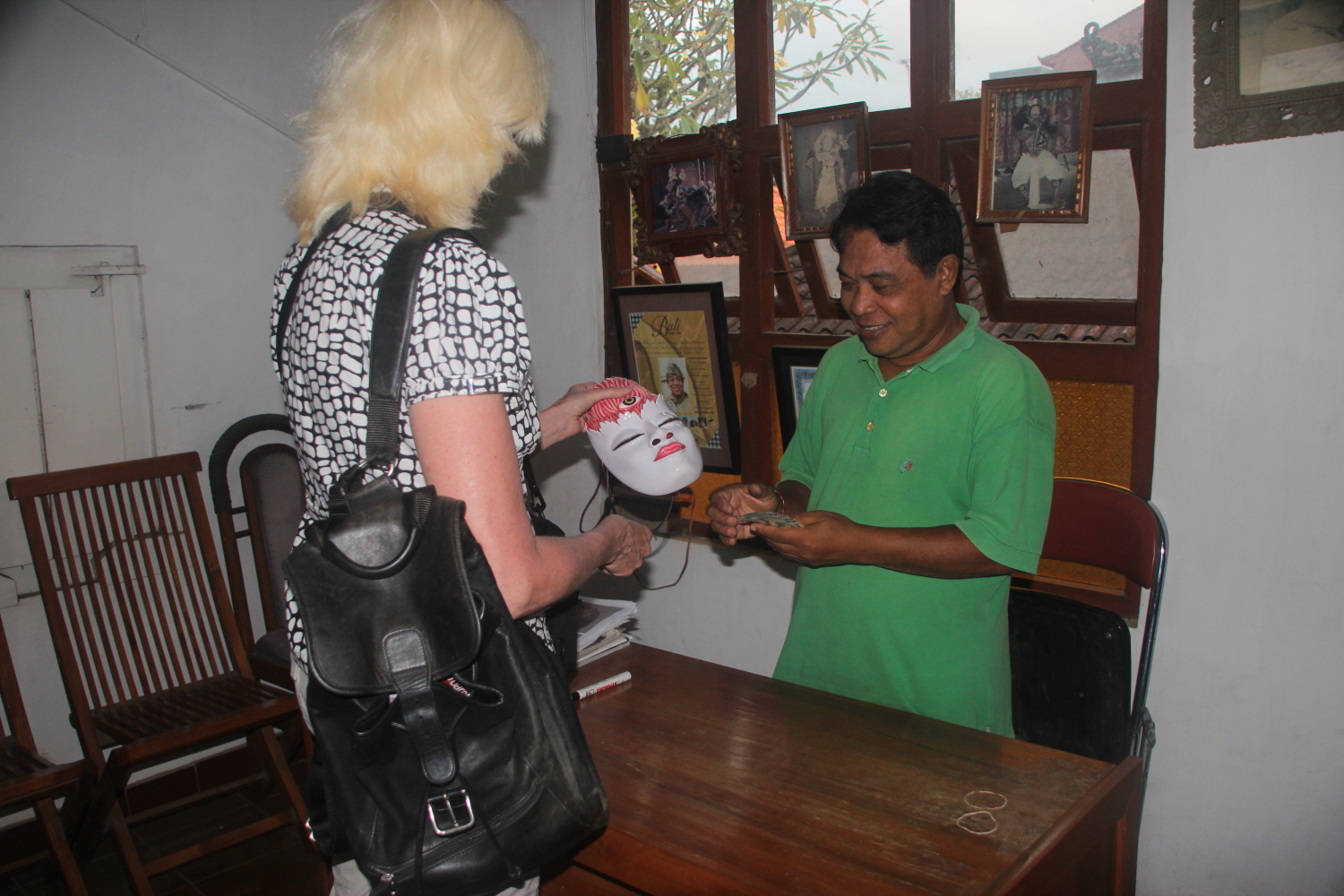
With Ida Bagus Anom, Mas, Bali; Photo:  Donna Tang

With Ida Bagus Anom, Mas, Bali; Photo: Donna Tang

A:  That is for each person to decide, but as someone who devotes every waking moment to my work and to becoming a better artist, I cannot imagine my life without art.  

I will tell you a little about what art has done for me.  In my younger days boredom was a strong motivator.  I left the active duty Navy out of boredom.  I couldn’t bear not being intellectually challenged (most of my jobs consisted of paper-pushing), not using my flying skills (at 27 I was a licensed commercial pilot and Boeing-727 flight engineer), and not developing my artistic talents.  In what surely must be a first, the Navy turned me into a hard-working and disciplined artist.  And once I left the Navy there was no plan B.  There was no time to waste.  It was “full speed ahead.” 

Art is a calling.  You do not need to be told this if you are among those who are called.  It’s all about “the work,” that all-consuming focus of an artist’s life.  If a particular activity doesn’t seem likely to make me a better artist, I tend to avoid it.  I work hard to nourish and protect my  gifts.  As artists we invent our own tasks, learn whatever we need in order to progress, and complete projects in our own time.  It is life lived at its freest. 

My art-making has led me to fascinating places:  Mexico, Guatemala, Brazil, Argentina, Uruguay, France, England, Italy, Bali, Java, Sri Lanka, and more; and to in-depth studies of intriguing subjects:  drawing, color, composition, art and art history, the art business, film and film history, photography, mythology, literature, music, jazz and jazz history, and archaeology, particularly that of ancient Mesoamerica (Olmec, Zapotec, Mixtec, Aztec, Maya, etc.).  And this rich mixture continually grows!  For anyone wanting to spend their time on earth learning and meeting new challenges, there is no better life! 

Comments are welcome!

Q: I just got home from my first painting experience… three hours and I am exhausted! Yet you, Barbara, build up as many as 30 layers of pastel, concentrate on such intricate detail, and work on a single painting for months. How do you do it?

Barbara's studio

Barbara’s studio

A:  The short answer is that I absolutely love making art in my studio and on the best days I barely even notice time going by!  

Admittedly, it’s a hard road.  Pursuing life as an artist takes a very special and rare sort of person.  Talent and having innate gifts are a given, merely the starting point.  We must possess a whole cluster of characteristics and be unwavering in displaying them.  We are passionate, hard-working, smart, devoted, sensitive, self-starting, creative, hard-headed, resilient, curious, persistent, disciplined, stubborn, inner-directed, tireless, strong, and on and on.  Into the mix add these facts.  We need to be good business people. Even if we are, we are unlikely to make much money.  We are not respected as a profession.  People often misunderstand us:  at best they ignore us, at worst they insult our work and us, saying we are lazy, crazy, and more.

The odds are stacked against any one individual having the necessary skills and stamina to withstand it all.  So many artists give up, deciding it’s too tough and just not worth it, and who can blame them?  This is why I believe artists who persevere over a lifetime are true heroes.  It’s why I do all I can to help my peers.  Ours is an extremely difficult life – it’s impossible to overstate this – and each of us finds our own intrinsic rewards in the work itself.  Otherwise there is no reason to stick with it.  Art is a calling and for those of us who are called, the work is paramount.  We build our lives around the work until all else becomes secondary and falls away.  We are in this for the duration.

In my younger days everything I tried in the way of a career eventually became boring. Now with nearly thirty years behind me as a working artist, I can still say, “I am never bored in the studio!”  It’s difficult to put into words why this is true, but I know that I would not want to spend my time on this earth doing anything else.  How very fortunate that I do not have to do so!

Comments are welcome!

Q: To be a professional visual artist is to have two full-time jobs because an artist must continually balance the creative and the business sides of things. How do you manage to be so productive?

No computer in sight

No computer in sight

A:  With social media and other new ways of doing business, managing it all is getting more difficult every day.  Bear in mind that I say this as someone who does not have the extra time commitment of a day job, nor do I have children or other family members to care for.  I have no idea how other visual artists, who may have these responsibilities and more, keep up with all the tasks that need to be done.  In The Artist’s Guide:  How to Make A Living Doing What You Love, Jackie Battenfield lists a few of them (believe me, there are others):

…being an artist isn’t just about making art.  You have many other responsibilities –  managing a studio, looking for opportunities, identifying an audience for your work, caring for and protecting what you have created, and securing money, time, and space – in addition to whatever is  happening in your personal life.

To begin with I try to maintain regular studio hours.  I generally work on Mondays, Tuesdays, Thursdays, Fridays, and Saturdays, and once I’m at the studio I stay there for a minimum of 7 hours.  To paint I need daylight so in the spring and summer my work day tends to be longer.  My pastel-on-sandpaper paintings are extremely labor-intensive.  I need to put in sufficient hours in order to accomplish anything.  When I was younger I used to work in my studio 6 days a week, 9 hours or more a day.  I have more commitments now, and can no longer work 60+ hours a  week, but I still try to stick to a schedule.  And once I’m at the studio I concentrate on doing the creative work, period.

I am productive when I keep the business and creative sides physically separate., ie., no computers, iPads, etc. are allowed into the studio.  Recently I tried an experiment.  I brought my iPad to the studio, thinking, “Surely I am disciplined enough to use it only during my lunch break.”  But no, I wasted so much time checking email, responding to messages on Facebook, etc., when I should have been focusing on solving problems with the painting that was on my easel.  I learned a good lesson that day and won’t bring my iPad to the studio again.

As has long  been my practice, I concentrate on business tasks when I get home in the evening and on my, so called, days off.  After a day spent working in the studio, I generally spend a minimum of two to three hours more to answer email, apply for exhibitions, work on my blog, email images to people who need them, etc.  At present I  have part-time help with social media – the talented Barbra Drizin, of Start from Scratch Social Media – although my time commitment there is growing, too, as more details need my attention.

No one ever said it would be easy being a professional artist, but then again, I would not choose to spend my days any other way.  As I often say, “Being an artist is a calling.  Contrary to popular belief, it is NOT a life for wimps… or slackers.”

Comments are welcome!