Category Archives: Black Paintings
Q: What’s on the easel today?
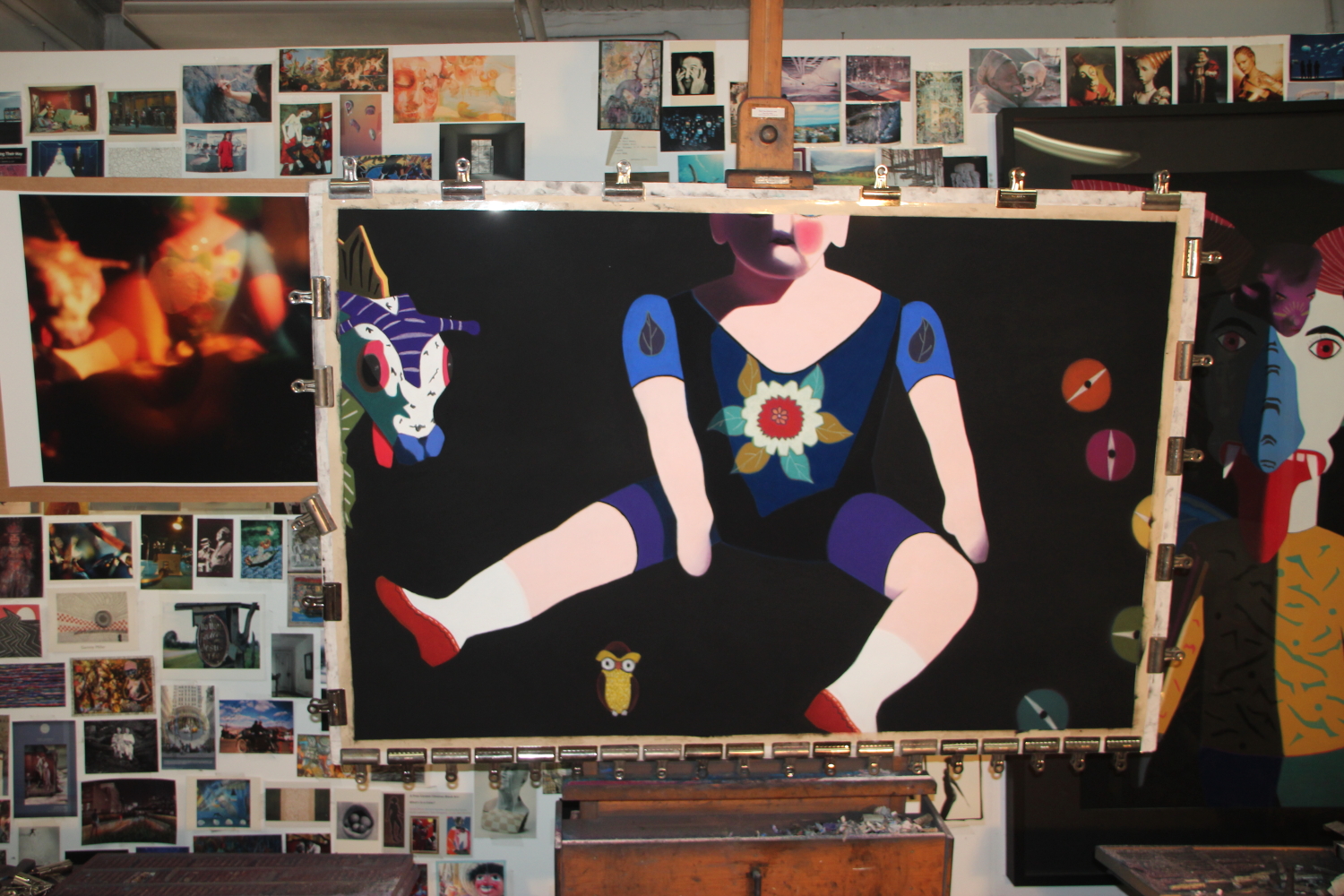
Work in progress
A: I am putting finishing touches on “Incognito.”
Comments are welcome!
Pearls from artists* # 94
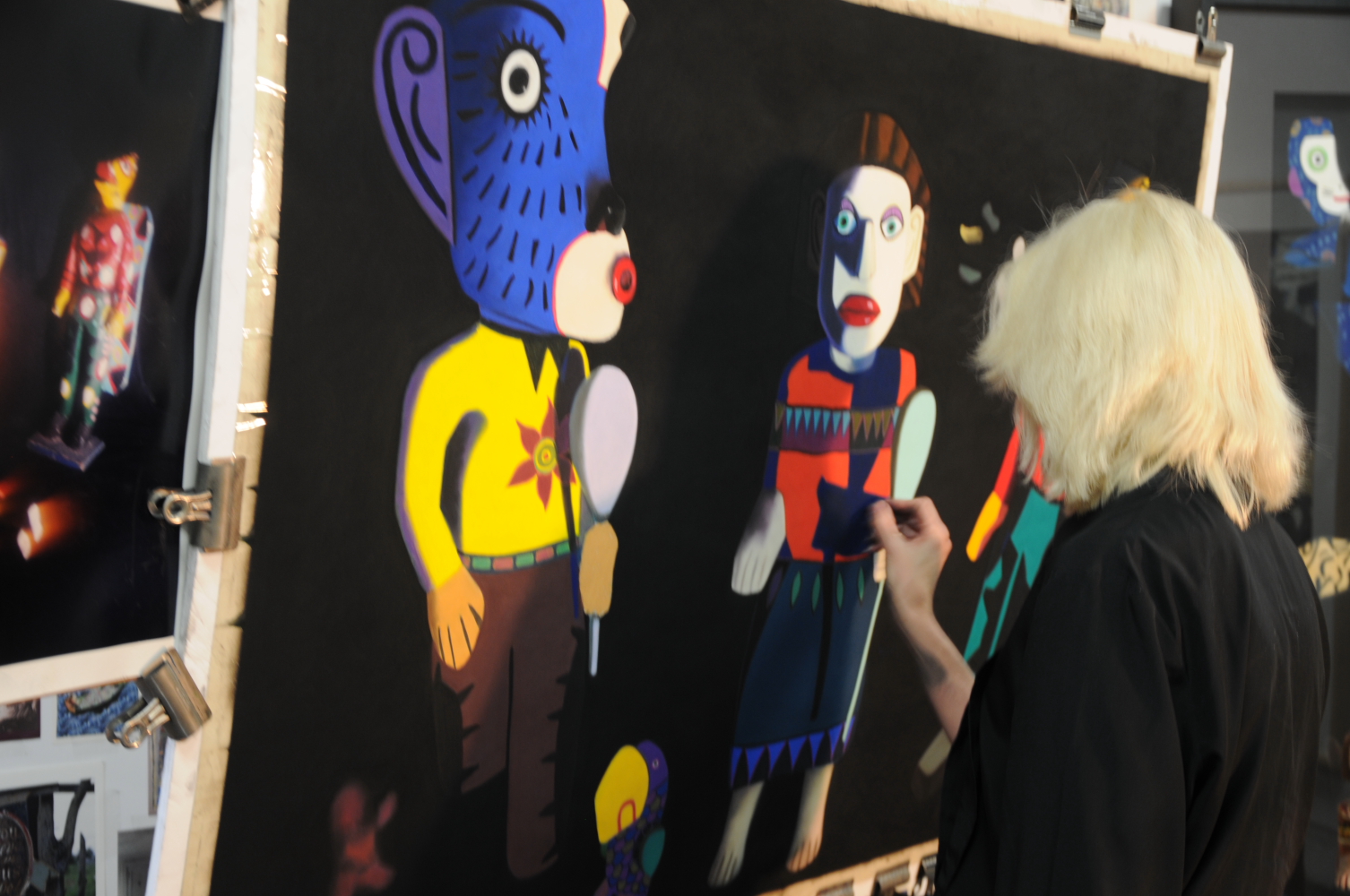
Working on “False Friends” Photo: Diana Feit
* an ongoing series of quotations – mostly from artists, to artists – that offers wisdom, inspiration, and advice for the sometimes lonely road we are on.
A work of art which inspires us comes from no quibbling or uncertain man. It is the manifest of a very positive nature in great enjoyment, and at the very moment the work was done.
It is not enough to have thought great things before doing the work. The brush stroke at the moment of contact carries inevitably the exact state of being of the artist at that exact moment into the work, and there it is, to be seen and read by those who can read such signs, and to be read later by the artist himself, with perhaps some surprise, as a revelation of himself.
For an artist to be interesting to us he must be interesting to himself. He must have been capable of intense feeling, and capable of profound contemplation.
He who has contemplated has met with himself, is in a state to see into the realities beyond the surfaces of his subject. Nature reveals to him, and, seeing and feeling intensely, he paints, and whether he wills it or not each brush stroke is an exact record of such as he was at the exact moment the stroke was made.
The Art Spirit by Robert Henri
Comments are welcome!
Q: How long have you been working in your current studio?
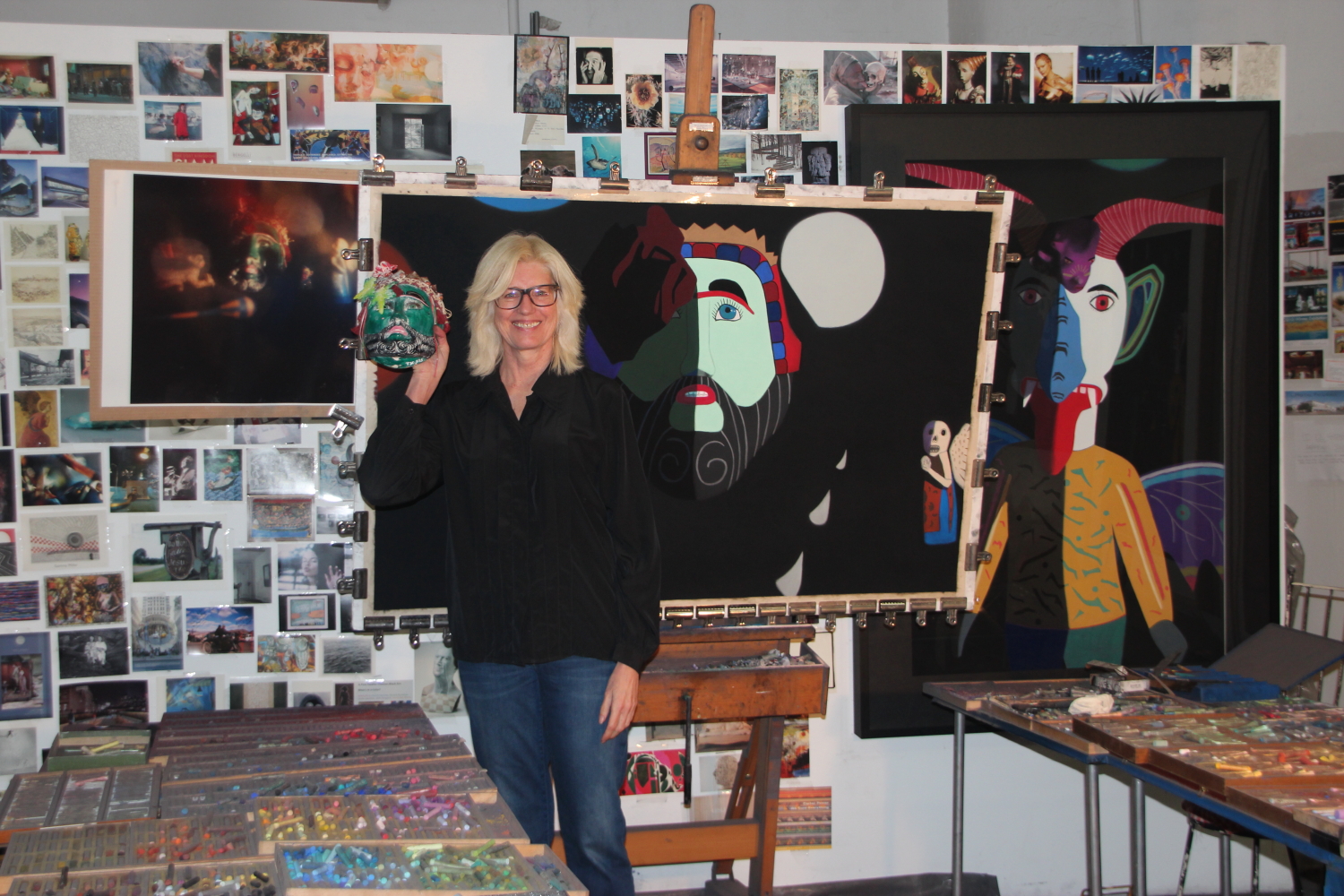
Barbara in her studio; Photo: Elliott Jones
A: I have been in my West 29th Street space for seventeen years, but from the beginning, in the mid-1980’s, I had a studio. My first one was in the spare bedroom of the Alexandria, Virginia, house that I shared with Bryan and that I still own. For about three years in the 1990s I had a studio on the third floor of the Torpedo Factory Art Center, a building in Alexandria that is open to the public. People come in, watch artists work, and occasionally buy a piece of art.
In April 997 an opportunity to move to New York arose and I didn’t look back. By then I was showing in a good 57th Street gallery, Brewster Arts Ltd. (the gallery focused exclusively on Latin American artists; I was thrilled with the company I was in; the only fellow non-Latina represented by owner, Mia Kim, was Leonora Carrington), and I had managed to find a New York agent, Leah Poller, with whom to collaborate. I looked at only one other space before finding my West 29th Street studio. An old friend of Bryan’s from Cal Tech rented the space next door and he had told us it was available. Initially the studio was a sublet. The lease-holder was a painter headed to northern California to work temporarily for George Lucas at the Lucas Ranch. After several years she decided to stay so I was able to take over the lease.
My studio continues to be an oasis in a chaotic city, a place to make art, to read, and to think. I love to walk in the door every morning and always feel more calm the moment I arrive. It’s my absolute favorite place in New York!
Comments are welcome!
Q: How would you define art?

Barbara’s studio
A: At its core all art is communication. I personally believe that without the component of communication, there is no art. The expression of human creative skill and imagination becomes art when it is appreciated for its beauty, complexity, emotional power, evocativeness, etc. A sympathetic and understanding audience is essential.
Why might artists fail to communicate? Perhaps they haven’t mastered their medium sufficiently to elicit a reaction from the viewer. Perhaps the viewer lacks the necessary artistic, cultural, or intellectual background to understand and appreciate what the artist is communicating. Maybe the viewer is distracted or preoccupied and not looking or thinking deeply enough. There are many reasons.
Comments are welcome!
Pearls from artists* # 87
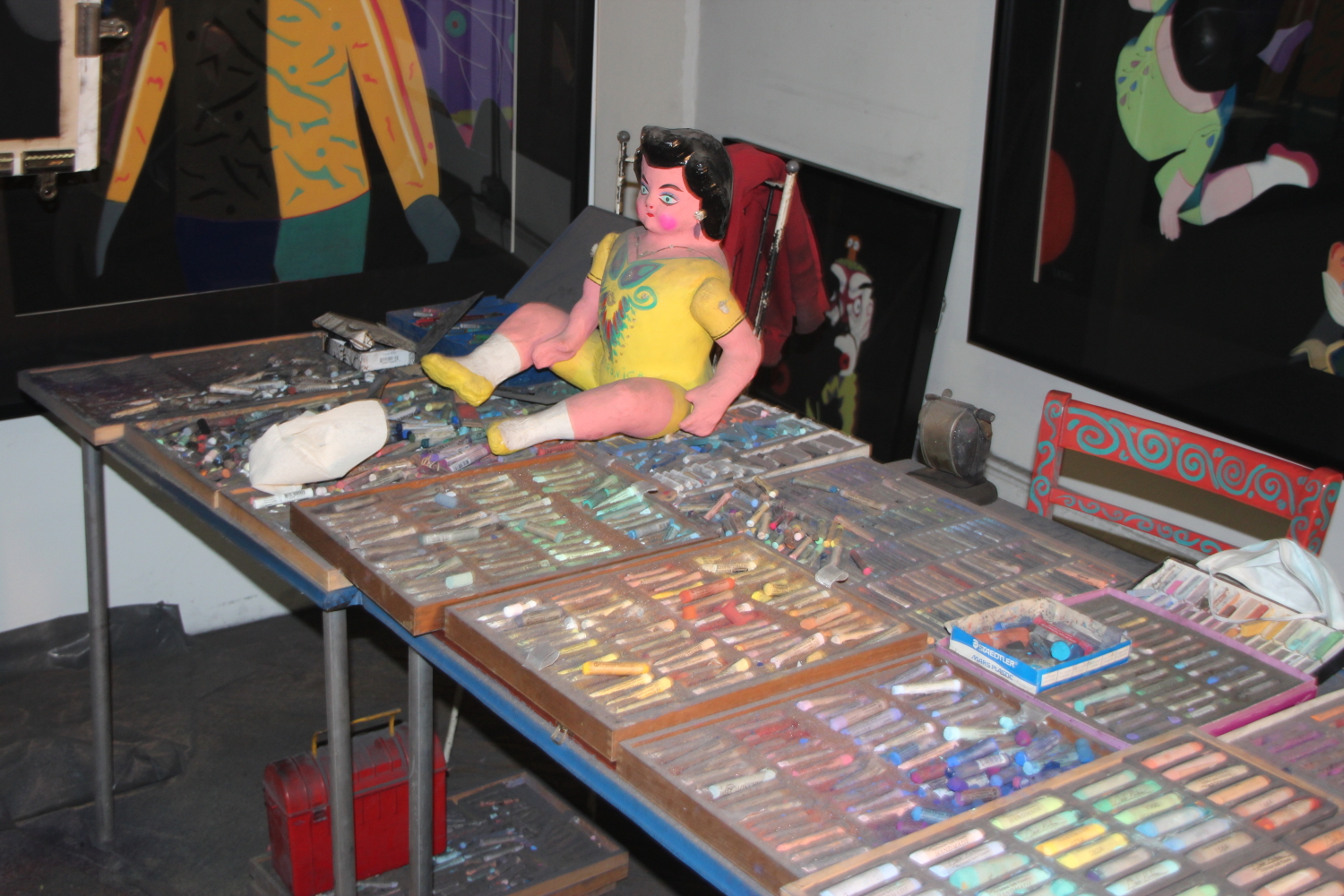
Studio
* an ongoing series of quotations – mostly from artists, to artists – that offers wisdom, inspiration, and advice for the sometimes lonely road we are on.
One evening, after one false start too many, I just gave up. Sitting at a bar, feeling a bit burned out by work and by life in general, I just started drawing on the backs of business cards for no reason. I didn’t really need a reason. I just did it because it was there, because it amused me in a kind of random, arbitrary way.
Of course it was stupid. Of course it was not commercial. Of course it wasn’t going to go anywhere. Of course it was a complete and utter waste of time. But in retrospect, it was this built-in futility that gave it its edge. Because it was the exact opposite of all the “Big Plans” my peers and I were used to making. It was so liberating not to have to think about all of that, for a change.
It was so liberating to be doing something that didn’t have to have some sort of commercial angle, for a change.
It was so liberating to be doing something that didn’t have to impress anybody, for a change.
It was so liberating to be free of ambition, for a change.
It was so liberating to have something that belonged just to me and no one else, for a change.
It was so liberating to feel complete sovereignty, for a change. To feel complete freedom, for a change. To have something that didn’t require somebody else’s money, or somebody else’s approval, for a change.
And of course, it was then, and only then, that the outside world started paying attention.
The sovereignty you have over your work will inspire far more people than the actual content ever will. How your own sovereignty inspires other people to find their own sovereignty, their own sense of freedom and possibility, will give the work far more power than the work’s objective merits ever will.
Your idea doesn’t have to be big. It just has to be yours alone. The more the idea is yours alone, the more freedom you have to do something really amazing.
The more amazing, the more people will click with your idea. The more people click with your idea, the more this little thing of yours will snowball into a big thing.
That’s what doodling on the backs of business cards taught me.
Hugh MacLeod in Ignore Everybody: and 39 Other Keys to Creativity
Comments are welcome!
Pearls from artists* # 86

“Broken,” 38″ x 58,” soft pastel on sandpaper
* an ongoing series of quotations – mostly from artists, to artists – that offers wisdom, inspiration, and advice for the sometimes lonely road we are on.
When I’m working from a photograph, a transparency, or direct observation, I am always amazed at how much more I see as the painting progresses. After I think I have completely perceived a particular area, something else reveals itself. As the work continues, the level of awareness deepens. The process takes it’s own time. I have come to accept that time and not fight it. I know that when I begin my work, no matter how hard I try, I’ll never observe as much on the first day as I will on the last. Like life, the development will not be rushed, nor will there be full realization before completion.
Dr. Leopold Caligor, a prominent New York psychiatrist, says that he listens to tapes of recorded sessions with patients, he hears new things and gains deeper insights. Each time he listens, more information is uncovered. This process is repeated until understanding is complete.
Audrey Flack in Art & Soul: Notes on Creating
Comments are welcome!
Pearls from artists* # 85
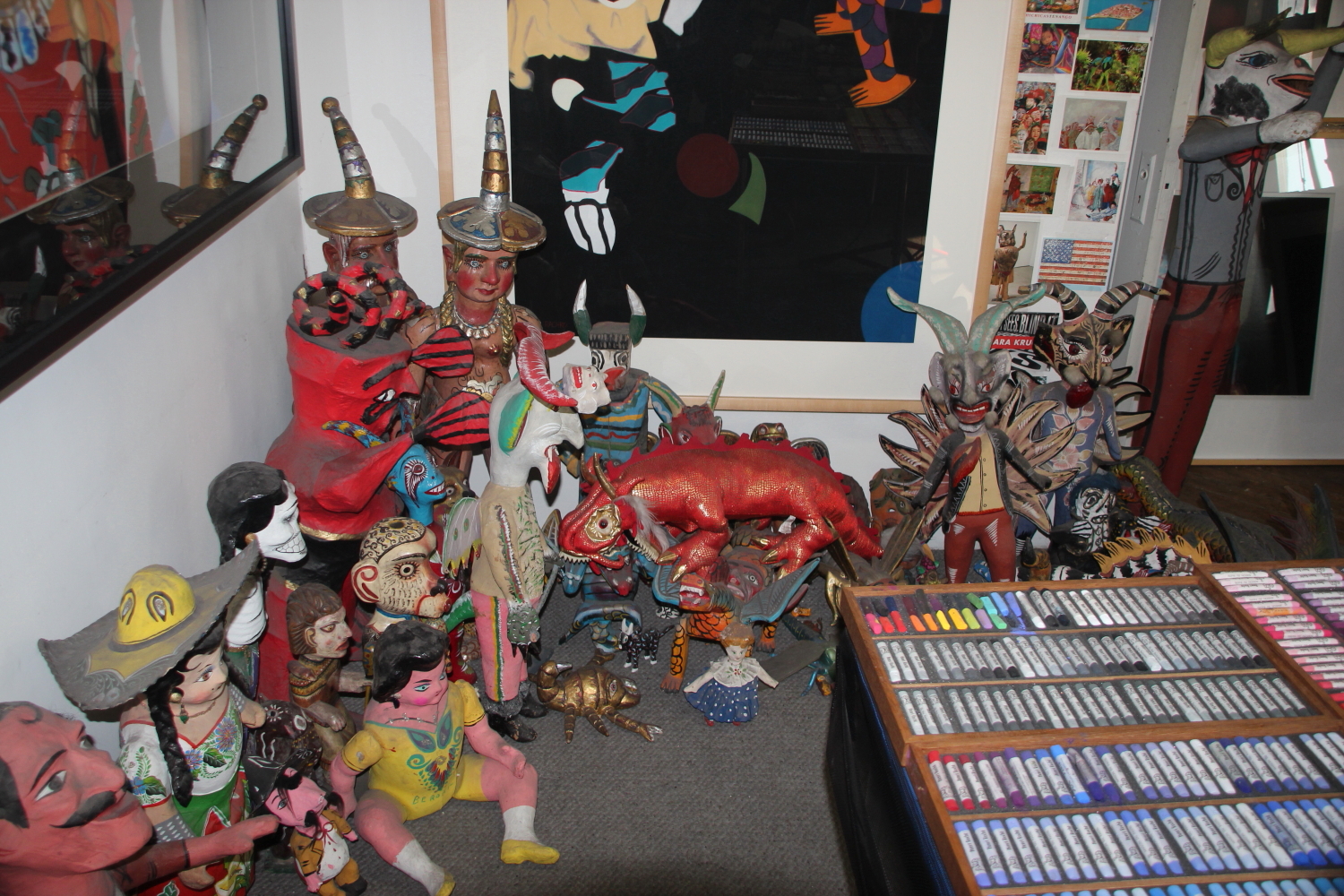
Studio
* an ongoing series of quotations – mostly from artists, to artists – that offers wisdom, inspiration, and advice for the sometimes lonely road we are on.
Credo
I believe in art.
I do not believe in the “art world” as
it is today.
I do not believe in art as a commodity.
Great art is in exquisite balance. It is
restorative.
I believe in the energy of art, and through
the use of that energy, the artist’s ability
to transform his or her life and, by ex-
ample, the lives of others.
I believe that through our art, and through
the projection of transcendent imagery, we
can mend and heal the planet.
Audrey Flack in Art & Soul: Notes on Creating
Comments are welcome!
Q: Do you have any advice for a young painter or someone just starting out as an artist?
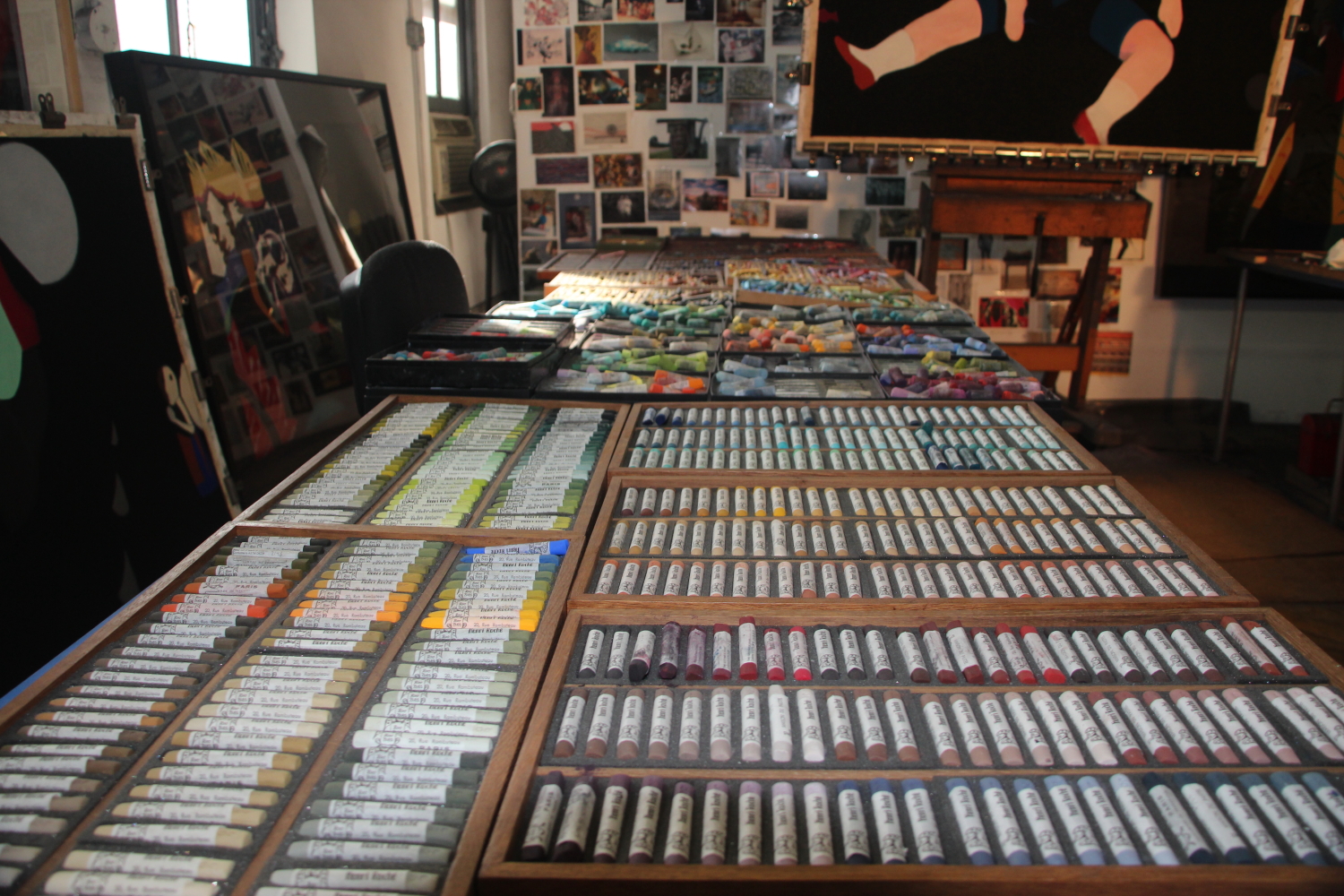
Studio
A: As artists each of us has at least two important responsibilities: to express things we are feeling for which there are no adequate words and to communicate to a select few people, who become our audience. By virtue of his or her own uniqueness, every human being has something to say. But self-expression by itself is not enough. As I often say, at it’s core art is communication. Without this element there is no art. When artists fail to communicate, perhaps they haven’t mastered their medium sufficiently so are unsuccessful in the attempt, or they may be being self-indulgent and not trying. Admittedly there is that rare and most welcome occurrence when an artistic statement – such as a personal epiphany – happens for oneself alone.
Most importantly, always listen to what your heart tells you. It knows and speaks the truth and becomes easier to trust as you mature. If you get caught up in the art world, step back and take some time to regain your bearings, to get reacquainted with the voice within you that knows the truth. Paint from there. Do not ever let a dealer or anyone else dictate what or how you should paint.
With perhaps the singular exception of artist-run cooperative galleries, be very suspicious of anyone who asks for money to put your work in an exhibition. These people are making money from desperate and confused artists, not from appreciative art collectors. With payment already in hand there is no financial incentive whatsoever for these people to sell your paintings and they won’t.
Always work in a beautiful and special place of your own making. It doesn’t need to be very large, unless you require a large space in which to create, but it needs to be yours. I’m thinking of Virginia Woolf’s “a room of one’s own” here. A studio is your haven, a place to experiment, learn, study, and grow. A studio should be a place you can’t wait to enter and once you are there and engaged, are reluctant to leave.
Be prepared to work harder than you ever have, unrelentingly developing your special innate gifts, whether you are in the mood to do so or not. Most of all remember to do it for love, because you love your medium and it’s endless possibilities, because you love working in your studio, and because you feel most joyously alive when you are creating.
Comments are welcome!
Pearls from artists* # 83
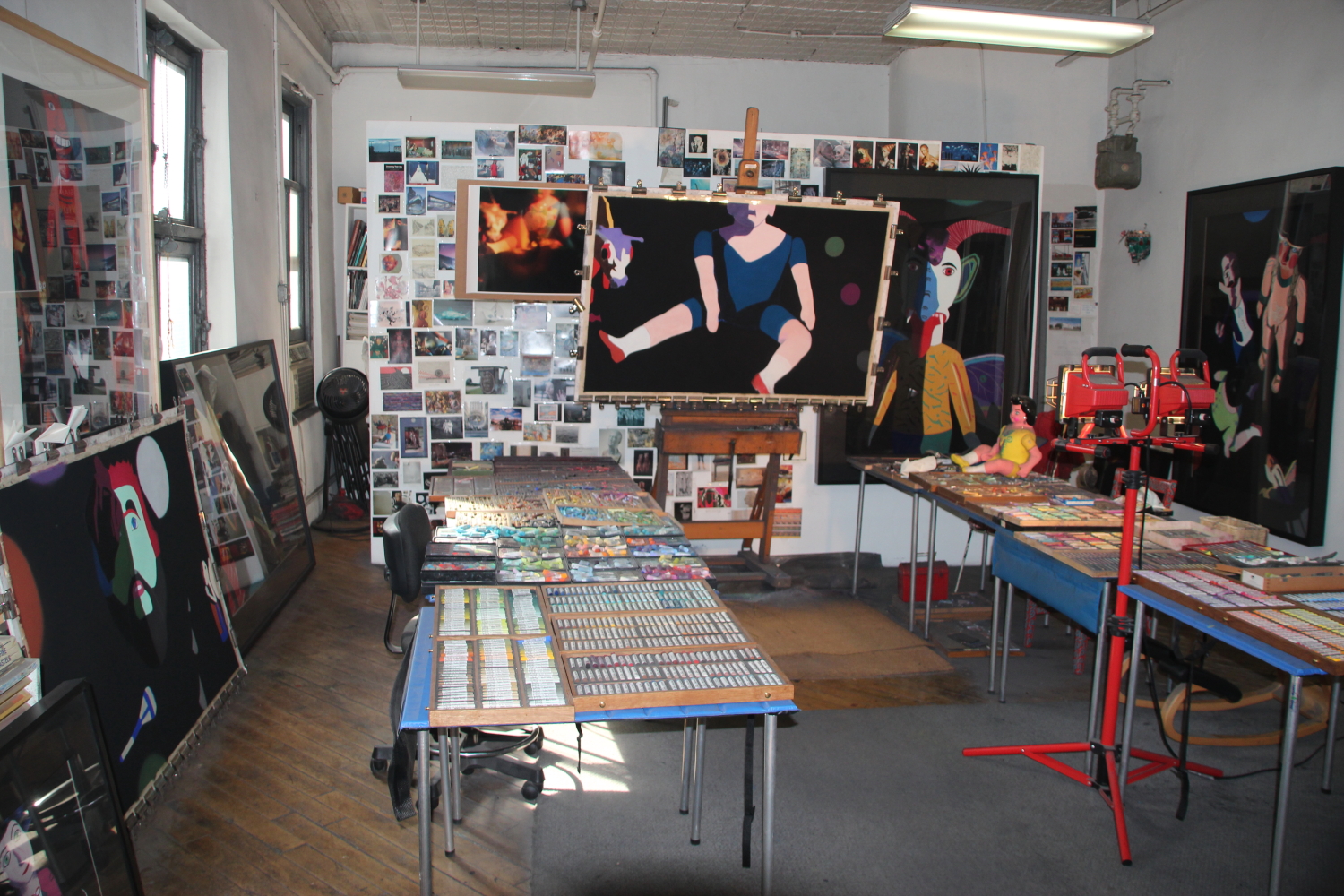
West 29th Street studio
* an ongoing series of quotations – mostly from artists, to artists – that offers wisdom, inspiration, and advice for the sometimes lonely road we are on.
The world can make no response to meet art. Praise can miss the point as much as a casual remark such as I heard last night: an impeccably turned-out gentleman bounding up the stairs to the gallery exclaimed over his shoulder, “And now to see the minimalist – or maximalist!” He had all the relish of a casually greedy person with a tasty tidbit in view; he was on his way to gulp down my life with as little consideration as he would an artichoke heart.
Do I wish, can I afford, in my own limitations, to continue to make work that has such a high psychic cost and stands in jeopardy of being so met? Do I have a choice? I do not know. Neither whether I can further endure, nor whether I can stop. The work is preemptory. My life has led me to an impasse.
Anne Truitt in Turn: The Journal of an Artist
Comments are welcome!
Q: What’s on the easel today?

Pastel painting in progress
A: I’m working on a pastel painting started a few weeks ago. It has a long way to go.
Comments are welcome!


 barbararachkoscoloreddust.com