Blog Archives
Pearls from artists* # 624

Machu Picchu (Peru), June 2016
*an ongoing series of quotations – mostly from artists, to artists – that offers wisdom, inspiration, and advice for the sometimes lonely road we are on.
If we were speaking from the point of view of the historian, and if we desired to know as concretely as possible how those peoples of the past or present conceived of their world, we should have to turn to their philosophy to find how they thought about their world, and to their sciences to analyze the atomic factors that contributed to those thoughts, and to their applied arts for the understanding of how this notion appeared when necessarily vulgarized to the common denominator of intelligence. But we would have to turn to their art to understand how they “felt about their world,” to know how their notions of reality found expression in their sensual perception of the world. And we know, of course, how those expressions can differ by simply examining Christian art, which consciously discarded the reality of its predecessor, Greek Hellenistic art.
Mark Rothko in The Artist’s Reality: Philosophies of Art
Comments are welcome!
Pearls from artists* # 623

The Studio
*an ongoing series of quotations – mostly from artists, to artists – that offers wisdom, inspiration, and advice for the sometimes lonely road we are on.
Jealousy? Hmmm. Jealousy links up with competition. It’s hard to compete, really compete, in the art world. That’s why award ceremonies are a little suspect. Athletes can compete. I don’t know how much you can really compete as an artist. You can compete with yourself.
You are an explorer. You understand that every time you go into the studio you are after something that does not yet exist. Maybe it’s the same for a runner. I don’t know. But with running, or swimming, or gymnastics, or tennis, the achievement is measurable. Forget about competition. Rather, commit yourself to find out the true nature of your art. How does it really work; what’s the essence of it? Go for that thing that no one can teach you. Go for that communion, that real communion with your soul, and the discipline of expressing that communion with others. That doesn’t come from competition. That comes from being one with what you are doing. It comes from concentration, and from your own ability to be fascinated endlessly with the story, the song, the jump, the color you are working with.
I know this sounds a little monkish or even sort of “holier than thou,” but I really do believe it. And that said, jealousy is a human sentiment. Few of us are above it. John Lahr, a writer, told me that the major emotion in Los Angeles is envy. I have to say he’s probably right. And a lot of it has to do with how close or far from an Academy Award one is. And LA, the capital of smoke and mirrors, would have sone believe that the award is just a step away. When you drive down Hollywood Boulevard, some of the dreamers look as though the dream ate them alive.
Anna Deavere Smith in Letters to a Young Artist: Straight-Up Advice on Making a Life in the Arts
Comments are welcome!
Pearls from artists* # 621

Montpelier, VT
*an ongoing series of quotations – mostly from artists, to artists – that offers wisdom, inspiration, and advice for the sometimes lonely road we are on.
Try to walk as much as you can, and keep your love for nature, for that is the way to learn to understand art more and more. Painters understand nature and love her and teach us to see her. If one really loves nature, one can find beauty everywhere.
Irving Sandler in Dear Theo: The Autobiography of Vincent Van Gogh
Comments are welcome!
Q: Do you have any rituals that you do before beginning a day’s work in the studio?

The Studio!
A: When I arrive at the studio in the morning it’s rare for me to immediately start working. Usually I read something art-related – books written by artists, about creativity, etc. At the moment I’m reading The Artist’s Reality: Philosophies of Art by Mark Rothko. As usual I am struggling to understand aspects of the art business and figure out what I need to do next to get my work seen and collected by a wider audience. The Artist’s Reality reminds me why I decided to make art in the first place. It helps reconnect with temporarily forgotten parts of myself and is a much-needed reminder of what I love about being an artist, especially in light of the business side that is becoming so complex and demanding of attention now.
Balancing the creative and business aspects of being an artist is a continual struggle. Both are so important. An artist needs an appreciative audience – very few artists devote their lives to art-making so that the work will remain in a closet – but I also believe this (from a note I wrote years ago and tacked to the studio wall): “Just make the work. None of the rest matters.”
Comments are welcome!

Pearls from artists* # 570
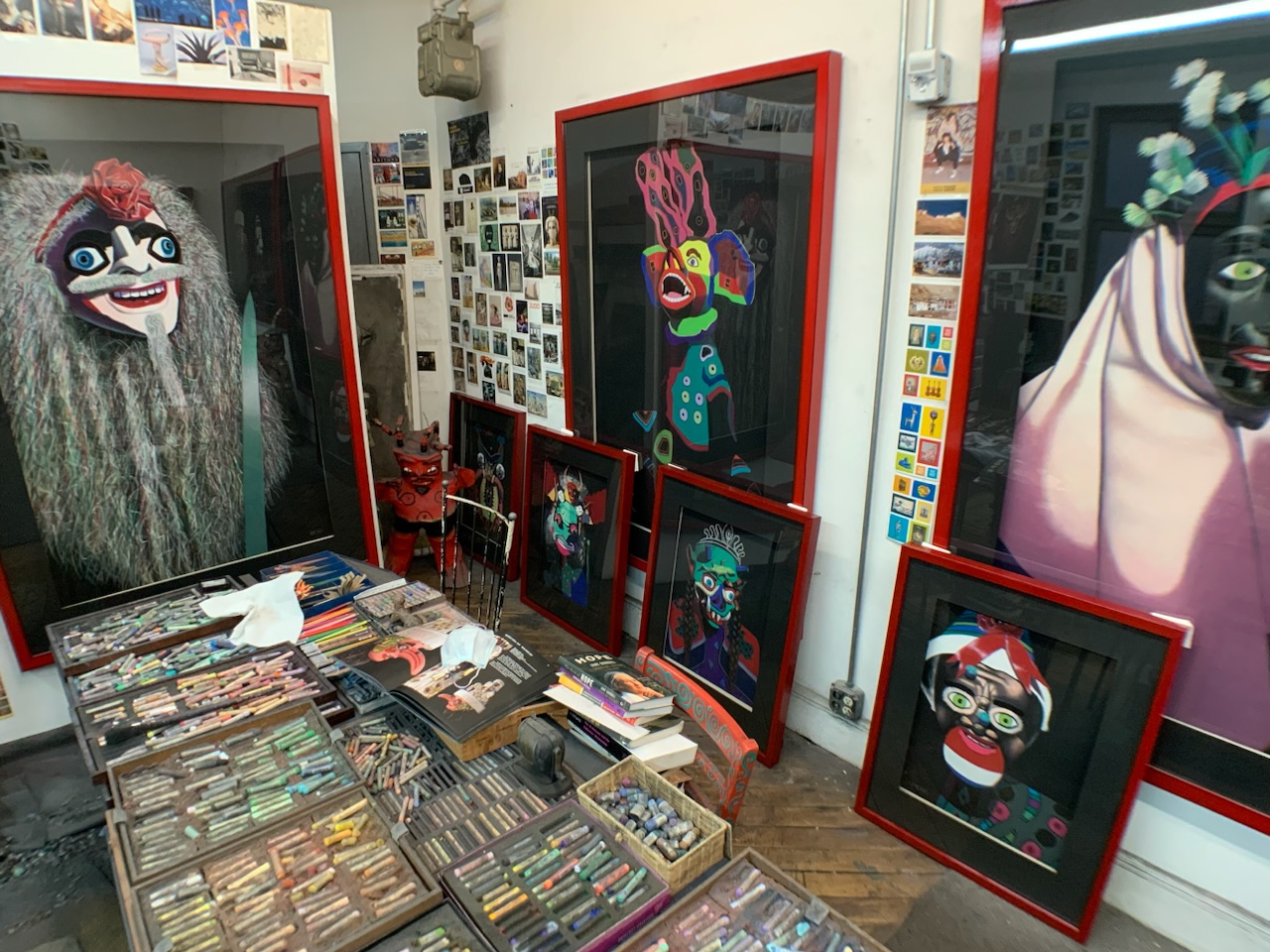
Barbara’s Studio
*an ongoing series of quotations – mostly from artists, to artists – that offers wisdom, inspiration, and advice for the sometimes lonely road we are on.
One of the main differences between the young girl who drew a line in chalk from the Metropolitan Museum all the way to her home on Park Avenue and the young woman who drew lines on canvas and paper twenty years later was that the latter understood the willfulness that drove the child. She was facing “the monster,” the consuming need to create, which was beyond her control but no longer beyond her comprehension. Helen [Frankenthaler] had long understood that her gift set her apart, and that it would be nearly impossible to describe how and why without sounding arrogant or cruel. “It’s saying I’m different, I’m special, consider me differently,” she explained years later. “And it’s also on the other side, a recognition that one is lonely, that one is not run of the mill, that the values are different, and yet we all go into the same supermarkets… and we are all moved one way or another by children and seasons, and dreams. So that art separates you…”
The separation she described was not merely the result of what one did, whether it be painting or sculpting or writing poetry. Helen said the distance between an artist and society was due to a quality both intangible and intrinsic, a “spiritual” or “magical” aspect that nonartists did not always understand and were sometimes frightened by. “They want you to behave a certain way. They want you to explain what you do and why you do it. Or they want you removed, either put on a pedestal or victimized. They can’t handle it.” Helen concluded that existing outside so-called normal life was simply the price an artist paid to create.
Mary Gabriel in Ninth Street Women
Comments are welcome!
Pearls from artists* # 558
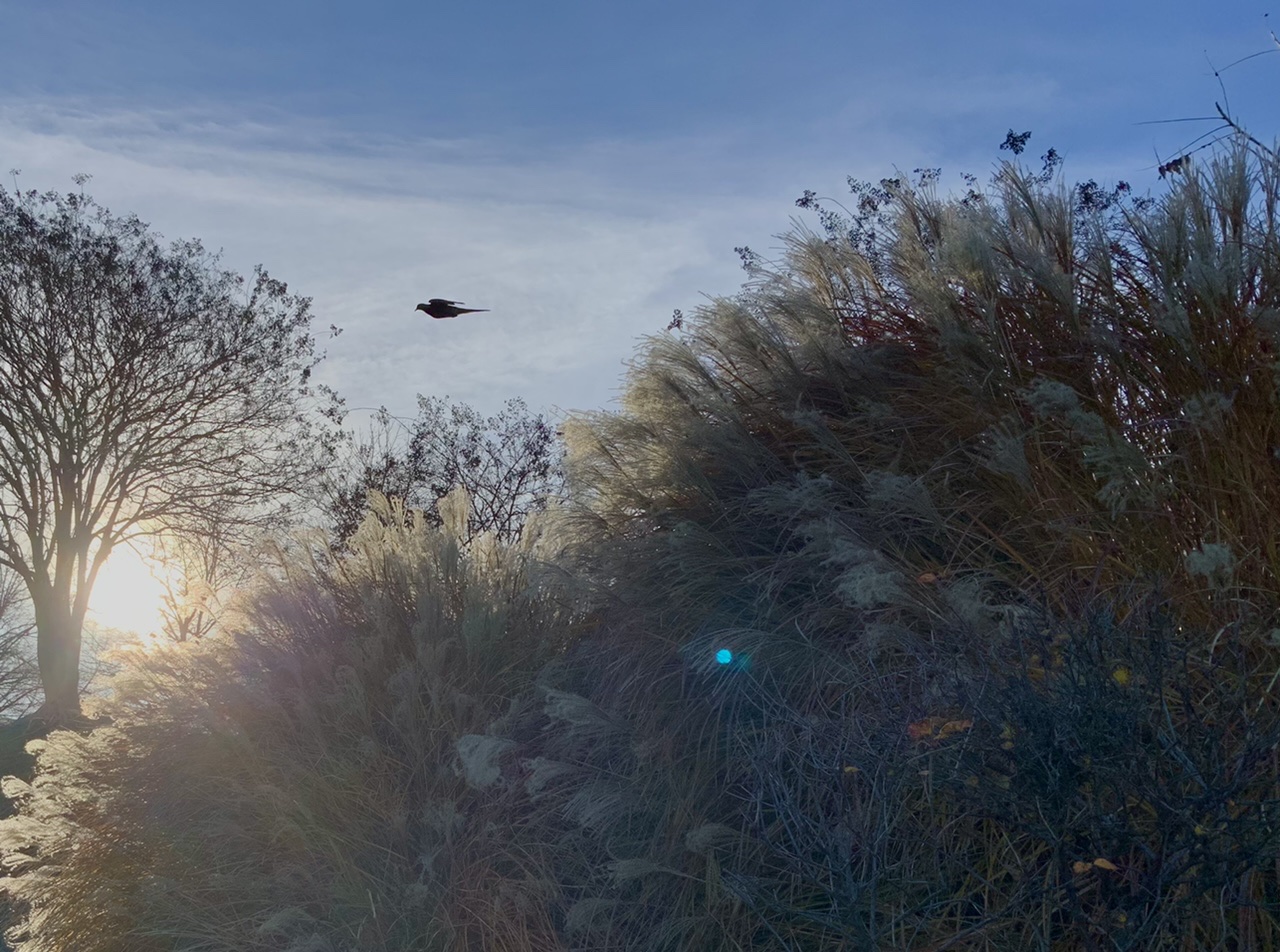
Alexandria, VA
*an ongoing series of quotations – mostly from artists, to artists – that offers wisdom, inspiration, and advice for the sometimes lonely road we are on.
One of the main differences between the young girl who drew a line in chalk from the Metropolitan Museum all the way to her home on Park Avenue and the young woman who drew lines on canvas and paper twenty years later was that the latter understood the willfulness that drove the child. She was facing “the monster,” the consuming need to create, which was beyond her control but no longer beyond her comprehension. Helen [Frankenthaler] had long understood that her gift set her apart, and that it would be nearly impossible to describe how and why without sounding arrogant or cruel. “It’s saying I’m different, I’m special, consider me differently,” she explained years later. “And it’s also on the other side, a recognition that one is lonely, that one is not run of the mill, that the values are different, and yet we all go into the same supermarkets… and we all are moved one way or the other by children and seasons, and dreams. So the art separates you.”
The separation she described was not merely the result of what one did, whether it be painting or sculpting or writing poetry. Helen said the distance between an artist and society was due to a quality both tangible and intangible and intrinsic, a “spiritual” or “magical” aspect that nonartists did not always understand and were sometimes frightened by. “They want you to behave a certain way. They want you to explain what you do and why you do it. Or they want you removed, either put on a pedestal or victimized. They can’t handle it.” Helen concluded that existing outside so-called normal life was simply the price an artist paid to create.
Mary Gabriel in Ninth Street Women
Comments are welcome!
Pearls from artists* # 509
* an ongoing series of quotations – mostly from artists to artists – that offers wisdom, inspiration, and advice for the sometimes lonely road we are on.
Which left me with nothing but a dazzled heart and the sense that I live in a most remarkable world, thick with mysteries. It all called to mind the British physicist Sir Arthur Eddington’s memorable explanation of how the universe works: “Something unknown is doing we don’t know what.“
But the best part is: I don’t need to know what.
I don’t demand a translation of the unknown. I don’t need to understand what it all means, or where ideas are originally conceived, or why creativity plays out as unpredictably as it does. I don’t need to know why we are sometimes able to converse freely with inspiration, when at other times we labor hard in solitude and come up with nothing. I don’t need to know why an idea visited you today and not me. Or why it visited us both. Or why it abandoned us both.
None of us can know such things, for these are among the great enigmas.
All I know for certain is that this is how I want to spend my life – collaborating to the best of my ability with forces of inspiration that I can neither see, nor prove, nor command, nor understand.
It’s a strange line of work, admittedly.
I cannot think of a better way to pass my days.
Elizabeth Gilbert in Big Magic: Creative Living Beyond Fear
Comments are welcome!
Pearls from artists* # 502

* an ongoing series of quotations – mostly from artists, to artists – that offers wisdom, inspiration, and advice for the sometimes lonely road we are on.
It seems to me that the less I fight my fear, the less it fights back. If I can relax, then fear relaxes, too. I cordially invite fear to come along with me everywhere I go. I even have a welcoming speech prepared for fear, which I deliver right before embarking upon any new project or adventure.
It goes something like this.
“Dearest fear: Creativity and I are about to go on a road trip together. I understand you will be joining us, because you always do. I acknowledge that you believe you have an important job to do in my life, and that you take your job seriously. Apparently, your job is to induce complete panic whenever I’m about to do something interesting – and may I say, you are superb at your job. So, by all means, keep doing your job, if you feel you must. But I will also be doing my job on this road trip, which is to work hard and stay focused. And Creativity will be doing its job, which is to remain stimulating and inspiring. There’s plenty of room in this vehicle for all of us, so make yourself at home, but understand this: Creativity and I are the only ones who will be making any decisions along the way. I recognize and respect that you are part of this family, and so I will never exclude you from our activities, but still – your suggestions will never be followed. You’re allowed to have a seat, and you’re allowed to have a voice, but you are not allowed to have a vote. You’re not allowed to touch the road maps; you’re not allowed to suggest detours; you’re not allowed to fiddle with the temperature. Dude, you’re not even allowed to touch the radio. But above all else, my dear old familiar friend, you are absolutely forbidden to drive.”
Then we head off together – me and creativity and fear – side by side by side forever, advancing once more into the terrifying but marvelous terrain of unknown outcome.
Elizabeth Gilbert in Big Magic: Creative Living Beyond Fear
Comments are welcome!
Pearls from artists* # 501

* an ongoing series of quotations – mostly from artists, to artists – that offers wisdom, inspiration, and advice for the sometimes lonely road we are on.
When I talk about “creative living” here, please understand that I am not necessarily talking about pursuing a life that is professionally or exclusively devoted to the arts. I’m not saying that you must become a poet who lives on a mountaintop in Greece, or that you must perform at Carnegie Hall, or that you must win the Palme d’Or at the Cannes Film Festival. (Though if you want to attempt any of these feats, have at it. I love to watch people swing for the bleachers.) No, when I refer to “creative living,” I am speaking more broadly. I’m talking about living a life that is driven more strongly by curiosity than by fear.
... A creative life is an amplified life. It’s a bigger life, a happier life, an expanded life, and a hell of a lot more interesting life. Living in this manner – continually and stubbornly bringing forth the jewels that are hidden within you – is a fine art, in and of itself.
Elizabeth Gilbert in Big Magic: Creative Living Beyond Fear
Comments are welcome!


 barbararachkoscoloreddust.com