Blog Archives
Q: Is it possible to sum up your creative practice in seven words?
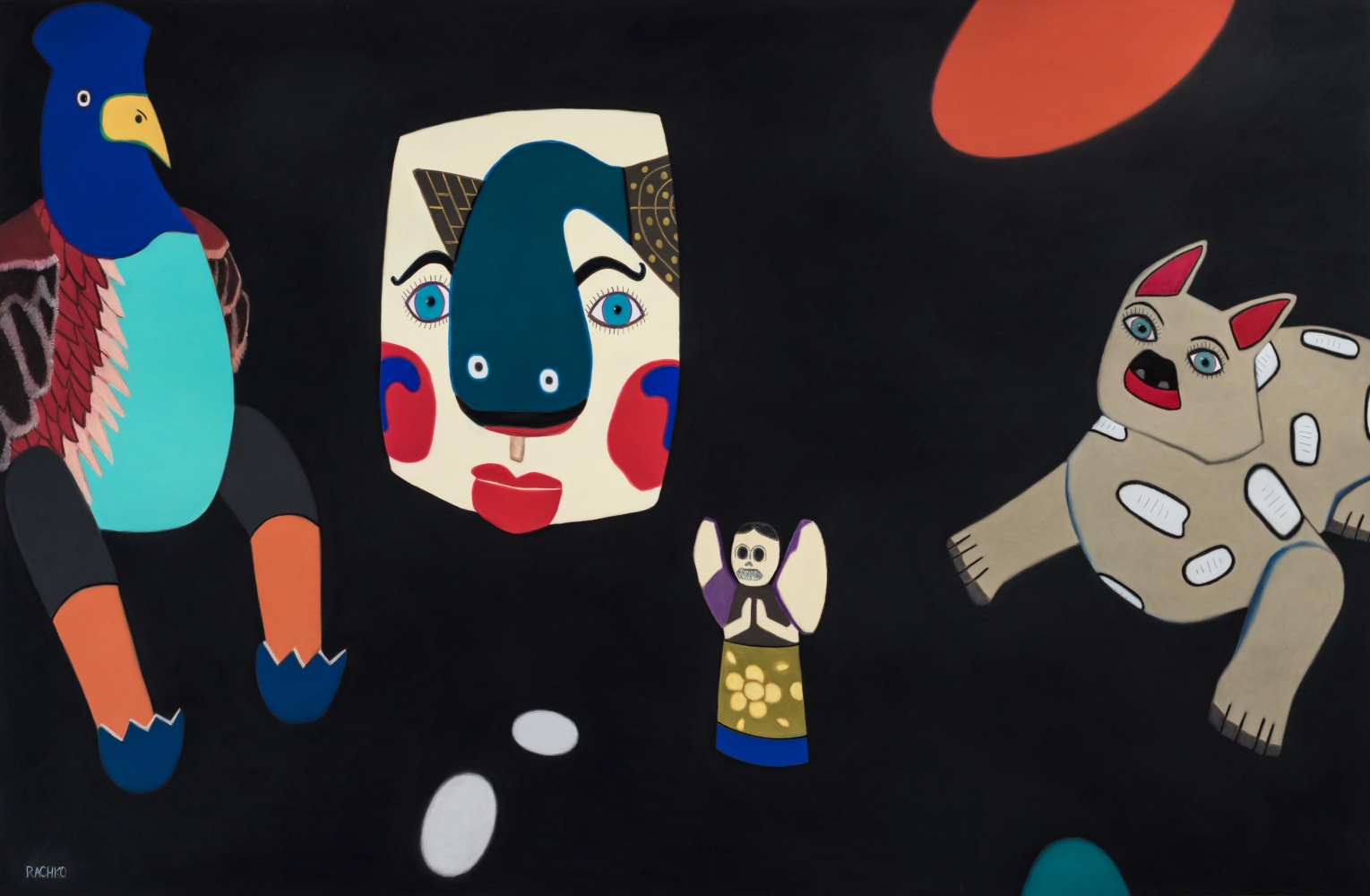
“Motley,” soft pastel on sandpaper, 38″ x 58″
A: Steadily striving to become a better artist. Of course, others determine how successful we have been in this regard.
Comments are welcome!
Pearls from artists* # 140

“Big Wow,” soft pastel on sandpaper, 38″ x 58″
* an ongoing series of quotations – mostly from artists, to artists – that offers wisdom, inspiration, and advice for the sometimes lonely road we are on.
Frankly, I think you’re better off doing something on the assumption that you will not be rewarded for it, that it will not receive the recognition it deserves, that it will not be worth the time and effort invested in it.
The obvious advantage to this angle is, of course, if anything good comes of it, then it’s an added bonus.
The second, more subtle and profound advantage is that by scuppering all hope of worldly and social betterment from one creative act, you are finally left with only one question to answer:
Do you make this damn thing exist or not?
And once you can answer that truthfully for yourself, the rest is easy.
Hugh MacLeod in Ignore Everybody and 39 Other Keys to Creativity
Comments are welcome!
Q: Why do you prefer not to explain your titles and imagery?
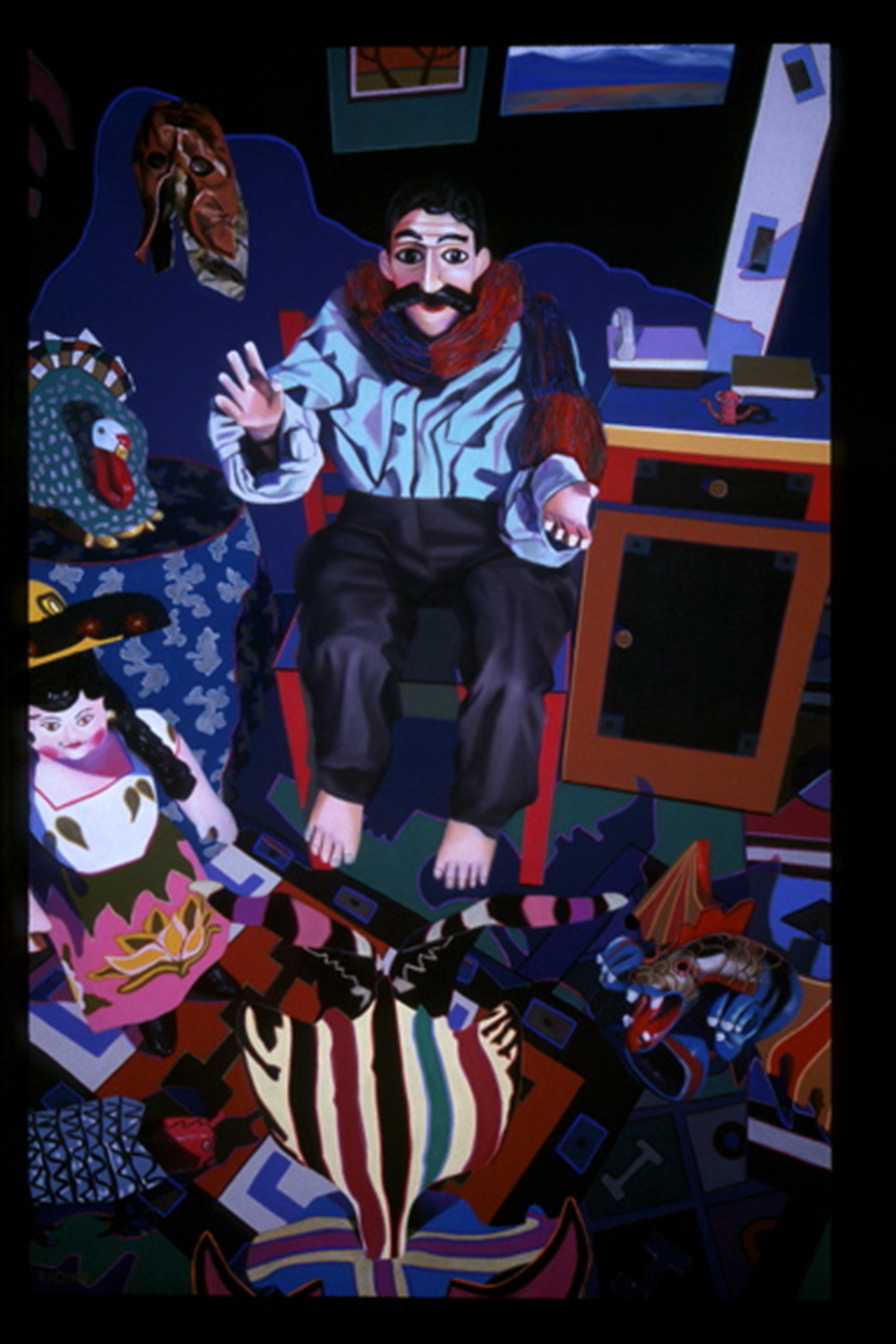
“Truth Betrayed by Innocence,” soft pastel on sandpaper, 58″ x 38″
A: It’s mainly because answers close down imagination and creativity. I enjoy hearing alternative interpretations of my pastel paintings. People are wildly imaginative and each person brings unique insights to their art viewing. By leaving meanings open, conversation is generated. Most artists want viewers to talk about their work.
Once at a public artist’s talk that I attended, I was told by an artist that my interpretation of her title was completely wrong. First of all, how can an interpretation honestly expressed by your audience be “wrong?” Art is as open to interpretation as a Rorschach test (art IS a kind of Rorshach test). Then she explained the thinking behind her title and succeeded in cutting off all further conversation. I felt belittled. Later several people told me that my interpretation was much more compelling. Still, the experience was mortifying and I hope to never do that to anyone.
Comments are welcome!
Pearls from artists* # 139
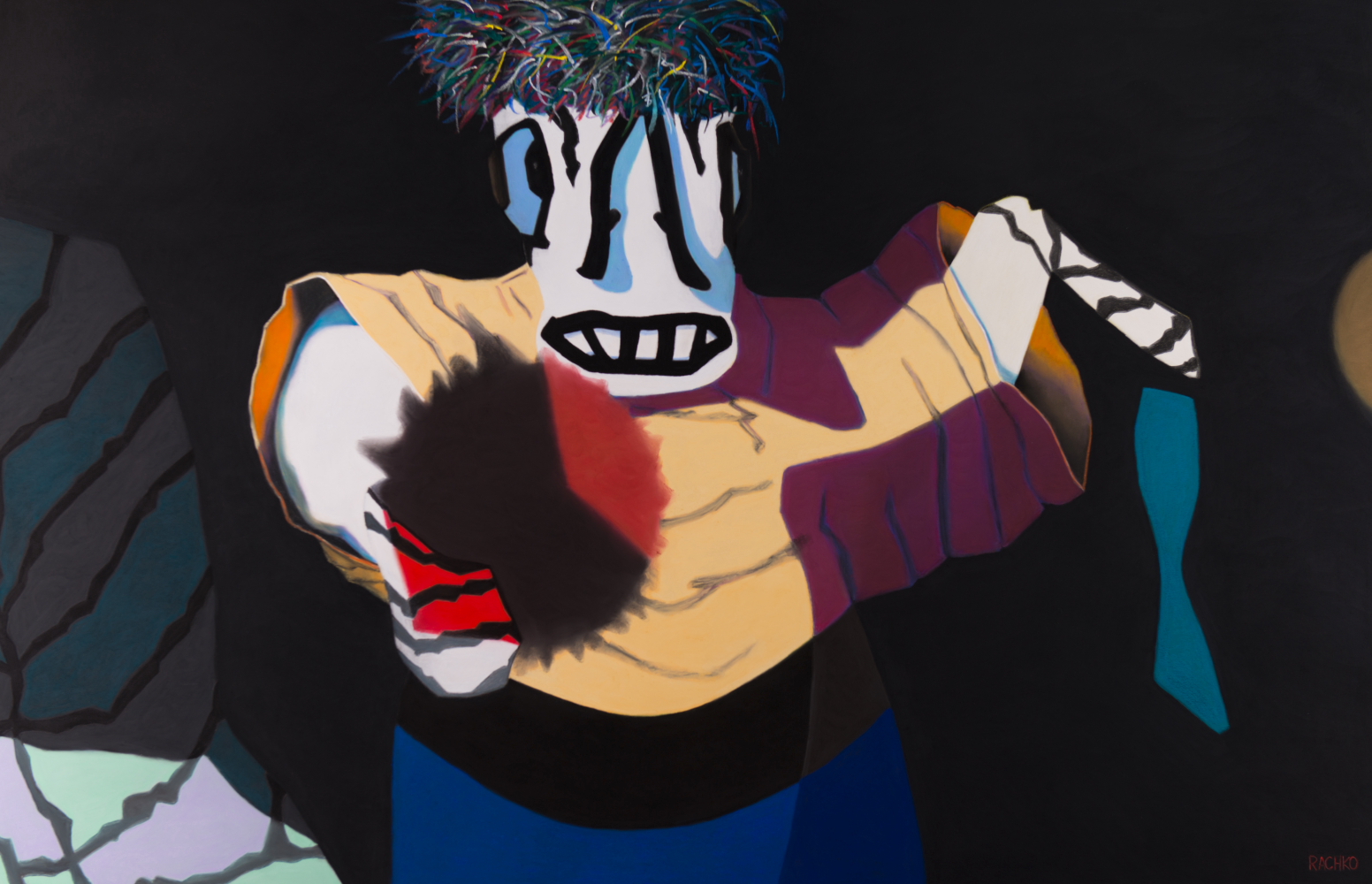
“Broken,” soft pastel on sandpaper, 38″ x 58″
* an ongoing series of quotations – mostly from artists, to artists – that offers wisdom, inspiration, and advice for the sometimes lonely road we are on.
Leaving a show of Pat Steir’s work called Winter Paintings at Cheim & Read Gallery, I thought back some years to when the Walker Art Center’s then curator Richard Flood was walking us through the Center’s collection and we came upon an abstract expressionist painting by Joan Mitchell that was so striking I asked him why it had taken so long for her to be recognized. He answered with a wry expression: “It’s the problem of beauty!”
A few days earlier our friends Kol and Dash came to lunch at our home, and Dash said at this time most visual art is conceptual. “It’s a way of thinking,” she said.
Story/Time: The Life of an Idea/Bill T. Jones
Comments are welcome!
Q: How do you know when a series has ended?

“A Promise, Meant to be Broken,” soft pastel on sandpaper, 58″ x 38″
A: I suppose it’s when there is nothing left to say within a particular body of work. The urgency to add something I haven’t tried vanishes. Usually I can’t even think of anything I haven’t tried.
I knew with certainty that the “Domestic Threats” series was finished while “A Promise Meant to be Broken” was still on my easel. It’s no accident that I included a self-portrait. This painting was my way of saying good-bye to an important body of work – literally turning my back on it – and summing up where the work had taken me.
For artists each series is a creative journey with a beginning, a middle, and an end. At a certain point it’s over. Then you build on what you’ve accomplished and move on to create something new. The connection between new work and old may not always be obvious, but one thing is certain: all the previous work laid the groundwork for what you make today.
Comments are welcome!
Pearls from artists* # 137

“She Embraced It and Grew Stronger,” soft pastel on sandpaper, 58″ x 38″
* an ongoing series of quotations – mostly from artists, to artists – that offers wisdom, inspiration, and advice for the sometimes lonely road we are on.
I was a determined young woman. I was driven. My problem was not in being an artist. I didn’t realize how much my being a woman would get in the way of being an artist in the world. I wasn’t aware of it. I was just doing my thing. My pain came from being treated like I was a bad woman, in my personal life. That being driven and assertive and doing my vision was really bad because I was not a supporter and a nurturer of men. The men were the ones who made me feel bad. It could just be that they were not strong men. It was very painful and the way that I took it was as if there was something the matter with me. Yet, there was no way I was not going to pursue my vision. It was not negotiable.
Conversations with Meredith Monk by Bonnie Marranca
Comments are welcome!
Pearls from artists* # 134

“Bryan,” soft pastel on sandpaper, 22″ x 28″, 1988
* an ongoing series of quotations – mostly from artists, to artists – that offers wisdom, inspiration, and advice for the sometimes lonely road we are on.
You never want to forget your roots. Going back to your roots is very important so you don’t get carried away from something essential. Otherwise, you move farther and farther away from the hands-on approach to making art. It is very important to go back to the beginnings at all times. You spiral back.
Conversations with Meredith Monk by Bonnie Marranca
Comments are welcome!
Q: You often speak about the Mexican and Guatemalan figures in your paintings as serving a function analogous to actors in a repertory company. In other words, a particular figure plays a different role each time it appears in one of your pastel paintings. Would you choose a figure and show how you have painted it through the years?
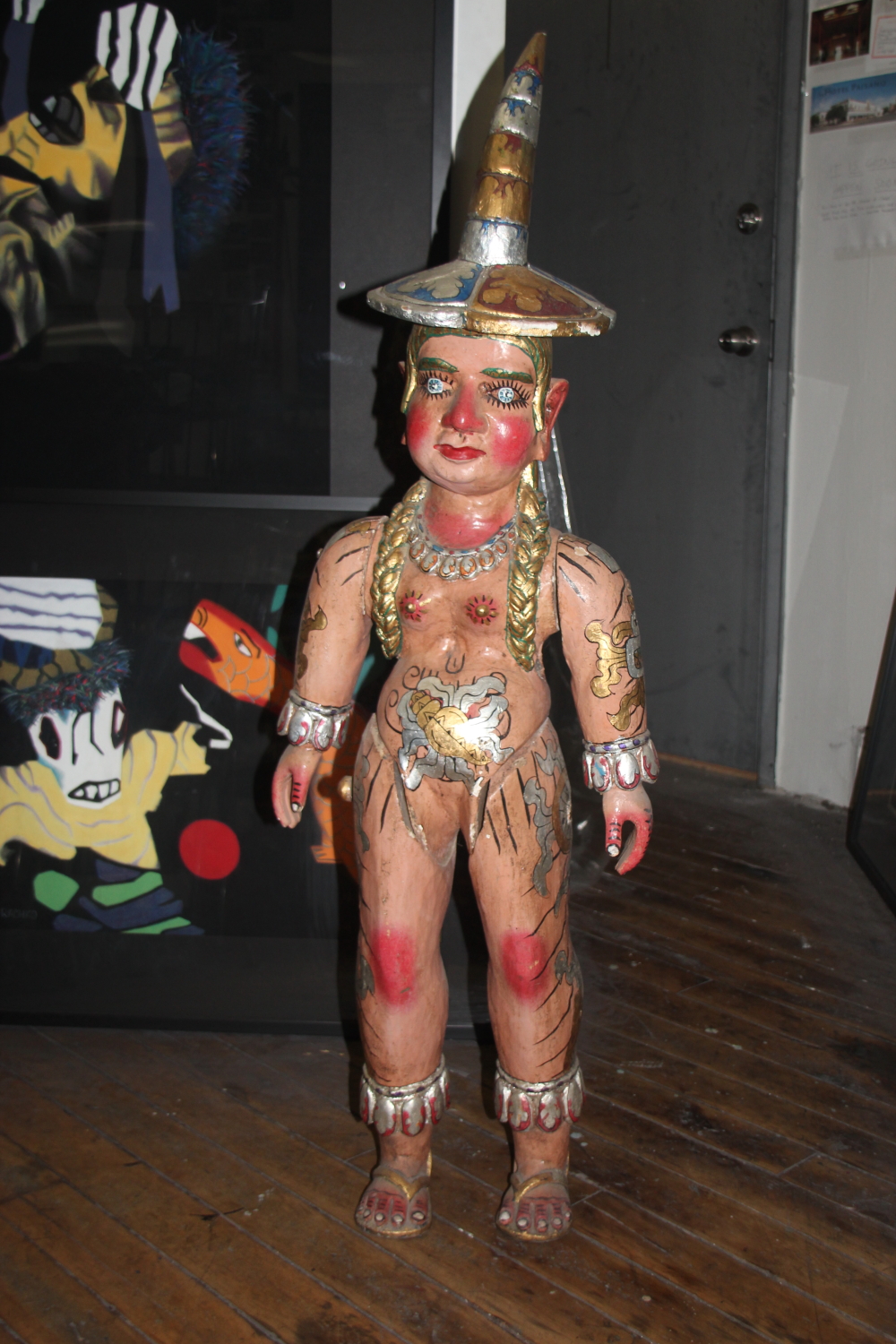
A Chinese-influenced figure Barbara brought home from Mexico City in 1999.
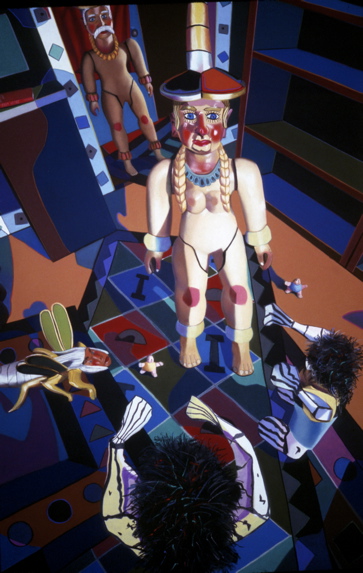
“Answering the Call,” 58″ x 38,” soft pastel on sandpaper, 2000
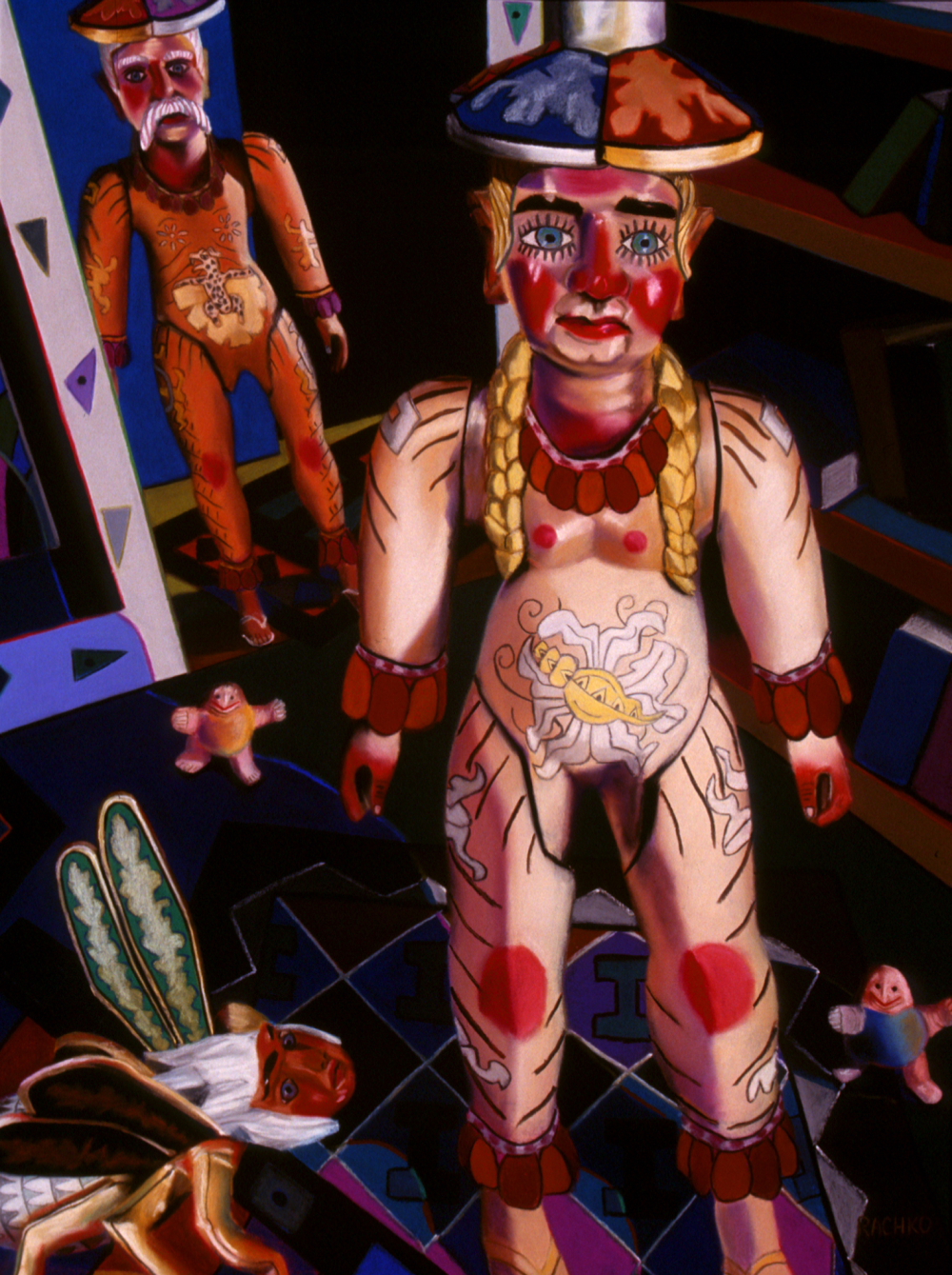
“Scene Fifteen: Living Room,” 26″ x 20″ soft pastel on sandpaper, 2002
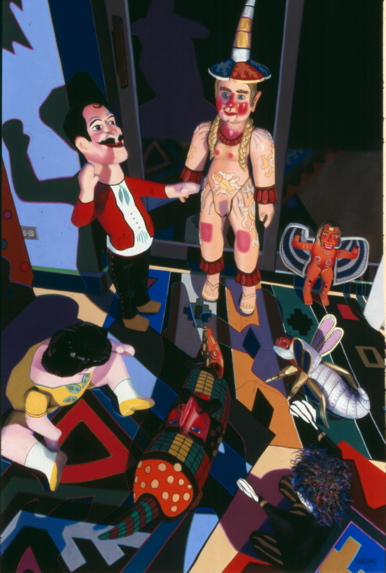
“Sometimes He Still Tried to Restrain Her,” 58″ x 38,” soft pastel on sandpaper, 2005
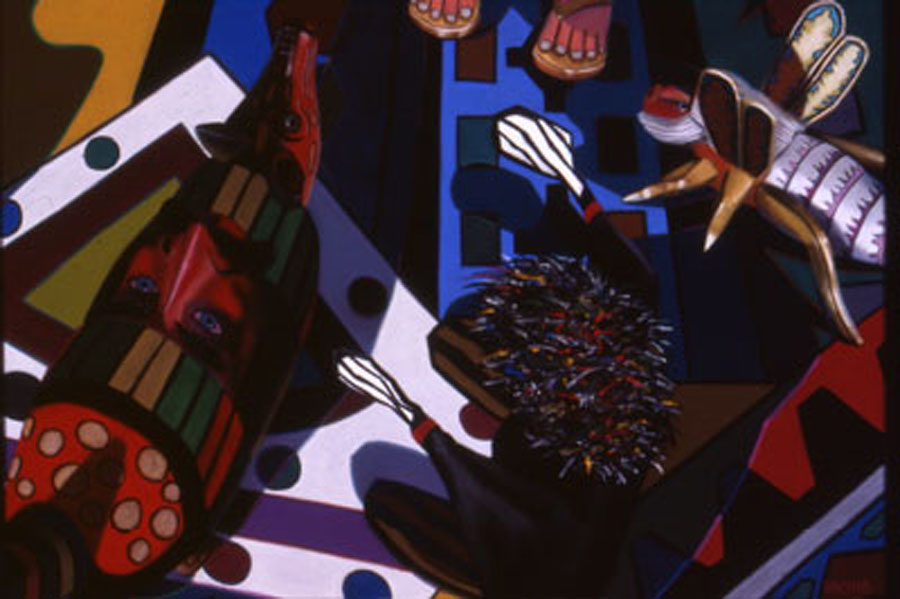
“Scene Twenty-One: Living Room,” 20″ x 26,” soft pastel on sandpaper, 2006 (see feet at top)
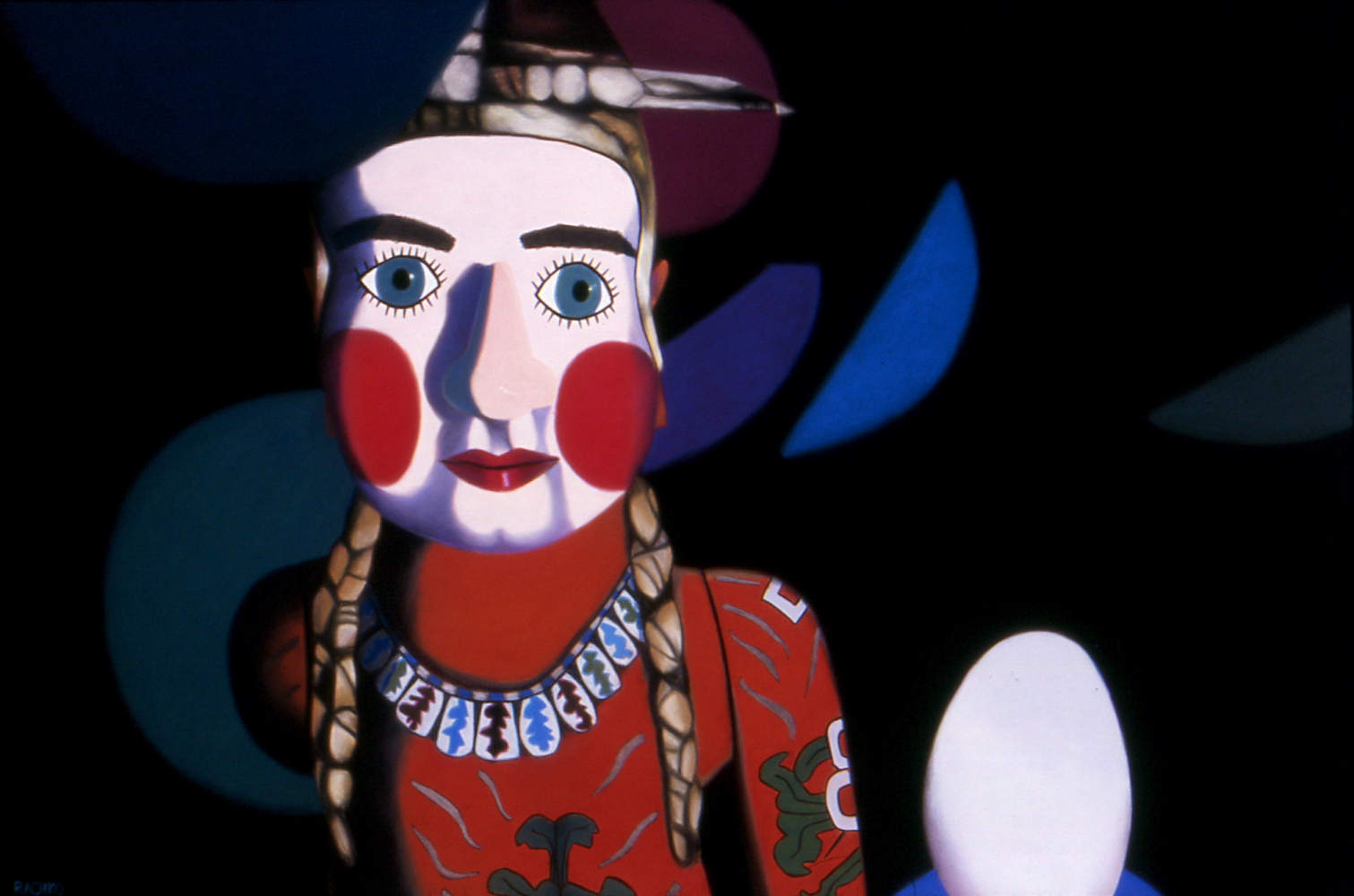
“Epiphany,” 38″ x 58,” soft pastel on sandpaper, 2012

“The Ancestors,” soft pastel on sandpaper, 58″ x 38,” 2013
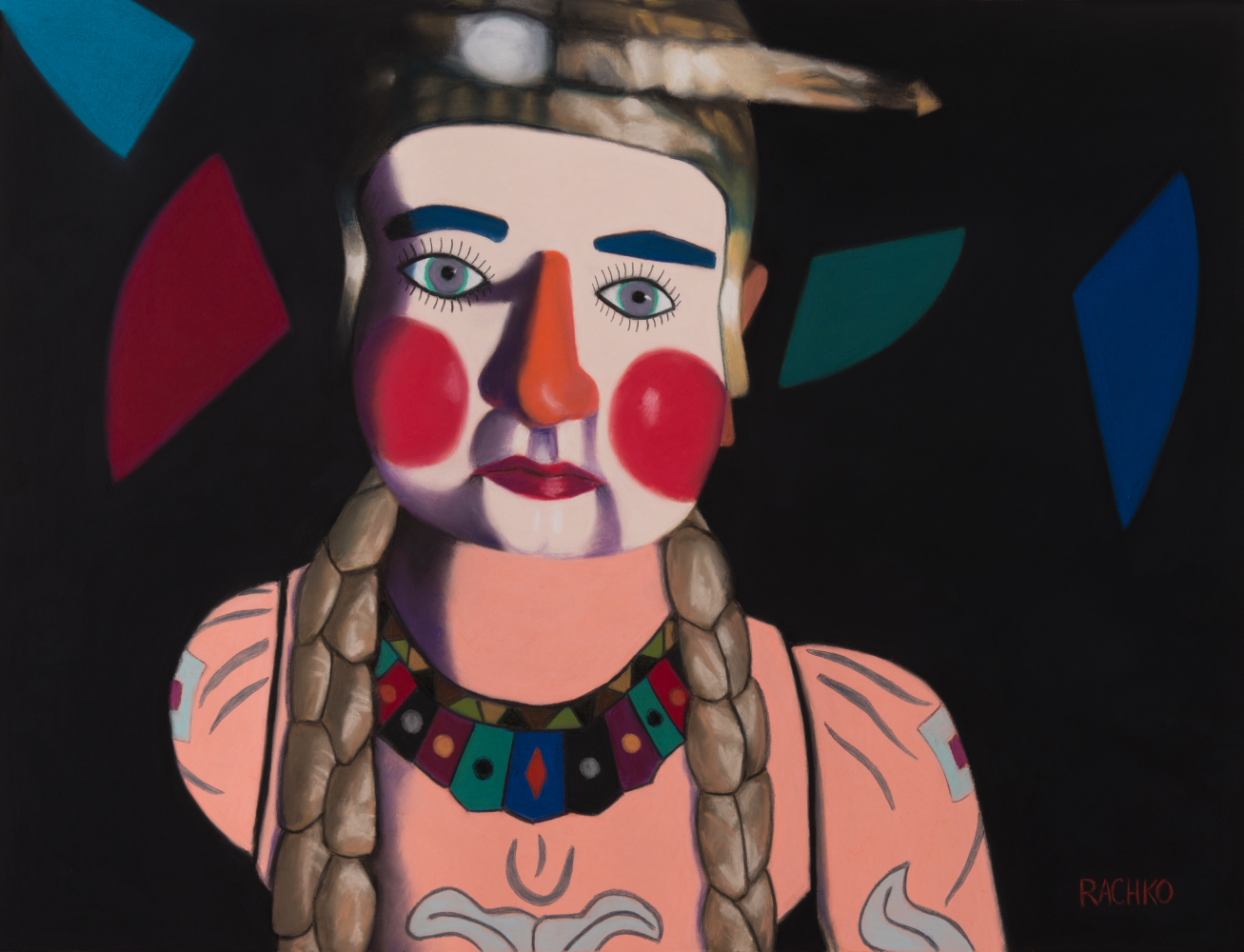
“The Storyteller,” soft pastel on sandpaper, 20″ x 26,” 2014
And she is in the painting that is on my easel now. See my February 14 blog post.
Comments are welcome!
Q: How do you achieve such richness of color in your pastel-on-sandpaper paintings?
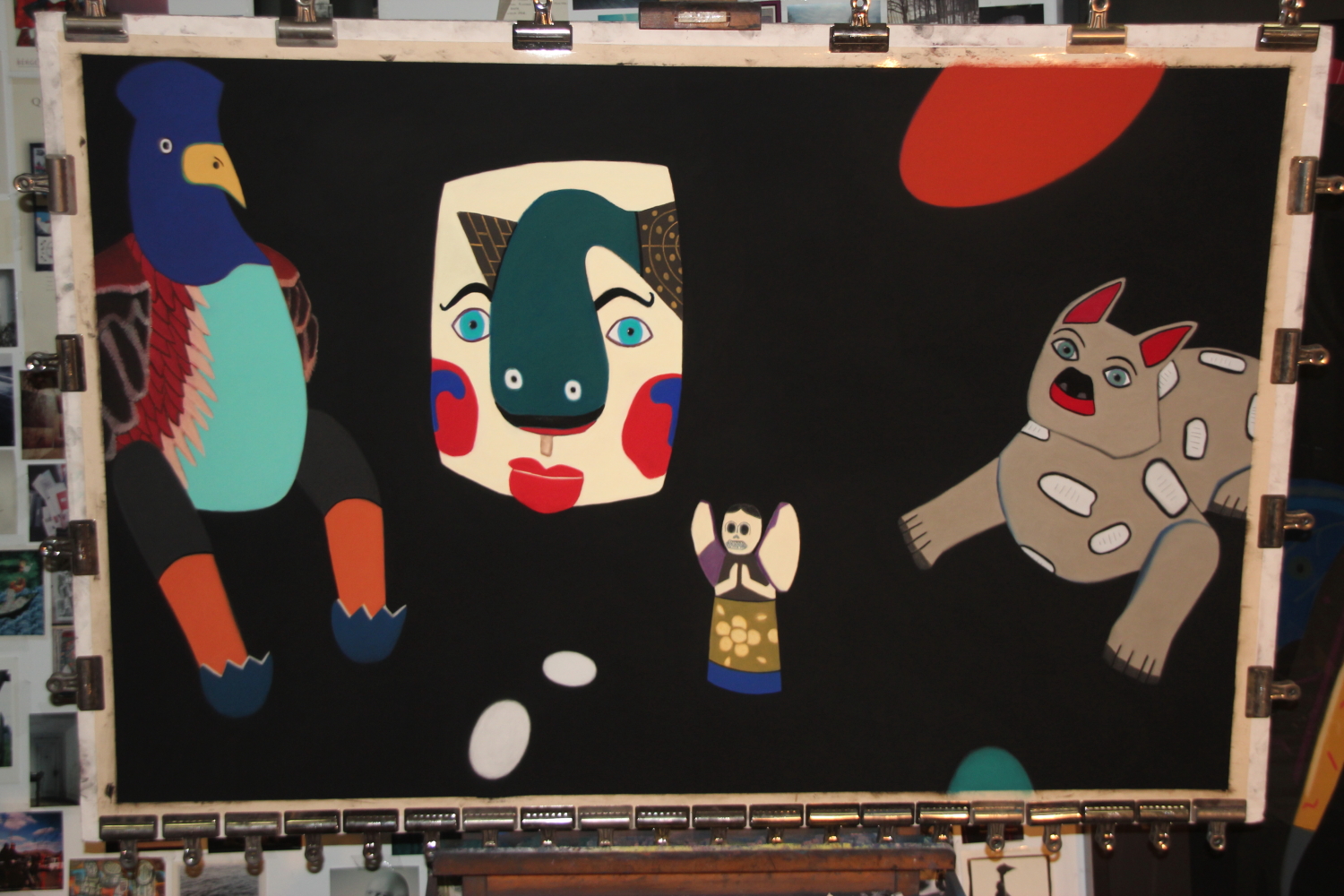
“Motley,” soft pastel on sandpaper, 38″ x 58″
A: This results from the several months of studio time and many layers of soft pastel that go into creating each painting. In a sense my technique is analogous to glazing done by the Old Masters. They slowly built up layers of thin paint to achieve a high degree of finish. Colors were not mixed physically, but optically. I gradually build up layers of soft pastel, as many as 30, to create a pastel painting. After a color is applied, I blend it with my fingers and push it into the sandpaper’s tooth. It mixes with the color beneath to create a new color, continually adding richness, saturation, and intensity to the overall painting.
Comments are welcome!


 barbararachkoscoloreddust.com