Blog Archives
Pearls from artists* # 414
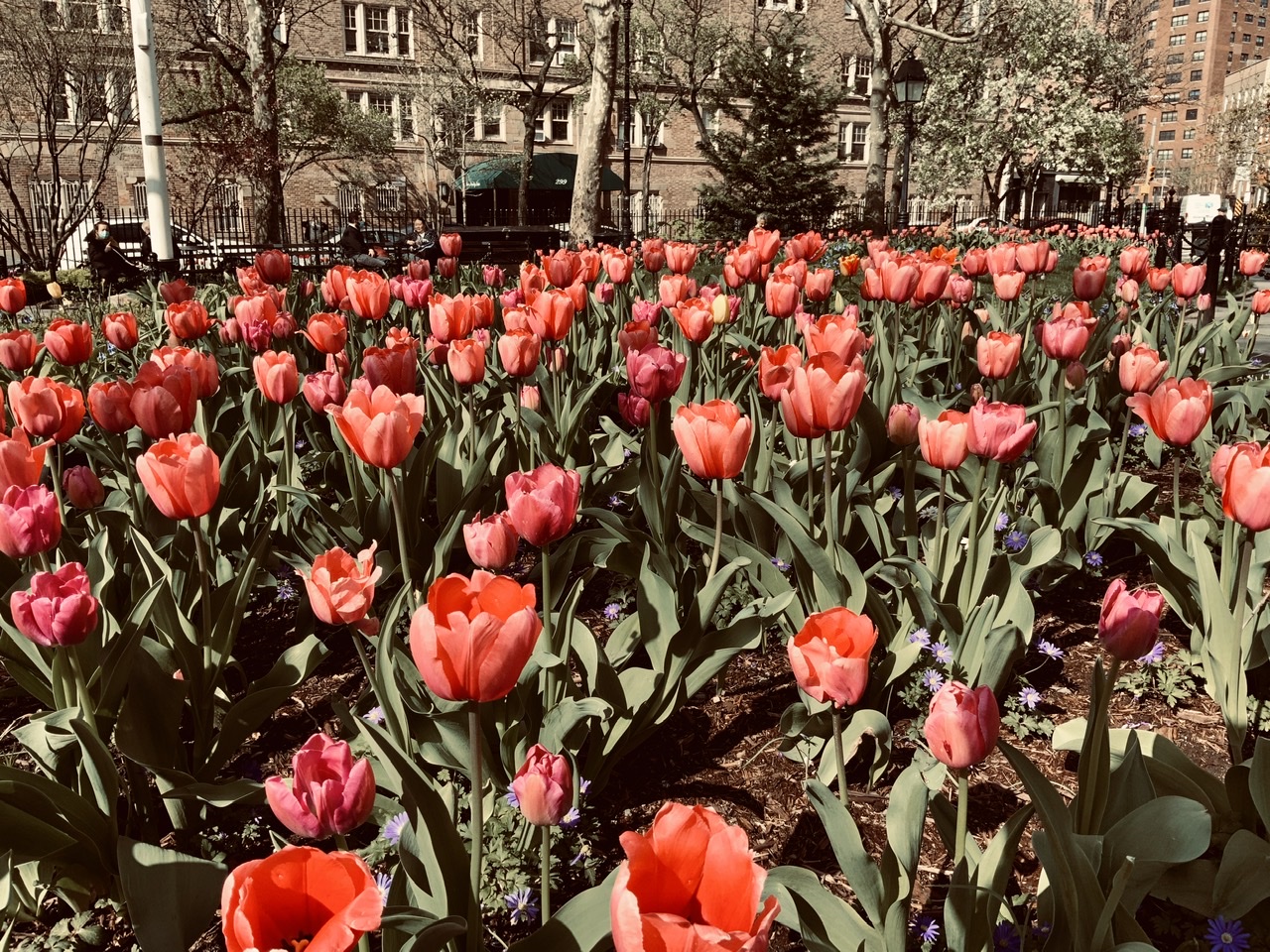
New York, NY
*an ongoing series of quotations – mostly from artists, to artists – that offers wisdom, inspiration, and advice for the sometimes lonely road we are on.
As we grow into our true artistic selves, we start to realize that the tools don’t matter, the story does. Your point of view and the way that you express yourself as a photographer are how you tell the stories that matter to you. And that, my friends, is therapeutic.
There’s a certain amount of Zen in that act. Peace and tranquility are hard to come by in today’s world. But through photography, we all have a chance to find both.
As photographers, we sometimes lose sight of the fact that our ability to use a camera gives us a chance to show everyone else who we are. Young photographers often obsess over doing something new. Older photographers, like Rick and I, realize that the real goal is in being you. So focus on being you not on being new for new’s sake. This is the path to both inner and outer success.
People will ask you what you photograph. I personally am often described as a bird photographer. But we are not what we do. It’s important to note the difference. And that is because people don’t care what you do. They care why you do it. If you are doing what you are meant to do, you will be able to articulate your own why.
Scott Bourne in Photo Therapy Motivation and Wisdom by Rick Sammon
Comments are welcome!
Pearls from artists* # 375

Tile worker in South India
* an ongoing series of quotations – mostly from artists, to artists – that offers wisdom, inspiration, and advice for the sometimes lonely road we are on.
With the camera you interpret reality. Photography is not truth. The photographer interprets reality and, above all, constructs his own reality according to his own awareness or his own emotions. Sometimes it’s complicated because it’s a kind of schizophrenic phenomenon. Without the camera, you see the world in one way, with the camera, in another. Through the window, you’re composing, and even dreaming about, this reality as if, through the camera, you were synthesizing what you are with what you’ve learned of a certain place. Then you make your own image, your own interpretation. The same thing happens to a writer as to a photographer. It’s impossible to capture the truth of life.
Graciela Iturbide in Eyes to Fly With: Portraits, Self-Portraits, and Other Photographs
Comments are welcome!
Q: What’s on the easel today?
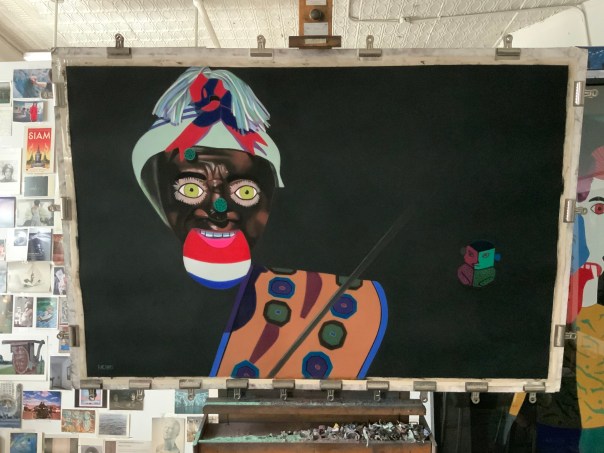
“Sentinels,” Soft Pastel on Sandpaper, 38” x 58”
A: At last, I have put finishing touches on “Sentinels,” 38” x 58,” and signed it! The photographer will photograph it and then, on my next trip south, this painting goes to the framer in Virginia.
Comments are welcome!
Pearls from artists* # 358
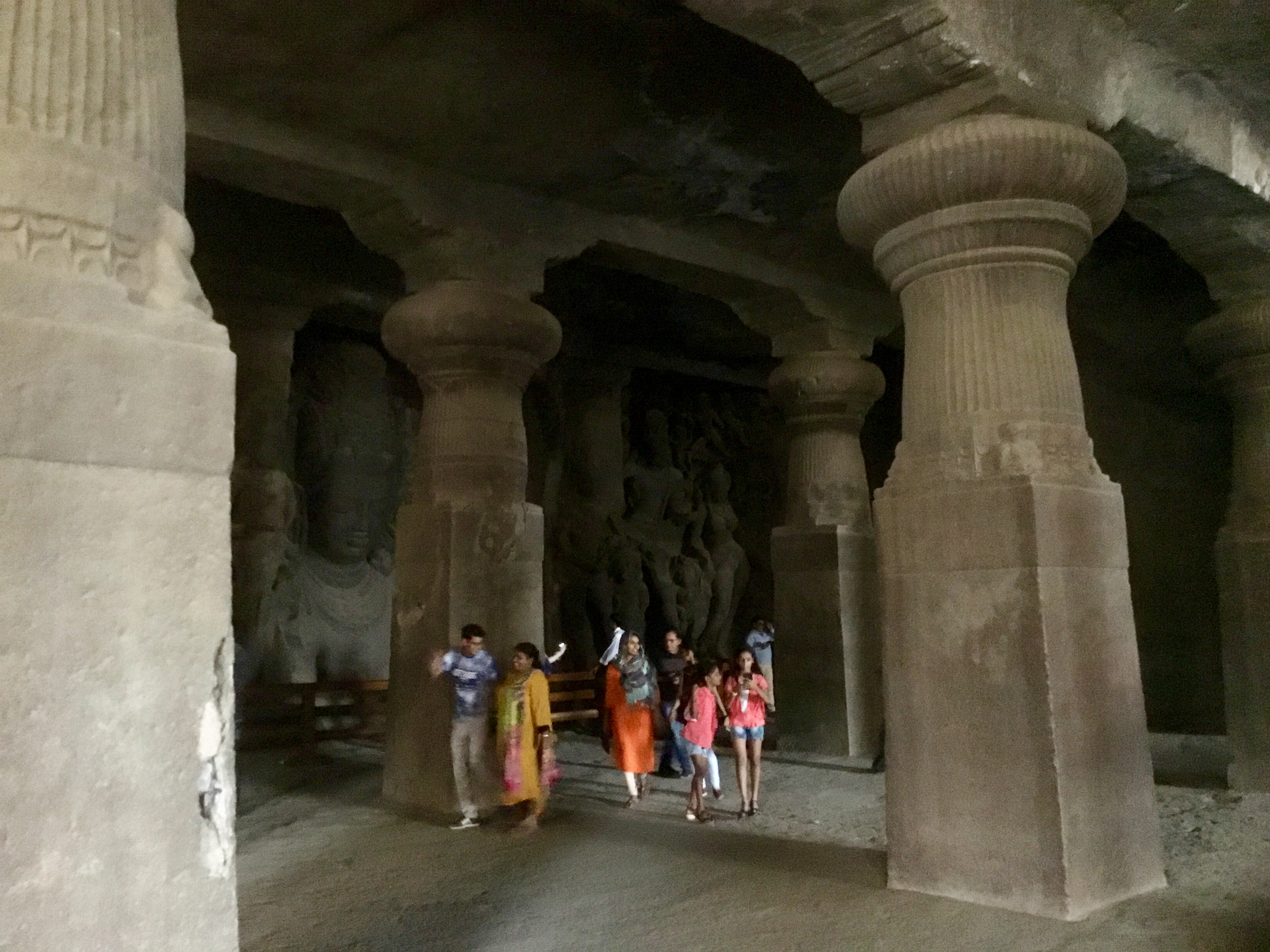
Elephanta Caves, India
*an ongoing series of quotations – mostly from artists, to artists – that offers wisdom, inspiration, and advice for the sometimes lonely road we are on.
According to [Rudolph] Arnheim, the way in which we reach out for and grasp the “object we see, either in our immediate range of perception or through the medium of photography, is dependent upon who we are and what we recognize from past experience.” The visual imprint of an image, an object, or a scene upon the eye is not at all “objective.” In the image-making process of thinking, we see, sort, and recognize according to the visual phenomenology of our own experience. What people notice in the “same” image – be it an image of a dancing Siva or a film of a Hindu festival procession – depends to some extent on what they can recognize from the visual experience of the past. In the case of film, of course, it also depends on what the photographer has seen and chosen to show us. Arnheim writes that the eye and the mind, working together in the process of cognition, cannot simply note down images that are “already there.” “We find instead that direct observation, far from being a mere ragpicker, is an exploration of the form-seeking, form-imposing mind, which needs to understand but cannot until it casts what it sees into manageable models.”
Diana L. Eck in Darsan: Seeing the Divine Image in India
Comments are welcome!
Q: Why did you first decide to depict Mexican folk art in your work?
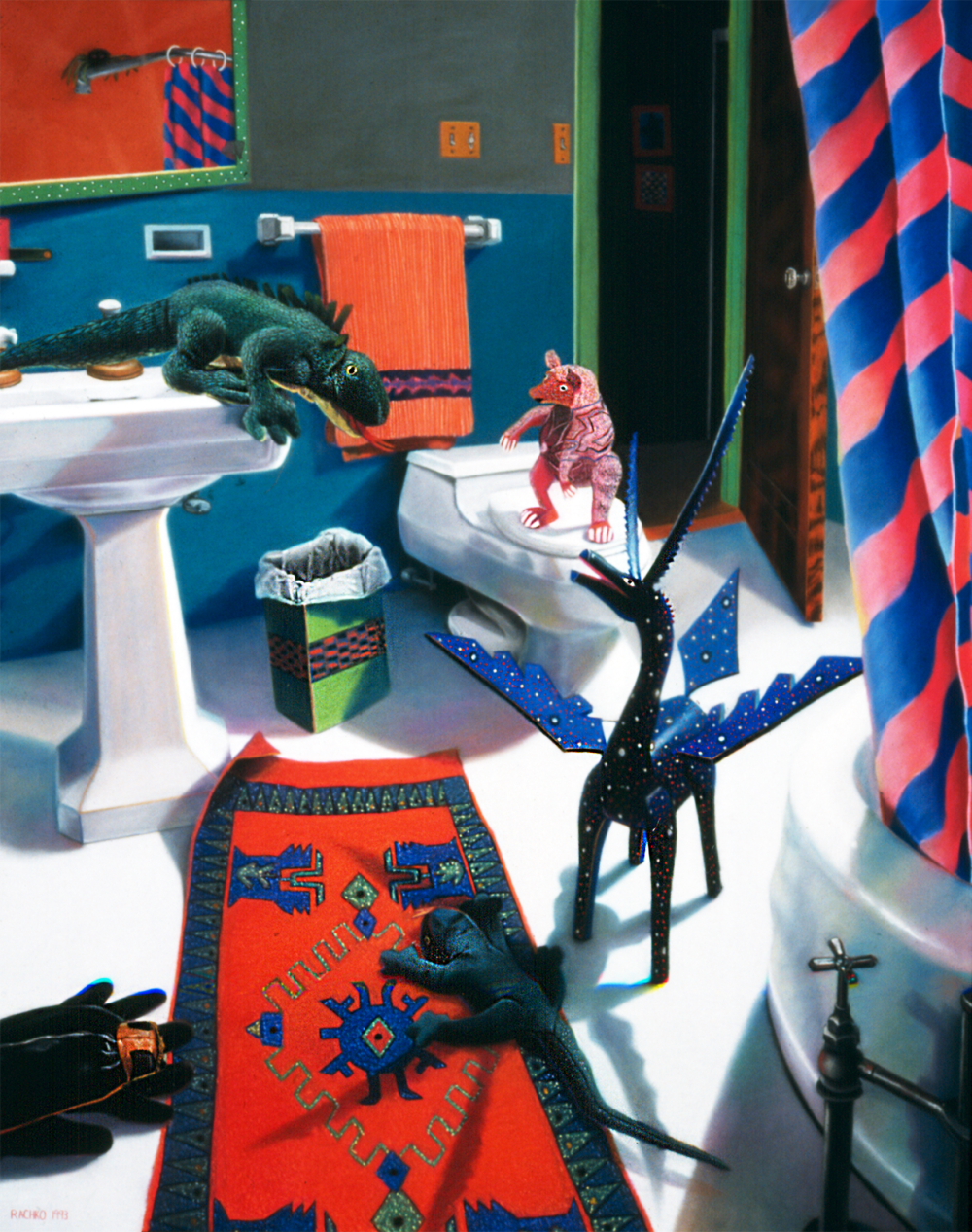
“Myth Meets Dream,” soft pastel on sandpaper, 47″ x 38″
A: As a Christmas present in 1991 my future sister-in-law sent me two brightly painted wooden animal figures from Oaxaca, Mexico. One was a blue polka-dotted winged horse. The other was a red, white, and black bear-like figure. See the two Mexican figures in “Myth Meets Dream” above.
I was enthralled with this gift and the timing was fortuitous because I had been searching for new subject matter to paint. Soon I started asking artist-friends about Oaxaca and learned that it was an important art hub. Two well-known Mexican painters, Rufino Tamayo and Francisco Toledo, had gotten their start there, as had master photographer Manual Alvarez Bravo. There was a “Oaxacan School of Painting” (‘school’ meaning a style, not an actual building) and Alvarez Bravo had established a photography school there (the building/institution kind). I began reading everything I could find. At the time I had only been to Mexico very briefly, in 1975, having made a road trip to Ensenada with my cousin and best friend from college.
The following autumn my then-boyfriend, Bryan, and I planned a two-week trip to visit Mexico. We timed it to see Day of the Dead celebrations in Oaxaca. (In my reading I had become fascinated with this unique festival). We spent one week in Oaxaca followed by one week in Mexico City. My interest in collecting Mexican folk art was off and running!
Comments are welcome!
Pearls from artists* # 152

“Between,” soft pastel on sandpaper, 20″ x 26″
* an ongoing series of quotations – mostly from artists, to artists – that offers wisdom, inspiration, and advice for the sometimes lonely road we are on.
The first picture I took of a black man was easy.
That’s the way it sometimes goes for me: I start on a new series of pictures and right away, in some kind of perverse bait-and-switch, I get a good one. This freak of a good picture inevitably inspires a cocky confidence, making me think this new project will be a stroll in the park. But, then, after sometimes two or three more good ones, the next dozen are duds, and that cavalier stroll becomes an uphill slog. It isn’t long before I have to take a breather, having reached the first significant plateau of doubt and lightweight despair. The voice of that despair suggests seducingly to me that I should give up, that I’m a phony, that I’ve made all the good pictures I’m ever going to, and I have nothing more worth saying.
That voice is easy to believe, and, as photographer and essayist (and my early mentor) Ted Orland has noted, it leaves me with only two choices: I can resume the slog and take more pictures, thereby risking further failure and despair, or I can guarantee failure and despair by not making more pictures. It’s essentially a decision between uncertainty and certainty and, curiously, uncertainty is the comforting choice.
Sally Mann in Hold Still: A Memoir with Photographs
Comments are welcome!
Q: So much of the art one sees in New York is ugly, but your art is consistently beautiful. Is beauty important to you?
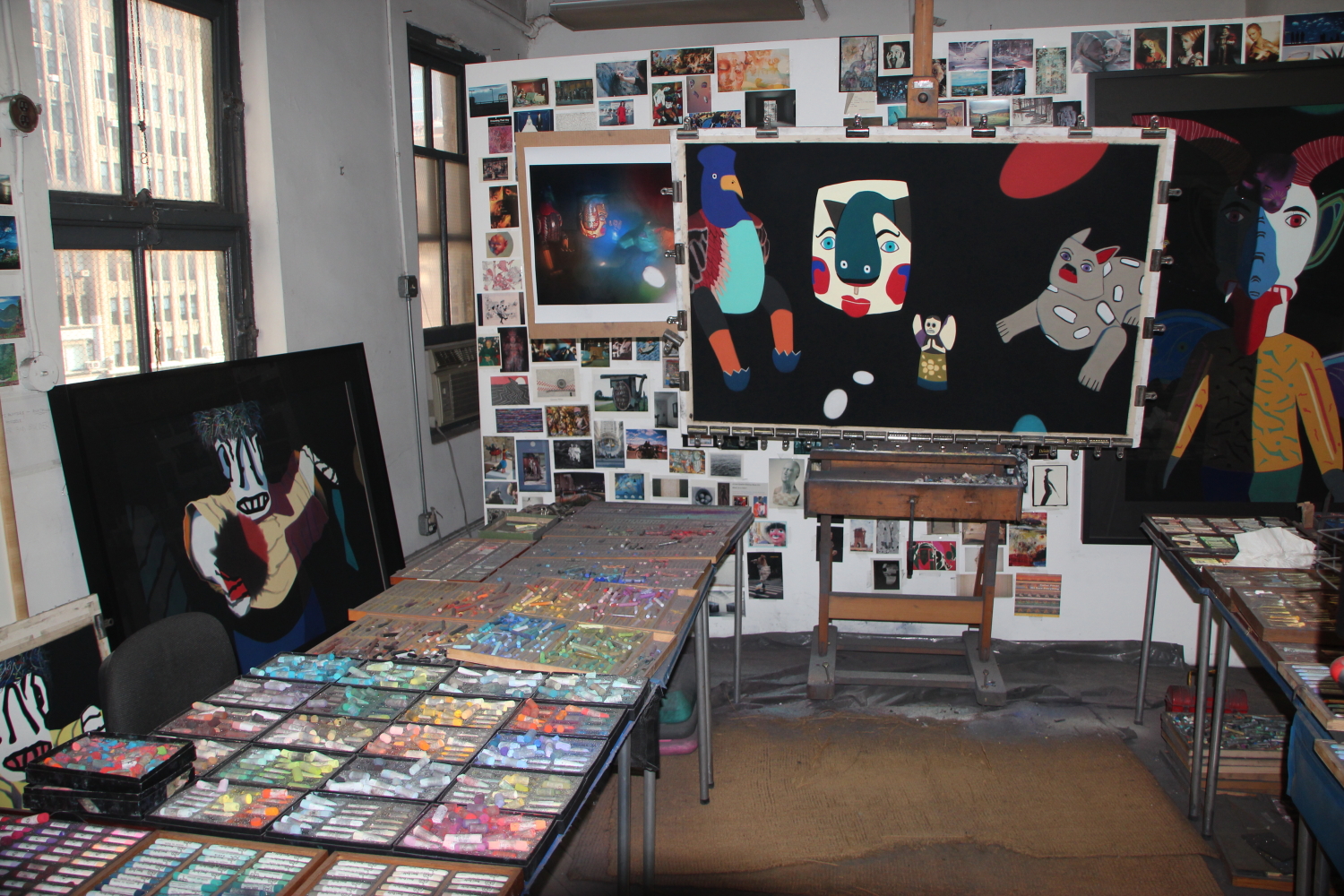
Barbara’s studio
A: Yes, beauty is extremely important. In some art circles it is not fashionable to say so, but I completely agree with the photographer, Robert Adams, who writes, “… the goal of art is Beauty.” I’ll leave it to others to decide if this quality is reached in my pastel paintings, but I certainly strive towards it.
Comments are welcome!
Pearls from artists* # 126

Self-portrait with “Blue Misterioso”
* an ongoing series of quotations – mostly from artists, to artists – that offers wisdom, inspiration, and advice for the sometimes lonely road we are on.
Photography is an elegiac art, a twilight art. There is no subject the photographer might attempt that could not be touched with pathos. All photogrpahs are memento mori. To take a photograph is to participate in another person’s (or thing’s) mortality, vulnerability, mutability. precisely by slicing out this moment and freezing it, all photographs testify to time’s relentless melt.
Photography by Susan Sontag in Anthology: Selected Essays from Thirty Years of The New York Review of Books, edited by Robert S. Silvers and Barbara Epstein
Comments are welcome!
Pearls from artists* # 96

Diane Arbus Revelations
* an ongoing series of quotations – mostly from artists, to artists – that offers wisdom, inspiration, and advice for the sometimes lonely road we are on.
My final day at the magic shop [in Disneyland, where he worked as a teenager], I stood behind the counter where I had pitched Svengali decks and the Incredible Shrinking Die, and I felt an emotional contradiction: nostalgia for the present. Somehow, even though I had stopped working only minutes earlier, my future fondness for the store was clear, and I experienced a sadness like that of looking at a photo of an old, favorite pooch. It was dusk by the time I left the shop, and I was redirected by a security guard who explained that a photographer was taking a picture and would I please use the side exit.
I did, and saw a small, thin woman with hacked brown hair aim her large-format camera directly at the dramatically lit castle, where white swans floated in the moat underneath the functioning drawbridge. Almost forty years later, when I was in my early fifties, I purchased that photo as a collectible, and it still hangs in my house. The photographer, it turned out, was Diane Arbus. I try to square the photo’s breathtaking romantic image with the rest of her extreme subject matter, and I assume she saw this facsimile of a castle as though it were a kitsch roadside statue of Paul Bunyan. Or perhaps she saw it as I did: beautiful.
Quoted by A.D. Coleman in Photocritical, May 28, 2014, from Born Standing Up: A Comic’s Life by Steve Martin
Comments are welcome!
Q: Where do you want your work to go in the future?
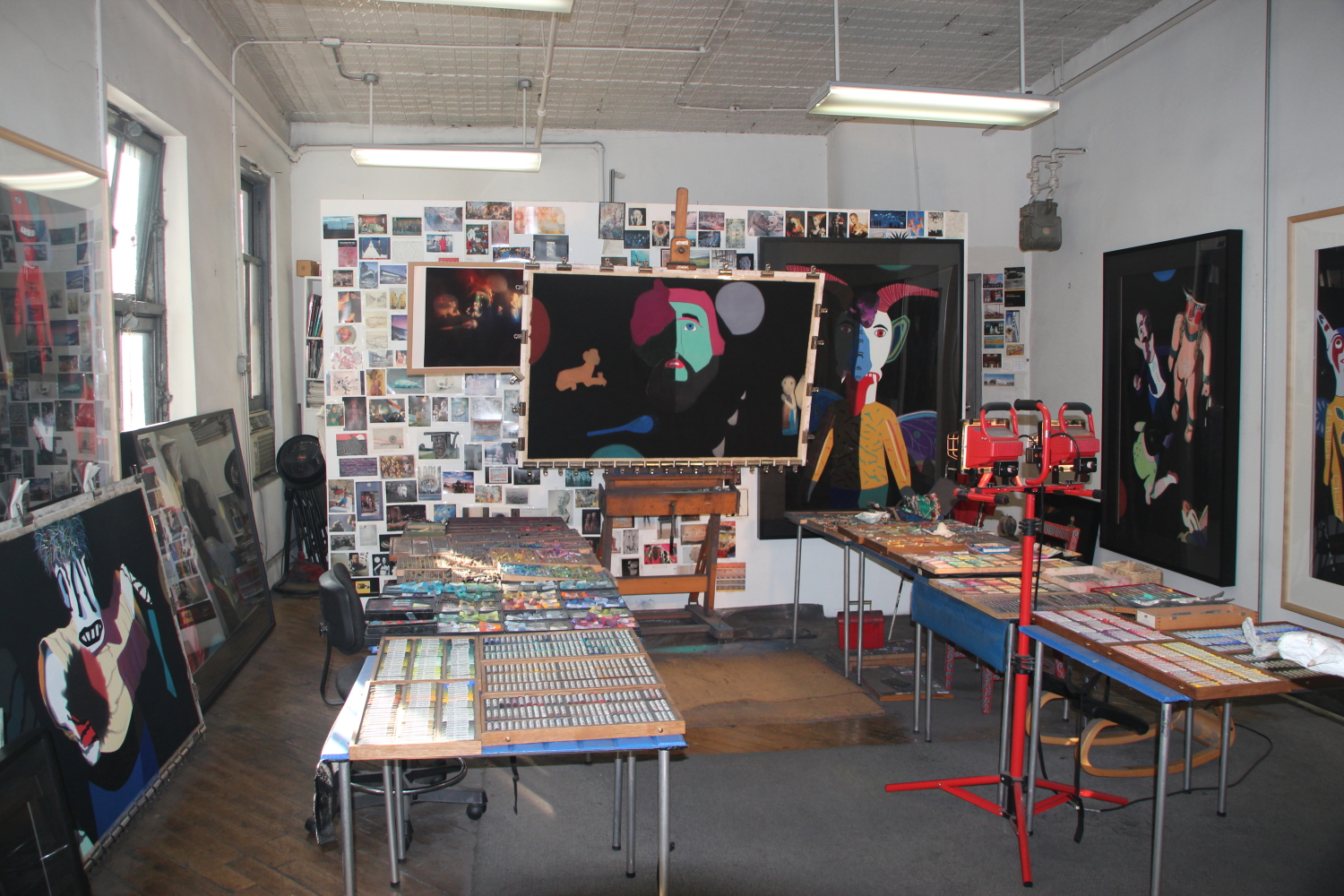
Barbara’s studio
A: Recently I answered a question about why I create, but now that I think about it, the same answer applies to what I want to do as an artist in the future:
~ to create bold and vibrant pastel paintings and photographs that have never existed before
~ to continue to push my primary medium – soft pastel on sandpaper – as far as I can and to use it in more innovative ways
~ to create opportunities for artistic dialogue with people who understand and value the work to which I am devoting my life
The last has always been the toughest. I sometimes think of myself as Sisyphus because expanding the audience for my art is an ongoing uphill battle. Many artist friends tell me they feel the same way about building their audience. It’s one of the most difficult tasks that we have to do as artists. I heard Annie Leibovitz interviewed on the radio once and remember her saying that after 40 years as a photographer, everything just gets richer. Notice that she didn’t say it gets any easier; she said, “it just gets richer.” I have been a painter for nearly 30 years and a photographer for 11. I agree completely. All artists have to go wherever our work goes. Creating art and watching the process evolve is an endlessly fascinating intellectual journey. I wouldn’t want to be spending my time on earth doing anything else!
Comments are welcome!


 barbararachkoscoloreddust.com