Blog Archives
Pearls from artists* # 670

*an ongoing series of quotations – mostly from artists, to artists – that offers wisdom, inspiration, and advice for the sometimes lonely road we are on.
I’ve had to keep defining and defending myself as a writer every single day of my adult life – constantly reminding and re-reminding my soul and the cosmos that I’m very serious about the business of creative living, and that I will never stop creating, no matter what the outcome, and no matter how deep my anxieties and insecurities may be.
Over time I’ve found the right tone of voice for these assertions, too. It’s best to be insistent, but affable. Repeat yourself, but don’t get shrill. Speak to your darkest and most negative interior voices the way a hostage negotiator speaks to a violent psychopath: calmly, but firmly. Most of all, never back down. You cannot afford to back down. The life you are negotiating to save, after all, is your own.
Elizabeth Gilbert in Big Magic: Creative Living Beyond Fear
Comments are welcome!
Pearls from artists* # 660

Dropping off “Harbinger” at the framer!
*an ongoing series of quotations – mostly from artists, to artists – that offers wisdom, inspiration, and advice for the sometimes lonely road we are on.
While most citizens sell precious life hours to procure money, those who acquire the most wealth spend that money to buy more free time. Billionaire CEOs turf tasks to upper-level managers to free themselves for blocks of uninterrupted learning and creative thinking time, because this is how earth-shattering, paradigm-blending breakthroughs are cultivated (Simmons, 2017). Our world is rapidly dividing into two groups: those who allow their time and focus to be constantly manipulated by others, and those who seize control of how they spend their short time on earth.
Kate Kretz in Art From your Core: A Holistic Guide to Visual Voice
Comments are welcome!
Pearls from artists* # 613
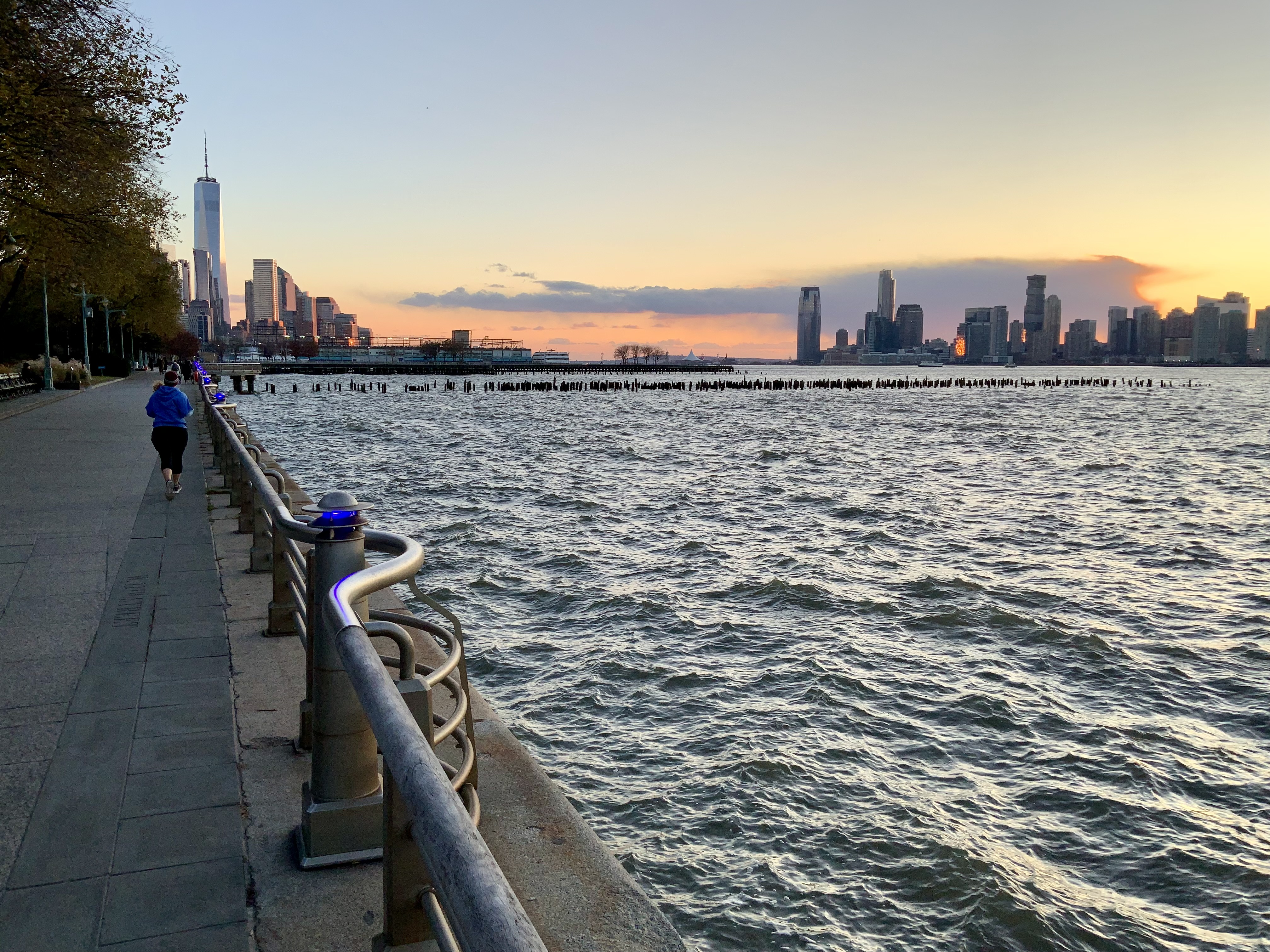
New York NY
*an ongoing series of quotations – mostly from artists, to artists – that offers wisdom, inspiration, and advice for the sometimes lonely road we are on.
A painting is a statement of the artist’s notions of reality in terms of plastic speech. In that sense the painter must be likened to the philosopher rather than to the scientist. For science is a statement of the laws that govern a specific phenomenon or category of matter or energy within the specified units and conditions of its operation. Philosophy, however, must combine all these specialized truths within a single system. It is because of this broad scope that Aristotle gives preeminence to the philosopher in the introduction to his Metaphysics, for he tells us that every man except the philosopher is an authority within his specific field, whereas the philosopher must have the acute knowledge that each man has in his own field plus the ability to relate all these fields to the operations of universality and eternity.
Therefore art, like philosophy, is of its own age; for the partial truths of each age differ from those of other ages, and the artist, like the philosopher, must constantly adjust eternity, as it were, to all the specifications of the moment. Art, too, creates at different times the notions of reality that the artist, as a man of the age, must inherit and develop and consider real along with the other intellectually conscious men of his time. His language, which is his plastic means, will also adjust itself to the possibility of making these notions manifest in their most coherent possibilities. The reality of the artist, therefore, reflects the understanding of his times, even as his creations shape those understandings. We posit this without wishing to attempt to untangle here the series of causes and effects, a process which would probably obscure more than it certified.
Mark Rothko in The Artist’s Reality: Philosophies of Art
Comments are welcome!
Pearls from artists* # 610
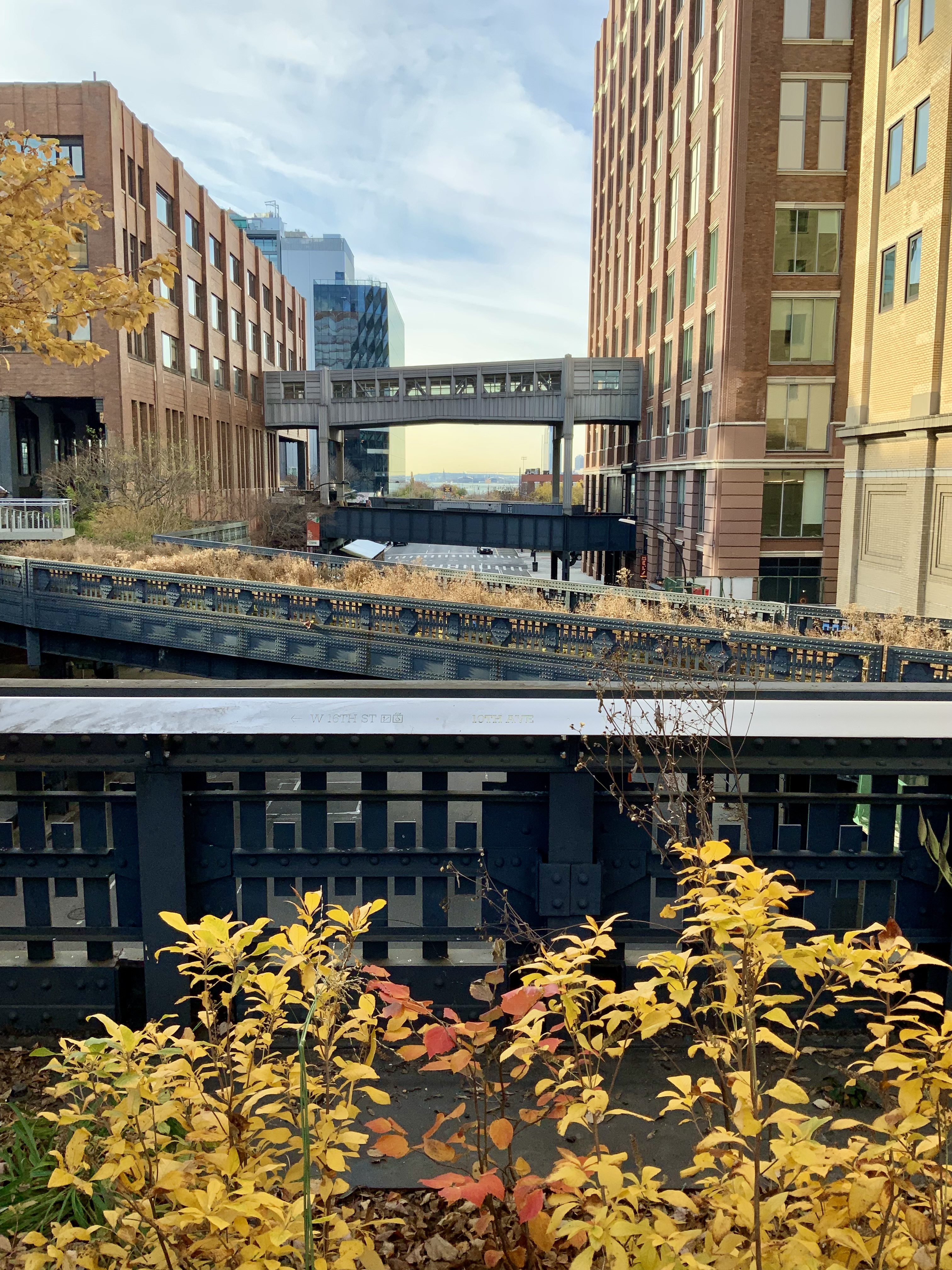
View from the High Line, New York NY
*an ongoing series of quotations – mostly from artists, to artists – that offers wisdom, inspiration, and advice for the sometimes lonely road we are on.
Just as the restless, committed, curious, and perhaps obsessed explorer follows the river from bend to bend, shooting rapids and pulling himself out of the water, so the self-dedicated artist launches himself on an exploratory art journey. He judges which fork in the river he will take, when he will rest and when he will push on, who he will take with him or whether he will travel alone. While he doesn’t possess unlimited freedom as he journeys, bound as he is by the demands of his personality, by his time and place, and by circumstances beyond his control, he does possess unrestricted permission from himself to explore every available avenue.
The contemporary artist must especially direct and trust himself because he lives in a constantly changing art environment. … as Pablo Picasso put it, “Beginning with Van Gogh we are all in a measure, autodidacts.” Painters no longer live within a tradition and so each of us must create an entire language.
Eric Maisel in A Life in the Arts: Practical Guidance and Inspiration for Creative and Performing Artists
Comments are welcome!
Pearls from artists* # 596

Film still from “Barbara Rachko: True Grit,” Directed by Jennifer Cox, Moto Films LLC
*an ongoing series of quotations – mostly from artists, to artists – that offers wisdom, inspiration, and advice for the sometimes lonely road we are on.
Being an artist is very hard work. Not only do you have to constantly develop your discipline, but if you have a desire to make a living, you have to be a good businessperson.
Agents, business managers, etc., etc., are not the authors of your career. They make suggestions. They are a part of your research team. You are the author. You are the center of your career. You have to run the show. I hope your show is about more than gold digging. I hope your show is about becoming the most engaging, enchanting, magical person that you can be – through your art. Art is ultimately transcendent. That’s a fact.
Anna Deavere Smith in Letters to a Young Artist: Straight-Up Advice on Making a Life in the Arts – For Actors, Performers, Writers, and Artists of Every Kind
Comments are welcome!
Pearls from artists* # 505

*an ongoing series of quotations – mostly from artists, to artists – that offers wisdom, inspiration, and advice for the sometimes lonely road we are on.
… I myself was once “at the top: – with a book that sat on the bestseller list for more than three years. I can’t tell you how many people said to me during those years, “How are you ever going to top that?” They’d speak of my great good fortune as though it were a curse, not a blessing, and would speculate about how terrified I must feel at the prospect of not being able to reach such phenomenal heights again.
But such thinking assumes there is a “top” – and that reaching that top (and staying there) is the only motive one has to create. Such thinking assumes that the mysteries of inspiration operate on the same scale as we do – on a limited human scale of success and failure, of winning and losing, of comparison and competition, of commerce and reputation, of units sold and influence wielded. Such thinking assumes that you must be constantly victorious – not only against your piers, but also against an earlier version of your own poor self. Most dangerously of all, such thinking assumes if you cannot win, then you must not continue to play.
But what does any of that have to do with vocation? What does any of that have to do with the pursuit of love? What does any of that have to do with the strange communion between the human and the magical? What does any of that have to do with faith? What does any of that have to do with the quiet glory of merely making things, and then sharing those things with an open heart and no expectations?
Elizabeth Gilbert in Big Magic: Creative Living Beyond Borders
Comments are welcome!
Pearls from artists* # 148
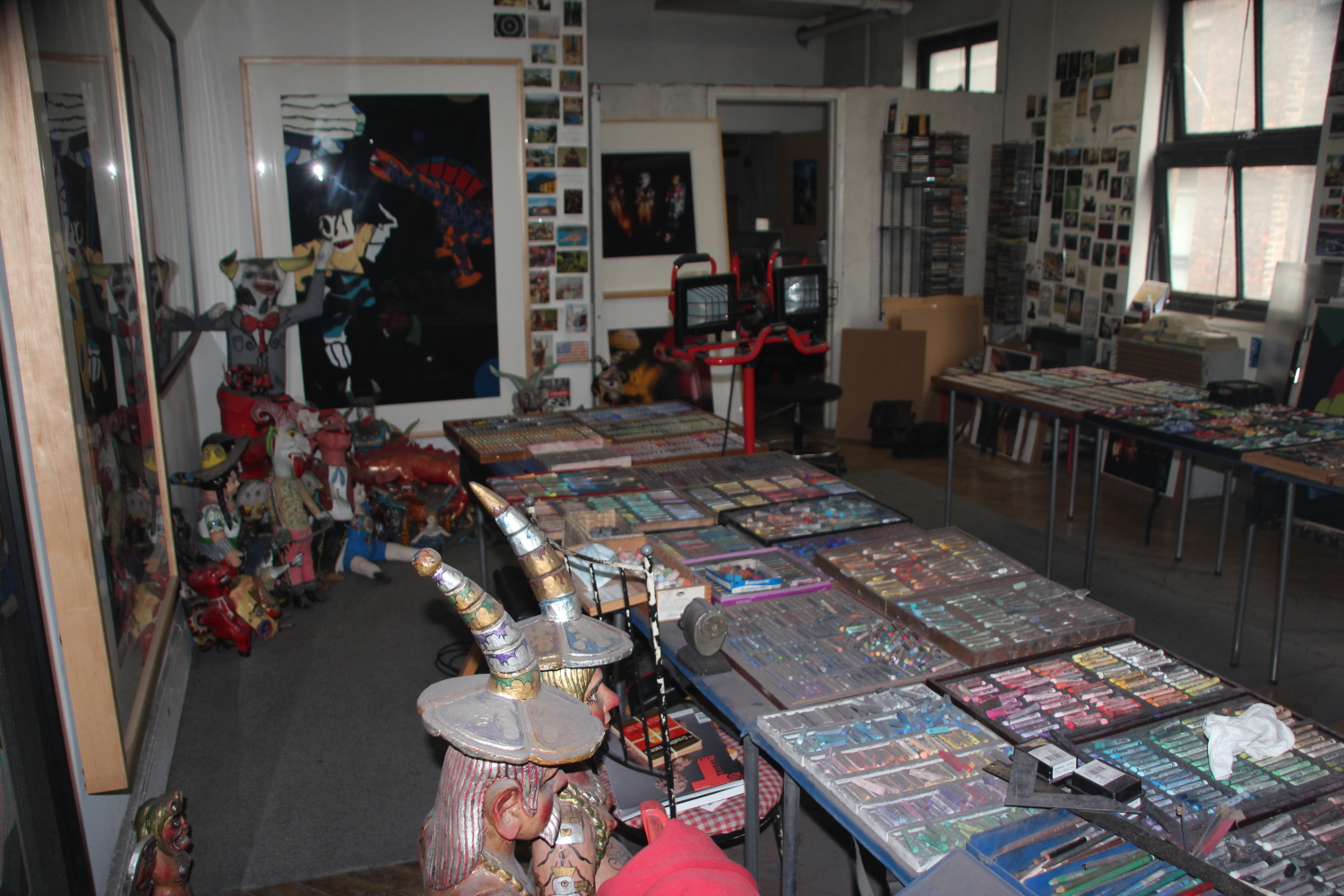
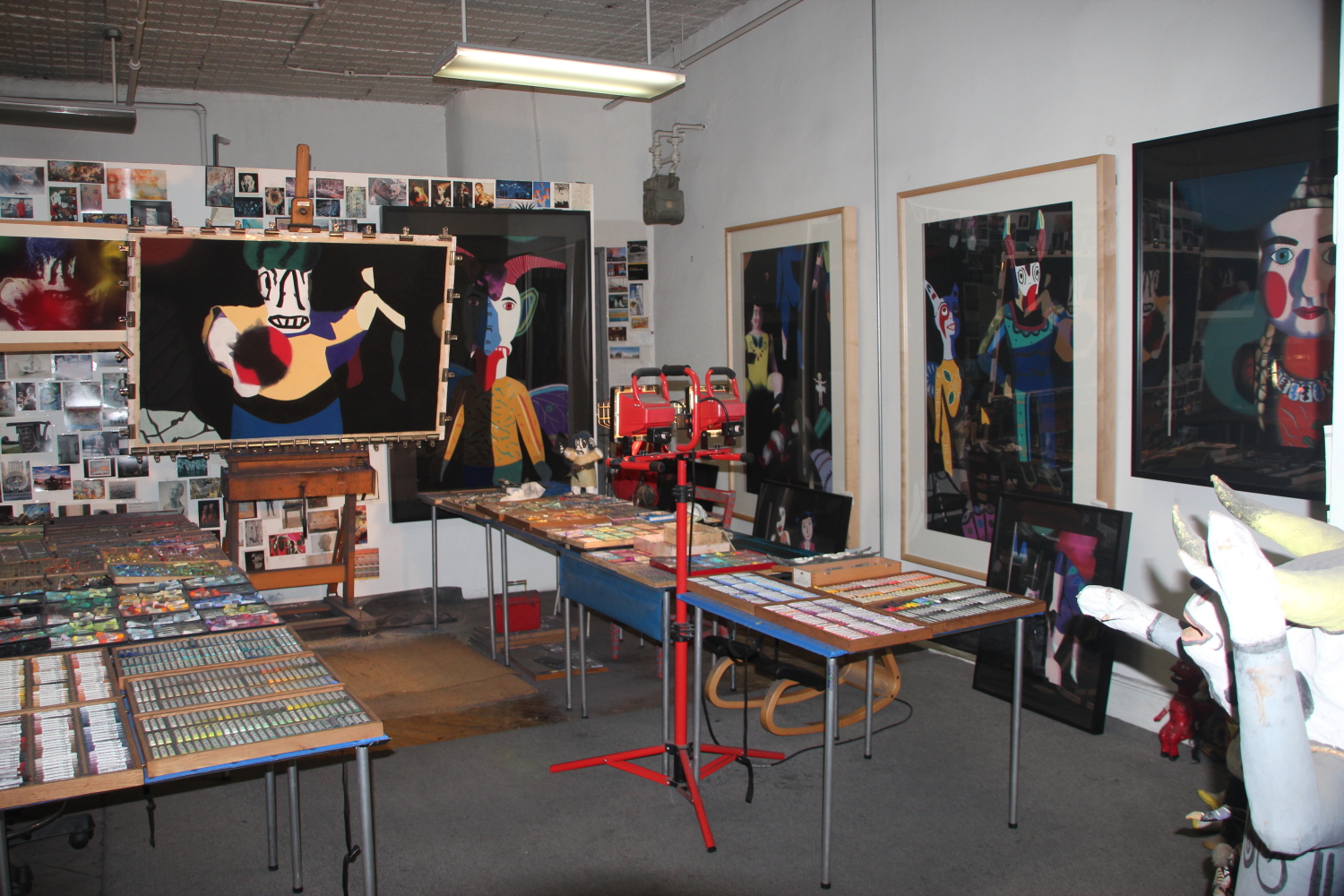
Barbara’s studio
* an ongoing series of quotations – mostly from artists, to artists – that offers wisdom, inspiration, and advice for the sometimes lonely road we are on.
I want Bob Iger, the head of Disney, to invest in my ideas. In fact … one of my ideas is … I love Walt Disney … I feel Disney should have an art fund that completely supports all of the arts. And I feel that there should be a responsibility, recruiters, constantly looking for new thinkers and connecting them directly to companies that already work. Why does the person who has the most genius idea or cultural understanding or can create the best art have to figure out how to become a businessman in order to become successful at expressing himself? I think it’s important for anyone that’s in power to empower.
Kanye West in Choice Quotes from Kanye’s Address at the School of the Art Institute of Chicago, in Hyperallergic, May 12, 2015
Comments are welcome!
Pearls from artists # 146
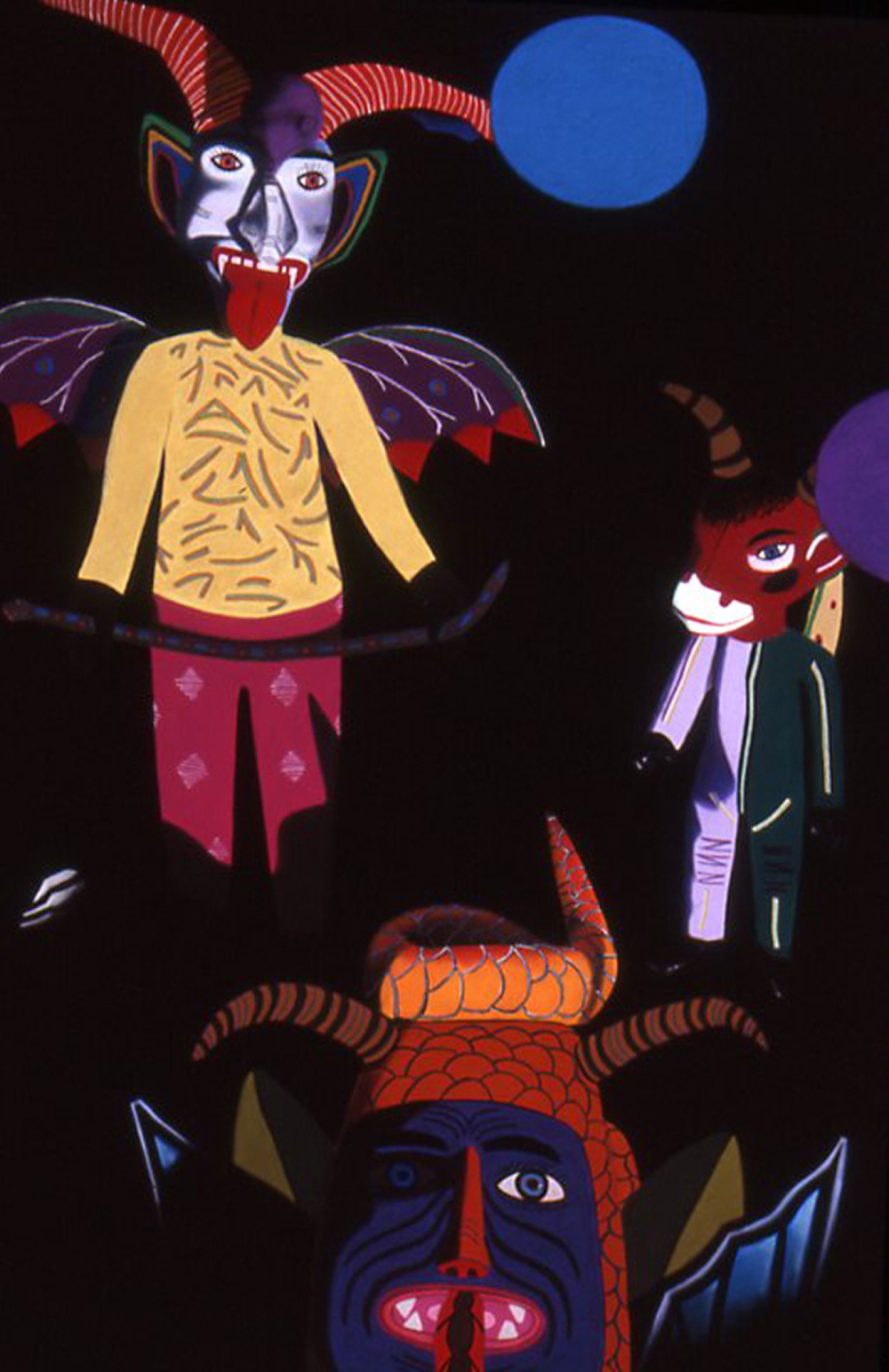
“The Sovereign,” soft pastel on sandpaper, 58″ x 38″
* an ongoing series of quotations – mostly from artists, to artists – that offers wisdom, inspiration, and advice for the sometimes lonely road we are on.
I try to remember that painting at its best is a form of communication, that it is constantly reaching out to find response from an ideal and sympathetic audience. This I know is not accomplished by pictorial rhetoric nor by the manipulation of seductive paint surfaces. Nor is a good picture concocted out of theatrical props, beautiful subjects, or memories of other paintings. All these might astound but they will never communicate the emotional content or exaltation of life, which I believe an artist, by definition, has to accept as his task.
Julian Levi: Before Paris and After in The Creative Process, edited by Brewster Ghiselin
Comments are welcome!
Pearls from artists* # 122
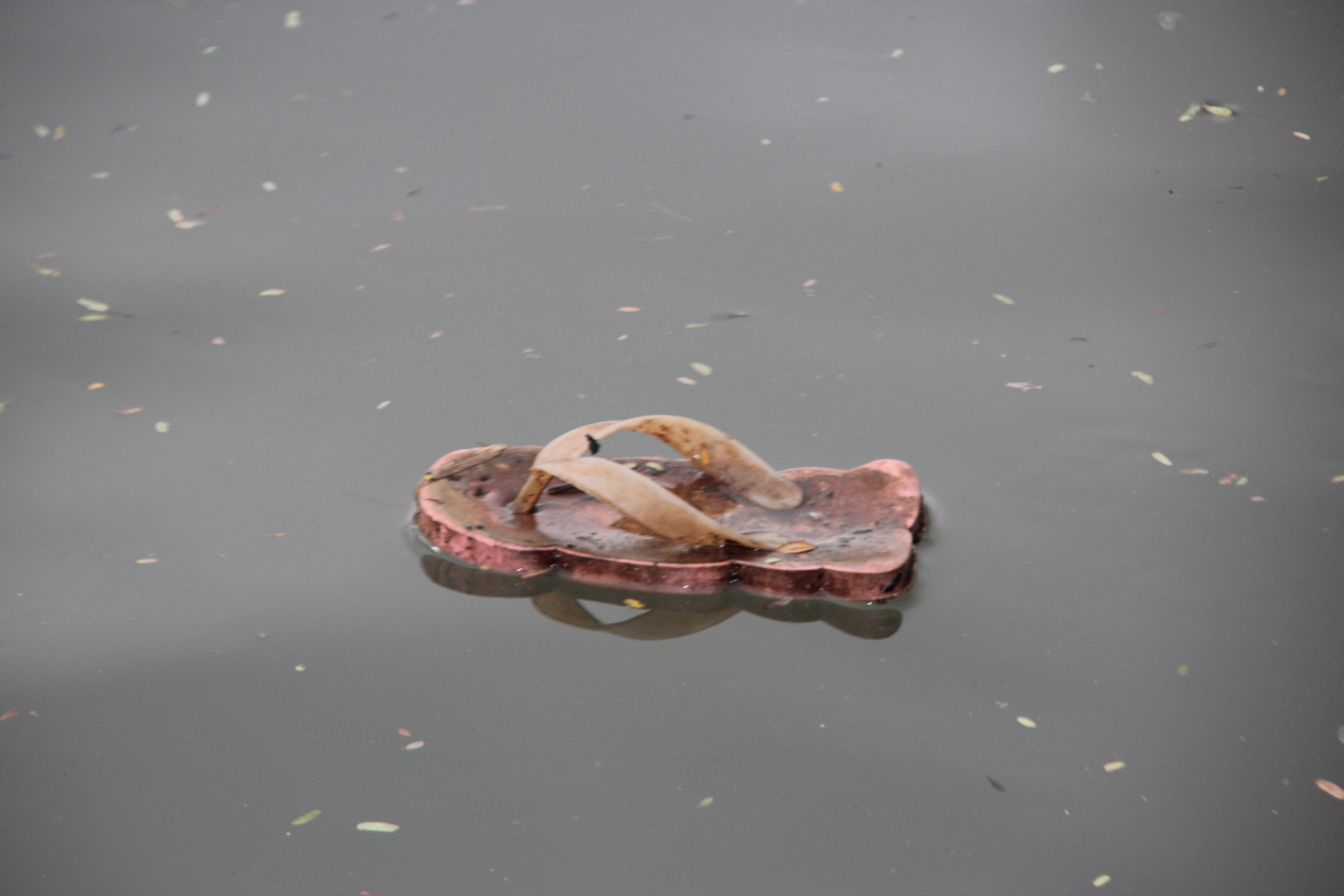
Sanur, Bali
* an ongoing series of quotations – mostly from artists, to artists – that offers wisdom, inspiration, and advice for the sometimes lonely road we are on.
Most significant growth in my life has been the direct result of errors, mistakes, accidents, faulty assumptions and wrong moves. I have generally learned more from my mistakes and my so-called failures than any successes or instances of “being right.” I would venture to propose that this equation is also true in the world at large. Error is a powerful animating ingredient in political, scientific and historical evolution as well as in art and mythology. Error is a necessity. The question I had to ask myself was: how can I cultivate a tolerance and an appetite for being wrong, for error?
In the face of an exceedingly complicated world, there are too many people who are invested in “being right.” These people are dangerous. Their authority is based on their sense of certainty. But innovation and invention do not only happen with smart people who have all of the answers. Innovation results from trial and error. The task is to make good mistakes, good errors, in the right direction.
There are many reasons that we get things as wrong as often as we do. Failures of perception, the cause of most error, are far more common in our daily lives than we like to think. We make errors because of inattention, because of poor preparation and because of haste. We err as a result of hardened prejudices about how things are. We err because we neglect to think things through. Our senses betray us constantly. But the chaos caused by being wrong also awakens energy and consciousness in us. In the moments that we realize our faults of perception, we are jerked into an awareness of our humanity. The Slovenian philosopher Slavoj Zizek wrote, “Consciousness originates with something going terribly wrong.”
Anne Bogart in “What’s the Story: Essays about art, theater, and storytelling
Comments are welcome!


 barbararachkoscoloreddust.com