Blog Archives
Pearls from artists* # 423

“Epiphany,” soft pastel on sandpaper, 38″ x 58″
* an ongoing series of quotations – mostly from artists, to artists – that offers wisdom, inspiration, and advice for the sometimes lonely road we are on.
I’ve mentioned that Kenneth Clark, the British art historian, said you could take the four best paintings of any artist in history and destroy the rest and the artist’s reputation would still be intact. This is because in any artist’s life there are moments when everything goes right. The artist is so in tune with his or her inner vision that there is no restriction. The divine is being expressed. Each mark becomes like a note of music in a divine order.
That experience, that prayer of expression, transcends its material and becomes spiritual. The experience is overwhelming, the joys it communicates explosive.
When on another occasion we can’t find that spiritual level of experience, and so can’t repeat it, the frustration can be cruel and the separation painful. Here lies the myth of the suffering artist. It isn’t the art making when it goes well that has any suffering in it. That is the union with the beloved. It’s the loss that causes the suffering. And the problem isn’t something we can necessarily control. We are instruments, conduits for that expression. It comes through us by grace.
The idea that we “make” art is perhaps a bit misleading. The final product is at its best the result of a collaboration with spirit. We may be separated from a flow within our spirit for weeks. We continue to paint because there is no knowing at what precise moment it will return. And when it does we need our faculties alert and our skills honed. Then the poetry is everywhere.
Ian Roberts in Creative Authenticity: 16 Principles to Clarify and Deepen Your Artistic Vision
Comments are welcome!
Q: Can you describe a single habit that you believe contributes to your professional success?
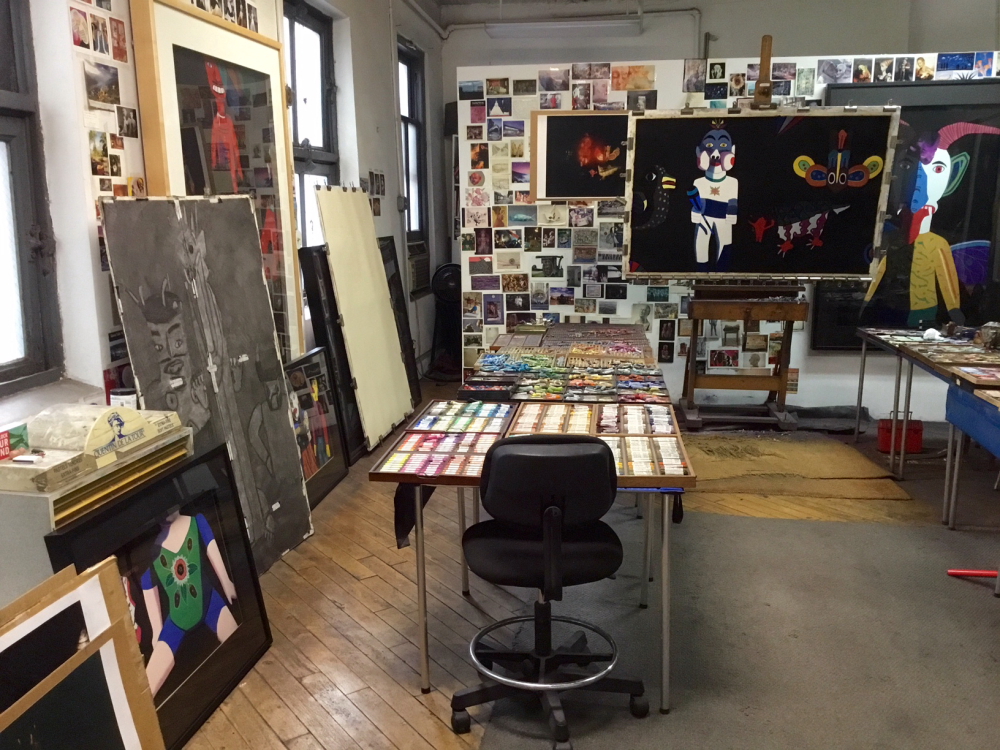
Barbara’s studio with work in progress
A: It’s probably the fact that I keep regular studio hours. Contrary to the cliche of artists working in spurts, I continually work in the studio at least seven hours a day, five days a week, with Wednesdays and Sundays as my days off. I devote another two hours or so in the mornings and evenings for art business tasks: email, sending out jpegs, social media, etc. I always remember something Katharine Hepburn said: “Without discipline there is no life.”
Comments are welcome!
Pearls from artists* # 177
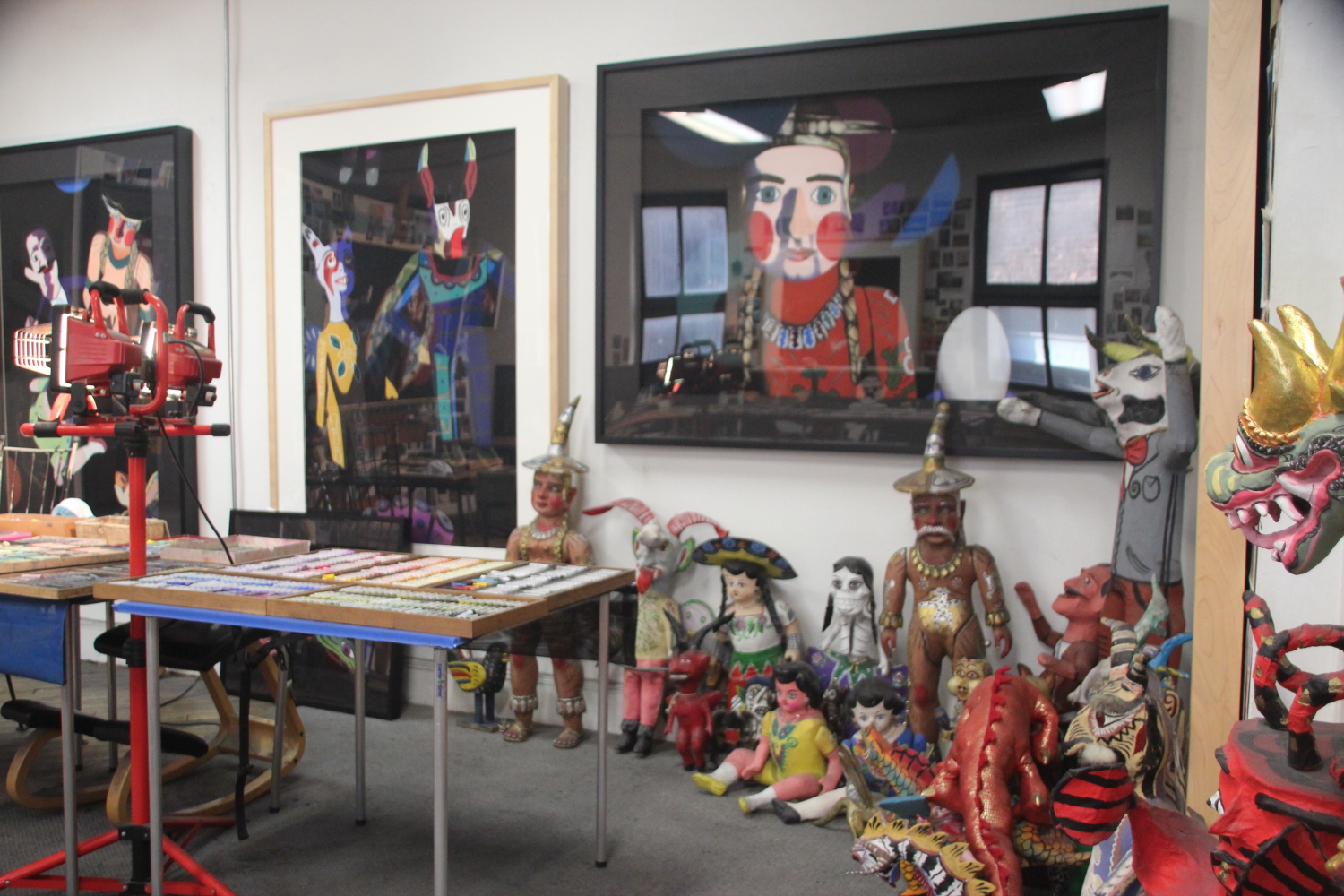
Barbara’s studio
* an ongoing series of quotations – mostly from artists, to artists – that offers wisdom, inspiration, and advice for the sometimes lonely road we are on.
Everyone but a lunatic has a reason for what he does. Yes, in that sense I am a determinist. But I believe, with Kant, that the mind is self-determined. That is, I believe intensely in the creative freedom of the mind. That is indeed absolutely essential to man’s security in a chaotic world of change. He is faced all the time with unique complex problems. To sum them up for action is an act of creative imagination. He fits the different elements together in a coherent whole and invents a rational act to deal with it. He requires to be free, he requires his independence and solitude of mind, he requires his freedom of mind and imagination. Free will is another matter – it is a term, or rather a contradiction in terms, which leads to continual trouble. The will is never free – it is always attached to an object, a purpose. It is simply the engine in the car – it can’t steer. It is the mind, the reason, the imagination that steers.
Joyce Carey in The Paris Review Interviews: Writers at work 1st Series, edited and with an introduction by Malcolm Cowley
Comments are welcome!
Pearls from artists* # 170
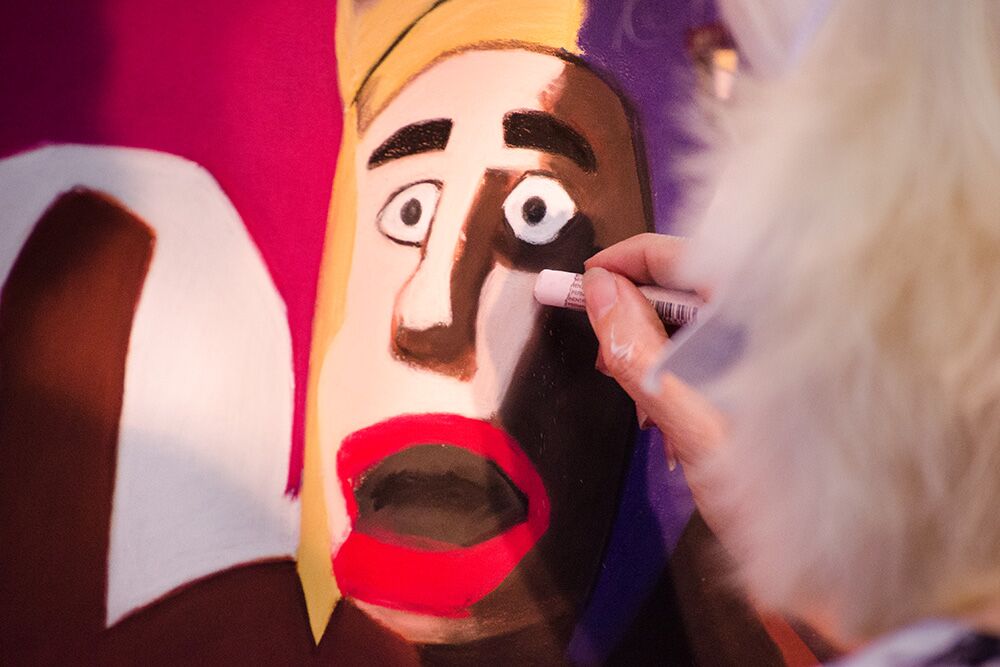
Barbara at work, Photo: Marianne Barcellona
* an ongoing series of quotations – mostly from artists, to artists – that offers wisdom, inspiration, and advice for the sometimes lonely road we are on.
Every novelist ought to invent his own technique, that is the fact of the matter. Every novel worthy of the name is like another planet, whether large or small, which has its own laws just as it has its own flora and fauna. Thus, Faulkner’s technique is certainly the best one with which to produce Faulkner’s world, and Kafka’s nightmare has produced its own myths that make it communicable. Benjamin Constant, Stendahl, Eugene Fromentin, Jaques Riviere, Radiquet, all used different techniques, took different liberties, and set themselves different tasks. The work of art itself, whether its title is Adolphe, Lucien Leuwen, Dominique, Le Diable au corps or A la Recherché du temps perdu, is the solution to the problem of technique.
Francois Mauriac in The Paris Review Interviews: Writers at Work 1st Series, edited and with an Introduction by Malcolm Cowley
Comments are welcome!
Pearls from artists* # 151

“The Storyteller,” soft pastel on sandpaper, 20″ x 26″
* an ongoing series of quotations – mostly from artists, to artists – that offers wisdom, inspiration, and advice for the sometimes lonely road we are on.
I am a storyteller, for better and for worse. I suspect that a feeling for stories, for narrative, is a universal human disposition, going with our powers of language, consciousness of self, and autobiographical memory.
The act of writing, when it goes well, gives me a pleasure, a joy, unlike any other. It takes me to another place – irrespective of my subject – where I am totally absorbed and oblivious to distracting thoughts, worries, preoccupations, or indeed the passage of time. In those rare, heavenly states of mind, I may write nonstop until I can no longer see the paper. Only then do I realize that evening has come and that I have been writing all day.
Over a lifetime, I have written millions of words, but the act of writing seems as fresh, and as much fun, as when I started it nearly seventy years ago.
On the Move: A Life by Oliver Sacks
Comments are welcome!
Pearls from artists* # 144
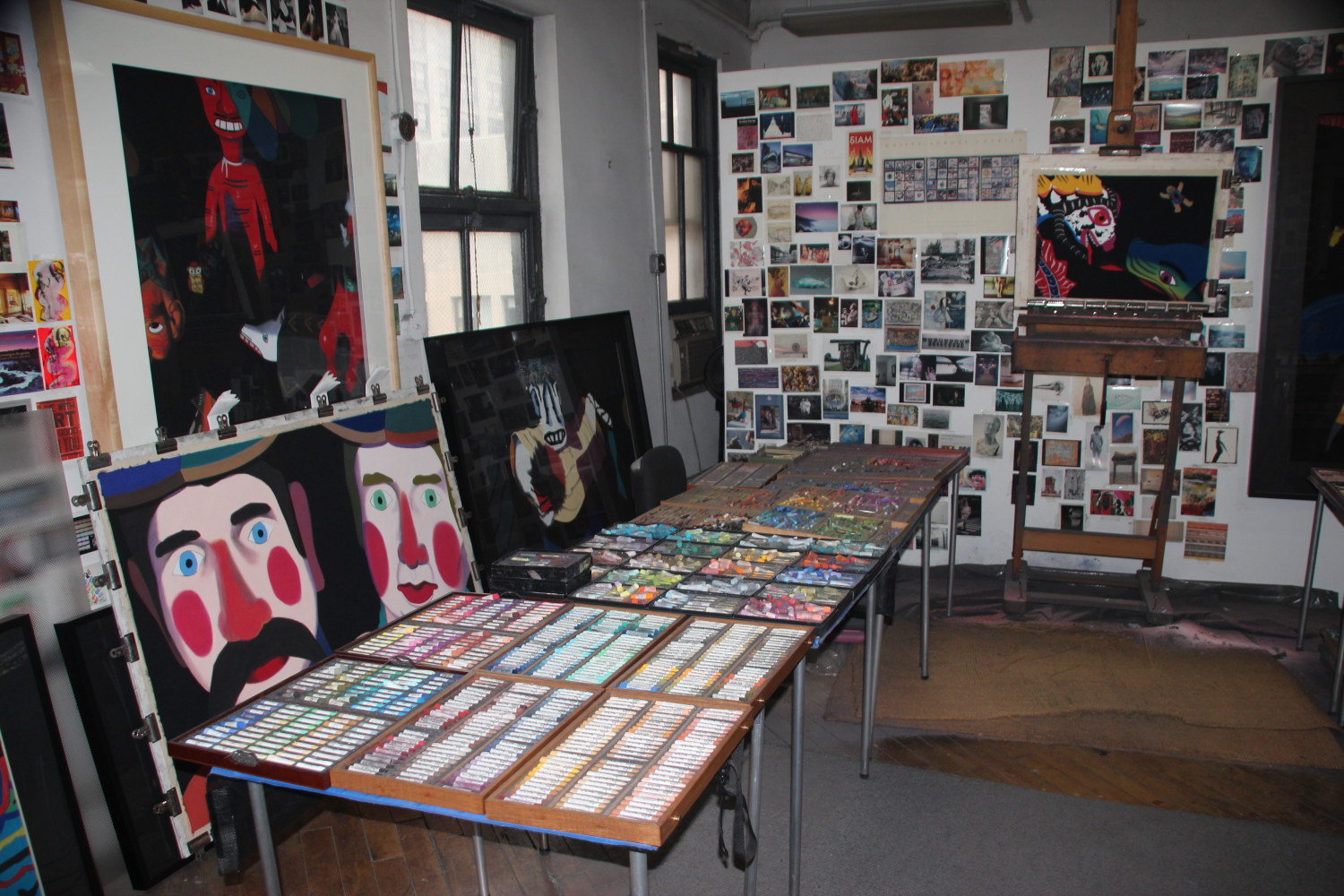
Barbara’s studio
* an ongoing series of quotations – mostly from artists, to artists – that offers wisdom, inspiration, and advice for the sometimes lonely road we are on.
Art and design are rule-based. This flies in the face of everything that most people have been taught before, namely, that art and design are about freedom. I remember reading a wonderful analogy about this concept many years ago in an out-of-print, early twentieth-century book on design. The author asked us to imagine a flying kite – the quintessential emblem of unrestricted, spontaneity, soaring in the wind. Keeping taught the line between you and the kite, however, is the source of that freedom. Here’s another way of putting it: “Creativity arises out of the tension between the rules and imagination.”
Leslie Hirst in The Art of Critical Making: Rhode Island School of Design on Creative Practice, Rosanne Somerson and Mara L. Hermano, editors
Comments are welcome!
Pearls from artists* # 136
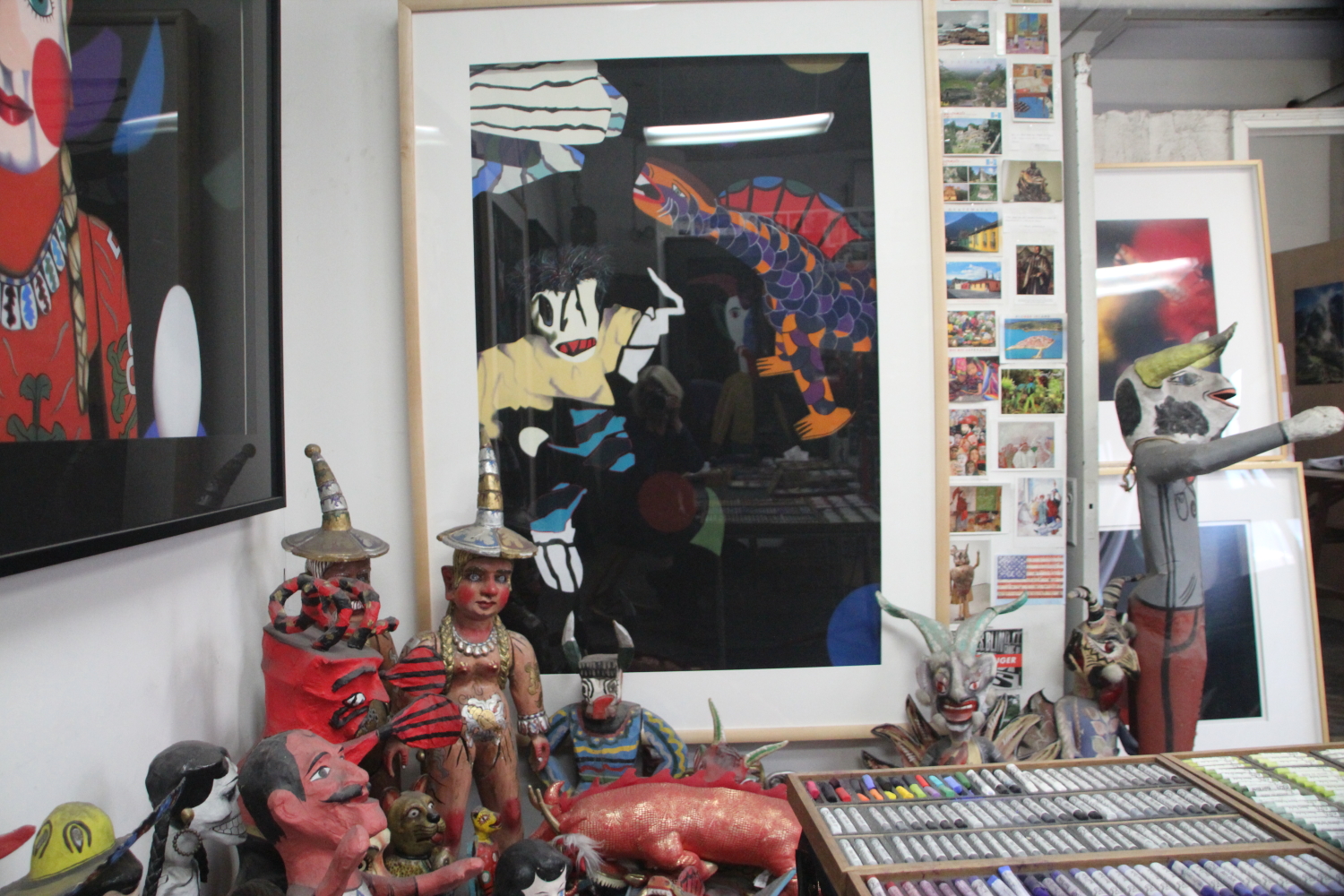
Barbara’s studio
* an ongoing series of quotations – mostly from artists, to artists – that offers wisdom, inspiration, and advice for the sometimes lonely road we are on.
Francis Bacon interview with David Sylvester
DS: What do you think are the essential things that go to make an artist, especially now?
FB: Well, I think there are lots of things. I think that one of the things is that, if you are going to decide to be a painter, you have got to decide that you are not going to be afraid to make a fool of yourself. I think another thing is to be able to find subjects which really absorb you to try and do. I feel without a subject you automatically go back into decoration because you haven’t got the subject which is always eating into you to bring it back – and the greatest art always returns you to the vulnerability of the human situation.
The Art Life: On Creativity and Career by Stuart Horodner
Comments are welcome!
Q: Do you have a daily artistic practice?

Studio entrance
A: In one way or another I suppose I do. Of course, I don’t go to the studio six days a week like I used to, but I generally work five days, about seven to eight hours per day. When I am not actually in the studio working at my easel, I try to make use of my time in ways that, hopefully, will make me a better artist. I am usually reading, studying, looking at art, talking to friends who are artists, thinking about my creative practice, etc. Art and everything related to it are naturally the focus of my life.
Comments are welcome!
Q: What’s on the easel today?

Work in progress
A: I am in the early stages – only 3 or 4 layers of pastel applied so far – on a large pastel painting with the working title, “He and She.” The figures are two favorites – a four-foot tall male and female couple, made of carved wood and silver and gold-leaf. I found them years ago at Galerie Eugenio in Mexico City.
These are the largest heads I have ever painted. As I work on this piece I remember one of my teachers saying, “Never paint a head larger than life-size.” Well, here’s to breaking rules.
For reference I am looking at a digital photograph shot with my Canon T3i. My usual practice is to make a c-print from a negative made with my Mamiya 6, but the photo clipped to my easel above is from a high resolution JPEG. Typically I set up a scene at home on a black cloth and photograph it, but my reference photo was taken in my studio without rearranging anything. In this painting I am breaking a few rules, while my creative process is perhaps evolving towards greater simplicity.
Comments are welcome!
Q: Why don’t you make political art?
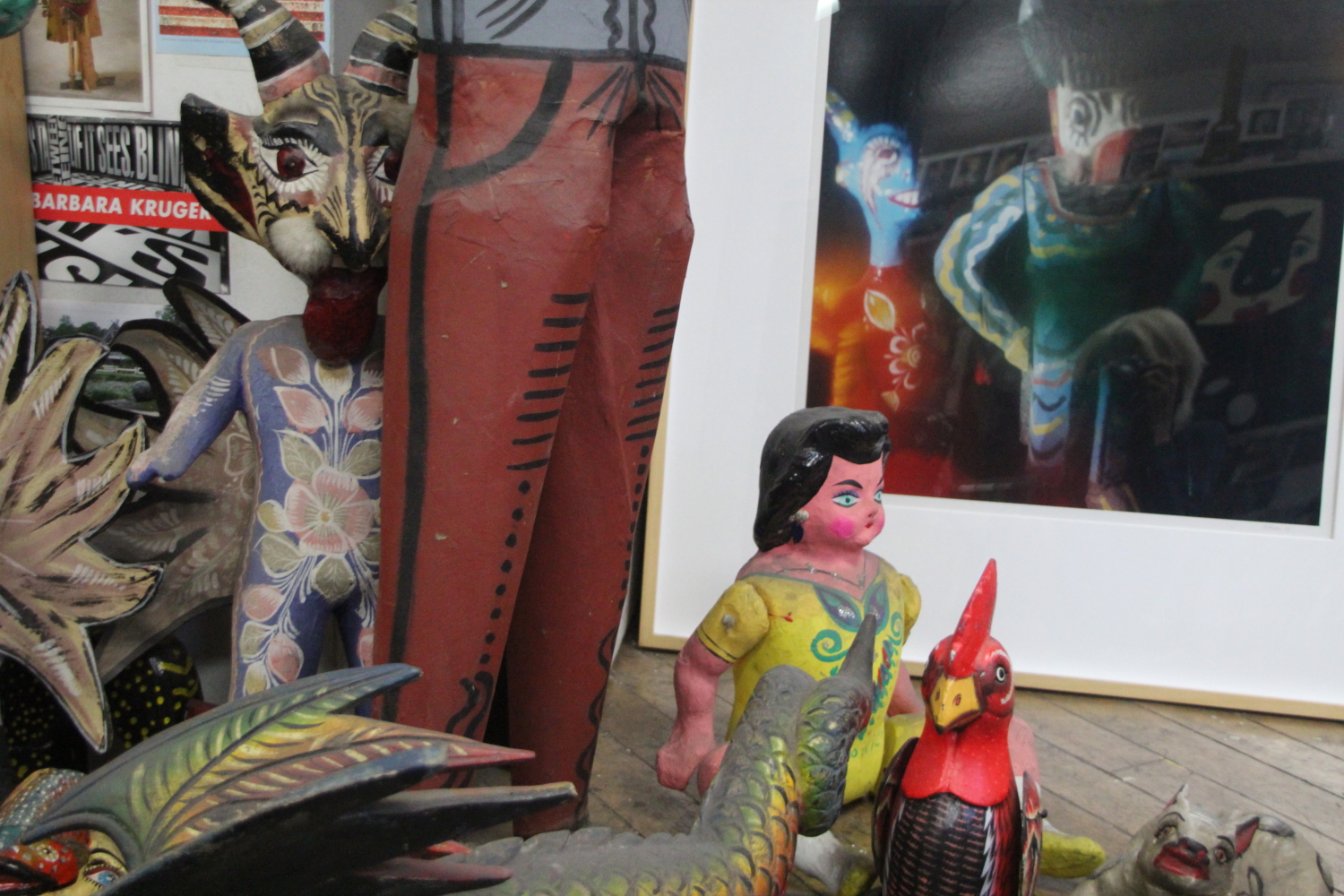
Barbara’s studio
A: I have little interest in dealing with political events in my work because these events come and go. They have a short shelf life. Fine art based on current events quickly loses its context and becomes outdated and irrelevant.
I prefer art that is timeless. My intention is to create personal work about deeper psychological issues and the human condition. Done well, personal work is more likely to speak to and stay with an audience long after the news cycle has moved on.
Comments are welcome!


 barbararachkoscoloreddust.com