Category Archives: Quotes
Pearls from artists* # 244
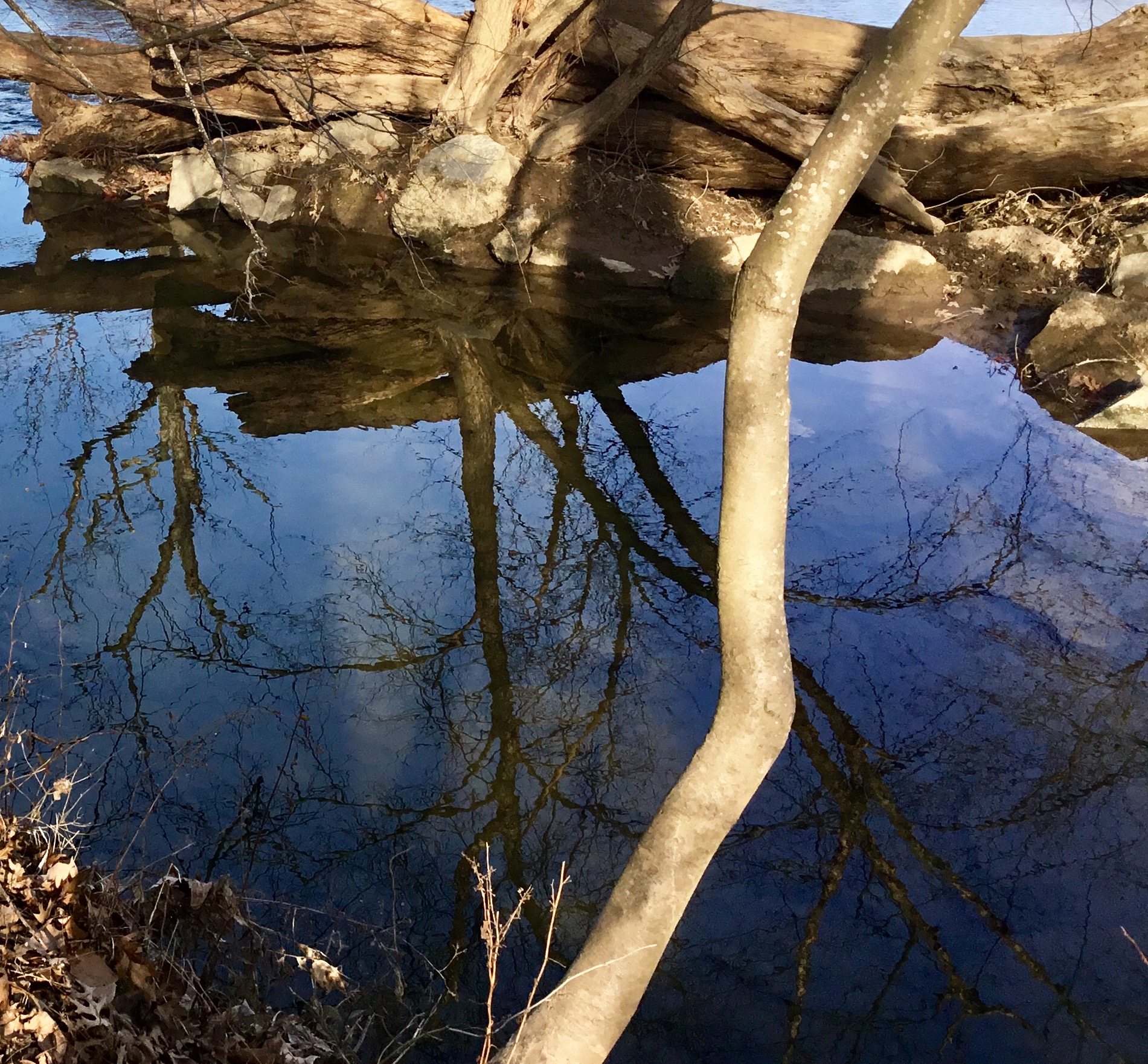
Great Falls, VA
* an ongoing series of quotations – mostly from artists, to artists – that offers wisdom, inspiration, and advice for the sometimes lonely road we are on.
Poet or painter, musician or architect, all solitary individuals at bottom turn to nature because they prefer the eternal to the transient, the profound rhythms of eternal laws to that which finds justification in passing. Since they cannot persuade nature to share in their experience they consider their task to grasp nature in order to place themselves somewhere in its vast contexts. And with these single solitary individuals all of humanity approaches nature. It is not the ultimate and possibly most peculiar value of art that it constitutes the medium in which man and landscape, figure and world encounter and find each other. But in the painting, the building, the symphony – in a word, in art itself, they seem to join together as if in a higher, prophetic truth, to rely on one another, and it is as if they completed each other to become that perfect unity that characterizes the work of art.
The Poet’s Guide to Life: The Wisdom of Rilke, edited and translated by Ulrich Baer
Comments are welcome!
Pearls from artists* # 243
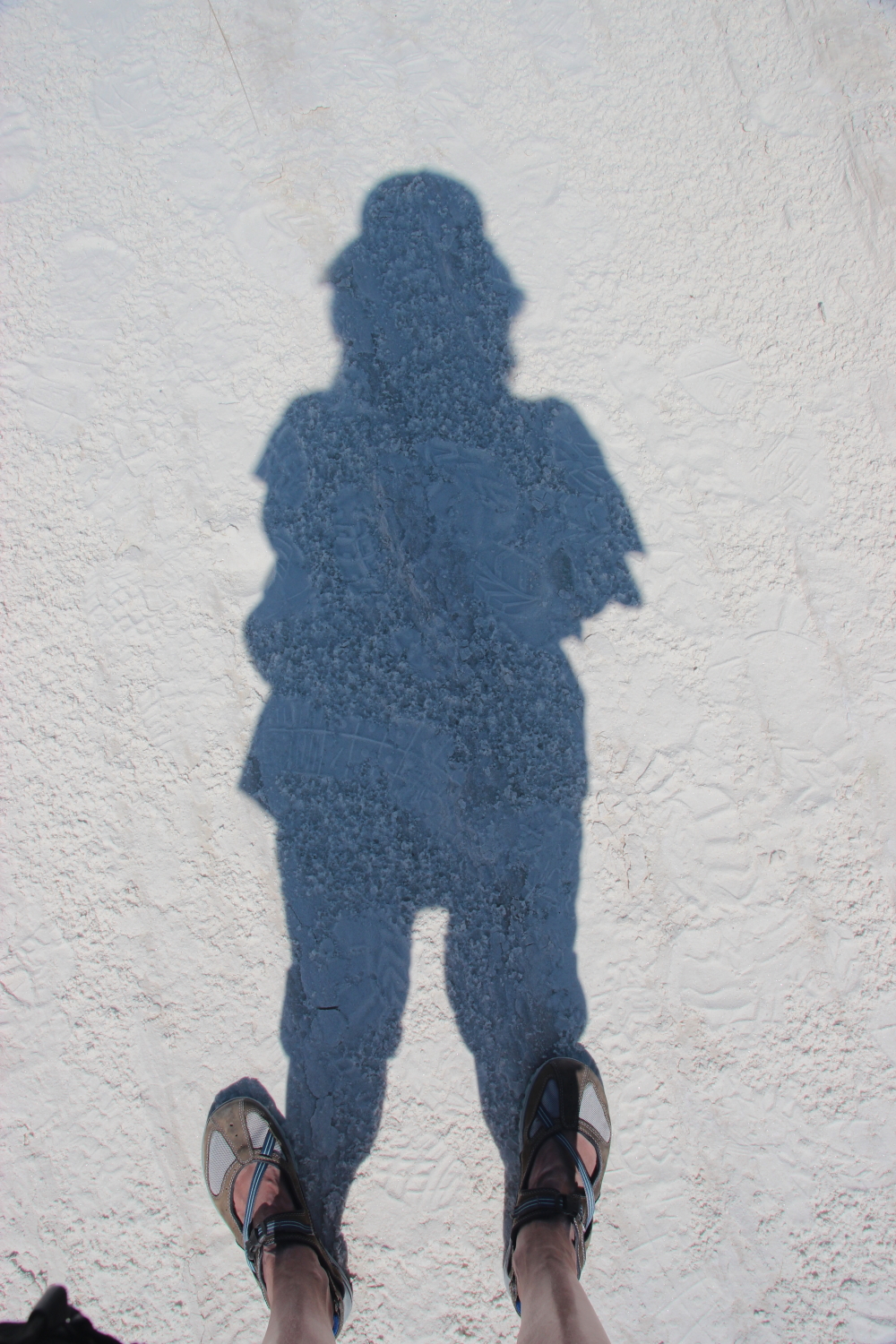
Self portrait, White Sands, NM
* an ongoing series of quotations – mostly from artists, to artists – that offers wisdom, inspiration, and advice for the sometimes lonely road we are on.
Art is not a making-oneself-understood but an urgent understanding-of-oneself. The closer you get in your most intimate and solitary contemplation or imagination (vision), the more has been achieved, even if no one else were to understand it.
The Poet’s Guide to Life: The Wisdom of Rilke, edited and translated by Ulrich Baer
Comments are welcome!
Pearls from artists* # 242
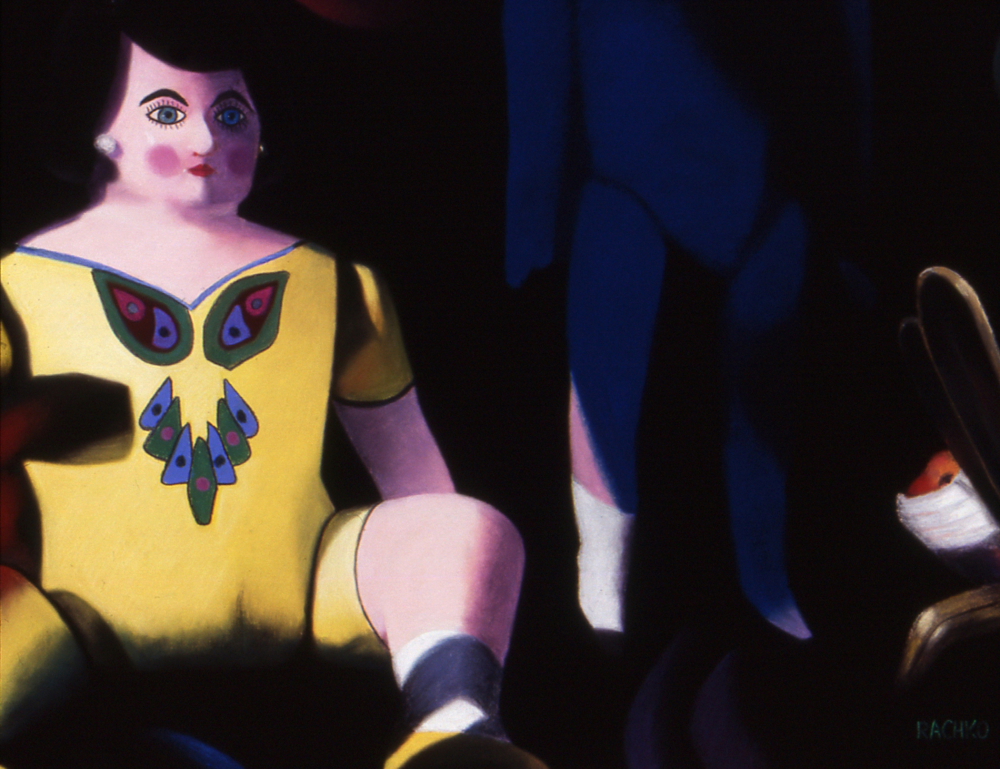
“Figment,” soft pastel on sandpaper, 20″ x 26″
* an ongoing series of quotations – mostly from artists, to artists – that offers wisdom, inspiration, and advice for the sometimes lonely road we are on.
Of this there can be no question – creative work requires the loyalty of water to the force of gravity. A person trudging through the wilderness of creation who does not know this – who does not swallow this – is lost. He who does not crave that roofless place eternity should stay home. Such a person is perfectly worthy, and useful, and even beautiful, but is not an artist. Such a person had better live with timely ambitions and finished work formed for the sparkle of the moment only. Such a person had better go off and fly an airplane.
Mary Oliver in Upstream: Selected Essays
Comments are welcome!
Pearls from artists* # 241

“The Ancestors,” soft pastel on sandpaper, 58″ x 38″
* an ongoing series of quotations – mostly from artists, to artists – that offers wisdom, inspiration, and advice for the sometimes lonely road we are on.
A few years ago I heard a lecture about the Whitney family, especially about Gertrude Vanderbilt Whitney, whose patronage established the museum of that name in New York City. The talk was given by Mrs. Whitney’s granddaughter, and she used a fine phrase when speaking of her family – of their sense of “inherited responsibility” – to do, of course, with received wealth and a sense of using it for public good. Ah! Quickly I slipped this phrase from the air and put it into my own pocket!
For it is precisely how I feel, who has inherited not measurable wealth but, as we all do who care for it, that immeasurable fund of thoughts and ideas, from writers and thinkers long gone into the ground – and, inseparable from those wisdoms because demanded by them, the responsibility to live thoughtfully and intelligently. To enjoy, to question – never to assume, or trample. Thus the great ones (my great ones, who may not be the same as your great ones) have taught me – to observe with passion, to think with patience, to live always caringly.
Mary Oliver in Upstream: Selected Essays
Comments are welcome!
Pearls from artists* # 240

Great Salt Lake, Utah
* an ongoing series of quotations – mostly from artists, to artists – that offers wisdom, inspiration, and advice for the sometimes lonely road we are on.
In creative work – creative work of all kinds – those who are the world’s working artists are not trying to help the world go around, but forward. Which is something altogether different from the ordinary. Such work does not refute the ordinary. It is, simply, something else. Its labor requires a different outlook – a different set of priorities. Certainly there is within each of us a self that is neither a child, nor a servant of the hours. It is a third self, occasional in some of us, tyrant in others. This self is out of love with the ordinary. It has a hunger for eternity.
Mary Oliver in Upstream: Selected Essays
Comments are welcome!
Pearls from artists* #239

At work on “False Friends”; photo by Diana Feit
* an ongoing series of quotations – mostly from artists, to artists – that offers wisdom, inspiration, and advice for the sometimes lonely road we are on.
It is a silver morning like any other. I am at my desk. Then the phone rings, or someone raps at the door. I am deep in the machinery of my wits. Reluctantly I rise, I answer the phone or I open the door. And the thought which I had in hand, or almost in hand, is gone.
Creative work needs solitude. It needs concentration, without interruptions. It needs the whole sky to fly in, and no eye watching until it comes to that certainty which it aspires to, but does not necessarily have at once. Privacy, then. A place apart – to pace, to chew pencils, to scribble and erase and scribble again.
Mary Oliver in Upstream: Selected Essays
Comments are welcome!
Pearls from artists* # 238

Self-portrait with “Blue Misterioso”
* an ongoing series of quotations – mostly from artists, to artists – that offers wisdom, inspiration, and advice for the sometimes lonely road we are on.
Form is certainty. All nature knows this, and we have no greater advisor. Clouds have forms, porous and shape-shifting, bumptious, fleecy. They are what clouds need to be, to be clouds. See a flock of them come, on the sled of the wind, all kneeling above the blue sea. And in the blue water, see the dolphin built to leap, the sea mouse skittering; see the ropy kelp with its air-filled bladders tugging it upward; see the albatross floating day after day on its three-jointed wings. Each form sets a tone, enables a destiny, strikes a note in the universe unlike any other. How can we ever stop looking? How can we ever turn away?
Mary Oliver in Upstream: Selected Essays
Comments are welcome!
Pearls from artists* # 237
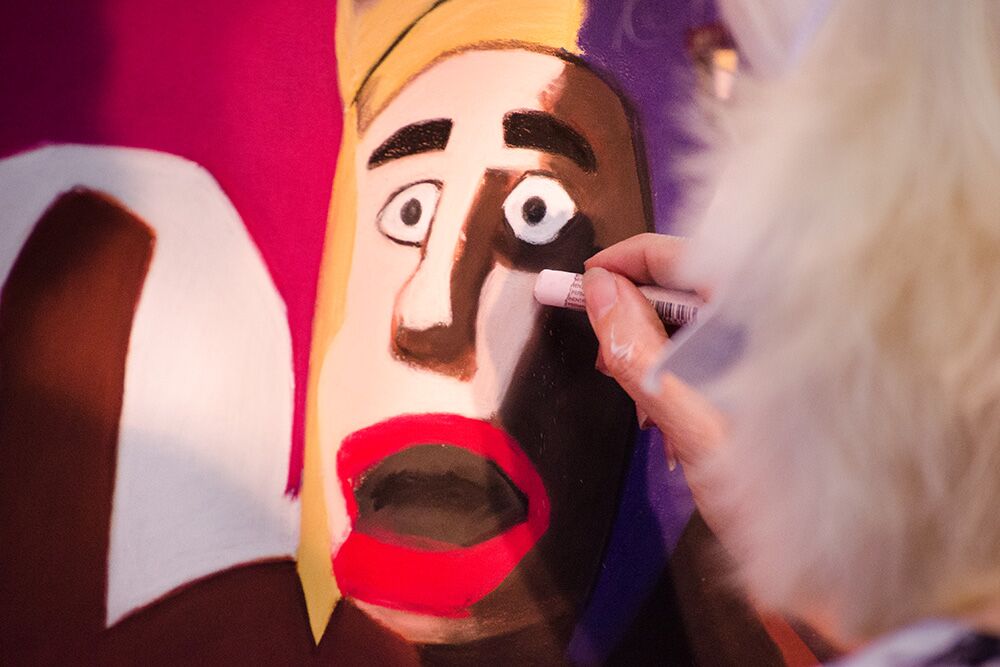
Barbara at work, Photo: Marianne Barcellona
* an ongoing series of quotations – mostly from artists, to artists – that offers wisdom, inspiration, and advice for the sometimes lonely road we are on.
You must not ever stop being whimsical.
And you must not, ever, give anyone else the responsibility for your life.
I don’t mean it’s easy or assured; there are stubborn stumps of shame, grief that remains unsolvable after all the years, a bag of stones that goes with one wherever one goes and however the hour may call for dancing and for light feet. But there is, also, the summoning world, better than anger, better than bitterness, and because more interesting, more alleviating. And there is the thing that one does, the needle one plies, the work, and within that work a chance to take thoughts that are hot and formless and to place them slowly and with meticulous effort into some shapely heat-retaining form, even as the gods, or nature, or the soundless wheels of time have made forms all across the soft, curved universe – that is to say, having chosen to claim my life, I have made for myself, out of work and living, a handsome life.
Mary Oliver in Upstream: Selected Essays
Comments are welcome!
Pearls from artists* # 236
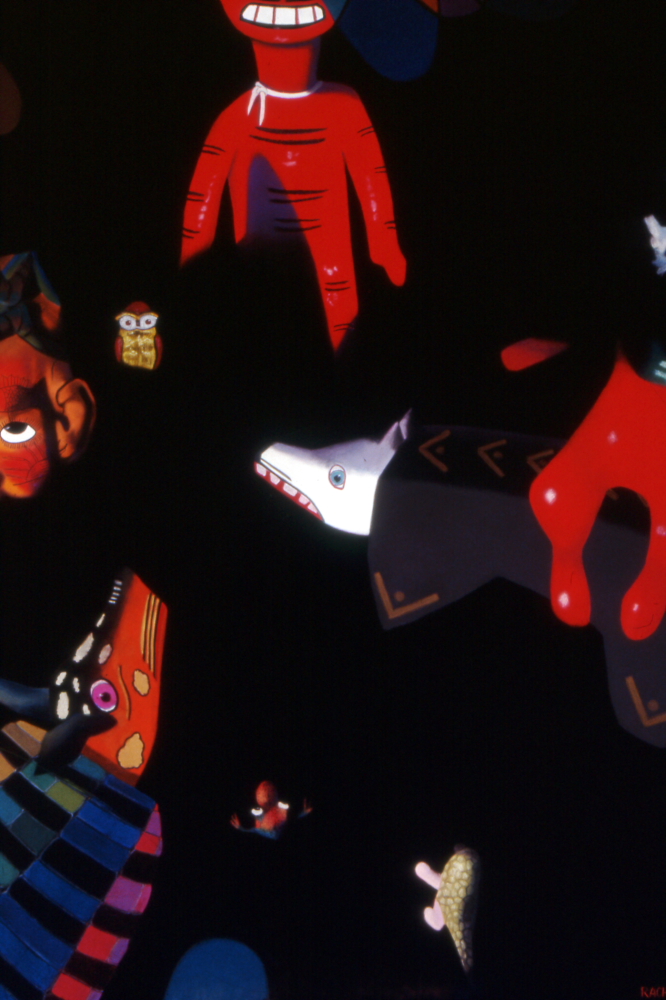
“Some Things We Regret,” soft pastel on sandpaper, 58″ x 38″
* an ongoing series of quotations – mostly from artists, to artists – that offers wisdom, inspiration, and advice for the sometimes lonely road we are on.
There are so many things that art can’t do. It can’t bring the dead back to life, it can’t mend arguments between friends, or cure AIDS, or halt the pace of climate change. All the same, it does have some extraordinary functions, some odd negotiating ability between people, including people who never meet and yet who infiltrate and enrich each other’s lives, it does have a capacity to create intimacy; it does have a way of healing wounds, and better yet of making it apparent that not all wounds need healng and not all scars are ugly.
Olivia Laing in The Lonely City: Adventures in the Art of Being Alone
Comments are welcome!
Pearls from artists* # 235
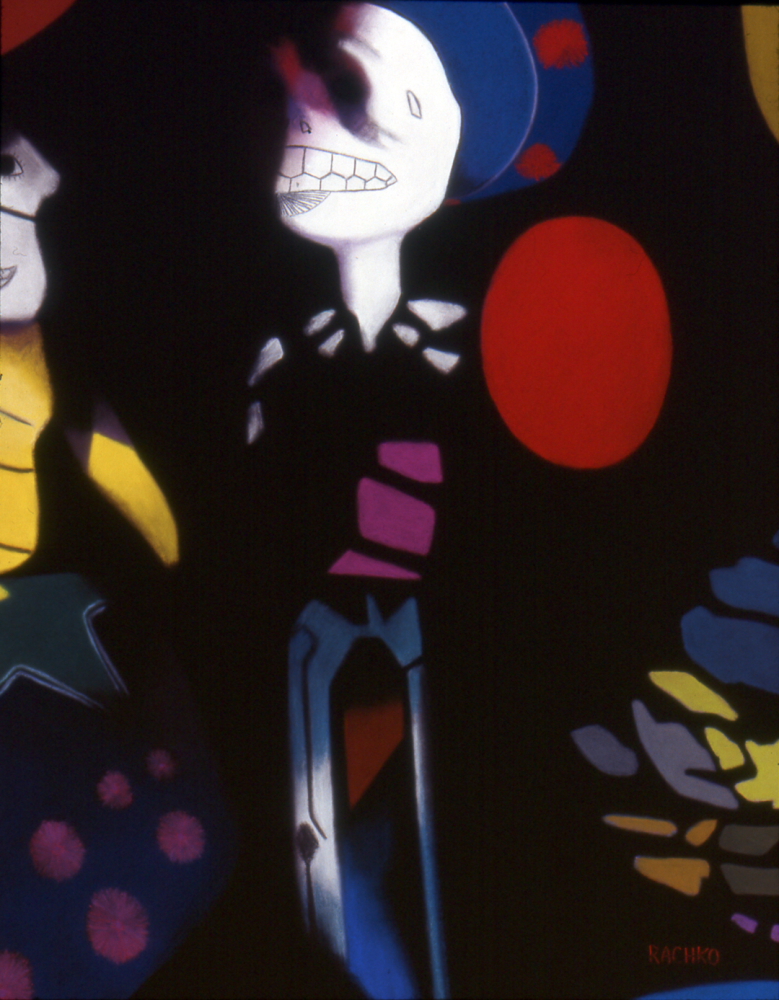
“Effigy,” soft pastel on sandpaper, 26″ x 20″
* an ongoing series of quotations – mostly from artists, to artists – that offers wisdom, inspiration, and advice for the sometimes lonely road we are on.
People make things – make art or things that are akin to art – as a way of expressing their need for contact, or their fear of it; people make objects as a way of coming to terms with shame, with grief. People make objects to strip themselves down, to survey their scars, and people make objects to resist oppression, to create a space in which they can move freely. Art doesn’t have to have a reparative function, any more than it has a duty to be beautiful or moral.
Olivia Laing in The Lonely City: Adventures in the Art of Being Alone
Comments are welcome!


 barbararachkoscoloreddust.com