Category Archives: Pearls from Artists
Pearls from artists* # 402
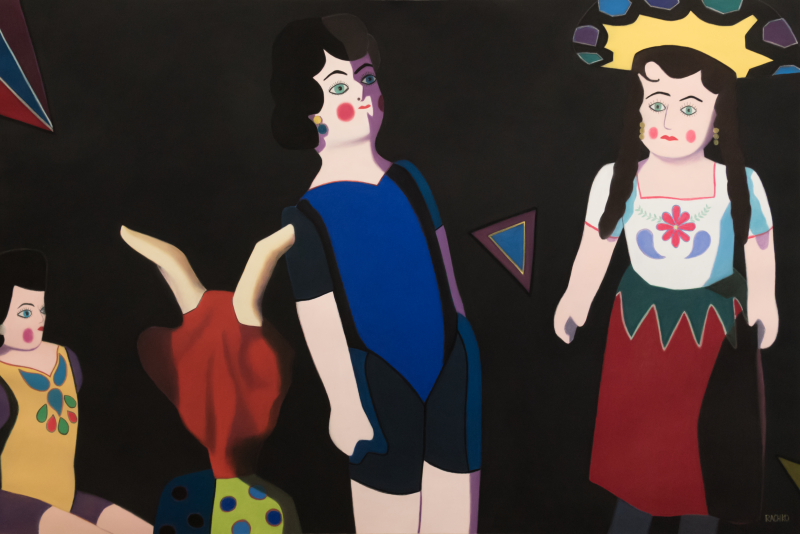
“Conundrum,” soft pastel on sandpaper, 38″ x 58″
*an ongoing series of quotations – mostly from artists, to artists – that offers wisdom, inspiration, and advice for the sometimes lonely road we are on.
Rodin was lonely before his fame, and perhaps after the fame that came to him still lonelier. For fame is actually only the sum of all the misunderstandings that gather around a new name.
Rainer Maria Rilke quoted in Mary Gabriel in Ninth Street Women
Comments are welcome!
Pearls from artists* # 401

“Prophecy,” Soft Pastel on Sandpaper, 58″ x 38″ Image, 70″ x 50″ Framed
*an ongoing series of quotations – mostly from artists, to artists – that offers wisdom, inspiration, and advice for the sometimes lonely road we are on.
Said [Larry] Rivers,
You could be poor and think your life worthwhile – the dance of the mind, the leap of the intellect. If you made art that did not sell immediately, or ever, you could still be involved in a meaningful, inspiring activity that was a reward in itself, and you could show it to the people you dreamed of thrilling with your efforts; your friends were your audience. They were sitting on your shoulder watching you work. That was the opera of the time… Pursuit of a career and commercial success was selling out, losing one’s soul. In painting, writing, music, and dance, nothing could be more shameful.
Mary Gabriel in Ninth Street Women
Comments are welcome!
Pearls from artists* # 400

In the studio with friends
* an ongoing series of quotations – mostly from artists, to artists – that offers wisdom, inspiration, and advice for the sometimes lonely road we are on.
A student in the audience raised her hand and asked me:
“Why should I live?”
… In the very act of asking that question, you are seeking reasons for your convictions, and so you are committed to reason as the means to discover and justify what is important to you. And there are so many reasons to live!
As a sentient being, you have the potential to flourish. You can refine your faculty of reason itself by learning and debating. You can seek explanations of the natural world through science, and insight into the human condition through the arts and humanities. You can make the most of your capacity for pleasure and satisfaction, which allowed your ancestors to thrive and thereby allowed you to exist. You can appreciate the beauty and the richness of the natural and cultural world. As the heir to billions of years of life perpetuating itself, you can perpetuate life in turn. You have been endowed with a sense of sympathy – the ability to like , love, respect, help, and show kindness – and you can enjoy the gift of mutual benevolence with friends, family, and colleagues.
And because reason tells you that none of this is particular to you, you have the responsibility to provide to others what you expect for yourself. You can foster the welfare of other sentient beings by enhancing life, health, knowledge, freedom, abundance, safety, beauty, and peace. History shows that when we sympathize with others and apply our ingenuity to improving the human condition, we can make progress in doing so, and you can help to continue that progress.
Stephen Pinker in Enlightenment Now: The Case for Reason, Science, Humanism, and Progress
Comments are welcome!
Pearls from artists* # 399
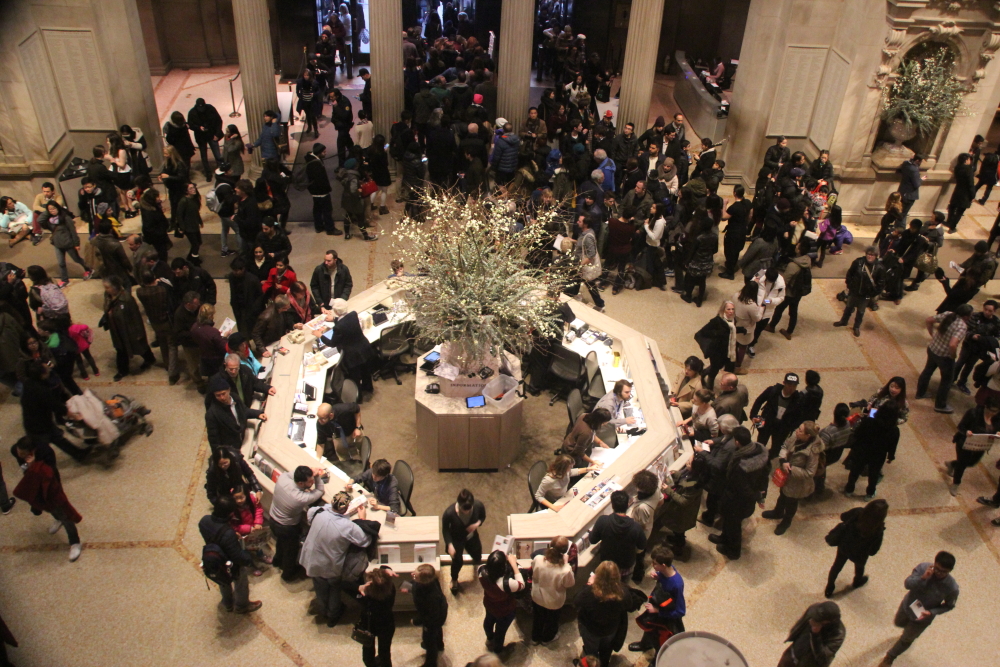
The Great Hall at the Met
* an ongoing series of quotations – mostly from artists, to artists – that offers wisdom, inspiration, and advice for the sometimes lonely road we are on.
Science is concerned with the general, the abstract, and the knowable. In contrast, art deals with the particular, the unknowable, the singular. This applies not just to the content of artistic works but also to the way this content is received. Even in the case of a film or concert attended by large numbers of people, the artistic experience remains fundamentally a solitary one. Each one of us lives the work alone. Whatever sense of togetherness accompanies the experience comes precisely from the fact that, faced with the singularity of the aesthetic moment, each percipient feels his aloneness before the radical mystery that enfolds us all. Wherever an act of creation is shared with others, then, there is individuation – not just for the author of the work but for the audience too. The singularity of art awakens us to our own singularity, and through it to the singularity in the Other. I have argued that artifice unifies by imposing an univocal image that replicates itself identically in each spectator. True art tears the spectator out of the mass of sameness, calling forth from the numberless crowd a new people and a new communion.
J.F. Martel in Reclaiming Art in the Age of Artifice: A Treatise, Critique, and Call to Action
Comments are welcome!
Pearls from artists* # 398
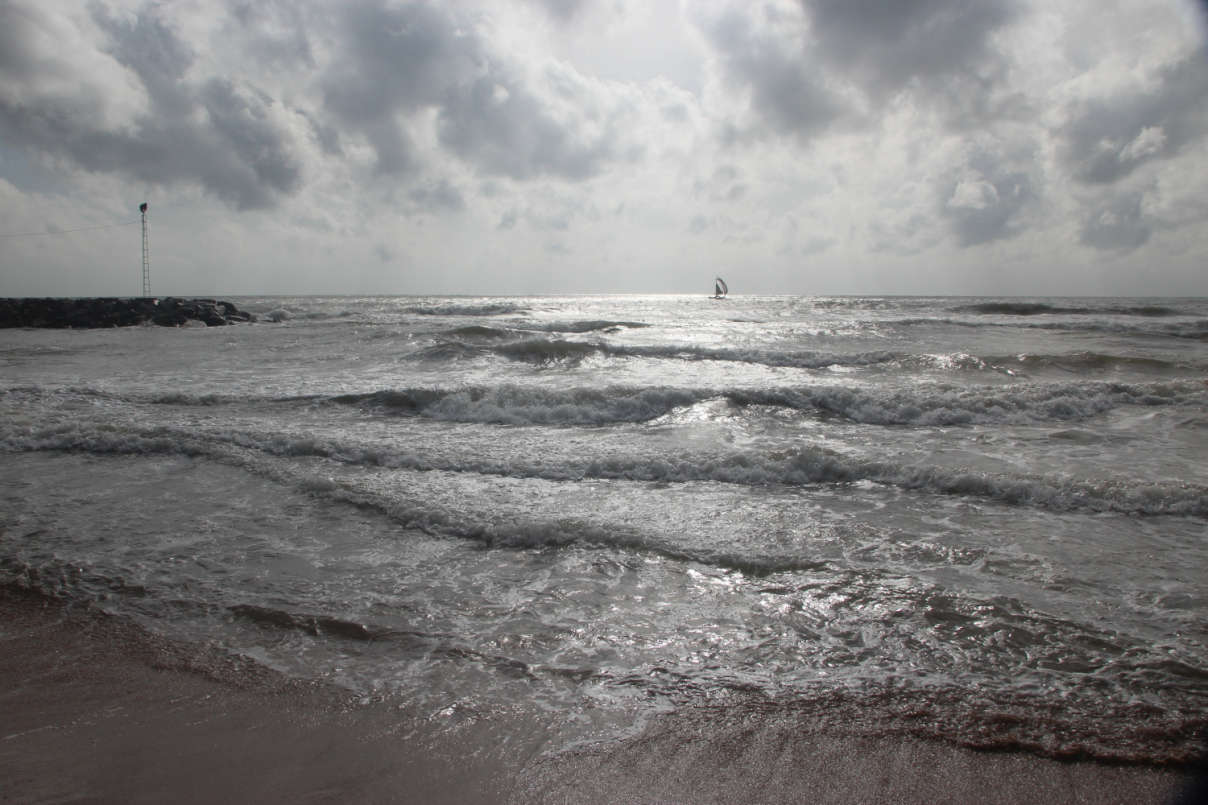
Negombo, Sri Lanka 2013
* an ongoing series of quotations – mostly from artists, to artists – that offers wisdom, inspiration, and advice for the sometimes lonely road we are on.
Marcus Aurelius asks us to note the passing of time with open eyes. Ten thousand years or ten thousand days, nothing can stop time, or change the fact that I would be turning seventy years old in the Year of the Monkey. Seventy. Merely a number but one indicating a significant percentage of the allotted sand in an egg timer, with oneself the darn egg. The grains pour and I find myself missing the dead more than usual. I notice that I cry more when watching television, triggered by romance, a retiring detective hit in the back while staring into the sea, a weary father lifting his infant from a crib. I notice that my own tears burn my eyes, that I am no longer a fast runner and that my sense of time seems to be accelerating.
Patty Smith in Year of the Monkey
Comments are welcome!
Pearls from artists* # 397
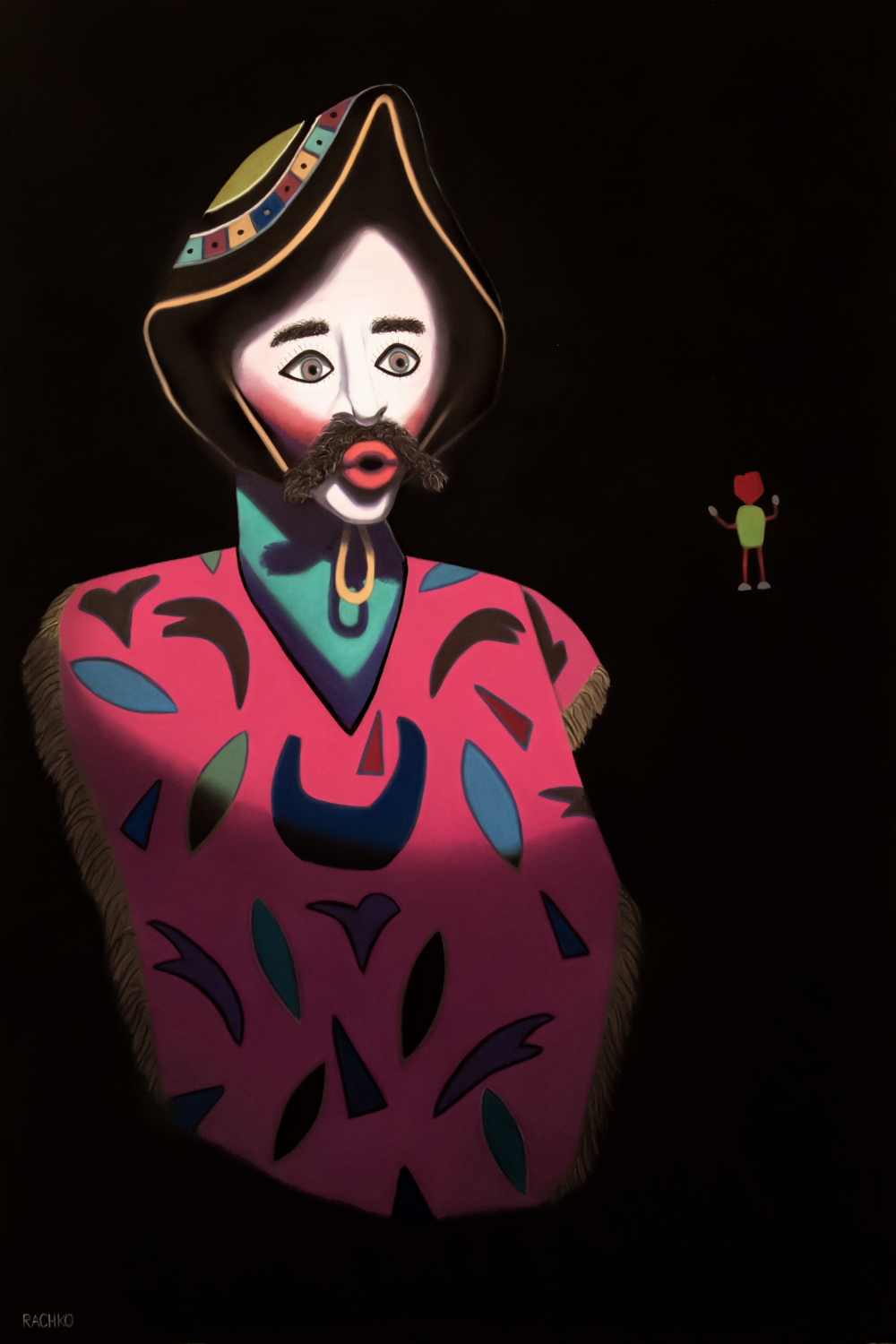
“Prophecy,” soft pastel on sandpaper, 58″ x 38″
* an ongoing series of quotations – mostly from artists, to artists – that offers wisdom, inspiration, and advice for the sometimes lonely road we are on.
Our species requires a greater capacity to see into the Real, not just the outer universe of the senses but also the inner cosmos of the psyche, the normally invisible dimensions. Near the end of his life, Jung said to an English journalist, “The only real danger that exists is man himself… His psyche should be studied because we are the origin of all coming evil.” It is a beautiful statement until the word studied comes up, at which point we are reminded that Jung at bottom was a rationalist: he refused to see that while psychology could talk brilliantly about the soul, it could never descend into its depths. For this we need imagination, madness, prophecy – art. We must understand that creative expression is not a pastime or distraction, but a psychonautic science in its own right. Allowed to operate in freedom, it can illuminate the darkness beyond our field of vision.
J.F. Martel in Reclaiming Art in the Age of Artifice: A Treatise, Critique, and Call to Action
Comments are welcome!
Pearls from artists* # 396
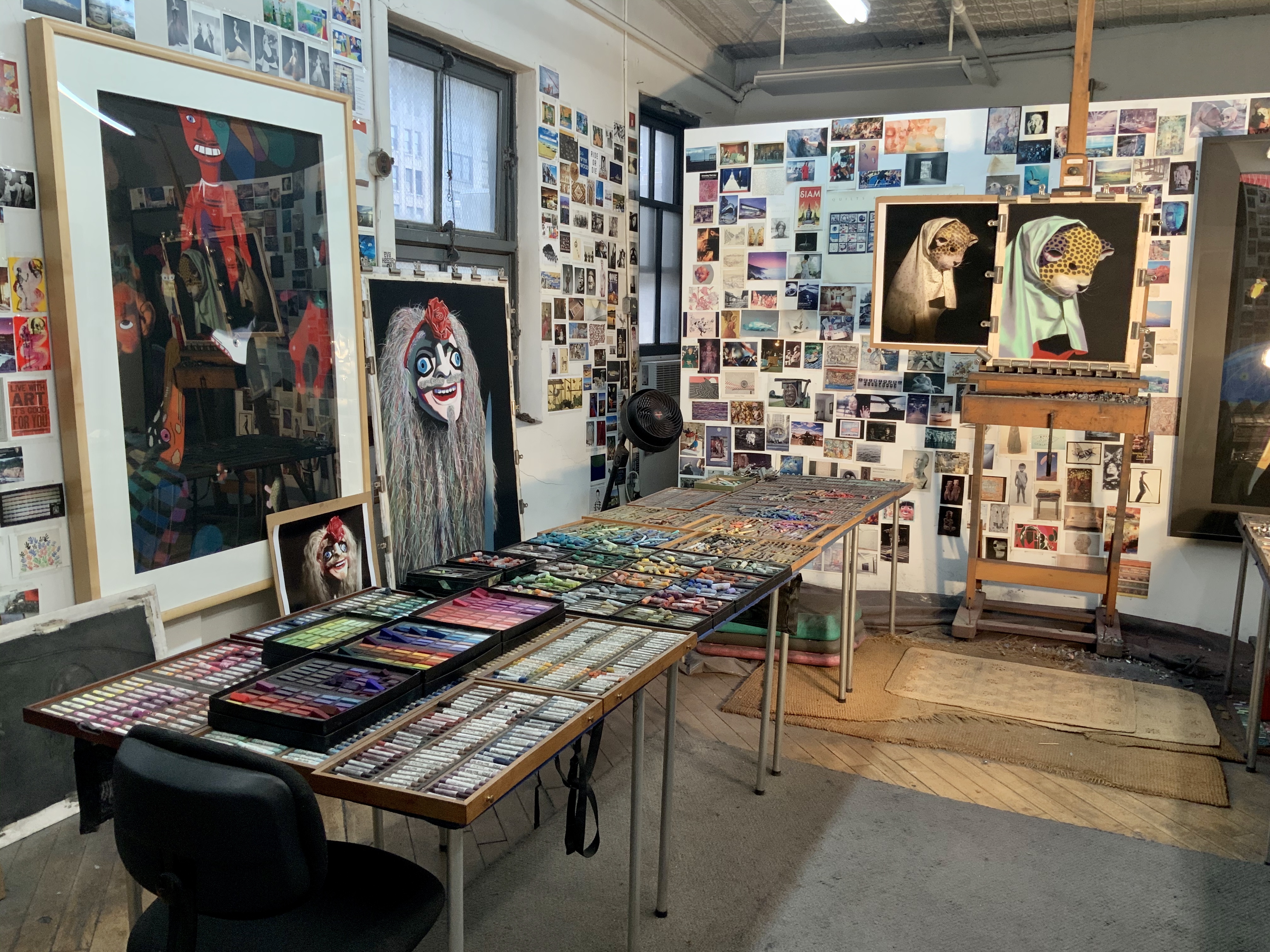
Barbara’s Studio
* an ongoing series of quotations – mostly from artists, to artists – that offers wisdom, inspiration, and advice for the sometimes lonely road we are on.
To summarize, art is expression. Expression is nonutilitarian and has no purpose beyond itself. Early on this led me to define works of art as things whose only function is to be perceived. Since the appearance of such things in everyday life breaks the drift of habit for which we have been hard-wired by evolution, art always occurs as an interruption. In the course of time, humans have produced innumerable works of art, subordinating them to innumerable ends according to the needs of the hour, yet all art exhibits a primal quality that exceeds those appropriations. Because the inherent multivalence of art threatens the desire to reduce things to clear significations, human societies have a tendency to overlook it, with the result that a great many aesthetic objects are called art when they are perhaps something else. To clarify this distinction I called art designed to serve instrumental reason “artifice.” In its worst forms, artifice amounts to aesthetic manipulation of a kind that is indisputably hostile to the ideals of openness, plurality, freedom of thought, and rational disclosure that we were told were the cornerstones of modernity. Art, on the other hand, is innately emancipatory, being itself the affirmation or sign of freedom.
J.F. Martel in Reclaiming Art in the Age of Artifice: A Treatise, Critique, and Call to Action
Comments are welcome!
Pearls from artists* # 395
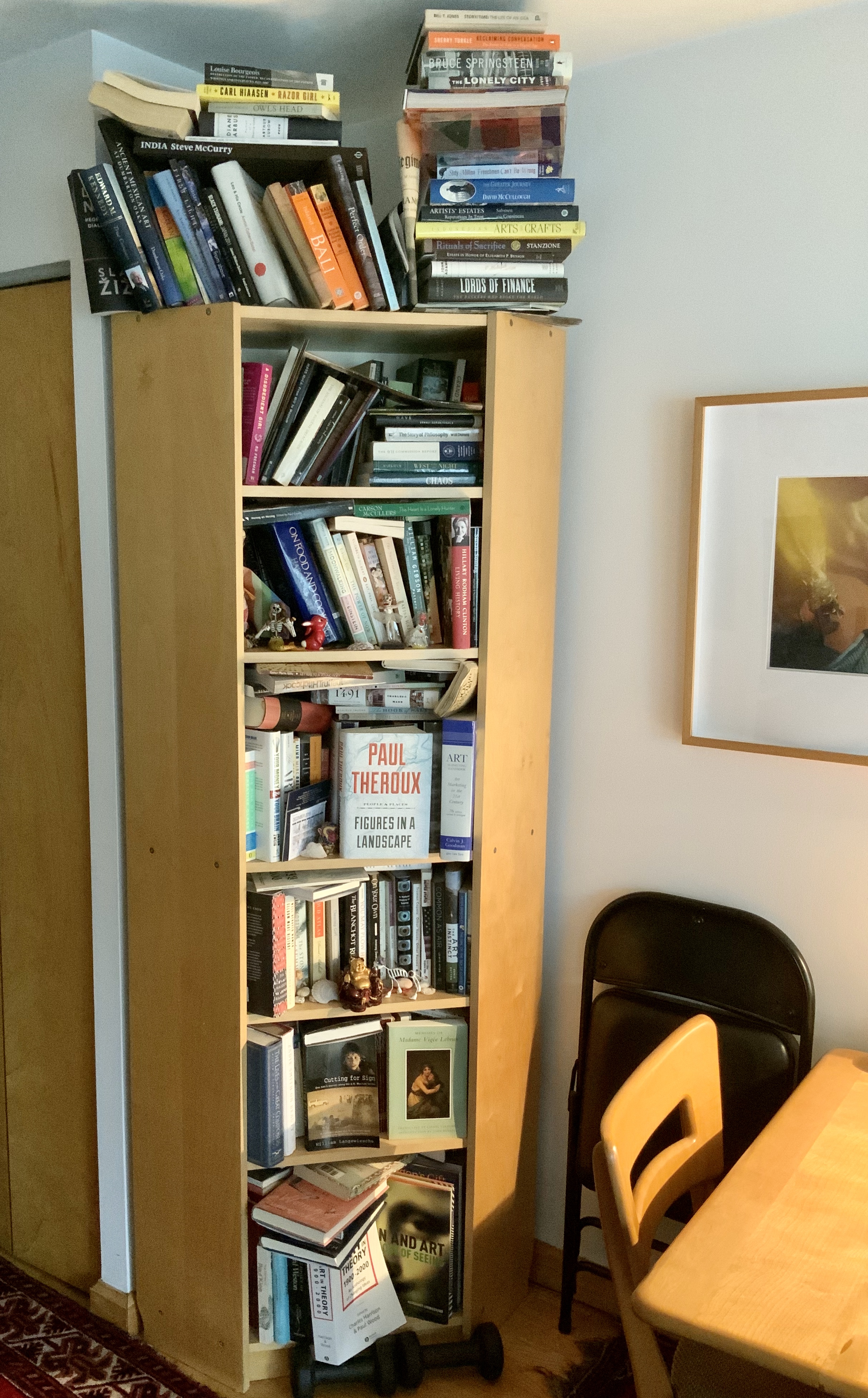
*an ongoing series of quotations – mostly from artists, to artists – that offers wisdom, inspiration, and advice for the sometimes lonely road we are on.
I was by no means the only reader of books on board the Neversink. several other sailors were diligent readers, though their studies did not lie in the way of belles-lettres. Their favourite authors were such as you may find at the book-stalls around Fulton Market; they were slightly physiological in their nature. My book experiences on board the frigate proved an example of a fact which every book-lover must have experienced before me, namely, that public libraries contain invaluable volumes, yet, somehow, the books that prove most agreeable, grateful, and companionable, are those we pick up by chance here and there; those which seem put into our hands by Providence; those which pretend to little, but abound in much.
Herman Melville in White Jacket
Comments are welcome!
Pearls from artists* # 394

White Sands, NM
*an ongoing series of quotations – mostly from artists, to artists – that offers wisdom, inspiration, and advice for the sometimes lonely road we are on.
Dear Person Reading This,
A writer can fit a whole world inside a book. Really. You can go there. You can learn things while you’re away. You can bring them back to the world you normally live in.
You can look out of another person’s eyes, think their thoughts, care about what they care about.
You can fly. You can travel to the stars. You can be a monster or a wizard or a god. You can be a girl. You can be a boy. Books give you worlds of infinite possibility. All you have to do is be interested enough to read that first page…
Somewhere, there is a book written just for you. It will fit your mind like a glove fits your hand. And it’s waiting.
Go and look for it.
Neil Gaiman
A Velocity of Being: Letters to a Young Reader edited by Maria Popova and Claudia Bedrick
Comments are welcome!
Pearls from artists* # 393
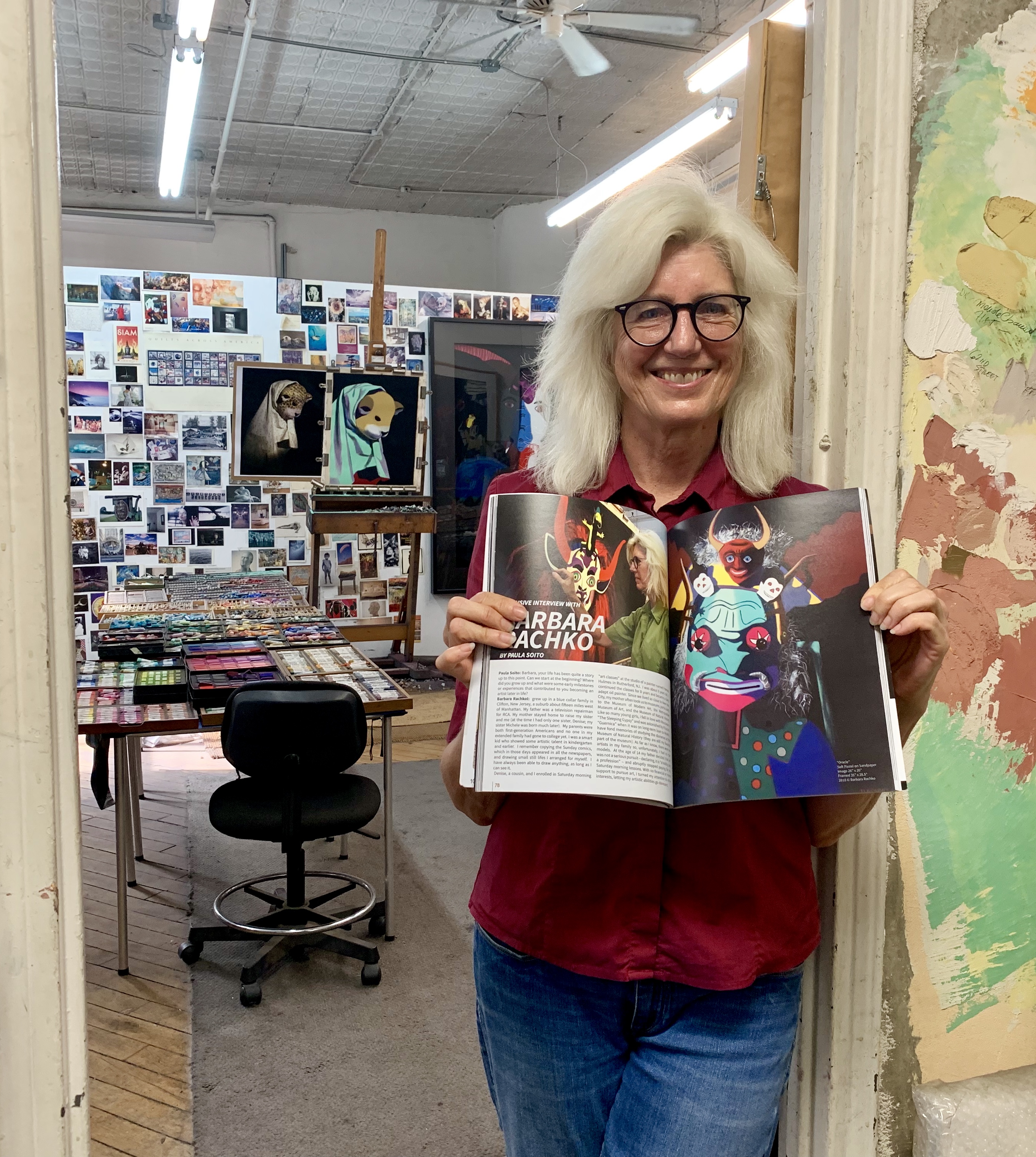
With my favorite interview
* an ongoing series of quotations – mostly from artists, to artists – that offers wisdom, inspiration, and advice for the sometimes lonely road we are on.
… Fernhoffer’s a man in love with our art, a man who sees higher and farther than other painters. He’s meditated on the nature of color, on the absolute truth of line, but by dint of so much research, he has come to doubt the very object of his investigations. In moments of despair, he claims that drawing doesn’t exist and that lines are only good for rendering geometrical figures, which is far from the truth, since with line and with black, which is not a color, we can create a human figure. There’s your proof that our art is like nature itself, composed of an infinity of elements: drawing accounts for the skeleton, color supplies life, but life without a skeleton is even more deficient than a skeleton without life. Lastly, there’s something even truer than all this, which is that practice and observation are everything to a painter; so that if reasoning and poetry argue with our brushes, we wind up in doubt, like our old man here, who’s as much a lunatic as he is a painter — a sublime painter who had the misfortune to be born into wealth, which has allowed him to wander far and wide. Don’t do that to yourself! A painter should philosophize only with a brush in his hand!
Honore Balzac in The Unknown Masterpiece
Comments are welcome!



