Category Archives: 2022
Pearls from artists* # 515

*an ongoing series of quotations – mostly from artists, to artists – that offers wisdom, inspiration, and advice for the sometimes lonely road we are on.
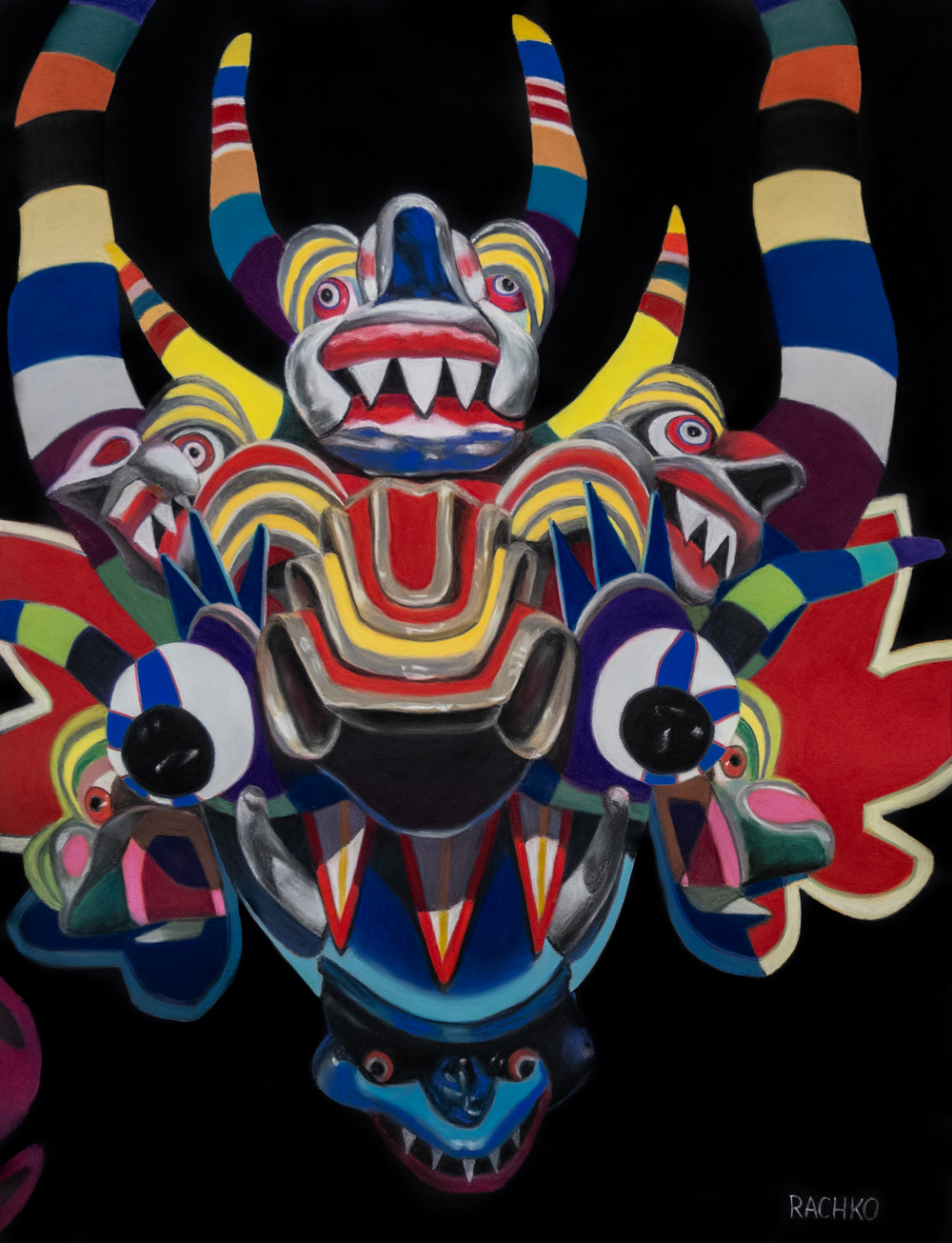
“Under [General Francisco] Franco,” he said, “attendance at Catholic holidays was obligatory and much Catalan folklore was banned. People avoided the religious processions and, once they were no longer mandatory, ignored them… Marvesa’s [Spain] festive license of demons and dragons is no longer of darkness. If Franco claimed the mantle of Catholic light, then to party as Catalan devils is a happy celebration of freedom.
Demons and dragons are a customary feature of saints’ days and Corpus-Christi festivals throughout Spain and its former empire. They are also common in Carnivals. Indeed, it is partly because of the presence of demons, dragons, and other masked transgressive figures that Carnival has been so often designated – by defenders and detractors alike – as a pagan or devilish season, a time of unrestrained indulgence before the ascetic penances of Lent.
Julio Caro Baroja, the father of Spanish Carnival studies, scorned the antiquarian notion that the masked figures and seasonal inversions of Carnival were “a mere survival” of ancient pagan rituals. Carnival, he argued, was first nurtured by the dualistic oppositions of Christianity. Where it survives – for when he wrote it had been banned by Franco – it still enacts these old antagonisms. “Carnival,” he concluded, “is the representation of paganism itself face-to-face with Christianity.”
... Peter Burke, one of the more lucid historians of popular culture, has proposed that “there is a sense in which every festival [in early modern Europe] was a miniature Carnival because it was an excuse for disorder and because it drew from the same repertoire of traditional forms.
Max Harris in Carnival and Other Christian Festivals: Folk Theology and Folk Performance
Comments are welcome!
Q: What is your process? (Question from artamour)
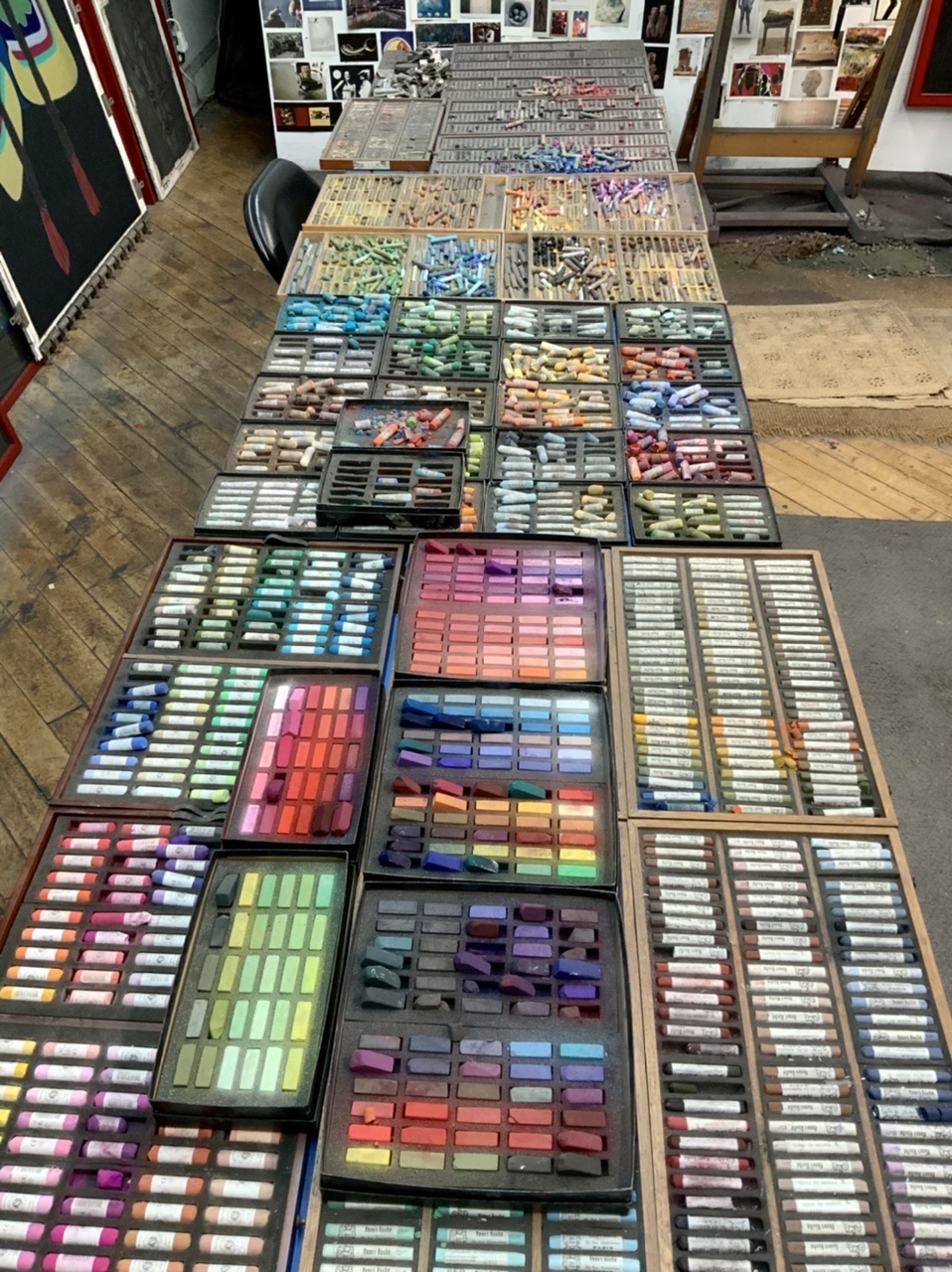
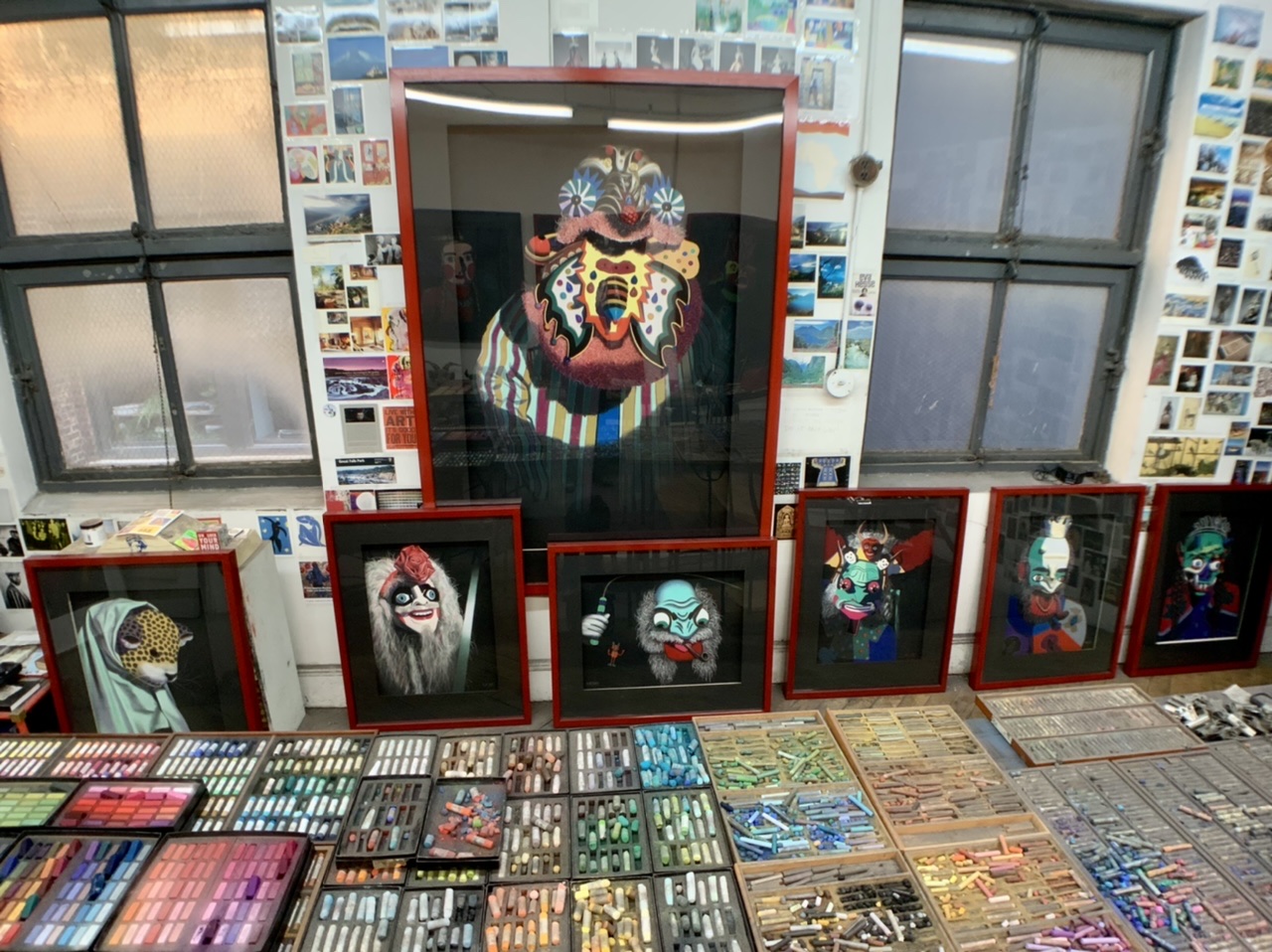
A: For thirty-six years I have worked exclusively in soft pastel on sandpaper. Pastel, which is pigment and a binder to hold it together, is as close to unadulterated color as an artist can get. It allows for very saturated color, especially employing the self-invented techniques I have developed and mastered. I believe my “science of color” is unique, completely unlike how any other artist works. I spend three to four months on each painting, applying pastel and blending the layers together to mix new colors on the paper.
The acid-free sandpaper support allows the buildup of 25 to 30 layers of pastel as I slowly and meticulously work for hundreds of hours to complete a painting. The paper is extremely forgiving. I can change my mind, correct, refine, etc. as much as I want until a painting is the best I can create at that moment in time.
My techniques for using soft pastel achieve rich velvety textures and exceptionally vibrant color. Blending with my fingers, I painstakingly apply dozens of layers of pastel onto the sandpaper. In addition to the thousands of pastels that I have to choose from, I make new colors directly on the paper. Regardless of size, each pastel painting takes three to four months and hundreds of hours to complete.
I have been devoted to soft pastel from the beginning. In my blog and in numerous interviews online and elsewhere, I continue to expound on its merits. For me no other fine art medium comes close.
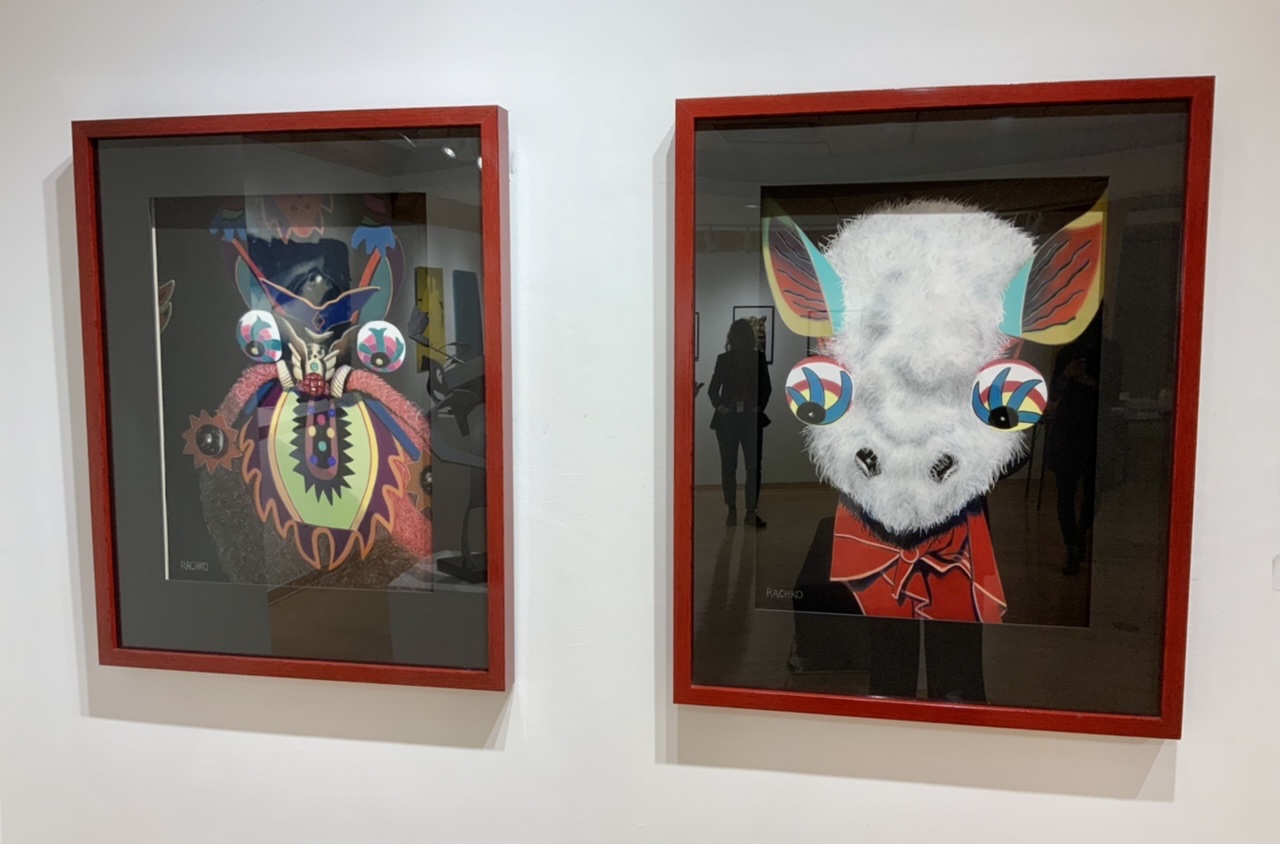
My subject matter is unique. I am drawn to Mexican, Guatemalan, and Bolivian cultural objects—masks, carved wooden animals, papier mâché figures, and toys. On trips to these countries and elsewhere I frequent local mask shops, markets, and bazaars searching for the figures that will populate my pastel paintings. How, why, when, and where these objects come into my life is an important part of the creative process. Each pastel painting is a highly personal blend of reality, fantasy, and autobiography.
Comments are welcome!
Pearls from artists* # 514
*an ongoing series of quotations – mostly from artists, to artists – that offers wisdom, inspiration, and advice for the sometimes lonely road we are on
Basically I am trying not to stagnate. I go this way and I go that way and I don’t know where I’m going next. But if I should get stagnant, I’d lose my interest.
There are so many things to be considered when making music. The whole question of life itself; my life in which there are many things on which I don’t think I’ve reached a final conclusion; there are matters I don’t think I’ve covered completely, and all these things have to be covered before you make your music sound any way. You have to grow to know.
When I was younger, I didn’t think this would happen, but now I know that I’ve still got a long way to go. Maybe when I’m sixty I’ll be satisfied with what I’m doing, but I don’t know… I’m sure that later on my ideas will carry more conviction.
I know that I want to produce beautiful music, music that does things to people that they need. Music that will uplift and make them happy – those are the qualities I’d like to produce.
Coltrane on Coltrane: The John Coltrane Interviews, edited by Chris DeVito
Comments are welcome!
Travel photo of the month*
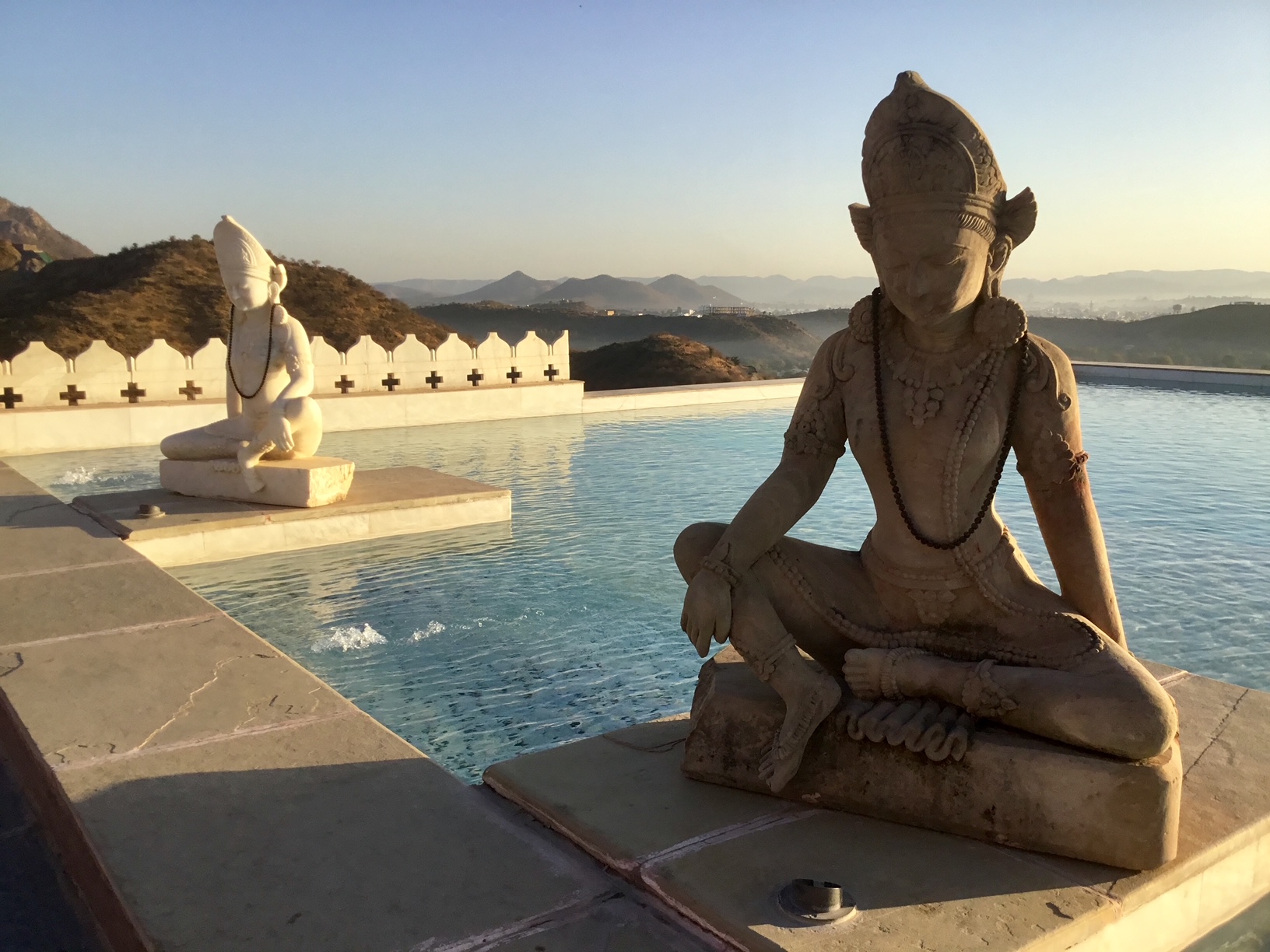
*favorite travel photos that have not yet appeared in this blog
Comments are welcome!
Pearls from artists* # 513
*an ongoing series of quotations – mostly from artists, to artists – that offers wisdom, inspiration, and advice for the sometimes lonely road we are on.
… you will never be able to create anything interesting out of your life if you don’t believe that you’re entitled to at least try. Creative entitlement doesn’t mean behaving like a princess or acting as though the world owes you anything whatsoever. No, creative entitlement simply means believing that you are allowed to be here, and that – merely by being here – you are allowed to have a voice and a vision of your own.
The poet David Whyte calls this sense of creative entitlement “the arrogance of belonging,” and claims that it is an absolutely vital privilege to cultivate if you wish to interact more vividly with life. Without this arrogance of belonging, you will never be able to take any creative risks whatsoever. Without it, you will never push yourself out of the suffocating insulation of personal safety into the frontiers of the beautiful and the unexpected.
The arrogance of belonging is not about egotism or self-absorption. In a strange way, it’s the opposite; it is a divine force that will actually take you out of yourself and allow you to engage more fully with life. Because often what keeps you from creative living is your self-absorption (your self-doubt, your self-disgust, your self-judgment, your crushing sense of self-protection). The arrogance of belonging pulls you out of the darkest depths of self-hatred – not by saying “I am the greatest!” but merely saying “I am here!”
Elizabet Gilbert in Big Magic: Creative Living Beyond Fear
Comments are welcome!
Q: What’s on the easel today?


A: Here is a preliminary charcoal drawing in preparation for my next ”Bolivianos” pastel painting. With the most recent works I have been experimenting with scale. This will be a 58” x 38” version of ”Schemer,” 2019, 26” x 20.”
Comments are welcome!
Pearls from artists* # 512
* an ongoing series of quotations – mostly from artists to artists – that offers wisdom, inspiration, and advice for the sometimes lonely road we are on.
Let inspiration lead you wherever it wants to lead you. Keep in mind that for most of history people just made things, and they didn’t make a big freaking deal about it.
We make things because we like making things.
We pursue the interesting and the novel because we like the interesting and the novel.
Elizabeth Gilbert in Big Magic: Creative Living Beyond Fear
Comments are welcome!
Q: Where do you create your art? (Question from artamour)

A: In April 1997 an opportunity to move to New York City arose and I didn’t look back. By then I was showing in a good 57th Street gallery, Brewster Gallery (they focused exclusively on Latin American Masters so I was in the company of Leonora Carrington, Rufino Tamayo, Diego Rivera, etc.). Also, I had managed to find an excellent New York artists/agent, Leah Poller, with whom to collaborate. (Leah and I are still dear friends).
I looked at only one other space before finding my West 29th Street studio and knew instantly it was the one! An old friend of Bryan’s from Cal Tech rented the space next door and he had told us it was available. Initially the studio was a sublet. The lease-holder was a painter headed to northern California to work temporarily for George Lucas at the Lucas Ranch. After several years she decided to stay so I was able to take over the lease. I feel extremely fortunate to have been in my West 29th Street, New York City space now for twenty-five years. In a city where old buildings are knocked down to make way for new ones this is rare.
My studio is an oasis in a chaotic city, a place to make art, to read, and to think. I love to walk in the door every morning and I feel calmer the moment I arrive. It is still my absolute favorite place in New York! Sometimes I think of it as my best creation.
Comments are welcome!
Q: Contemporary art has become very diverse and multidisciplinary in the last few decades. Do you welcome this trend? Is this trend part of your art practice? (Question from artamour)
A: By definition trends in art come and go and I don’t see how any self-respecting artist can or should pay much attention to them. I continue to do my own thing, refining my soft pastel techniques, following wherever my interests, inspiration, and subject matter lead, all the while striving to become a better artist.
Comments are welcome!


 barbararachkoscoloreddust.com