Author Archives: barbararachkoscoloreddust
Pearls from artists* # 399
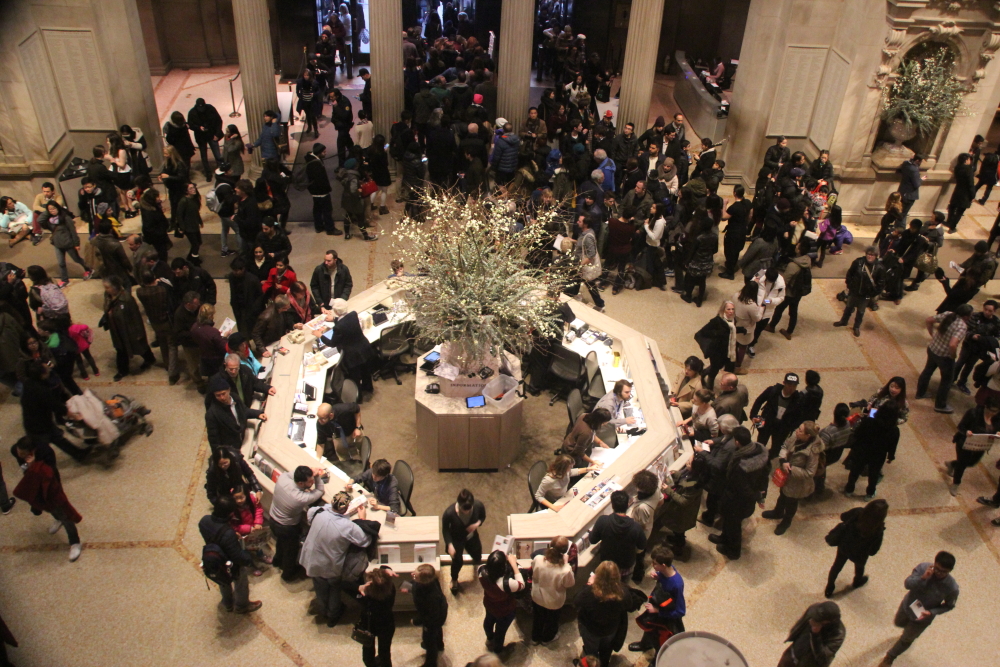
The Great Hall at the Met
* an ongoing series of quotations – mostly from artists, to artists – that offers wisdom, inspiration, and advice for the sometimes lonely road we are on.
Science is concerned with the general, the abstract, and the knowable. In contrast, art deals with the particular, the unknowable, the singular. This applies not just to the content of artistic works but also to the way this content is received. Even in the case of a film or concert attended by large numbers of people, the artistic experience remains fundamentally a solitary one. Each one of us lives the work alone. Whatever sense of togetherness accompanies the experience comes precisely from the fact that, faced with the singularity of the aesthetic moment, each percipient feels his aloneness before the radical mystery that enfolds us all. Wherever an act of creation is shared with others, then, there is individuation – not just for the author of the work but for the audience too. The singularity of art awakens us to our own singularity, and through it to the singularity in the Other. I have argued that artifice unifies by imposing an univocal image that replicates itself identically in each spectator. True art tears the spectator out of the mass of sameness, calling forth from the numberless crowd a new people and a new communion.
J.F. Martel in Reclaiming Art in the Age of Artifice: A Treatise, Critique, and Call to Action
Comments are welcome!
Q: Can you briefly explain how the Bolivian Carnival masks you depict in your work are used?

Museum of Ethnography and Folklore, La Paz, Bolivia
A: The masks depict important figures from Bolivian folklore traditions and are used in Carnival celebrations in the town of Oruro. Carnival occurs every year in late February or early March. I had hoped to visit again this year, but political instability in Bolivia made a trip too risky.
Carnival in Oruro revolves around three great dances. The dance of “The Incas” records the conquest and death of Atahualpa, the Inca emperor when the Spanish arrived in 1532. “The Morenada” music and dance style from the Bolivian Andes was possibly inspired by the suffering of African slaves brought to work in the silver mines of Potosi. The dance of “The Diablada” depicts Saint Michael fighting against Lucifer and the seven deadly sins. Lucifer was disguised in seven different masks derived from medieval Christian symbols aor totemic animals that became nd mostly devoid of pre-Columbian elements (except that became attached to Christianity after the Conquest). Typically, in these dances the cock represents Pride, the dog Envy, the pig Greed, the female devil Lust, etc.
Comments are welcome!
Pearls from artists* # 398
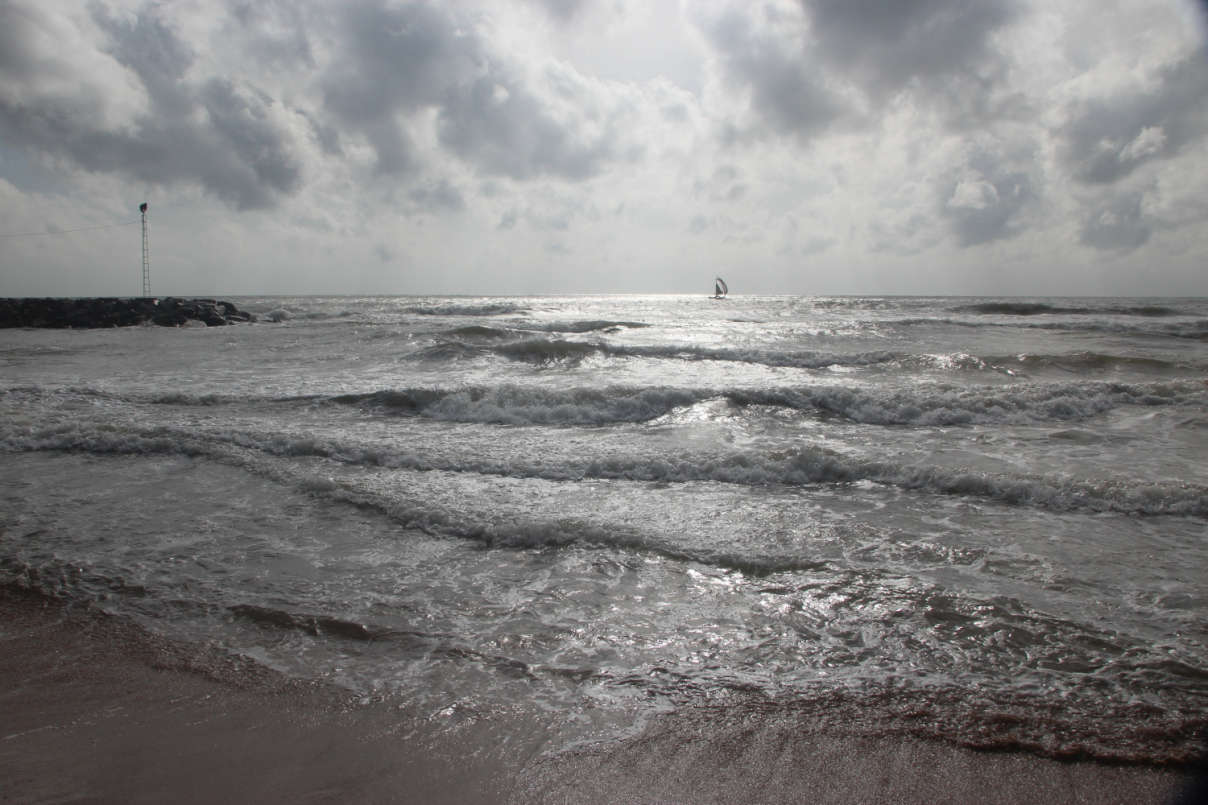
Negombo, Sri Lanka 2013
* an ongoing series of quotations – mostly from artists, to artists – that offers wisdom, inspiration, and advice for the sometimes lonely road we are on.
Marcus Aurelius asks us to note the passing of time with open eyes. Ten thousand years or ten thousand days, nothing can stop time, or change the fact that I would be turning seventy years old in the Year of the Monkey. Seventy. Merely a number but one indicating a significant percentage of the allotted sand in an egg timer, with oneself the darn egg. The grains pour and I find myself missing the dead more than usual. I notice that I cry more when watching television, triggered by romance, a retiring detective hit in the back while staring into the sea, a weary father lifting his infant from a crib. I notice that my own tears burn my eyes, that I am no longer a fast runner and that my sense of time seems to be accelerating.
Patty Smith in Year of the Monkey
Comments are welcome!
Travel photo* of the month

Thar Desert, Rajasthan, India
* Favorite travel photos that have not yet appeared in this blog.
Comments are welcome!
Pearls from artists* # 397
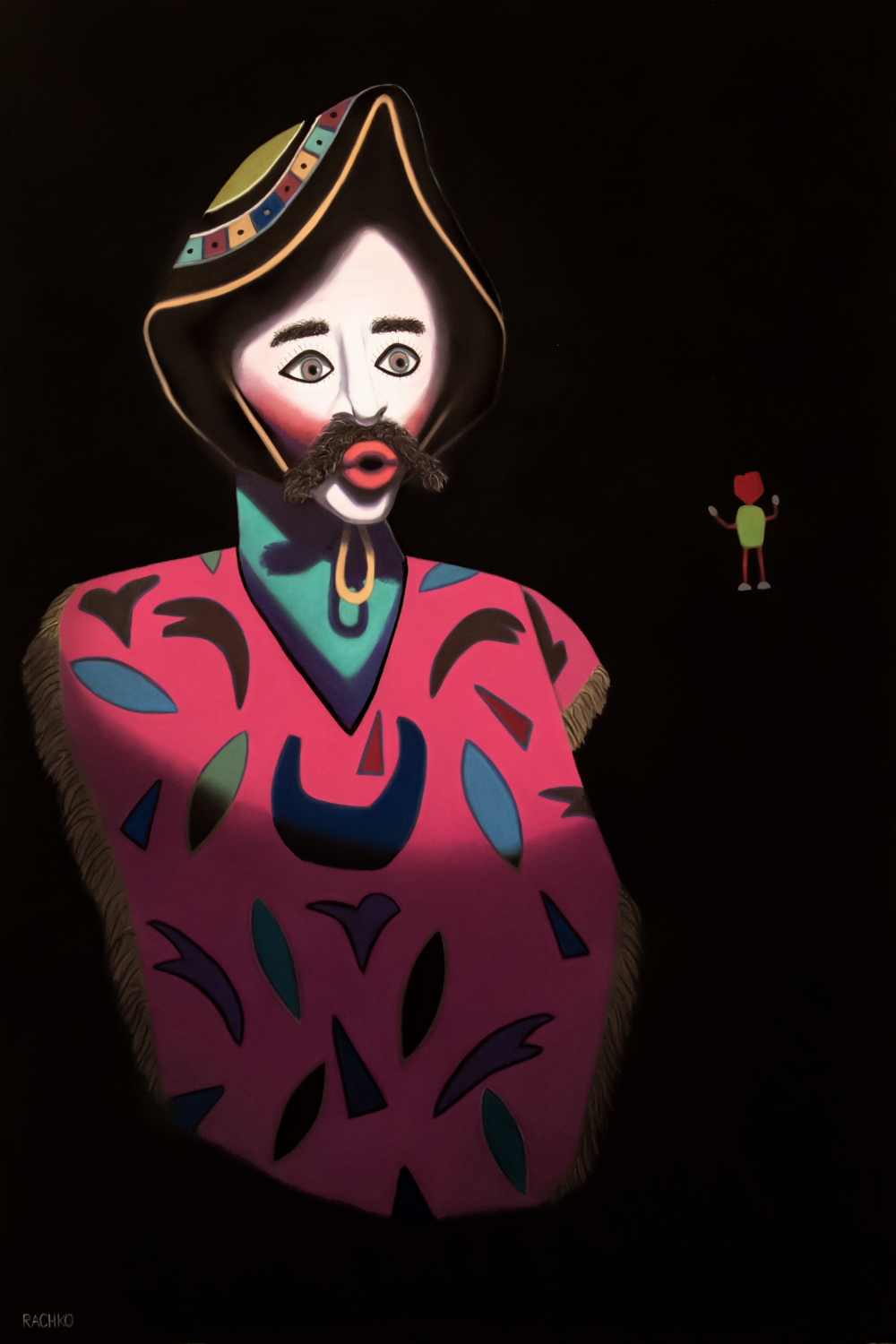
“Prophecy,” soft pastel on sandpaper, 58″ x 38″
* an ongoing series of quotations – mostly from artists, to artists – that offers wisdom, inspiration, and advice for the sometimes lonely road we are on.
Our species requires a greater capacity to see into the Real, not just the outer universe of the senses but also the inner cosmos of the psyche, the normally invisible dimensions. Near the end of his life, Jung said to an English journalist, “The only real danger that exists is man himself… His psyche should be studied because we are the origin of all coming evil.” It is a beautiful statement until the word studied comes up, at which point we are reminded that Jung at bottom was a rationalist: he refused to see that while psychology could talk brilliantly about the soul, it could never descend into its depths. For this we need imagination, madness, prophecy – art. We must understand that creative expression is not a pastime or distraction, but a psychonautic science in its own right. Allowed to operate in freedom, it can illuminate the darkness beyond our field of vision.
J.F. Martel in Reclaiming Art in the Age of Artifice: A Treatise, Critique, and Call to Action
Comments are welcome!
Q: What’s on the easel today?

Work in progress
A: For nearly two weeks this pastel painting, “Majordomo,” has been on “pause” due to the corona virus. I’m able to work on it now sporadically.
Comments are welcome!
Pearls from artists* # 396
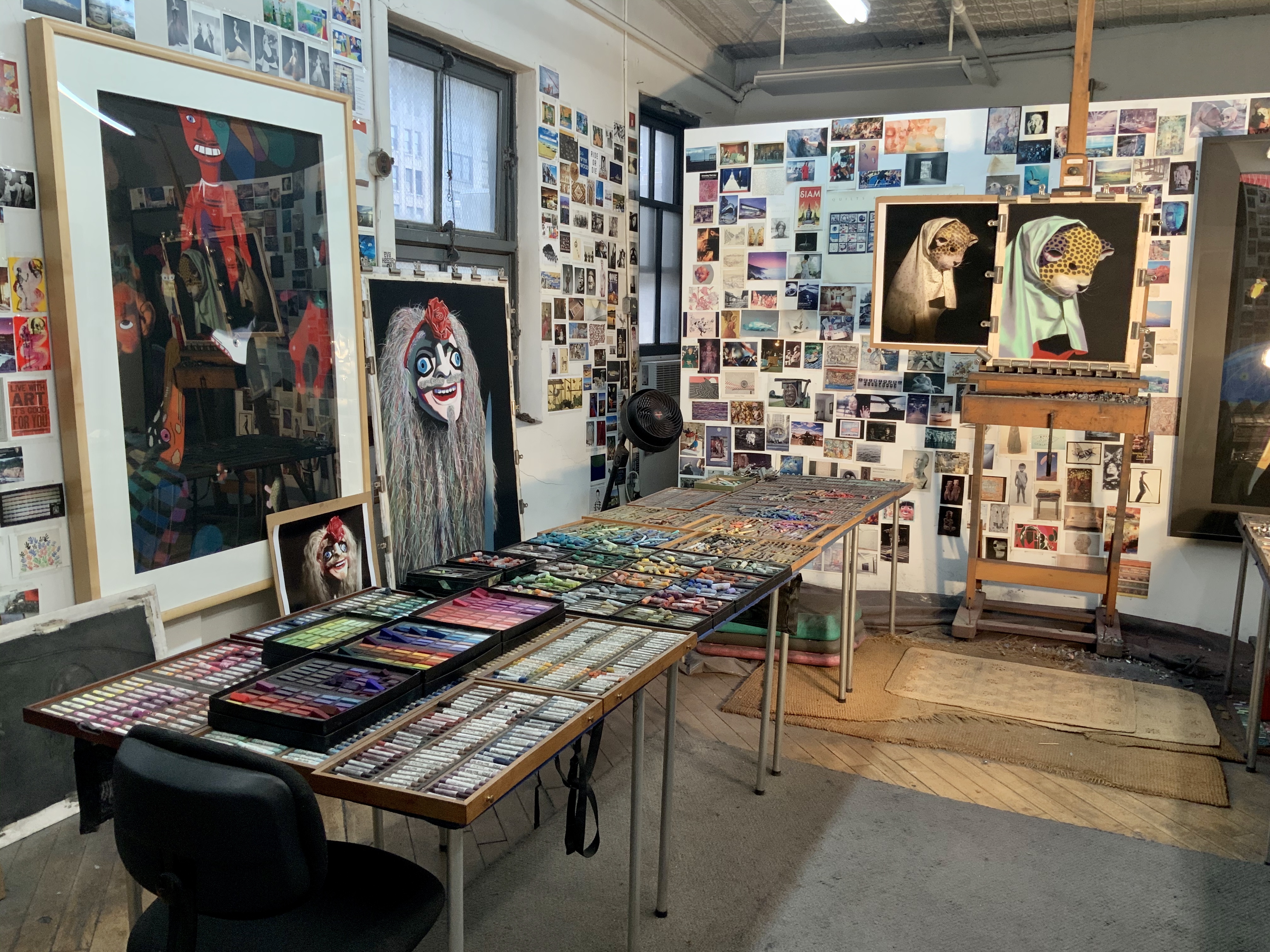
Barbara’s Studio
* an ongoing series of quotations – mostly from artists, to artists – that offers wisdom, inspiration, and advice for the sometimes lonely road we are on.
To summarize, art is expression. Expression is nonutilitarian and has no purpose beyond itself. Early on this led me to define works of art as things whose only function is to be perceived. Since the appearance of such things in everyday life breaks the drift of habit for which we have been hard-wired by evolution, art always occurs as an interruption. In the course of time, humans have produced innumerable works of art, subordinating them to innumerable ends according to the needs of the hour, yet all art exhibits a primal quality that exceeds those appropriations. Because the inherent multivalence of art threatens the desire to reduce things to clear significations, human societies have a tendency to overlook it, with the result that a great many aesthetic objects are called art when they are perhaps something else. To clarify this distinction I called art designed to serve instrumental reason “artifice.” In its worst forms, artifice amounts to aesthetic manipulation of a kind that is indisputably hostile to the ideals of openness, plurality, freedom of thought, and rational disclosure that we were told were the cornerstones of modernity. Art, on the other hand, is innately emancipatory, being itself the affirmation or sign of freedom.
J.F. Martel in Reclaiming Art in the Age of Artifice: A Treatise, Critique, and Call to Action
Comments are welcome!
Start/Finish of “Avenger,” Soft Pastel on Sandpaper, 58″ x 38″
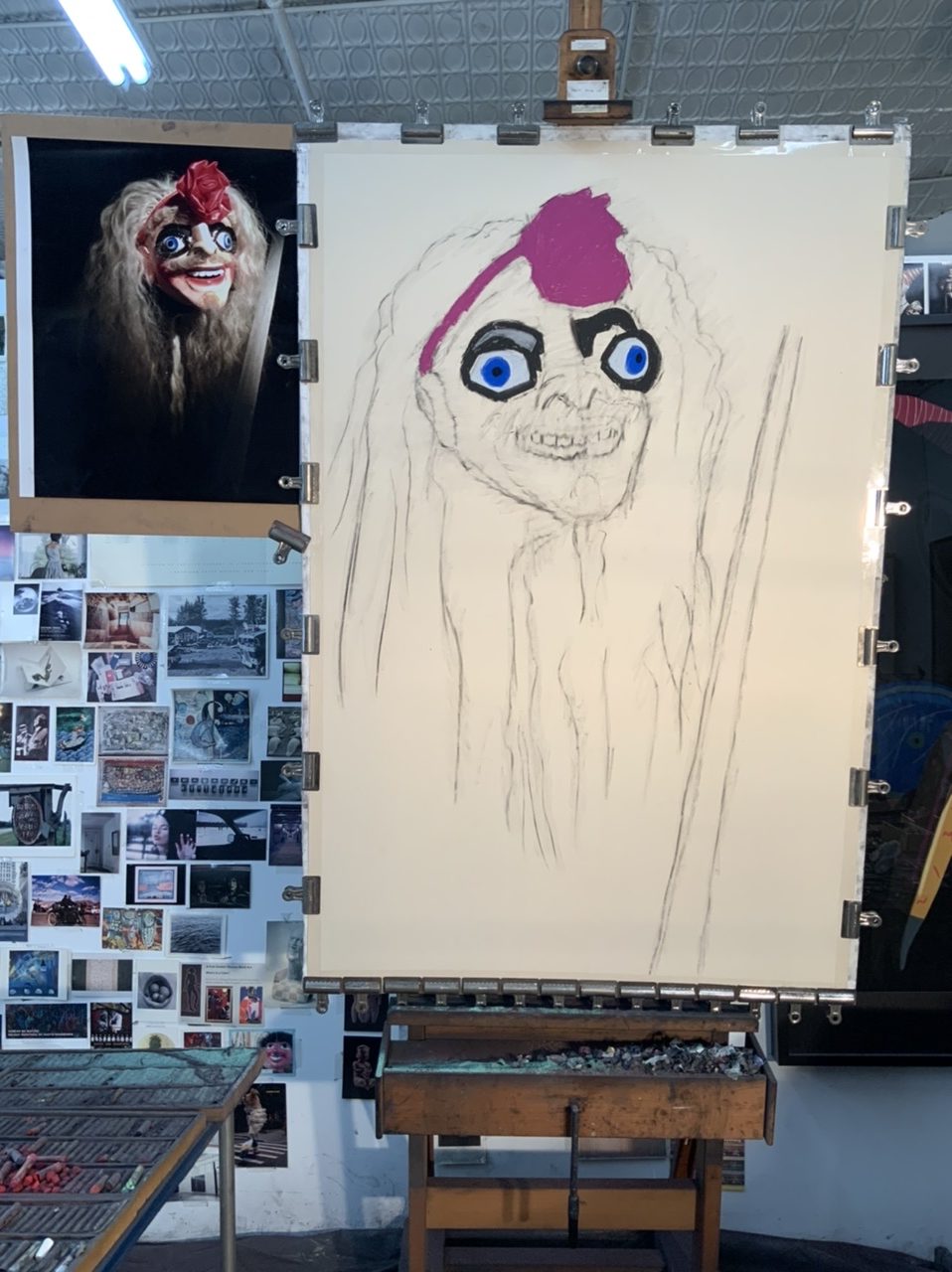
Start
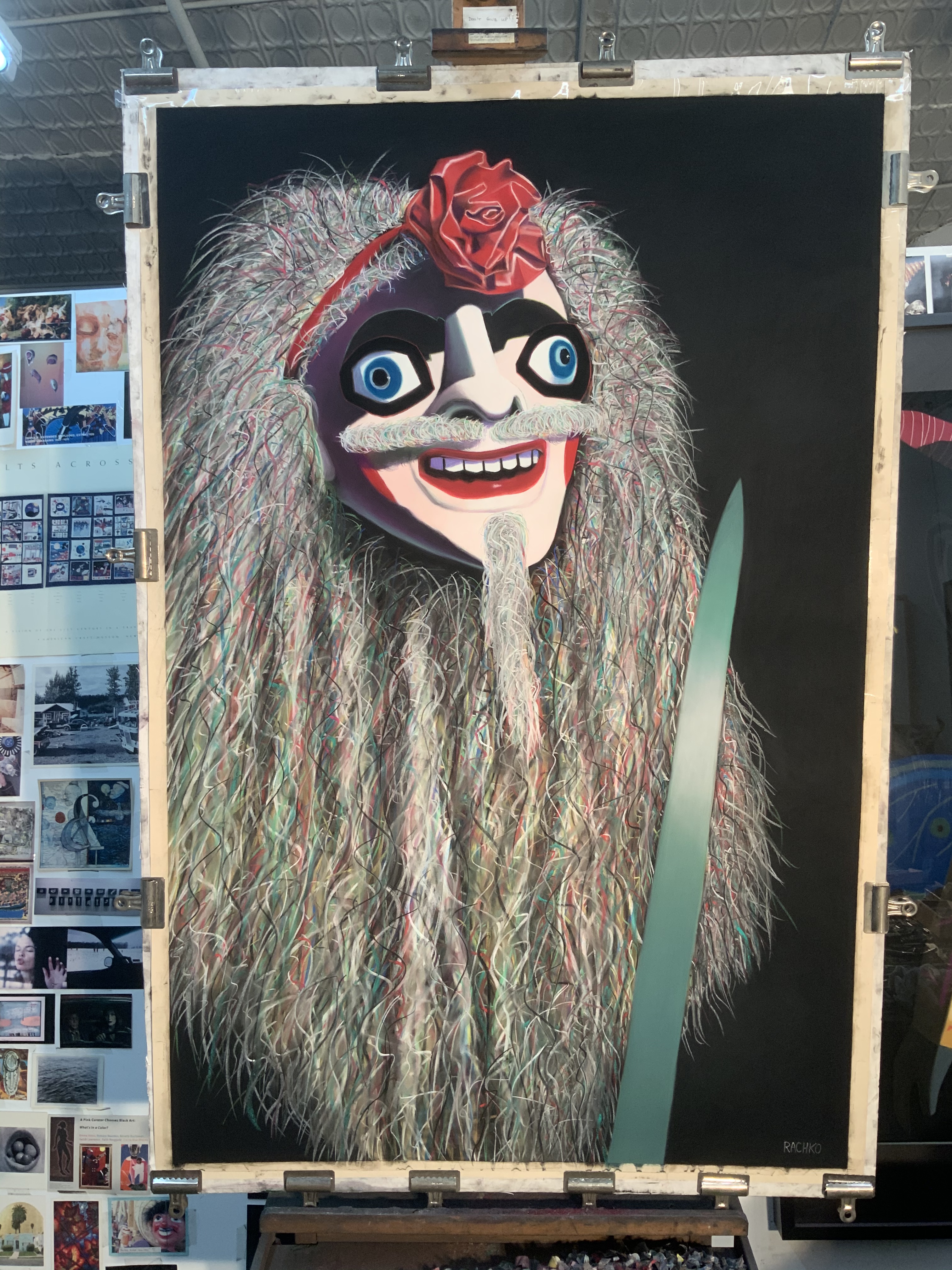
Finished and signed lower right
Comments are welcome!
Pearls from artists* # 395
*an ongoing series of quotations – mostly from artists, to artists – that offers wisdom, inspiration, and advice for the sometimes lonely road we are on.
I was by no means the only reader of books on board the Neversink. several other sailors were diligent readers, though their studies did not lie in the way of belles-lettres. Their favourite authors were such as you may find at the book-stalls around Fulton Market; they were slightly physiological in their nature. My book experiences on board the frigate proved an example of a fact which every book-lover must have experienced before me, namely, that public libraries contain invaluable volumes, yet, somehow, the books that prove most agreeable, grateful, and companionable, are those we pick up by chance here and there; those which seem put into our hands by Providence; those which pretend to little, but abound in much.
Herman Melville in White Jacket
Comments are welcome!
Q: What do you enjoy most about being an artist?
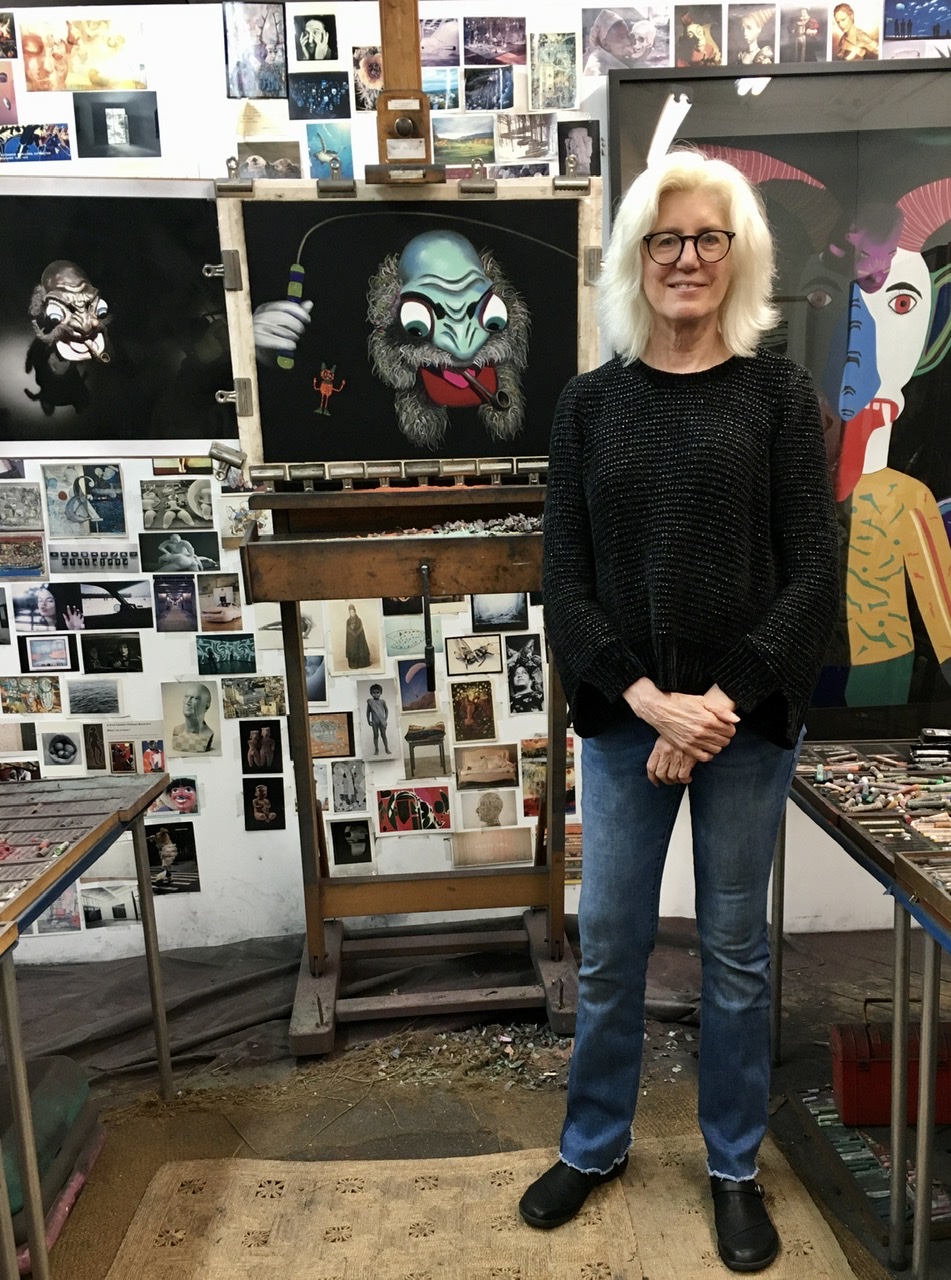
With “Majordomo,” soft pastel on sandpaper, 20” x 26”
A: This is a question I enjoy revisiting every so often because life as an artist does not get easier; just the opposite, in fact. Visual artists tend to be “one man bands.” We do it all notwithstanding the fact that everything gets harder as we get older. So it’s good to be reminded about what makes all the sacrifice and hard work worthwhile.
There are so many things to enjoy! I make my own schedule, set my own tasks, and follow new interests wherever they may lead. I am curious about everything and am rarely bored. I continually push my pastel technique and strive to become a better artist. There is still so much to learn!
My relationship with collectors is another perk. I love to see pastel paintings hanging on collectors’ walls, especially when they’re newly installed and the owners are excited to take possession. This means that the piece has found a good home, that years of hard work have come full circle! And it’s often the start of a long friendship. After living with my pastel paintings for years, collectors tell me they see new details never noticed before and they appreciate the work more than ever. It’s extremely gratifying to have built a network of supportive art-loving friends around the country. I’m sure most artists would say the same!
Comments are welcome!



