Blog Archives
Pearls from artists* # 672

*an ongoing series of quotations – mostly from artists, to artists – that offers wisdom, inspiration, and advice for the sometimes lonely road we are on.
Let me now, therefore, turn directly to the question of the European individual and, for a start, cite the observations of the Swiss psychologist, Carl G. Jung, throughout whose works the term “individuation” is used to indicate the psychological process of achieving individual wholeness. Jung makes the point that in the living of our lives every one is us is required by his society to play some specific social role. In order to function in the world we are all continually enacting parts Jung calls personnae, from the Latin persona, meaning “mask, false face,” the mask worn by an actor on the Roman stage, through which he “sounded” (per-sonare, “to sound through). One has to appear in some mask or other if one is to function socially at all; and even those who choose to reject such masks can only put on others, representing rejection, “Hell no!” or something of this sort. Many of the masks are playful, opportunistic, superficial; others, however, go deep, very deep, much deeper than we know. Just as every body consists of a head, two arms, a trunk, two legs, etc., so does every living person consist, among other features, of a personality, a deeply imprinted persona through which he is made known no less to himself than to others, and without which he would not be. It is silly, therefore, to say, for example, “Let’s take off our masks and be natural!” And yet – there are masks and masks. There are the masks of youth, the masks of age, the masks of the various social roles, and the masks also that we project upon others spontaneously, which obscure them, and to which we then react.
Joseph Campbell in Myths to Live By
Comments are welcome!
Pearls from artists* # 667

“Magisterial,” soft pastel on sandpaper, 58” x 38”, in progress
*an ongoing series of quotations – mostly from artists, to artists – that offers wisdom, inspiration, and advice for the sometimes lonely road we are on.
This is the eternal origin of art – that a human being confronts a form that wants to be one a work of art through him. Not a figment of his soul, but something that appears to the soul and demands the soul’s creative power. What is required is a deed that a man does with his whole being […] and the work is imperious: if I do not serve it properly, it breaks, or it breaks me. The form that confronts me I cannot experience nor describe: I can only actualize it. And yet I see it, radiant in the splendor of the confrontation, far more clearly than all the clarity of the experienced world.
Martin Buber quoted in Art From Your Core: A Holistic Guide to Visual Voice by Kate Kretz
Comments are welcome!
Q: Is there anything you wish you could change about life as a visual artist?

Barbara’s Studio
A: While there is much to admire and maybe even envy about being an artist, it does have some downsides. Among these, for me, is that enormous amounts of solitude are required to create art. I wish this were not the case.
Our work is entirely unique and because it starts as an idea in our heads, we must work solo to bring it into the world. We spend our days pondering, looking, and reacting, rather than speaking to anyone. As typical workdays go, it is rather odd.
I sometimes envy filmmakers who require collaboration with a large team of experts in order to practice their art. They have fellow professionals with whom they can discuss their ideas and they can solicit advice on how to make improvements. Artists rarely have this luxury.
On the other hand, visual artists don’t have to wait for anyone else to do their jobs before we can get to work. We don’t have to deal with personality conflicts or other people’s agendas. Our individual creative process is generally free of obstacles created by others. When you really think about it, the only thing that is required of an artist is to go to the studio and get to work! We are free to make our own rules and our own schedules, and, creatively speaking, are largely responsible for our own advances and setbacks.
Comments are welcome!
Q: How do you persist despite the haters, nay-sayers, etc.? (Question from Bold Journey Publishing)

Barbara’s Studio
A: There are so many obstacles to art-making and countless reasons to just give up. When you really think about it, it’s amazing that great art gets made at all. So why do we do it? For artists I believe it’s all about making our time on earth matter, about devotion to our innate gifts, and a deep love of our hard-fought creative process.
I have been a full-time professional artist for 37 years. How and why do successful artists persist? It helps a lot to be stubborn! We just keep digging in that much deeper. Making art is a most noble and sacred calling – you know this if you are one of the called – and that’s what separates those of us who are in it for the long haul from the wimps, fakers, and hangers-on. I say to my fellow artists who continue to work despite the endless challenges, we artists who continue to struggle every day for recognition of our gifts are true heroes!
These words below by Mary Gabriel in Ninth Street Women, published in 2017, ring true for artists. It’s good, even for me, to occasionally reread them and be reminded.
The obstacles faced by women who hoped to leave a mark on humankind have, through the millennium, varied in height but not in stubborn persistence. And yet, a great many women have stubbornly ignored them. The desire to put words on a page or marks on a canvas was greater than the accrued social forces that told them they had no right to do so, that they were excluded by their gender from that priestly class called artist. The reason, according to Western tradition, was as old as creation itself: For many, God was the original artist and society had assigned its creator a gender – He. The woman who dared to declare herself an artist in defiance of centuries of such unwavering belief required monstrous strength, to fight not for equal recognition and reward but for something at once more basic and vital: her very life. Her art was her life. Without it, she was nothing. Having no faith that society would broaden its views on artists by dethroning men and accommodating women, in 1928 [Virginia] Woolf offered her fellow writers and painters a formula for survival that allowed them to create, if not with acceptance, then at least unimpeded. A woman artist, she said, needed but two possessions: “money and a room of her own.”
Furthermore, I think I persist because I do not believe in “big breaks.” Big breaks may sometimes happen, but in my experience an artist’s life is made up of single-minded dedication, persistence, hard work, and lots of small breaks. I recently finished reading “Failing Up: How to Take Risks, Aim Higher, and Never stop Learning” by Leslie Odom, Jr. I like what he has to say to artists here:
The biggest break is the one you give yourself by choosing to believe in your wisdom, in what you love, and in the gifts you have to offer the waiting world.
Comments are welcome!
Pearls from artists* # 568

*an ongoing series of quotations – mostly from artists, to artists – that offers wisdom, inspiration, and advice for the sometimes lonely road we are on.
Some people say they work best under pressure, but working under pressure is a bit of a fallacy. It’s not waiting till the last minute that gives you the good work; it’s the focus that’s required when you wait till the last minute that brings about the good work. So think of it this way: your focus is the center of your brilliance; why not avail yourself of that brilliance on a regular basis? Everyone has her own rhythm, but if you don’t like the fact that you procrastinate, one way to get out of it is to think what the alternative is. The alternative is, instead of trying to do a month’s work in a few intense days in the studio, to give yourself the pleasure of yourself in flow, in focus, on a regular basis.
Anna Deavere Smith in Letters to a Young Artist: Straight-Up Advice on Making a Life in the Arts for Actors, Performers, Writers, and Artists of Every Kind
Comments are welcome!
Pearls from artists* # 412
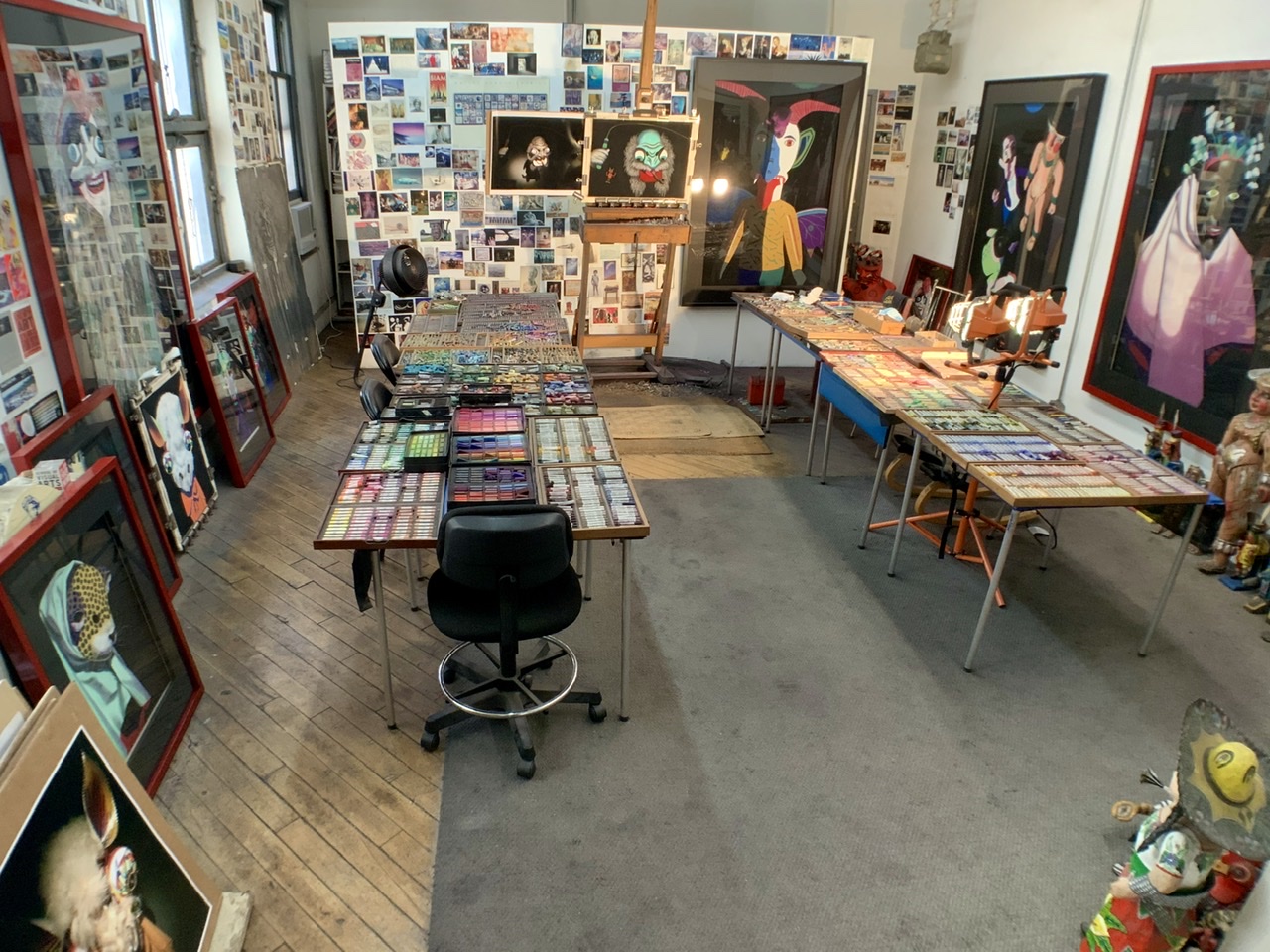
Barbara’s studio
*an ongoing series of quotations – mostly from artists, to artists – that offers wisdom, inspiration, and advice for the sometimes lonely road we are on.
The obstacles faced by women who hoped to leave a mark on humankind have, through the millennium, varied in height but not in stubborn persistence. And yet, a great many women have stubbornly ignored them. The desire to put words on a page or marks on a canvas was greater than the accrued social forces that told them they had no right to do so, that they were excluded by their gender from that priestly class called artist. The reason, according to Western tradition, was as old as creation itself: For many, God was the original artist and society had assigned its creator a gender – He. The woman who dared to declare herself an artist in defiance of centuries of such unwavering belief required monstrous strength, to fight not for equal recognition and reward but for something at once more basic and vital: her very life. Her art was her life. Without it, she was nothing. Having no faith that society would broaden its views on artists by dethroning men and accommodating women, in 1928 [Virginia] Woolf offered her fellow writers and painters a formula for survival that allowed them to create, if not with acceptance, then at least unimpeded. A woman artist, she said, needed but two possessions: “money and a room of her own.”
Mary Gabriel in Ninth Street Women
Comments are welcome!
Q: How many studios have you had since you’ve been a professional artist?

Barbara’s studio
A: I am on my third, and probably last, studio. I say ‘probably’ because I love my space and have no desire to move. Plus, it would be a tremendous amount of work to relocate, considering that I have been in my West 29th Street studio since 1997.
My very first studio, in the late 1980s, was the spare bedroom of my house in Alexandria, Virginia. I set up a studio there while I was on active duty in the Navy. When I resigned my commission, I was required to give the President an entire year’s advance notice. Towards the end of that year I remember calling in sick so I could stay home and make art.
In the early 1990s I rented a studio on the third floor of the Torpedo Factory in Alexandria. For a while I enjoyed working there, but the constant interruptions – in an art center that is open to the public – became tiresome.
In 1997 I had the opportunity to move to New York. I desperately craved solitary hours to work in peace, without interruption, so at first I didn’t have a telephone. I still don’t have WiFi there because my studio is reserved strictly for creative work.
Moving from Virginia to New York in 1997 was relatively easy. My aunt, who planned to be in California to continue her Buddhist studies, offered me her rent-controlled sixth-floor walkup on West 13th Street. I looked at just one other studio before signing a sublease for my space at 208 West 29th Street. I had heard about the vacancy through a college friend of my husband, Bryan. Karen, the lease-holder, was relocating to northern California to work on “Star Wars” with George Lucas. After several years, she decided not to return to New York and I have been the lease-holder ever since.
Comments are welcome!
Q: How would you describe your personal artistic style?
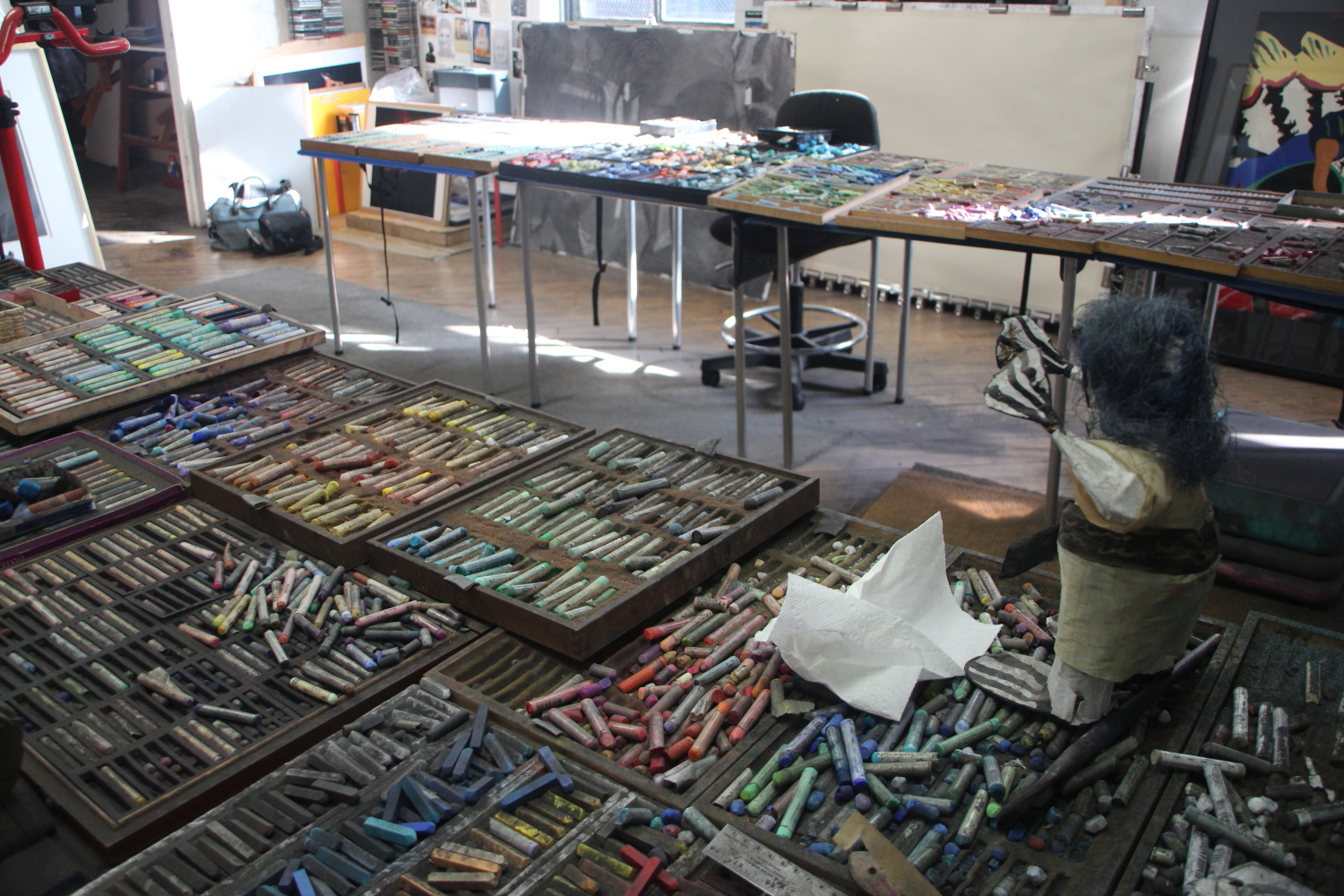
Barbara’a pastels
A: Regardless of what medium I am using, I am first and foremost a colorist. Everything I create is vibrant with color.
The Navy taught me to be organized, goal-oriented and focused, to love challenges, and in everything I do, to pay attention to the details. Trying to make it as an artist in New York is nothing BUT challenges, so these qualities serve me well, whether I am creating paintings, shooting and making photographs, or trying to understand the art business, keep up with social media, and manage all the tasks required of a busy artist with a New York studio, a business, and two residences to maintain. It’s a lot, but it forces me to continually learn and grow. As Helen Keller famously said, “Life is an adventure or it is nothing.”
These days I am rarely bored. I thoroughly enjoy spending long, solitary hours working to become a better artist. I am meticulous about craft and will not let work out of my studio until it is as good as I can make it. My creative process is more exciting than ever. It’s thrilling and energizing to continually push soft pastel to its limits and use it in ways that no other artist has done before!
Comments are welcome!


 barbararachkoscoloreddust.com