Blog Archives
Pearls from artists* # 624

Machu Picchu (Peru), June 2016
*an ongoing series of quotations – mostly from artists, to artists – that offers wisdom, inspiration, and advice for the sometimes lonely road we are on.
If we were speaking from the point of view of the historian, and if we desired to know as concretely as possible how those peoples of the past or present conceived of their world, we should have to turn to their philosophy to find how they thought about their world, and to their sciences to analyze the atomic factors that contributed to those thoughts, and to their applied arts for the understanding of how this notion appeared when necessarily vulgarized to the common denominator of intelligence. But we would have to turn to their art to understand how they “felt about their world,” to know how their notions of reality found expression in their sensual perception of the world. And we know, of course, how those expressions can differ by simply examining Christian art, which consciously discarded the reality of its predecessor, Greek Hellenistic art.
Mark Rothko in The Artist’s Reality: Philosophies of Art
Comments are welcome!

Q: What advice would you give to a young artist with potential?

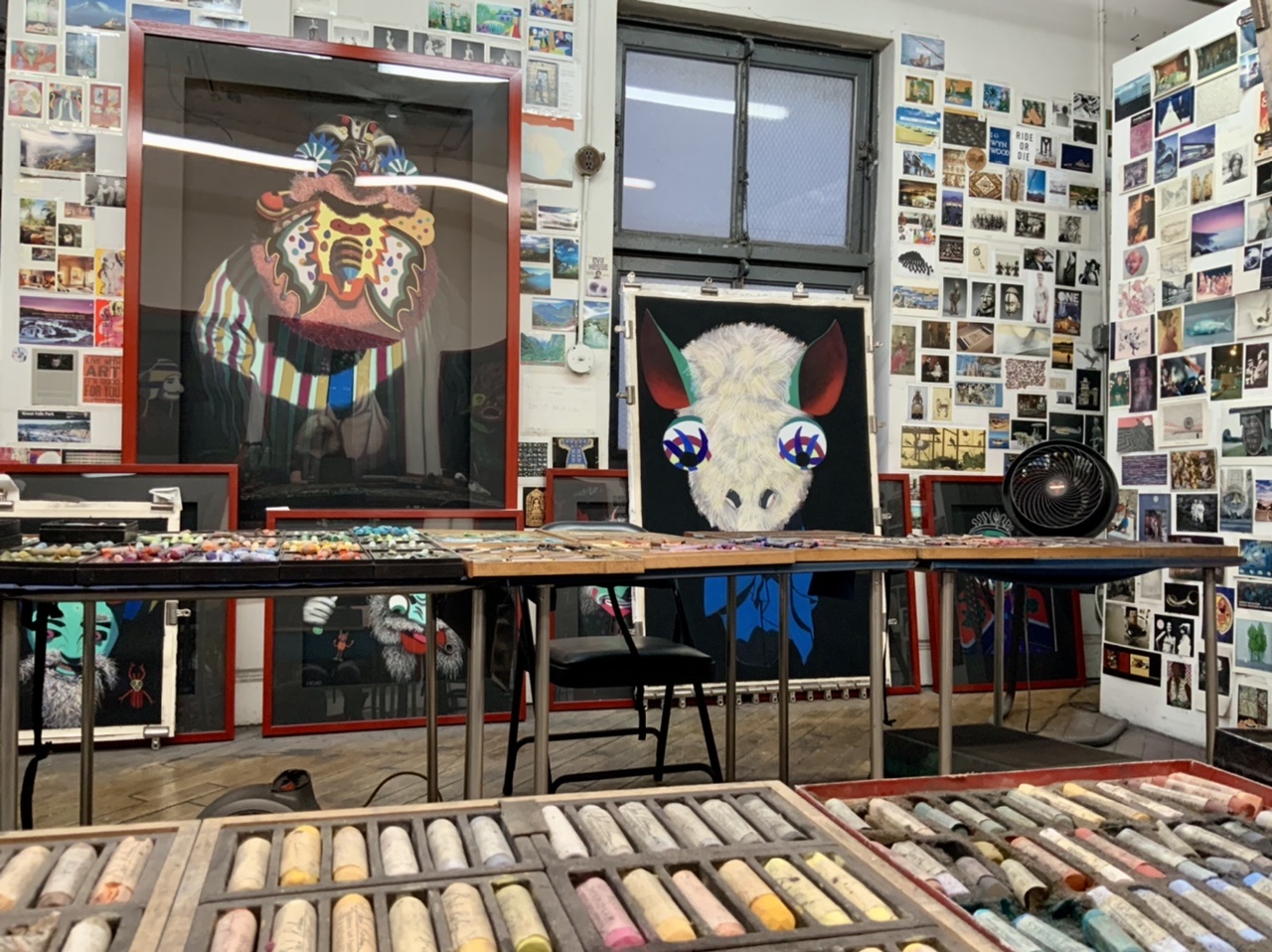
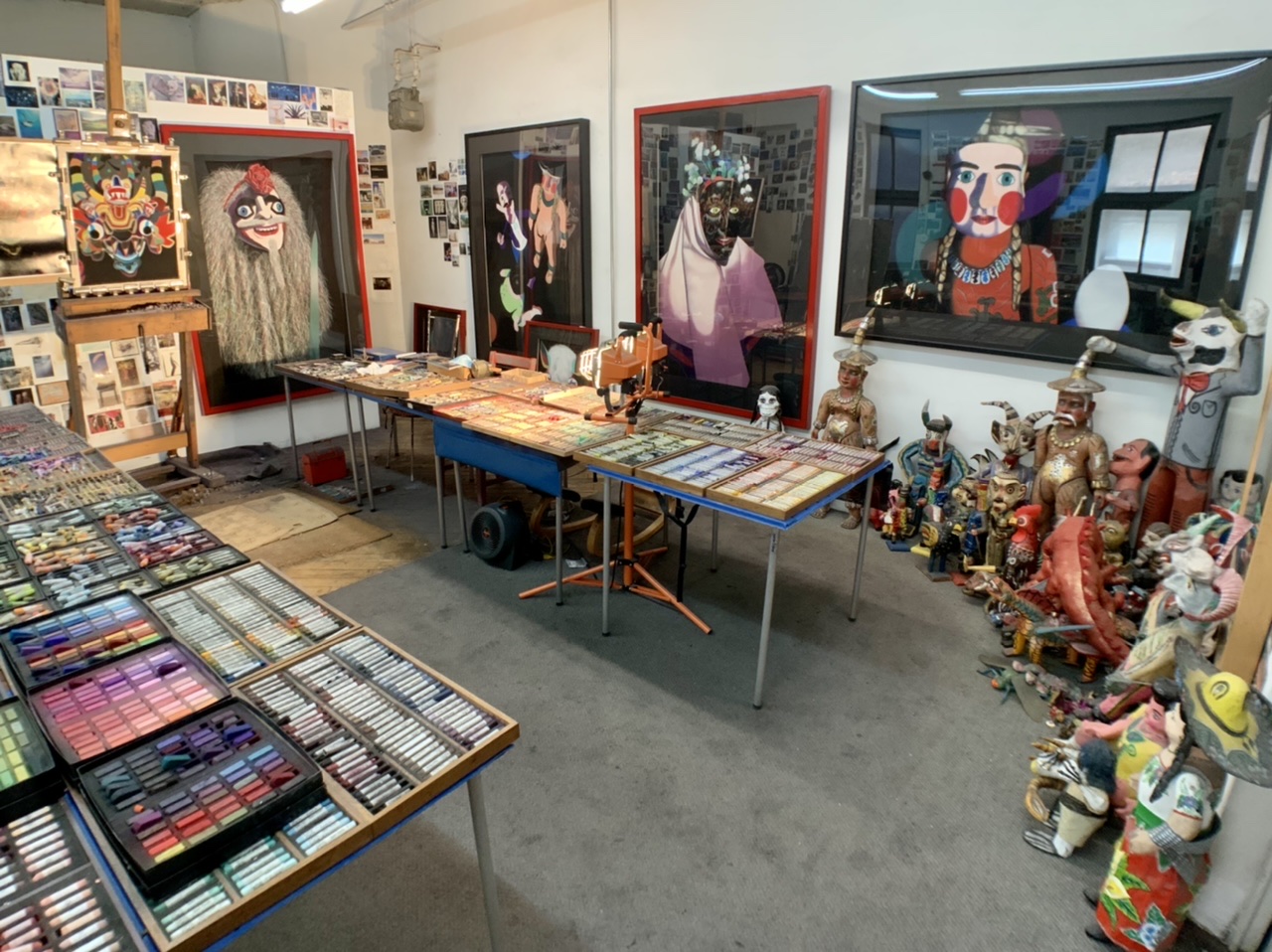
Barbara’s studio (since April 1997)
A: I last answered this question in my blog more than ten years ago and I would say similar things now to what I said then.
Be sure that you love your process unconditionally because there is no relationship between how hard you will work and how much money you will earn, period. Indeed, with inflation and rapidly evolving ways of doing business, it seems to cost more money every year to be an artist. As I’ve said often, be prepared to work very, very hard. Really it’s all about making the most of your gifts as an artist. If you don’t feel a deep responsibility to developing your talents as far as possible, you won’t have what it takes to keep going. Countless artists quit and no one can blame them. You absolutely must love your materials and your creative process and be willing to do whatever it takes to continue making art.
This is not a life for slackers!
Comments are welcome!
Pearls from artists* # 532
*an ongoing series of quotations – mostly from artists, to artists – that offers wisdom, inspiration, and advice for the sometimes lonely road we are on.
Far from offering an escape from the world, the arts present one of the most difficult and hard-fought ways to enter into the life of our time or any other time. What the artist must first accept is the authority of an art form, the immersion in what others have done and achieved. Once the artist has begun to take all that in – it’s a process that never really ends – there comes the even greater challenge of asserting one’s freedom. It’s the limits imposed by a vocation that makes it possible to turn away from the pressures of the moment and think and feel freely – and sometimes, give the most private emotions an extraordinary public hearing. If art is the ordering of disorderly experience, and I don’t know how else to describe it, then the artist must be true both to the order and to the disorder. These are the trials of the artist and the artistic vocation. They shape the experience of anybody who reads a novel or looks at a painting or listens to a piece of music.
Jed Perl in Authority and Freedom: A Defense of the Arts
Comments are welcome!
Q: Would you speak about someone who made a difference in your professional life?
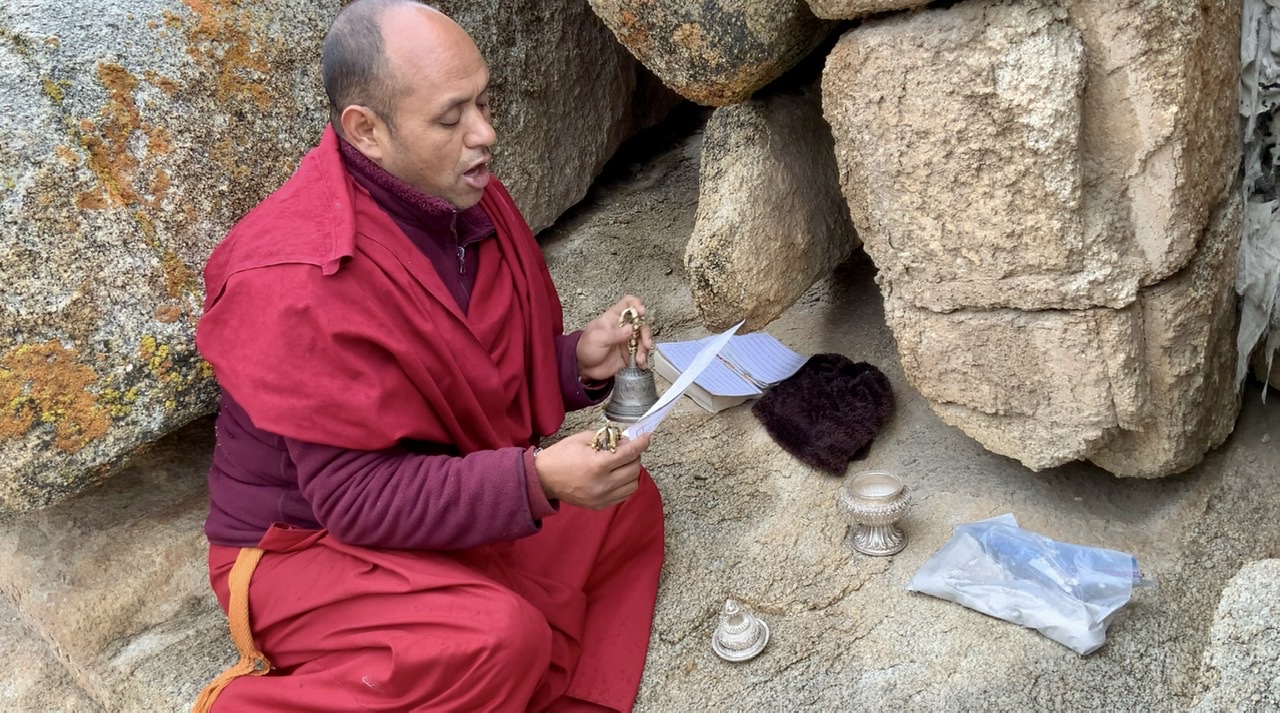
A: The first person who comes to mind is my favorite aunt, Teddie. In 1997 she was headed to northern California to attend a three-year-plus silent Tibetan Buddhist retreat at her teacher’s center. Teddie offered me her West 13th Street 6th-floor walkup apartment to live in while she was away. At the time I was based in Alexandria, VA and had just had my first solo exhibition at an important West 57th Street gallery, Brewster Fine Arts. I was becoming increasingly frustrated with the limited Washington, DC art scene, had outgrown everything it had to offer, and felt New York pulling me towards new and exciting professional adventures.
Teddie, recognizing my talent and ambition, made it possible for me to afford to move to New York. She had practiced Tibetan Buddhism for 35 years and was soon to become a Buddhist lama. She had an extraordinary mind and thought deeply about life. We used to talk for hours. Teddie was 7 years older and seemed more like a sister than an aunt. Indeed, she was my first soul mate. (I have been extremely fortunate to have had two such relationships in my life. The other was my late husband, Bryan).
Unfortunately, dear Aunt Teddie died at the age of 67 of breast cancer. Recently, on September 25 I honored her life in a short ceremony on a mountain cliff in Leh, Ladakh (India). A Tibetan Buddhist monk recited prayers as he placed her ashes among the rocks.
Comments are welcome!
Pearls from artists* # 484

*an ongoing series of quotations – mostly from artists, to artists – that offers wisdom, inspiration, and advice for the sometimes lonely road we are on.
[Walter] Murch: We hope we become better editors with experience! Yet you have to have an intuition about the craft to begin with: for me, it begins with, Where is the audience looking? What are they thinking? As much as possible, you try to be the audience. At the point of transition from one shot to another, you have to be pretty sure where the audience’s eye is looking, where the focus of attention is. That will either make the cut work or not.
[Michael] Ondaatje: So before you make the cut, if you feel the audience is looking towards point X, then you cut to another angle where the focus of attention is somewhere around that point X.
The Conversation: Walter Murch and the Art of Editing Film by Michael Ondaatje
This passage in Ondaatje’s book resonates because I work similarly to refine and construct each pastel painting. My goal is to move the viewer’s eye around in an engaging and interesting way. This part of my process is subtle so I suspect that most of my audience neither appreciates nor even suspects that I have done it.
Comments are welcome!
Pearls from artists* # 483

*an ongoing series of quotations – mostly from artists, to artists – that offers wisdom, inspiration, and advice for the sometimes lonely road we are on.
The editor has a unique relationship with the actors. I never try to go on to the set to see the actors out of costume or out of character – and also just not to see the set. I only want to see what there is on screen. Ultimately, that’s all the audience is ever going to see. Everyone else working on the film at that stage is party to everything going on around the filmed scene: how cold it was when that scene was shot; who was mad at whom; who is in love with whom; how quickly something was done; what was standing just to the left of the frame. An editor particularly has to be careful that those things don’t exert a hidden influence on the way the film is constructed, can (and should in my view) remain ignorant of all that stuff – in order to find value where others might not see value, and on the other hand, to diminish the value of certain things that other people see as too important. It’s one o the crucial functions of the editor. To take, as far as it is possible, the view of the audience, who is seeing the film without any knowledge of all the things that went into its construction.
On Editing Actors, by Walter Murch in The Conversations: Walter Murch and the Art of Editing Film, by Michael Ondaatje
Comments are welcome!
Pearls from artists* # 454
*an ongoing series of quotations – mostly from artists, to artists – that offers wisdom, inspiration, and advice for the sometimes lonely road we are on.
The only possible spiritual development (for an artist) is in the sense of depth. The artistic tendency is not expansive, but a contraction. And art is the apotheosis of solitude.
Samuel Beckett quoted in A Director Prepares: Seven Essays on Art and Theatre by Anne Bogart
Comments are welcome!
Pearls from artists* # 452
*an ongoing series of quotations – mostly from artists, to artists – that offers wisdom, inspiration, and advice for the sometimes lonely road we are on.
Art serves us best precisely at that point where it can shift our sense of what is possible, when we know more than we knew before, when we feel we have – by some manner of a leap – encountered the truth. That, by the logic of art, is always worth the pain.
T.S. Eliot quoted in A Director Prepares: Seven Essays on Art and Theatre by Anne Bogart
Q: What inspires you to start your next painting? (Question from Nancy Nikkal)

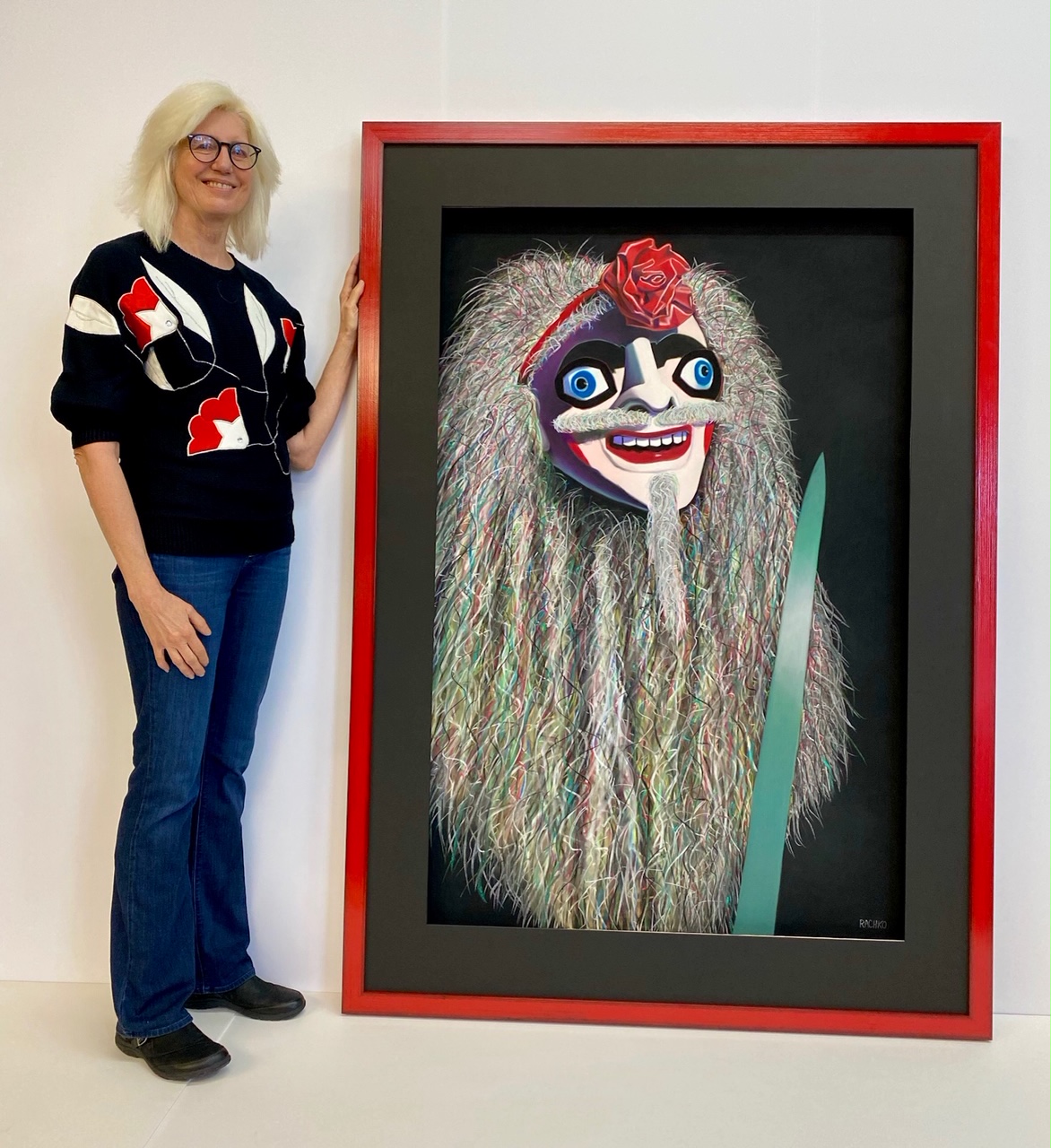
A: For my current series, “Bolivianos,” I am using as source/reference material c-prints composed at a La Paz museum in 2017. I began the series by picking my favorite from this group of photos (“The Champ” and later, “Avenger”) before continuing with others selected for prosaic reasons such as I like some aspect of the photo, to push my technical skills by figuring out how to render some item in pastel, to challenge myself to make a pastel painting that is more exciting than the photo, etc. I like to think I have mostly succeeded.
At this time I am running low on images and have not yet imagined what comes next. Do I travel to La Paz again in 2021 to capture new photos? This series was a surprise gift so I am reluctant to deliberately chase after it knowing that ‘lightning never strikes twice.’ Will travel even be possible this year with Covid-19? These are questions I am wrestling with now.
Comments are welcome!