Blog Archives
Pearls from artists* # 613
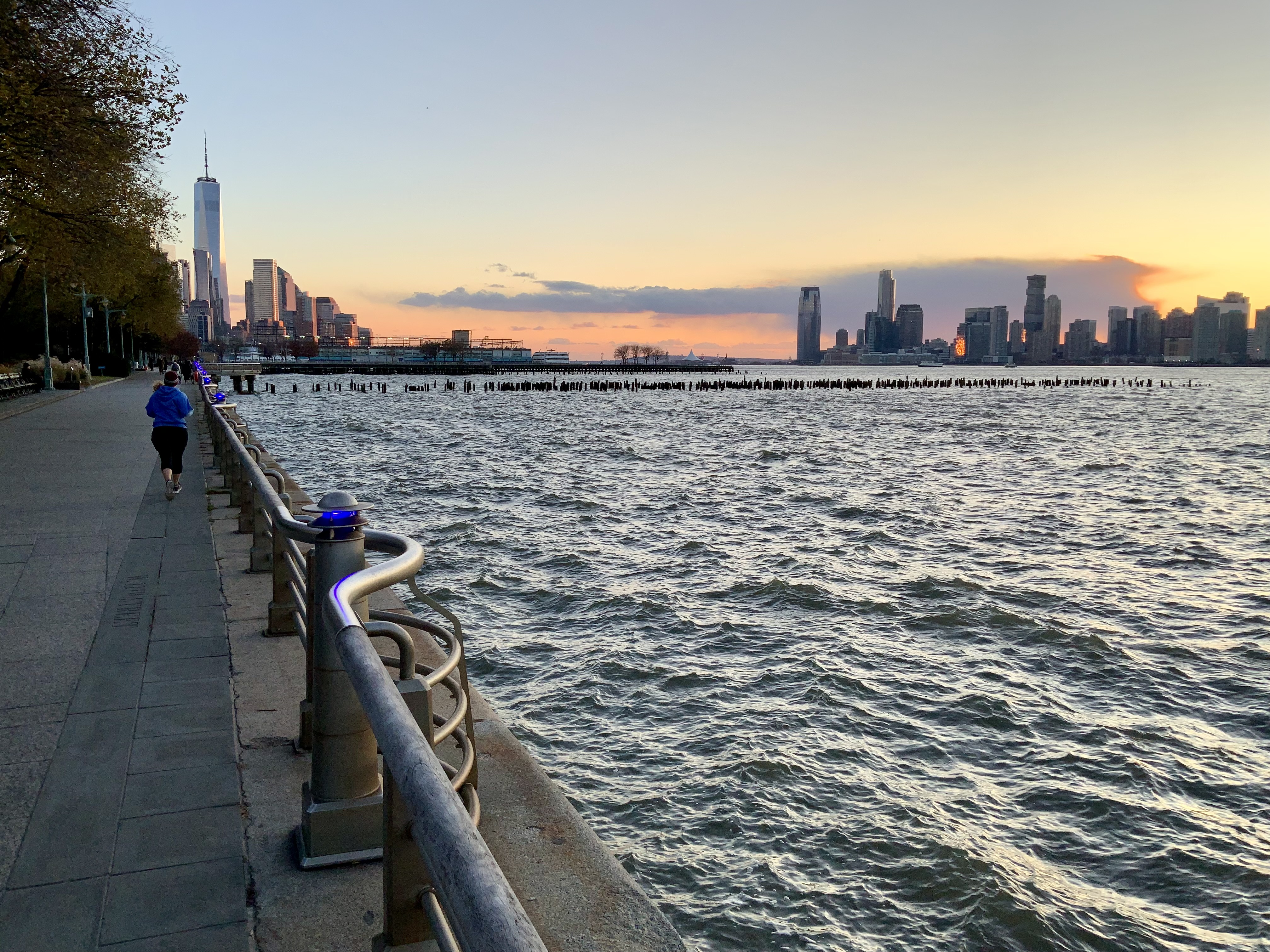
New York NY
*an ongoing series of quotations – mostly from artists, to artists – that offers wisdom, inspiration, and advice for the sometimes lonely road we are on.
A painting is a statement of the artist’s notions of reality in terms of plastic speech. In that sense the painter must be likened to the philosopher rather than to the scientist. For science is a statement of the laws that govern a specific phenomenon or category of matter or energy within the specified units and conditions of its operation. Philosophy, however, must combine all these specialized truths within a single system. It is because of this broad scope that Aristotle gives preeminence to the philosopher in the introduction to his Metaphysics, for he tells us that every man except the philosopher is an authority within his specific field, whereas the philosopher must have the acute knowledge that each man has in his own field plus the ability to relate all these fields to the operations of universality and eternity.
Therefore art, like philosophy, is of its own age; for the partial truths of each age differ from those of other ages, and the artist, like the philosopher, must constantly adjust eternity, as it were, to all the specifications of the moment. Art, too, creates at different times the notions of reality that the artist, as a man of the age, must inherit and develop and consider real along with the other intellectually conscious men of his time. His language, which is his plastic means, will also adjust itself to the possibility of making these notions manifest in their most coherent possibilities. The reality of the artist, therefore, reflects the understanding of his times, even as his creations shape those understandings. We posit this without wishing to attempt to untangle here the series of causes and effects, a process which would probably obscure more than it certified.
Mark Rothko in The Artist’s Reality: Philosophies of Art
Comments are welcome!
Pearls from artists* # 612
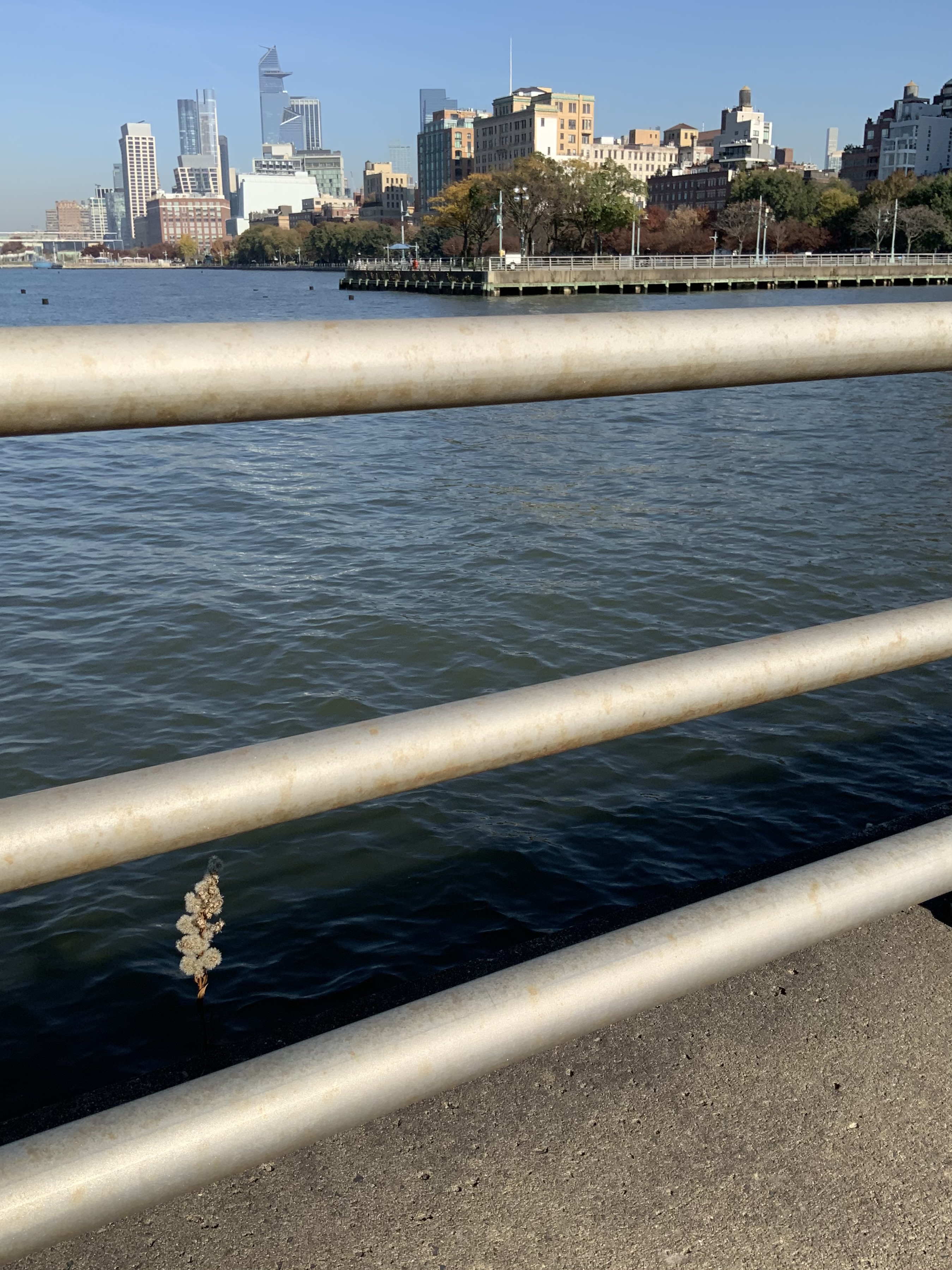
New York, NY
*an ongoing series of quotations – mostly from artists, to artists – that offers wisdom, inspiration, and advice for the sometimes lonely road we are on.
It is the poet and philosopher who provide the community of objectives in which the artist participates. Their chief preoccupation, like the artist, is the expression in concrete form of their notions of reality. Like him, they deal with verities of time and space, life and death, and the heights of exaltation as well as the depths of despair. The preoccupation with these external problems creates a common ground which transcends the disparity of the means used to achieve them. And it is in the language of the philosopher and poet or, for that matter, of other arts which share the same objective that we must speak if we are to establish some verbal equivalent of the significance of art.
Let us not for a moment conceive that the language of one is interchangeable with that of the other: that one can duplicate the sense of a picture by the sense of words or sounds, or that one can translate the truth of words by means of pictorial delineations. Not all odes of Pindar, framed and embroidered, could duplicate the portrayal by Apelles’ brush of the Hero of the Palaestra. The Pandemonium of Milton or Dante’s Inferno can never replace the vision of the Last Judgment by either Michelangelo or Signorelli. No more so than the Pastoral Symphony of Beethoven can be apprehended through the reading of idyllic poems, augmented by descriptions of woodland and fields, of torrents and streams, the study of ornithological sounds, and the laws of harmonics. Neither books on jurisprudence, nor costume plates, can possibly reconstruct Raphael’s School of Athens. And the man who knows a book or a picture through its critics, whatever his experience, has no experience of the art itself. The truth, the reality of each, is confined within its own boundaries and must be perceived in terms of the means generic to itself.
In speaking of art here, there is no thought of recreating the experience of the picture. If we compare one art to another, it is not with the intention of contrasting their actuality, but to speak rather of the motivations and properties such as are admissible to the world of verbal ideas. And if… we are partial to the philosopher – at the expense of those others who share with the artist his common objectives, it is not because we divine in his effort a greater sympathy to the artist, but because philosophy shares with art it’s preoccupation with ideas in the terms of logic.
Mark Rothko in The Artist’s Reality: Philosophies of Art
Comments are welcome!
Pearls from artists* # 448

*an ongoing series of quotations – mostly from artists, to artists – that offers wisdom, inspiration, and advice for the sometimes lonely road we are on.
Memory plays a huge role in the artistic process. Every time you stage a play, you are embodying a memory. Human beings are stimulated to tell stories from the experience of remembering an incident or a person. The act of expressing what is remembered is actually, according to the philosopher Richard Rorty, an act of re-description. In redescribing something, new myths are created. Rorty suggests that there is no objective reality, no Platonic ideal. We create truths by describing, or re-describing, our beliefs and observations. Our task, and the task of every artist and scientist, is to redescribe our inherited assumptions and invented fictions in order to create new paradigms for the future.
Anne Bogart in A Director Prepares: Seven Essays on Art and Theater
Comments are welcome!
Pearls from artists* # 122
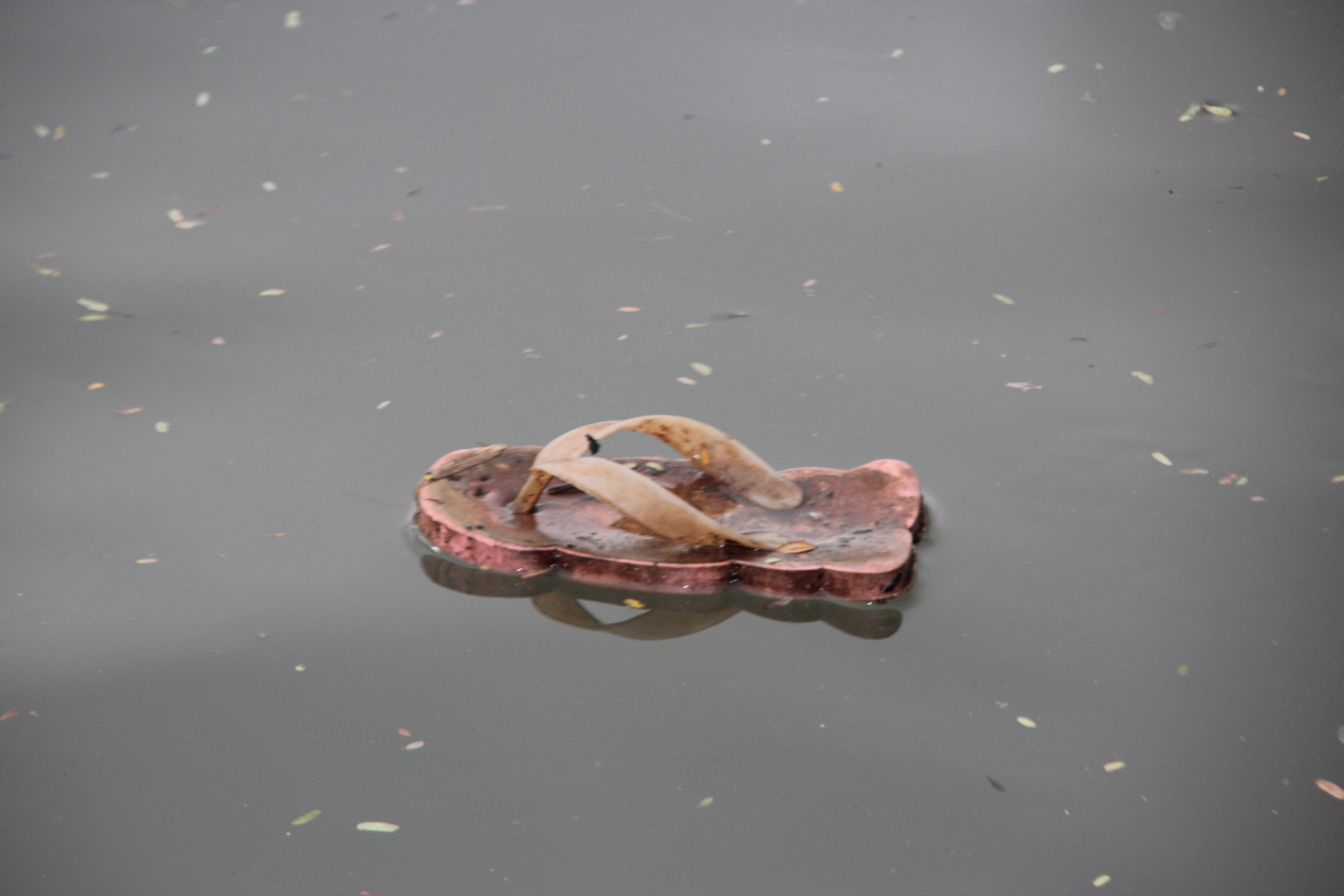
Sanur, Bali
* an ongoing series of quotations – mostly from artists, to artists – that offers wisdom, inspiration, and advice for the sometimes lonely road we are on.
Most significant growth in my life has been the direct result of errors, mistakes, accidents, faulty assumptions and wrong moves. I have generally learned more from my mistakes and my so-called failures than any successes or instances of “being right.” I would venture to propose that this equation is also true in the world at large. Error is a powerful animating ingredient in political, scientific and historical evolution as well as in art and mythology. Error is a necessity. The question I had to ask myself was: how can I cultivate a tolerance and an appetite for being wrong, for error?
In the face of an exceedingly complicated world, there are too many people who are invested in “being right.” These people are dangerous. Their authority is based on their sense of certainty. But innovation and invention do not only happen with smart people who have all of the answers. Innovation results from trial and error. The task is to make good mistakes, good errors, in the right direction.
There are many reasons that we get things as wrong as often as we do. Failures of perception, the cause of most error, are far more common in our daily lives than we like to think. We make errors because of inattention, because of poor preparation and because of haste. We err as a result of hardened prejudices about how things are. We err because we neglect to think things through. Our senses betray us constantly. But the chaos caused by being wrong also awakens energy and consciousness in us. In the moments that we realize our faults of perception, we are jerked into an awareness of our humanity. The Slovenian philosopher Slavoj Zizek wrote, “Consciousness originates with something going terribly wrong.”
Anne Bogart in “What’s the Story: Essays about art, theater, and storytelling
Comments are welcome!
Pearls from artists* # 119
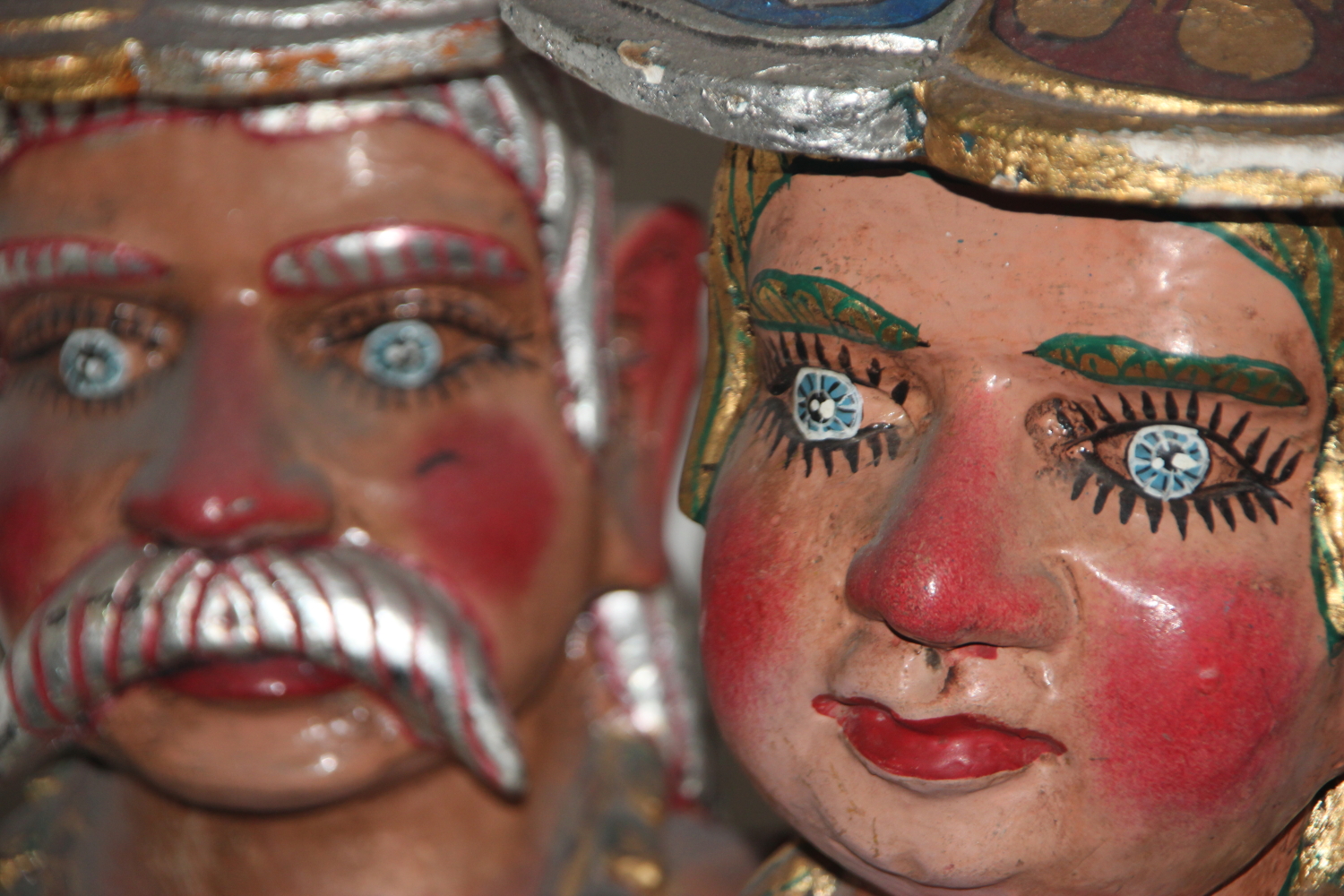
“He and She”
* an ongoing series of quotations – mostly from artists, to artists – that offers wisdom, inspiration, and advice for the sometimes lonely road we are on.
During the course of the past several years we have experienced a seismic shift in the way the world functions. Any notion of a certain or stable or inevitable future has vanished. We are living in what the Polish philosopher Zygmunt Bauman calls “liquid modernity.” No one’s life is predictable or secure. We are confronted with challenges never previously encountered, and these challenges weigh heavily on the role and responsibilities of the individual in society. It is the onus of each one of us to adjust, shift and adjust again to the constant liquid environment of fluid and unending change. In the midst of all this reeling and realignment, the moment is ripe to activate new models and proposals for how arts organizations [and artists] can flourish in the present climate and into an uncertain future.
What’s the Story: Essays about art, theater, and storytelling by Anne Bogart
Comments are welcome!
Pearls from artists* # 110
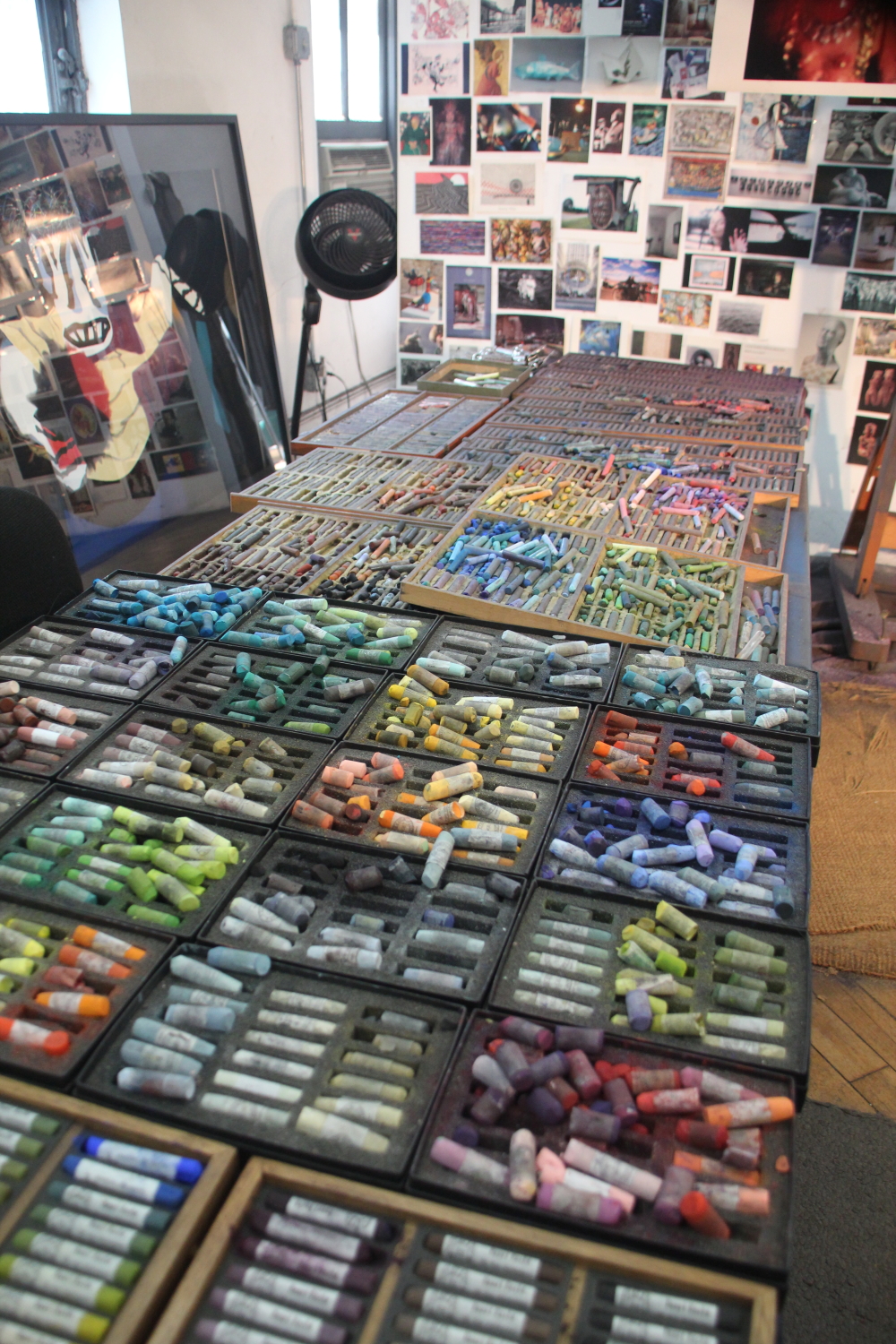
Barbara’s studio
* an ongoing series of quotations – mostly from artists, to artists – that offers wisdom, inspiration, and advice for the sometimes lonely road we are on.
A well-lived life should be worth attention. At the very least, you should find your own story engaging. In presenting yourself to yourself and others, then, you should keep in mind the rules that good playwrights follow. Like a good character – you should be making choices that are explicable – choices that appear to be coming from a mind in working order. Your choices should be reasonably coherent with each other, also, so as to support the thought that there is a real person – you – behind those choices.
Paul Woodruff, philosopher, quoted in What’s the Story: Essays about art, theater, and storytelling by Anne Bogart
Comments are welcome!


 barbararachkoscoloreddust.com