Blog Archives
Pearls from artists* # 365
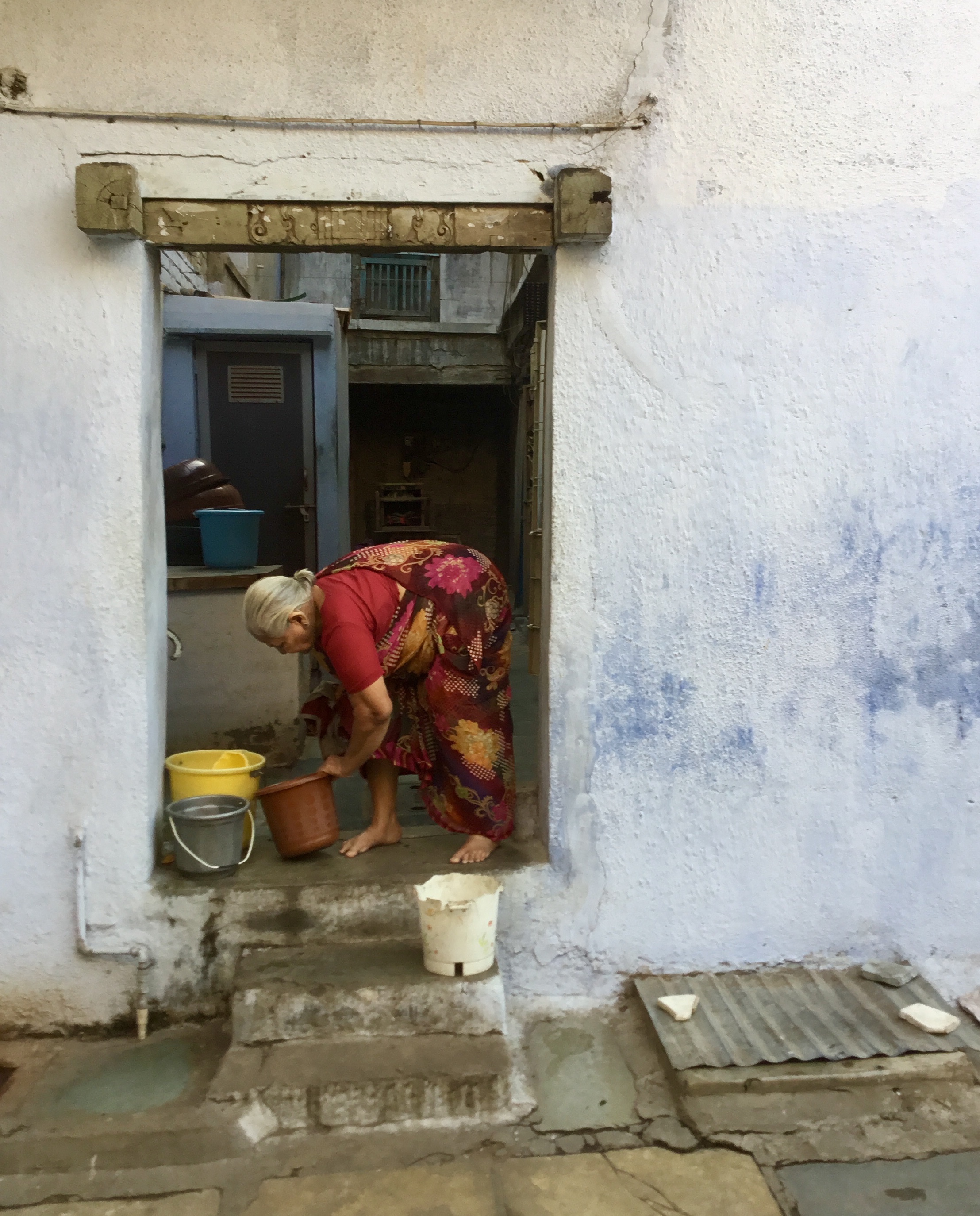
Ahmedabad, India
* an ongoing series of quotations – mostly from artists, to artists – that offers wisdom, inspiration, and advice for the sometimes lonely road we are on.
The important thing is the intersection between intuition and discipline, because you have to be alert and at the same time invisible. The eye has to be alert and capture very quickly everything you have inside you – I don’t know how to explain it. What the eye sees is the synthesis of what you are or what you’ve learned to do, this is the language of photography…
Graciela Iturbide in Eyes to Fly With: Portraits, Self-Portraits, and Other Photographs
Comments are welcome!
Pearls from artists* # 350
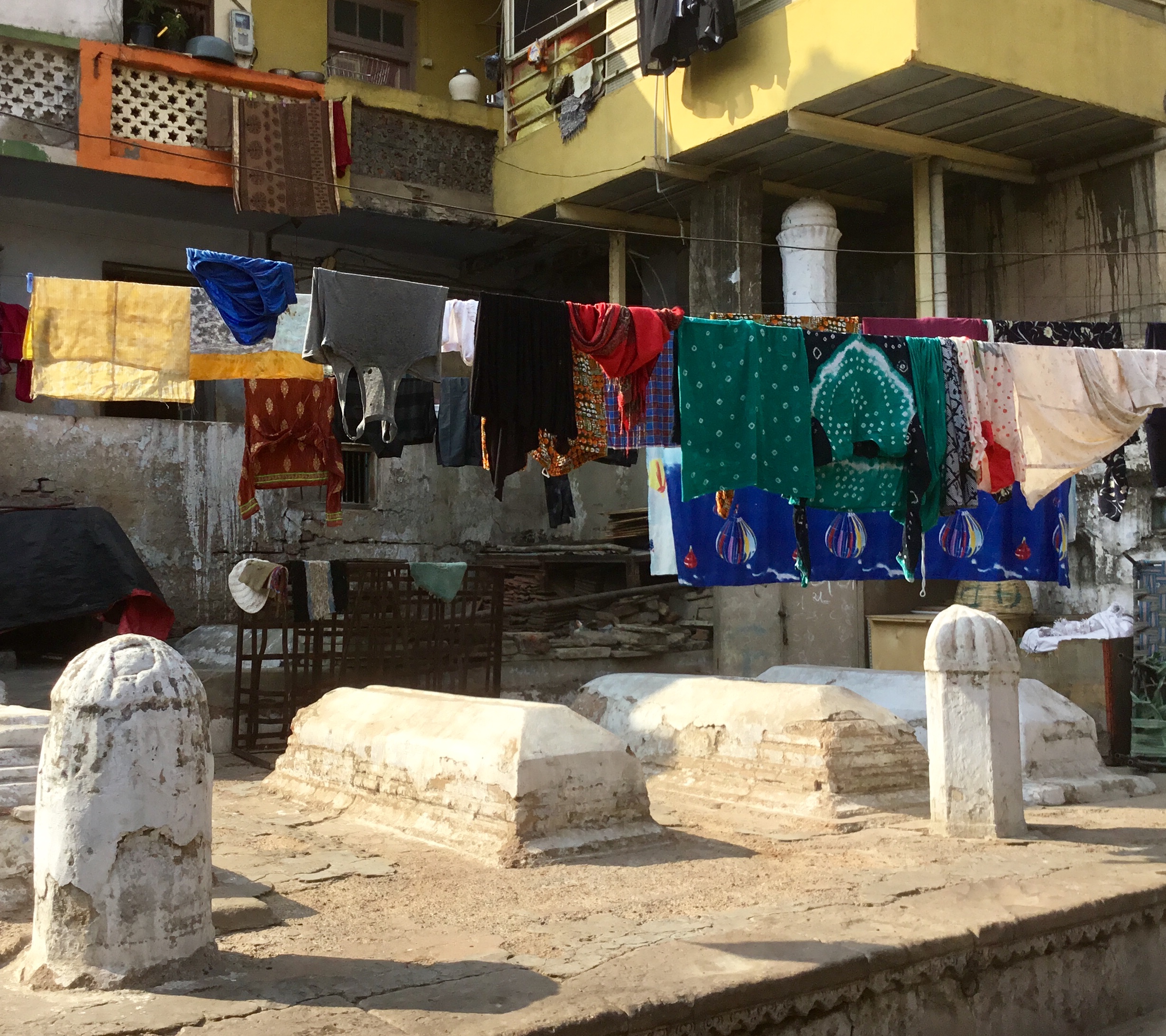
Ahmedabad, India
*an ongoing series of quotations – mostly from artists, to artists – that offers wisdom, inspiration, and advice for the sometimes lonely road we are on.
Seeing is not a passive awareness of visual data, but an active focusing upon it, “touching” it. Arnheim writes, in language that echoes the Hindu notion of seeing and touching: “In looking at an object we reach out for it. With an invisible finger we move through the space around us, go out to the distant places where things are found, touch them, catch them, scan their surfaces, trace their borders, explore their texture. It is an eminently active occupation.”
Diana L. Eck in Darsan: Seeing the Divine Image in India
Comments are welcome!
Pearls from artists* # 300
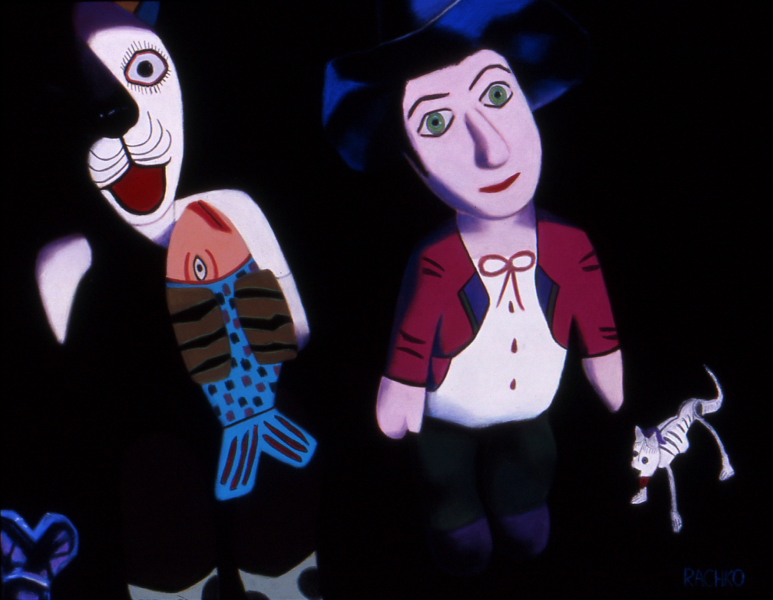
“Offering,” soft pastel on sandpaper, 20″ x 26″
*an ongoing series of quotations – mostly from artists, to artists – that offers wisdom, inspiration, and advice for the sometimes lonely road we are on.
Art breaks down the barriers that normally stand between the physical and the psychic, between your soul and the souls of others. “Through art alone are we able to emerge from ourselves, to know what another person sees of a universe which is not the same as our own and of which, without art, the landscapes would remain as unknown to us as those that may exist on the moon.” For the French novelist Marcel Proust, who wrote those words, art is a meeting place in which human beings commune at a level that ordinary language and sign systems do not allow. Without art, connection at this deeper level is impossible.
J.F. Martel in Reclaiming Art in the Age of Artifice: A Treatise, Critique, and Call to Action
Comments are welcome!
Pearls from artists* # 188
“Offering,” soft pastel on sandpaper, 20″ x 26″
* an ongoing series of quotations – mostly from artists, to artists – that offers wisdom, inspiration, and advice for the sometimes lonely road we are on.
HM: In order to create a work of art, you need an artist, an object, the work, and the audience. Indeed, where there’s no audience, there’s no artist. Renoir used to say, “No painters in Hamlet.” meaning that on a desert island you wouldn’t paint.
( I confess I am a little surprised. For my part, I find it difficult to believe that the true artist cannot work without hope. It seems to me that art is first and foremost an internal necessity, a need to escape from life. It is true that this is closer to the mystics’ point of view and that the artist, if he does not work directly for his contemporaries, at least looks forward to some future resonance. Nonetheless, I ask the same question again.)
PC: Even a true painter wouldn’t paint on a desert island?
HM: No… Painting is a means of communication, a language. An artist is an exhibitionist. Take away his spectators and the exhibitionist slinks off with his hands in his pockets.
The audience is the material in which you work. You don’t see the face of the audience. It’s huge, an immense mass. The public is – listen, it’s the man you encounter one fine day, who says, “Monsieur Matisse, I can’t tell you how much I love your picture, the one you exhibited at the salon,” and this man is a clerk who could never spend a red cent on painting. The public is not the buyer; the public is the sensitive material on which you hope to leave an imprint.
PC: Through the picture, the audience returns to the source of emotion.
HM: Yes, and the artist is the actor, the fellow with the wheedling voice who won’t rest until he’s told you his life story.
Chatting with Henri Matisse: The Lost 1941 Interview, Henri Matisse with Pierre Courthion, edited by Serge Guilbaut, translated by Chris Miller
Comments are welcome!
Pearls from artists* # 151

“The Storyteller,” soft pastel on sandpaper, 20″ x 26″
* an ongoing series of quotations – mostly from artists, to artists – that offers wisdom, inspiration, and advice for the sometimes lonely road we are on.
I am a storyteller, for better and for worse. I suspect that a feeling for stories, for narrative, is a universal human disposition, going with our powers of language, consciousness of self, and autobiographical memory.
The act of writing, when it goes well, gives me a pleasure, a joy, unlike any other. It takes me to another place – irrespective of my subject – where I am totally absorbed and oblivious to distracting thoughts, worries, preoccupations, or indeed the passage of time. In those rare, heavenly states of mind, I may write nonstop until I can no longer see the paper. Only then do I realize that evening has come and that I have been writing all day.
Over a lifetime, I have written millions of words, but the act of writing seems as fresh, and as much fun, as when I started it nearly seventy years ago.
On the Move: A Life by Oliver Sacks
Comments are welcome!
Pearls from artists* # 82
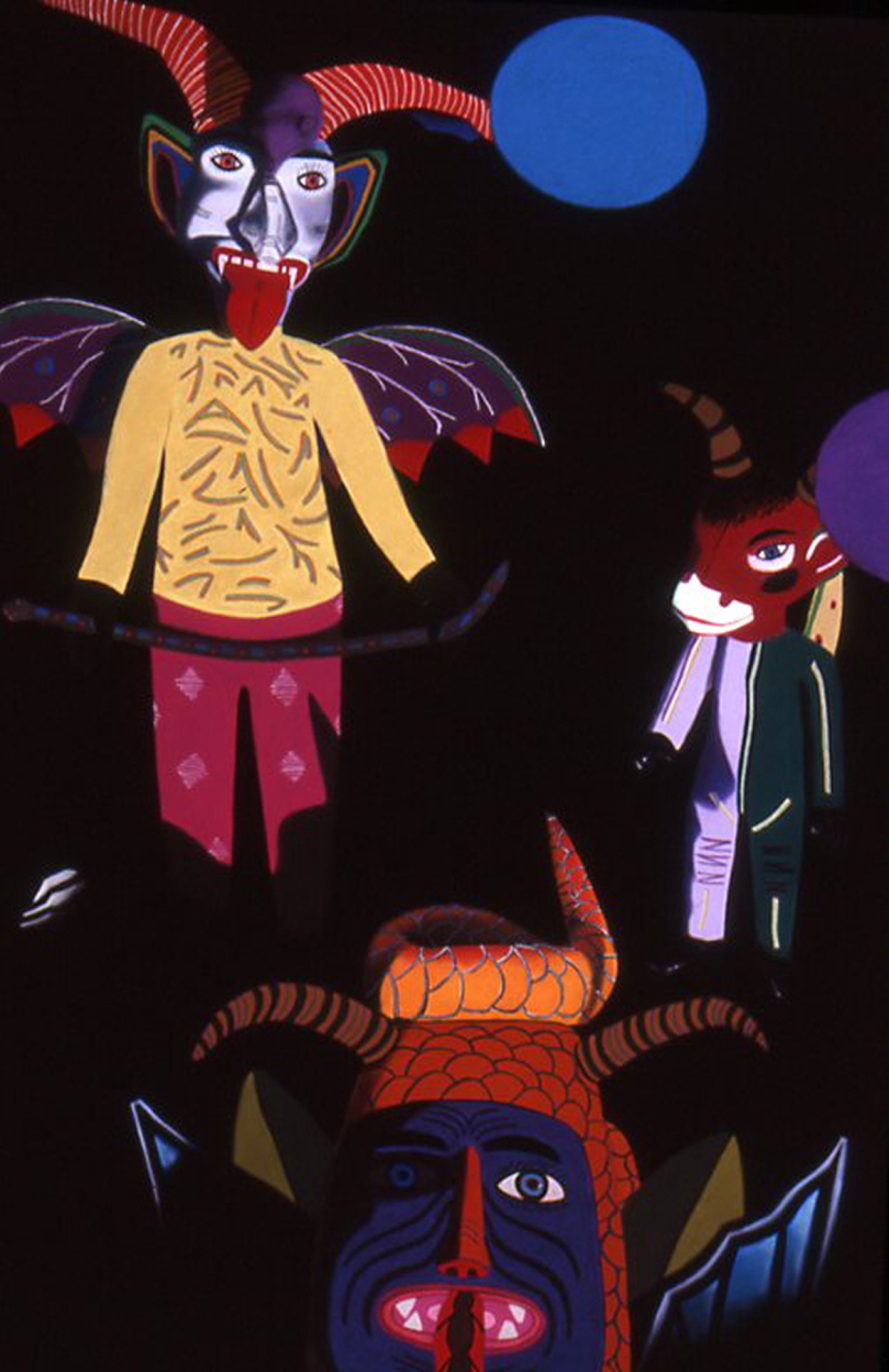
“The Sovereign,” soft pastel on sandpaper, 58″ x 38″
* an ongoing series of quotations – mostly from artists, to artists – that offers wisdom, inspiration, and advice for the sometimes lonely road we are on.
Art isn’t psychology. For one thing art deals in images, not language. Images precede language and are closer to feelings. They summon feelings before they’re named and categorized, when they’re still fresh and sometimes hard to recognize or identify.
For another thing, to translate his vision an artist uses materials that are, for lack of a better word, alchemical. Paint, for example, has this wonderful, mysterious quality – a smell and a sensuous, velvety feel and an ability to hold color and light – that unlocks and speeds up one’s creative metabolism. And paint captures my every impulse – from my broadest conceptions to the tiniest ticks and tremors of my wrist.
There are literally no words to describe what occurs when an image suddenly and unexpectedly appears on the canvas. Sometimes it’s serendipity, the result of a fortunate brushstroke. Sometimes I think it has to do with the inherent qualities of paint, or the slickness of a surface, or the fullness or acuity of a brush. And sometimes when I’ve got a good rhythm going and everything comes together, I feel as though it produces the purest expression of who I am and what I am and how I perceive the world.
Eric Fischl and Michael Stone in Bad Boy: My Life on and off the Canvas
Comments are welcome!
Pearls from artists* # 75
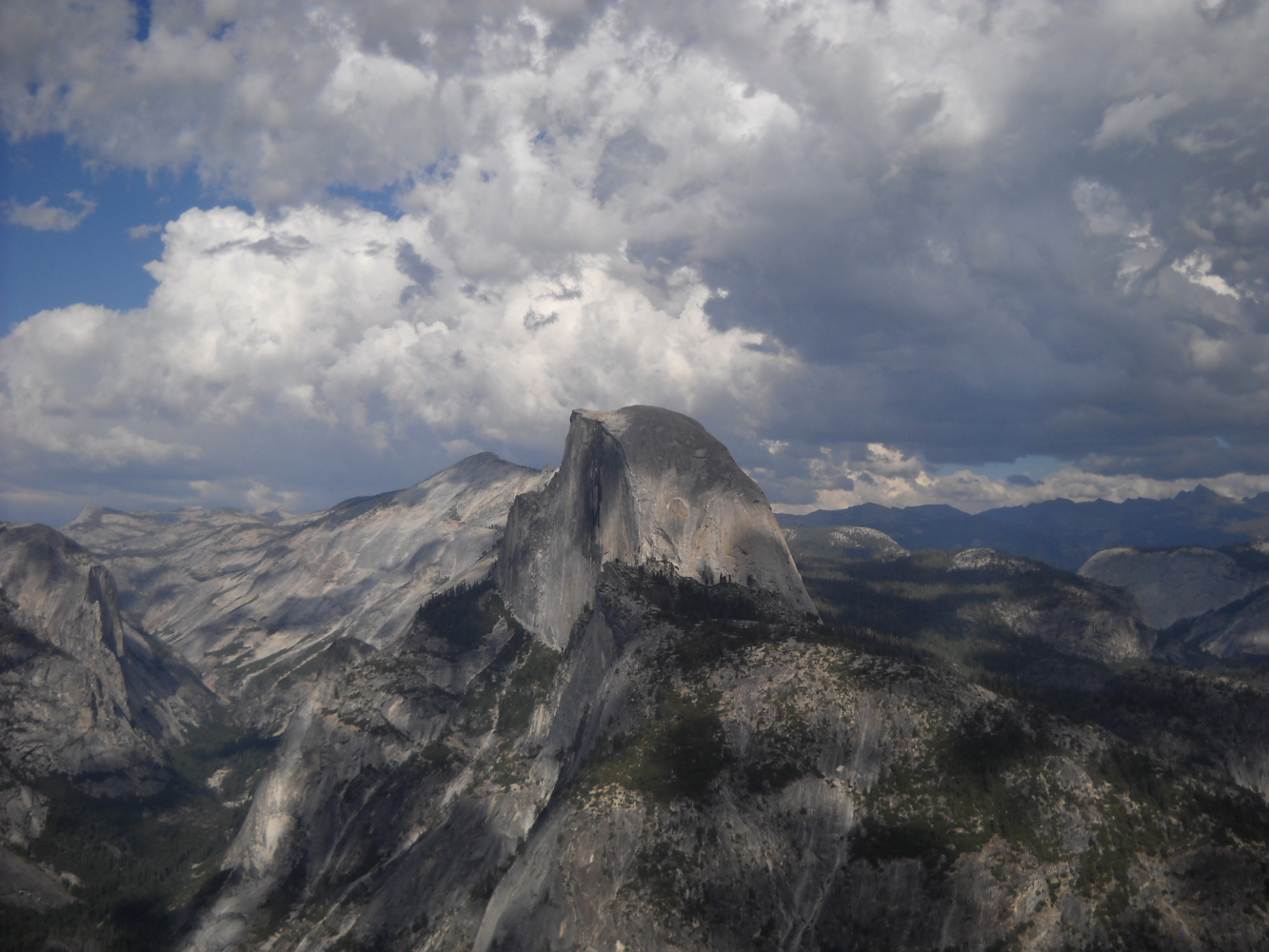
Half Dome at Yosemite
* an ongoing series of quotations – mostly from artists, to artists – that offers wisdom, inspiration, and advice for the sometimes lonely road we are on.
We realize now that our common human language is not Esperanto or computers or something having to do with vocal cords and speech. It is, rather, our sense of proportion, our balance, harmony and other aspects of simple and fundamental form. Our universal language, in other words, is beauty.
Rollo May, My Quest for Beauty
Comments are welcome!
Pearls from artists* # 50

The Getty Museum, Los Angeles
The important thing is the intersection between intuition and discipline, because you have to be alert and at the same time invisible. The eye has to be alert and capture very quickly everything you have inside you – I don’t know how to explain it. What the eye sees is the synthesis of what you are or what you’ve learned to do, this is the language of photography…
Graciela Iturbide in Eyes to Fly With
Comments are welcome!
Pearls from artists* # 49

Untitled, 24″ x 24″ chromogenic print, edition of 5
* an ongoing series of quotations – mostly from artists, to artists – that offers wisdom, inspiration, and advice for the sometimes lonely road we are on.
The beauty of art is better, “higher,” according to Hegel, than the beauty of nature because it is made by human beings and is the work of the spirit. But the discerning of beauty in nature is also the result of traditions of consciousness, and of culture – in Hegel’s language, of spirit.
The responses to beauty in art and to beauty in nature are interdependent. As Wilde pointed out, art does more than school us on how and what to appreciate in nature. (He was thinking of poetry and painting. Today the standards of beauty in nature are largely set by photography.) What is beautiful reminds us of nature as such – of what lies beyond the human and the made – and thereby stimulates and deepens our sense of the sheer spread and fullness of reality, inanimate as well as pulsing, that surrounds us all.
A happy by-product of this insight, if insight it is: beauty regains its solidity, its inevitability, as a judgment needed to make sense of a large portion of one’s energies, affinities, and admirations; and the usurping notions appear ludicrous.
Imagine saying, “That sunset is interesting.”
Paolo Dilonardo and Anne Jump, editors, Susan Sontag At the Same Time: Essays and Speeches
Comments are welcome!
Pearls from artists # 19
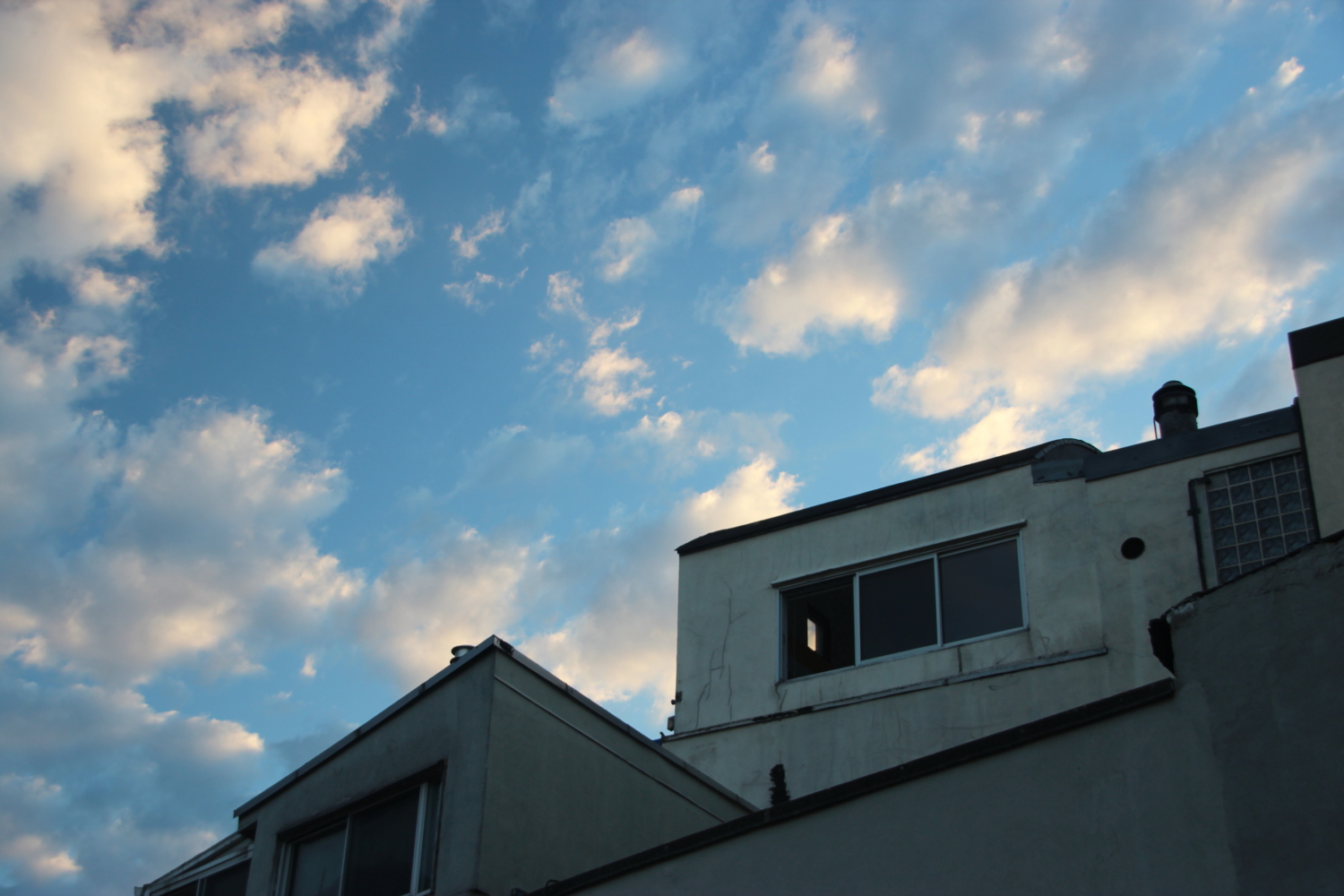
View from the balcony
* an ongoing series of quotations – mostly from artists, to artists – that offers wisdom, inspiration, and advice for the sometimes lonely road we are on.
What one writes at twenty-one is a cry, does one think of a cry that it ought to have been cried differently? The language is still so thin about one in these years, the cry pierces through and just takes along what is left clinging to it. The development will always be this, that one makes one’s language fuller, thicker, firmer (heavier), and of course there is sense in that only for one who is sure that the the cry too is growing in him ceaselessly, irresistibly, so that later, under the pressure of countless atmospheres, it will issue evenly from every pore of the almost impenetrable medium…
Talent, you understand, scarcely has significance any more in our day, since a certain dexterity of expression has become general, where is it not? Hence succeeding still means something only where the highest, utmost is achieved, and then one is again liable to think that just this unsurpassable something, once it appears in person, is in itself successful.
And so there is no real ground for concern, only that we want never to remain behind our heart and never to be in advance of it: that is probably needful. Thus we arrive at everything, each at what is his.
Jane Bannard Greene and M.D. Herter Norton editors, Letters of Rainer Maria Rilke 1910 – 1926
Comments are welcome!


 barbararachkoscoloreddust.com