Blog Archives
Pearls from artists* # 640

*an ongoing series of quotations – mostly from artists, to artists – that offers wisdom, inspiration, and advice for the sometimes lonely road we are on.
When an artist changes and develops over the years, as is natural to any creative person, such change is met by howls of protest from the marketers. Sometimes an artist (or teacher, scientist, or spiritual guru) starts with something extraordinary, becomes a star, and then their gift is either frozen or perverted.
The growing and risky edge of creative work is devalued, treated as a frill or extracurricular activity decorating the routine of ordinary life. There are few mechanisms available for the artist to construct a self-sustaining way of living and working. “One gathers,” says Virginia Woolf,
“from the enormous modern literature of confession and self-analysis that to write a book of genius is almost always a feat of prodigious difficulty. Everything is against the likelihood that it will come from the writer’s mind whole and entire. Generally, material circumstances are against it. Dogs will bark; people will interrupt; money must be made; health will break down. Further, accentuating all these difficulties and making them harder to bear is the world’s notorious indifference. It does not ask people to write poems and novels and histories; it does not need them. It does not care whether Flaubert finds the right word or whether Carlyle scrupulously verifies this or that fact. Naturally, it will not pay for what it does not want. And so the writer, Keats, Flaubert, Carlyle, suffers, especially in the creative years of youth, every form of distraction and discouragement. A curse, a cry of agony, rises from those books of analysis and confession. “Mighty poems in their misery dead” – that is the burden of their song. If anything comes through in spite of all this, it is a miracle, and probably no book is born entire and uncrippled as it was conceived.”
Stephen Nachmanovitch in Free Play: Improvisation in Art and Life
Comments are welcome!
Pearls from artists* # 397
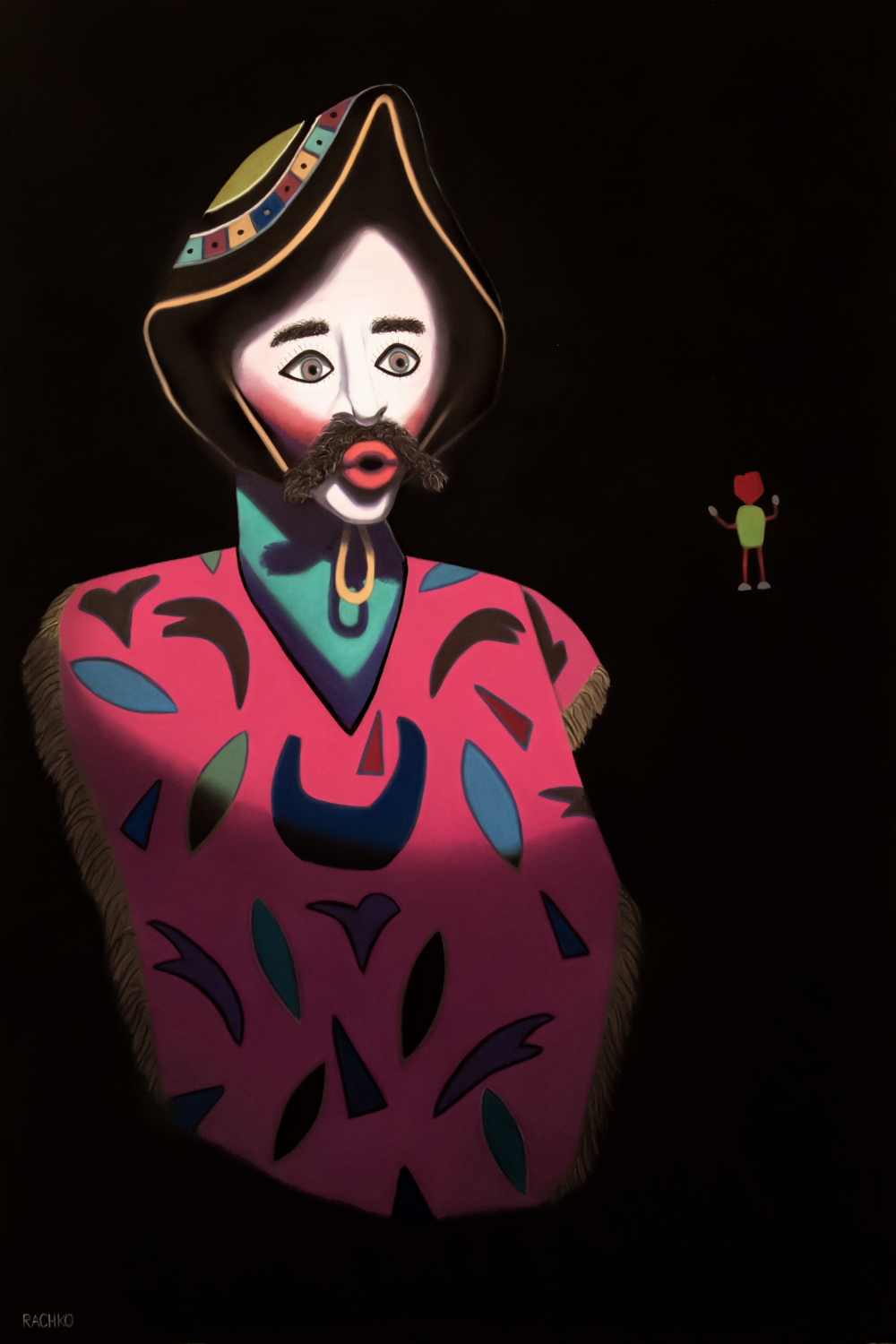
“Prophecy,” soft pastel on sandpaper, 58″ x 38″
* an ongoing series of quotations – mostly from artists, to artists – that offers wisdom, inspiration, and advice for the sometimes lonely road we are on.
Our species requires a greater capacity to see into the Real, not just the outer universe of the senses but also the inner cosmos of the psyche, the normally invisible dimensions. Near the end of his life, Jung said to an English journalist, “The only real danger that exists is man himself… His psyche should be studied because we are the origin of all coming evil.” It is a beautiful statement until the word studied comes up, at which point we are reminded that Jung at bottom was a rationalist: he refused to see that while psychology could talk brilliantly about the soul, it could never descend into its depths. For this we need imagination, madness, prophecy – art. We must understand that creative expression is not a pastime or distraction, but a psychonautic science in its own right. Allowed to operate in freedom, it can illuminate the darkness beyond our field of vision.
J.F. Martel in Reclaiming Art in the Age of Artifice: A Treatise, Critique, and Call to Action
Comments are welcome!
Pearls from artists* # 268

The Lightning Field, Quemado, NM
* an ongoing series of quotations – mostly from artists, to artists – that offers wisdom, inspiration, and advice for the sometimes lonely road we are on.
Visit 1: October 18 and 19, 2003, continued
The long drive through the New Mexico landscape from Albuquerque to Quemado to The Lightning Field is a gradual slide towards emptiness, a prelude. Or a subtle preparation for the eyes and mind. The practicalities of the cabin provide simple accommodations that address basic needs to maximize focus and minimize distraction.
At The Lightning Field, my experience of space began with the rational structure of the grid, which was eventually exposed by less rational behavior.
The artwork locates the physical environment in space, and my perception of the work began with the regularity of the grid. The repeated unit of the pole was not significant, only its holistic engagement between human scale and the landscape of the sky. Then the effects of light, the anticipation of cycles of change through the course of the day and night, the possibility of the unpredictable.
Laura Raicovich in At The Lightning Field
Comments are welcome!
Q: Why don’t you teach or conduct pastel workshops?
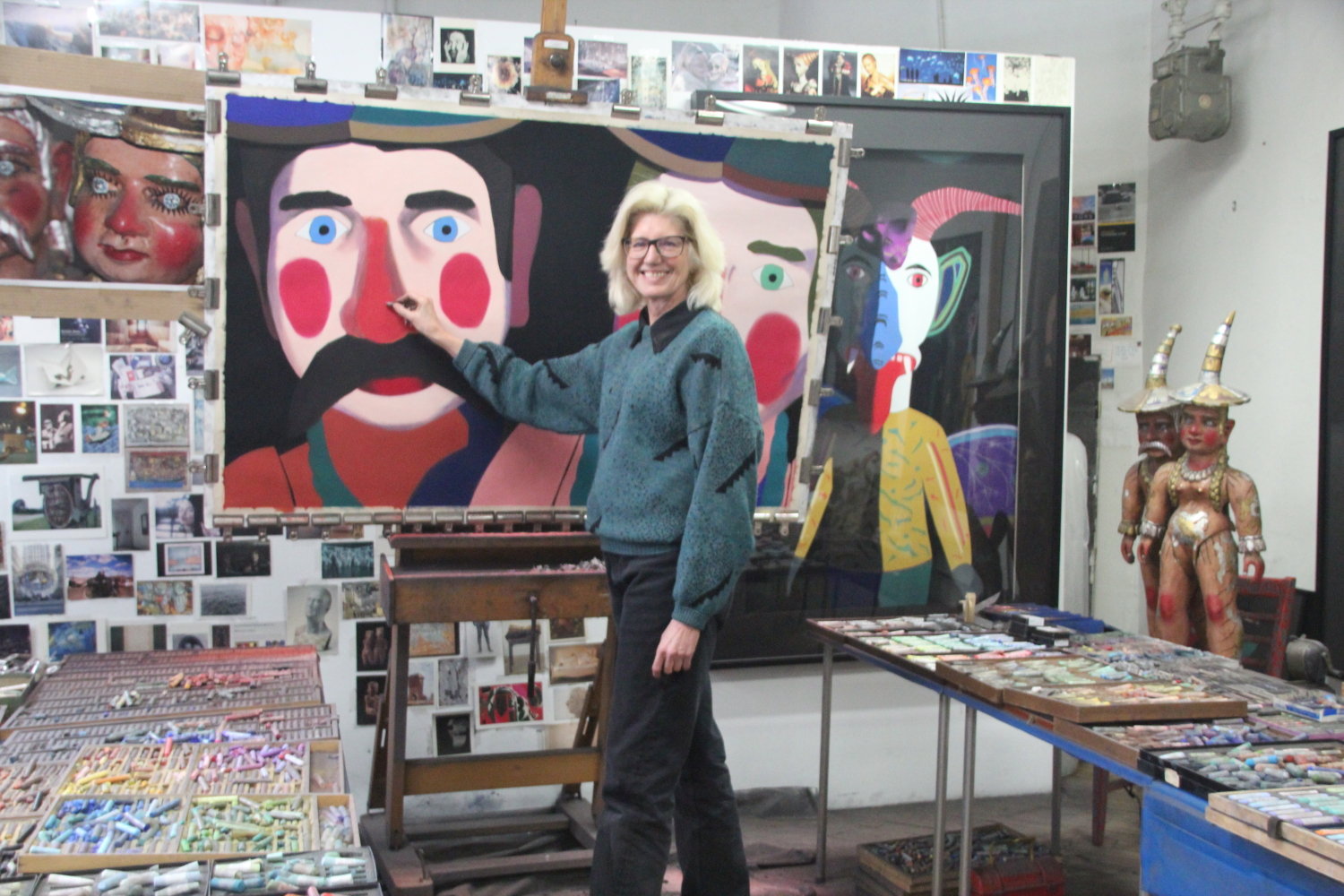
Barbara in her studio
A: I am often asked to teach, but I never have had the desire to do so. Because my work is extremely labor intensive, I am reluctant to give up precious studio time, either for teaching or for any activities that could be deemed a distraction. Consistent in my creative practice, I typically work in my studio five days a week, seven or more hours a day and am able to complete four or five pastel-on-sandpaper paintings in a year.
Teaching would divert time, attention, and energy away from my practice. Certainly it can be rewarding in many ways but since my process is slow and meticulous, I prefer to focus on making new work.
Comments are welcome!
Pearls from artists* # 69
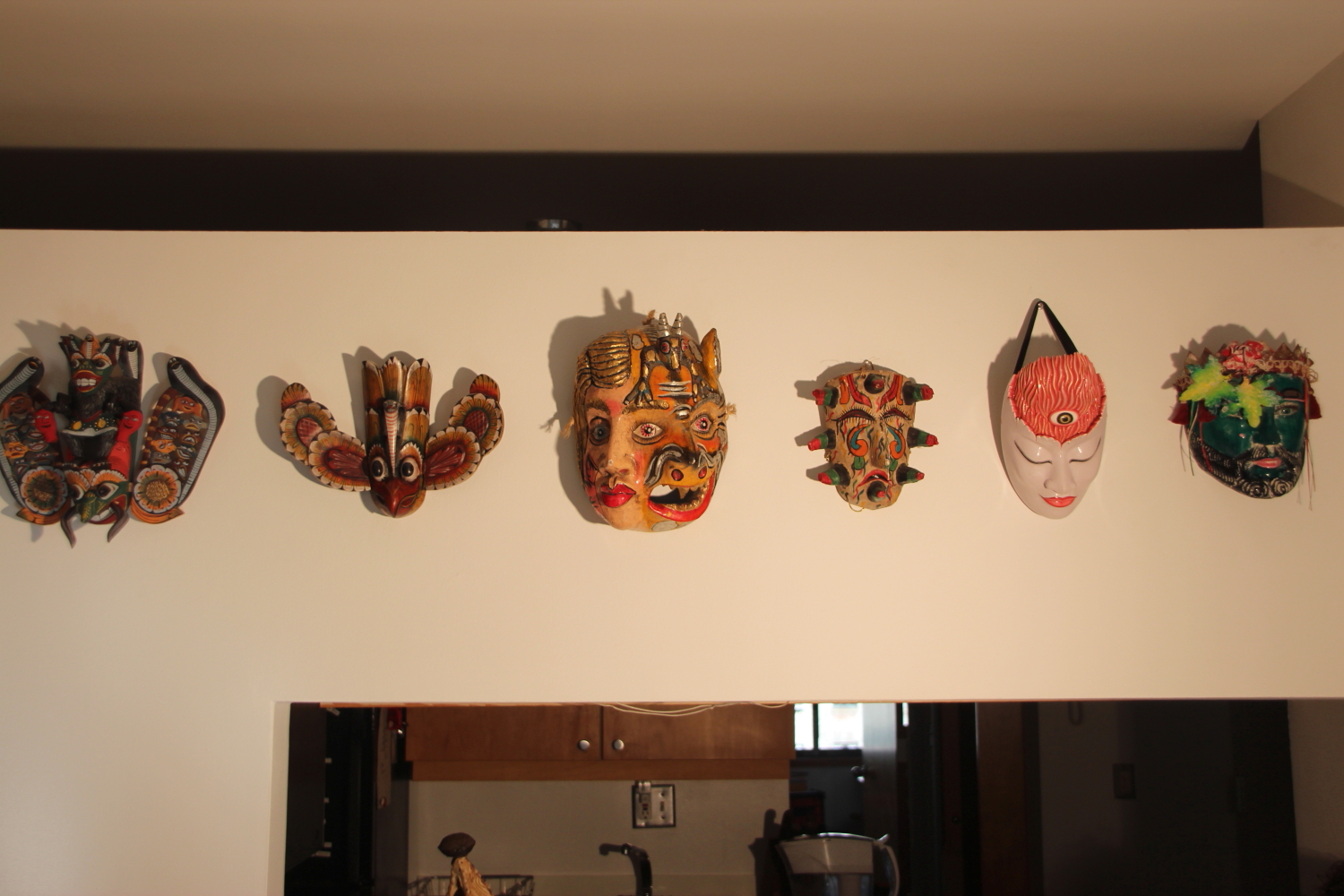
Masks from Sri Lanka, Mexico, and Bali
*
an ongoing series of quotations – mostly from artists, to artists – that offers wisdom, inspiration, and advice for the sometimes lonely road we are on.
The mission is to stay hungry. Once you need to know, you can proceed and draw distinctions. From the heat of this necessity, you reach out to content – the play, the theme, or question – and begin to listen closely, read, taste, and experience it. You learn to differentiate and interpret the sensations received while engaged with content. The perception forms the basis for expression.
Have you ever been so curious about something that the hunger to find out nearly drives you to distraction? The hunger is necessity. As an artist, your entire artistic abilities are shaped by how necessity has entered your life and then how you sustain it. It is imperative to maintain artistic curiosity and necessity. It is our job to maintain in this state of feedforward as long as humanly possible. Without necessity as the fuel for expression, the content remains theoretical. The drive to taste, discover, and express what thrills and chills the soul is the point. Creation must begin with personal necessity rather than conjecture about audience taste or fashion.
Anne Bogart in and then, you act: making art in an unpredictable world
Comments are welcome!


 barbararachkoscoloreddust.com