Category Archives: Quotes
Q: What is your best advice for new artists?

Recent pastel paintings in progress
A: I would say to remember that artists work from our hearts. Well-meaning people will give you unsolicited, contradictory, and confusing advice about what to paint, how to paint, etc. Artists must learn to ignore most of it and listen to our hearts. Continue working from a place deep inside you and you will always stay on the right track.
Comments are welcome!
Pearls from artists* # 555

Studio view showing some tools of the trade
*an ongoing series of quotations – mostly from artists, to artists – that offers wisdom, inspiration, and advice for the sometimes lonely road we are on.
Rembrandt and Shakespeare, Tolstoy and Gauguin, possessed, I believe, powerful hearts, not powerful wills. They loved the range of material they used, the work’s possibilities excited them; the field’s complexities fired their imaginations. The caring suggested the tasks; the tasks suggested the schedules. They learned their fields and then loved them. They worked, respectfully, out of their love and knowledge, and they produced complex bodies of work that endure. Then, and only then, the world maybe flapped at them
some sort of hat, which, if they were still living, they ignored as well as they could, to keep at their tasks.
Annie Dillard in The Abundance, quoted in The Marginalian by Maria Popova, November 23, 2022
Comments are welcome!
Pearls from artists* # 554
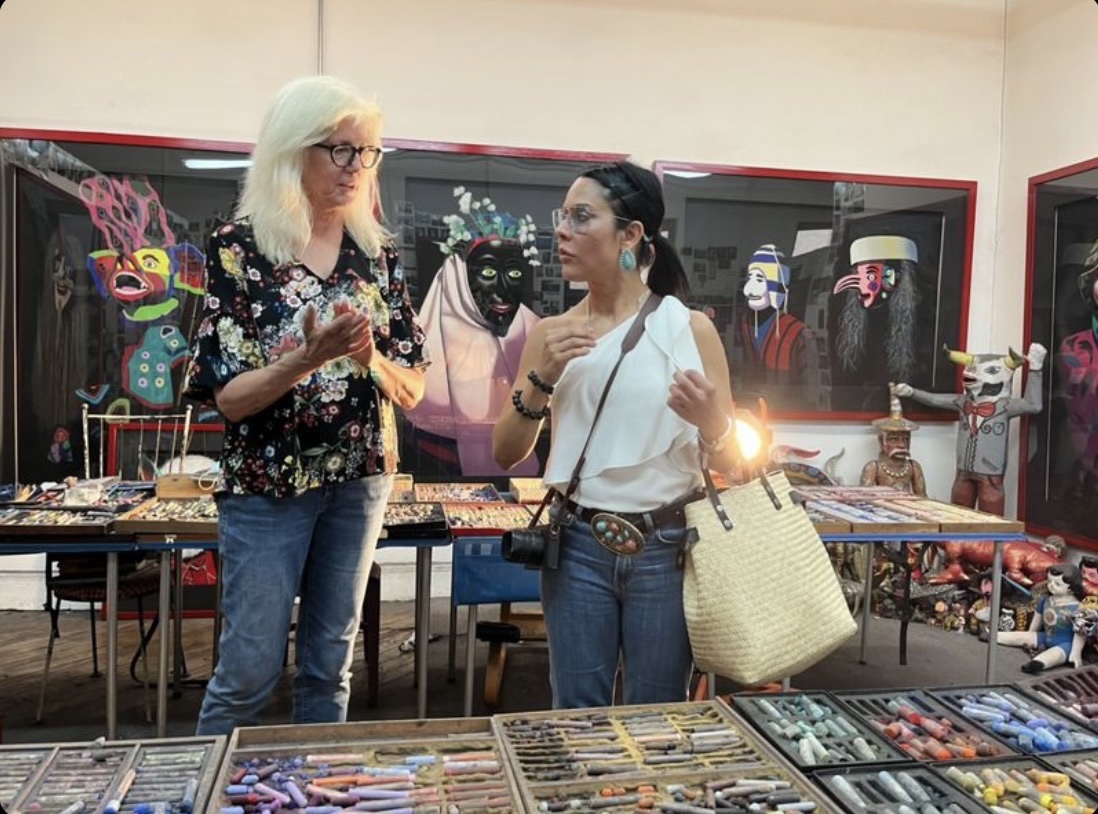
Explaining my work. Photo: David De Hannay
*an ongoing series of quotations – mostly from artists, to artists – that offers wisdom, inspiration, and advice for the sometimes lonely road we are on.
We’ve all taken advantage of the unlimited instant access that the wired world claims to provide. So it’s not surprising that many artists are reluctant to contemplate, much less accept, any self-imposed limitations. Painters and sculptors who remain in their studios grapple with the fundamentals and fine points of representation or abstraction – worrying about Renaissance theories of perspective or Klee’s or Kandinsky’s ideas about plane geometry – can be accused of having their heads in the sand. But there comes a time when certain questions must be asked. What are the artistic traditions that mean the most to you? What is your artistic heritage? Where do you stand?
Between Abstraction and Representation by Jed Perl in The New York Review of Books, November 24, 2022
Comments are welcome!
Pearls from artists* # 553
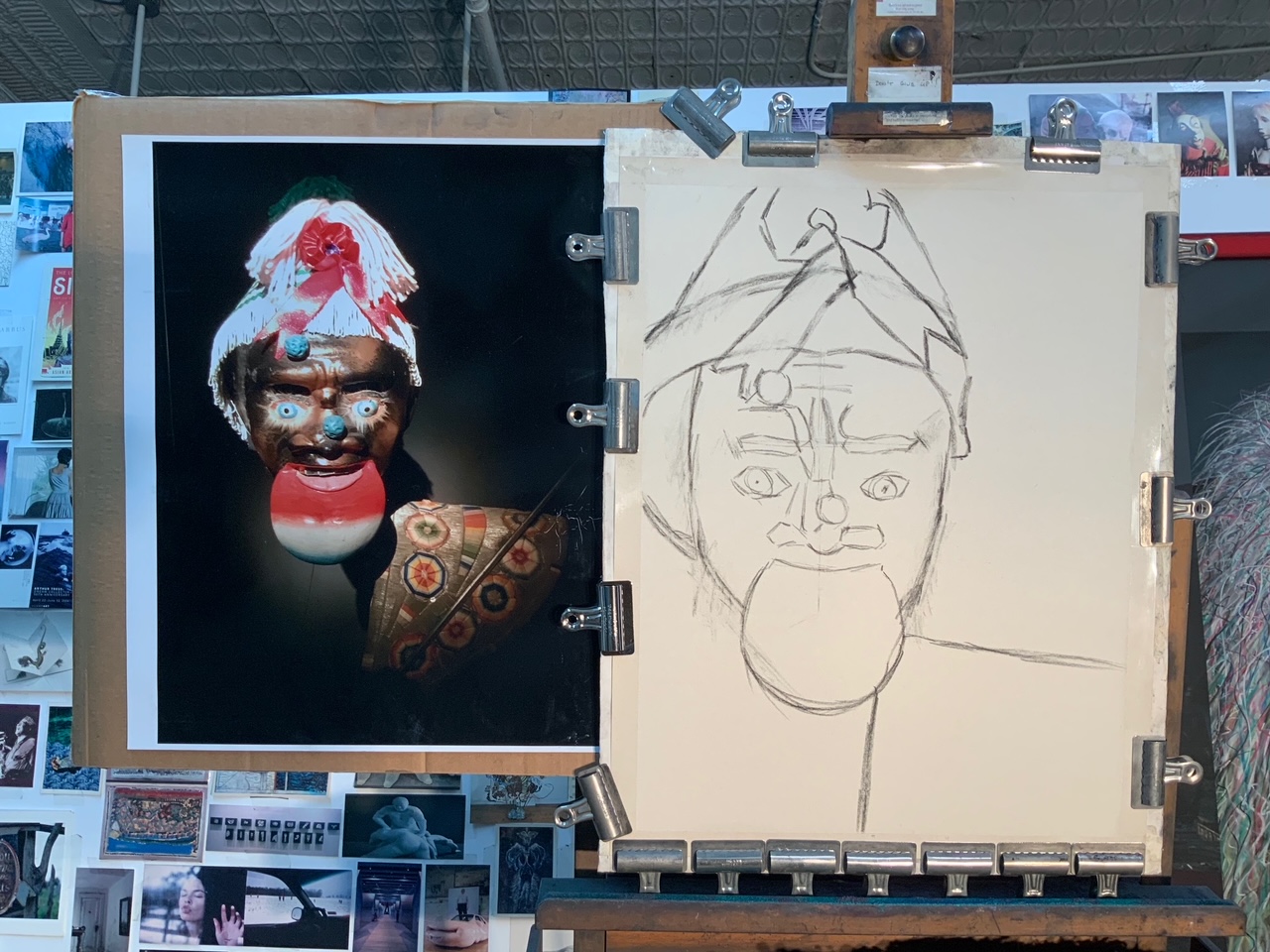
Starting a new pastel painting
*an ongoing series of quotations – mostly from artists, to artists – that offers wisdom, inspiration, and advice for the sometimes lonely road we are on.
We think of the procrastinator as lazy and inactive, but procrastination is active. Not to get all psychological and heavy on you, but procrastination is actually “active avoidance.” I like the word active because it shows just how powerful your avoidance tendencies are.
It takes all kinds of forms – writer’s block and disorganization are two of the most common. I’ve known people who have mild forms of it, and I’ve known people who are absolutely crippled by it, who never accomplish what they set out to do.
… the most heavy-handed thing I can say is: If you procrastinate, you are only robbing yourself.
Anna Deavere Smith in Letters to a Young Artist: Straight-up Advice on Making a Living in the Arts – For Actors, Performers, Writers, and Artists of Every Kind
Comments are welcome!
Pearls from artists* # 552

*an ongoing series of quotations – mostly from artists, to artists – that offers wisdom, inspiration, and advice for the sometimes lonely road we are on.
There is a sense in which any art that succeeds is like all other art that succeeds – at least if we believe that beauty, in its manifold forms, is ultimately one and the same thing. All enduring works of art are both coherent and complex, with forces and counterforces somehow united in a whole that’s more than the sum of its parts.
Between Abstraction and Representation by Jed Perl in The New York Review of Books, November 24, 2022
Comments are welcome!
Pearls from artists* # 551

Barbara’s Studio
*an ongoing series of quotations – mostly from artists, to artists – that offers wisdom, inspiration, and advice for the sometimes lonely road we are on.
A creative process is a philosophical search, shaped by matters of practice and procedure that extend from the first touch of the artist’s pencil, brush, or chisel to the final decisions about what constitutes completeness.
Stylistic particularism – the decision as to what kind of abstract or representational artist you’re going to be – shapes, deepens, and extends the artist’s imaginative powers. Most artists who work for many years see their style evolve, sometimes dramatically. In the 1930s and 1940s Giacometti, who had first been admired for Surrealist sculptures in which representational elements are set in essentially abstract structures, found himself increasingly focused on the direct observation of the human figure. What by the mid-1940s could look like a wholesale transformation of his artistic language was the result of individual decisions all of which, during Giacometti’s career of nearly five decades, interlocked. They reinforced one another. They added up.
Between Abstraction and Representation by Jed Perl in The New York Review of Books, November 24, 2022
Comments are welcome!
Pearls from artists* # 550

In the studio
*an ongoing series of quotations – mostly from artists, to artists – that offers wisdom, inspiration, and advice for the sometimes lonely road we are on.
Be more than ready. Be present in your discipline. Remember your gift. Be grateful for your gift and treat it like a gift. Cherish it, take care of it, and pass it on. Use your time to bathe yourself in that gift. Move your hand across the canvas. Go to museums. Make this into an obsession.
… what you are will show, ultimately. Start now, every day, becoming in your actions, your regular actions, what you would like to become in the bigger scheme of things.
Anna Deveare Smith in Letters to a Young Artist: Straight Up Advice on Making a Life in the Arts – For Actors, Performers, Writers, and Artists of Every Kind
Comments are welcome!
Pearls from artists* # 549
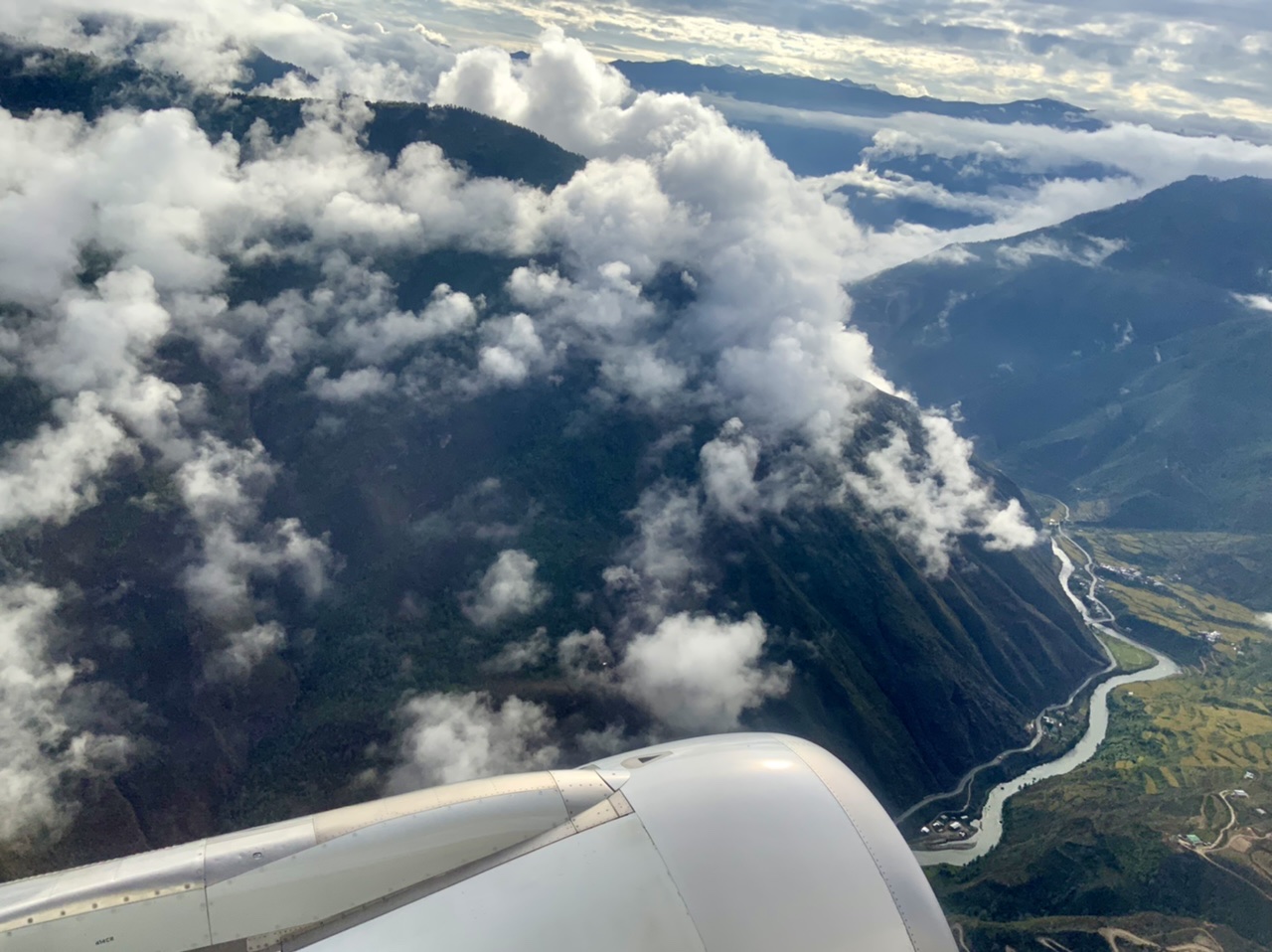
Departing from Paro Airport in Bhutan
*an ongoing series of quotations – mostly from artists, to artists – that offers wisdom, inspiration, and advice for the sometimes lonely road we are on.
… a lot of times you take a trip halfway around the world. You think the trip is for one thing… and you came away with something else. You change in a way you did not expect. These are the lessons that come well after school, college, training, apprenticeships. These lessons are not full courses; they are two sentences long. I felt I had gotten a degree in two minutes.
Anna Deavere Smith in Letters to a Young Artist: Straight-up Advice on Making a Life in the Arts – For Actors, Performers, Writers, and Artists of Every Kind
Comments are welcome!
Pearls from artists* # 548
*an ongoing series of quotations – mostly from artists, to artists – that offers wisdom, inspiration, and advice for the sometimes lonely road we are on.
We who work in the arts are at risk of being in a popularity contest rather than a profession. If that fact causes you despair, you should probably pick another profession. Your desire to communicate must be bigger than your relationship to these chaotic and unfair realities. Ideally, we must be even more ‘professional’ than lawyers, doctors, accountants, hairdressers. We have to create our own standards of discipline.
All of the successful artists I know are very disciplined and very organized. Even if they don’t look organized, they have their own order.
Anna Deavere Smith in Letters to a Young Artist: Straight Up Advice on Making a Life in the Arts – for Actors, Performers, Writers, and Artists of Every Kind
Comments are welcome!


 barbararachkoscoloreddust.com
Q: Would you share some of your favorite comments that fans and supporters have made about your work?
Mar 25
Posted by barbararachkoscoloreddust
A: I have published favorite quotes on the website, but for anyone who has not read them, please see the above photo or https://barbararachko.art/en/
Comments are welcome!
Share this:
Posted in 2023, An Artist's Life, Art Business, Quotes
Comments Off on Q: Would you share some of your favorite comments that fans and supporters have made about your work?
Tags: anyone, comments, favorite, favorites, people, published, Quotes, supporters, website