Category Archives: Pastel Painting
Pearls from artists* # 194

“Epiphany,” soft pastel on sandpaper, 38″ x 58″
* an ongoing series of quotations – mostly from artists, to artists – that offers wisdom, inspiration, and advice for the sometimes lonely road we are on.
I did sculpture because what interested me in painting was to bring some order to my brain. It was a change of means. I took to clay as a break from painting; at the time I’d done absolutely everything I could in painting. Which means it was still about organizing. It was to put my sensations in order and look for a method that really suited me. When I’d found it in sculpture, I used it for painting. To come into possession of my own brain: that was always the goal, a sort of hierarchy of all my sensations, so that I could reach a conclusion.
One day, visiting Carriere at his house, I told him that. He replied: “But, my friend, that’s why you work. If you ever managed it, you’d probably stop working. It’s your reason for working.”
In painting – in any oeuvre – the goal is to reconcile the irreconcilable. There are all kinds of qualities in us, contradictory qualities. You have to construct something viable with that, something stable. That’s why you work your whole life long and want to keep on working until the last moment… as long as you haven’t admitted defeat or lost your curiosity, as long as you haven’t settled into a routine.
Chatting with Henri Matisse: The Lost 1941 Interview, Henri Matisse with Pierre Courthion, edited by Serge Guilbaut, translated by Chris Miller
Comments are welcome!
Q: How many studios have you had since you’ve been a professional artist?

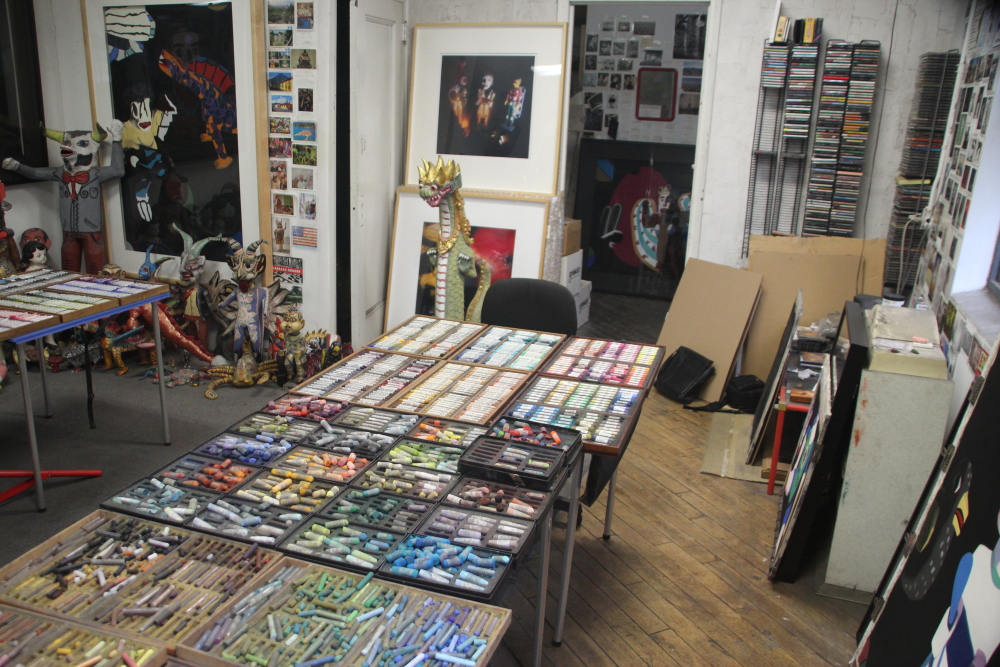
Barbara’s studio
A: I am on my third, and probably last, studio. I say ‘probably’ because I love my space and have no desire to move. Plus, it would be a tremendous amount of work to relocate, considering that I have been in my West 29th Street studio since 1997.
My very first studio, in the late 1980s, was the spare bedroom of my house in Alexandria, Virginia. I set up a studio there while I was on active duty in the Navy. When I resigned my commission, I was required to give the President an entire year’s advance notice. Towards the end of that year I remember calling in sick so I could stay home and make art.
In the early 1990s I rented a studio on the third floor of the Torpedo Factory in Alexandria. For a while I enjoyed working there, but the constant interruptions – in an art center that is open to the public – became tiresome.
In 1997 I had the opportunity to move to New York. I desperately craved solitary hours to work in peace, without interruption, so at first I didn’t have a telephone. I still don’t have WiFi there because my studio is reserved strictly for creative work.
Moving from Virginia to New York in 1997 was relatively easy. My aunt, who planned to be in California to continue her Buddhist studies, offered me her rent-controlled sixth-floor walkup on West 13th Street. I looked at just one other studio before signing a sublease for my space at 208 West 29th Street. I had heard about the vacancy through a college friend of my husband, Bryan. Karen, the lease-holder, was relocating to northern California to work on “Star Wars” with George Lucas. After several years, she decided not to return to New York and I have been the lease-holder ever since.
Comments are welcome!
Pearls from artists* # 193
Barbara’s studio
* an ongoing series of quotations – mostly from artists, to artists – that offers wisdom, inspiration, and advice for the sometimes lonely road we are on.
Interviewer: Your work includes a great range of experience, as well as of form. What do you think is the greatest quality a poet can have? Is it formal, or is it a quality of thinking?
Ezra Pound: I don’t know that you can put the needed qualities in hierarchic order, but he must have a continuous curiosity, which of course does not make him a writer. but if he hasn’t got that he will wither. And the question of doing anything about it depends on a persistent energy. A man like Agassiz is never bored, never tired. The transit from the reception of stimuli to the recording, to the correlation, that is what takes the whole energy of a lifetime.
Writers at Work: The Paris Review Interviews Second Series, edited by George Plimpton and introduced by Van Wyck Brooks
Comments are welcome!
Q: What’s on the easel today?
Work in progress
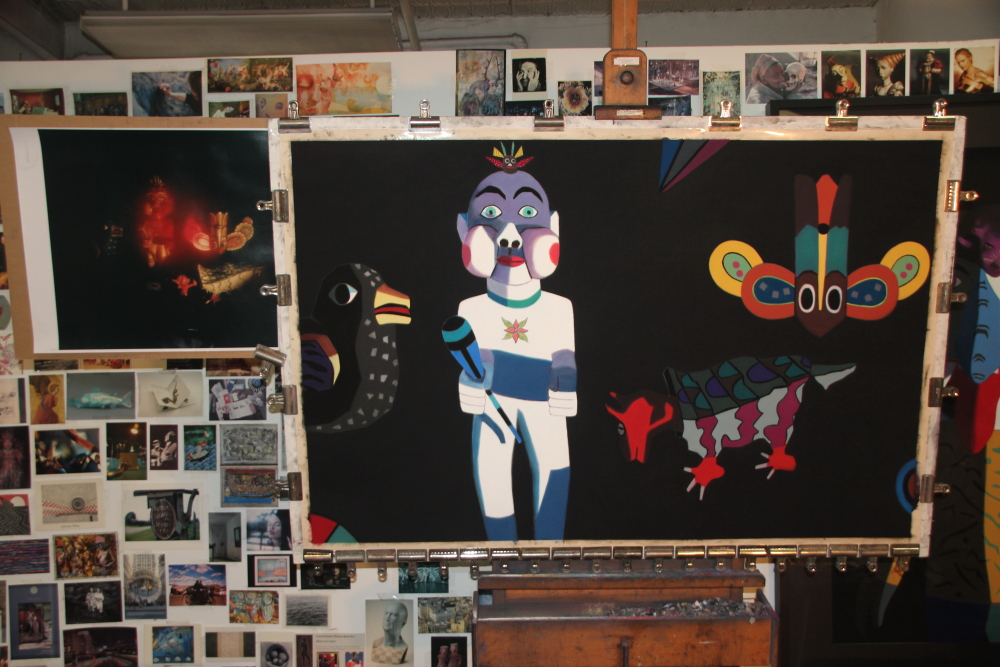
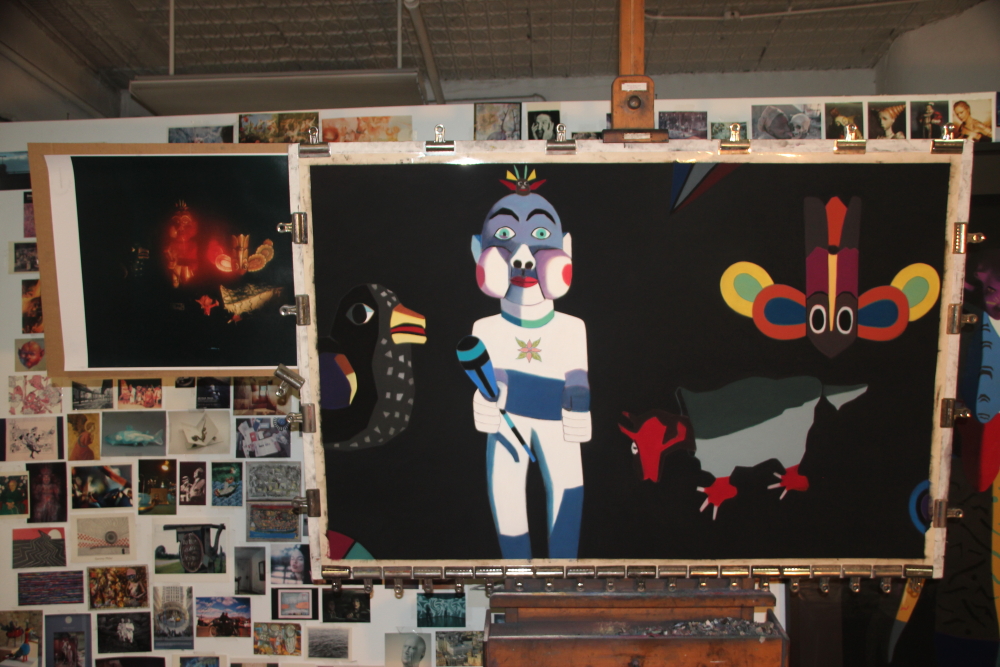
A: “White Star,” 38″ x 58″ is slowly progressing. The title of this painting alludes to David Bowie’s last album, “Dark Star” and is my somewhat more optimistic take on that phrase.
The white Guatemalan figure and the Sri Lankan mask on the top right still could use more details. Over time the “Black Paintings” series is becoming more about what is left out. So how much detail to add is an open question.
Comments are welcome!
Q: Do you have a mentor?
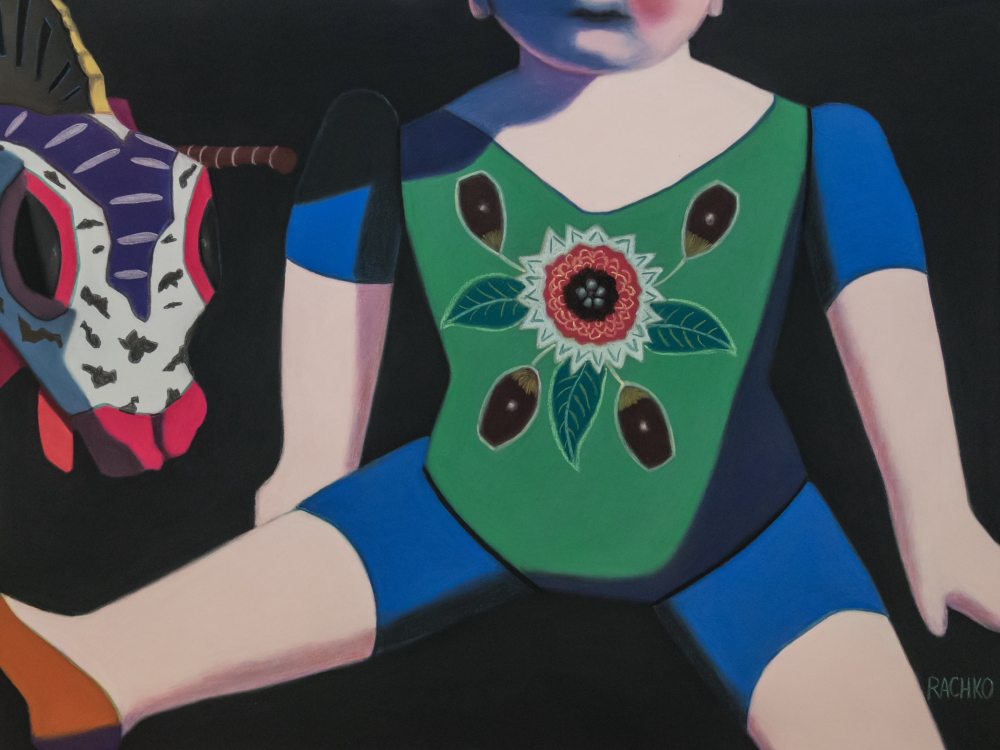
“Alone Together,” soft pastel on sandpaper, 20″ x 26″
A: No, but I often wish I did. How wonderful it would be to consult someone who’s been there, a productive and successful artist who could provide advice on all the concerns, especially the problems and dangers, inherent in a professional artist’s life.
But I have been at this for thirty years and found no such person! I think it’s because each artist’s career is highly unique as we chart are own individual paths. Unlike most professions, there are no firm rules or straight forward career milestones for making your way as an artist.
Besides the countless hours spent in the studio, I have always worked diligently to understand the art business. Certainly getting work seen, exhibited, reviewed, sold, etc. is as important as making it in the first place. It’s all part of being a professional artist.
Early on I developed the habit of relying on my own best judgment, both in creating the work and in getting it seen and collected. Certainly I have made plenty of mistakes. As a result though, I know a tremendous amount about the art business. And I enjoy sharing what I know in the hopes of steering other artists away from making similar missteps.
Comments are welcome!
Pearls from artists* # 191
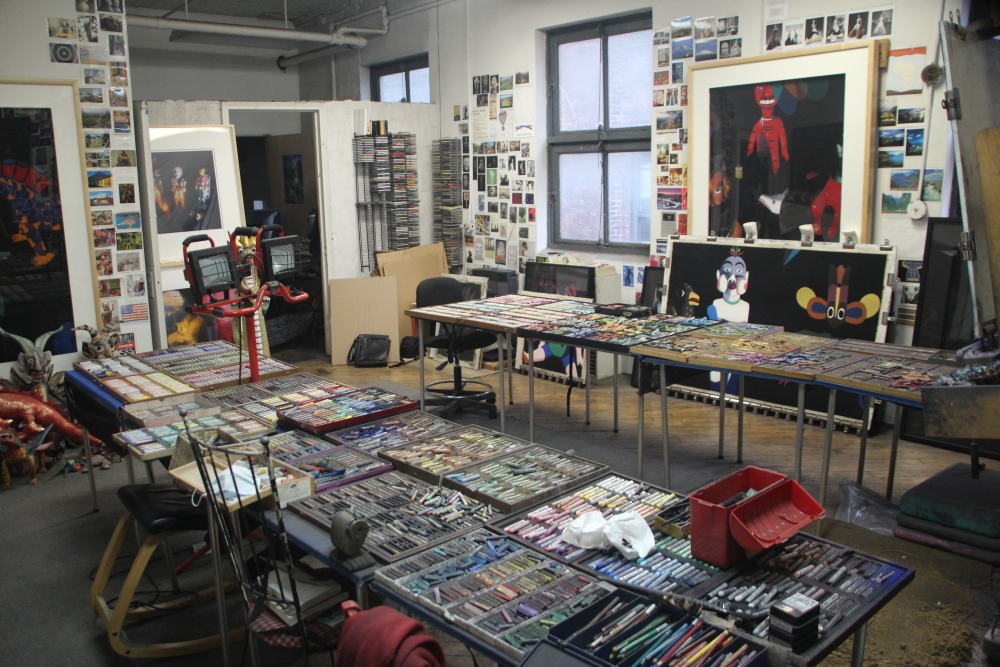
Barbara’s studio
* an ongoing series of quotations – mostly from artists, to artists – that offers wisdom, inspiration, and advice for the sometimes lonely road we are on.
“Do you understand what this is? Jacob Kahn asked me, his strong voice rising. “Do you begin to understand what you are going to be doing to yourself? You understand now what Picasso did, yes? Even Picasso, the pagan, had to do this. At times there is no other way. Do you understand me, Asher Lev? This is not a toy. This is not a child scrawling on a wall. This is a tradition; it is a religion, Asher Lev. You are entering a religion called painting. It has its fanatics and rebels. And I will force you to master it. Do you hear me? No one will listen to what you have to say unless they are convinced you have mastered it. Only one who has mastered a tradition has a right to attempt to add to it or rebel against it. Do you understand me, Asher Lev?”
My Name is Asher Lev by Chaim Potok
Comments are welcome!
Start/Finish of “The Ancestors,” soft pastel on sandpaper, 58″ x 38″
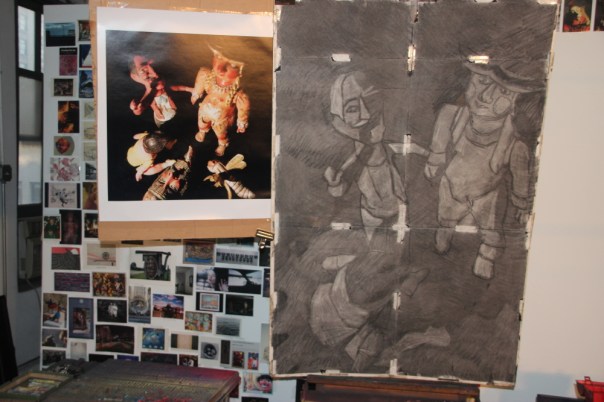
Preliminary charcoal sketch on white drawing paper. The white bits are masking tape joining small sheets of paper together to make one that’s 60″ x 40″.
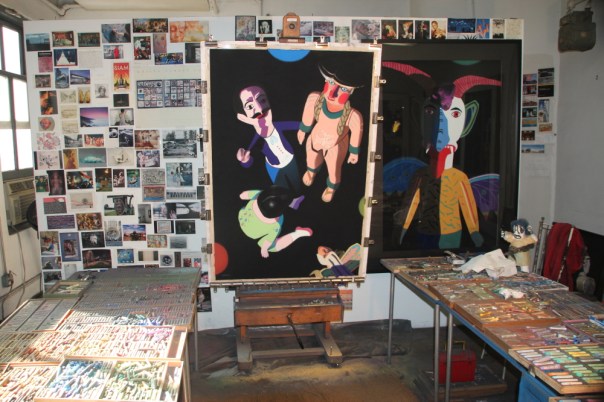
Finished and signed, lower left
Comments are welcome!
Pearls from artists* # 190
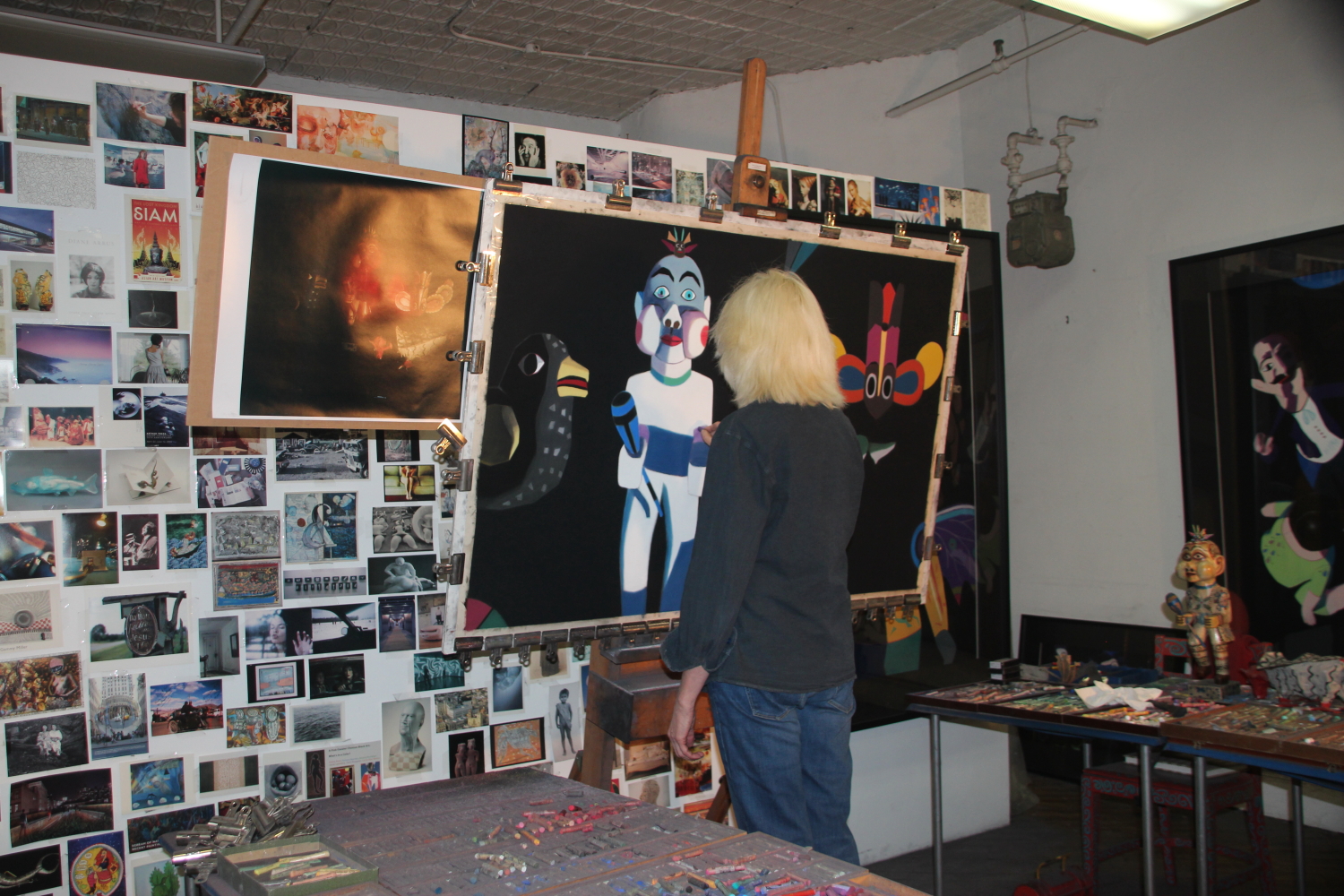
Working
* an ongoing series of quotations – mostly from artists, to artists – that offers wisdom, inspiration, and advice for the sometimes lonely road we are on.
For fifty years, I worked tirelessly, never looking up, interested in nothing but the organization of my own brain. And the works that came had their significance – which was just as well. Otherwise, I’d be a completely useless fellow.
Still, that’s not the point. The point is, I was lucky enough to be able to do fifty years’ work, until I was sixty-five. What happened was, I had to pay for it. It comes around for everyone. I’ve paid my dues!
Chatting with Henri Matisse: The Lost 1941 Interview, Henri Matisse with Pierre Courthion, edited by Serge Guilbaut, translated by Chris Miller
Comments are welcome!
Q: Do you have any unfinished pastel paintings?
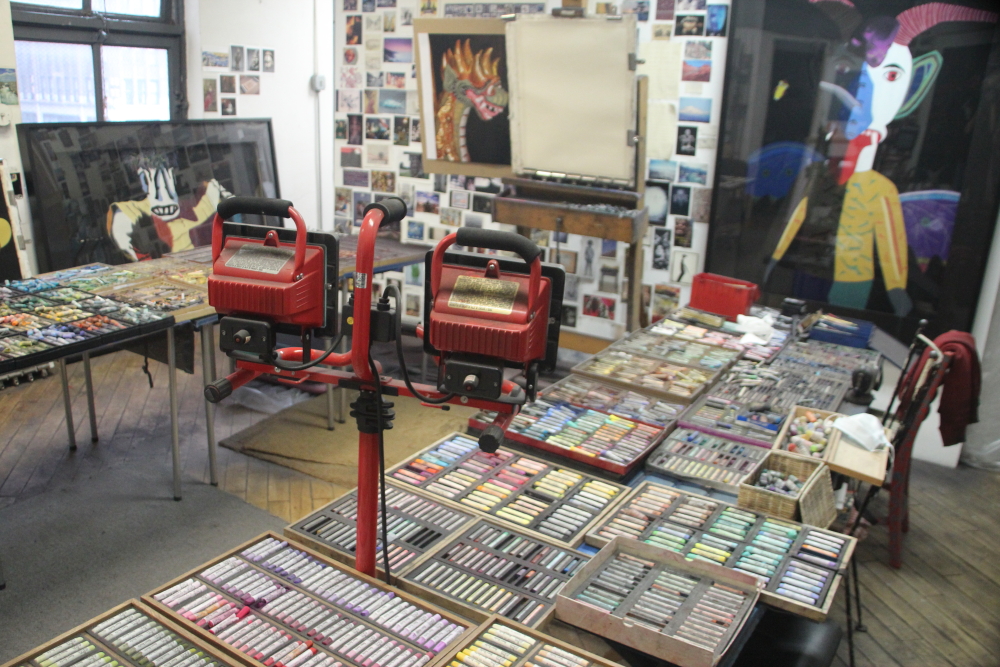
Barbara’s studio
A: It has been roughly 20 years since I started a painting that I couldn’t resolve and finish. This may or may not be a good thing. It could mean that I am not experimenting or pushing myself enough. On the other hand, having worked as a professional artist for nearly thirty years, I am confident of my ability to think through and find solutions for finishing each painting, regardless of the difficulties encountered along the way.
Comments are welcome!
Q: What’s on the easel today?
Work in progress
A: I am continuing with “White Star,” a 38″ x 58″ pastel painting I started some months ago.
Comments are welcome!


 barbararachkoscoloreddust.com